QR codes are enablers of the connection between the physical and the digital worlds, giving users, brands and tech-savvy people the opportunity to keep taking offline customer acquisition journeys online, as per their needs. This solution is both low-tech and high-flexiblity, making it ideal for marketing teams that are low-to-no budget, as well as those with integrated, 360-degree plans for engagement. Learn more about what QR code marketing is, why it works and how to leverage it to connect better with your audience.
What are QR Codes?
Invented by a Japanese company (Denso Wave) in the 1990s, the QR or ‘quick response’ codes are two dimensional matrix shapes, which combine shaded and unshaded pixels that can be scanned through a smart device, such as a smartphone.
Here’s an instance of what a QR code looks like.
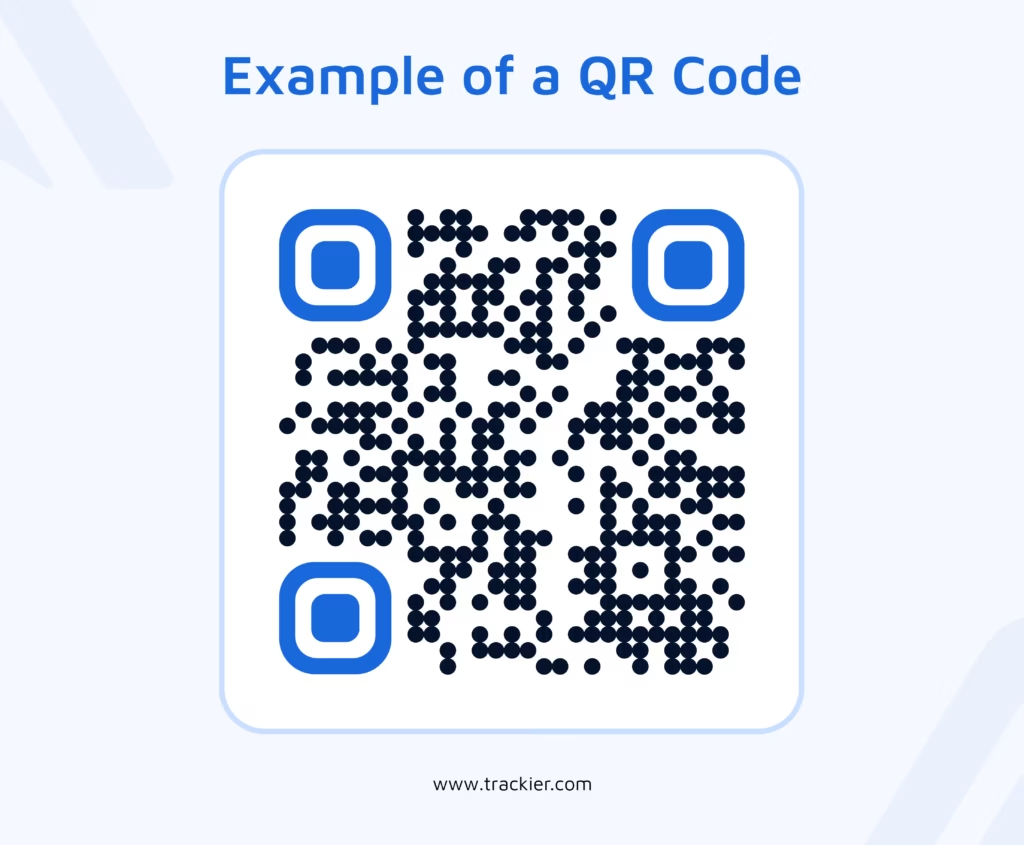
Square in shape, with markers on all corners, QR codes are a very mainstream method of link addition in most kinds of real-life informational expansions. Consider instances where such codes can be used to share nutritional information or recipes through the product label. Or, in the case of public assistance notices, they can help individuals privately connect with assistance seekers.
In fact, a QR makes it easy to share information in brief with the ability to learn more through the additional effort of scanning the code.
Why QR Code Marketing Matters Today
In the present, QR codes enable everything from ordering at a restaurant to making a digital payment (such as UPI in India). In terms of enablement through this technology, a lot of interactions or processes are possible simply due to its existence.
Due to the ubiquitous nature of smartphones, which double up as QR code scanners, the use of this technology has grown exponentially, and actually birthed various use cases, which did not previously exist.
QR codes on industrial material can inform about its unit number, manufacturing information, lifecycle, repair or replacement warranties and much more. Truly, any additional information that needs to be added in PDF, webpage, document or website format can be linked within a QR code,
Similarly, QR codes enable redirection within the user’s device. A scan on a bus ad may lead you to an app store download page. Or, a scan inside a store may lead consumers to their website’s checkout page, with the discount added in. Or, a QR code at a monument may lead you to a slideshow about its building, architectural tidbits and eventual ransacking.
In Dollywood, QR codes on drinking cups enable the vendor to track the ‘endless’ refills. In China, they’re placed on train tickets to facilitate travel.
Truly, what can be done with the help of a QR code is endless.
That’s why it truly shines as a superb tool within marketing. You can do QR code marketing across the entire media mix through:
- brochures,
- flyers,
- posters,
- physical mailers,
- event posters and standees,
- business cards,
- organizational displays, and so on.
This allows any marketing collateral to extend the interaction — every collectible creates more engagement, offers deeper insights and affords more opportunities to convert interested prospects into leads, or even customers.
What are the Possible QR Code Interactions in Marketing?
A QR code can be scanned to reveal information that can be used to automatically launch some functions on the user’s device, such as:
- View a landing page or mobile site
- Make a call to a number associated with the QR Code
- Send a text message
- Send an email
- Check out a message or offer (which helps in affiliate marketing)
- Download contact information (VCARD)
- View a location on Google Maps
- Check out a social media profile
While these applications are not exhaustive, they do list out the most popular methods wherein QR code marketing is utilized.
Benefits of QR Code Marketing for Businesses
Increase Customer Engagement
QR code marketing enables instant connections between business offerings, available in-person and their larger narrative, products and services, which can be accessed in a globally connected economy. Consider the fact that according to Statistica, QR code scans through smartphones crossed 100 million in 2025 alone.
It clearly shows that users do respond to this form of engagement on a regular basis to participate in surveys, watch videos, order from menus and join loyalty programs — across all kinds of business use cases.
Drive More Website Traffic
When UTM parameters are attached to the link placed on a QR code, brands and businesses can keep a complete track of which code was scanned, from where and by which customer. Associating physical moments to internet-based entities further ensures unique brand-driven memories can be created, which leads to better recall and more post-interaction engagement.
Improve Customer Experience
With the help of QR codes, customers are able to quickly and easily access menus, user guides, payment pages or customer support without having to search online. Marketing through QR codes ensures all meaningful customer-directed communication can be shared without the need for additional accessories or limitations, which makes reachouts through it fairly democratic.
All users require for access is a smartphone, with a working camera. No other add-ons improve or degrade access.
Collect Valuable First-Party Data
Dynamic QR codes allow businesses to measure scans, device types, locations, time of engagement and campaign performance. Using a QR code maker can make it easier to create customized codes for different marketing campaigns and track their performance. These insights help marketers optimize campaigns while building privacy-friendly first-party data strategies.
Additionally, QR codes act as an automatic opt-in. Only users who make the effort of scanning and engaging will end up sharing their information.
Boost Sales and Conversions
QR codes enable better conversions through frictionless payments, and instant access. Coupled with quick loading pages and easy transactions, the complete process of completing a conversion gets simplified even for those who don’t dabble too heavily in technology.
QR code marketing usually involves copy alongside the black and white designs. This enables users to know exactly what will happen once their scan goes through and they load the link. Having this kind of clarity also ensures higher click-through rates to conversion completion ratios.
8 Effective QR Code Marketing Strategies
Here are 8 effective ways to maximize the outcomes of your QR code marketing campaigns.
Link QR Codes to Dedicated Landing Pages
Users can land on your website homepage through the other information on your offline marketing collateral. Instead, what you need is to share specific information and drive a directed action. That can only happen with the use of a dedicated landing page.
If you’re promoting a seasonal sale, loyalty program, video or anything else, ensure the link leads to the action site, to match intent with outcome.
Use QR Codes on Product Packaging
Product packaging is owned brand space. Marketing through packaging design is a key action which drives better user experiences. If you’re a D2C brand with an FMCG product, share:
- recipes,
- tutorials,
- raw material-related details,
- certifications for the product,
- warranty and storage details, and so on through the use of QR code marketing.
Driving happy customers back to your website will also ensure that repeat purchase occurs, without the need for retargeting and other marketing-driven expenses.
Enhance In-Store Experiences
Who wants clarity from the brand’s side leading to informed users making better decisions? Well, everyone. Use in-store signage to provide potential customers with information such as:
- product reviews,
- inventory information to know availability,
- size guides,
- self-checkout opportunities,
- or even more information about distribution and product life.
People who know better can choose better and in this manner, retail marketing can be a facilitator of actual sales numbers.
Promote at Events
Exhibiting at an event? That’s a lot of space which can be utilized effectively for QR code marketing. Whether you want users to find you on social media platforms, or to visit your website, or find you at your next event booth — all of it can be done through setting up codes meaningfully across banners, standees, brochures and more.
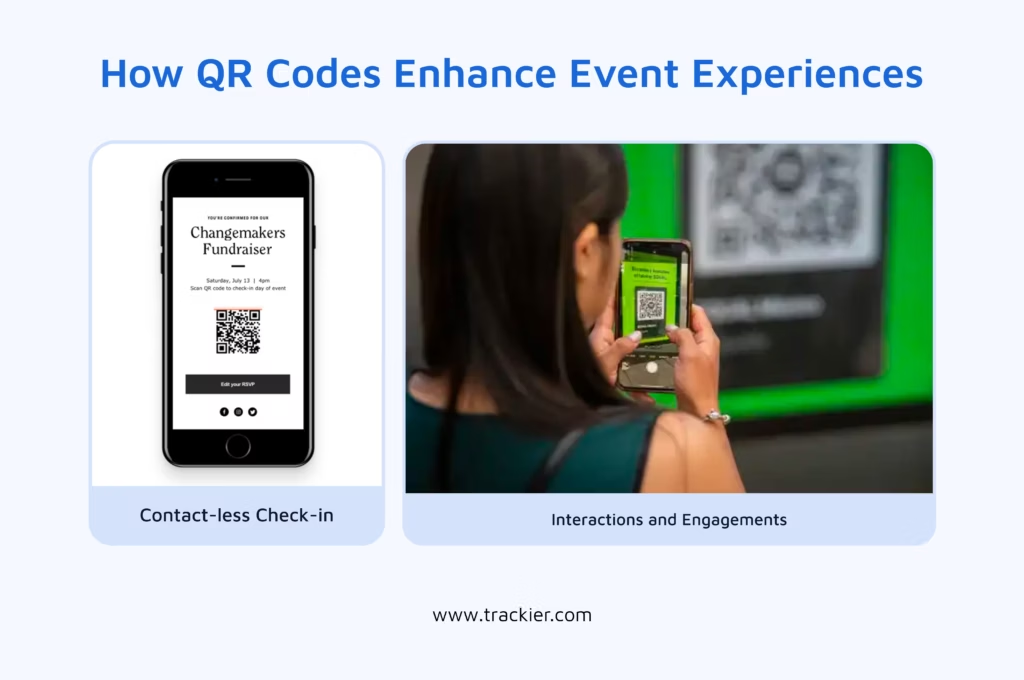
Even if you’re not exhibiting, there are options for you. Add QR codes on your digital or physical cards so people you interact with can book your calendar, write to you through email, visit your storefront or connect with you on Linkedin.
Collect Customer Feedback
If you have products that sell offline through quick commerce, retail stores and supermarkets, how do you keep track of customer sentiments? Of course, there’s physical presence at points of sale. But a cheaper (and more accessible) alternative is the use of QR codes to achieve direct inputs from users of your products and services.
With clever placements and effective copy, a certain percentage of customers can be persuaded to actively share how they really feel about your brand’s products. What’s more? The QR code could itself be a carrier of future discounts, offers and loyalty program access, which can sweeten the deal for even hard-to-convince individuals.
Share Exclusive Offers
Time sensitive deals? Loyalty point redemption offers? Opportunity-based discounts? Store-specific discounts? You can all of them with precise accuracy when you use QR codes to dispel them.
The best part about QR code marketing is that codes are easy to implement and open to modification from the creator’s end. That means, the same code can serve various links, depending on what’s been programmed.
You could even paint a QR code on the wall of your store and serve different end-point landing pages, as per need, fancy, insight or business goal.
Track Campaign Performance
Dynamic QR codes provide valuable analytics, including scan counts, locations, devices, operating systems and scan times. Monitoring these insights allows businesses to evaluate campaign effectiveness, identify customer behavior patterns and optimize future marketing efforts based on real performance data.
What are the Best Practices for QR Code Marketing?
Placing a QR code on marketing material is not QR code marketing. It’s too easy to misunderstand the utility of the medium due to its simplicity. The underlying formula of success in this type of marketing depends entirely on a brand’s ability to create seamless and valuable experiences for their prospects and customers.
But the extent of success changes through the use of some key best practices. Here’s some of the things that help:
- Use dynamic QR codes over static ones
The use of dynamic codes for the purpose of QR code marketing allows businesses to review and update the destination URLs, track campaigns from end-to-end and keep seeing outcomes without having to constantly update collaterals.
- Include a clear, visible call-to-action
Simply printing a QR code on a poster, banner, newspaper ad or standee is not marketing. As with any other type of marketing, a user has to be persuaded to conduct a specific action through the use of sharp, clear copy. To ensure better CTR, the copy should be precise, simply-to-understand and applicable across multiple QR marketing flows.
- The position of the QR code matters
Position QR codes where they are easy to see and scan, ensuring they are large enough and provide sufficient contrast against the background.
- Test the code through multiple devices before launch
Test every QR code before launching your campaign to confirm it works across different devices and operating systems. Regularly monitor scan analytics to measure engagement, identify high-performing channels and optimize future campaigns.
- Be transparent about data collection (if any)
Prioritize customer privacy by being transparent about any data collection and complying with applicable data protection regulations.
How to Measure the Success of QR Code Campaigns?
Tracking the right performance metrics helps businesses understand whether their QR code campaigns are achieving their goals. By analyzing customer interactions and business outcomes, marketers can identify successful strategies and improve future campaigns.
Focus on the following key performance indicators:
- Scan Rate: Measures how many people scanned your QR code and indicates the effectiveness of its placement and call to action.
- Click-Through Rate (CTR): Tracks the percentage of users who visited your landing page after scanning the QR code.
- Conversion Rate: Shows how many users completed a desired action, such as making a purchase, signing up or downloading content.
- Revenue Generated: Evaluates the total sales or income directly attributed to the QR code campaign.
- Customer Acquisition Cost (CAC): Calculates how much it costs to acquire each new customer through the campaign.
- Repeat Engagement: Measures how often customers return to scan QR codes or interact with future campaigns.
- Return on Investment (ROI): Compares campaign costs with revenue generated to determine overall profitability and marketing effectiveness.
Conclusion
Looking for an easy and effective way to connect with customers and grow your business? Look no further than QR code marketing.
Whether you want to drive more website visits, promote special offers or learn more about your audience, QR codes make it quick and convenient. The key is to provide real value and track what works so you can improve your campaigns over time.
With the right strategy, QR codes can help you create better customer experiences, increase engagement and achieve stronger marketing results.
To learn more about how you can measure the performance of your marketing campaigns using QR Codes, check out Trackier’s industry-leading attribution solutions and get a free trial today!
FAQs
What does “QR” in QR code stand for?
“QR” stands for Quick Response, because the code is designed to be scanned quickly by a smartphone or similar device.
How do I choose the right placement for a QR code?
Good placement means: making it clearly visible, accessible for scanning (e.g., not too high, not moving/blurred), ensuring the surrounding design doesn’t interfere with scanning, and using a call-to-action, that tells the user what happens when they scan. Avoid placing QR code on fast-moving vehicles, in dimly-lit locations without testability, or in contexts where scanning is inconvenient.
How can I track the performance of a QR code campaign?
If you use a dynamic QR code or embed tracking parameters in the linked URL (UTM parameters, analytics), you can track: number of scans, device types, locations, time of scan, conversion actions.
What are common mistakes to avoid with QR code marketing?
Following are the common mistakes to avoid with QR code marketing:
– Using a QR code without a clear user benefit or strong CTA.
– Linking to a destination not optimised for mobile (since users will scan via smartphone).
– Placing the QR where scanning is impractical (e.g., too high, moving vehicle, poor lighting).
– Failing to test readability before roll-out (especially after printing, or when customised).
– Using multiple QR codes in one piece without clarity, confuses users.
– Not tracking or analysing performance, so you don’t know what is or isn’t working.
What is the difference between a static QR code and a dynamic QR code?
A static QR code has fixed information that cannot be edited after creation. A dynamic QR code can be updated anytime and provides analytics such as scan count, device type, and location.
How to promote a QR code?
Put your QR codes within sight of potential customers or users to drive them to interact with it. Adding it to product packaging, flyers, posters, business cards, emails, social media posts and storefronts is the ideal way to do it. Ensure there is a clear, visible and actionable call-to-action placed near the code to elicit the right response.
How to use QR codes in your marketing campaigns?
Use QR codes to direct customers to landing pages, product information, promotional offers, event registrations, loyalty programs, surveys or digital menus. Track scan performance to measure engagement and optimize your campaigns for better results.
What are some QR code marketing opportunities?
Opportunities where QR codes shine through as a clear marketing tool are all instances where offline marketing has a chance to connect with the online interface of a brand or business. QR codes can support product launches, retail promotions, restaurant menus, event marketing, customer feedback, social media campaigns, loyalty programs, contactless payments and lead generation.