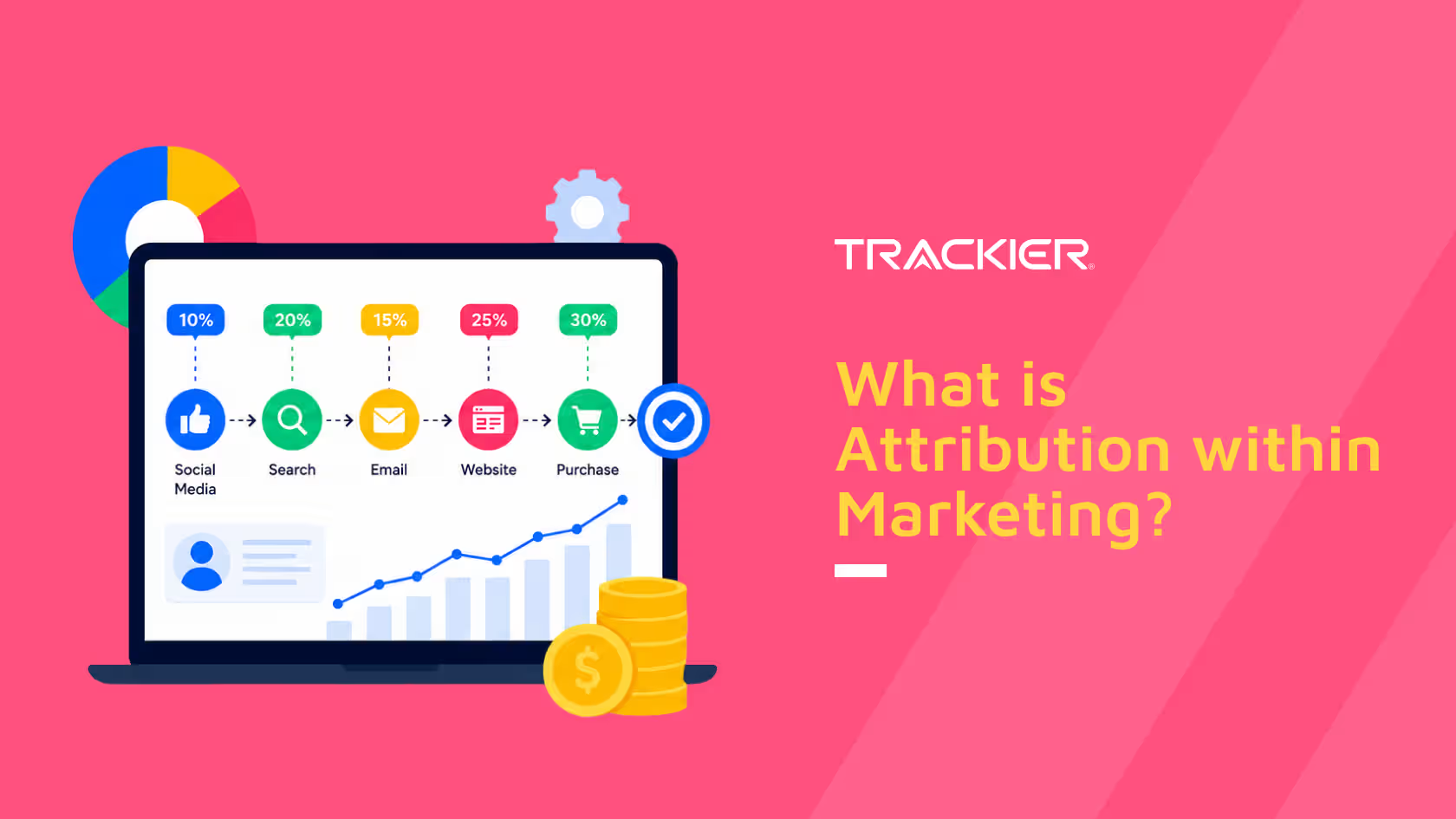
In simple terms, the act of assigning a direct cause, credit or origin to something is known as attribution. But that is the general understanding of the term in plain English.
Within marketing, it takes on various forms and becomes a crucial centre of understanding how the efforts of a person, function or a process translate into clear, measurable outcomes that serve both, as a guiding light towards the next course of action, and as a filter in avoiding efforts and budget are not wasted.
Usually when we consider marketing attribution, we are referring to instances like:
- The work of a niche creator resulting in rising brand awareness or sales (within influencer or partner marketing),
- The outcome of a marketing campaign, evident through analytics of the channels it was rolled out on, or,
- When we consider human behaviour as a result of push and pull marketing techniques and attempt to determine how it came about.
The basic idea behind using the term ‘attribution’ is usually to frame an outcome as emerging from a specific source. For instance, a lead can be attributed to a specific ad set or landing page, a new website visitor can be attributed to a specific search query and a new registration can be assigned to a newsletter subscription pop-up.
All these are valid connections which can be made by taking a certain situation and trying to identify how it came to be.
Let’s understand more clearly how this term can be defined, understood and applied.
What is Attribution?
If we look at the definition of attribution in the Cambridge dictionary, it reads as:
“the act of saying or thinking that something is the result or work of a particular person or thing”.
Merriam Webster’s dictionary defines the concept of attribution in three key ways:
- When a particular work or book is ascribed to a particular author or creator,
- “An ascribed quality, character or right”, or,
- An interpretative process through which judgements are made regarding one’s own or other’s behavior (within psychology).
This manner of prescribing cause is effectively mirrored within marketing. When you can draw direct correlation between a cause and its effect, immediate or otherwise, you can clearly attribute what led a particular prospect to convert into a customer, or a customer to turn loyal.
In simple terms, attribution is used to connect the dots and identify the ‘what’, ‘who’ or ‘how’ that led to an end goal, outcome, click-through, conversion or lack thereof.
Therefore, the process of assigning credit to a marketing channel or touchpoint in effecting a conversion is known as attribution. The reason this activity matters at all within marketing is because marketers need to understand:
- which channels influence decisions,
- where customers come from, and,
- how budgets should be allocated to improve the chances of such actions being cohesively repeated.
Currently, target audiences across industries don’t make their decisions due to a single factor. Therefore, making a conclusive attribution is ineffective. Instead, it makes more sense to treat multiple touchpoints as contributors to a given end result. Therefore, modern marketing tends to work within a multi-attribution format.
As a result, this process applies to:
- Sales
- App installs
- Subscriptions
- Leads, and,
- Repeat purchases.
The end goal of this process is: determining which touchpoints receive conversion credit, when the required conversion does end up occurring.
Why Attribution Matters in Modern Marketing
As a result, present day business impact through marketing efforts can be measured as a collection of various channels or mediums.
Modern marketing can be understood more effectively by looking at the mediums through which marketing messages are delivered:
- Paid search
- Meta ads
- Influencers or Creators
- Affiliates or publishers
- YouTube
- Apps (in-app messaging or pop-ups)
- OTT, CTV, and so on.
These are varied, and can be effected through multiple platforms and channels. In a world where attribution is a factor of multiple actions, understanding the level or amount of impact from a particular individual source is next to impossible, if everything isn’t tracked to a tee.
There are also emerging challenges within marketing itself, which have made attribution essential to have, and perfect, such as:
- Fragmented customer journeys, which happens across channels as discussed above.
- Rising ad costs, with CAC rising YoY on major paid channels across industries.
- Omnichannel marketing, due to which integrated marketing is essential.
- Privacy-first tracking changes, which have limited how much brands can actually track due to laws like GDPR and CCPA.
In essence, attribution enables businesses to judge worthy actions against those that lead to net neutral or net negative results. This process allows teams at the global and local level to sift through channels, platforms, teams, performance areas and more to better align marketing budgets.
Without having a clear picture on attribution, most brands are going to be:
- Chasing visibility, over actual revenue-tied goals,
- Undervaluing the channels that lie towards the top of the funnel since their outcomes are less evident, and,
- Misallocating budgets across the entire marketing function.
The Relationship Between Attribution and ROI
Attribution tells marketers what is working, and what isn’t. What’s working usually leads to return on investment or ROI, in positive terms. However, knowing what isn’t working is just as vital so you know which actions, channels or messages aren’t translating into desirable consumer behavior.
The relationship between attribution and ROI is a direct one, where several marketing metrics actually reflect this correlation effectively. You can see this in:
- Lifetime value
- Return on ad spend
- Customer acquisition costs
All of these aspects are weighed against revenue generated through them, to ensure the spends never exceed the returns.
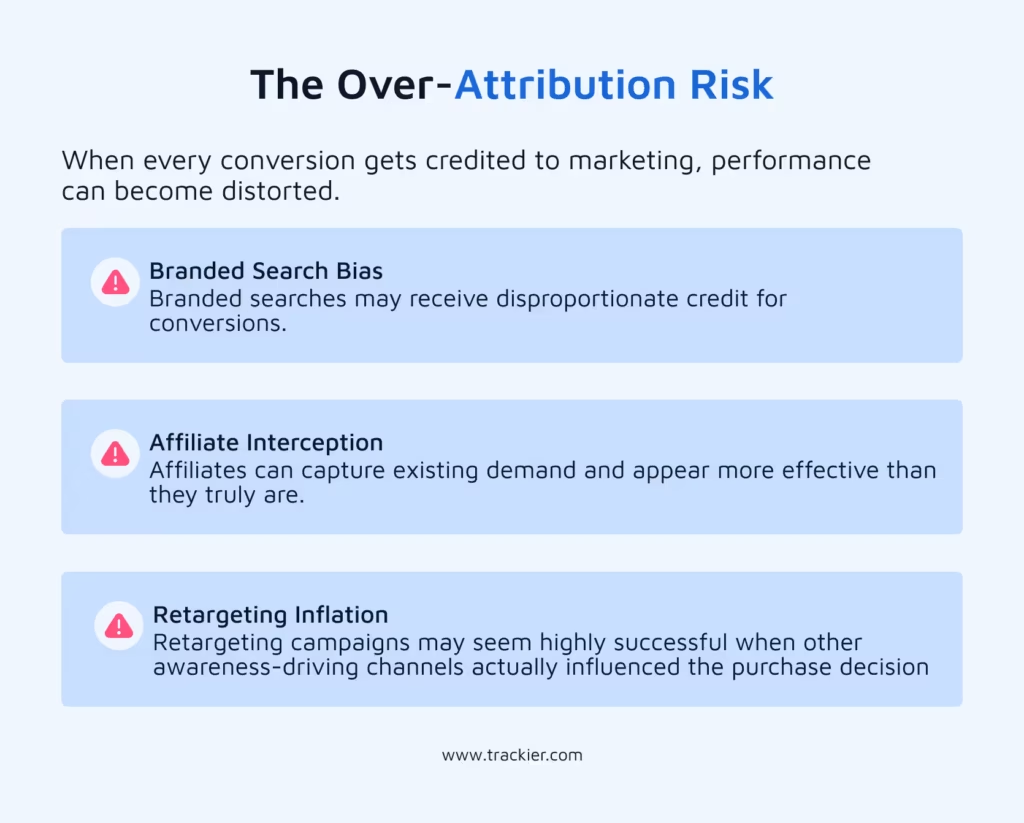
There is, however, an added peril when we focus too much on the link between attribution and ROI. It tends to skew perception on performance. This phenomenon can also be referred to as ‘over-attribution’, where every sign and signal is read as linked to marketing activities, even when it may not be.
Such mischaracterizations are visible in the form of:
- Branded searches often get more credit than unbranded ones when it comes to downstream customer behavior.
- Affiliates may intercept existing demand, which may improve their numbers and end up costing the brand a little more.
- Retargeting may appear stronger than it truly is, especially when brand awareness and visibility are overleveraged, but transactional or conversion-intent is underserved.
Each attribution journey must be weighed across actions on their own merit. What tends to happen when we revisit journeys is that first-touch actions get discredited, while the last-touch attribution is both seen, and rewarded. Keeping a firm and direct connection with ROI can further increase this tendency and make a lot of marketing efforts seem like poor spending.
For example, spending on paid backlinks to improve website visibility may seem like a waste as compared to a paid user acquisition ads campaign since the direct conversion evidence is laid bare in the latter, while in the former it isn’t.
Attribution vs Measurement vs Analytics
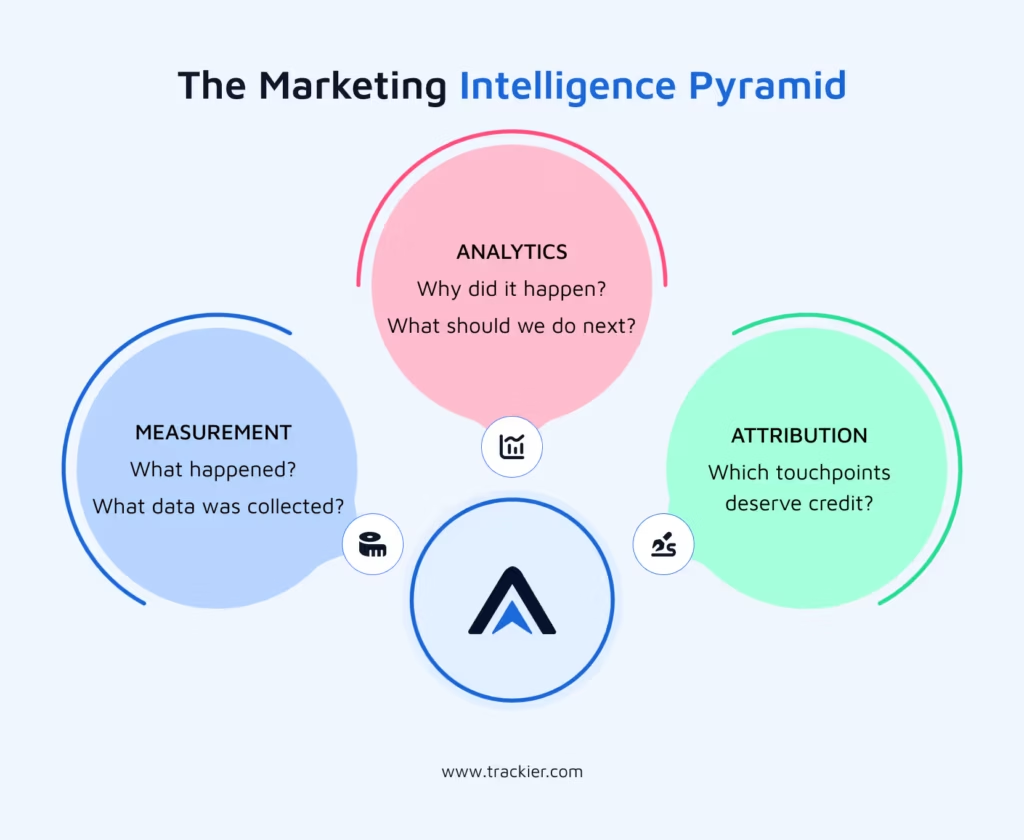
Usually in colloquial language, the terms ‘attribution’, ‘measurement’ and ‘analytics’ are seen as overlapping in form and function. However, this is usually due to misunderstanding the nature and treatment of these actions.
Attribution is an action which credits conversion to an action or a set of actions.
Measurement is the entire process of tracking, collecting and validating marketing, business or performance data.
Analytics is the act of studying and interpreting the entire data set accumulated during the process of measurement.
While all three activities are linked, and experience some overlap, they are separate and valuable in themselves. All three come together to optimize and improve the overall attribution process, the link between ROI and attribution and the coordination between marketing and product, customer success, sales and other teams.
How Attribution Actually Works IRL
When we think of attribution, the process of how it comes to be (in simplistic terms) is as follows:
- A given user interacts with a particular marketing touchpoint
- Tracking identifiers or logs capture this interaction
- The user conducts an activity which is counted as a conversion
- Based on the attribution model in use, credit gets assigned to the source
Now this understanding is a fairly basic way of understanding what actually happens once the user interaction begins.
But attribution is a technical process. There is a deep technological system at play which makes capturing the moment of interaction, form of engagement and more possible at every point in time. What does the technical process of attribution look like? Let’s see.
First, a touchpoint is captured. Usually this creative or content piece has an identifier or a tracker embedded in it, often in the form of a tracking link. By clicking on this link, either a browser-based cookie is activated or a click ID is generated.
Various facets of the user (which don’t give away personal details but allow for segmentation) are recorded, such as device IDs, OS, region, IP address and so on.
Then, the attribution rules come into play. Whether the attribution has to happen on first or final interaction (or marketing material), or whether all sources will be credited equally is pre-decided — on which basis the data collection is executed.
Finally, the platform where attribution tracking is being conducted performs conversion matching, i.e. it validates that the ‘user’ or ‘click ID’ that initiated the journey is the same one that has performed the conversion event.
This closes the loop and brings the entire attribution journey to an end. Looking back at this measurement, marketers can draw clear conclusions on the outcomes of their marketing strategy and plans, and work on further improving them.
Let’s understand how various touchpoints come into the picture through an example.
- A person searches for the term ‘black running shoes’ and sees an ad.
- They click on the given ad unit and navigate to the website’s product listing page. They browse for some time but see no offers on that day.
- The user then revisits the website again, this time by searching for the ecommerce website and navigating the ‘black shoes’ through the website’s internal search.
- This time, they find reason to purchase and the conversion occurs.
- Once this entire series of events is captured, the attribution model assigns credit.
In effect, the entire user journey included two touchpoints: one through a paid display advertisement, and one through organic search which is a function of search engine marketing. As you can see, discovery was enabled through the first medium, while the second led to the final conversion. Yet, only crediting only one of them would be a mistake.
Understanding Customer Touchpoints
Neil Patel states that 94.5% of buyer journeys online are prone to having more than a single touchpoint. He views this through 4 pillars of possible interactions with buyers, namely,
- Streaming [reels, Youtube, CTV]
- Scrolling [social media feeds]
- Searching [AI channels, Google lens]
- Shopping [e-commerce platforms, marketplaces]
While this remains to be an online-heavy approach, usually customers may interact with a brand wherever it exists. Occasionally, even where it doesn’t — such as in closed communities.
Any interaction between brand and customer is valuable for the purpose of mapping attribution. If you’re leaning on digital marketing to lead prospective customers down the buyer funnel, the major touchpoints you simply cannot miss should include:
- Paid ads
- Blog visits
- Email opens
- Influencer content
- Affiliate link clicks
- App installs
- Direct website or app visits
There are major factors to be considered about customer touch points when designing your attribution mapping:
Not all customer touch points are created equal
In real terms, based on industry and marketing strategy, some touchpoints are infinitely more valuable than others, especially when we consider attribution in sync with ROI. For instance, working on search engine marketing offers organic visibility (which after a point is essentially free) and better global discoverability for businesses of all sizes.
Compared with email marketing, which requires regularity and some cost (for a reliable email marketing platform) as well as opt-ins and fresh email lists, there is a clear difference visible.
Only those prospects who appear within the list can be appealed to at one time. However, SEM makes the business visible to everyone, everywhere all the time.
User funnel journeys are increasingly non-linear
Attribution funnels must account for all the platforms in use for the purpose of brand visibility and awareness, including all earned and owned channels. Without this, you will always be missing crucial pieces of data on minor interactions or reengagement, whenever they appear.
Users don’t always tend to be platform-sticky. This means they may find you through social media marketing, but they may forget just as quickly, only to be reminded when they view an ad for your product on CTV.
Additionally, different touchpoints affect different points within the user journey down the marketing funnel. Here’s a glimpse into how this usually works within B2B ecommerce:
- Awareness: Industry reports, thought leadership content, podcasts, PR coverage, organic social content, influencer or creator content, AI search visibility, display advertising and affiliate publishers.
- Interest: LinkedIn content consumption, webinars, newsletters, educational blogs, comparison content, review platforms, community discussions (Slack, Discord, Reddit) and partner referrals.
- Desire: Case studies, customer testimonials, analyst reports, product comparisons, partner recommendations, ROI calculators, product-led content and success stories.
- Action: Demo requests, contact forms, free trials, sales conversations, affiliate referrals, retargeting campaigns, email nurture sequences and direct website visits.
Conversion Paths and User Journeys
Users rarely convert in a single interaction. Conversion paths are the sequences of interactions that happen before the conversion.
The way attribution is designed usually accounts for potential conversion paths. But user journeys are unique, and can follow completely new templates of interaction, beyond what was imagined or intended.
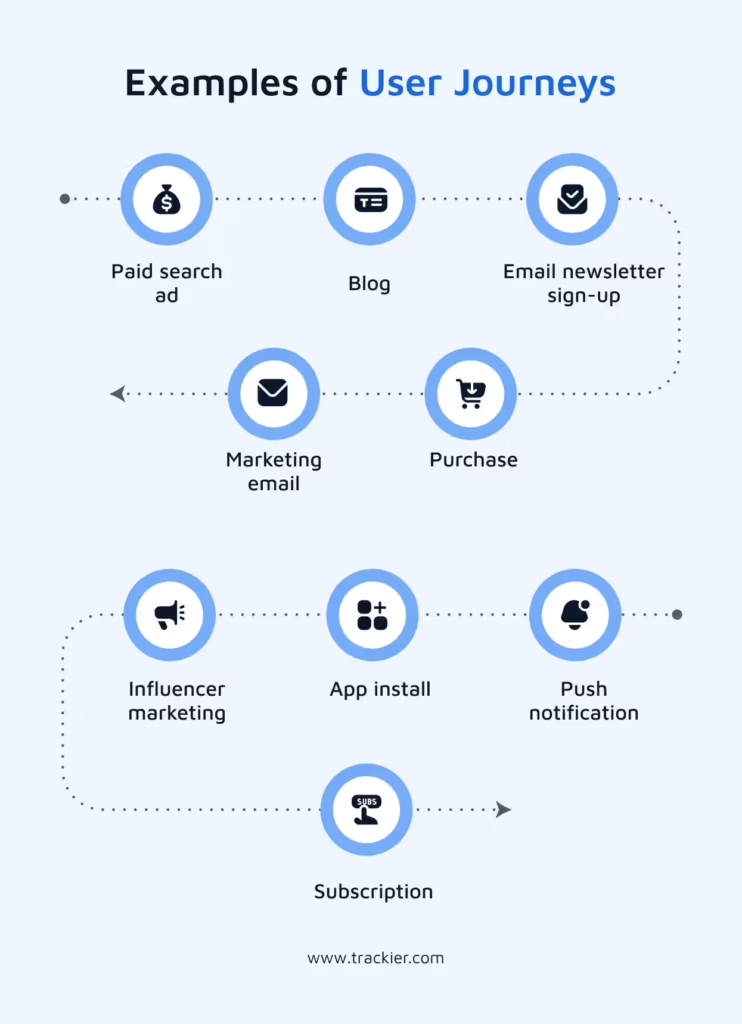
Modern customer journeys tend to be:
- Non-linear: Across various channels and mediums
- Cross-device: Website to app and back
- Cross-platform: From social media to email to paid ads
This further complicates attribution, since different models account for such behaviors individually. So, what may count as a valuable sign of conversion-bound progress in one journey may read as a derailment in others.
Attribution Windows, Explained
Another vital facet of accounting for attribution is considering the windows within which activity is actually recorded.
The reason for this is that when a person makes their first move and gets identified within the attribution platform, their next move may come within a day, month, year or even several years. It is nearly impossible to log activity over such a long period of time from a single first interaction.
Therefore, based on the length of consideration windows applicable to the business and industry, journeys are captured over a period of time. Here’s what this can often be like in practice:
- 1-day
- 7-day
- 30-day
Shorter windows are better in the case of ecommerce, FMCG and so on where impulse purchases and AOVs are smaller in size. Whereas, for SaaS, fintech and B2B businesses, the consideration cycle may even last several months.
Click-Through vs View-Through Attribution
Primarily, the difference between click-through and view-through attribution lies in the type of interaction a user performs with respect to the ad inventory, before conversion.
When a viewer only sees the ad (measured through an impression) but doesn’t click and yet ends up converting, the impact of the view is also counted within the overall conversion. This conversion, however, must occur within the view attribution window to be captured. In the click-through model, in the same instance, a click on the ad is essential to say the ad contributed to the conversion.
Let’s look at the comprehensive differences between the two models.
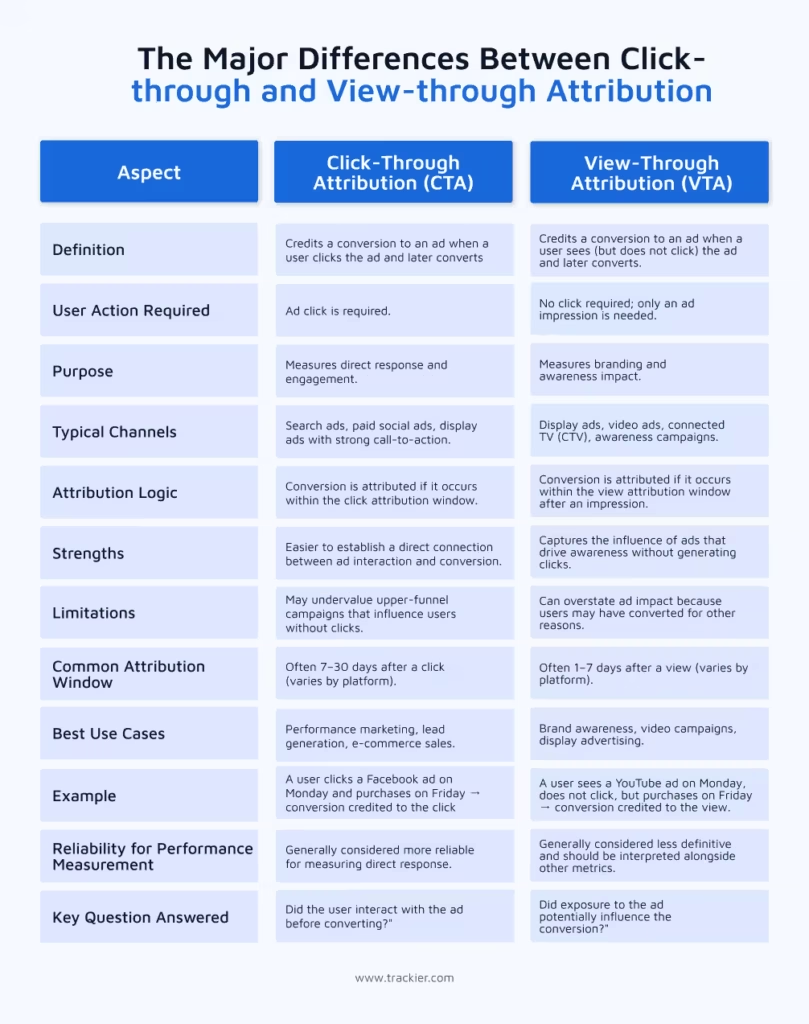
A simple scenario-based example can help us understand these two concepts better.
Suppose a user sees an ad ‘A’, but he doesn’t click. Yet he ends up converting 2 days later. In this instance, if view-through attribution is applicable, the impression will count as leading directly to the intended action.
CTV and display advertising heavily use view-through. While it is still applicable for brand visibility, awareness building and securing mindshare, the causation from view to the conversion cannot be made with certainty.
Deterministic vs Probabilistic Attribution
When exact identifiers are used to make a case for attribution, it is known as deterministic attribution. Usually this looks like:
- Login ID
- Device ID
- Hashed email
However, when exact knowledge is not available and you have to rely on statistical matching to arrive at a broad idea (i.e. audience persona or ICP configuration) of who this person might be, then the type of attribution is said to be probabilistic. Here, the identifies are usually:
- IP
- OS type
- Timestamp
- Behavioral signals
Let’s understand the complete list of differences that exist between probabilistic and deterministic types of attribution modelling.
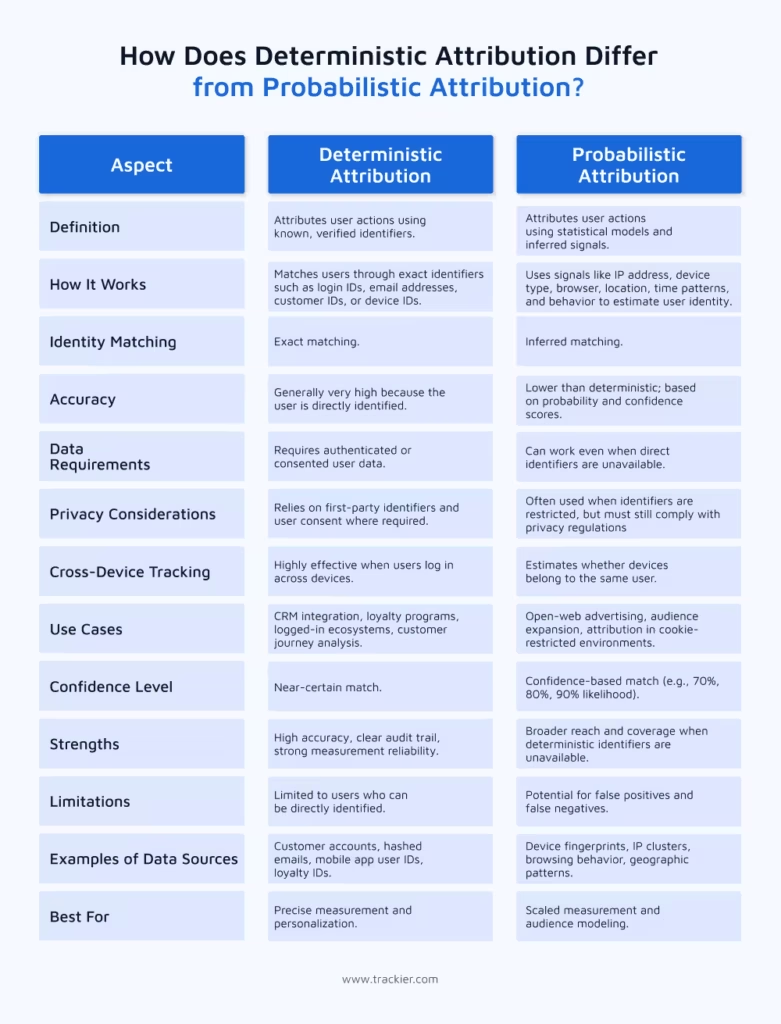
The key difference arises when we consider the real-world application or use case of these models. Probabilistic modelling sacrifices precision for scale and privacy. That’s also one of the major reasons why it is gaining popularity since the GDPR and CCPA came into effect.
While deterministic attribution has higher measurement accuracy, probabilistic models hide exact user matching and identification — which all businesses must adhere to when they operate within the ambit of the law.
Types of Attribution Models
Based on business needs, models are selected to credit conversions across the entire customer acquisition funnel. Let’s understand what these models are, which ones are typically in use within which industry, and why.
Single-Touch Attribution Models
A single-touch model assigns credit to a single touchpoint within the user journey as contributing directly to the conversion event. Within this model, there are further classifications to attribute value to a specific, identifiable singular interaction.
This click could have been the very first one in the user journey, or it could be the most recent one.
While single-touch attribution models enable for low-cost and straightforward attribution mapping, they also tend to ignore vital information and over-value certain actions more than others.
- First-Touch Attribution
The entire credit for converting a given customer is assigned to the very first interaction they had with the brand. This type of attribution is most effective to understand which channel or medium is most effective at bringing users to the funnel in the first place, through the means of building brand awareness and visibility.
Studying first-touch attribution is most beneficial when conducting an analysis on demand generation and initial post-launch brand building initiatives. However, overleveraging this model at a different stage means you miss out on all the nuance at the mid and lower-funnel stages.
- Last-Touch Attribution
Similarly, the last-touch attribution model seeks to give credit primarily to the last action before the conversion event. This model is a historically dominant model since it works on the recency effect — aligned closely with how human perception is generally shaped.
However, the last-touch attribution model suffers from an over-valuation of downstream actions or interactions, which may not always be the most influential.
- Last Non-Direct Click Attribution
This model is identical to the last-touch attribution model, except the direct traffic is discounted from getting any credit in achieving a conversion. The given model was the default attribution format used in older versions of Google Analytics and is helpful when you’re looking to avoid direct traffic from undervaluing marketing-driven interactions.
Multi-Touch Attribution Models
When we consider multi-touch attribution, as the name suggests, multiple touchpoints are credited with bringing any particular conversion together. Such measurement and analysis provides a more comprehensive picture of how desired customer actions come to be, and enables a better understanding of the end user.
Let’s examine the models which are typically measured through a range of touchpoints.
- Linear Attribution
Linear attribution gives equal credit to every touchpoint in the customer journey. It works well for long nurturing journeys where many interactions slowly build interest over time.
- Time Decay Attribution
Time decay attribution gives more credit to interactions that happen closer to the conversion. It is best for high consideration purchases where recent actions matter more than earlier ones.
- Position-Based Attribution
Position based attribution splits credit in a fixed way. Typically 40 percent goes to the first touch, 40 percent to the last touch and 20 percent is shared across the middle touchpoints. It balances awareness and conversion signals.
- W-Shaped Attribution
W-shaped attribution focuses on key milestones in B2B journeys. It gives strong credit to the first touch lead creation and opportunity creation while other touches receive less weight.
- Full-Path Attribution
Full path attribution tracks the entire journey including closed revenue. It connects marketing and sales impact from first interaction to final deal.
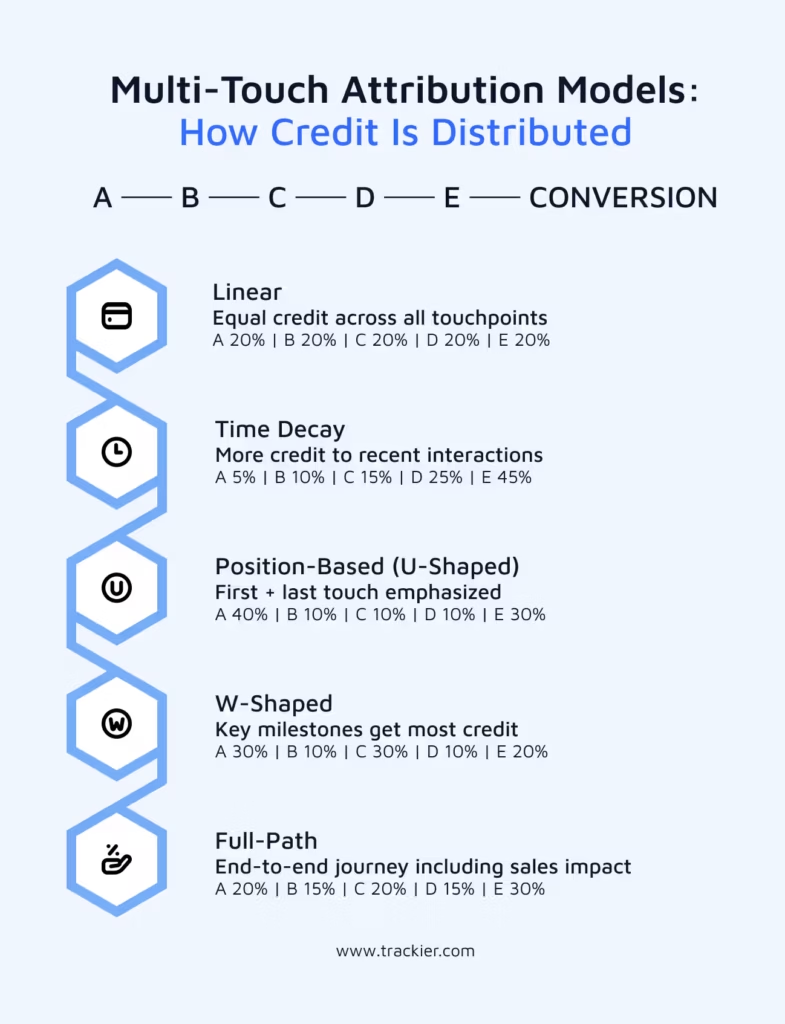
There are clear distinctions between web-based multi-touch attribution and mobile-based flows, which need to be kept in mind during analysis.
Data-Driven Attribution (DDA)
When machine learning is utilized to assign credit to various marketing collaterals or touchpoints based on how much they contributed to making the final conversion action actually happen is known as data-driven attribution.
This model uses real user behavior and inputs to align dynamic credit to actions, rather than relying on fixed rules.
It relies on a variety of inputs like:
- Conversion likelihood across different paths
- Interaction sequencing and the order of touchpoints
- Historical patterns from past user behavior
- Engagement data collected over time
Here’s how it works.
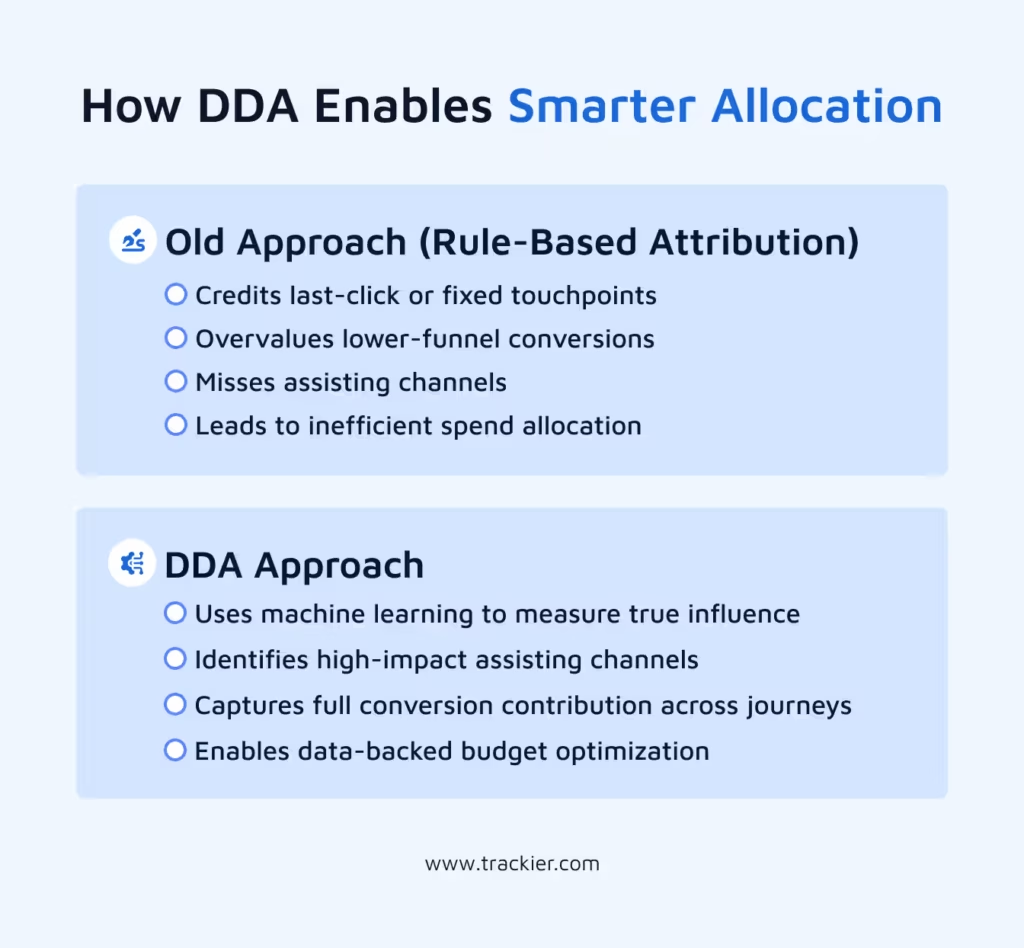
Google Analytics 4 now places a strong emphasis on DDA as its default attribution approach. While DDA generally improves attribution accuracy and provides deeper insights, it also introduces challenges. The model can function like a black box, making results harder to interpret and raising concerns about transparency.
AI-Powered Attribution Models
Artificial intelligence offers speed, agility, precision and a great level of predictive power where attribution is concerned. Modern AI-powered attribution models go beyond basic rule-based methods by analyzing large volumes of behavioral data to identify patterns, predict outcomes and assign more valid credit across all touchpoints.
- Let’s understand why this model offers value by exploring the key applications for it:
Attribution modeling across multiple channels - Predictive scoring to estimate conversion potential
- Customer path analysis to identify influential interactions
- Real-time optimization of marketing campaigns
- Predictive conversion weighting based on user behavior
- Anomaly detection to flag unusual performance changes
- Automated budget recommendations for improved ROI
In the present times, post cookie depreciation, attribution has become a challenge. In such a scenario, statistical modelling and machine learning provide valuable insights, compensating for instances of missing data.
More recently, LLMs have also become a valuable part of the decision making process within marketing and beyond. For example, Canva’s “2025 State of Marketing & AI Report” found that 94% of marketing leaders had AI budgets and 78% considered AI critical to long-term strategy.
One Customer Journey With Seven Different Outcomes
As we have understood up to this point, the outcome of attribution lies largely with the type of attribution which is being applied. The same journey can suggest varying outcomes (and lead to different insights) based on the model being used. As such, the selection of the attribution model has a direct impact on both, marketing decisions and budget planning.
Let’s consider an instance of a journey path and view how this theory directly applies.
Example Journey
- A customer clicks a Facebook ad and discovers the brand.
- They read a blog article on the company website.
- They sign up for an email newsletter.
- A few days later, they read an affiliate review recommending the product.
- They return directly to the website by typing the URL.
- They complete a purchase.
Credit Allocation Under Each Attribution Model
Although the journey remains identical, each step earns different value in every model. In fist-touch attribution, only the Facebook ad is valued while in last touch only the direct visit through search is. In linear, all of them will equally matter, which complicates the problem since more touchpoints lead to devaluation of credit itself.
No single model is universally correct. Instead, each highlights a different perspective on how marketing activities contribute to conversions.
Why Different Models Produce Different Results
Attribution becomes more complex when multiple marketing channels are involved because each channel offers different levels of visibility and measurement accuracy. Some channels can be viewed fully in metrics, such as email marketing where open rates, click-through rates and so on are visible.
Other channels rely more heavily on probabilistic or model-based attribution. Examples include connected TV, podcasts, influencer marketing, word-of-mouth referrals and certain privacy-restricted environments.
In such cases, statistical modelling and prediction tend to offer more effective results.
Attribution Across Different Marketing Channels
The true test of a model is its alignment with the modern marketing stack being used by the marketer to bring potential customers down the funnel. Each channel affects customers in a different way and provides varying levels of quantitative and qualitative measurement.
Let’s examine this difference channel-by-channel.
Paid Search Attribution
Through paid marketers can capture strong purchase intent, when it arises from buyers. However, this is not true all around. Branded search campaigns tend to receive excessive credit because they frequently appear near the end of the customer journey.
Social Media Attribution
The way social platforms are built, the currency of attribution is usually based on view-through windows and algorithmic discovery. While users may even follow, engage with, comment on or save marketing messages — both subtle and unsubtle — their eventual conversion or lack thereof cannot always be measured strictly.
Email Attribution
Email marketing is an effective channel through varying stages of the funnel journey, but its greatest impact is usually evident during lifecycle marketing and retention propagation. Additionally, the results of this activity are applicable only on owned audiences since mails can only be sent once the lead is generated.
Metrics like open rate, deliverability rate, unsubscribe rate, click-through rate and click rate offer highly quantitative understanding of the effect of marketing campaigns.
Affiliate Marketing Attribution
Affiliate programs are often affected by challenges like coupon hijacking, pixel expiration, broken links and fraudulent conversions — all instances where partners claim rewards for actions that did not bring in a true conversion.
A single campaign may not be enough to draw conclusions. However, incremental partner measurement can help advertisers in arriving at valuable results in terms of attribution.
Influencer Attribution
Tracking influencer impact can be difficult because users often convert days or weeks after exposure. Promo codes and custom links are commonly used to improve attribution accuracy.
Organic Search Attribution
Organic search helps in identifying existing user purchase intent through long-tail discovery and research-driven buying behavior. Customers may visit more than once, further cementing the value of the platform in supporting conversion behaviors.
In terms of measurement, the value of the channel is assigned in terms of sessions, time spent per session, engagement rate and so on.
Mobile App Attribution
The mobile attribution funnel relies on SDKs, device identifiers and privacy-focused frameworks such as SKAN for measurement. These tools bridge the gap between app installs and in-app actions directly to specific marketing campaigns.
OTT and CTV Attribution
Here, attribution tends to be the most vague and indirect. Over-the-top (OTT) and connected TV (CTV) campaigns often use household level attribution, rather than measuring for each individual viewer.
Techniques for measurement commonly include QR codes, matched audience data and probabilistic modelling to estimate conversion impact from marketing messages.
Mobile Attribution, Explained
Simply put, mobile attribution is the process of identifying which specific marketing activities led to given app installs, in-app events or user reengagement moments.
By measuring app-related events, marketers can discover how users discover, install and interact with mobile applications. By doing so, they can improve marketing campaigns to be more effective and optimize marketing spends.
Mobile attribution has become significantly more challenging in recent years due to growing privacy restrictions. Certain changes in the recent past, including:
- App Tracking Transparency (ATT),
- SKAdNetwork (SKAN), and,
- Limitations on tracking the Google Advertising ID (GAID)
Have reduced access to a large amount of user-level data which was previously available.
As a result, marketers are having to rely much more on probabilistic models and aggregated data, which has diluted mobile-led attribution to some extent.
Now, the most common mobile attribution identifiers include:
- IDFA (Identifier for Advertisers) on iOS devices
- GAID (Google Advertising ID) on Android devices
- Install referrer data from app stores
- Probabilistic signals such as device characteristics, timestamps and attribution modeling
Modern mobile attribution platforms combine these signals to measure campaign effectiveness while complying with privacy regulations. These signals matter — mobile apps account for the majority of smartphone usage time globally, making this a virtual data goldmine (if tapped) for advertisers.
How Mobile Attribution Works
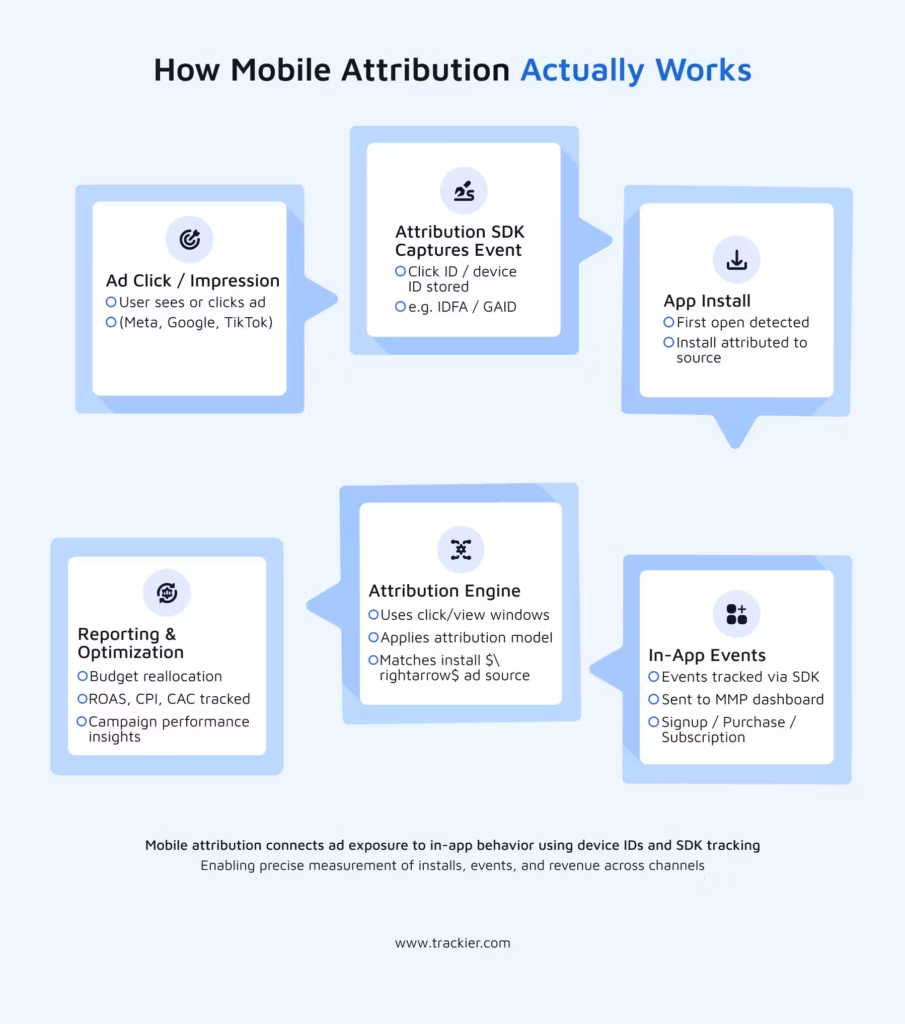
As discussed above, the basis of the attribution process through mobile is establishing the link between app-related user interactions and marketing campaigns. Through this measurement, marketers can learn which messaging, channels and ads affected users into action, driving user acquisition and installs.
But this is not an ecosystem built on singular 1-1 connections. Rather a few components come together to make this seamless and effective in practice.
- SDKs (Software Development Kits): SDKs are integrated into mobile apps to collect data on installs, user actions, purchases, and other in-app events. They enable accurate measurement of user behavior after installation.
- MMPs (Mobile Measurement Partners): MMPs act as independent attribution platforms that collect data from advertising networks and apps. They help marketers track campaign performance across multiple channels while providing a centralized view of attribution data.
- Attribution Matching: When a user clicks or views an ad and later installs an app, attribution systems compare available identifiers and signals to determine which marketing touchpoint should receive credit for the install or conversion.
- Postbacks: Postbacks are automated data transfers sent from apps or attribution platforms to advertising networks. They communicate conversion events, installs or in-app actions while supporting privacy-compliant measurement.
Together, SDKs, MMPs, validation systems and postbacks enable marketers to see exactly what moves the needle for intended app users, and what doesn’t.
Here’s a visual representation of this process.
Affiliate Attribution, Explained
When we try to associate a particular publisher or affiliate’s contribution in achieving a conversion, affiliate attribution is at play. The credit for a sale, impression or any other intended action is critical in affiliate marketing since it leads directly to a commission or a payout for the partner marketer.
The tracking methods used help advertisers in correctly linking marketing efforts of affiliates to certain visible outcomes (based on whatever is the goal for the given campaign or affiliate program).
Common tracking methods include affiliate links, browser cookies, postbacks and conversion matching systems that verify the relationship between a click and a completed action.
How Affiliate Attribution Works
When a user clicks an affiliate link, a unique click ID is generated and stored. Attribution rules determine how long the affiliate remains eligible for credit and which partner receives recognition if multiple interactions occur. Conversion tracking then matches completed purchases or leads to the recorded click.
Once the conversion is verified, the affiliate platform calculates payouts based on predefined commission structures.
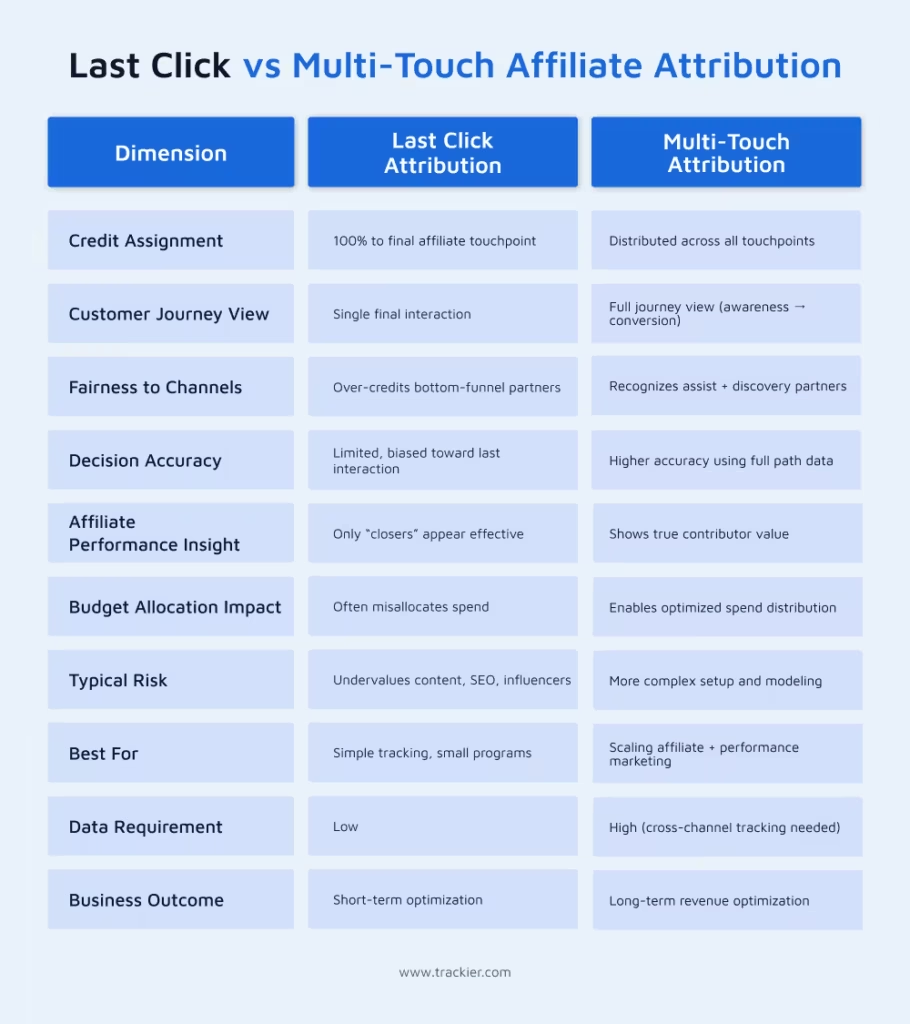
Last Click vs Multi-Touch Affiliate Attribution
Historically, the affiliate attribution model in use has largely been last-click attribution because it is simple to implement and easy to understand. However, many enterprises are adopting multi-touch attribution models that recognize the contribution of multiple partners throughout the customer journey.
Coupon Attribution Challenges
Affiliate programs often face issues such as coupon poaching, brand bidding and conversion interception. These practices can result in affiliates receiving credit for conversions they did not meaningfully influence.
Fraud Prevention in Affiliate Attribution
Affiliate fraud remains a major concern and costs businesses billions of dollars annually. Common threats include click injection, fake installs, cookie stuffing and bot traffic.
Strong monitoring systems, fraud detection tools (such as those offered by Trackier) and regular affiliate audits help protect attribution accuracy and maintain program integrity.
Attribution in a Privacy-First World
Since privacy regulations like the GDPR and CCPA were implemented, the manner in which attribution worked changed fundamentally. Due to the limitations on identification of users and data storage norms, businesses could no longer map user actions as accurately as before.
As a result, there has been an increasing reliance on server-based tracking. Further, brands and businesses must work urgently on identifying and collecting first-party data through owned media.
The Death of Third-Party Cookies
The browser-enabled cookie-based tracking is now a thing of the past. The decline of third-party cookies has accelerated the shift toward first-party data strategies. It has also renewed interest in contextual targeting, where ads are matched to content rather than individual users.
iOS Privacy Changes and ATT
Apple’s App Tracking Transparency (ATT) framework requires users to opt in to tracking. This change led to a significant decline in IDFA availability and increased adoption of SKAdNetwork (SKAN) for attribution. Studies across the MMP industry show that ATT opt-ins remain very limited across markets, offering little insight.
GDPR and Attribution
GDPR requires organizations to obtain appropriate consent, collect data lawfully and follow defined data retention policies. This law affects not only businesses, but also software that enables performing marketing, such as Trackier (which is wholly GDPR-compliant).
Server-Side Tracking
Server-side tracking improves signal durability, reduces dependence on browser-based tracking and offers greater resilience in privacy-focused environments. It is one of the tracking formats offered through Trackier, which ensures campaign outcomes are measured, collected and reported in real-time on the platform dashboard for marketers to analyse and optimize immediately.
First-Party Data Strategies
Many organizations are investing in CRM enrichment, login ecosystems and consent capture processes to strengthen attribution accuracy while maintaining regulatory compliance.
Attribution vs Marketing Mix Modeling (MMM)
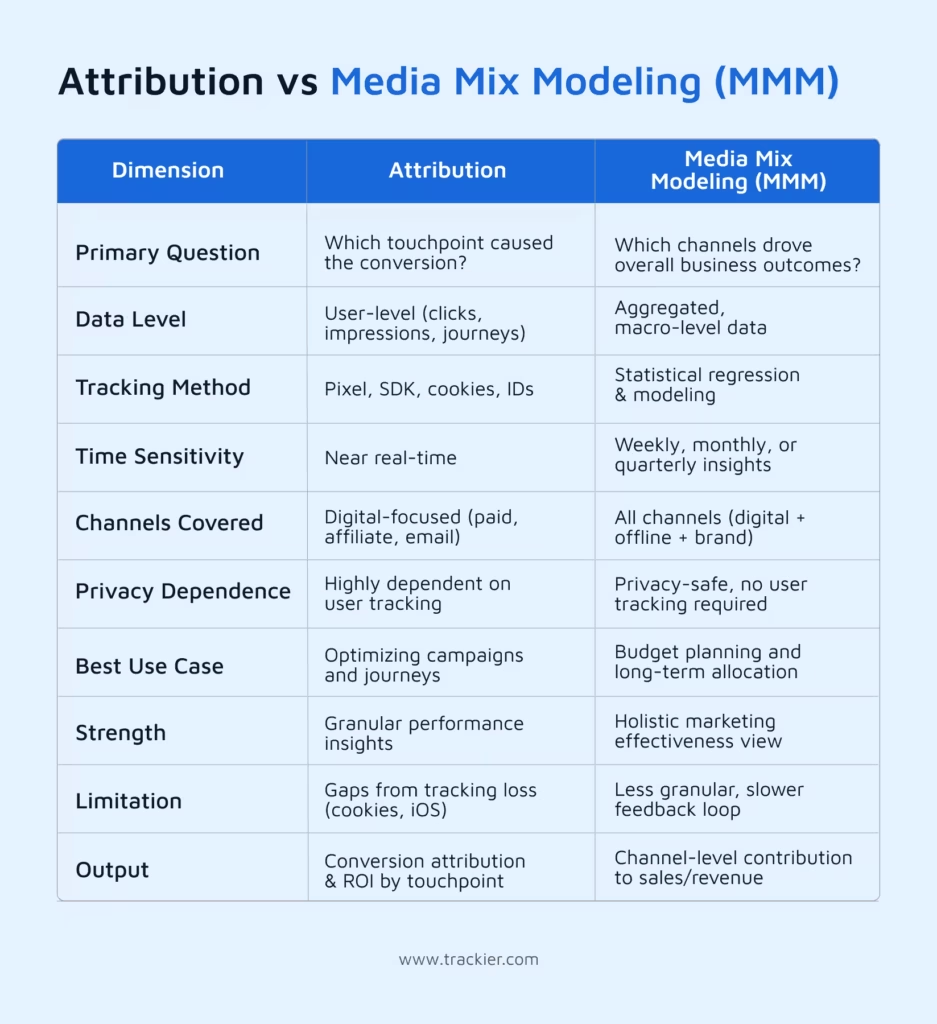
Attribution and Marketing Mix Modeling (MMM) (also occasionally referred to as media mix modelling) are two important approaches for measuring marketing performance. While both help marketers understand what drives results, they operate at different levels.
Attribution focuses on individual user interactions while MMM tries to work out the overall impact of marketing activities with the help of statistical analysis.
Both matter in their own ways. As privacy regulations and tracking limitations continue to grow, marketing mix modelling is experiencing a resurgence because it does not rely heavily on user-level identifiers.
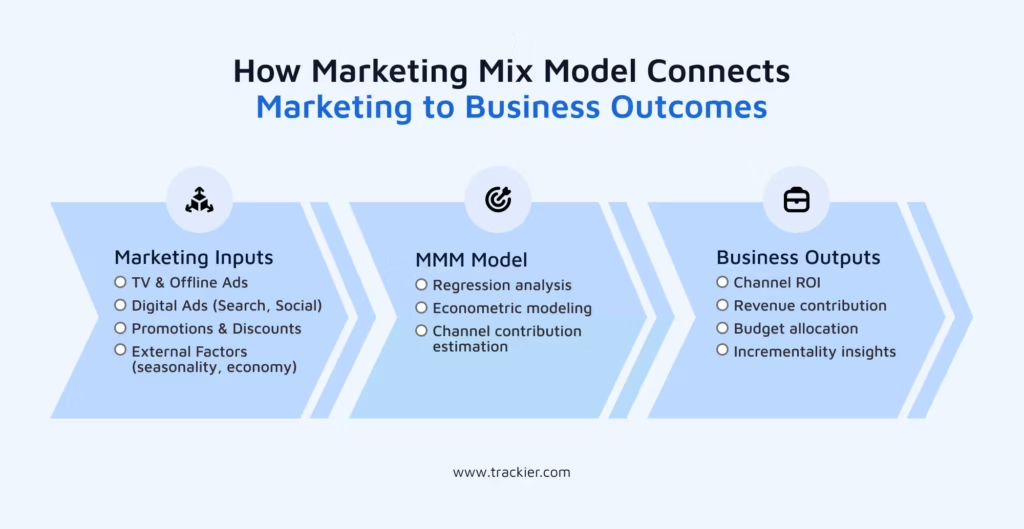
What is Marketing Mix Modeling?
Marketing mix modeling (MMM) is a statistical technique that measures how different marketing activities contribute to business outcomes. Its key characteristics can be noted as:
- Regression modeling to identify channel impact
- Media contribution analysis across campaigns
- Macro-level forecasting for future performance
- Evaluation of both online and offline channels
- Long-term measurement of marketing effectiveness
MMM helps organizations understand how marketing investments influence sales, revenue and other business objectives.
Attribution vs Media Mix Modeling
Here’s a list of the core differences between the two frameworks.
When to Use Attribution
Attribution is most effective when marketers need detailed performance insights. It offers most promising results in applications such as:
- Tactical campaign optimization
- Channel performance analysis
- Conversion path reporting
- Budget allocation within digital campaigns
- Identifying high-performing touchpoints
When to Use Media Mix Modeling
The marketing mix model is better suited for strategic decision-making and broader business planning. The most common instances where it offers better results than attribution include:
- Annual and quarterly budget planning
- Measuring TV and offline media impact
- Executive forecasting and reporting
- Evaluating long-term marketing effectiveness
- Understanding cross-channel contribution
Why Leading Brands Use Both
A hybrid measurement strategy offers several advantages:
- Attribution provides granular user-level insights
- MMM delivers a broader view of channel performance
- Incrementality testing validates whether marketing activities drive true business impact
- Combined measurement reduces reliance on any single methodology
A more reliable and comprehensive framework is one where both are used for their individual benefits, as per the needs of the business.
Attribution vs Incrementality Testing
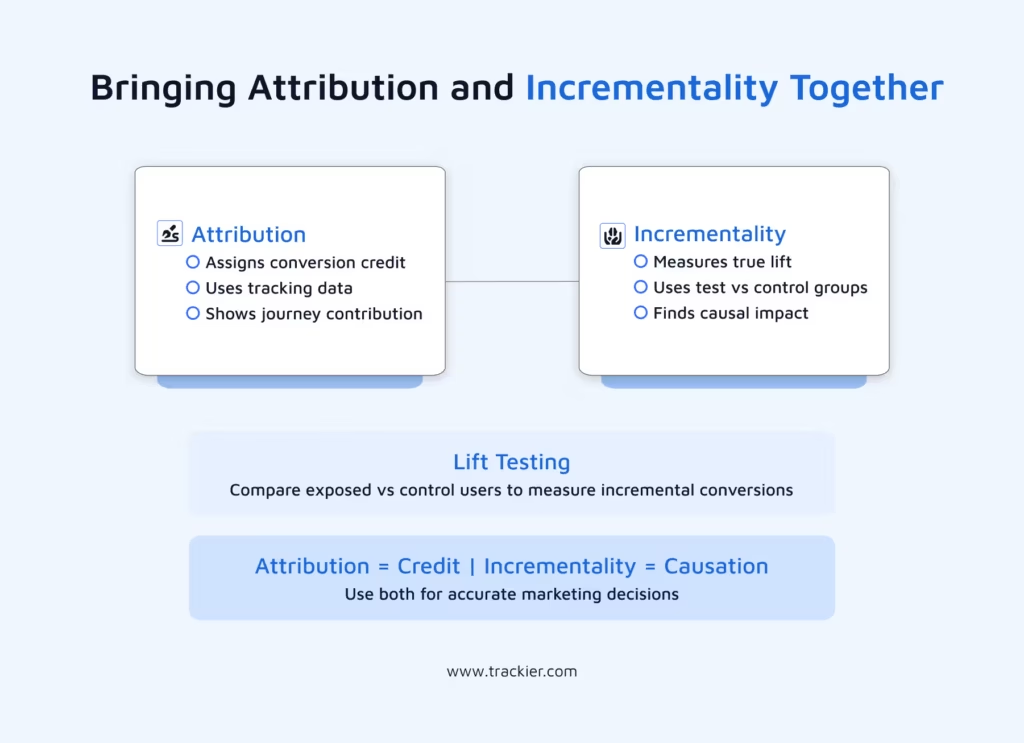
Usually in colloquial parlance, both of these terms are used interchangeably but they are different in function. Attribution measures credit assigned to specific marketing touchpoints from the user’s perspective, while incrementality gets to the root of whether a marketing action actually caused the specific conversion to happen.
Attribution simply measures value for the purpose of serving the credit. Just because a channel appears in the conversion path does not mean it created additional demand. Incrementality checks specifically for value in terms of achieving the conversion.
What Incrementality Measures
Incrementality testing measures the true lift generated by a marketing campaign. Instead of assigning credit across touchpoints, it evaluates whether marketing exposure produced conversions that would not have occurred otherwise.
The key benefits of using this method include:
- Identifying true business impact
- Measuring additional conversions generated by campaigns
- Separating correlation from causation
- Improving budget allocation decisions
Why Attribution Is Not Causation
Depending on the attribution model in use, the value of a channel, medium or marketing message tends to get overstated. Let’s consider this through two unique instances:
- Retargeting campaigns: Users may have already intended to purchase before seeing the retargeting ad.
- Branded search campaigns: Customers who already know the brand may convert regardless of the branded search click.
This is a channel when using attribution alone to structure your entire analysis, and actions beyond that.
Lift Testing, Explained
Incrementality also needs to be measured. For this purpose, lift testing is used. It essentially arrives at a conclusion by measuring two groups with each other and finding out how the differences carried both towards the conversion event.
Popular ways of implementing lift testing include:
- Holdout groups: A portion of the audience does not see the campaign and serves as a control group.
- Geo testing: Marketing activity is shown in selected regions while similar regions remain unexposed (as a result of geotargeting).
- Exposed vs unexposed audiences: Conversion rates are compared between users who saw the campaign and those who did not.
Using Attribution and Incrementality Together
True evaluation of marketing results must include both attribution-based measuring and incrementality to ensure weighted value can be assigned most accurately to all efforts involved. This complete view of performance comes with several benefits for brands, businesses and advertisers:
- Attribution reveals which touchpoints influence conversions.
- Incrementality validates whether those touchpoints create real business impact.
- Attribution supports day-to-day campaign optimization.
- Incrementality improves strategic budget allocation.
- Together, they provide a more accurate measurement framework.
Common Attribution Challenges
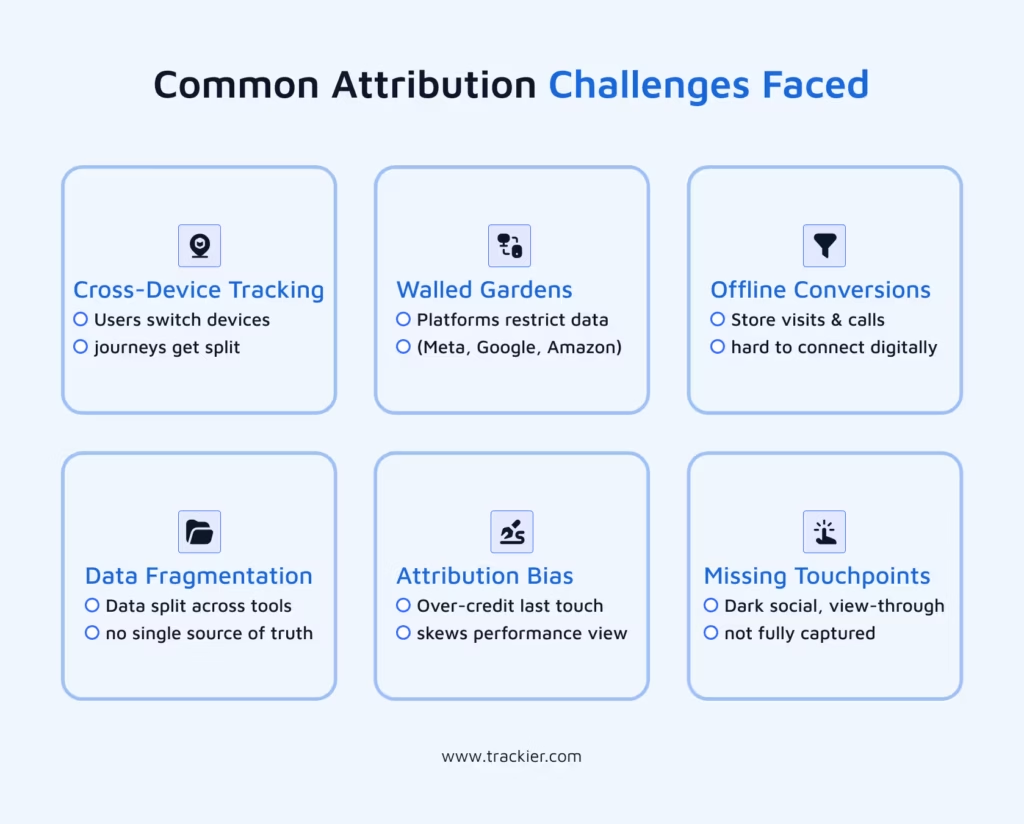
As is the case with all measurement models used across industries and use cases, attribution is also faced with challenges which can make measurement difficult or faulty. Modern customer journeys span across diverse touchpoints, devices and channels which can sometimes be hard to measure when also riddled with recent privacy rules.
Let’s understand what the major hurdles here are.
Cross-Device Tracking
Users frequently switch between smartphones, tablets and desktop devices which can make a single user journey appear fragmented, making it tough to link together and measure definitively.
Walled Gardens
Platforms used for marketing such as Meta, Google and Amazon provide limited access to certain user-level data, creating attribution blind spots across channels.
Offline Conversion Attribution
Many conversions happen offline through store visits, phone calls or in-person sales. Linking these actions to digital campaigns remains a significant challenge.
Data Fragmentation
Customer data is often spread across analytics platforms, CRMs, ad networks and sales systems. Disconnected systems can result in incomplete attribution reporting.
Attribution Bias
Some advertising platforms use self-attribution methods that may overstate their contribution to conversions, making performance comparisons difficult.
Missing Touchpoints
Not every interaction can be tracked. Dark social channels such as private messages, email forwards and messaging apps often influence conversions without appearing in attribution reports.
For example, a user may receive a product recommendation through a private chat and later purchase directly, leaving the original touchpoint unrecorded.
How to Choose the Right Attribution Model
There is no universal model that works for every organization. The most effective approach is selecting a framework that aligns with how customers discover, evaluate and purchase your products or services.
For Startups
Startups often have limited data and smaller marketing teams. Simple attribution models, such as first-touch or last-touch attribution, can provide clear insights without adding unnecessary complexity. As data volume grows, more advanced models can be introduced.
At launch stage and for some time beyond, brands primarily build revenue through paid marketing, where clear attribution signals are visible on the platform or ad planner in use. Usually affiliate marketing for small businesses also operates on similar principles.
For E-commerce Brands
Deloitte’s Marketing Trends of 2026 Report highlights that 60% of “consumers say social content, recommendations, or communities influence how they discover new brands, with search increasingly used for subsequent validation.”
If you’re planning on measuring marketing effectiveness through straightforward ecommerce buyer funnels, you’re in for a surprise. A lot of these factors cannot be weighed. Communities can be silent influencers. Recommendations can be set off through word-of-mouth marketing. So how can you determine what’s working?
Due to this, when businesses want to understand if their ecommerce marketing is working, they must implement attribution modelling with incrementality testing to identify the exact touchpoints of value.
For SaaS Companies
Within SaaS a lot of the customer journey happens before the buyer ever gets in touch with the business. As per research by 6Sense, this can be as high as 70%. So you’re only able to clearly attribute for 30% of the funnel, if you’re using traditional journey-based attribution formats within B2B.
To counter the extremely long sales cycles, attribution itself will need to be multivariate and comprehensive to check and account for every dollar of marketing spends. Additionally, the model being used will need a lot of self reporting since conversions happen though sales calls, outbound emails, and other touchpoints which are conducted 1-1.
For Affiliate Networks
Affiliate programs benefit from partner-level transparency. Attribution systems should clearly define credit allocation rules and provide visibility into how individual partners contribute to conversions.
For Mobile Apps
Mobile app marketers often rely on MMP-driven attribution to measure installs, in-app events and re-engagement campaigns. These platforms help navigate privacy restrictions while maintaining attribution accuracy. Working alongside a dedicated android mobile app agency ensures these SDK tracking events and privacy frameworks are implemented correctly from day one.
If your business is visible through desktop and mobile app, you can simply make use of an API-based integration between the MMP and your web attribution tool. Trackier enables this type of dual tracking with two-way API so all the collated data can be analysed on a single platform, in one place.
For Enterprises
Large organizations typically require hybrid measurement systems. Combining attribution, Marketing Mix Modeling (MMM) and incrementality testing provides a broader view of performance across digital and offline channels. This approach helps balance tactical optimization with long-term strategic decision-making.
Attribution Tools and Software
What to Look for in Attribution Software
Selecting the right attribution software is critical for accurate marketing measurement. Modern customer journeys span multiple devices and channels, so marketing attribution platforms must provide a unified view of performance across the entire conversion path.
When evaluating attribution software, look for:
- Real-Time Attribution
Real-time attribution allows marketers to track conversions and campaign performance as they happen. Faster access to data enables quicker optimization decisions, more efficient budget allocation and improved responsiveness to changing market conditions.
- Fraud Detection
Affiliate software should include fraud detection mechanisms that identify suspicious activity such as click spam, click injection, fake installs, bot traffic and conversion manipulation. Effective fraud prevention protects marketing budgets and improves reporting accuracy.
- Cross-Channel Measurement
Customers rarely convert after a single interaction. Cross-channel measurement helps businesses understand how paid search, social media, email, affiliates, mobile apps and other channels work together throughout the customer journey. This provides a more complete picture of marketing effectiveness.
These features help businesses improve data quality, reduce reporting gaps and make more informed marketing decisions.
Why Businesses Use Attribution Platforms Like Trackier
Modern marketing ecosystems generate data from multiple sources, making attribution increasingly complex. Businesses use attribution platforms such as Trackier to centralize measurement and improve visibility across channels.
These platforms help organizations manage:
- Cross-channel visibility across campaigns
- Mobile attribution and app measurement
- Affiliate tracking and partner management
- Automated attribution workflows
- Fraud prevention and traffic validation
- Conversion tracking and reporting
By bringing data into a single system, unified attribution platforms reduce data silos and improve optimization efforts. Marketers gain a clearer understanding of channel performance, customer journeys and campaign effectiveness, enabling more confident decision-making and stronger return on investment.
FAQs
What is data-driven attribution?
A marketing attribution model which seeks to use machine learning approaches to assign credit for a given conversion across all touchpoints is known as data-driven attribution. This helps in discovering which journeys work best for effecting conversions, such as two ad sets in a row, or an ad set followed by a long-tail search query.
What is attribution in GA4?
Within the Google Search ecosystem, GA4 assigns credit to sources based on a combination of multiple attribution models. There are preset conversion paths available through the existing reporting, but they can also be custom built by users. Everything from what counts as a conversion or key action can be set so that attribution recorded is valuable for the given business model.
What is affiliate attribution?
The act of assigning conversion credit to publishers or partner marketers for their efforts in enabling a sale or any other desired action in the course of affiliate marketing, influencer promotions or performance marketing is known as affiliate attribution. Advertisers and networks can use any model of attribution for the purpose of this measurement. However, most usually choose to go with first-touch or last-touch attribution to simply it.
How does attribution work without cookies?
Cookieless attribution relies on probabilistic attribution to analyse the outcome of marketing efforts. This can be matched with server-to-serve or postback enabled tracking as is made possible through partner marketing tools like Trackier.