Mobile attribution was built on identifiers like Google Advertising ID (GAID) and Apple’s Identifier for Advertisers (IDFA) which allowed advertisers to:
- Track user journeys,
- Measure app installs, and,
- Optimize campaigns with precision.
However, the entire ecosystem changed overnight when Apple introduced App Tracking Transparency (ATT), restricting cross-app tracking without explicit consent from users. This privacy-first measure also became a part of Google’s ad ecosystem, with the Privacy Sandbox. For Android-led advertising, this was an attempt to balance user privacy with measurement for advertisers.
However, 2025 proved to be a decisive year in this journey. By then, several key initiatives within the Privacy Sandbox were depreciated. The mobile advertising ecosystem found itself scrambling — more fragmented and harder to track than ever before.
Now, advertisers rely heavily on various sources to data, such as:
- first-party data
- probabilistic attribution
- contextual targeting
- install referrer signals
- server-side tracking
- modeled conversions
To arrive at reliable, measurable and actionable data on their mobile-led campaigns.
What is GAID?
From advertisers’ perspective, there was a problem: even in a privacy-first advertising environment, there is a need to identify users so their attributes can enable audience profiling and segmentation, and they can be shown ads which are relevant for their profile.
But consent seeking meant users could reject tracking outright. Or, they may restrict what information was collected.
Google advertising ID was the happy middleground. GAID is a unique, resettable advertising identifier for Android devices. In this case, when tracking is implemented, the user is not ‘John Smith’ or ‘Harish Prasad’, but rather a set of character strings with certain given attributes (which enable both, segmentation and targeting).
A GAID has 3 major attributes that support its privacy-first inclination:
- It is assigned to users through Google Play Services.
- It can be reset by any given user.
- It can be disabled or deleted by the user.
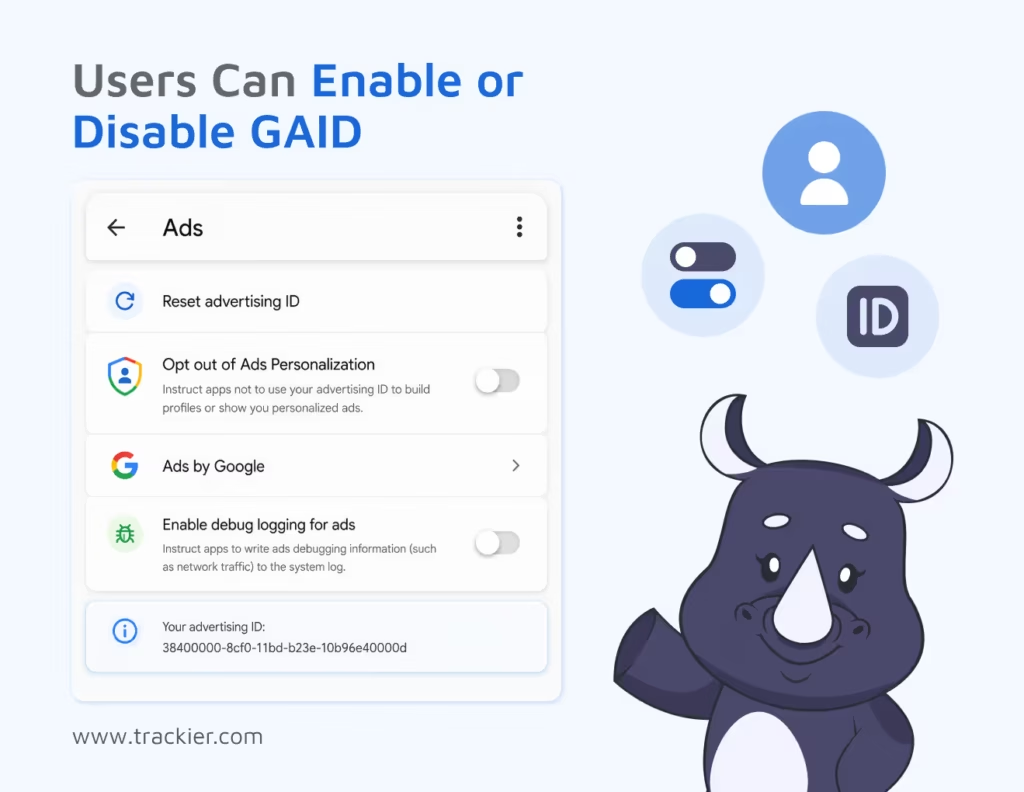
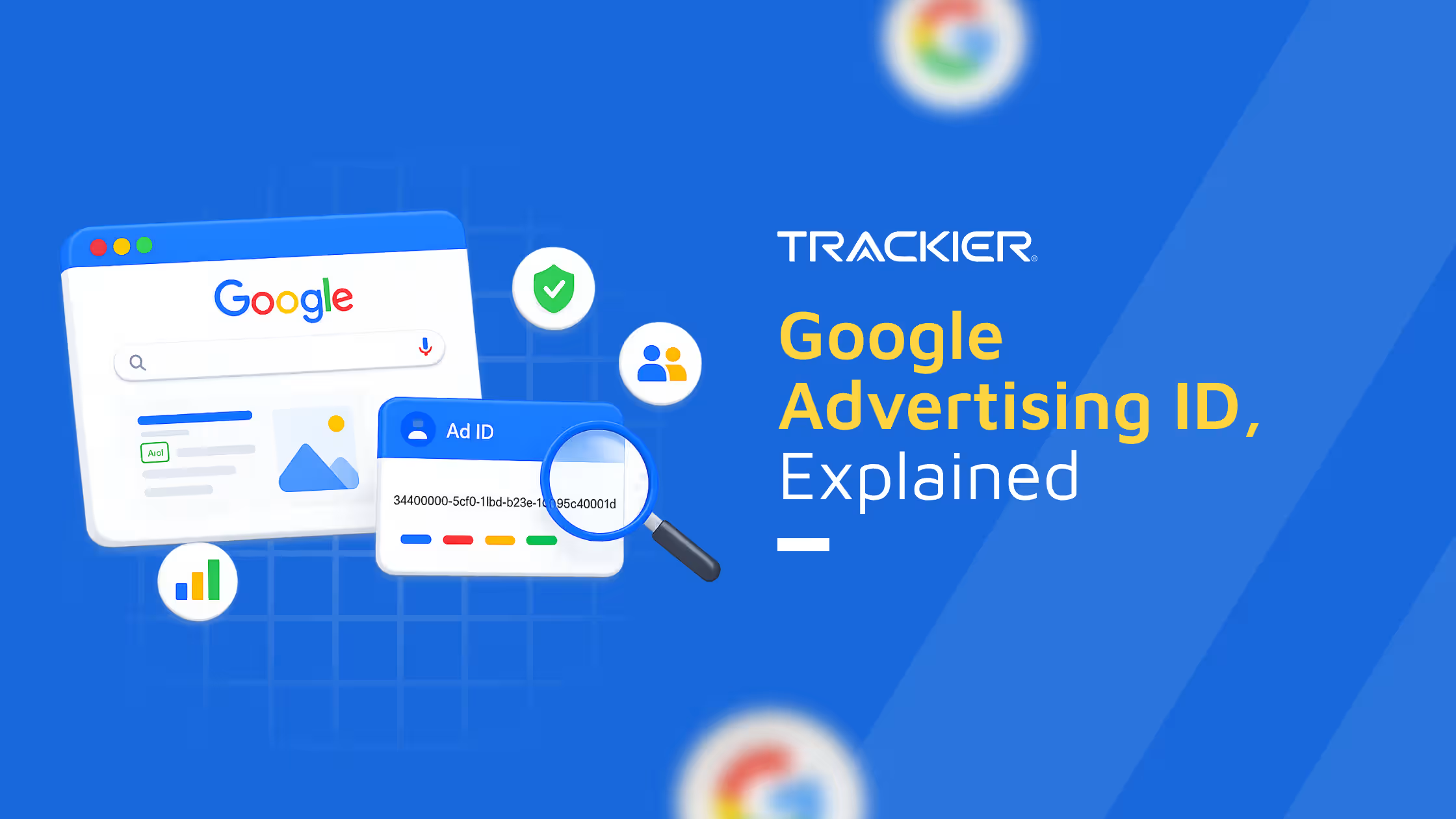
Example of a GAID
The characteristics of this identifier are as follows:
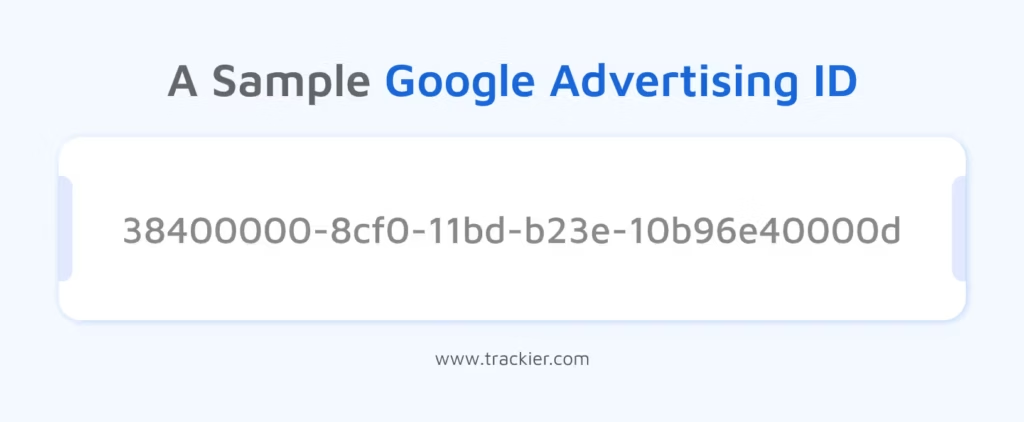
- It consists of 32 hexadecimal digits with 4 hyphens.
- The characters within the ID consist of numbers between 0 and 9, and lowercase alphabets between ‘a’ and ‘f’.
- If a user chooses out of this ad tracking mechanism on Android 12 and higher, the ID will get reset to show all zeroes.
Here’s an example of GAID:
Unlike hardware-based identifiers for mobile devices such as IMEI numbers, Android device IDs or even product serial numbers, GAID is built specifically for advertising effectiveness and attribution-linked use cases.
This advertising ID doesn’t permanently tie activity to a given device. Instead, it offers users the flexibility to add, delete or reset it on their device at any time.
The reason why Google Advertising ID became the foundation of Android attribution within the mobile advertising ecosystem was simply because it enabled advertisers to understand how users interacted with ads and apps across campaigns. It enabled:
- Retargeting
- Frequency capping
- Audience segmentation
- Fraud detection, and,
- Personalised ad experiences.
Presently GAID exists within the larger mobile attribution world, but its role has evolved significantly in response to requirements for privacy-first attribution and platform-level restrictions.
How GAID Works in Android Advertising
When a user clicked on a mobile ad, the advertising ecosystem would pass the device’s Google advertising ID through various adtech performance marketing platforms involved in the given campaign.
This complete process usually involved some of the following players:
- Demand-side platforms
- Ad networks
- Mobile measurement partners (MMPs) like Apptrove or Appsflyer
The GAID becomes the core identifier or stand-in for the user as the activity is tracked across steps. If beyond the click, the app actually gets installed, the MMP can match the earlier recorded ad click with the install using this unique identifier.
This complete process, known as deterministic attribution enabled precise campaign reporting and accurate medium or source attribution tracking.
There are several reasons why the Google advertising ID was valued by advertisers across industries, who needed to run mobile-based campaigns:
- ROAS measurement
- Granular audience targeting
- Retargeting efficiency
- Fraud detection across performance campaigns
There are industry-wise use cases too.
- In e-commerce, brands used it for personalized retargeting campaigns across apps.
- Gaming apps used it to optimize user acquisition campaigns.
- Fintech companies relied on it to track onboarding conversions.
However, there were privacy concerns when it came to the user. Behavioral profiling and cross-device tracking were both made possible. With the GDPR and CCPA (as well as other similar local level laws), this could no longer be done without explicit knowledge and consent from customers.
GAID vs Apple’s IDFA
The Google Advertising ID and Apple’s Identifier for Advertisers are both unique, anonymous device-based identifiers, used by performance marketers to track the activity of users, and attribute conversions correctly.
Where they differ is largely in the privacy fundamentals covered, and the manner of their implementation. Here’s the gist of differences, based on factors like attribution model, platform type and retargeting impact.
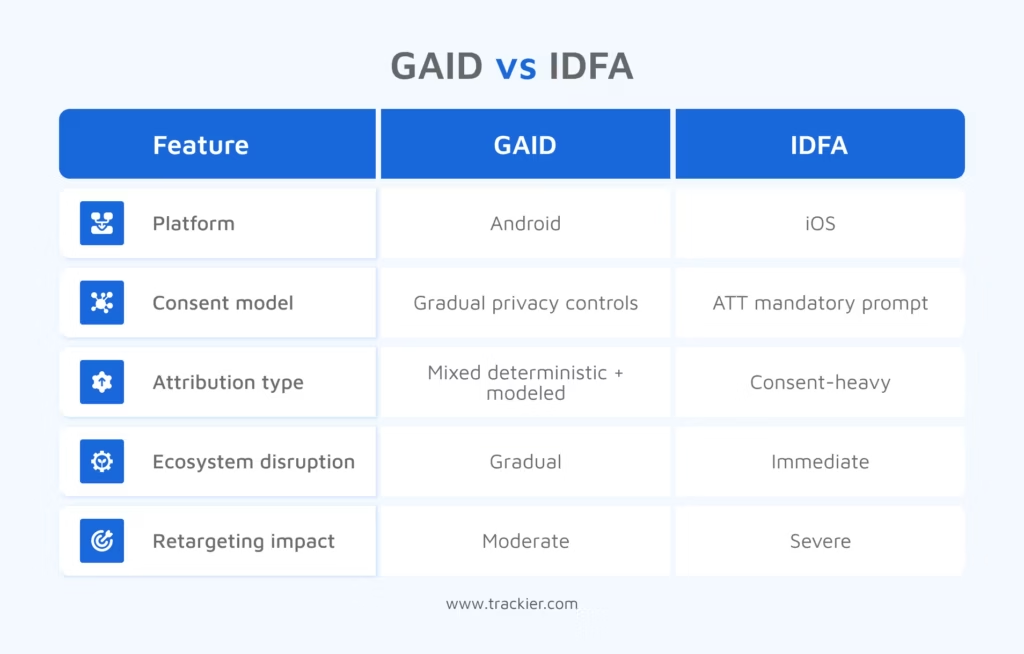
Apple endorses an opt-in model, with immediate ATT enforcement. Since this experience may be viewed as intrusive, most users choose to opt-out.
In contrast, GAID is opt-out, where assigning of the ID is default and users have to manually opt-out through the system settings.
What Happened to the Android Privacy Sandbox?
As an alternative to relying strictly on cross-app identifiers like GAID, Google proposed a set of privacy-preserving APIs that could support advertising and attribution without infringing directly on users’ privacy.
Here’s how the APIs were structured:
- Attribution reporting API – Allowed for measurement of app installs and conversions using aggregated, not direct tracking
- Topics API – Supported interested-based tracking through broad interest categories across devices, instead of detailed app or browsing history.
- Protected audience API (previously, FLEDGE) – Enabled retargeting without exposing user identities.
However, there were challenges at various levels which resulted in fragmented adoption, such as:
- Implementation complexity,
- Advertiser uncertainty,
- Interoperability concerns,
- Anti-trust scrutiny, and,
- Skepticism about Google controlling future ad standards.
This led to Google depreciating the entire Privacy Sandbox along with the APIs in October 2025. Taking a lesson from this initiative, the industry shifted from a single measurement of attribution to a diversified set of strategies created around first-party data, server-side postback tracking, install referrer signals and modeled attribution.
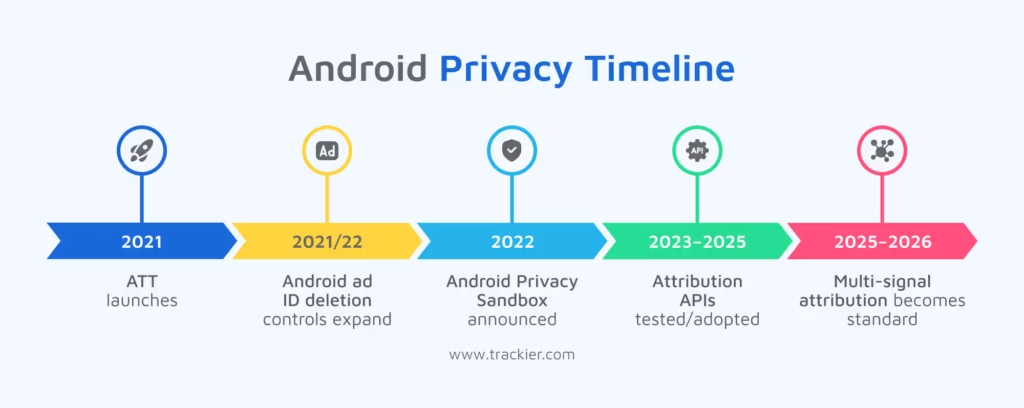
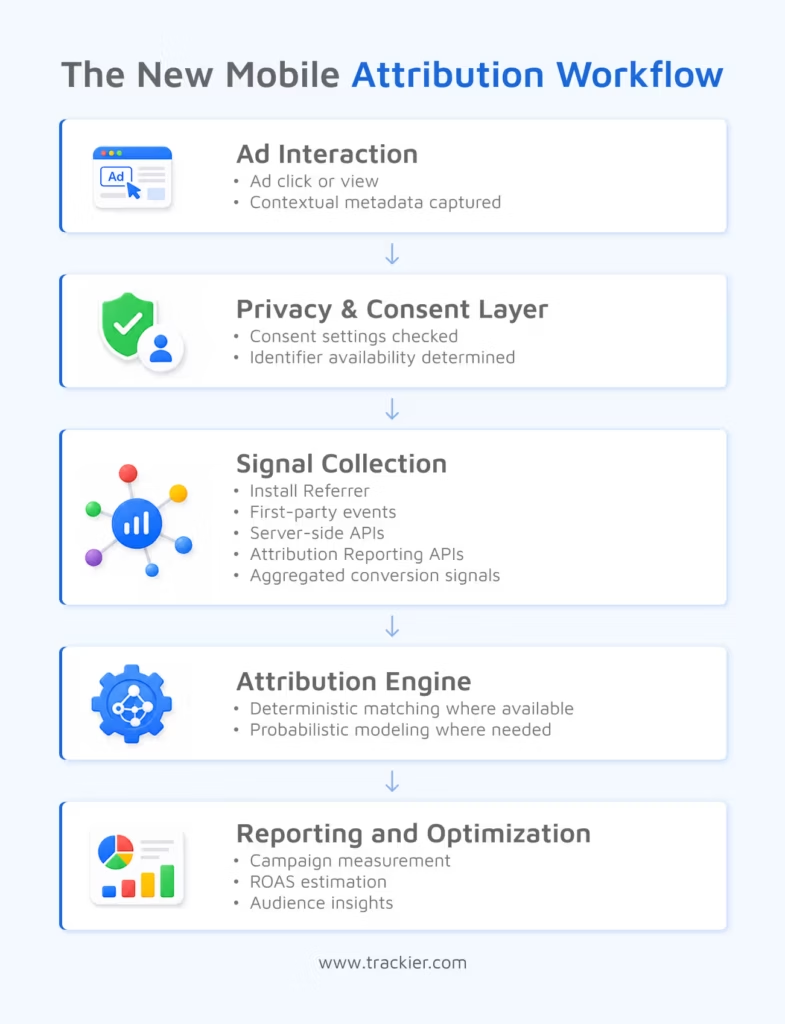
How Mobile Attribution Works Without GAID
As access to GAID became more restricted, mobile attribution evolved from a device-ID-driven model into a multi-signal measurement ecosystem.
Modern attribution is less deterministic than before, but that is also due to increased privacy requirements. Today’s measurement frameworks are designed to balance user privacy with actionable marketing insights, allowing advertisers to optimize campaigns without depending entirely on persistent device identifiers.
Attribution Reporting APIs
The attribution reporting APIs provide aggregated reporting and privacy-safe event-level reports. What this means is that advertisers can distill insights through campaign measurement data and analysis, but with limitations like delayed reporting windows, privacy thresholds and reduced data granularity.
Install Referrer
The Google Play install referrer API allows advertisers and attribution providers to understand which campaign or ad click led to an app install, rather than relying on GAID. As a result, click-to-install attribution is enabled while remaining privacy-first.
The install referrer API has not been depreciated yet, and remains key to attribution even today. For many advertisers using platforms like Trackier, install referrer data continues to support campaign optimization, fraud prevention and performance measurement across-app acquisition campaigns.
Probabilistic Attribution
A probabilistic attribution model aims to estimate campaign influence on conversions through non-persistent signals such as IP address, time stamps, behavioural similarities, operating system and so on.
Rather than matching exactly, this system works on calculating statistical likelihood of a certain ad interaction driving a conversion event (like an app install).
A drawback of using this method is the fact that it isn’t strictly accurate. However, due to device-level restrictions, this format enables modelling which isn’t otherwise possible.
Server-Side Tracking
A facet of cookieless mobile attribution, server-side tracking is a result of growing browser restrictions, ad blockers, operating system privacy controls and SDK limitations.
Instead of managing data collection on the user’s device, backend infrastructure (or the server) is employed in event processing. Such an approach leads to data durability, reduction in signal loss and more resilient multi-platform attribution.
For advertisers, server-side tracking also enables better control over first-party data pipelines, conversion events and campaign analytics.
Why First-Party Data Matters More Than Ever
First-party data refers to information collected directly from users through owned platforms and consented interactions. This usually includes attributes such as app engagement behavior, purchase history and marketing communication interactions.
The reason why first party data grew in popularity and priority is due to the depreciation of third-party identifiers. Focusing on directly collected information is beneficial because:
- It comes with in-built consent.
- Reduces dependence on external sources of information.
- Improves CRM activities to extend lifetime value of existing customers.
Industries like B2B ecommerce, fintech apps, subscription apps and SaaS increasingly rely on first-party ecosystems to improve customer relationships. As a result, performance marketing through the means of retention marketing, CRM-driven engagement and lifecycle automations can be enabled.
How Advertisers Can Strengthen First-party Data
Here are some practical ways in which advertisers and business owners can secure insights directly through data collected by them on owned channels:
- Encouraging account creation on the website or app with incentives like coupons.
- Improving email and SMS capture strategies across interactions.
- Investing in customer data platforms (CDPs).
- Building transparent consent management systems.
- Prioritizing long-term customer relationships over short-term tracking dependence.
How Advertisers Should Prepare for the Future
As discussed across this article, GAID for users on Android 12 or later is practically a relic of the past. With increased concerns around user safety and privacy, it is possible that advertisers may need to strengthen first-party data collection strategies to know which actions are driving customers towards the bottom of the funnel.
Some of the key ways in which they can be prepared for what’s to come are:
- Reducing dependence on single identifiers like GAID or IDFA.
- Investing in server-side tracking and consent-first measurement infrastructure.
- Diversifying attribution strategies using install referrer data, modeled reporting and privacy-safe measurement APIs.
- Focusing more on incrementality and campaign impact rather than perfect user-level tracking. Such broad generalizations also enable marketers to keep moving the needle.
Affiliate marketers, ad networks, app marketers and publishers will need to prioritize resilient measurement models to keep adapting to changing platform rules and evolving global regulations.
FAQs
What is GAID in Android?
The Google advertising ID or GAID is a 32 character tracking ID for Android device users. Rather than collecting specific drilled-down data on a particular person, this anonymous identifier is used to ensure user privacy is maintained in cross-device and app-tracking environments.
Can users reset GAID?
Yes, the Google advertising ID can be deleted by any user on an Android device. In addition to this, users can also do the following actions:
– reset identifier
– opt out of personalization
– delete advertising ID on newer Android versions
How does attribution work without GAID?
Attribution is possible even without GAID in the case of Android 12 and further. This is made possible through the following measures:
– Server-side tracking from attribution platforms like Trackier
– Probabilistic attribution
– Install referrer API
What is Android Privacy Sandbox?
Android Privacy Sandbox is Google’s privacy-focused advertising framework designed to reduce reliance on cross-app tracking and device identifiers like GAID. It introduced APIs for attribution, interest-based advertising and audience targeting while aiming to preserve user privacy through aggregated and on-device data processing.
How does GAID affect my life in 2027?
If you’re using any OS before Android 12, the GAID is probably functional within your device. This means, based on the local privacy regulations applicable to you, your data may be collected and analysed by third-parties. However, if you’re using Android 12 and later, you can simply delete or reset your GAID, as per your choice.