Performance is the backbone of affiliate marketing, and affiliate links provide the foundation for tracking that performance. These distinct URLs link conversions back to the correct source, whether you’re a creator earning from your content or a brand trying to grow through partnerships.
But what are affiliate links, and how do affiliate links work? Affiliates are given trackable links that let companies monitor clicks, sign-ups, and purchases. This guarantees that commissions are issued correctly and that the partners are motivated to generate measurable results.
This is made possible by affiliate tracking software, which automates the attribution process and gives brands full visibility into affiliate-driven performance.
Let’s understand the foundation of affiliate marketing: the basic but effective affiliate link.
What Is an Affiliate Link?
An affiliate links meaning is simple: it is a special URL that is given to each affiliate and is used to track the leads, sales, or traffic that they bring in for a company. They usually contain tracking parameters or affiliate IDs, through which affiliate marketing networks are able to assign specific actions, such as purchases or sign-ups, to the respective partner.
Affiliate links serve as digital fingerprints that guarantee affiliates receive compensation for the clients they recommend. For example, an action is logged when a user clicks on an affiliate link placed in a blog or social media post. The affiliate is paid if the user proceeds to purchase something.
As they provide transparent, performance-based compensation and smooth tracking across partner ecosystems, affiliate links are essential to affiliate marketing.
In addition to monitoring commissions, affiliate links give valuable information to businesses about their customers and the performance of their campaigns.
Brands can find out what affiliates caused the most clicks, leads, or sales, thereby determining effective traffic sources and using this information for marketing purposes.
In turn, affiliates benefit from having an opportunity to see how much money they earn from different content or promotional means of communication. Thus, the efficiency of affiliate marketing increases.
How Does Affiliate Links Work?
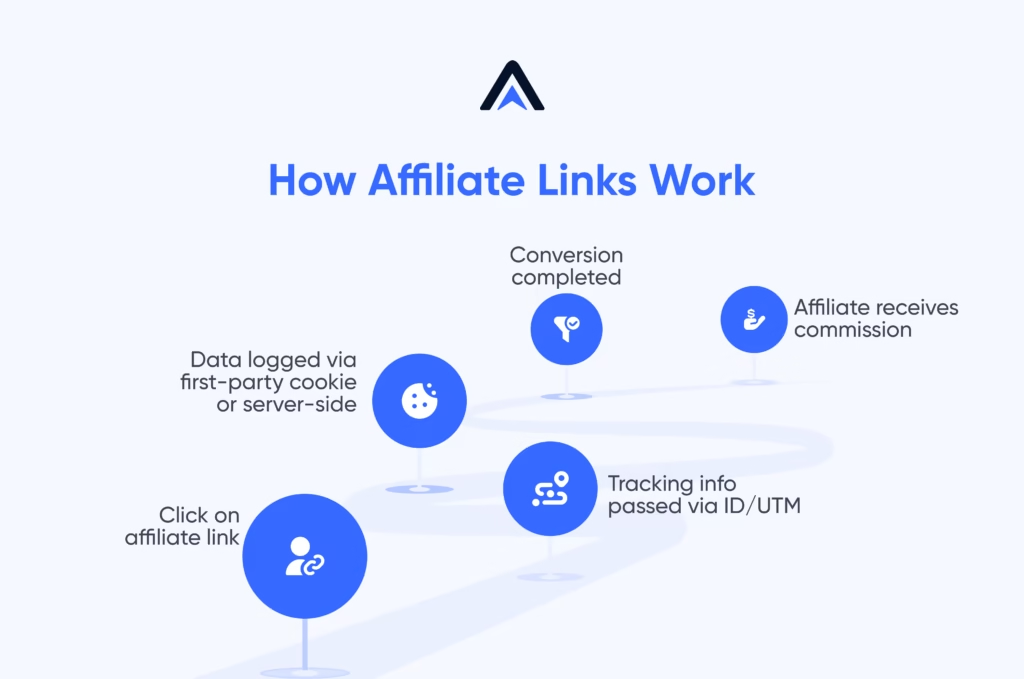
Affiliate links track a user’s journey from the time they click on a link until they finish an action, such as making a purchase or signing up. The links contain specific tags that relate activity to a given partner, such as affiliate IDs or UTM parameters.
Third-party cookies were used by affiliate tracking to collect and store this information. But marketers were forced to adapt their methods as privacy came to the forefront, GDPR took effect, and browsers such as Chrome and Safari began to limit third-party cookie use.
This is where server-side tracking and first-party cookies come in:
- First-party cookies are less likely to be blocked and are more privacy-compliant because they are made and stored by the website the user visits.
- Server-side tracking gives users more flexibility, security, and resilience to browser restrictions and ad blockers by moving data collection from the user’s browser to the server.
Even in an environment where cookies are restricted, modern affiliate tracking software now combines these methods to ensure proper attribution.
Affiliate links work by using a more intelligent, privacy-aware set of tools to make sure each recommendation is taken into account openly.
Role of Affiliate Links in Affiliate Marketing
Affiliate links are essential to affiliate marketing as they track each activity that occurs from click to conversion. For the brand, these links are important for tracking results, paying partners, and increasing reach.
Enable Precise Attribution
Businesses can track which affiliate generated a click, lead, or sale with unique IDs included in each affiliate link. This ensures accurate and fair commission payments.
Helps Affiliate Tracking Software
These links provide information to affiliate tracking software, helping marketers evaluate campaign success and real-time performance optimization.
Connects Conversions and Content
Affiliate links transform ordinary content into resources that generate income, whether they are included in a blog post, YouTube description, or Instagram Story.
Encourage Multi-Channel Marketing
Affiliate marketing links function across touchpoints, such as email newsletters and cashback websites, enabling companies to expand their partner strategy.
Build Trust with Partners
More than 80% of brands now use affiliate marketing to generate leads and sales, making affiliate links one of the most widely adopted performance marketing tools.
Relationships are strengthened when affiliates are compensated for their contributions through transparent tracking via affiliate links.
Types of Affiliate Links
All affiliate links are not made equal. Brands can use different link types to accomplish their objectives, depending on the platform, tracking requirements, and affiliate strategy. Here are a few common types:
Standard Affiliate Links
These are simple URLs that contain affiliate IDs or tracking settings. They take consumers straight to the landing page or product without any changes.
Dynamic Tracking Links
These are produced automatically by affiliate networks and may contain real-time information such as campaign tags, device type, or geolocation. Brands that have sizable, well-defined affiliate programs might benefit from them.
Postback URL (server-to-server)
These links don’t use client-side tracking or cookies. Conversions are instead monitored via server-side communication, which makes them perfect for settings without cookies.
Deep Links
Instead of directing users to the homepage, deep affiliate links direct them to a particular product or page. By reducing unnecessary clicks, they improve user experience and conversion rates.
How to Create Affiliate Links
Creating an affiliate link is easy, especially if you’re using a platform or software built for affiliate tracking. Here’s a guide to creating one:
1. Sign up for an affiliate program
Affiliates must first register for a brand’s partner or affiliate program. They will have access to the program’s dashboard after being approved.
2. Create a Unique Affiliate Link
The majority of systems come with an integrated option for creating affiliate links. The software will create a unique URL with your affiliate ID when you choose the product or landing page you wish to promote.
3. Customize the Link (Optional)
This is an optional step, but certain platforms allow you to add UTM parameters to trace source, medium, and campaign. They also make deep links to point visitors to a certain page and shorten the URL for a cleaner look.
4. Automate using Affiliate Tracking Software
Creating, assigning, and tracking affiliate links is made simple with the help of platforms such as Trackier. Click reports, commission structures, and fraud prevention are also managed by these tools.
5. Check the Link
Always visit the link before sharing to be sure tracking is working and the redirect operates properly. The majority of software will display your test click in real time.
How to Track Affiliate Links?
Affiliate link tracking enables brands to analyze metrics such as clicks, conversions, and commission payments to affiliates. With the rise of affiliate tracking software, this process has become simplified and provides insights on affiliate performance in real-time.
Here are some steps involved in tracking affiliate links:
- Utilize affiliate tracking solutions to generate links and allocate conversions.
- Give a unique affiliate ID to each partner to link their clicks and sales appropriately.
- Implement first-party cookies and server-side tracking as they are safe and reliable.
- Track additional metrics besides clicks and conversions, including revenue, EPC, and top affiliates.
- Continuously monitor the effectiveness of tracking links to verify redirects and tracking accuracy.
Best Practices for Using Affiliate Links
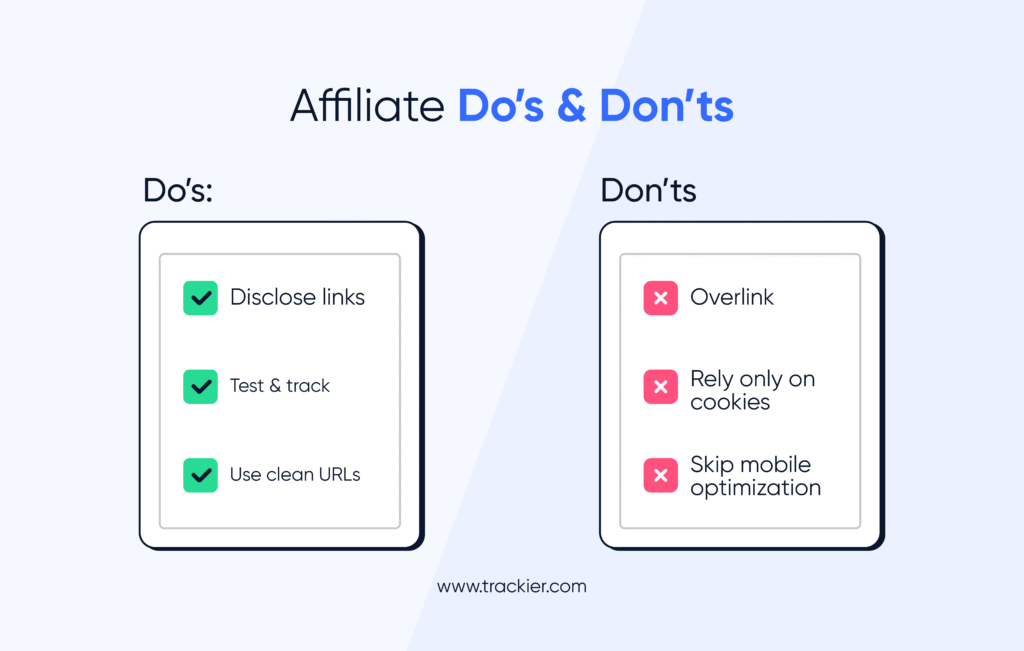
Using affiliate links effectively can make the difference between a high-converting campaign and a forgettable one. Here are some best practices to follow:
- Disclose Affiliate Relationships – To increase trust and maintain compliance with FTC regulations, always let your audience know when a link could result in a commission.
- Assign Contextual Placement – Include affiliate links in content where they make sense, such as when a product is mentioned in a blog post or instructional content.
- Avoid Overlinking – Avoid packing your page with links. Instead, concentrate on appropriate links that benefit the viewer.
- Make Use of Cloaked or Clean URLs – To increase click-through rates and give your links a cleaner appearance by shortening them.
- Make Your Site Mobile-Friendly – Since smartphones bring a significant amount of affiliate traffic, make sure the landing page is adaptable.
- Monitor Performance Frequently – To improve your plan over time, track clicks, conversions, and revenue using affiliate tracking software. Businesses earn an average of $6.50 in revenue for every $1 invested in affiliate marketing, highlighting the importance of tracking affiliate link performance and optimizing high-converting partners.
- Retire or Update Broken Links – To provide an easy user experience, regularly audit and update affiliate marketing links that are incorrect or inactive.
- Placements of A/B Test Links – Try a variety of formats, CTAs, and locations to discover what gets the most clicks and conversions.
Common Mistakes to Avoid
When it comes to affiliate links, even experienced marketers can make mistakes. By avoiding these common errors, you can optimize your affiliate efforts and increase conversions.
- Ignoring rules about disclosure could damage audience trust and result in legal issues.
- Including links to unrelated or low-quality products might damage your brand and lower conversion rates.
- Using excessive links in a single piece of content might make it seem spammy and less effective.
- If you don’t test your links, you risk losing commissions and having broken redirects.
- Not monitoring performance means you will lose out on chances to scale and optimize.
- Ignoring a landing page’s mobile responsiveness can cost you valuable traffic.
- Affiliate links that are outdated or expired lead to a poor user experience.
- Relying solely on cookie-based tracking is risky in today’s privacy-first era.
Affiliate Links vs Referral Links: What’s the Difference?
Referral and affiliate links have slightly different functions, even though they are both intended to monitor user behavior and compensate promoters.
Affiliate links are mostly used in business collaborations where affiliates receive payments for promoting certain actions through tracked URLs, such as clicks, purchases, or sign-ups. These links are essential to performance-based marketing and are controlled by affiliate tracking software.
Many peer-to-peer sharing applications use referral links. They provide rewards such as discounts or credits instead of cash commissions, getting current customers to invite friends or acquaintances.
FAQs
What is the difference between affiliate tracking and referral tracking?
Affiliate tracking is designed for performance-based partnerships where affiliates earn commissions for generating sales, leads, or other actions. Referral tracking focuses on customer-to-customer recommendations, typically rewarding users with discounts, credits, or bonuses instead of direct monetary commissions.
Why isn’t my affiliate link generating commissions?
Several factors can prevent commissions, including broken links, expired campaigns, attribution windows ending, incorrect tracking setup, ad blockers, or customers not completing the required action. Reviewing tracking reports and testing links regularly helps identify and resolve these issues before they impact earnings.
Can affiliate links be customized?
Yes. Many affiliate platforms allow affiliates to create deep links, add UTM parameters, shorten URLs, or customize destination pages. These options help improve user experience, measure campaign performance across channels, and drive higher conversion rates through more relevant landing pages.
What happens if a customer doesn’t purchase immediately?
If the affiliate program uses cookies or server-side tracking, the referral may still be credited if the customer returns and completes the purchase within the attribution window. The exact duration depends on the cookie period or attribution rules defined by the merchant or affiliate platform.
How do brands track affiliate link performance?
Brands use affiliate tracking platforms to monitor clicks, conversions, sales, commissions, and campaign performance. These platforms assign unique identifiers to affiliate links, allowing marketers to identify top-performing partners, optimize campaigns, detect fraud, and generate accurate reports from a single dashboard.
