A partner go-to-market (GTM) strategy is essentially a structured system for building revenue through other people’s relationships.
Your direct sales team can only reach so many prospects. Your marketing budget can only stretch so far. That is where partners come in, opening doors into accounts, geographies, and segments that your internal team either can’t access efficiently or would take significantly longer to convert on their own.
A partner GTM network runs alongside your existing channels, not instead of them. Direct sales still operates. Marketing still runs. The partner engine adds a third lane to the same road, one that, when built properly, generates revenue that your direct channels wouldn’t have produced anyway. That’s the distinction worth holding onto: a partner GTM strategy isn’t a substitute for direct growth. It’s an additional source of it.
The importance of a partner GTM strategy can be substantiated by the fact that the broader integrated network economy will unlock $100 trillion by 2030. That number is large enough to sound abstract, but the underlying point is straightforward: companies that grow through connected partner ecosystems rather than purely through direct channels are going to have a structural advantage over those that don’t.
The distinction between having partners and having a Partner GTM Strategy matters more than most companies realise until they’re already behind.
Moreover, adoption of dedicated partner infrastructure among high-growth SaaS companies has also climbed sharply in just a few years.
In this guide, we will dive into what a partner GTM strategy is, how you can create one, and what important things to keep in mind while creating one.
What Is a Partner GTM Strategy?
At its core, a Partner GTM Strategy answers four questions: which partners are worth working with, how to bring them on board effectively, what support and incentives actually motivate them, and how to track partner revenue contribution over time.
That last part matters more than most companies acknowledge upfront. Partners who don’t see clear, timely recognition of what they’re generating tend to quietly deprioritise you in favour of whoever makes it easier.
It’s also worth distinguishing this from a traditional channel programme, because they’re not the same thing.
A traditional channel programme typically focuses on reseller or distribution relationships – one motion, reasonably straightforward.
A Partner GTM Strategy coordinates across multiple partner types simultaneously: recruitment, enablement, activation, measurement, and optimization all running together rather than in isolation.
The underlying philosophy is different too. A Partner-Led Growth Strategy treats partners as an actual extension of the go-to-market team. Not contacts to call when direct sales needs backup. Not logos to add to a partner page. Instead, it treats partners as actively managed participants in revenue generation, held to similar standards and given similar support to internal teams.
A partner-led go-to-market strategy is typically built on four connected areas:
- Partner Recruitment: finding and onboarding the right partner types that influence different funnel stages, not just any partner willing to sign
- Partner Enablement: equipping partners with the training and assets to sell or refer with confidence
- Partner Activation: moving recruited partners from signed to actually revenue-generating
- Partner Optimization: tracking performance and reallocating investment toward what is proven to work
Skip any one of these and the program stalls at “signed but inactive,” which remains one of the most common failure points in partner-led growth.
Why Partner GTM Strategy Is Important
The business case for having a well-planned partner GTM strategy isn’t theoretical.
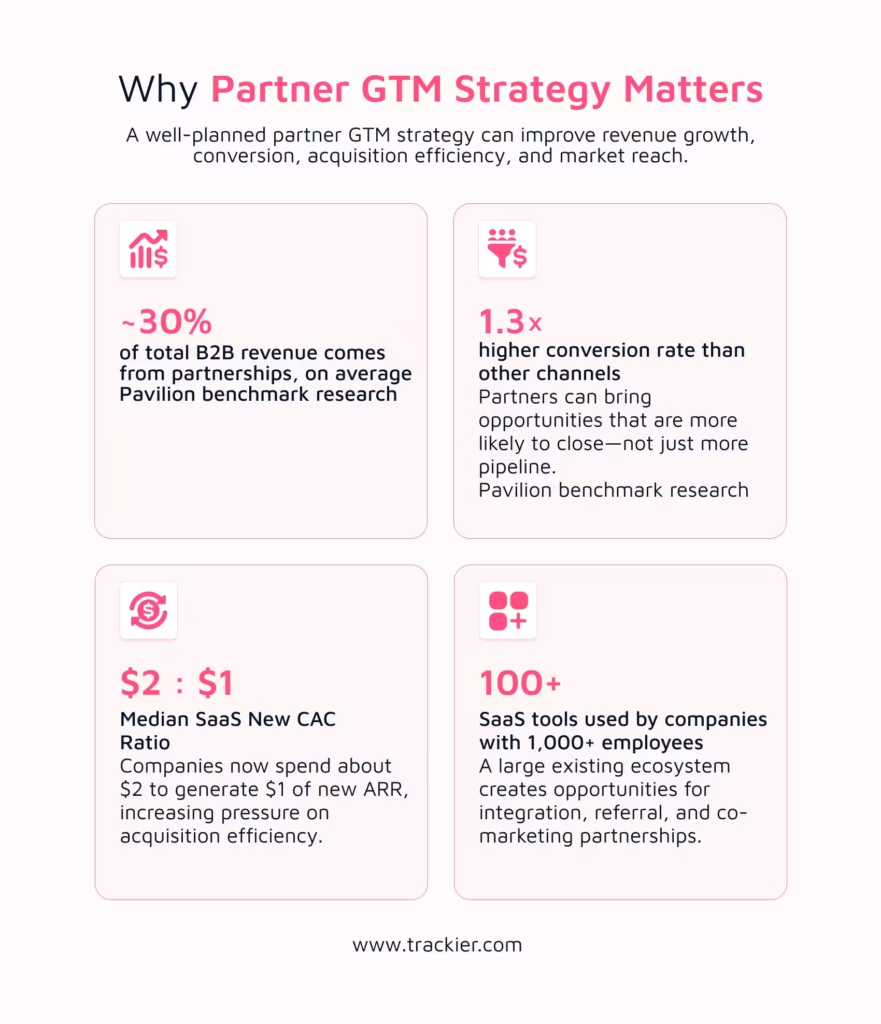
Pavilion’s benchmark research found that partnerships contribute around 30% of total revenue across B2B companies on average, and convert at roughly 1.3 times the rate of other channels.
That second number is the one worth sitting with.
A higher conversion rate means partners aren’t just adding volume to the pipeline. They’re bringing in opportunities that are genuinely more likely to close. Which makes sense when you consider that a trusted partner recommendation carries considerably more weight than a cold outreach from a sales rep the prospect has never heard of.
The following are some more compelling reasons why every company should plan its partner GTM strategy:
- Rising Customer Acquisition Cost (CAC): the median SaaS New CAC Ratio has reached about $2 for every $1 of new annual recurring revenue (ARR). This highlights growing pressure on acquisition efficiency, with outbound response rates remaining challenging across B2B categories. A partner-sourced pipeline can be warmer and more efficient to acquire when partners have strong audience fit and established buyer relationships
- Growing revenue share: mature partner programs can become a meaningful source of pipeline and revenue, although their contribution varies significantly by business model, industry, and partner type
- Enablement lift: structured onboarding and certification can improve partner readiness and reduce friction during the early stages of a partnership. Training, clear documentation, and ready-to-use sales assets can also reduce the support required during onboarding
- Existing ecosystem presence: companies with 1,000+ employees now use well over 100 SaaS tools, creating a large pool of potential integration and ecosystem relationships. Many of those tools may represent a potential integration, referral, or co-marketing partnership that is already touching your buyer, which makes a partner ecosystem strategy a way to meet demand that already exists rather than manufacture new demand from scratch
Skip any one of these and the program stalls at “signed but inactive,” which remains one of the most common failure points in partner-led growth.
The Four Pillars of a Partner GTM Strategy
Partner Recruitment
Sign up the wrong partners, or too many mediocre ones at once, and you end up with noise instead of revenue. Think about your ideal partner profile the same way you’d think about an ideal customer profile. What industry are they in? Does their audience actually overlap with yours? What’s already in their tech stack, and how far does their reach extend? A handful of well-aligned partners will outperform a long tail of inactive ones every time, so keep the application process simple. Strong candidates lose interest fast if they’re left waiting on a response.
Partner Enablement
Recruit partners without enabling them, and you get people who sign the agreement and then never actually sell anything. This is where most programs quietly bleed potential. What works: a clear path through the first thirty days, training that’s bite-sized enough partners can finish it without derailing their own business, assets they can use right away like decks and demo scripts, and a partner portal that’s actually kept up to date instead of going stale the week after launch.
Partner Activation
Getting a partner onboarded and getting them generating revenue are two different things, and the gap between them doesn’t close by itself. Set a deadline for activation. Assign someone whose job is to reach out first, rather than waiting around for the partner to make the first move. A first-deal incentive helps too, since it gives partners a reason to move now rather than eventually. It’s worth tracking activation rate on its own, separate from how many partners you’ve signed. That number tells you a lot more about real engagement than sign-up counts ever will.
Partner Optimization
No GTM strategy stays finished for long. Partner performance moves, sometimes a lot, which is exactly why regular reviews matter. Keep partner-sourced revenue and partner-influenced revenue in separate columns so the numbers actually mean something. Review on a fixed schedule, not whenever someone remembers to. And when it comes to incentives and attention, put them where they’ll do the most good, toward your top performers, rather than spreading everything thin across a list that’s increasingly just names on a page.
What are the Common Partners in a Partner Ecosystem Strategy?
The most common partner types include referral, affiliate, reseller/channel, technology/integration, and agency/services partners.
Choosing the right partner program is crucial for any organization’s growth goals. A well-rounded Partner Ecosystem Strategy would blend more than one of the following partners, rather than relying on a single motion.
- Referral Partners: individuals or businesses that send potential customers or opportunities your way. Depending on the program, that might earn them a commission, a referral fee, or some other incentive tied to qualified referrals or conversions.
- Affiliate Partners: individuals, publishers, creators, media companies, communities, or other businesses that promote a product through trackable links, campaigns, or similar attribution mechanisms, earning commissions based on defined actions or conversions.
(NOTE: Affiliate and referral programs are both forms of partner-led growth, and they can overlap depending on the partner, the customer journey, and how compensation is structured.)
- Reseller/Channel Partners: sell your product directly to their own customer base, often bundling it with their own services. The revenue potential per partner is higher here, but so is the lift, since deeper enablement and margin planning are non-negotiable.
- Technology/Integration Partners: complementary software with a direct product connection into yours. The payoff isn’t just new logos; retention often improves too, especially once the integration becomes woven into how customers actually work.
- Agency/Services Partners: these partners implement, customize, or manage your product on behalf of their own clients. They’re especially valuable in categories where onboarding or configuration gets complicated enough that buyers want an expert doing the heavy lifting.
How to Create a Partner GTM Strategy?
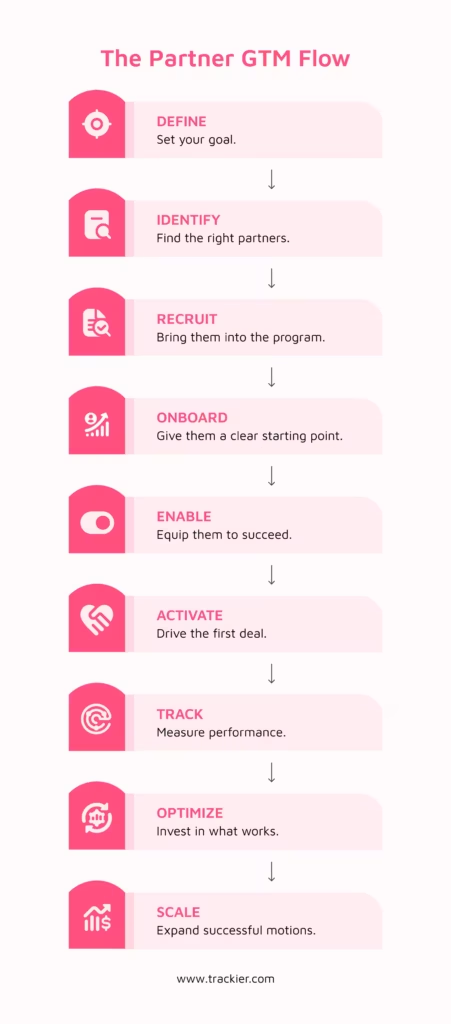
To build a Partner GTM Strategy, you can follow the nine stages: define your goals, identify ideal partners, recruit them, onboard them, enable them, activate them, track performance, optimize the program, and scale what works:
1. Define: Set the boundaries before anything else moves. Write down the specific outcome the program exists to drive, whether that’s pipeline, expansion revenue, or new market entry. Set a partner-sourced revenue target, and get sales and finance to agree upfront on how partner-sourced versus partner-influenced revenue will be defined, so nobody disputes the numbers later.
2. Identify: Reverse-engineer your ideal partner profile from your best existing customers: the tools they already use, the communities they trust, where their audience overlaps with yours. Shortlist the 3-5 partner types that best match your Stage 1 goals, and rank prospective partners by fit rather than by size or visibility alone.
3. Recruit: Build a low-friction application process with a clear approval bar tied to the profile from Stage 2. Pace recruitment to match your enablement capacity; signing faster than you can onboard just creates a backlog of inactive partners later.
4. Onboard: Give every new partner a first-30-days path with a clear end goal, such as a first referral or first demo, and a named point of contact rather than a shared inbox. Confirm tracking links and access are working before the partner goes live.
5. Enable: Provide co-branded decks, one-pagers, and demo scripts so partners aren’t building materials from scratch, plus short, on-demand training that doesn’t block their own work. Consider certification tied to earning potential, particularly when it helps partners build the skills needed to sell, refer, or implement effectively.
6. Activate: Set a hard activation deadline, for example, a first deal within 60 days, and back it with a first-deal incentive to create urgency. Check in proactively at weeks 1, 2, and 3 instead of waiting for the partner to ask for help.
7. Track: Set up reliable click, conversion, and payout tracking and establish clear marketing attribution rules so performance is measured, not estimated. Automate payout calculation and disbursement to remove delays and manual errors, which are one of the fastest ways to lose partner trust.
8. Optimize: Review performance monthly or quarterly against the targets set in Stage 1. Reallocate co-marketing budget and account manager time toward top performers, and re-engage or sunset partners who stay consistently inactive rather than letting them sit in the program indefinitely.
9. Scale: Double down on the partner types and verticals the data shows are winning: deeper enablement, better incentives, dedicated account management. Revisit the whole playbook every quarter, since a Partner GTM Strategy is never a one-time build.
How Do You Actually Track a Partner GTM Strategy?
Complete partner performance tracking means building visibility across the entire partner lifecycle. Who you recruited, how quickly they activated, what they’re contributing to pipeline right now, and whether that contribution is growing or quietly flatlining.
Platforms like Trackier make this genuinely manageable, centralizing attribution, automating commissions, and giving your team and partners actual real-time data rather than a spreadsheet someone updates once a month and nobody fully believes.
What actually needs tracking:
- Partner recruitment quality: time to activation, onboarding completion rates, and where in the process people are dropping off
- Activation speed: how quickly a newly onboarded partner generates their first qualified lead, and then their first closed deal
- Pipeline contribution: deals sourced and influenced per partner, average deal size compared to direct, pipeline velocity
- Revenue attribution: partner-sourced versus partner-influenced revenue, captured automatically through unique tracking links rather than relying on anyone to self-report
- Multi-touch attribution: every partner touchpoint in the buying journey gets credited, not just whoever happened to be last
- Partner engagement signals: portal logins, asset downloads, deal registrations, certifications completed, anything that indicates whether a partner is genuinely active or just technically enrolled
- Commission accuracy: automated calculation and payout through Trackier, so reconciliation stops being a monthly argument
- Fraud detection: suspicious activity flagged before it reaches payout, protecting programme integrity without manual auditing
- Partner health trends: spotting dormant partners early enough to do something about it, and identifying high performers worth investing in before someone else does
Common Challenges in Partner-Led Growth
Signed but inactive partners
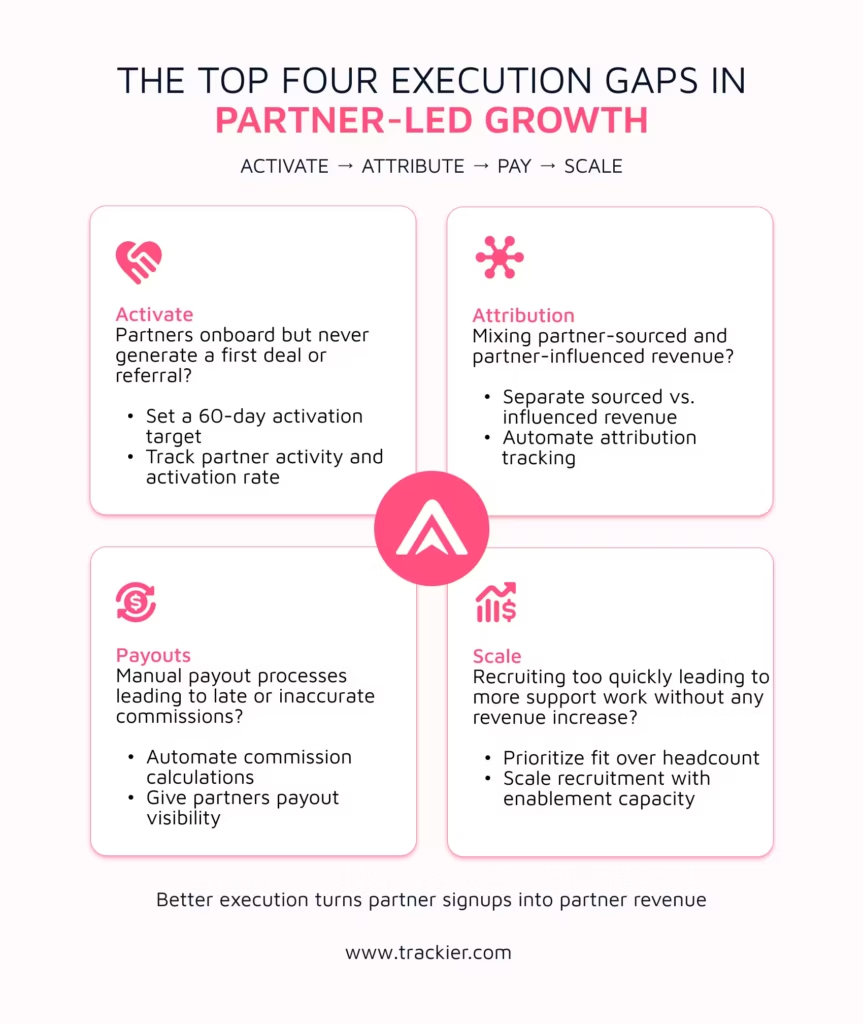
A partner finishes onboarding, gets access to everything they need, and then… nothing happens. No first deal, no first referral. Just a name sitting in a dashboard. This is probably the single most common failure mode in partner programs, and it usually comes down to one thing: activation gets treated as something that happens on its own, rather than a stage that needs an owner and a deadline.
What actually fixes it:
- Set a defined activation window, for example, a first deal within 60 days
- Check in proactively at set intervals instead of waiting to be asked for help
- Track activation rate as its own metric, separate from total signups
- Get real-time visibility into partner activity so drop-off gets caught early, before a partner goes quietly dormant
Attribution disputes
Blend partner-sourced and partner-influenced revenue into one number, and sooner or later someone questions it, your sales team, the partner, or both. And once that happens, nobody has a clean way to defend the figure. Trust erodes fast from there.
What actually fixes it:
- Separate the two revenue types from day one, not after the first dispute
- Preserve the rate, attribution rule, and conversion data behind every credited deal
- Automate the tracking layer so records exist independently, not stitched together from memory or spreadsheets
Payout delays and errors
There are only a few things that damage a partner relationship faster than a commission that’s late or just wrong. Partners notice immediately, and for many, it’s the first real sign that a program isn’t being run seriously. Manual processes are usually to blame here: spreadsheets, approval chains, someone hand-checking commission math under deadline pressure. The more a program scales, the worse this gets.
What actually fixes it:
- Automate payout calculation rather than routing it through manual approvals
- Support multi-currency payments and reconciliation for partners operating across markets
- Give partners visibility into their own payout history, so trust isn’t something they’re just taking on faith
Recruiting too broad, too fast
More partners can feel like more opportunity, but sign a large batch of loosely-fit partners and what you usually get is more onboarding overhead and more support tickets, not a proportional jump in revenue.
What actually fixes it:
- Tighten the ideal partner profile before scaling recruitment further
- Prioritize fit over headcount when evaluating new prospects
- Let enablement capacity set the pace of recruitment, not the reverse
Future Trends in Partner GTM Strategy
Partner programs are moving fast. What felt cutting-edge two years ago already looks manual and slow today. Here’s what’s actually reshaping partner GTM strategy right now.
AI-augmented partner orchestration
Manual deal registration is on its way out. In its place: predictive scoring that flags which partners are likely to close, plus automated surfacing of warm introduction paths a human would otherwise miss.
What this looks like in practice:
- AI agents flag high-probability deals before a partner even registers them
- Warm intro paths get surfaced automatically instead of relying on someone remembering a connection
- Enablement moves into the workflow itself, guidance appears when a partner needs it, not buried in a training module they have to go find
- Manual, static LMS-style training gets replaced by in-the-moment, personalized guidance
Attribution becomes non-negotiable
Defending partner contribution in a meeting, based on relationships and gut feel, is becoming a thing of the past. Partner-sourced and partner-influenced revenue are increasingly treated like any other financial metric: provable, auditable, and expected to hold up under scrutiny.
What this looks like in practice:
- Partner-sourced and partner-influenced revenue get tracked as two distinct, defensible numbers
- Attribution data (rate, rule, conversion record) gets preserved automatically instead of reconstructed after a dispute
- Programs still relying on spreadsheets and manual claims fall further behind fastest
- Finance and sales increasingly expect partner ROI reporting to meet the same bar as any other revenue channel
Ecosystem-led growth convergence
Channels, alliances, services, and marketplaces used to run as separate programs with separate owners and disconnected dashboards. That’s converging into a single, connected ecosystem motion.
What this looks like in practice:
- Partner data gets consolidated into one shared view instead of living across multiple disconnected systems
- Deal overlap between partners becomes visible in real time, so teams can coordinate instead of duplicating effort
- Partner-involved deals close faster and more often, but only when the infrastructure exists to actually see the signal
- Program ownership shifts from siloed teams to a unified ecosystem function
Specialist partners outperform generalists
Buyers increasingly want partners who understand their exact environment, not generalists spread thin across every vertical they can chase.
What this looks like in practice:
- Programs invest deeper enablement into narrower partner specializations, rather than broad, shallow coverage
- Recruitment shifts from “sign as many partners as possible” to “sign the right partners for a specific niche”
- Generalist partners increasingly lose ground to specialized, well-enabled ones in competitive deals
- Vertical-specific certification and training become a differentiator, not an afterthought
Conclusion
A Partner GTM Strategy is a coordinated system spanning recruitment, enablement, activation, and optimization, backed by tracking infrastructure that makes partner performance provable instead of a relationship-based guess.
Start with what’s broken. Audit where partners are dropping off, separate partner-sourced revenue from partner-influenced revenue, build a real activation stage with a deadline, fix your tracking and payout layer, and review performance on a fixed cadence instead of only reacting when something goes wrong.
If your current setup lacks reliable partner tracking or automated payouts, then it might be best to consider platforms like Trackier to bring that clarity to your partner ecosystem, the same way it brings clarity to affiliate and performance marketing programs.
The partner GTM cycle is simple: recruit right, enable well, activate deliberately, and optimize continuously.
FAQs
How is a Partner GTM Strategy different from a channel program?
Traditional channel programs tend to center on reseller or distribution relationships. A broader Partner GTM Strategy takes a more holistic approach, actively managing recruitment, enablement, activation, measurement, and optimization across multiple partner types and motions.
What’s the biggest reason partner programs fail
Partners get recruited and onboarded, and then nothing happens. They never actually get activated into live revenue motion. Activation has to be tracked and proactively managed with a clear deadline; it can’t just be something you assume will happen on its own.
How do you measure a Partner GTM Strategy’s success?
Track partner-sourced revenue and partner-influenced revenue as two separate numbers, alongside activation rate, time-to-first-deal, and revenue per active partner.
What role does tracking software play in a Partner GTM Strategy?
It’s the attribution and payout infrastructure that makes partner performance measurable and provable, instead of something you’re piecing together from manual claims, spreadsheets, and guesswork.
Which partner type should a company start with?
Referral or affiliate partners are typically faster to launch and often require less operational commitment, making them a common starting point before adding reseller or technology partnerships as the program matures.
How long does it take to see results from a Partner GTM Strategy?
Most programs start seeing early activation within 60 to 90 days if enablement and tracking are set up properly from the start. Meaningful revenue contribution, the kind worth reporting to leadership, may take several quarters, since it depends on partners moving through recruitment, onboarding, and activation before their pipeline shows up as closed revenue.
Do small or early-stage companies need a full Partner GTM Strategy?
This varies from company to company, but early-stage companies might not always need the entire nine-stage build on day one, but the core discipline holds up regardless of size. Even a two-person partnerships team gets real value from defining an ideal partner profile, tracking activation separately from signups, and automating payouts early on. Retrofitting tracking onto a program that’s already running is a much harder job than just building it in from the start.