Partner marketing brings businesses and external partners together.
These partners can include affiliates, creators, agencies, publishers, resellers, referral partners, technology providers, and strategic alliances.
Each partnership model works differently.
Some partners introduce new audiences, some generate trackable sales or leads, and others support distribution, product adoption, market entry, or customer retention. A well-defined program sets the partner’s role, commercial terms, tracking method, and expected outcome before activity begins.
This guide explains how partner marketing works across the full partner lifecycle, from selection and onboarding to commissions to performance measurement, and how a partner marketing platform or partner marketing software can help businesses manage partner activity through consistent data, reporting, and payment records.
What Is Partner Marketing?
Partner marketing is a structured commercial relationship in which an external partner helps a business reach, influence, acquire, serve, or retain customers.
The partner’s role depends on the program.
Affiliates and publishers generate trackable actions. Creators introduce products through content. Referral partners make qualified introductions. Resellers and distributors sell through their own channels. Agencies, consultants, and technology providers support sales, implementation, adoption, or customer growth.
Every program should define four points before activity begins:
- The customer segment the partner will reach
- The action or outcome that the partner will support
- The method used to track the partner’s contribution
- The payment, reward, or shared commercial benefit
These points separate a managed partner marketing program from an informal collaboration. They also provide the basis for partner selection, campaign rules, attribution, commissions, and performance reporting.
What Makes Partner Marketing Work?
A partner program needs a clear customer benefit, defined responsibilities, agreed commercial terms, and a shared method for measuring results.
Does the partnership create clear customer value?
The combined offer should help the customer discover, buy, use, or gain more value from a product or service.
Both partners should be able to explain the customer problem they address and the role each business plays in solving it.
Does each partner have a defined role?
Document who owns promotion, content, sales activity, customer communication, technical setup, reporting, and support.
Roles should reflect each partner’s audience, skills, access, and commercial contribution.
Are the goals and measurement rules agreed?
Set the target customer action, reporting period, attribution method, validation rules, and success metrics before activity starts.
Both sides should use the same definitions for leads, conversions, revenue, and approved results.
Are communication and review processes documented?
Set contacts for campaign, technical, payment, and compliance questions.
Review performance, customer quality, campaign changes, and unresolved issues at an agreed frequency. Record decisions that affect responsibilities, attribution, commissions, or partner access.
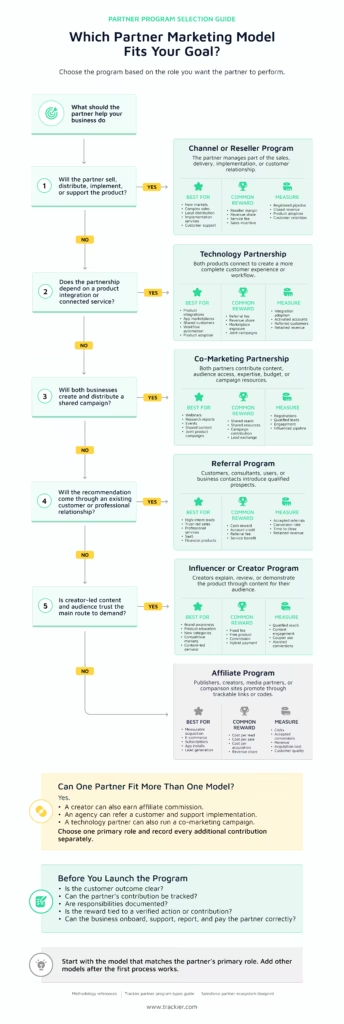
How Is Partner Marketing Different from Affiliate, Influencer, Referral, and Channel Marketing?
Partner marketing often gets grouped with affiliate, influencer, referral, and channel marketing. The terms overlap, so the confusion is understandable. Still, each model gives the partner a different role.
Partner marketing is the broader approach. It covers structured relationships where another business, such as a publisher, creator, customer, consultant, or reseller, helps a brand reach, influence, convert, serve, or retain customers.
Some partnerships focus on a tracked sale. Others support brand awareness, product adoption, distribution, customer support, or entry into a new market. The relationship may last for one campaign or continue across several stages of the customer journey.
Affiliate, influencer, referral, channel, and co-marketing programs can all be integrated into a broader partner marketing strategy. The right choice depends on who the partner is, how they reach the customer, and which outcome the business wants to measure.
If you are new to the subject can refer to these partner marketing terms for a clearer explanation of the language used across different program models.
How does affiliate marketing fit into partner marketing?
Affiliate marketing focuses on measurable customer actions.
Affiliates use tracking links, coupon codes, referral codes, or other identifiers to generate sales, leads, registrations, subscriptions, or app installs. They usually receive a commission after the required action has been confirmed.
This makes affiliate marketing a performance-led part of partner marketing. It works well when the conversion path can be tracked, and the business wants to connect partner rewards with verified results.
Affiliates may include publishers, review websites, comparison platforms, content creators, media buyers, industry experts, or niche communities. Some relationships remain focused on promotion. High-performing affiliates may later take part in custom campaigns, product launches, or deeper commercial partnerships.
As these programs grow, affiliate tracking software can help connect partner activity with clicks, conversions, revenue, commissions, and traffic-quality data.
How is influencer marketing different?
Influencer marketing begins with content and audience trust.
Creators introduce a product through their own format, voice, and community. A campaign may focus on reach, engagement, product education, brand recall, content creation, or assisted sales.
Payment may include a fixed fee, free products, commission, or a mix of fee and performance rewards. Influencer and affiliate marketing overlap when a creator receives a trackable link or code and earns commission from completed actions.
These hybrid arrangements have become common because brands can support the creator’s work while measuring the response generated by the content. The creator still contributes trust and creative value, while the affiliate element connects part of the payment to performance.
A current comparison of influencer marketing and affiliate marketing explains the same distinction through campaign goals, payment structures, creative control, and measurement.
Affiliate marketing usually starts with the required action. Influencer marketing usually starts with the audience and the content needed to influence that action.
Brands running performance-led creator programs can also use influencer tracking software to connect individual links, coupon codes, conversions, and revenue with the right creator.
How is referral marketing different?
Referral marketing usually activates people who already have a relationship with the brand.
They may be customers, users, employees, consultants, business contacts, or existing partners. Their recommendation often reaches a smaller group than a publisher or creator campaign, though the introduction may carry more personal trust.
Rewards can include account credits, discounts, loyalty points, cash, service upgrades, or benefits for both the referrer and the new customer.
The main difference lies in who makes the recommendation. Affiliates often promote to an audience they have built. Referrers usually recommend the product through personal or professional connections.
Shopify’s guide to referral and affiliate marketing compares the models through promoter type, reward structure, reach, scale, and brand control.
How is channel marketing different?
Channel marketing works through partners that help sell, distribute, implement, or support a product.
Common channel partners include resellers, distributors, value-added resellers, agencies, consultants, system integrators, and managed service providers.
These relationships often involve more commercial coordination than a standard affiliate arrangement. Partners may need product training, sales material, certification, deal registration, technical support, assigned territories, or agreed margins.
A channel partner may own part of the sales process or customer relationship. An affiliate usually introduces or influences the conversion without taking responsibility for product delivery or implementation.
Trackier’s guide to channel marketing explains how third-party partners can support promotion, sales, distribution, customer contact, delivery, and ongoing support.
Where does co-marketing fit?
Co-marketing brings two or more businesses together to create and distribute a shared campaign.
The partners may host a webinar, publish research, produce a guide, run an event, create a bundled offer, or promote each other to related audiences. Each business contributes something useful, such as content, distribution, industry knowledge, creative resources, or access to a customer segment.
Payment may not be involved. Partners often divide campaign costs and responsibilities based on the value each side brings.
Co-marketing works best when the audience has a clear reason to care about both businesses. A shared logo on an asset will not carry a weak topic or an unrelated partnership very far.
The complete guide to co-marketing partnerships covers shared campaigns, referral programs, content partnerships, and other ways brands can combine their reach.
Can one partner perform more than one role?
Yes. These categories describe the role a partner plays within a program. The same partner can perform several roles.
A creator may publish sponsored content and earn affiliate commission. An agency may refer a customer, help close the sale, and later manage implementation. A technology company may build an integration, join a webinar, list the product in its marketplace, and send qualified leads.
These mixed models are common in mature partner marketing programs. They let businesses reward each contribution based on the work completed and the outcome produced.
A partner marketing platform can help manage several models through one system. It may support partner accounts, campaign access, tracking, commissions, reports, invoices, and performance data.
Partner marketing software does not choose the relationship model for the business. It gives the team a consistent way to operate, measure, and improve the models it selects.
| Model | Participants | Contribution | Reward Model | Measurement Focus |
| Partner Marketing | Businesses, publishers, creators, agencies, customers, and consultants | Supports one or more stages of growth and the customer journey | Commission, fee, margin, shared resources, or commercial agreement | Partner-sourced and partner-influenced outcomes |
| Affiliate Marketing | Publishers, creators, comparison sites, and media partners | Generates trackable actions | Commission per sale, lead, install, or other action | Clicks, conversions, revenue, and customer quality |
| Influencer Marketing | Creators and industry voices | Builds attention, trust, and product interest | Fixed fee, product exchange, commission, or hybrid payment | Reach, engagement, content performance, and assisted conversions |
| Referral Marketing | Customers, employees, users, and business contacts | Makes trusted introductions | Credit, discount, cash, points, or account benefit | Referrals, conversion rate, retention, and referred revenue |
| Channel Marketing | Resellers, distributors, agencies, and system integrators | Sells, delivers, implements, or supports the product | Margin, revenue share, service fee, or sales incentive | Pipeline, closed revenue, product adoption, and retention |
| Co-Marketing | Complementary businesses and strategic partners | Creates and distributes shared campaigns | Shared budget, content, audience access, or resources | Reach, leads, engagement, pipeline, and campaign contribution |
A business does not always need to choose one model. A partner marketing program may combine several of them, provided every partner understands its role, reward structure, campaign rules, and measurement method.
What Business Outcomes Can Partner Marketing Support?
The outcome depends on the partner’s role and the customer stage the program supports.
Customer acquisition
Affiliates, publishers, creators, referral partners, and agencies can introduce new customers through trackable links, codes, referrals, content, or campaigns.
Measure accepted leads, sales, subscriptions, installs, acquisition cost, and customer quality.
Market and audience access
Local partners, specialist publishers, distributors, and industry consultants can connect a business with a defined region, vertical, or customer segment.
Assess audience relevance, qualified reach, conversion quality, and revenue from the target market.
Sales and distribution
Resellers, distributors, agencies, and channel partners can promote, sell, package, or deliver the product through their existing customer relationships.
Track registered opportunities, pipeline, closed revenue, sales cycle, product adoption, and retained customers.
Product adoption and customer retention
Technology partners, consultants, implementation partners, and service providers can support integration, onboarding, usage, and account growth.
Measure activation, feature use, renewal, expansion revenue, and retained customer value.
Brand awareness and demand creation
Creators, publishers, co-marketing partners, and strategic alliances can produce content, events, research, and campaigns for a shared audience.
Use qualified reach, registrations, engagement, assisted conversions, and influenced pipeline to assess the contribution.
Each program should choose one primary outcome and a limited set of supporting metrics. Combining awareness, acquisition, sales, and retention into one performance target makes partner evaluation unclear.
How Does the Partner Marketing Lifecycle Work?
Partner marketing continues well beyond signing an agreement or launching a campaign. Each partner moves through a lifecycle, from initial evaluation to activation, growth, renewal, or exit.
A structured lifecycle helps teams see where partners are progressing and where they are losing momentum. It also prevents the registered partner count from becoming the main measure of program health.
How are potential partners identified and qualified?
The process begins by defining the type of partner the program needs.
Teams assess audience fit, promotional methods, geographic reach, brand alignment, technical readiness, and expected contribution. A repeatable partner recruitment process helps screen applicants using the same standards instead of approving every interested partner.
Both sides then agree on responsibilities, permitted channels, commercial terms, tracking requirements, and expected outcomes.
How do partners move from onboarding to activation?
Approval only gives a partner access to the program. Activation begins when the partner starts meaningful commercial activity.
During onboarding, partners receive campaign access, tracking links, product information, creative material, policies, reporting access, and payout terms. A clear process for onboarding partners at scale can reduce delays between approval and the first campaign.
Useful activation measures include onboarding completion, time to first campaign, time to first click, and time to first qualified conversion.
How are active partners managed and measured?
Once campaigns are live, teams track traffic, conversions, customer quality, commissions, and revenue. Performance reviews can also reveal tracking errors, weak offers, missing assets, or partners who need more support.
Partners should not receive the same level of attention at every stage. New partners may need setup support. Active partners may need campaign ideas or better offers. High-performing partners may benefit from custom terms, early campaign access, or joint planning.
A detailed partner lifecycle management framework can help teams connect recruitment, onboarding, performance, retention, and expansion within one process.
How does the lifecycle end or expand?
Productive relationships may grow into new markets, campaigns, products, or payment models. Some partners may remain useful in a smaller role. Others may become inactive or stop meeting program standards.
Regular reviews help teams decide whether to retain, re-engage, expand, restructure, or close a partnership.
Current research on lifecycle-driven partner programs also shows that partners increasingly contribute to adoption, retention, and expansion after the initial sale. Partner marketing measurement should reflect those later contributions when the business model supports them.
How Do You Build a Partner Value Proposition?
A partner value proposition explains why a partner should join the program, invest resources in it, and continue participating. It should state the value created for the partner, the customer, and the business.
What does the partner receive?
Define the commercial and operational benefits offered through the program.
These can include commission, recurring revenue, reseller margin, access to new customers, joint campaigns, product training, sales support, reporting access, reliable payments, or a stronger service offering.
The offer should reflect the partner’s role. Affiliates need clear commission terms, accurate tracking, and campaign material. Agencies need client value, sales support, and product knowledge. Resellers need pricing, margins, enablement, and account rules. Technology partners need integration support, documentation, and a clear route to shared customers.
What does the customer receive?
State the customer problem the partnership addresses.
A referral partner can reduce the time required to find a suitable provider. A reseller can provide local sales and support. An agency can connect the product with a wider business requirement. A technology partner can reduce manual work through integration.
The customer benefit should be clear enough for both businesses to explain in the same way.
What does the business receive?
Define the contribution expected from the partner.
This can include qualified reach, accepted leads, sales, product distribution, market access, implementation support, customer adoption, or retained revenue.
Connect the contribution with a trackable event and an agreed reporting method.
What should the final value proposition include?
Document five points.
- The customer segment served by the partnership
- The customer problem being addressed
- The role assigned to each partner
- The commercial and operational benefits for both sides
- The outcome used to assess the relationship
Use the same proposition across recruitment, onboarding, campaign material, and partner reviews. The supporting guide to B2B partner marketing strategy provides further guidance on program goals, partner selection, enablement, and performance tracking.
How Do You Onboard, Enable, and Activate Partners?
Onboarding gives an approved partner access to the program. Enablement provides the knowledge and resources needed to promote, sell, refer, implement, or support the offer. Activation begins when the partner completes the first agreed commercial activity.
Keeping these stages separate prevents the approved partner count from being treated as program performance.
What should partner onboarding include?
Each partner should receive the following information before starting any activity.
- Program terms and responsibilities
Explain permitted promotional methods, commission rules, validation periods, payout schedules, brand guidelines, disclosure requirements, data access, and reasons for conversion rejection. - Campaign and product information
Provide the target audience, customer use cases, pricing, offer details, approved claims, geographic restrictions, and campaign objectives. - Tracking and reporting access
Share tracking links, coupon codes, referral codes, deal registration access, conversion definitions, attribution rules, and reporting instructions. - Promotional and sales resources
Give partners approved banners, landing pages, product sheets, pitch decks, email copy, social content, case studies, and objection-handling material. - Support contacts and response process
State where partners should send campaign, tracking, payment, compliance, and technical questions.
The onboarding path should reflect the partner’s role. Affiliates need campaign rules, links, creatives, and commission details. Agencies need positioning, case studies, and client-facing material. Resellers need product training, pricing, margins, and deal registration. Technology partners need technical documentation, testing access, and integration requirements.
A documented process for onboarding partners reduces manual setup and gives every partner access to the same approved information.
How should partner enablement be structured?
Enablement should prepare partners for the activity they are expected to complete.
Product training should explain the customer problem, use cases, pricing, limitations, and competitive position. Campaign training should cover approved channels, tracking setup, audience selection, creative use, and conversion requirements.
Partners also need access to updated material after onboarding. Product changes, new offers, revised policies, regional requirements, and campaign results should reach active partners through a searchable resource centre, partner portal, email update, or scheduled training session.
Structured partner training has reduced onboarding and ramp time by 40% to 52% in reported cases. Faster onboarding has value only when partners understand the offer and can complete the required activity without repeated support.
How do you move partners from onboarding to activation?
Give every new partner a defined first action.
For an affiliate, the first action could be creating a tracking link and launching an approved campaign. For a referral partner, it could be submitting a qualified lead. For a reseller, it could be registering an opportunity. For a technology partner, it could be completing an integration test.
Set a timeframe for the first action and monitor progress during the opening weeks. Contact partners who complete onboarding but do not start any activity. The cause often sits in one of four areas.
- The partner does not understand the offer.
- The commercial terms do not justify the required work.
- The required assets or access are missing.
- Technical or compliance checks remain incomplete.
Resolve the specific gap instead of sending the same reminder to every inactive partner.
Which partner activation metrics should you track?
Use metrics that show movement from approval to productive activity.
Onboarding completion rate measures the percentage of approved partners who finish the required setup.
Time to first activity measures the number of days between approval and the partner’s first campaign, referral, deal registration, or technical milestone.
Partner activation rate measures the percentage of approved partners who complete the activity used to define an active partner.
Time to first qualified conversion measures how long an activated partner takes to generate an accepted sale, lead, install, subscription, or other agreed result.
Early partner retention measures how many newly activated partners remain active after the first 30, 60, or 90 days.
The definition of an active partner should remain consistent across reports. Logging into a portal or opening an email does not represent commercial activity unless the program has defined it as a meaningful activation event.
These metrics also support broader partner lifecycle management by showing where partners stop progressing between approval, onboarding, activation, performance, and retention.
How can partner marketing software support onboarding?
Partner marketing software can automate application reviews, partner approvals, account creation, tracking-link generation, campaign access, creative distribution, training assignments, compliance checks, and onboarding communication.
A partner marketing platform can also record onboarding status, first activity, conversions, commissions, and early performance in one system. This removes the need to reconcile separate spreadsheets, emails, and reporting tools before deciding whether a new partner has become active.
How Should Partner Commissions and Incentives Be Structured?
Set partner rewards against the action, revenue, or customer outcome assigned to the partner.
The commission structure should fit the partner’s role, the sales cycle, product margin, customer value, and level of control over the final conversion.
Which partner commission model fits each outcome?
| Commission Model | Payment trigger | Suitable use |
| Cost per lead | An accepted lead meets the stated criteria | B2B demand generation, finance, education, and service businesses |
| Cost per acquisition | A user completes a verified action | App installs, registrations, subscriptions, and account openings |
| Cost per sale | A confirmed purchase is completed | E-commerce, retail, travel, and marketplaces |
| Revenue share | The partner receives a percentage of revenue | Subscription products, gaming, financial products, and recurring services |
| Recurring commission | Payment continues while the referred customer remains active | SaaS and membership businesses |
| Reseller margin | The partner keeps the difference between the wholesale and selling price | Resellers, distributors, and channel partners |
| Fixed fee | Payment covers agreed promotional or delivery work | Creators, publishers, agencies, and co-marketing partners |
| Hybrid model | A fixed fee is combined with a performance payment | Creator campaigns, strategic publishers, and long sales cycles |
A single program can use different models for different partner types. An affiliate can receive payment for a verified sale, while an agency receives a referral fee, and a reseller earns a margin.
Trackier’s guide to affiliate payment structures explains CPA, CPL, CPS, revenue share, bonuses, tiered payouts, and payment schedules in greater detail.
How should the commission rate be calculated?
Start with the value left after the business delivers the product or service.
The calculation should include gross margin, expected customer lifetime value, refund rate, chargebacks, taxes, payment fees, software costs, partner support, and the maximum acceptable acquisition cost.
A basic limit can be calculated as follows.
Maximum partner payout = target acquisition cost minus program and payment costs
For recurring products, calculate commissions against collected revenue instead of contract value. This prevents overpayment when a customer cancels early, receives a refund, or fails to complete payment.
For lead-based programs, define the difference between a submitted lead, an accepted lead, a sales-qualified lead, and a closed customer. Payment should connect to the stage that the partner can influence and the business can verify.
How should tiered incentives work?
Tiered incentives increase rewards after a partner reaches a stated threshold.
Thresholds can use verified sales, qualified revenue, retained customers, product adoption, customer quality, or entry into a priority market.
Volume-only tiers can reward low-quality growth. Add conditions for refund rate, fraud rate, customer retention, order value, or lead acceptance before applying a higher rate.
Short-term bonuses can support product launches, seasonal campaigns, new customer segments, or specific conversion events. Long-term commission changes should follow sustained performance across an agreed review period.
The 2026 channel forecast reports that Microsoft increased AI incentives by about 50% and Azure outcome-based incentives by about 70% year over year. The structure rewards adoption and customer outcomes rather than basic resale activity.
Which payout rules should be documented?
Every partner agreement should define:
- The event that qualifies for payment
- The attribution model and attribution window
- The commission rate or calculation method
- The validation and holding period
- Refund, cancellation, and chargeback rules
- Duplicate conversion rules
- Tier thresholds and effective dates
- Minimum payout amount
- Payment frequency and currency
- Tax and verification requirements
- Conversion rejection and dispute procedures
Historical commission rates should remain attached to the period in which the conversion occurred. Changing a partner’s current tier should not recalculate older conversions under the new rate.
How should commissions be validated before payment?
Validate the conversion against the agreed customer action, attribution record, payment status, fraud checks, return window, and campaign rules.
Approved, pending, rejected, and reversed conversions should appear separately in partner reports. Each rejected conversion should include a reason code that the partner can review.
Payment schedules should account for the business model. E-commerce programs need time for returns and cancellations. SaaS programs can connect recurring commission to collected subscription revenue. Lead programs need time to confirm identity, eligibility, and sales acceptance.
How can partner marketing software manage commissions?
Partner marketing software can apply different rates by partner, campaign, product, geography, device, customer event, or performance tier.
It can also connect conversion validation with commission calculation, invoice creation, payment status, and partner reporting.
A partner marketing platform should preserve the rate, attribution rule, currency, and validation status used for each conversion. This creates a clear record for reconciliation and disputes.
Trackier’s automated invoicing and partner payments cover invoice generation, payout rules, multi-currency payments, reconciliation, payment records, and publisher-level reporting.
How Do You Measure Partner Marketing Performance and ROI?
Measurement should connect partner activity with accepted conversions, customer value, revenue, commissions, and program costs.
Around 88% of marketers use analytics or measurement tools, while only 31% report full satisfaction with their ability to unify data. A partner program needs consistent conversion definitions, attribution rules, and cost records before results can be compared accurately through marketing measurement and analytics.
Which partner marketing metrics should you track?
Select metrics based on the outcome assigned to the partner.
| Measurement Area | Metrics |
|---|---|
| Partner Activity | Active partners, campaigns launched, referrals submitted, and registered opportunities |
| Conversion Performance | Accepted leads, sales, installs, subscriptions, conversion rate, and time to conversion |
| Customer Quality | Lead acceptance, refunds, cancellations, repeat purchases, retention, and customer lifetime value |
| Financial Performance | Collected revenue, commission, acquisition cost, contribution margin, and ROI |
| Partner Health | Revenue per active partner, active partner retention, and revenue concentration |
Registered partner count should remain separate from active partner count. Define an active partner through a commercial action such as a campaign launch, accepted referral, registered opportunity, or qualified conversion.
What is the difference between partner-sourced and partner-influenced revenue?
Partner-sourced revenue comes from customers first introduced through a partner.
Partner-influenced revenue includes customers whose journey involved a partner before another channel completed the conversion.
Record both figures separately. Combining them can count the same revenue twice and overstate partner contribution.
Which attribution model should you use?
Use an attribution model that reflects the customer journey and the partner’s assigned role.
- First-touch attribution gives credit to the partner that introduced the customer.
- Last-touch attribution gives credit to the final tracked partner before conversion.
- Linear attribution divides credit equally across recorded interactions.
- Time-decay attribution gives more credit to interactions closer to conversion.
- Position-based attribution gives greater credit to the first and final interactions.
- Custom attribution assigns credit according to selected events or partner roles.
Short purchase journeys can use a single-touch model. Longer B2B, subscription, and high-value journeys often require several recorded interactions.
Trackier’s guide to partner attribution explains how different models assign credit across partner-led customer journeys.
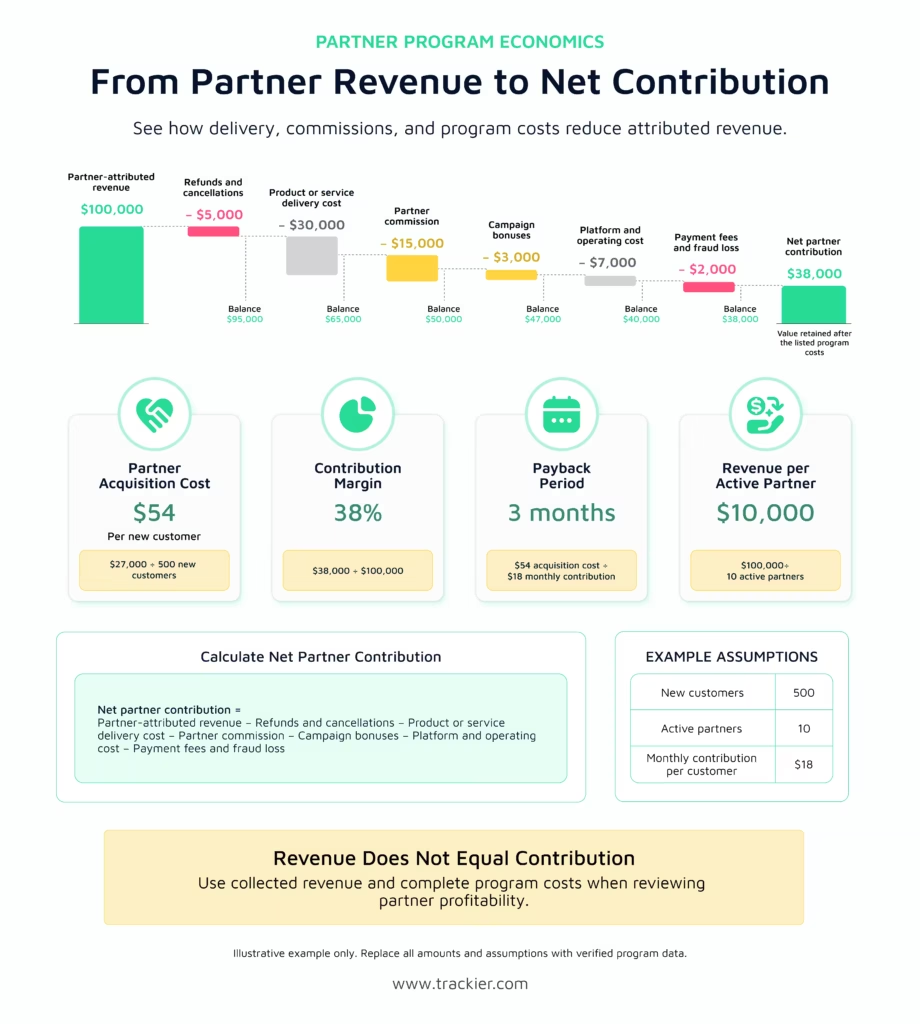
How do you calculate partner marketing ROI?
Use net contribution instead of attributed revenue.
Partner marketing ROI = Net partner contribution – total program cost / total program cost x 100
Net partner contribution should account for:
- Collected revenue
- Refunds and cancellations
- Product or service delivery costs
- Partner commissions
- Campaign bonuses
- Platform costs
- Program operating costs
- Payment fees
- Fraud losses
Revenue shows the value connected with partner activity. ROI shows whether the program retained enough value after costs.
How should partner performance be compared?
Compare partners using the same reporting period, conversion definition, attribution window, validation rules, currency, customer segment, and market.
Review conversion volume beside customer quality. A partner generating fewer conversions can produce greater net value through stronger retention, higher order values, or lower refund rates.
Track revenue concentration as well. Heavy dependence on a small number of partners increases program risk when one source reduces activity or leaves.
What Is a Partner Marketing Platform?
A partner marketing platform is a central system for managing partner accounts, campaigns, tracking, attribution, commissions, conversion approvals, reporting, invoices, and payment records.
It connects activity across the partner lifecycle. Partner applications, campaign access, customer actions, commission calculations, and payment status remain linked to the same partner and campaign records.
Investment in this technology is increasing. According to Forrester’s 2026 partner marketing automation research, 75% of partner ecosystem marketing decision-makers expected their technology investment to rise within 12 months.
Among organisations already using a partner marketing automation platform, 65% planned to increase their investment.
Which records does a partner marketing platform connect?
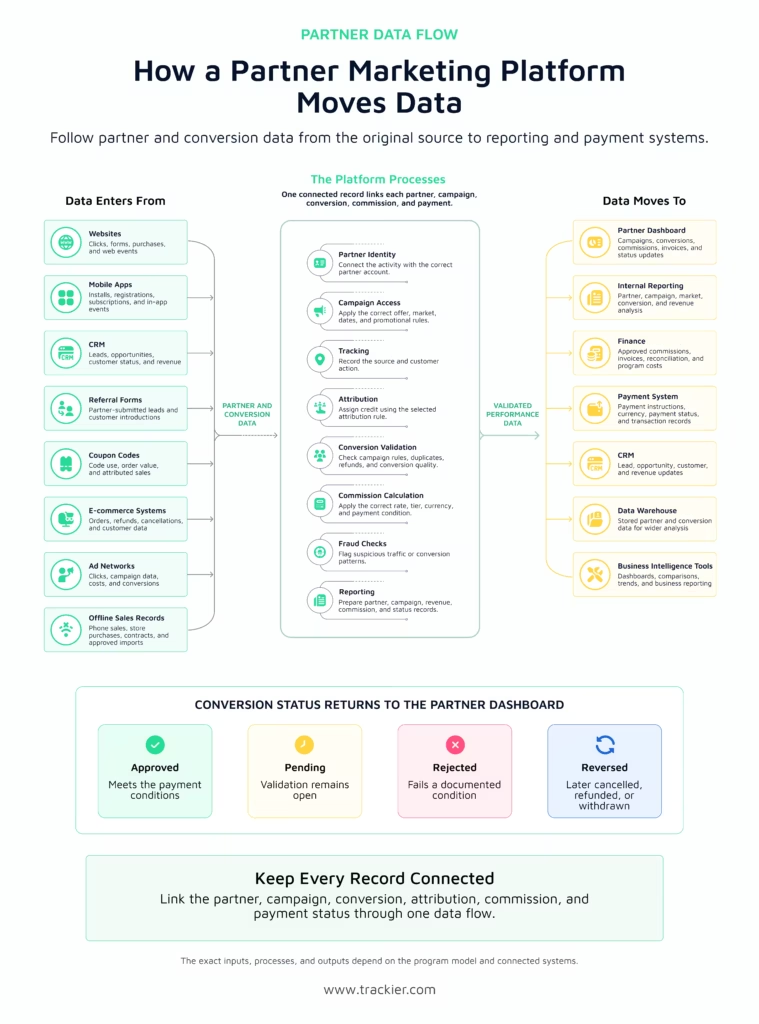
| Record | Information stored |
|---|---|
| Partner | Account details, status, agreement, permissions, market, and partner type |
| Campaign | Offer, product, dates, geography, traffic rules, creatives, and conversion goals |
| Customer action | Click, referral, lead, sale, install, subscription, coupon use, or offline conversion |
| Attribution | Partner credit, tracking method, attribution window, and touchpoint |
| Commission | Rate, tier, currency, approval status, rejection, and reversal |
| Payment | Invoice, approved amount, payment date, method, and reconciliation status |
Connecting these records gives internal users and partners a consistent view of performance and payment data.
Which partner programs can the platform support?
A partner marketing platform can support affiliates, creators, referral partners, publishers, agencies, resellers, distributors, and technology partners.
The required workflows differ across these models. An affiliate program needs link tracking and performance commissions. A referral program needs lead submission and acceptance rules. A reseller program needs opportunity registration, pricing, and revenue records.
Check the supported workflows before selecting a platform. A tool built for one partner type will not automatically support every program model.
Which manual processes can it replace?
The platform can replace separate records used for:
- Partner applications and approvals
- Campaign access
- Tracking-link creation
- Commission calculations
- Conversion validation
- Performance reports
- Invoice records
- Payment status
- Partner access controls
A central record also reduces differences between internal reports and the figures shown to partners.
What Is Partner Marketing Software?
Partner marketing software is technology used to operate, track, and measure partner-led activity.
A focused software product can manage one function such as tracking, partner onboarding, campaign access, commission calculation, fraud checks, or payouts. A broader platform connects several of these functions through shared partner and campaign data.
The terms partner marketing platform and partner marketing software often overlap. Product capability provides a more useful distinction than the label used by the provider.
How is partner marketing software different from affiliate tracking software?
Affiliate tracking software focuses on links, clicks, conversions, attribution, commissions, and affiliate-level reporting.
Partner marketing software can cover a wider set of relationships, including referrals, creators, agencies, resellers, technology partners, and strategic partners.
The correct option depends on the partner models included in the program.
How does the software support campaign operations?
The software can store campaign rules, approved partners, products, offers, geographies, tracking methods, creatives, conversion goals, and commission settings.
A campaign management system also supports campaign creation, access controls, performance limits, and operational changes across active campaigns.
Partner marketing automation can handle repeated actions such as account approvals, campaign assignment, tracking-link creation, performance alerts, and campaign pauses.
How does it connect with other business systems?
A CRM stores prospect, opportunity, and customer records. Payment systems process approved transactions. Business intelligence tools combine data across departments. Mobile measurement platforms record app activity.
Partner marketing software exchanges data with these systems through APIs, postbacks, webhooks, tracking tags, and file imports.
Available partner integrations should match the CRM, mobile measurement, payment, fraud, advertising, and reporting systems already used by the business.
What Features Should You Look for in a Partner Marketing Platform?
Choose a partner marketing platform based on tracking accuracy, operational fit, data access, security, and the partner models included in the program.
A long feature list has limited value when the platform cannot support the program’s conversion events, commission rules, reporting structure, or existing systems.
Does the platform track every required conversion?
List every customer action used for reporting or payment before reviewing software.
These actions can include leads, sales, registrations, account openings, installs, subscriptions, recurring payments, coupon redemptions, offline purchases, and product events.
Check support for the tracking methods used by the business.
- First-party tracking
- Server-to-server postbacks
- Tracking links
- Coupon and referral codes
- Web and mobile events
- CRM imports
- Offline conversion uploads
- API-based tracking
The platform should store the partner, campaign, source, conversion time, revenue, commission, and validation status connected with each action.
Real-time marketing analytics should allow reporting by partner, campaign, geography, device, traffic source, conversion goal, and date.
Does it support the required attribution rules?
Check whether the platform supports first-touch, last-touch, multi-touch, and custom attribution.
Review how it handles attribution windows, repeat purchases, recurring payments, cross-device journeys, coupon use, duplicate claims, refunds, and offline conversions.
Attribution settings should remain visible in reports. A conversion record should show why a partner received credit.
Can it manage different partner models?
Check support for every partner type included in the program.
Affiliates need links, campaign access, conversion tracking, and performance commissions. Referral partners need lead submission, acceptance rules, status updates, and referral payments.
Creators need links, codes, content records, fixed fees, and performance rewards. Resellers need opportunity registration, pricing, margins, and customer ownership rules. Technology partners need integration activity, referred accounts, product adoption, and shared reporting.
Do not assume one workflow will serve every partner type.
Can it configure commissions without manual calculation?
The platform should support the payment models used by the program.
These can include CPA, CPL, CPS, revenue share, recurring commission, reseller margins, fixed fees, hybrid payments, bonuses, and performance tiers.
Check whether rates can change by partner, campaign, product, geography, conversion goal, and effective date.
Historical records should preserve the rate applied when each conversion occurred. Refunds, cancellations, chargebacks, and rejected conversions should update commission records without changing unrelated transactions.
Can it validate traffic and conversion quality?
Quality checks should take place before commission approval.
Review support for duplicate conversions, bot activity, click spam, self-referrals, coupon misuse, geographic mismatch, unusual conversion timing, repeated customer details, and abnormal traffic changes.
Partner fraud prevention should support real-time checks, custom rules, alerts, blocking controls, and partner-level fraud reports.
Every rejected or reversed conversion should include a recorded reason.
Does it provide useful reports for partners and internal users?
Partners should see their campaign access, clicks, conversions, pending commissions, approved commissions, rejected activity, invoices, and payment status.
Internal reports should support partner, campaign, product, market, device, source, conversion status, currency, and date filters.
Check whether reports separate:
- Recorded conversions from approved conversions
- Gross revenue from collected revenue
- Partner commission from total program cost
- Partner-sourced revenue from partner-influenced revenue
- Active partners from registered partners
The platform should allow scheduled reports, data exports, API access, and custom reporting fields.
Does it connect with existing systems?
List every system that exchanges partner or conversion data.
Common connections include CRM software, mobile measurement platforms, e-commerce systems, payment services, data warehouses, fraud tools, ad networks, and business intelligence platforms.
Review API documentation, webhooks, postbacks, authentication, update frequency, retry handling, export formats, and error records.
Confirm who owns the data and how it can be exported during migration or account closure.
Does it meet security and access requirements?
Review encryption, account permissions, two-factor authentication, audit logs, data retention, backup processes, incident response, and regulatory support.
Partner and internal accounts should use role-based access. Each user should see only the partners, campaigns, reports, and financial records connected with their role.
The provider’s security and compliance controls should document data handling, access protection, certifications, retention, and incident procedures.
How should the software be tested before purchase?
Run a pilot using a real partner, campaign, conversion event, and commission rule.
| Test Area | What To Check |
|---|---|
| Tracking | Recorded conversions match the source system |
| Attribution | Credit follows the selected rule and attribution window |
| Validation | Duplicates, refunds, and rejected conversions receive the correct status |
| Commission | Rates, tiers, currencies, and reversals calculate correctly |
| Reporting | Partner and internal reports show consistent figures |
| Integration | APIs, postbacks, webhooks, and exports transfer complete data |
| Access | Users see only permitted records |
| Operations | Recurring work does not depend on manual spreadsheets |
Select the platform after testing the full path from partner setup to approved payment.
How Do You Protect Partner Marketing Data and Program Quality?
Partner programs exchange customer identifiers, conversion events, commission records, payment details, campaign assets, and reporting data. Governance rules should define how this information is collected, accessed, shared, retained, and removed.
Which rules should every partner agreement define?
| Area | Required Rule |
| Promotional Channels | State which websites, social platforms, paid media channels, email lists, apps, and offline methods the partner can use |
| Advertising Claims | Define approved product claims, pricing statements, discount language, and restricted claims |
| Commercial Disclosures | Require clear disclosure of commissions, sponsorships, free products, and other commercial relationships |
| Brand Use | Set rules for trademarks, logos, brand bidding, domain names, coupon codes, and creative edits |
| Tracking | Define approved links, codes, pixels, postbacks, attribution windows, and prohibited tracking practices |
| Data Access | State which customer and campaign data the partner can view, download, store, or share |
| Conversion Approval | Document validation periods, duplicate rules, refunds, cancellations, fraud checks, and rejection reasons |
| Payments | Define commission rates, currencies, payout dates, minimum thresholds, taxes, and dispute deadlines |
| Exit process | Cover account closure, campaign removal, data deletion, unpaid commissions, and continued use of brand assets |
Rules should match the partner model. A creator needs disclosure and claim guidance. An affiliate needs traffic and attribution rules. A reseller needs pricing, territory, and customer ownership terms. A technology partner needs data-processing and system-access terms.
How should partner and customer data be controlled?
Collect only the data required for attribution, validation, payment, reporting, or an agreed customer service.
Document the purpose of each data field, who can access it, where it is stored, how long it remains available, and what happens after the partnership ends.
Partner accounts should use role-based access. A publisher should see its own campaign and payment records, not another partner’s data. API keys, postback credentials, exported reports, and user permissions should be reviewed after role changes or account closure.
Businesses using personal data received from partners for EU marketing activity need a valid processing basis and clear information about how the data will be used under EU rules for third-party marketing data.
Programs processing digital personal data in India should account for the Digital Personal Data Protection Rules 2025.
A July 2026 review listed 12 US states that require covered businesses to honor universal opt-out signals such as Global Privacy Control. Website tracking, partner pixels, analytics tools, and downstream data sharing should respect applicable Global Privacy Control requirements.
How should paid partnerships be disclosed?
Partners should state their commercial relationship wherever compensation, commission, free access, products, discounts, or other benefits influence an endorsement.
The disclosure should appear with the promotional message. It should not sit only inside a profile, terms page, hidden hashtag group, or collapsed description.
The FTC guidance for endorsements and influencers provides current US guidance on disclosing relationships between brands and endorsers.
Approved claim libraries reduce inconsistent or unsupported statements. Regulated products such as finance, healthcare, insurance, gambling, and alcohol require additional review based on the markets where the promotion appears.
How should conversion quality be validated?
Validate conversions before commission approval.
Checks should cover duplicate transactions, bot activity, click spam, self-referrals, coupon misuse, geographic mismatch, repeated customer details, unusual conversion timing, cancellations, refunds, and payment failure.
Every conversion should carry one clear status.
- Pending while the validation period remains open
- Approved after meeting campaign and quality rules
- Rejected after failing a documented requirement
- Reversed after a later refund, cancellation, chargeback, or confirmed breach
Partner reports should show rejection and reversal reasons. Unexplained deductions create disputes and prevent partners from correcting poor traffic or campaign setup.
What should a partner marketing software record?
Partner marketing software should preserve the partner, campaign, traffic source, attribution rule, commission rate, currency, validation status, and approval history connected with every conversion.
Audit logs should record account changes, campaign edits, rate updates, manual approvals, rejected conversions, data exports, and permission changes.
These records support payment reconciliation, partner disputes, compliance reviews, fraud investigations, and reporting accuracy.
Legal requirements differ across markets and industries. Partner agreements, tracking practices, disclosures, and data-processing terms should receive local legal review before launch.
What Causes Partner Marketing Programs to Underperform?
Partner programs lose performance when recruitment, activation, measurement, or commercial rules remain unclear.
Are partners approved without qualification standards?
Approving partners based only on reach or application volume creates poor audience fit, weak traffic quality, and unnecessary account management.
Use the same audience, market, promotional, operational, and compliance criteria for every prospect.
Is onboarding being treated as activation?
An approved account does not represent an active partner.
Define activation through a commercial action such as launching a campaign, submitting a qualified referral, registering an opportunity, or generating an accepted conversion.
Are incentives rewarding volume without quality controls?
Higher conversion volume has limited value when refund, rejection, fraud, or cancellation rates also increase.
Connect commission tiers and bonuses with accepted revenue, customer retention, product adoption, or another verified quality measure.
Are attribution and commission rules changing without records?
Unrecorded changes create reporting differences and payment disputes.
Store the attribution model, attribution window, commission rate, currency, validation status, and effective date applied to each conversion.
Is the program expanding before the pilot is validated?
Adding more partners or markets increases existing tracking, onboarding, payment, and compliance problems.
Confirm conversion accuracy, customer quality, partner activation, commission calculations, and payout reconciliation before expanding the program.
How Are AI and Automation Changing Partner Marketing?
AI and automation are changing how businesses find partners, manage routine work, analyse performance, and support partner-led customer growth.
IDC’s 2026 partner ecosystem research finds that automation is absorbing basic implementation and support work. Partner value is moving toward customer guidance, business knowledge, risk control, and outcome delivery.
How can AI support partner selection?
AI can compare prospects using audience fit, geography, industry focus, campaign history, customer quality, content relevance, and compliance records.
Use the output to prioritise partners for review. Approval should also include brand fit, promotional methods, reputation, technical readiness, and commercial terms.
Document the data used for partner scoring. A score without supporting criteria cannot explain why one partner received priority over another.
Which partner activities can be automated?
Automation can handle repeated actions such as:
- Reviewing applications against stated criteria
- Creating partner accounts
- Assigning campaigns by partner type or market
- Generating tracking links
- Sharing onboarding material
- Applying commission rules
- Sending performance alerts
- Pausing campaigns after reaching limits
- Flagging unusual conversion activity
- Preparing invoices and payment records
Keep approval controls for commission changes, account suspension, conversion rejection, payment holds, and contract updates.
How can AI improve partner enablement?
AI can organise resources according to the partner’s role, market, product knowledge, and previous activity.
An affiliate can receive campaign material linked to its traffic source. A reseller can receive sales content for its customer segment. An agency can receive case studies connected with its industry.
Only 40% of partners currently have full access to company AI tools, according to Salesforce’s 2026 sales research. Partner access should still follow data permissions, approved use cases, and security controls.
How can AI support performance analysis?
AI can identify changes across conversion rate, customer quality, refunds, partner activity, revenue, and campaign engagement.
Useful applications include:
- Identifying inactive partners
- Detecting unusual traffic patterns
- Finding campaigns with falling conversion quality
- Grouping partners by customer value
- Forecasting commissions and payouts
- Recommending relevant campaigns
- Identifying partners suited to a new market
Accurate recommendations depend on complete partner, campaign, conversion, attribution, and payment records.
Which decisions require human review?
Keep human review for:
- Partner approval and rejection
- Contract changes
- Commission disputes
- Fraud investigations
- Account suspension
- Payment holds
- Data-access changes
- Partnership termination
Store the data, rule, and approval history connected with every decision that affects partner access, attribution, commission, or payment.
How Do You Build a 90-Day Partner Marketing Plan?
A 90-day plan should produce one tested partner model, an active pilot group, verified tracking, and enough performance data to decide what to improve or expand.
What should happen during the first 30 days?
Define the business outcome before recruiting partners.
Choose one primary conversion, such as a qualified lead, sale, subscription, app install, account opening, or retained customer. Set the attribution window, validation rules, target acquisition cost, and customer-quality standard.
Create an ideal partner profile based on audience, market, promotional method, brand fit, technical readiness, and compliance history. The partner recruitment process should use these criteria for every applicant and prospect.
Document the program structure. Include partner responsibilities, approved channels, commission rules, payout schedule, tracking method, campaign restrictions, data access, and dispute process.
Select a partner marketing platform when spreadsheets and separate systems cannot manage tracking, commissions, reporting, validation, and partner access accurately.
Complete these deliverables before recruitment begins.
- Program goal and conversion definition
- Ideal partner profile
- Commercial model
- Partner agreement
- Campaign rules
- Tracking and attribution setup
- Onboarding material
- Performance dashboard
What should happen during days 31 to 60?
Recruit a small pilot group that represents the partner types the program plans to support.
Complete approval, contracting, account setup, campaign assignment, tracking-link creation, and training. The partner onboarding process should give each partner the information and access required for its assigned role.
Test the complete conversion path before launch.
Create a test click or referral, complete the target action, confirm attribution, validate the conversion, calculate the commission, and check the partner report. Repeat the test for refunds, rejected conversions, duplicate activity, and reversals.
Give each partner one defined first action and a deadline. This could be launching a campaign, submitting a referral, registering a deal, publishing approved content, or completing an integration test.
Salesforce’s partner program planning guidance also connects program design with partner enablement, external launch, shared reporting, and regular performance reviews.
What should happen during days 61 to 90?
Measure partner progress from approval to productive activity.
Track onboarding completion, partner activation, time to first activity, time to first qualified conversion, conversion rate, customer quality, commission, revenue, and net contribution.
Review inactive partners separately from active partners. Resolve missing access, unclear campaign rules, weak offers, tracking errors, or incomplete training before increasing recruitment.
Use partner attribution to confirm which partners introduced, influenced, or completed each conversion. Keep partner-sourced and partner-influenced revenue separate.
Collect structured feedback from the pilot group. Ask about onboarding, campaign access, creative material, reporting, commission clarity, payment terms, and support response.
Expand the program only after the pilot meets its tracking, quality, compliance, and financial thresholds. Increase partner recruitment, campaign access, or incentives one change at a time so the effect remains measurable.
What should be ready after 90 days?
| Area | Required Output |
| Strategy | Defined customer outcome, partner model, and market |
| Recruitment | Tested ideal partner profile and qualification process |
| Operations | Documented approval, onboarding, campaign, and support workflows |
| Technology | Verified tracking, attribution, reporting, and commission calculation |
| Activation | Partners completing the program’s defined commercial activity |
| Quality | Conversion validation, fraud checks, and rejection rules |
| Finance | Confirmed commission, invoice, payout, and reconciliation process |
| Measurement | Baseline activation, conversion, customer-quality, revenue, and ROI data |
| Growth Decision | Clear criteria for expanding, revising, or closing the pilot |
Use the first 90 days to test the operating model. Promotion can then expand through the channels covered in the guide to promoting partner programs.
Is Partner Marketing Right for You?
If you’re looking to:
- Expand without exploding your budget
- Increase conversion rates
- Scale into new markets
- Improve retention
…then yes, partner marketing is worth your attention.
Success isn’t accidental, it’s built. It takes strategic alignment, a solid framework, and the right platform to power it all. That’s where Trackier comes in, bringing structure and scalability to your partner marketing efforts. When done right, the payoff is big: sustainable growth and lasting brand equity. A
re you ready to unlock the full potential of partner marketing? Your journey starts today.
What Should You Do Next?
Start with one customer segment, one partner model, and one measurable conversion.
Document the partner qualification criteria, onboarding steps, attribution rule, commission structure, validation process, and payout schedule before recruitment begins.
Run a limited pilot. Track activation, accepted conversions, customer quality, acquisition cost, and net contribution. Fix tracking, commercial, or operational gaps before adding more partners, campaigns, or markets.
Use partner marketing software when manual records no longer provide accurate tracking, commission, validation, and payment data. A partner marketing platform should support the operating model already defined.
Partner marketing scales through repeatable processes, reliable data, clear commercial terms, and partners who create measurable customer value.
Hungry for more? Download our free case studies that cover real stories.
Or sign up for Trackier’s newsletter to get weekly best practices on referral programs and partner marketing.
Frequently Asked Questions
What is the difference between partner marketing and affiliate marketing?
Affiliate marketing is a subset of partner marketing where individuals or publishers promote products and earn commissions based on performance. Partner marketing, on the other hand, encompasses a broader spectrum of collaborations, such as co-marketing, strategic alliances, and referral programs, focused on shared goals and long-term value creation between brands.
How do I choose the right partner for my marketing campaign?
Choosing the right partner involves evaluating audience overlap, brand alignment, complementary offerings, and mutual goals. Ideal partners should enhance your value proposition and be willing to co-invest in campaign efforts. It’s also important to assess their marketing capabilities, communication transparency, and overall credibility before entering into any collaboration.
What are some examples of successful partner marketing?
Great examples include Uber and Spotify’s in-app music integration, GoPro and Red Bull’s extreme sports content partnership, and Starbucks and Barnes & Noble’s in-store café collaboration. These partnerships succeeded because they aligned customer interests, co-created unique experiences, and leveraged each other’s brand power to reach wider, more engaged audiences.
How can I measure the ROI of partner marketing?
ROI can be measured using key performance indicators like leads generated, customer acquisition cost (CAC), sales conversions, engagement metrics, and partner-influenced revenue. Attribution tracking helps determine which partner activities drive results. Comparing performance data against initial goals ensures transparency and allows for ongoing optimization of the program.
What tools do I need to run a partner marketing program?
Running an effective partner program requires tools for partner onboarding, campaign tracking, performance analytics, communication management, and payout automation. These tools streamline operations, reduce manual errors, and allow you to track performance in real-time, making it easier to scale efforts and ensure consistent partner engagement.
Is partner marketing suitable for B2B businesses?
Yes, partner marketing is highly effective in B2B. From co-hosted webinars and joint whitepapers to referral alliances and software integrations, B2B brands benefit from access to new audiences, shared expertise, and enhanced trust. Strategic partnerships can also accelerate market entry, improve lead quality, and strengthen brand authority in niche sectors.