
There is a common misconception that affiliate marketing is all about sharing a link and earning a commission, and that’s it. The job is done. In reality, every successful affiliate program relies on a set of processes and tools that make outcomes and the affiliate journey more effective. The global affiliate marketing industry is valued at over $20 billion in 2026 and is projected to reach past $35 billion by 2033. Hence, separate tools have become a necessity and are required by both the affiliates and the advertisers, respectively.
- Affiliate tracking and management platforms help brands run their programs.
- SEO, content, link management, and analytics tools help affiliates make the most of the traffic and audiences they have built.
Understanding this difference is a crucial step when an affiliate marketing stack is being built. The right affiliate marketing tools reduce the manual work, improve performance visibility, and make it easy to manage growth.
The wrong ones, on the other hand, can add unnecessary complexity without solving the problem you actually have.
This guide breaks down the different types of affiliate marketing tools, what each one does, and where they fit into the affiliate marketing process.
Two Sides of the Same Industry
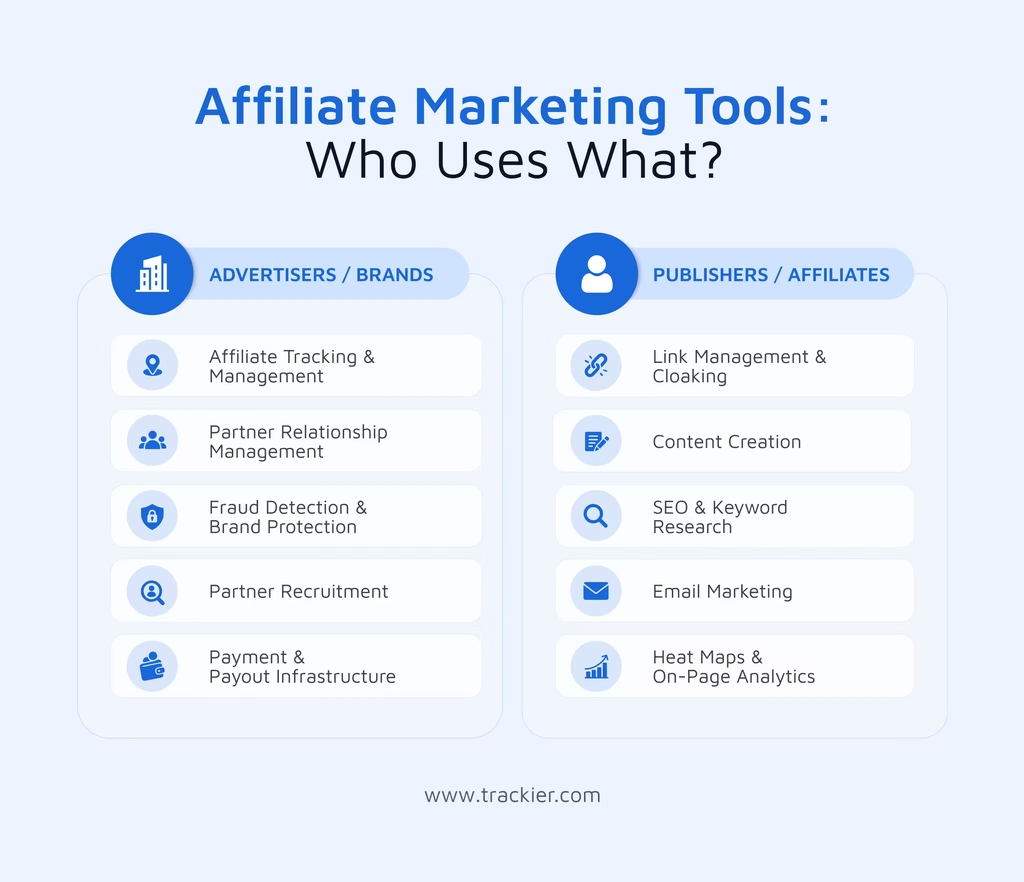
Before understanding the tools that can be utilized, it is important to understand the roles that they are meant for. This is because the answer to what the right tool is depends entirely on the side that is being talked about.
- The advertiser or brand runs the affiliate program. They recruit partners, set commission structures, track who sends them customers, and pay out. The tools they would require should be able to handle hundreds of partners, thousands of clicks, disputed conversions, and fraud attempts.
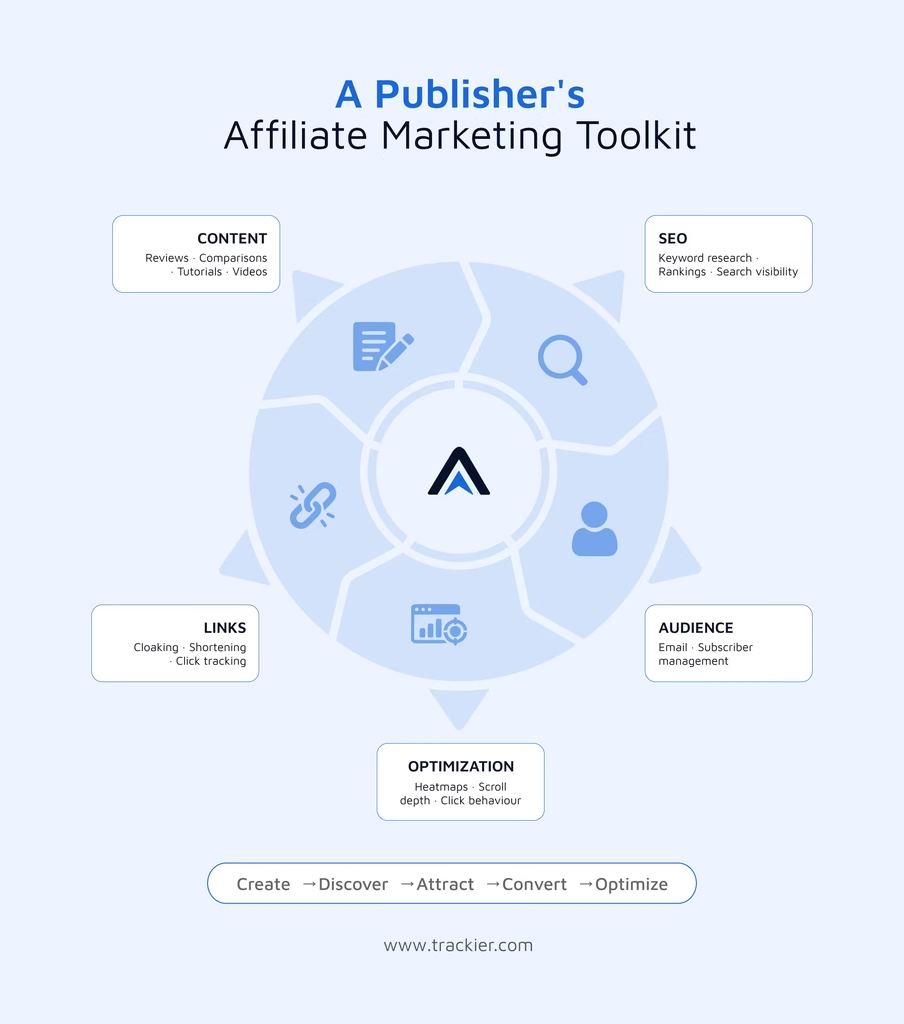
- The affiliate or the publisher promotes the advertiser’s product or service in exchange for commission. Their tools need to handle content creation, link management, and making the most of the traffic and audience they’ve already built.
Marketing Tools for Brands and Advertisers
Affiliate Tracking and Management Software
This is the basic technology that runs an affiliate program, and Trackier handles the three essential things every affiliate program needs —
- Tracking which affiliate sent the given visitor
- Attributing the resulting sale and lead to the right partner
- Paying that partner accurately and on time
What comes under this hood is –
- Cookie and click tracking
- Conversion attribution across multiple touchpoints and devices
- Automated commission calculation for the structure that is chosen
- Payout processing that doesn’t require manual reconciliation with a spreadsheet
- Real-time reporting
- Fraud detection that flags suspicious activities like traffic spikes or self-referrals
- API to make the system talk to the CRMs and payment stack
- Support for multiple campaigns or brands from a single account
Enterprises running unmonitored partner campaigns or manual setups lose or misallocate roughly 15% to 20% of their digital marketing spend due to unmeasured conversions. Implementing structured tracking platforms allows organizations to unlock this capital and reallocate it to high-yield channels.
Partner Relationship Management (PRM) Tools
The role of performance marketing software is to tell “what” happened. A PRM, on the other hand, helps in the management of the relationship with affiliates. This includes –
- Onboarding new affiliates
- Sharing promotional assets
- Communicating updates
- Having updates on each partner without having to dig into old email threads
Some tracking platforms like Trackier bundle this in, while other brands layer a separate PRM tool on top, particularly in B2B programs where a handful of high-value partners get a lot of hands-on attention.
Affiliate Fraud Detection and Brand Protection Tools
There is a plethora of fraud variations beyond what new affiliate program managers expect –
- Cookie stuffing
- Fake leads
- Bots
- Inflating click counts
- Affiliates buying paid ads on the brand’s trademark to intercept traffic that would have converted anyway
This is exactly what dedicated brand protection tools prevent. These tools can, hence, either be integrated into the affiliate tracking platform or can be built in. Trackier provides both.
For programs that have a significantly high ad spend, this affiliate marketing tool is not optional. The way brands make use of this tool differentiates where the brand is paying for real customers and where it is unknowingly subsidizing fraud.
Some of the affiliate fraud detection and brand protection tools include –
- TrafficGuard: Best for real-time traffic validation, invalid traffic filtering, and click-quality analysis.
- ClickCease: Best for PPC (pay-per-click) click fraud prevention and blocking fake bot traffic.
Partner Recruitment and Discovery Tools
Earlier, finding good affiliates used to mean manually searching the web for relevant sites and cold emailing contract forms in order to look for partners. But now, recruitment tools use AI and data like search rankings, traffic estimates, and audience overlap to be able to identify the sites and affiliates that can –
- Traffic in the brand’s niche
- Surface the contact information
- Manage the outreach campaign itself
Payment and Payout Infrastructure
Some tracking platforms handle payouts natively. Others integrate with dedicated payment tools and handle the actual money movement. This is especially beneficial for businesses with international affiliates who must be paid in their own currency or through different payment methods.
A recent Forrester index found that 75% of partner marketing executives are aggressively scaling up their automation tech stacks. Without automated multi-currency structures, a business cannot scale its program safely without drowning its finance team in manual errors.
This becomes a real consideration once a program has enough partners that “send everyone a bank transfer manually” stops being viable.
Affiliate Marketing Tool for Publishers
Link Management and Cloaking
Raw affiliate links are long, displeasing to the eye, and easy to tamper with, so much so that a malicious script can swap an embedded affiliate ID and quietly redirect commission to someone else. Link cloaking management tools shorten and “cloak” these URLs into something readable and shareable, while also tracking clicks per link so a publisher can see which placement is actually driving the traffic.
For international promotions, some link tools also auto-detect a visitor’s country and route them to the right regional storefront, which matters a lot for anyone in the Amazon Associates program specifically.
Content Creation Tools
Affiliate marketing runs on content –
- Reviews
- Comparisons
- Tutorials
- Unboxing videos
- Walkthroughs
In fact, this category covers a lot of ground. This includes –
- Screen recording software for software walkthroughs
- Basic video equipment for product demos
- Design tools for the graphics and banners that go into blog posts and social posts
What are some affiliate marketing tools that are commonly used for content creation?
There are separate designated tools for writing and editing (Grammarly, Jasper, and ChatGPT), visual design (Canva, CapCut), and SEO and research (Semrush, Ahrefs).
The common idea is that demonstrating a product convincingly tends to convert better than simply linking to it, so any tool that makes that easier to produce earns its keep.
SEO and Keyword Research
For publishers who rely on search traffic (and most do), keyword research and SEO tools determine which content is even worth creating.
These handle keyword difficulty and volume, track ranking positions over time, and increasingly surface which terms are triggering AI-generated search answers. The latter is a newer consideration as more search traffic gets absorbed by AI overviews before a user ever clicks a result.
Email Marketing Software
Audience is also built through platforms like social media and search engines that cannot be controlled. The numbers can change overnight if an algorithm or policy changes. An email list is one of the few audience assets a publisher actually owns. What is worth flagging here is the fact that not every email platform tolerates affiliate marketing.
Some explicitly restrict or ban affiliate links in campaigns, so this is one category where reading the terms of service before signing up genuinely matters.
Heat Maps and On-Page Analytics
Heatmaps are necessary as an affiliate marketing tool because it turns confusing user behaviour into clear action insights. They show whether users click non-interactive images or miss the affiliate link.
With the help of heat maps and on-page analytics, affiliates can identify exact user drop-off points instead of guessing why the promotion fails. They can then fix the layout accordingly.
But how can affiliates use a heat map tool in practice?
- Add a lightweight JavaScript snippet from a heatmap tool like Hotjar to the landing page.
- Let the tool run until enough visits are gathered so that the data is visible accurately
- Look at warm colors (red, orange) for high activity and cool colors (blue) for ignored areas
They help affiliates by helping them find click friction, measure scroll depth, cut wasted spend, and improve return on investment.
What are Some Affiliate Marketing Tools for Affiliates and Advertisers?
There are certain categories of tools that both advertisers and affiliates can use. Some of these tools include –
- Analytics tools: Analytics platforms like Google Analytics are relevant for both. Advertisers use them to understand traffic quality and channel performance across their whole program. Publishers, on the other hand, use them to see what’s converting on their own site.
- Communication tools: Both sides use everything from simple video messaging to project management. It is just used for different conversations. An advertiser can use it for updating multiple partners on a promotion; publishers can use it for following up on a commission question.
- Spy and competitive intelligence tools: Commonly found in performance marketing, these tools let both sides see what is working for the competitors. Understanding what competitors are doing is one of the most prominent steps in curating a marketing strategy. While advertisers check how rival programs structure their commission and creatives, affiliates research the offers and angles that are already converting in their niche.
Common Mistakes to Avoid When Building the Affiliate Marketing Tool Stack
There are some patterns that both sides must be wary of, and these patterns are worth being called out directly –
Buying the Tool Before the Process Exists
The role of a software or affiliate marketing tool is to automate the process and not create it as well. An advertiser who hasn’t decided how commissions should be structured, or a publisher who hasn’t figured out what content actually converts, will get very little out of even the best platform in that category.
It is only when the process is on the floor that the tool executes faster.
Choosing Based on Feature Count
Every tool, be it a fraud detection tool, a tracking platform, or an SEO suite, lists roughly the same feature set on its homepage.
The deciding factor here is not which of these tools has more features; it is whether any of them handles the brand or the affiliates’ problem well. This can include the –
- Attribution model
- Commission structure
- Traffic volume
A tool that is excellent in general but does not fulfill what is required is just a waste of money.
Ignoring How Tools Talk to Each Other
A tracking platform that cannot pass the data to the CRM, or a link manager that cannot feed the click data into the data analytics, will take the brand back to square one by reconciling the data manually.
A tool should not be analysed on the basis of what it does in isolation but on how it can complement the whole system and the other tools.
Under Investing in the Tool That Does Most of the Work
Spreading a limited budget thinly across the categories may seem tempting but is a wrong practice. The tool that is directly linked to the revenue actually deserves the lion’s share of the budget, and the rest should be filled in as the gaps start to appear.
Wrapping It Up
An affiliate marketing tool is a whole system in its own and can be split across two different jobs: running a program and promoting one. Advertisers need infrastructure for tracking, attribution, commissions, fraud prevention, and payouts at scale. Publishers need infrastructure for content, links, discoverability, and audience ownership. The tools that solve each problem look almost nothing alike.
The important point is that more tools do not automatically mean a better affiliate marketing stack. The right combination depends on who is using the tools, how the affiliate program operates, how much traffic it handles, what needs to be tracked, and where the biggest operational gaps exist. Affiliate tracking, for example, connects conversions back to the partner who generated them and provides the data needed for accurate commission calculation and campaign analysis.
So, before choosing an affiliate marketing tool, start with the process rather than the feature list. Identify what needs to be tracked, automated, protected, or optimized first. Then choose the tools that solve those specific problems and can work together as the program grows.
FAQ
What is an affiliate marketing tool for publishers?
An affiliate marketing tool for publishers helps creators, bloggers, website owners, and other affiliates manage and optimize the activities involved in promoting products or services.
What are some examples of affiliate marketing tools for publishers?
Common publisher-focused tools include link management software, SEO platforms, keyword research tools, content creation software, email marketing platforms, analytics tools, and heatmap solutions.
The most useful tool depends on how the publisher attracts visitors and monetizes their audience.
What are affiliate fraud detection and brand protection tools?
Affiliate fraud detection and brand protection tools help advertisers identify and prevent suspicious activity that can lead to invalid traffic, incorrect attribution, or commissions being paid for fraudulent conversions.
Depending on the solution, these tools can help identify activities such as fake leads, bots, self-referrals, click manipulation, cookie stuffing, and unauthorized trademark bidding.
Can an affiliate marketing tool track clicks and conversions?
Yes. Tracking clicks and conversions is one of the primary functions of many affiliate marketing tools.
The tool records the relevant affiliate or campaign identifier when a visitor interacts with an affiliate link or another supported tracking method. If that visitor later completes a tracked action, such as a purchase or lead submission, the platform can attribute the conversion to the appropriate affiliate according to the program’s tracking and attribution rules.
Can an affiliate marketing tool calculate commissions?
Many affiliate marketing tools can automatically calculate commissions based on rules configured by the advertiser. These rules can support different commission structures, depending on what the platform offers.
Automated commission calculation can reduce spreadsheet-based reconciliation and make it easier for advertisers to manage larger numbers of affiliates and transactions.