The publisher in affiliate marketing is the connecting point between the brands and the potential customers by delivering content, influence, and trusted recommendations. Affiliate Marketing is becoming immensely popular and will evolve into a $20 billion-plus industry by the year 2026.
Publishers help in generating measurable results for the brands through clicks, leads, and sales rather than impressions.
However, as programs continue to grow, it becomes much more difficult to manage so many publishers, check their performance, attribute conversions, and pay the right publishers.
To solve all of these challenges, brands can leverage affiliate tracking software for real-time updates, accurate attribution, and fraud prevention.
What is a publisher in affiliate marketing
In affiliate marketing, a publisher is a person or an organization that endorses the products or services of a company with the help of affiliate links, getting paid for successful sales generated via their efforts.
Publishers do not own the service or product they are promoting; their goal is to generate website traffic leading to sales conversion through different promotional channels such as blogs, social networks, review websites, and more.
They play an important role in the affiliate marketing industry along with advertisers and networks in making it possible to achieve certain performance goals.
With the increase in the number of affiliate professionals needed, marketers who are aiming for a career in performance marketing can explore many job offers in affiliate and digital marketing on Jooble, where they can look for positions in different industries and experience levels.
How does a publisher in affiliate marketing work
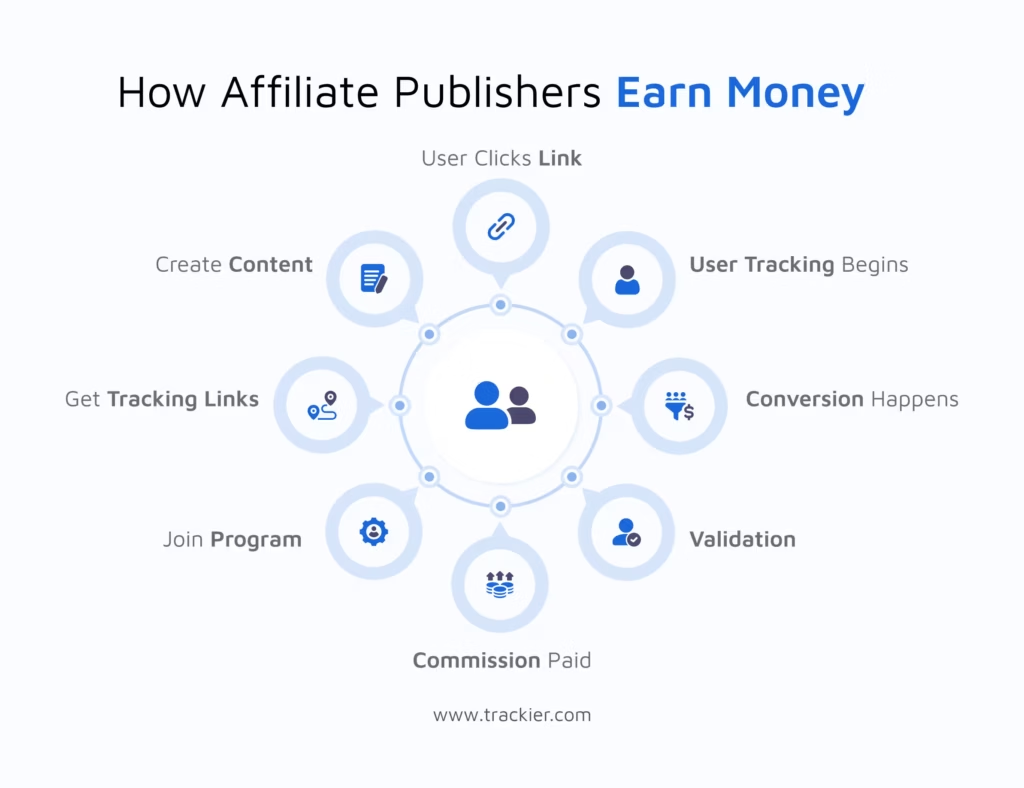
Affiliate publishers operate within a systematized process enabling them to make money through their online activities by utilizing performance-based tracking to convert both content and traffic.
Step 1: Register with an affiliate program
First, a publisher has to register with the required affiliate program or network and select what products or services they want to promote.
All affiliate programs form their own commission rules, attribution models, and conversion systems. A publisher can decide to work with a single program or with a big network that can take care of a lot of brands.
Step 2: Obtain tracking links
After registration, a publisher is given tracking links or IDs that show what actions they have to take. Links contain some parameters through which it will be determined which publisher made the conversion when a user clicks on the link.
Some networks also deliver other tools helping publishers to connect directly to the product pages of their affiliates through the parameters of creative assets used.
Step 3: Publish content or ads
Publishers become creative in their output by writing blogs, making videos on YouTube, posting on social media, emailing, or creating paid ads.
The purpose of all these operations is to attract the most relevant and specific traffic and well-targeted users instead of random people.
Step 4: The user clicks the link
Once a user clicks on an affiliate link, the system captures the relevant information such as when the click happened, what device was used to make that click, and which publisher was involved.
At this stage, some form of tracking cookie or other means of tracking the user’s journey will then be saved. It is also important to point out that there is no interruption to the user’s browser as this process happens within milliseconds.
Step 5: User journey is tracked
It is also important to note that the tracking of the user is done continuously through the use of cookies or other devices.
Such means can include pixels and server-to-server technologies which have been used to ensure that even delayed purchases can still be attributed to the right publisher of the product.
This tracking is done over a period of time which is specified by the merchant and can range from 24 hours to 90 days.
Step 6: The process of conversion
Conversion is recognized from the moment the user does the action as required by the system.
There are some marketing systems, such as CPA (cost per action), CPL (cost per lead), or CPS (cost per sale), which describe what to consider as the action.
Step 7: Validity of action and approaching the payment process
Prior to making a payment, advertisers validate the action performed to settle the issue of fraud, duplicates, or cancellation. Validation ensures that payments are made for those actions only.
Step 8: Commissions are paid to the publisher
After the approval of the actions taken, the publisher receives the commission. Then, all payments related to the action are made for the whole month as compensation according to the terms and conditions of the payment system in use.
Types of publishers in affiliate marketing
Affiliate publishers can’t be treated alike because they are distinct types of publishers who utilize various platforms, types of content, and approaches to produce traffic and convert it into sales. Types of publishers can be described as follows.
1. Publishers of content and blogs
Such publishers have websites and blogs that utilize effective SEO strategies to produce articles, reviews, comparisons, and other types of content designed to help their users make smart buying choices.
These publishers have been found to convert traffic into sales with the help of a very high purchase intent.
2. Publishers of influencers and social media
The viral efforts of influencers through Instagram, TikTok, YouTube, and other websites prove that they are credible sources of information because of their recommendations and the connection that they create with their followers.
Influencers are celebrities who are well respected by their audiences and therefore make an important type of affiliate publisher.
3. Distribution of coupons and deals
These are the publishers that attract users looking for promo codes, discounts, and deals. The conversion rate of coupon deals is very high, and they reach their peak during seasonal sales and high-intent shopping periods.
4. Cashback and loyalty platforms
These companies are able to incentivize their customers through cashbacks and bonuses on every purchase made. They make a significant contribution to the achievement of repeat sales.
5. Email and newsletter publishers
Such types of publishers prefer to utilize preselected mailing lists for the sake of advertising offers to interested subscribers, resulting in positive conversion rates.
6. Comparison and niche sites
Such platforms enable users to conduct deep product analysis based on multiple parameters that help in making final purchasing decisions.
7. Mobile app publishers
Mobile applications such as shopping assistants or finance applications allow advertisers to integrate affiliate programs directly into the app.
8. Paid media publishers
These publishers usually utilize paid media marketing such as Google, Meta, and other programmatic channels to bring users to their affiliate products through targeted ads.
The platforms have potential for scalability, but they require thorough tuning to sustain high profitability and minimize the risks of wasting their marketing budget.
What is the work of a publisher
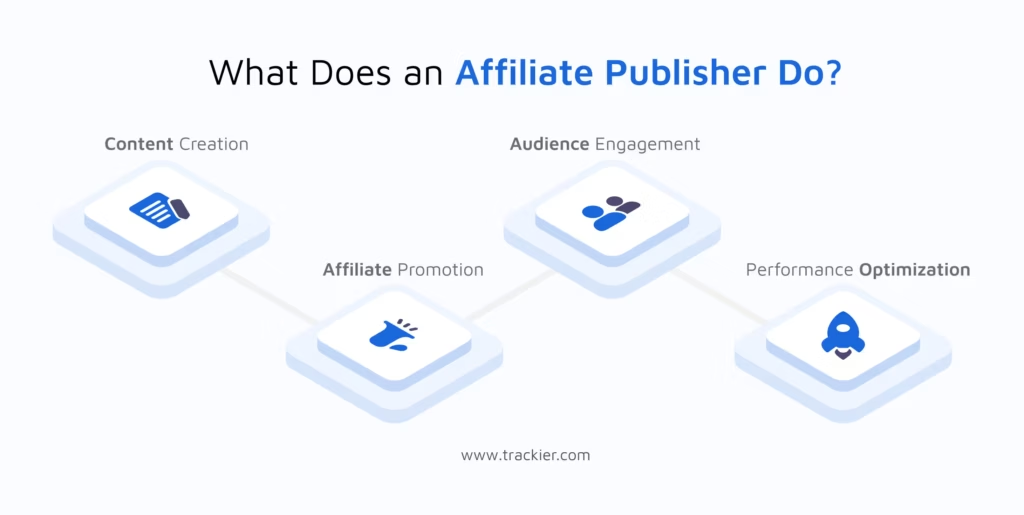
A publisher in affiliate marketing does more than just constructive work; it continues to influence the actions of customers through trusted recommendations and affiliate links.
What the publisher does is:
- Create content (like reviews, guides, and more)
- Use affiliate links
- Answer questions and engage audiences
- Evaluate the performance of each of their actions and make adjustments
Every publisher chooses what product to promote and how to do it, as well as specific audiences to work with.
All kinds of publishers are now becoming important figures in the world of affiliate marketing, due to their work with all types of formats, starting from SEO content to influencer marketing.
To scale efficiently in affiliate marketing, it has become relevant to use performance marketing software that offers accurate conversion tracking and helps optimize campaigns.
Difference between advertising and publisher in affiliate marketing
Understanding the difference between advertisers and publishers is crucial for understanding how affiliate marketing works since both parties have different but very significant functions.
| Aspect | Advertiser | Publisher |
| Definition | A business or brand that creates and sells products or services | An individual or business that does the marketing for the products or services |
| Involvement in Affiliate Marketing | Offers products or services and creates an affiliate program | Advertises through content, traffic, and audiences |
| Main Goal | Get revenues and leads | Receive a commission from the revenues generated from sales |
| Ownership | Owns the product or service | Does not own the product |
| Payment Model | Pay a commission (CPA/CPL/CPS) to publishers | Get a commission for generated performance |
| Traffic Responsibility | Rely on the publisher for traffic | Generate traffic to the advertiser |
| Example | E-commerce brand, SaaS company | Blogger, influencer, coupon site, YouTuber |
How to find the right publishers
As per the report, affiliate marketing contributes up to 5%-25% of total online sales for leading companies in the market. A small group of publishers will generate the biggest part of revenues, and it is essential to look for quality, rather than quantity, when selecting publishers in affiliate marketing.
The number of publishers chosen is not as important as selecting ones that already serve the audience one wants to reach and will help bring in real conversions.
The first step in identifying the right publishers is to make use of an affiliate tracking tool that provides data based on performance. One can be precise in selecting the right publishers based on conversions, EPC, traffic quality, etc.
Usually, the best publishers represent high-purchase-intent channels such as blogs, YouTube channels, comparison websites, influencers, and coupon sites.
One should take into consideration many factors to evaluate the right publisher: audience relevance, audience engagement, conversion history, etc., but not just the level of reach.
Testing the selected publishers is also very important. Small campaigns will help brands to assess how their partnership can work, without having to risk a big amount of money.
Communicating with partners is one of the ways to ensure that both sides achieve good results. Good campaigns, an optimized creative approach, and audience receiving solid feedback will help increase conversions in the future.
The last thing to do to succeed in the affiliate marketing process is to measure all indicators using a proper tracking system like Trackier.
Conclusion
It can be said that publishers are an important element when it comes to affiliate marketing. They play the role of intermediaries between the brands and potential clients with an intention to purchase something.
Different types of publishers such as blogs, social media influencers, coupon websites, or comparison portals serve their own purpose in the process of brand awareness, engagement, and conversion.
To reach affiliate marketing goals, businesses should combine and manage the right type of publishers. They should make use of numerous tools that can provide affiliate marketing reports to monitor the effectiveness of the program.
Ready to make a difference in your affiliate program?
Book a demo of the right affiliate platform that allows you to onboard high-performing publishers, track conversions in real-time with accurate attribution, and prevent fraud.
FAQs
What skills do affiliate publishers need?
Publishers need content creation, SEO, audience targeting, and basic analytics skills. Understanding consumer behavior and digital marketing also helps improve conversions. Over time, learning performance optimization and tracking tools becomes important to scale income and build a sustainable affiliate marketing business.
How do brands choose publishers?
Brands choose publishers based on audience relevance, engagement quality, past performance, and traffic sources. They prefer publishers who can deliver consistent conversions rather than just clicks. Many brands use platforms like Trackier to evaluate publisher performance and ensure data-driven partnership decisions.
Is affiliate marketing still profitable for publishers?
Yes, affiliate marketing remains highly profitable, especially with the growth of digital commerce and influencer-led content. However, success depends on strategy, niche selection, and consistency. Publishers who focus on trust, high-quality content, and performance optimization can build long-term and scalable income streams.
How do publishers track their performance?
Publishers track performance using affiliate dashboards or tracking platforms that show clicks, conversions, and earnings. Tools like Trackier provide real-time insights, attribution tracking, and fraud detection, helping publishers understand which campaigns are working and how to optimize their content for better results.
Can anyone become a publisher?
Yes, almost anyone can become a publisher if they have an audience or content platform. Beginners often start with blogs or social media pages. The key requirement is the ability to create valuable content and drive relevant traffic that can convert into meaningful actions for advertisers.