If you’re selling goods and services on the internet through a single platform, how are you bringing in users in 2026?
It is a pertinent question to ask, in an increasingly evolving marketplace, where bringing in players, retaining them and ensuring their satisfaction are all crucial levers for ecommerce marketing success.
There are online stores to be found everywhere, in every nook and corner of the internet — at local, regional, national and continental levels. So how do you stand out?
As mobile phone penetration increases and 5G network penetration becomes the norm, the user base for such businesses is likely to keep growing. Pretty much anyone who has access to the online medium is a valid prospect, a likely customer. Then how do you segment, and what’s the acquisition strategy at play?
Let’s understand what strategies must be deployed, which channels matter most and how growth needs to be planned for 2026.
What is eCommerce Marketing?
According to the American Marketing Association, “ecommerce marketing involves promoting products or services sold online to potential customers and converting them into buyers.” To achieve this end, marketers use various channels and mediums, which become the tools in play to market the given ecommerce platform.
The selling and buying happens primarily through the following mediums:
- Websites
- Apps
- Social Media
- Messengers
The goal of marketing here is to:
- Highlight the goods and services available through a given store
- Share details about pre and post-purchase service available
- Promote discounts and offers that are ongoing
Then what makes ecommerce marketing different from traditional marketing, you may ask?
In simple terms, there is the difference in the way the sale is conducted: online versus offline. There’s also the fact that traditional marketing is more broad — whether you choose radio, television, newspaper or even billboards. When done for ecommerce, there is a more tactical, targeted approach with an emphasis on data to direct the efforts. Strong customer communication also plays a key role in reducing chargebacks, as proactive order updates, clear return policies, and timely support can prevent misunderstandings that often lead to payment disputes.
Additionally, the marketing of ecommerce offers the opportunity to optimize campaigns and collaterals in real-time, while traditional marketing suffers from delayed feedback.
How eCommerce Marketing Works
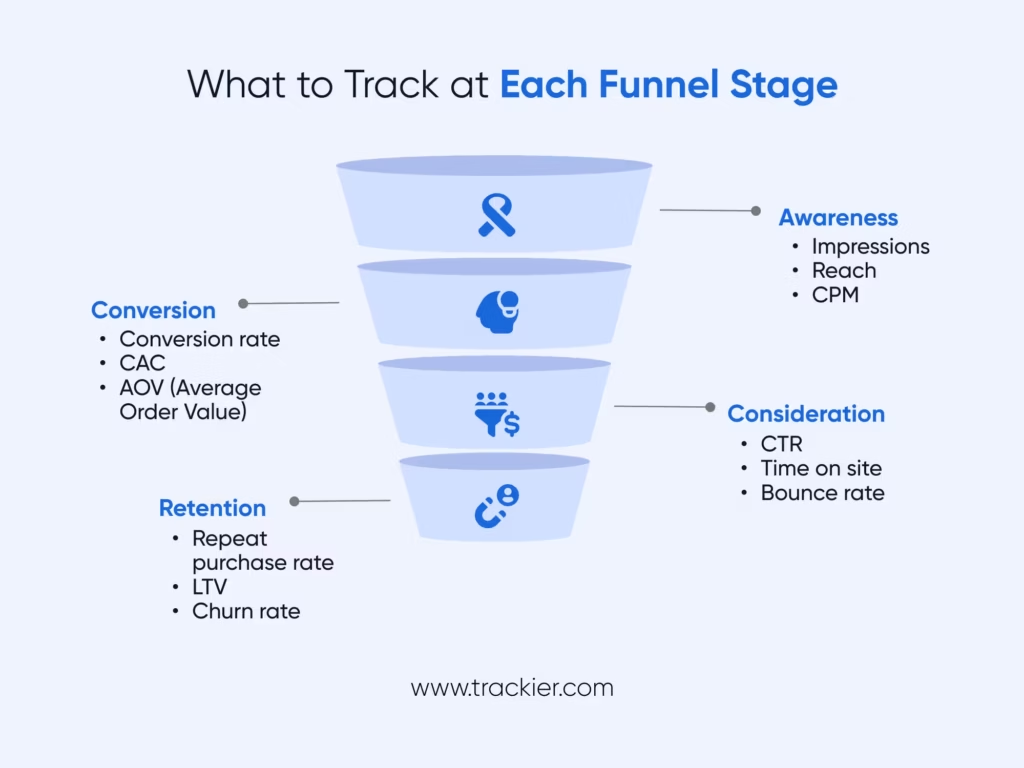
Marketing for ecommerce platforms involves the passage of various funnel stages for the user:
- Awareness: Attract new audiences through SEO, social media, and influencer marketing
- Consideration: Nurture interest using retargeting ads and email campaigns
- Conversion: Drive purchases with optimized landing pages and compelling offers
- Retention: Build loyalty through email marketing, remarketing and rewards programs
While the traditional approach looked at this entire flow as linear, starting at the top and moving all the way down from awareness to retention, emerging approaches suggest this may not always be the case.
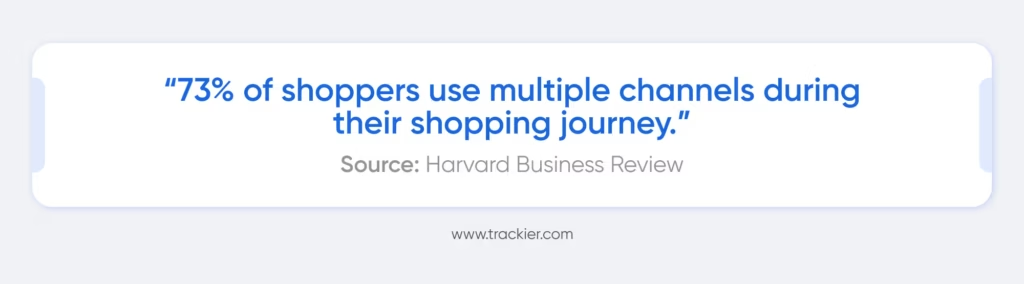
Each person is unique, with different ways of approaching marketing messages visible to them and diverse decision making models. Therefore, each user journey tends to be unique, often jumping back and forth across stages and touchpoints.
Multi-touch journeys are the norm — and that’s precisely why ecommerce marketing needs to be innovative.
Why eCommerce Marketing Matters for Online Businesses
As per data from Grand View Research, the global ecommerce market is growing at a whopping CAGR of 21%+ and will continue on this trajectory all the way to 2033. The value of the market at this point is due to grow to over $8 trillion as per Statistica.
Considering the value and size of this market, it is certain that competition here is intense. To stand out from the crowd, online businesses will need to lean heavily on marketing, and in many cases on ecommerce consulting services to identify where that marketing effort should be directed.
D2C is a growing segment. The direct to consumer or D2C industry is expected to grow parallely and achieve a valuation of $880 billion by 2034. The growth rate for this industry is expected to be roughly 15% during this period.
You can visualize the kind of competition that exists within the ecommerce industry. There are new marketplaces and selling formats which are emerging — from QCommerce to live stream commerce.
In such a market, there’s also a hyper competitive CAC compounded by shrinking margins in growing inflation. Across different verticals, there is a difference in customer acquisition costs (CAC), which is continuously fluctuating. Usually ecommerce brands aim for a number which is ⅓ of the LTV from a given customer.
All of this together plays into why ecommerce marketing is a must-have when you’re running an online business.
Key Benefits of eCommerce Marketing
Scalable customer acquisition
Opening a storefront — even on the internet — is one thing. Bringing people through the door regularly is quite another.
That’s an advantage ecommerce marketing offers those who use it effectively. By maintaining a steady flow of traffic, potential customers who are looking to buy what you’re selling, will keep showing up on your website or app.
From there on, the user journey, offers and so on can work towards converting them to a first-time buyer. Subsequently, a loyalty program, gamification and retargeting efforts can turn such a customer into a loyal customer.
This entire process of building a solid base of regular buyers can be streamlined by implementing marketing strategies across channels.
Measurable ROI (vs traditional channels)
One of the key ways ecommerce marketing wins over the use of traditional promotional mediums is through its measurability. Whether you’re considering running digital ads over Google, or you’re sending push notifications through the app, you can check interactions at multiple levels, such as:
- How many individuals received the communication [metric: delivery rate]
- How many individuals viewed the message [metric: impressions]
- How many individuals clicked through to the landing page [metric: click-through rate]
- How many individuals unsubscribe from the particular marketing medium (and for what reason) [metric: unsubscribe rate]
Such detailed analysis across key performance indicators on every single channel is possible. This depth of analysis can contribute towards improving outcomes from each $ spent on promotions to improve the overall ROI of the marketing function.
Better targeting and personalization
Traditional mediums for marketing are mass communication mediums. They are great sources of promotion at the awareness stage of the ecommerce marketing funnel, if you’re not aware of who your exact target audience should be, or where they can be found.
However, if your business is built around serving a specific audience, with clear research into where such audiences can be located, the ecommerce marketing model can work wonders.
Marketing messages can be delivered with unique precision, only to those who are ‘relevant’, while actively excluding the people who may lie outside the preferred base. In email marketing, for instance, this is possible by creating email lists that are heavily segmented, verified and include willing recipients (who have opted into receiving mails).
Stronger customer lifetime value (LTV)
Think of it like this: ecommerce marketing is not an acquisition model. Rather, it is a system of brand building, awareness generation, user acquisition and loyalty generation, that aims at steadily improving the return on investment.
With time, new users don’t need advertising to tell them you exist. They already know, and make purchases without the need for a ‘pull’.
As a result, over time, the value offered through the apparatus keeps increasing while the spending keeps on reducing.
Top eCommerce Marketing Channels
Search Engine Optimization (SEO)
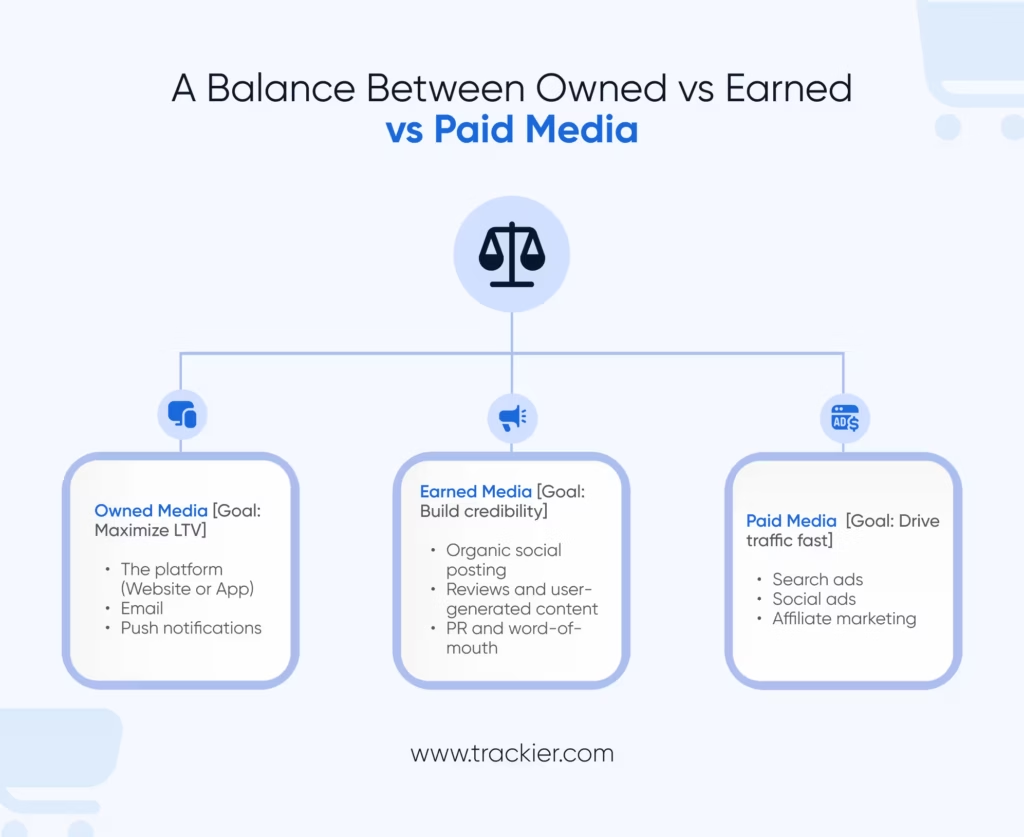
Using SEO helps ecommerce brands and businesses attract traffic directly onto their website, without spending any money on acquisition. This involves doing some of the following:
- Optimizing product pages and category pages,
- Maintaining overall technical site structure,
- Content marketing through blogs and buying guides that build authority, improve rank and lead the website to show up on SERPs, and,
- Technical SEO to improve navigation to your website
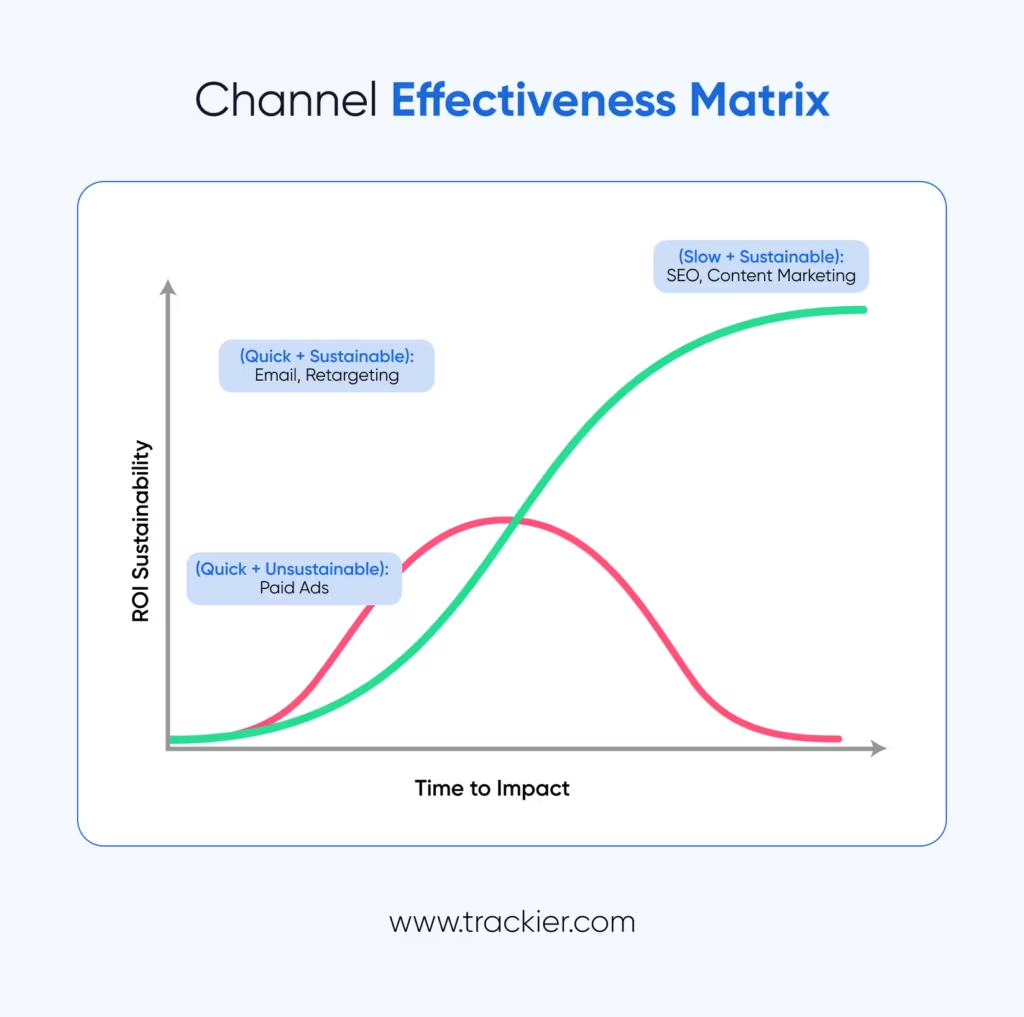
This is a time-consuming strategy which often shows great results, but only in the medium to long-term. However, as it builds, businesses tend to lean on another ecommerce marketing channel: paid advertising.
Paid Advertising (PPC and Social Ads)
From running sponsored messaging on Google Shopping and search campaigns to ads on platforms like Meta and Snapchat — all of it lies under this medium’s purview.
These channels excel at driving immediate results in the form of both visibility and platform traffic. When you’re relatively new in the market, paid ads can deliver your first few conversions effectively, and create a pipeline for future revenue.
Additionally, running paid campaigns over the medium term can assist in retargeting users who may have arrived on the website previously but didn’t convert.
Email Marketing
Email remains a high-ROI channel using automated flows like welcome sequences, abandoned cart recovery, and post-purchase engagement. It helps nurture customers and encourage repeat purchases through personalized communication.
Social Media Marketing
Using branded accounts across Instagram, X, Tiktok and more, brands post organic posts and video content in an effort to build awareness and engage with an audience that knows of them.
In this medium, short-form video content dominates engagement, while social commerce enables direct purchases within platforms like Instagram and TikTok. As brands produce more content faster, many are shifting toward AI-powered editing workflows. Teams increasingly rely on an online video editor to quickly create, edit, and optimize social content. Tools like Async’s video editor let teams create and refine social videos through chat-based prompts instead of relying entirely on manual timeline editing.
Affiliate and Partner Marketing
Affiliate marketing is a performance-based medium, where partners like publishers, influencers and cashback sites earn commissions for driving sales. It offers scalable growth with low upfront risk, making it increasingly popular for ecommerce brands.
Along with paid marketing, it is often considered a good channel to initiate the entire ecommerce marketing process whenever a new brand or business is launched.
Influencer Marketing
Influencer marketing leverages social media creators and their audiences to grow brand awareness, trust and each for a given ecom product or service. By making use of the captive audience across various channels that are closely aligned with the brand’s core message, this medium can drive better adoption and recall.
eCommerce Marketing Strategies That Drive Growth
Conversion Rate Optimization (CRO)
CRO focuses on turning more existing traffic into paying customers by continuously improving the on-site experience. Here’s how you can implement this strategy effectively:
- Keep improving product pages with clear, high-quality images, helpful descriptions and the latest product reviews from actual customers.
- Reduce friction in the checkout process and enable smooth user navigation across the ecommerce site or app.
- Run A/B tests on marketing messages across the platform, including headlines, calls-to-action and pop-ups to refine communication and identify what works.
Personalization and Customer Segmentation
Users are more likely to engage with and convert if they feel valued. One of the ways to make this happen is through customer segmentation, which can enable the implementation of personalization strategies.
Some of the ways in which this can be effected are:
- Use behavior-based targeting to show relevant products based on browsing and purchase history.
- Implement recommendation engines to suggest complementary or frequently bought items.
- Deliver dynamic content that adapts messaging, offers and creatives for different user groups.
Retention Marketing Strategies
One-time sales may become easier to achieve than repeated purchases from the same customer. However, to extend the lifetime value of any customer, certain retention strategies can be applied:
- Automated marketing messages in the form of email and SMS drip campaigns.
- Loyalty programs that come with points or rewards for certain milestones.
Omnichannel Marketing Approach
Your ecommerce brand should come across as a single entity to consumers, who is available to them across the mediums where they are present.
While the people who implement these strategies internally may be different, their external impact needs to be consistent so that the audience remembers and recalls your brand in relevant contexts constantly.
Here’s what you need to do to ensure this:
- Maintain consistent messaging across ads, website, email and social media.
- Connect customer journeys across devices so users can move seamlessly between channels.
- Use coordinated campaigns where each touchpoint reinforces the next step in the funnel.
Performance and Data-Driven Marketing
When your ecommerce marketing is based on actual, measurable facts and insights, the results of your promotional efforts will reflect better alignment with set business goals. The simple reason is that when marketing relies on assumptions (which may not have any basis in reality), there is a chance you’re acting in the wrong direction.
But how do you give effect to data-driven marketing? Here are some key steps to ensure this happens:
- Track every customer touchpoint across channels to understand real purchase behavior.
- Use attribution models like last-click and multi-touch to measure channel impact accurately.
- Optimize marketing budgets by scaling high-performing campaigns and reducing inefficient spend.
How to Build an eCommerce Marketing Strategy
Step 1: Define Your Goals
What matters most to your ecommerce business? Know what your focus is: traffic, return on ad spend (ROAS) or revenue. This will help you separate short-term gains from real long-term wins that support business growth.
Step 2: Understand Your Target Audience
You may start out with a certain framework in mind. But auditing the demographics, behavior and purchase intent of your actual customers can help refine this. Additionally, this approach supports the creation of buyer personas to better align personalized marketing for each user type.
Step 3: Choose the Right Channels
Not every channel is worth using when you’re communicating with your customers. Instead, emphasis should be placed on mediums and channels where your audience is present and willing to listen to you.
Your approach could also depend on your available budget, but don’t choose only one channel since that will limit your reach.
Step 4: Allocate Budget Effectively
Balance your paid and organic efforts to ensure you don’t overinvest or under-use any one channel. Additionally, if you’re using ecommerce marketing to grow a new brand within a new audience segment, it is vital that a part of the budget be retained for testing new approaches.
Step 5: Track, Measure and Optimize Performance
Continuous monitoring and analysis provides a clearer understanding of successful strategies compared to unsuccessful ones. Digging deeper into KPIs like conversion rate, CTR or ROAS will help you investigate the exact reasons behind why certain strategies work, and others don’t.
eCommerce Marketing Tools and Technologies
Analytics and Tracking Tools
In the case of any type of marketing campaign, the use of analytics and tracking enables clear post-campaign reporting on learnings, failures and improvements for the next iteration.
Of course, here analysis is not possible without tracking. Both capabilities work in sync.
Accurate tracking ensures precise ROI reporting, which is required to evaluate the result of any marketing budget spend. If multi-channel campaigns are implemented, omnichannel attribution will need to be implemented to ensure no touchpoint is ignored in the conversion equation.
Automation and Campaign Management Tools
The use of automated marketing tools is primarily to streamline repetitive tasks such as email campaigns, customer segmentation and workflow triggers.
They enable automated journeys like welcome series, abandoned cart reminders, and post-purchase engagement. A clear email marketing automation strategy helps ecommerce brands connect these journeys to lifecycle stages instead of treating each flow as a separate campaign. When integrated with tracking systems, automation becomes more performance-driven, allowing brands to optimize messaging based on real conversion data.
Affiliate and Partner Management Platforms
If your ecommerce marketing strategy includes affiliate, influencer or coupon marketing, using large-scale performance marketing tools to record clicks, conversions and payouts for partner marketers is a must-have.
Platforms like Trackier enable brands to centralize partner tracking, reduce reporting inconsistencies and monitor performance in real-time. Such a structured approach makes it easier to scale affiliate, influencer and partner-led campaigns while maintaining transparency and control over the entire attribution chain.
Emerging Technologies in Use
Newer formats of advertising are also employed in highlighting ecommerce products and services. Take the instance of AR and VR, wherein mid-stream and intermittent ad content is often curated to engaged users. In fact, the Metaverse, as initially conceptualized, was meant to be an interactive space, where customers could engage in virtual commerce.
As mediums of marketing evolve, ecommerce marketing moves to these channels too. CTV advertising is one such manner of advertising, wherein national, regional and even hyper-local content can be served up to viewers in between their streaming experience.
Here’s an example of this.
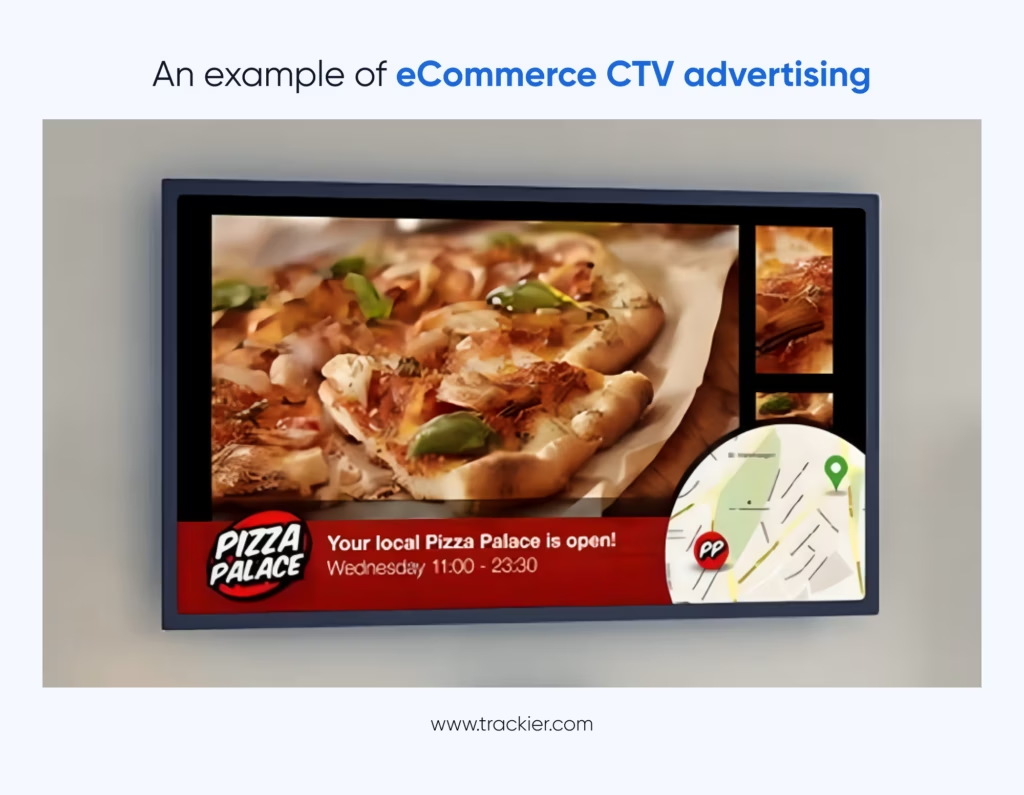
Examples of eCommerce Advertising
The practice of ecom marketing is visible all around us, interspersed with the organic content we consume. Where search results lead that discovery, Google Ads management shapes which queries surface the brand and at what cost per click, so the spend can be rebalanced against the same conversion data.
It is present in your search for products when you’re in the funnel as a consumer yourself. Here’s an example of this.
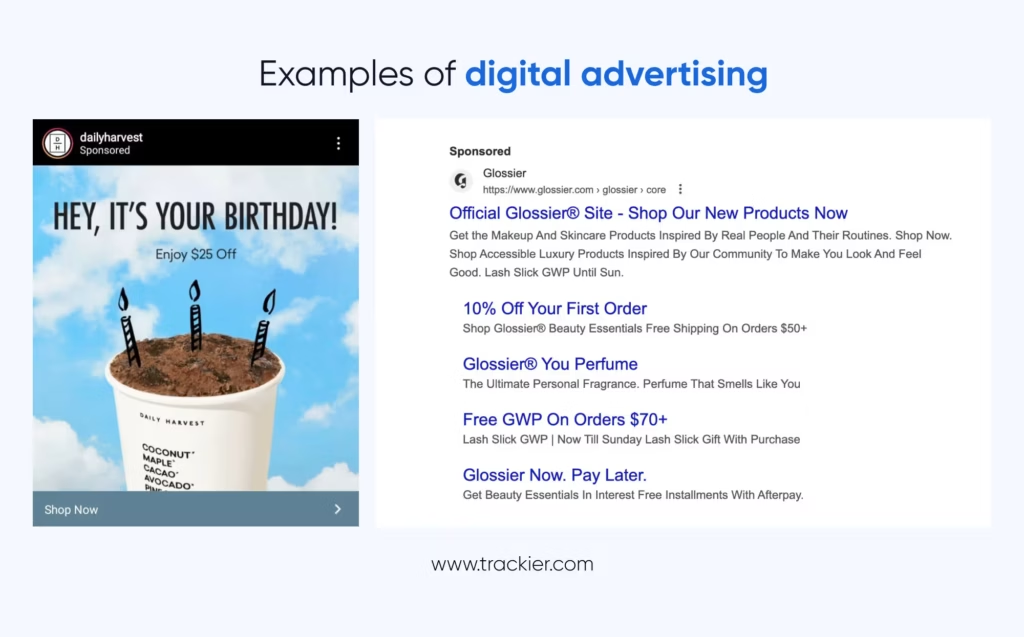
Or, driven by algorithms based on your account activity and engagement signals, it is present within the social media content you consume.
And if you’re a previous customer, you’re likely to see it in your mail box as a reminder to go back, and view the catalogue. Perhaps you may repeat the purchase decision.
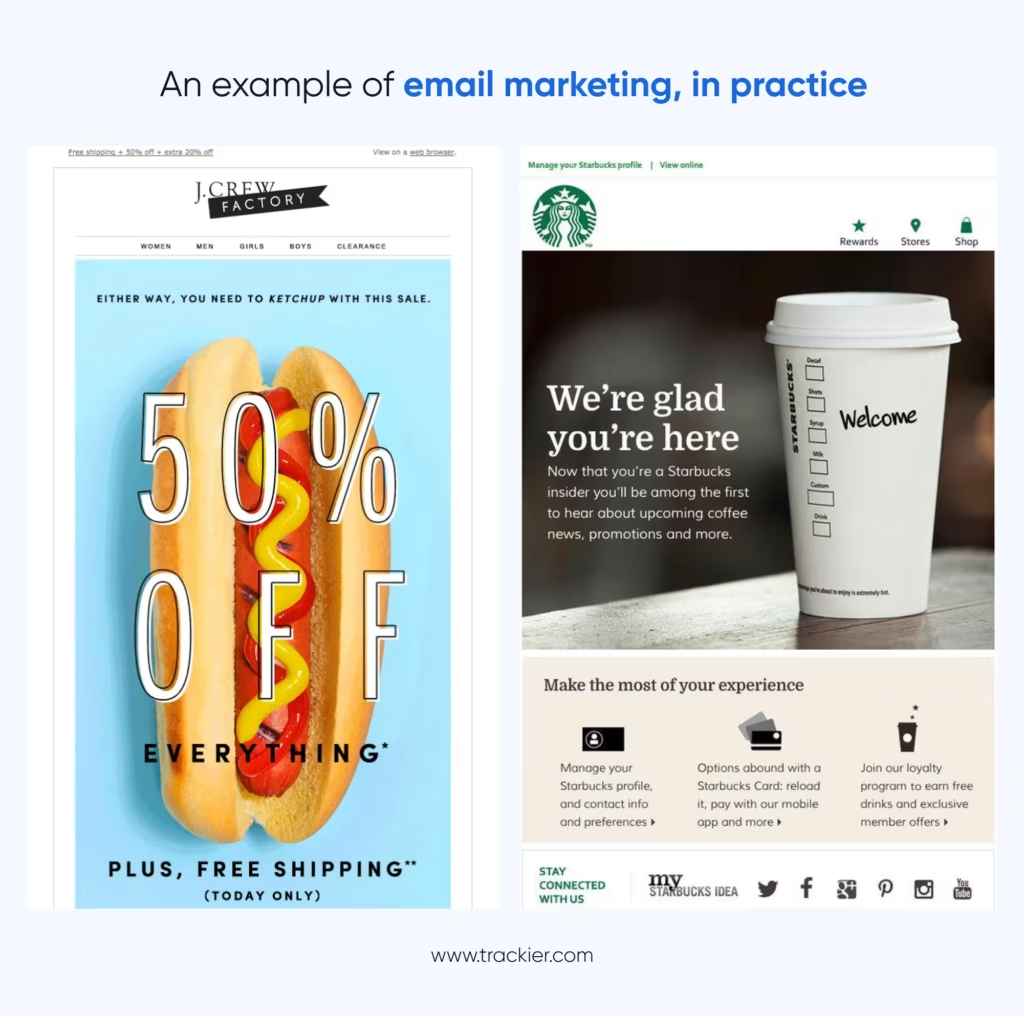
Conclusion
As a seller of online goods and services, it is critical to consider promotional strategies much before your store goes live. The entire process of attracting and selling to customers in a repeatable, predictable cycle can be made possible by following systemic ecommerce marketing strategies across the chosen marketing channels.
Whether you pick search engine marketing, email marketing or paid marketing to be your primary mediums of creating brand awareness and eventual sales, you must evolve accurate tracking and analysis methods to check whether your efforts are bearing fruit, or going in vain.
FAQs
What is ecommerce marketing?
The process of promoting an online store to attract, convert and retain customers is known as ecommerce marketing. To do this, you may use channels such as social, email and paid ads to drive traffic and sales.
What are the best ecommerce marketing channels?
The most effort channels to carry out ecommerce marketing are paid marketing (on search engines and social media), SEM, email, social media marketing and affiliate marketing. The right mix for your particular ecom business depends completely on your audience, your product or service and the available budget.
How do I start ecommerce marketing?
As with any form of marketing, the first step in ecommerce marketing is defining the goal that you wish to achieve through this effort. The subsequent steps can be as follows:
– Gain a clear understanding of your target audience
– Select the channels you wish to market on
– Launch a campaign and A/B test various elements within it
– Optimize the campaign to improve results
What is the most effective ecommerce marketing strategy?
The right ecommerce marketing strategy is usually a mix of three key aspects: data-driven strategies, personalization and retention strategies. Focusing on the complete customer journey from one end to the other, and not just simple acquisition is what most often leads to success.
How do you measure ecommerce marketing success?
Various key performance indicators can be used to indicate ecommerce marketing success. Depending on what your goal is while running a given marketing campaign, you can define some parameters, such as conversion rate, click-through rate or ROAS to identify whether the promotion is achieving the desired results, or not.