Every year, businesses spend plenty on marketing, but not all of that money yields results. Having trustworthy partners who can generate clients rather than just impressions or clicks is a challenge for many businesses.
While people and publications who want to market products frequently have trouble finding reputable brands, receiving timely payment, or getting the necessary resources to monitor their progress. This disconnect causes conflict between advertisers and affiliates.
An affiliate network solves this problem by acting as a bridge between brands and affiliates. These networks offer conversion tracking, performance monitoring, and fair payout through the use of affiliate tracking software.
This provides brands with access to a network of motivated affiliates. It offers affiliates a safe approach to market several products while getting paid.
What Is an Affiliate Network?
An affiliate network is a platform that links publishers or affiliates (individuals, content creators, or businesses who market these products) with advertisers (businesses or brands that wish to sell their products). An affiliate network’s main roles are relationship management, lead or sales tracking, and payment handling for both parties.
Affiliates have the option to promote a brand’s offer after it gets listed on an affiliate marketing network. The affiliate receives a commission if a customer buys using their special affiliate link. The network makes sure that payments are handled accurately and that transactions are tracked correctly.
An affiliate marketing network offers tracking tools, fraud prevention strategies, and data dashboards. This approach builds trust because both advertisers and affiliates understand that they are operating in a controlled and verified environment.
How Does an Affiliate Network Work?

Affiliates are only compensated when they produce quantifiable activities, such as a sale, lead, or click, based on the performance model used by affiliate networks. The usual procedure is as follows:
- Advertiser joins the network – A brand signs up with an affiliate network to promote its products or services. They set marketing guidelines, payment arrangements, and commission rates.
- Affiliates join the network – Affiliates register to use available offers. They are free to select the products or brands they wish to advertise.
- Use of tracking links – Affiliates are given unique tracking links by the network. These links keep an eye on consumer behavior and guarantee that sales are appropriately acknowledged.
- Customer makes a purchase -The network logs a transaction when a user clicks on an affiliate link and performs the required activity.
- Payment is processed – After verifying the transaction, the network pays the affiliate on the advertiser’s behalf.
Affiliate networks use a variety of payment methods. One of the most popular is CPA affiliate networks (cost per action), in which affiliates get paid each time a customer completes a particular task, like making a purchase or signing up for a trial. CPL (cost per lead) and CPS (cost per sale) are two more models.
Benefits of Using an Affiliate Network

Affiliate networks offer several advantages for both advertisers and affiliates:
For Affiliates
- Multiple offers in one location – Affiliates can avoid negotiating with various brands separately.
- Security and trust – Networks guarantee dependable affiliate payment processing.
- Tools and resources – Availability of reporting, creative, and tracking tools.
- Flexibility – Affiliates don’t have to pay much up front to test out various offerings and areas.
For Advertisers
- Access to a vast affiliate network – Without having to hire each publisher one at a time, brands can quickly connect with a large publisher pool.
- Performance-based costs – The investment is more cost-effective because advertisers only pay when results are obtained.
- Fraud prevention – Networks usually have systems to detect invalid traffic or suspicious activity.
- Simplified payments – The network manages distribution, and the advertiser pays it instead of paying hundreds of affiliates directly.
Affiliate networks establish a structure that allows both parties to concentrate on outcomes while the network handles management.
Top Affiliate Networks
Advertisers and affiliates depend on a number of reputable affiliate networks. Among the most well-liked are:
- CJ Affiliate (formerly Commission Junction) – A long-standing network with global reach and diverse offerings across industries.
- Rakuten Advertising – It is well-known for its strong ties with leading brands and premium affiliates.
- Impact – Provides partnership automation and advanced tracking features.
- ShareASale – User-friendly network with thousands of offers, suitable for beginners.
- Amazon Associates – One of the most extensive affiliate programs, allowing affiliates to promote millions of products.
Affiliate Marketing and Network Marketing: Key Differences

Affiliate marketing and network marketing are sometimes used together. However, they are completely different models.
- Affiliate Marketing Network – Affiliates market products and services and get paid when leads or sales are produced. Payments are only based on success, and no other affiliates are hired.
- Network Marketing (MLM) – Focuses on building a sales team where members recruit others. Revenue is derived from both direct sales and the performance of the downline that was hired.
While network marketing puts more of an emphasis on hiring and team building, affiliate marketing is more performance-driven and product-focused.
Affiliate networks are a simpler and more open choice for companies that want to grow without the hassle of hiring complicated structures.
Types of Affiliate Networks
There are various commission models that affiliate networks use. Among the main types are:
- CPA (Cost Per Action) – Affiliates get paid when a user takes a certain action, such as filling out a form, downloading an app, or making a purchase.
- CPL (Cost Per Lead) – When affiliates provide qualified leads for the advertiser, they receive payment.
- CPS (Cost Per Sale) – Affiliates are compensated only when a sale is completed.
- Hybrid Models – By combining several models, some networks allow advertisers to pay for both leads and sales.
Each affiliate network is appropriate for a different type of business objective. For instance, although CPS networks are typical in e-commerce, CPA affiliate networks are preferred by advertisers searching for quantifiable results, such as sign-ups.
Challenges of Using Affiliate Networks
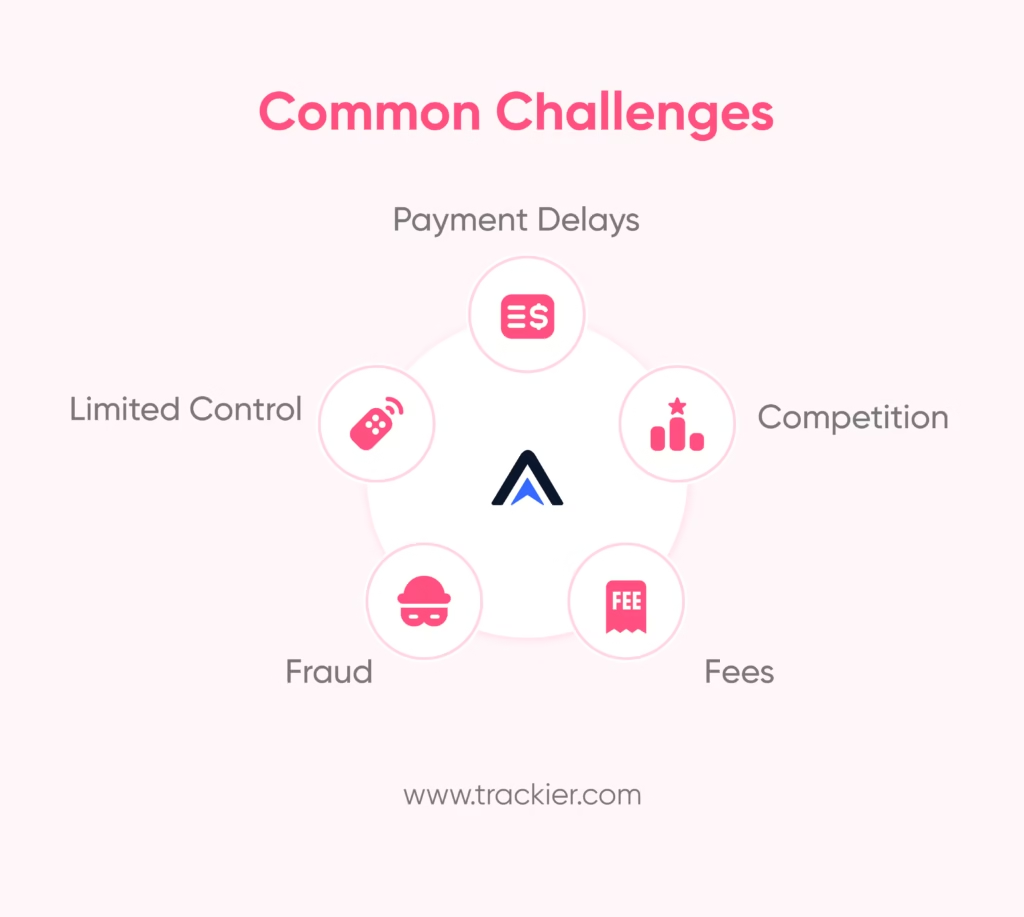
Although affiliate networks have several advantages, advertisers and affiliates should be aware of the following drawbacks:
- Competition – It might be challenging to stand out when thousands of other affiliates are pushing similar products.
- Fees – A portion of commissions is taken by networks, which could lower overall profit margins.
- Fraud Risk – Click fraud, cookie stuffing, and phony leads can still happen even with fraud prevention solutions.
- Limited Control – Since the network oversees the majority of the engagement, advertisers may engage with affiliates less directly.
- Payment Delays – Depending on verification cycles, affiliates can experience delayed payouts in certain networks.
Both marketers and affiliates can set more reasonable goals and develop more effective plans by being aware of these challenges.
Bottom Line
An affiliate network is a reliable platform that simplifies the management of performance-driven marketing by connecting affiliates and advertisers. It offers precise tracking, quick payouts, and access to a wide range of prospects.
Affiliates receive reliable deals to promote, while advertisers profit from affordable customer acquisition. These platforms remain an essential component of contemporary affiliate marketing.
While there are challenges such as competition and fees, the overall advantages make affiliate networks a strong choice for businesses and affiliates who want to grow through performance marketing.
FAQs
Are affiliate networks safe for affiliates?
Reliable affiliate networks provide secure tracking, verified advertisers, timely payments, and access to genuine offers. However, affiliates should research networks before joining and review commission terms, payment schedules, and advertiser reputation. Choosing established networks helps reduce risks related to delayed payments or unreliable partnership opportunities.
What types of businesses use affiliate networks?
Businesses across industries use affiliate networks, including e-commerce, SaaS, fintech, travel, gaming, education, and subscription services. These networks help companies increase sales, generate leads, and expand their reach by partnering with affiliates who already have engaged audiences interested in specific products or services.
What challenges do businesses face when using affiliate networks?
Businesses using affiliate networks may face challenges such as affiliate fraud, high competition, network fees, limited direct relationships with publishers, and inconsistent affiliate performance. To overcome these issues, brands should use reliable tracking solutions, monitor campaign data regularly, verify affiliates, and optimize partner relationships.
What features should businesses look for in an affiliate network?
Businesses should look for features such as real-time tracking, detailed reporting, fraud detection, automated payouts, affiliate management tools, API integrations, and customizable campaigns. A reliable affiliate network should provide transparency, accurate attribution, and scalability to help brands manage partnerships effectively and maximize performance marketing results.
Are affiliate networks beneficial for advertisers?
Yes, affiliate networks help advertisers reach a larger audience without spending heavily on traditional advertising. They provide access to experienced publishers, automated tracking, fraud prevention tools, and performance insights. Since advertisers usually pay only after desired actions occur, affiliate networks can improve customer acquisition efficiency.
