Flawless security is what they all claim, but is it really what it is being portrayed as in today’s world? This transformation has sparked a new wave of innovation, one where privacy-first attribution frameworks are redefining how marketers measure performance.
Data breaches have become an unfortunate constant in today’s digital landscape. At the same time, many industries continue to speak about growth powered by centralized data systems that promise complete security and neutrality. This contrast naturally raises an important question: is the promise of data protection truly real, or is it sometimes more perception than practice? In such an environment, trust becomes the core of modern marketing. The real challenge for businesses is not just collecting and processing data, but building systems that users can genuinely rely on and nurturing that trust over time.
A privacy-centric future is often discussed as the next evolution of digital marketing, especially in a cookieless world. However, it cannot simply exist as an ideal or industry narrative. True privacy-centric attribution requires more than compliance checkboxes or technological adjustments, it must be rooted in the belief that consumers should feel confident about how their data is handled today and how it will be protected in the future. When organizations design attribution frameworks with transparency, accountability, and user control at their core, privacy moves from being a promise to becoming a practice. That is where the real shift begins, where data, trust, and performance marketing align to build a sustainable and responsible AdTech ecosystem.
The Role of Regulations in Building a Privacy-Centric Attribution
As conversations around privacy-centric attribution gain momentum, regulations have become a critical pillar in shaping how data can be collected, processed, and utilized. In a digital ecosystem driven by insights and performance metrics, the absence of regulatory frameworks can easily blur the line between innovation and intrusion. Regulations bring structure to this evolving landscape by defining the boundaries of data usage while ensuring that businesses continue to operate transparently and responsibly. For marketers and AdTech platforms alike, compliance is no longer just a legal requirement. It is becoming a competitive differentiator that builds long-term trust with consumers.
At the core of these regulations lies a clear intention. The goal is to ensure that data is used ethically while still enabling businesses to derive meaningful insights. A privacy-first ecosystem requires companies to rethink how they approach attribution, measurement, and targeting without relying on unrestricted data access.
Some of the fundamental principles that guide this shift include:
- User consent and transparency: Clear communication about what data is collected and how it will be used.
- Data minimization: Collecting only the information that is truly necessary for a specific purpose.
- Purpose limitation: Ensuring that data collected for one objective is not repurposed without proper authorization.
- Security and protection: Implementing safeguards to prevent unauthorized access, breaches, or misuse.
- User control: Giving individuals the ability to access, manage, or revoke permissions related to their data.
These principles act as guardrails for the modern advertising ecosystem and help organizations innovate without compromising user privacy. As third-party cookies continue to phase out and alternative attribution models emerge, regulatory clarity ensures that new solutions such as first-party data strategies, contextual targeting, and privacy-preserving measurement are built within ethical boundaries. In this environment, companies are encouraged to design technologies that prioritize privacy by default rather than treating it as an afterthought.
Ultimately, the future of privacy-centric attribution will depend on how effectively businesses balance regulatory compliance with technological innovation. Organizations that embrace regulations as a framework for responsible growth will be better positioned to earn consumer trust while maintaining accurate performance measurement. In a world where data continues to power digital marketing, regulations form the foundation that ensures progress does not come at the cost of privacy.
Building the Framework for Privacy-Centric Attribution
As the industry moves deeper into the cookieless era, the conversation is no longer limited to why privacy matters. The real focus now lies in how organizations can build practical systems that enable measurement while respecting user data boundaries. Privacy-centric attribution requires a shift in both technological infrastructure and strategic thinking. Businesses must adopt frameworks that allow them to collect meaningful insights without depending on intrusive tracking methods. This transition pushes the ecosystem toward solutions that are transparent, consent-driven, and sustainable in the long term.
For marketers, platforms, and technology providers, implementing privacy-first attribution involves redesigning the way data flows across the advertising ecosystem. Instead of relying heavily on third-party identifiers, the focus is shifting toward trusted data environments and privacy-preserving technologies. Several emerging practices are shaping this transition and helping organizations build reliable attribution models.
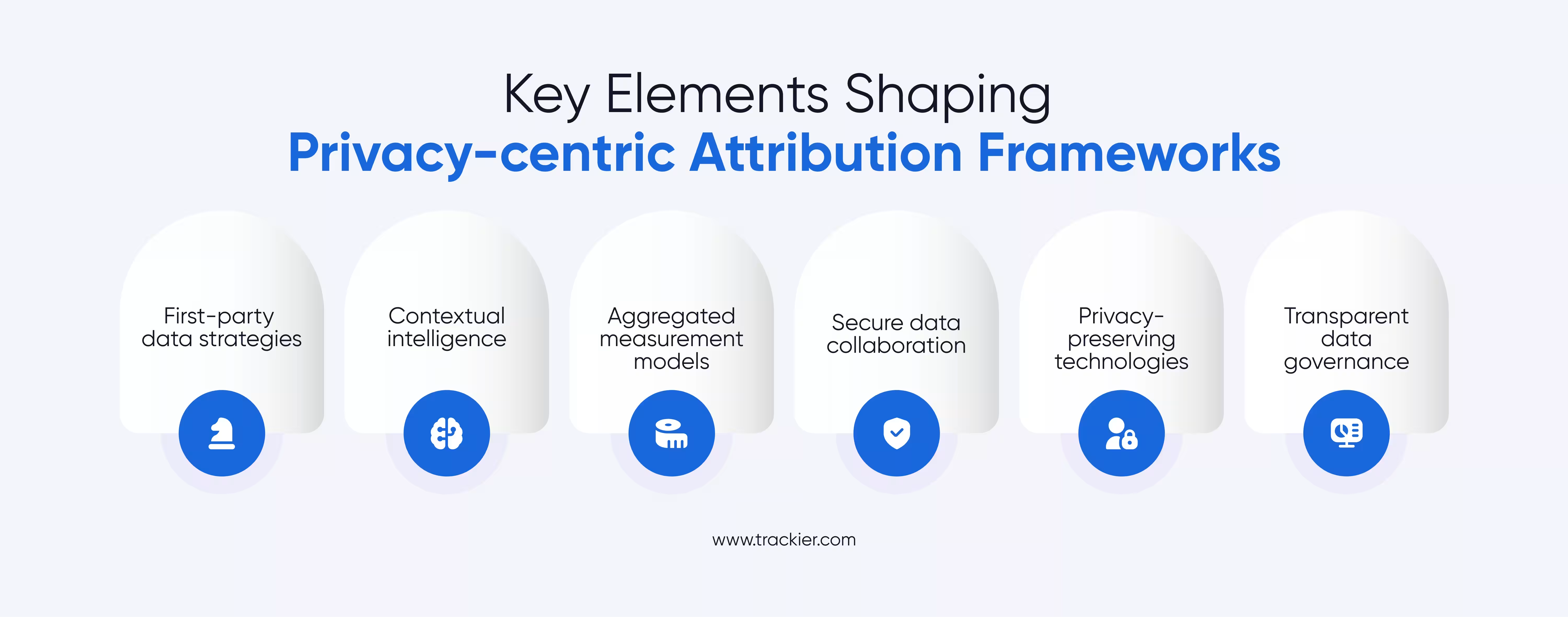
Key elements shaping privacy-centric attribution frameworks include:
- First-party data strategies: Leveraging direct user relationships and consent-based data collected through owned platforms and services.
- Contextual intelligence: Understanding user intent and content environments rather than tracking individual user behavior across platforms.
- Aggregated measurement models: Analyzing campaign performance through grouped data sets instead of individual user-level tracking.
- Secure data collaboration: Using clean rooms and controlled environments where advertisers and partners can analyze shared insights without exposing raw data.
- Privacy-preserving technologies: Implementing encryption, differential privacy, and anonymization methods to protect sensitive information.
- Transparent data governance: Establishing clear policies on how data is collected, stored, shared, and eventually deleted.
Attribution in a Privacy-Centric Ecosystem
These approaches are gradually redefining the relationship between advertisers, technology providers, and consumers. Instead of competing solely on data access, companies are now focusing on how responsibly they can manage and interpret information. This shift also encourages greater collaboration within the ecosystem, where publishers, platforms, and marketers work together to create attribution models that respect both performance goals and user privacy.
Attribution itself is undergoing a fundamental transformation. In traditional advertising systems, attribution relied heavily on persistent identifiers and third-party cookies to track users across platforms and touchpoints. While this model enabled granular tracking, it also raised significant concerns around user consent, transparency, and data ownership, accelerating the shift toward Privacy-Centric Attribution.
In a privacy-centric ecosystem, attribution models must operate with limited user-level signals while still delivering reliable insights for campaign optimization. This requires a transition toward aggregated measurement, probabilistic modeling, and privacy-preserving technologies that enable marketers to evaluate performance without compromising user confidentiality.
Key shifts shaping modern attribution include:
- Aggregated attribution models that measure campaign outcomes through grouped data sets rather than individual user tracking
- Event-based tracking frameworks that rely on consent-driven interactions and anonymized signals
- Privacy-preserving analytics that apply differential privacy and cryptographic techniques to protect individual identities
- Cross-channel measurement strategies that combine contextual insights, first-party signals, and modeled conversions
These evolving methods ensure that marketers can still understand campaign performance while maintaining a balance between measurement accuracy and user privacy.
Certifications and Compliance Standards
As privacy regulations expand globally, certifications and compliance standards are becoming essential indicators of trust in the AdTech industry. Organizations that align with recognized frameworks demonstrate their commitment to secure and responsible data management.
Certifications provide both advertisers and users with confidence that the platform adheres to internationally recognized security and privacy standards, reinforcing the foundation of Privacy-Centric Attribution.
Key areas of certification and compliance often include:
- Data protection standards that ensure the responsible handling of personal information
- Information security frameworks that safeguard digital infrastructure and data storage
- Operational transparency requirements that define how data is processed and audited
- Regulatory compliance frameworks aligned with global privacy laws
These certifications not only validate security practices but also strengthen the credibility of platforms operating within the digital advertising ecosystem.
Trackier’s Commitment to Security and Compliance
In an environment where privacy regulations and consumer expectations continue to evolve, AdTech platforms must demonstrate a clear commitment to responsible data handling. Security and compliance are no longer optional features but foundational components of any reliable marketing technology infrastructure.
Trackier’s approach focuses on building systems that prioritize data protection, regulatory alignment, and transparency throughout the entire attribution process. By integrating privacy-first practices into the architecture, we ensure that advertisers and partners can measure campaign performance while adhering to modern data protection standards, enabling robust and compliant Privacy-Centric Attribution.
Our commitment to security and compliance is built around several key principles:
- Privacy-first product design where data protection measures are integrated during the development stage rather than being added later.
- Strict access control mechanisms that limit how and where sensitive information can be accessed.
- Secure infrastructure environments designed to protect data integrity and prevent unauthorized exposure.
- Continuous compliance monitoring aligned with global data protection regulations.
- Transparent data governance policies that ensure accountability across the platform.
Through these measures, we enable marketers to operate confidently in a rapidly evolving privacy landscape while maintaining the accuracy and reliability required for performance marketing.
To operate in a privacy-first ecosystem, we align with globally recognized regulations and security standards. These certifications are embedded into how the platform manages data, ensures compliance, and builds trust with customers and partners.
GDPR (General Data Protection Regulation)
Trackier complies with GDPR standards to ensure that personal data is collected, processed, and stored with full transparency and user consent.
- Ensures lawful data processing and clear user consent mechanisms.
- Gives users the right to access, modify, or delete their data.
- Maintains transparency in how data is used across campaigns.
Use Case Scenario:
For campaigns targeting EU users, Trackier ensures that all tracking and attribution processes are aligned with consent-based data collection, helping advertisers stay compliant while running performance campaigns.
CCPA (California Consumer Privacy Act)
Trackier complies with CCPA to provide users with visibility and control over their personal data.
- Allows users to know what data is being collected
- Supports data deletion and opt-out requests
- Ensures transparency in data sharing practices
Use Case Scenario:
For brands targeting California-based audiences, we enable compliance by supporting opt-out mechanisms and ensuring that user data is not shared or sold without proper consent.
ISO 27001:2022
Trackier adheres to ISO 27001:2022 standards to maintain a robust, secure information management system.
- Implements strict security controls to protect sensitive data
- Follows risk management and continuous monitoring practices
- Conducts regular audits to maintain security standards
Use Case Scenario:
For enterprises handling large volumes of sensitive campaign and user data, we provide a secure infrastructure that minimizes risk and ensures data integrity across all touchpoints.
Why This Matters in a Privacy-First AdTech Ecosystem
These certifications are not just compliance markers but part of how we operate at every level of data handling and attribution.
- Ensures campaigns are privacy-compliant across global markets.
- Builds trust with advertisers, partners, and end users.
- Enables secure and transparent attribution in a cookieless world.
- Reduces risks associated with data breaches and misuse.
By aligning with these standards, we ensure that performance marketing continues to evolve with privacy, security, and compliance at its core.
Privacy-Centric Architecture
A privacy-centric ecosystem requires more than policy changes. It demands a complete redesign of the technological architecture that supports advertising, data processing, and attribution.
Privacy-centric architecture focuses on minimizing data exposure while ensuring that the essential components of marketing measurement remain functional. This architecture prioritizes secure data environments, controlled data flows, and clear governance frameworks that define how information moves across the ecosystem, forming the backbone of Privacy-Centric Attribution.
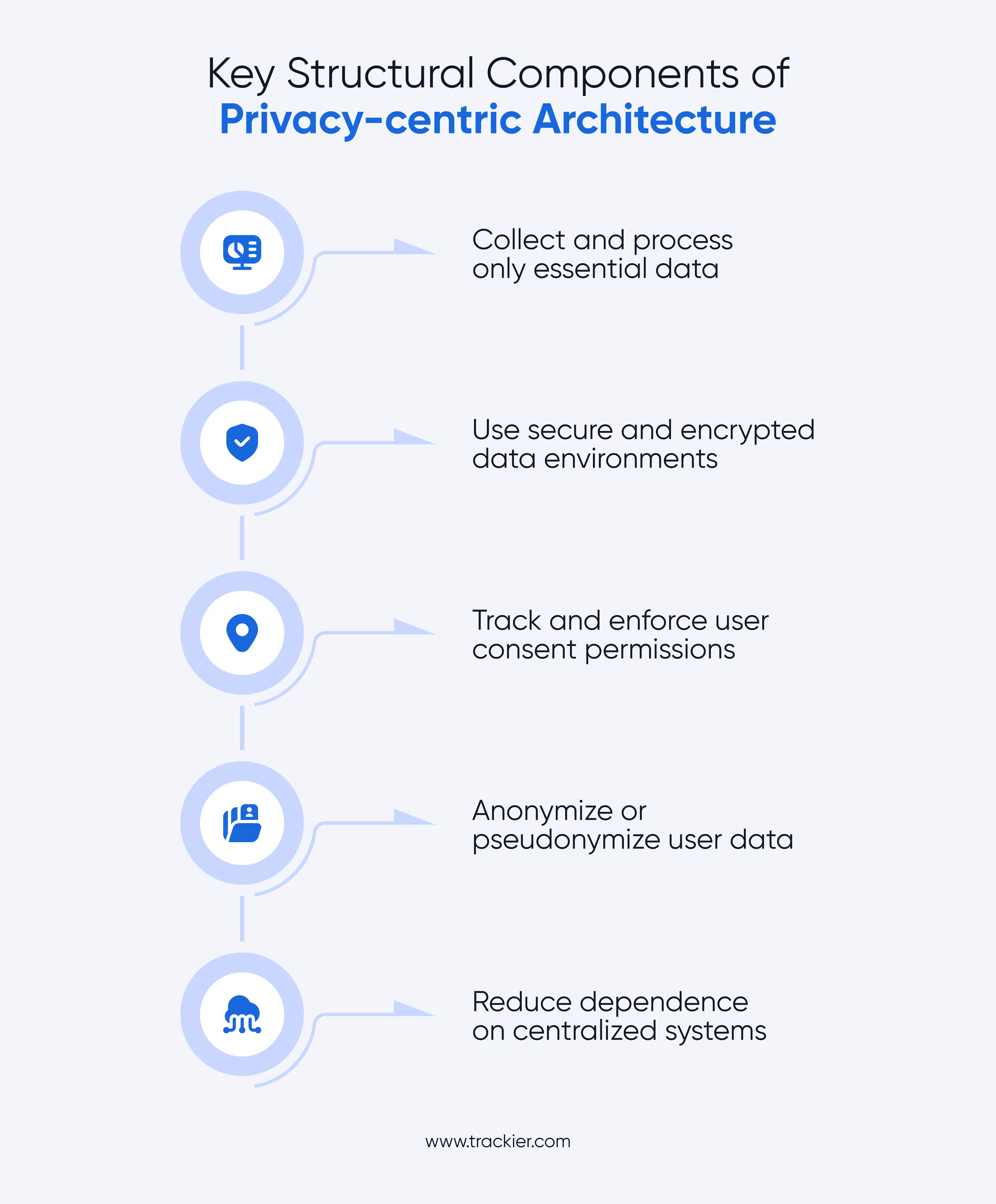
Key structural components of privacy-centric architecture include:
- Data minimization layers that ensure only essential data is collected and processed.
- Secure processing environments, such as clean rooms and encrypted data collaboration spaces.
- Consent management systems that track and enforce user permissions across platforms.
- Anonymization and pseudonymization mechanisms that remove identifiable user attributes.
- Decentralized data processing structures that reduce reliance on centralized storage systems.
By integrating these elements into the underlying infrastructure, organizations can maintain attribution capabilities while significantly reducing privacy risks.
Privacy-Centric Attribution
Privacy-centric attribution represents the evolution of measurement frameworks for a world in which unrestricted user tracking is no longer viable. Instead of relying on individual identifiers, these systems focus on aggregated insights, probabilistic modeling, and contextual signals to understand marketing impact.
The goal is not to eliminate attribution but to redesign it to respect user privacy boundaries while still providing marketers with actionable insights.
Privacy-centric attribution models typically operate through:
- Event-based measurement frameworks that capture meaningful interactions without persistent tracking.
- Conversion modeling techniques that estimate outcomes based on aggregated behavioral patterns.
- Contextual and content-based signals that infer user intent without identifying individuals.
- Privacy-safe attribution windows that limit the duration and scope of measurement.
By combining these techniques, marketers can continue to optimize campaigns while ensuring that user privacy remains protected.
Cookieless Custom AdTech
The decline of third-party cookies has accelerated the development of custom AdTech solutions designed specifically for a cookieless ecosystem. These solutions prioritize first-party data, contextual intelligence, and secure collaboration frameworks.
Cookieless AdTech is not simply about replacing cookies with another identifier. Instead, it represents a broader transformation in how advertising technologies operate.
Core elements of cookieless custom AdTech include:
- First-party data ecosystems are built around direct consumer relationships.
- Contextual advertising frameworks that match ads with relevant content environments.
- Server-to-server integrations that enable secure data exchange between platforms.
- Advanced analytics models that interpret aggregated performance signals.
These solutions enable marketers to continue delivering personalized and relevant advertising experiences while aligning with privacy expectations and regulatory requirements.
Server-Side Tracking
As client-side tracking becomes increasingly restricted due to browser limitations, privacy tools, and ad blockers, server-side tracking has emerged as a critical solution for maintaining attribution accuracy.
Unlike traditional browser-based tracking methods, server-side tracking processes data through secure server environments rather than relying entirely on the user’s device. This approach allows advertisers to capture essential performance signals while reducing the risk of data loss caused by browser restrictions or ad-blocking technologies, making it a key enabler of Privacy-Centric Attribution.
Server-side tracking works by routing event data directly from the website or application to a secure server environment, which then forwards relevant signals to advertising and analytics platforms.
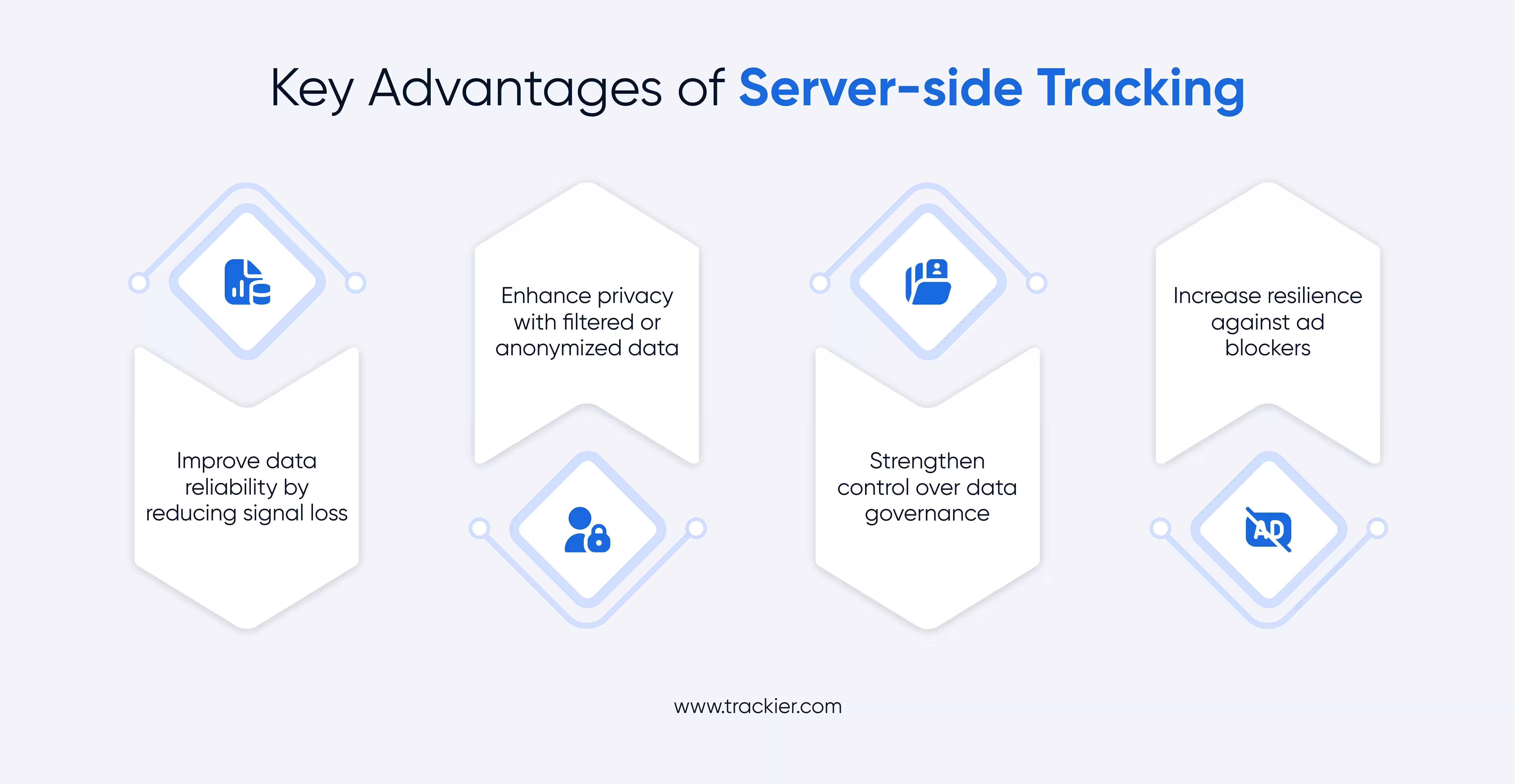
The key advantages of server-side tracking include:
- Improved data reliability by reducing signal loss caused by browser restrictions.
- Enhanced privacy protection, as sensitive data can be filtered or anonymized before transmission.
- Better control over data governance since information is processed within controlled server environments.
- Greater resilience against ad blockers that typically interfere with client-side scripts.
While server-side tracking does not eliminate the need for privacy compliance, it provides a more controlled and secure method of managing marketing data in a restricted tracking environment.
Structural Orientation for Privacy-Centric AdTech
To successfully implement privacy-centric attribution, organizations must rethink the structural design of their marketing technology ecosystems. This transformation involves aligning data infrastructure, compliance frameworks, and measurement systems around a shared objective: enabling responsible data usage while maintaining marketing effectiveness.
A privacy-centric AdTech structure typically includes:
- A robust first-party data infrastructure that prioritizes consent-based relationships with users.
- Integrated consent and preference management systems across all digital touchpoints.
- Secure data collaboration environments for advertisers and partners.
- Privacy-preserving analytics frameworks that generate insights without exposing personal identifiers.
This structural orientation ensures that privacy is embedded across every stage of the marketing lifecycle rather than treated as an external compliance requirement, supporting a scalable and sustainable approach to Privacy-Centric Attribution.
Cookieless Advertising and Its Relationship with Privacy and Compliance
The shift toward a cookieless advertising ecosystem is closely tied to the growing emphasis on privacy and regulatory compliance. As third-party tracking mechanisms decline, marketers must adopt alternative strategies that respect user consent while maintaining campaign performance, accelerating the adoption of Privacy-Centric Attribution.
Cookieless advertising relies on a combination of technologies and strategies, such as:
- First-party data collection through trusted consumer relationships.
- Contextual targeting based on content and environment.
- Aggregated performance measurement models.
- Secure data-sharing frameworks between advertisers and publishers.
These approaches ensure that advertising remains effective while aligning with global privacy expectations.
Regulatory Frameworks Shaping the Future of Attribution
Regulatory frameworks are playing a defining role in shaping how attribution systems operate in the modern digital economy. Laws and compliance standards provide the necessary guidelines that ensure marketing technologies respect user rights while enabling responsible data-driven innovation.
Effective regulatory implementation helps organizations:
- Maintain transparency in data collection and usage practices.
- Ensure proper consent management across marketing activities.
- Protect sensitive information from unauthorized access or misuse.
- Standardize data governance practices across platforms.
When implemented effectively, regulatory compliance becomes an operational advantage rather than a limitation. It enables organizations to build sustainable marketing systems that maintain consumer trust while supporting long-term business growth.
Toward a Responsible and Sustainable AdTech Ecosystem
The evolution toward privacy-centric attribution signals a broader transformation within the digital advertising industry. Measurement frameworks are becoming more transparent, technologies are becoming more secure, and organizations are increasingly recognizing the importance of responsible data management.
Rather than weakening the advertising ecosystem, the cookieless transition is encouraging innovation that prioritizes trust, accountability, and sustainability. Companies that successfully integrate privacy, technology, and performance measurement will be better positioned to thrive in the next era of digital marketing, driven by the principles of Privacy-Centric Attribution.
Ultimately, the future of AdTech will not be defined solely by the volume of data available but by how intelligently and responsibly that data is used. Privacy-centric attribution represents the pathway toward an ecosystem where marketing effectiveness and consumer trust evolve together.
The Evolution of Measurement in a Privacy-First Landscape
As the digital advertising ecosystem evolves, measurement frameworks must adapt to a world where unrestricted user-level tracking is no longer sustainable. Traditional attribution models were built around persistent identifiers and cross-site tracking mechanisms that allowed marketers to follow individual user journeys across platforms. However, the shift toward privacy-first policies has forced the industry to rethink how campaign effectiveness can be measured without relying on invasive tracking methods.
Modern measurement systems are increasingly focused on aggregated insights, predictive modeling, and contextual intelligence. Instead of attempting to reconstruct every user journey, these systems analyze broader behavioral patterns and campaign outcomes to generate reliable performance insights. This shift toward Privacy-Centric Attribution not only reduces privacy risks but also encourages marketers to focus on long-term performance indicators rather than isolated conversion events.
In this new landscape, measurement strategies are evolving toward:
- Aggregated reporting models that prioritize trend analysis over individual-level tracking.
- Predictive analytics that estimate campaign impact through statistical modeling.
- Privacy-preserving APIs that provide limited yet meaningful performance signals.
- Integrated measurement frameworks that combine first-party data and contextual insights.
These innovations are gradually redefining how success is evaluated in digital marketing.
Strengthening Consumer Trust Through Transparent Data Practices
Trust has become one of the most valuable assets in the digital economy. As users grow increasingly aware of how their personal information is collected and used, brands must demonstrate transparency and accountability in their data practices.
Privacy-centric attribution is not just a technological shift; it is also a cultural transformation that requires organizations to place user trust at the center of their operations. Businesses that clearly communicate their data policies and provide meaningful control to users are more likely to build lasting relationships with their audiences.
Transparent data practices involve several critical components:
- Clearly communicating data collection methods and purposes to users.
- Providing accessible privacy settings and consent management options.
- Ensuring that user permissions are respected across platforms and partners.
- Maintaining open communication regarding how consumer data contributes to advertising and measurement.
When organizations prioritize transparency, they transform privacy from a compliance obligation into a strategic advantage that strengthens brand credibility, enabling more effective and trustworthy Privacy-Centric Attribution.
Fragmented Advertising Ecosystem in a Privacy-Centric Attribution
The decline of third-party cookies has also highlighted the need for greater collaboration across the digital advertising ecosystem. In the past, many platforms operated within isolated data environments, each controlling its own measurement systems and user identifiers.
In a privacy-centric world, collaboration between advertisers, publishers, technology providers, and measurement platforms is becoming essential. Secure data-sharing frameworks and privacy-safe collaboration environments allow different stakeholders to analyze performance insights without exposing sensitive user information, strengthening the foundation of Privacy-Centric Attribution.
Key collaboration models emerging within the industry include:
- Data clean rooms that enable joint analysis of aggregated data sets.
- Publisher-advertiser partnerships focused on first-party data sharing.
- Cross-platform measurement frameworks are designed to standardize attribution signals.
- Privacy-safe APIs that allow controlled data exchange between marketing technologies.
These collaborative approaches help ensure that attribution and measurement remain effective even as traditional tracking methods disappear.
Preparing Marketing Teams for the Cookieless Transition
While technology plays a central role in privacy-centric attribution, organizational readiness is equally important. Marketing teams must adapt their strategies, workflows, and skill sets to operate effectively in a cookieless environment, ensuring the successful implementation of Privacy-Centric Attribution.
This transition requires a shift in mindset from relying heavily on granular tracking to embracing broader measurement frameworks and contextual insights. Marketers must also develop a deeper understanding of privacy regulations, consent management systems, and first-party data strategies.
Key priorities for marketing teams navigating the cookieless transition include:
- Developing strong first-party data collection and engagement strategies.
- Building expertise in privacy-compliant data analytics and modeling.
- Integrating consent management systems into marketing workflows.
- Aligning campaign strategies with contextual and content-driven targeting.
By preparing teams for these changes, organizations can maintain marketing effectiveness while adapting to evolving privacy expectations.
The Road Ahead for Privacy-Centric AdTech Innovation
The transformation toward privacy-centric advertising is still in its early stages, and the coming years will likely bring further technological innovation and regulatory evolution. As new frameworks emerge, AdTech companies will continue exploring solutions that balance marketing performance with user privacy.
Future developments in the industry may include advanced privacy-preserving computation techniques, improved cross-platform measurement standards, and greater adoption of decentralized data architectures. These innovations will enable marketers to generate valuable insights while maintaining strict privacy protections, further advancing Privacy-Centric Attribution.
Looking ahead, several trends are expected to shape the next phase of AdTech innovation:
- Increased adoption of privacy-preserving technologies such as federated learning and differential privacy.
- Expansion of secure data collaboration environments across advertising networks.
- Development of standardized attribution frameworks for cookieless ecosystems.
- Greater integration of artificial intelligence in privacy-safe marketing analytics.
As the industry continues to evolve, organizations that invest in privacy-first technologies and transparent data practices will be best positioned to lead the next generation of digital advertising.
The Economics of Privacy-Centric Advertising
The shift toward privacy-centric advertising is not only a regulatory or technological transformation but also an economic one. For years, the digital advertising ecosystem operated on an abundance of user-level data, allowing advertisers to optimize campaigns with granular targeting and attribution models. As privacy regulations tighten and third-party cookies disappear, the economics of digital advertising are evolving toward models that prioritize efficiency, trust, and long-term value.
In a privacy-first environment, the value of high-quality first-party data increases significantly. Brands and publishers that maintain direct relationships with their audiences are better positioned to gather consent-based insights and create meaningful advertising experiences. This dynamic is gradually reshaping the competitive landscape, where access to trusted data becomes more valuable than sheer data volume, strengthening the shift toward Privacy-Centric Attribution.
At the same time, advertisers are learning to operate with fewer signals while maintaining campaign performance. Instead of relying on hyper-targeted impressions, many organizations are investing in contextual intelligence, predictive analytics, and creative optimization to drive results.
Several economic shifts are emerging across the industry:
- Greater investment in first-party data ecosystems and owned digital platforms
- Increased demand for privacy-safe measurement technologies
- Stronger collaboration between publishers and advertisers to share insights responsibly
- A renewed focus on creative quality and contextual relevance as drivers of performance
These changes indicate that privacy-centric advertising is not limiting growth but redefining how value is created and distributed across the digital advertising ecosystem.
Artificial Intelligence and Machine Learning in Cookieless Attribution
As the availability of deterministic user-level signals decreases, artificial intelligence and machine learning are becoming essential tools for maintaining attribution accuracy. Advanced algorithms can analyze aggregated behavioral patterns, contextual signals, and historical campaign data to generate insights that were previously derived from individual user tracking, powering more accurate and scalable Privacy-Centric Attribution.
Machine learning models are particularly valuable in identifying correlations across large datasets where direct tracking is no longer possible. By analyzing patterns in engagement, conversion behavior, and campaign performance, these systems can estimate attribution outcomes while preserving user anonymity.
AI-driven attribution systems are capable of supporting several privacy-centric functions, including:
- Conversion modeling that estimates campaign impact based on aggregated signals.
- Predictive analytics that forecast performance trends across channels.
- Contextual analysis that identifies relevant content environments for advertising.
- Anomaly detection that helps identify irregularities or inefficiencies in campaign performance.
In many ways, the rise of privacy regulations has accelerated innovation in AI-powered marketing technologies. Rather than relying on extensive tracking infrastructures, organizations are now exploring intelligent models that derive insights from limited but high-quality data signals, enabling more advanced and adaptive Privacy-Centric Attribution.
As these technologies mature, AI is expected to play a central role in bridging the gap between privacy protection and marketing performance.
Global Privacy Regulations Shaping the Future of AdTech
Privacy regulations have become one of the most influential forces shaping the future of the digital advertising industry. Governments and regulatory bodies around the world are increasingly introducing laws that define how organizations must collect, process, and store consumer data.
These regulations aim to protect user privacy while encouraging responsible innovation in data-driven industries. As a result, companies operating within the AdTech ecosystem must continuously adapt their technologies and operational frameworks to remain compliant.
Some of the most significant regulatory trends influencing the industry include:
- Expanding consumer data rights, including the ability to access, delete, and control personal information.
- Stronger consent requirements for data collection and advertising personalization.
- Increased emphasis on data transparency and accountability.
- Mandatory security and breach notification standards.
The global nature of digital advertising makes regulatory compliance particularly complex. Organizations must often navigate multiple regional frameworks simultaneously while ensuring that their marketing technologies align with varying legal requirements, making Privacy-Centric Attribution essential for maintaining compliance and consistency across markets.
However, regulatory evolution is also encouraging the industry to adopt more sustainable practices. By establishing clear boundaries around data usage, privacy laws are pushing companies to develop technologies that prioritize transparency, security, and ethical data management.
In the long term, these frameworks are likely to contribute to a more balanced digital ecosystem where innovation and consumer protection evolve together.