The growth of businesses these days is no longer dependent upon one sales or marketing channel. Nowadays, businesses cooperate with affiliates, agencies, influencers, resellers, technology partners, and referral partners in order to obtain more customers and realize additional revenues. All of these partnerships together create a network that contributes to the development of companies.
The larger this network, the more difficult it is to manage partners in a manual way. Entrepreneurs need to establish a detailed scheme of how to attract partners, how to measure their performance, how to manage commissions, and how to build relationships.
This is where the partner ecosystem strategy comes in. It provides a proper framework for making and managing partner relationships while helping businesses scale efficiently.
With the help of this article, you will understand more about the partner ecosystem strategy, why it matters for businesses, what its key components are, and how to build a successful partner ecosystem strategy for your business.
What is a Partner Ecosystem Strategy?
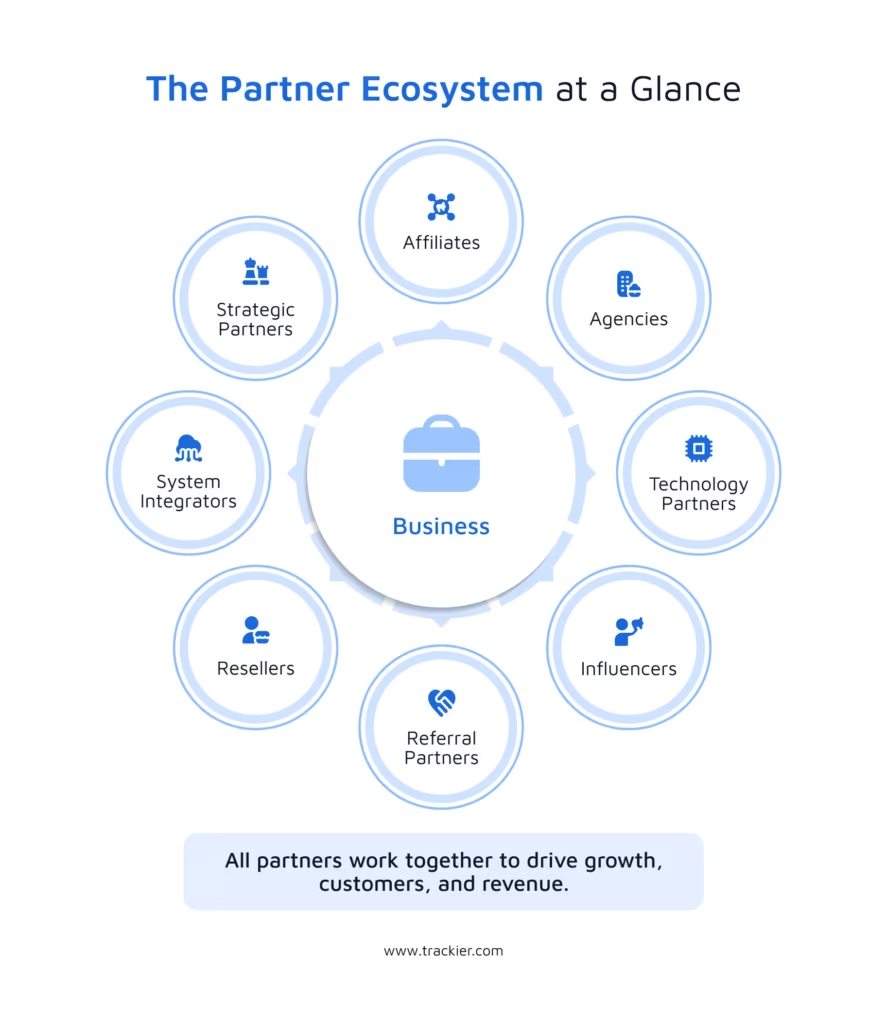
A partner ecosystem is a network of businesses, individuals, agencies, and technology providers that work together to create, promote, sell, or support products and services. Businesses collaborate with different types of partners, including affiliates, resellers, agencies, referral partners, influencers, consultants, and technology partners, to expand their reach and drive growth.
Each partner contributes differently. For example, affiliates generate leads and sales, resellers sell products directly, technology partners build integrations, while agencies and consultants help with implementation, service delivery, or co-selling.
A partner ecosystem strategy is an easy-to-follow approach for businesses to create and maintain these partnerships. This strategy gives businesses insights to choose suitable partners, explain partner roles, and track their performance.
A good partner ecosystem strategy focuses on:
- Choosing the right partners
- Giving each partner a clear role
- Tracking partner performance
- Managing commissions and rewards
- Using technology to manage partners easily
The main goal is to create long-term partnerships that help both the business and its partners grow together.
Why is a Partner Ecosystem Strategy Important?
In Affiliate marketing, it is possible to manage a smaller number of partners manually, but if you have hundreds or thousands of partners, it becomes very challenging.
If your business does not have a proper strategy, then it can face:
- Poor communication
- Manual tracking
- Missed commissions
- Duplicate entries of partnerships
- High risk of Fraud
- Lack of visibility among partner performance
Partner ecosystem strategy helps you to solve these challenges by making the proper processes for onboarding, tracking, reporting, payment, and partner engagement.
Key Components of a Partner Ecosystem Strategy
1. Partner Recruitment
The first step is finding the partners who match your business goals.
These could include:
- Affiliate marketers
- Marketing agencies
- Technology partners
- Referral partners
- Consultants
- Content creators
Choosing quality partners is often more valuable than simply increasing the number of partners
2. Partner Onboarding
Once partners are onboarded on your program, they should be able to start quickly.
A good onboarding process includes:
- Registration
- Approval
- Training resources
- Marketing materials
- Tracking links
- Product information
The simpler the onboarding process, the faster partners can begin promoting your business.
3. Performance Tracking
Businesses need to track every partner to analyze their performance.
So, here are some Common metrics that help in performance tracking:
- Clicks
- Leads
- Conversions
- Sales
- Revenue
- Return on Investment
- Partner activation rate
- Conversion approval rate
- Customer Lifetime Value (CLV)
- Repeat purchase rate
- Refund or churn rate
- Fraud rate
- Partner-sourced revenue
With the help of accurate tracking, businesses can easily identify their top-performing partners.
4. Commission Management
Partners should be rewarded fairly for their performance.
Different commission models include:
- Cost Per Sale
- Cost Per Lead (CPL)
- Revenue Share
- Hybrid Commission
- Fixed Bonus
An effective strategy clearly defines how commissions are calculated and paid.
5. Communication
Strong relationships require regular communication.
Businesses should provide:
- Regular Product updates
- Campaign details
- Promotional materials
- Performance reports
- Support
If the flow of communication is smooth, then it improves engagement and motivates your partners to achieve the desired goal.
Benefits of a Partner Ecosystem Strategy
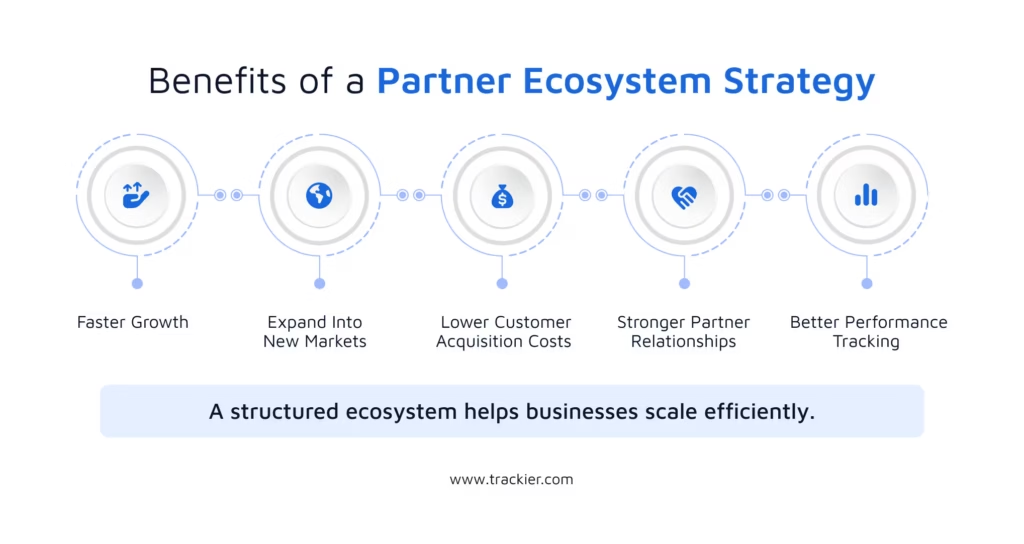
A well-planned partner ecosystem strategy helps businesses grow more efficiently by making partner relationships more organized and performance-driven. Here are some of its key benefits:
Faster Business Growth
Different partner types contribute in different ways. Affiliates generate leads, resellers drive direct sales, agencies deliver implementation services, and technology partners expand product capabilities through integrations and co-selling opportunities. Together, they help businesses grow faster without relying only on internal sales teams.
Better Market Expansion
Working with local partners makes it easier to enter new regions. They understand local customer preferences, regulations, and market trends, helping businesses grow faster.
Higher Revenue
A strong partner ecosystem brings together multiple partners who contribute to lead generation, customer acquisition, and repeat business, resulting in increased revenue.
Lower Customer Acquisition Costs
Since many partner programs use performance-based commission models, businesses only pay when partners deliver results, making customer acquisition more cost-effective.
Stronger Partner Relationships
Clear communication, transparent commission structures, timely payments, and ongoing support help build trust and encourage long-term partnerships.
How to Build a Successful Partner Ecosystem Strategy
Building a successful partner ecosystem strategy takes proper planning, the right partners, and continuous improvement in the strategy.
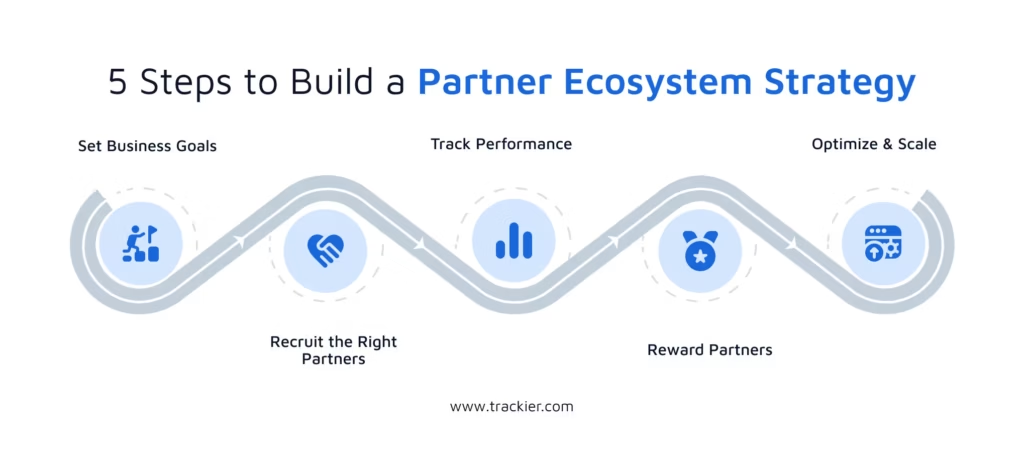
Here are five simple steps to get started:
Step 1: Define Your Business Goals
The first step is to identify what you want to achieve. Your objectives could include boosting sales, obtaining new customers, entering new markets, or raising your brand awareness. Specific goals help shape your partner strategy.
Step 2: Choose the Right Partners
Select partners whose audience, expertise, and business objectives align with your brand. The right partners are more likely to drive meaningful results and build long-term value.
Step 3: Use Reliable Tracking Technology
Implement a partner management platform that accurately tracks clicks, leads, conversions, and commissions. Reliable tracking ensures transparency and helps measure partner performance.
Step 4: Create a Clear Reward Structure
Define how partners will be compensated, whether through cost per sale (CPS), cost per lead (CPL), revenue sharing, or hybrid models. A transparent commission structure builds trust and keeps partners motivated.
Step 5: Monitor and Optimize Performance
Regularly review partner performance using key metrics such as conversions, revenue, and ROI. Use these insights to improve campaigns, strengthen partnerships, and grow your partner ecosystem over time.
How Trackier Supports Your Partner Ecosystem Strategy
With its all-in-one platform, Trackier offers real-time tracking, automated commission management, fraud detection, detailed reporting, and seamless integrations. Businesses can efficiently onboard partners, monitor performance, and manage partner programs from a single platform. It supports commission calculations, automated invoicing, payout workflows, and payment reporting. Trackier Pay can also manage payments from invoice generation to partner disbursement, helping businesses reduce manual work while improving transparency and partner trust.
Final Thoughts
A strong partner ecosystem strategy helps businesses build lasting partnerships that drive growth. By choosing the right partners, tracking performance, rewarding partners fairly, and using the right technology, businesses can create a scalable ecosystem that delivers long-term success.
FAQS
1. What is a partner ecosystem strategy?
A partner ecosystem strategy is a plan that helps businesses build, manage, and grow a network of partners such as affiliates, agencies, resellers, and technology providers. It helps businesses improve collaboration, track partner performance, and achieve long-term growth.
2. Why is a partner ecosystem strategy important?
A partner ecosystem strategy helps businesses reach new customers, increase revenue, improve partner relationships, and manage partnerships more efficiently. It also makes it easier to track performance, automate commissions, and scale partner programs.
3. Who can be part of a partner ecosystem?
A partner ecosystem can include affiliates, influencers, agencies, referral partners, resellers, technology providers, system integrators, distributors, and strategic business partners. Each partner contributes in different ways to help the business grow.
4. How do you build a successful partner ecosystem strategy?
To build a successful partner ecosystem strategy, businesses should set clear goals, recruit the right partners, provide an easy onboarding process, track partner performance, offer fair commissions, and use partner management software to streamline operations.
