Affiliate revenue is the income that is generated through affiliate marketing activities. It is the earnings that are made via efforts made by affiliates to drive certain desired actions for businesses. This could be sales, app installs, lead submissions, subscriptions, or even clicks.
Whether these actions were induced or not is tracked through a unique affiliate link or tracking mechanisms that ensure that affiliates receive their due credit for each conversion.
Affiliate proceeds are, hence, the monetary value that is created through partnerships between businesses and affiliates.
How does it benefit the two?
- Businesses gain customers or conversions
- Affiliates earn a commission in return for their efforts
It is, hence, like a financial foundation for affiliate marketing. It is because of this revenue that advertisers and publishers can measure the outcomes of their work and investments.
How Does Affiliate Revenue Work?
The partner payouts process consists of three major participants. These include an advertiser or business, an affiliate or publisher and customers.
The steps that the process commonly follows are –
- A business first launches an affiliate program or partners with an affiliate network
- Affiliates join the program and receive their unique tracking links
- The affiliate promotes the business through websites, blogs, social media, paid ads, email campaigns, or influencer content.
- The users click on the link and complete the required action
- The affiliate tracking platform used by the business or the affiliate network records the conversion.
- Once this process is completed, the affiliate earns a commission and earns the affiliate revenue
The commission model here depends on what is agreed upon between the affiliate and the advertiser.
While some businesses choose to pay a fixed amount per conversion, others offer a percentage-based commission.
Commission Affiliate Revenue Model
Performance earnings can be generated through different pricing models depending on campaign objectives. Some of these models are as follows
Cost Per Sale
In this model, affiliates earn revenue when a customer completes a purchase. This affiliate payout structure is most commonly used in e-commerce and retail affiliate programs.
For example, if an affiliate promotes a product worth $200 with a 10% commission rate, the affiliate earns $20 from the sale.
Cost Per Lead
Under CPL, affiliate revenue is earned when an affiliate makes users complete a lead action, such as –
- Filling a form
- Signing up for a newsletter
- Booking a demo
- Registering for a trial
This mode is especially common in industries like SaaS, finance, insurance, and even education.
Cost Per Click
Affiliates generate revenue on the basis of the number of clicks that are sent to the advertiser’s website. The priority here is to generate more traffic and not just conversions.
Cost Per Install
This commission model is most frequently used in mobile app marketing. In CPI, the affiliates are rewarded when users install an application.
Affiliate revenue holds a different meaning from the perspective of both affiliates and advertisers.
Affiliate Revenue From a Business Perspective
For businesses, affiliate income means the value that is generated through affiliate partnerships. It is closely related to –
- Customer acquisition
- Marketing ROI
- Campaign profitability
While in the traditional advertising model, brands pay upfront for visibility, in performance marketing, they just have to pay for the results. Payment is made only when a measurable action is delivered. This way, businesses can analyse the efficiency of campaigns and the chosen marketing strategy.
For advertisers, performance-based revenue helps answer certain questions like –
- Which affiliates generate the highest quality traffic
- Which campaigns are providing the most profitable conversions
- What commission structure produces sustainable growth
- Which channels contribute the most revenue
Businesses often analyse affiliate revenue along with metrics like –
- Return on ad spend
- Customer lifetime value
- Conversion rate
- Average order value
- Fraud rates
Dedicated affiliate tracking platforms help businesses analyse affiliate performance and monitor revenue in real time. This allows them to –
- Optimize campaigns
- Identify top-performing partners
- Reduce attribution gaps
From the Perspective of an Affiliate
For affiliates, this income is what they earn from their promotional efforts. It shows how effectively they can drive conversion through their-
- Content
- Traffic sources
- Audience influences
Affiliates focus on maximizing revenue by improving –
- Traffic quality
- Audience targeting
- Conversion rates
- Promotional strategies
- Content relevance
The potential of an affiliate’s income depends on several factors. Some of these are –
Traffic source – Where exactly is the traffic coming from? There are different sources where affiliates drive traffic from. This could be SEO driven blogs, social media channels, email marketing, paid advertising, YouTube content, and influencer promotions. It is the quality and intent of traffic that is attained, which has a direct impact on revenue generation.
Commission structure – Higher commission percentages or recurring commissions can directly increase affiliate revenue.
Conversion optimization – Affiliates who understand audience behavior often generate better results through optimized landing pages, strong calls to action, and relevant offers.
Niche selection – Certain industries, such as finance, SaaS, iGaming, and software, often offer higher affiliate payouts compared to low-margin product categories.
Why Affiliate Revenue Matters
Affiliate income is an earning metric, but it is also what influences decision-making for affiliates and advertisers.
For Businesses
It helps businesses –
- Scale customer acquisition
- Expand reach through third-party publishers
- Reduce marketing risk with performance-based payouts
- Improve campaign visibility
- Build a long-term relationship with partners
For Affiliates
It helps affiliates as it provides them with –
- A scalable monetization model
- Passive or recurring income opportunities
- Performance-based earning potential
- Flexibility across industries and channels
Challenges in Tracking Affiliate Revenue
While affiliate marketing is one of the best ways for businesses to create growth opportunities, it also has certain challenges. Accurate measurement is a big obstacle here that often becomes difficult to cross. The reasons behind this are as follows –
- Attribution issues – Users often interact with multiple marketing channels before converting. Determining which affiliate deserves credit can become complex.
- Cookie limitations – Browser restrictions, ad blockers, and privacy regulations have become highly common these days due to which traditional cookie tracking is not as effective anymore.
- Fraudulent traffic – Fake clicks, bot traffic, and duplicate leads can distort affiliate proceeds’ reporting and affect profitability.
- Delayed conversions – Some industries have longer sales cycles, which makes it harder to attribute revenue immediately.
To overcome these issues, businesses have started relying on platforms that provide affiliate tracking solutions. These platforms offer –
- Real-time attribution
- Cross-device tracking
- Server-to-server tracking
- Fraud detection tools
- Transparent reporting dashboards
How is Affiliate Revenue Calculated?
The calculation method depends on the commission structure.
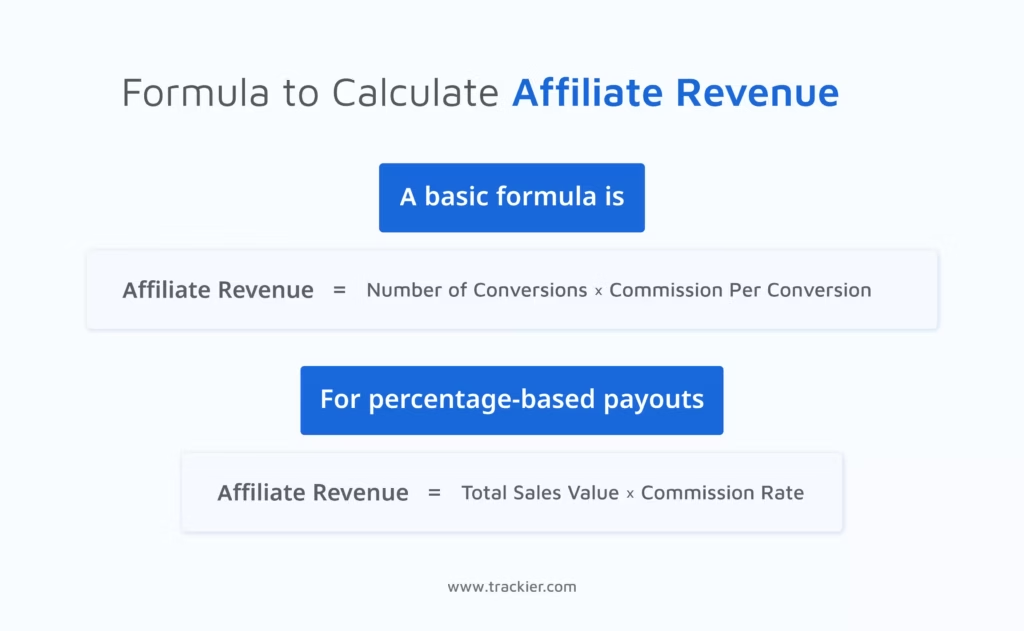
For example, if the total sales generated are $10,000 and the commission rate is 8%, then the affiliate earnings would be $800.
Tracking platforms automate these calculations and provide a detailed report for advertisers as well as affiliates.
Wrapping it up
Promotional earnings are the main financial result of affiliate marketing. For businesses, it’s the money made through customers they acquire via partners. For affiliates, it’s the income they earn by promoting products or services effectively.
Even though businesses and affiliates see affiliate revenue in their own ways, they’re both focused on performance and growth. Businesses want profitable results, while affiliates strive to increase their commissions with smart promotional strategies.
As affiliate marketing changes, keeping track of revenue accurately and improving performance will be key to supporting strong partnerships.
FAQ
Is affiliate revenue the same as affiliate commission?
No, affiliate revenue and affiliate commission might look similar but they are not the same. Affiliate revenue is the total earnings that are generated through affiliate marketing activities across campaigns, partners, or time periods. Affiliate commission, on the other hand, is the specific payout amount earned per conversion. If commission is the unit, then the revenue is the overall sum earned by an affiliate or distributed through an affiliate program.
Who controls how much affiliate revenue is earned?
Affiliate revenue is primarily influenced by the advertiser’s commission structure and campaign rules, but it is not controlled by a single party. Businesses define payout models, while affiliates control performance through traffic quality and marketing strategy. External factors like audience behavior, seasonality, and conversion optimization also significantly impact how much revenue is ultimately generated.
Can affiliate revenue be recurring?
Yes, affiliate revenue can be recurring depending on the program structure. In subscription-based models such as SaaS or membership platforms, affiliates may earn ongoing commissions as long as referred users continue their subscriptions. This creates a long-term income stream rather than a one-time payout, making such programs highly attractive for affiliates focused on stable earnings.
Why does affiliate revenue vary across industries?
Affiliate revenue varies across industries due to differences in product value, margins, customer lifetime value, and competition levels. For example, finance and software industries often offer higher payouts because of higher customer value, while retail or low-margin sectors may offer smaller commissions. Additionally, conversion difficulty and sales cycles also affect overall revenue potential.
