
One of the most important problems that arises when you start an in-house affiliate program is the inability to onboard effective partners, or to keep them around through nurturing the affiliate relationship.
That’s where many may be tempted to consider starting their own affiliate networks.
Financially, it makes complete sense. Businesses are always looking for more performance-driven ways of making money, and more cost effective mediums of bringing in new sales or customers. Affiliate marketing is just the means to do that — and with limited risk.
According to Statistica, affiliate marketing spending in the US alone is going to cross $13 billion in 2026. Considering the fact that this spend happens post conversion, tells us about the scope of revenue growth possible by enhancing the pool of available partner marketers.
The more you add, the better the outcomes. Even when you factor in fraud and other leakages. Then it certainly helps to start your affiliate network.
But what does it mean to start a network and how to actually do it? Let’s understand the key considerations involved.
What Does it Mean to Start Your Affiliate Network?
Think of an affiliate network as a bridge. It connects advertisers (who wish to promote their product) with publishers (who are going to be working towards bringing in traffic).
It provides the infrastructure needed to:
- track affiliate-generated conversions,
- manage campaigns,
- automate payouts, and,
- monitor performance
An affiliate program, in contrast, can be seen as limiting — only one advertiser has direct associations or partnerships with select affiliates. In the case of an affiliate network, the connection occurs between various advertisers with a large and diverse pool of affiliates, over a single, centralized platform.
As a complete ecosystem, the typical affiliate network framework includes some essential elements:
- Advertisers offering products or services
- Affiliates promoting those offers
- Tracking software to attribute conversions
- Payment systems for commissions
- Analytics and fraud monitoring tools
Additionally, when you start your affiliate network, there is a need to understand the payout or commission structures commonly operating in such setups:
- CPA
- CPS
- CPL
- CPC or CPI
- Revenue sharing
- Tiered payouts (when onboarded partners are referred by others)
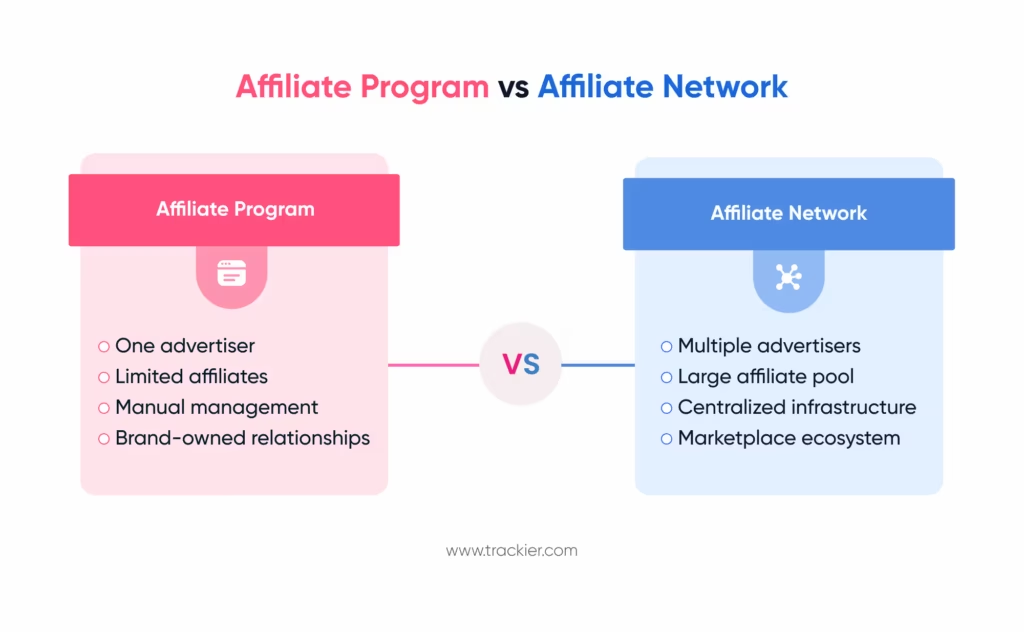
Starting your own affiliate network means building and managing this ecosystem independently, often using affiliate tracking and partner management software to streamline operations.
Why are Brands Choosing to Build Their Own Affiliate Networks?
Often the primary cause behind considering to start your affiliate network is a strategic one. A variety of factors come together to nudge businesses with their own private partner ecosystems in this direction. Let’s understand what they are.
Does an Owned Affiliate Network Improve Control Over Partnerships?
When you run campaigns through third-party marketplaces, the ability to control the quality of affiliates or the length of partnerships is limited. That is something creating a network of your own can provide. Beyond handpicking your partners, this also allows you to lean into making marketing more performance oriented through custom commission modeling, compliance policies or referral management.
Where Do Improved Profit Margins Become Apparent?
Traditional affiliate networks charge setup fees, monthly platform costs and percentage-based commissions. If you start your affiliate network, you can control these costs by reducing dependency on external actors and organizations, and improve profitability over time.
Do You Want Access to First-party Data?
One fallout from the decay of third-party cookies is a limitation on the amount and quality of data available with advertisers and ad runners. This can increase challenges in a highly competitive marketplace. That’s why operators are preferring to launch their own affiliate networks, in order to gain access to first-party affiliate data that improves:
- The understanding of customer journeys,
- Techniques for analysis and optimization of campaigns, and,
- The accuracy of the attribution process.
Are You Looking for Scalable Global Affiliate Program Expansion?
Affiliate marketing is often chosen as a promotional medium simply for the speed at which it enables new market entry or expansion in existing markets. All this is made possible through risk averse, cost effective means, due to the nature of partner marketing — payouts are a by-product of completed conversions.
Creating your own affiliate network enables the scaling of partnerships across geographies, while maintaining centralized operations.
Should You Start Your Affiliate Network? Here’s a Decision Map.
Building an affiliate network has a lot of clear benefits. It can give businesses greater control over publisher relationships, tracking, commissions and performance data. However, it also requires investment in technology, compliance, fraud prevention, publisher acquisition and payments.
But before actually creating your own network, consider these key factors:
- What’s your objective? Decide whether you need an affiliate program for your own business or want to build a network that connects multiple advertisers with publishers. Both have different outcomes and use cases.
- Have you considered scale? Building your own network can make sense when you have substantial affiliate activity, an established publisher base and a clear need for greater control. In other cases, the cost may outweigh everything else.
- You must evaluate the technology requirements: A network needs reliable tracking, attribution, APIs, dashboards, reporting, fraud detection and payment capabilities. Building and maintaining these systems requires significant technical resources. You can also source them, but that means relying on expensive subscriptions to multiple SaaS organisations.
- Is your motivation speed to market? An established affiliate platform can provide tracking, reporting, publisher management and payment infrastructure without the time and cost of building everything internally. Getting to such a level of effectiveness as a new organization will take time.
- There needs to be a plan for compliance. Affiliate marketing requires ongoing oversight. Businesses should establish clear promotional affiliate marketing guidelines, monitor affiliate activity and address violations promptly. The FTC provides guidance on managing affiliate disclosures and endorsements.
- Prioritise accurate attribution: Cross-device journeys, multiple marketing touchpoints and different tracking methods can make attribution challenging. Your technology needs to provide reliable and transparent performance data.
- Protect your SEO: If affiliates use your links, Google recommends marking paid or sponsored links with
rel="sponsored". Affiliate content should also provide genuine value rather than simply republishing merchant information. - Compare the economics: Factor in development, infrastructure, maintenance, fraud prevention, compliance, support and payment costs. Compare this with the cost of using an established affiliate platform, to know if means justify the ends.
Which Route is Right for You?
Here are 3 unique positions you may land on, after due consideration on whether starting an affiliate network is the correct approach for you.
Build your own network → Best for businesses with significant scale, strong technical resources and a long-term need for complete control.
Use affiliate technology → Best when speed, efficiency and access to proven infrastructure are higher priorities.
Choose a hybrid approach → A practical option when you want control over your affiliate strategy while relying on third-party technology for tracking, automation or payments.
If you decide that creating your network is the correct path, here’s how you can actually go about building it.
How To Start Your Affiliate Network? A Step-by-step Breakdown
1. Choose a Profitable Niche and Clear Value Proposition
Keeping your affiliate network open to all kinds of affiliate marketing, everywhere may seem like the perfect recipe for attracting both talent and business. But it is one of the biggest mistakes most new networks make.
Building an affiliate network with a focused niche or specialization enables you to establish authority, attract relevant affiliates and differentiate the given networks from others, even if they operate in the same geographical region or share a roster of partners. It gives you a unique advantage, when the market is crowded. It makes your wins stand out, leading to market dominance, even when you’re relatively new.
Some of the high-performing niches you can choose to set up your affiliate network in are:
- SaaS
- Finance and fintech
- Gaming
- E-commerce
- Health and wellness
- Education and online learning
A singular focus also enables you to start your affiliate network with a strong value proposition, such as:
- Higher commission rates
- Faster payouts
- Better tracking accuracy
- Exclusive offers
- Dedicated affiliate support
- Global payment capabilities
Knowing who you are and what you stand for as a network enables service delivery that matches those values. Advertisers know exactly what they’ll get when they conduct business with you.
All of these variables together enable the given affiliate network to present advantages to both its target audiences: advertisers and affiliates. Niche-focus builds business credibility while better deals and efficient commissions bring high-performing partners to your platform.
Start by asking yourself some simple questions, at the stage where you’re planning the structure of your affiliate network:
- Which audience are you serving?
- What type of advertisers will join your network?
- Why would affiliates choose your platform over competitors?
- What unique benefits can you provide?
Answering them will lead you to the selection of a valuable niche and relevant USP, as dictated by ongoing, visible market trends.
2. Invest in Reliable Affiliate Marketing Tracking Technology
The second major consideration before you actually start your affiliate network would be aligning an effective software to track affiliate activity and map attribution for each affiliate, in a seamless manner.
Since privacy norms like GDPR and CCPA became non-negotiable, third-party cookies have lost prominence within the activity tracking paradigm. Therefore, networks and demand side platforms have to increasingly rely on postback-enabled, server-to-server methods to be effective in their performance marketing efforts.
Partner marketing tracking is, for all intents and purposes, the very backbone of affiliate marketing. Without it, affiliates are incorrectly compensated, advertisers lose faith and partner relationships break down.
But what should you be tracking? Here’s a list.
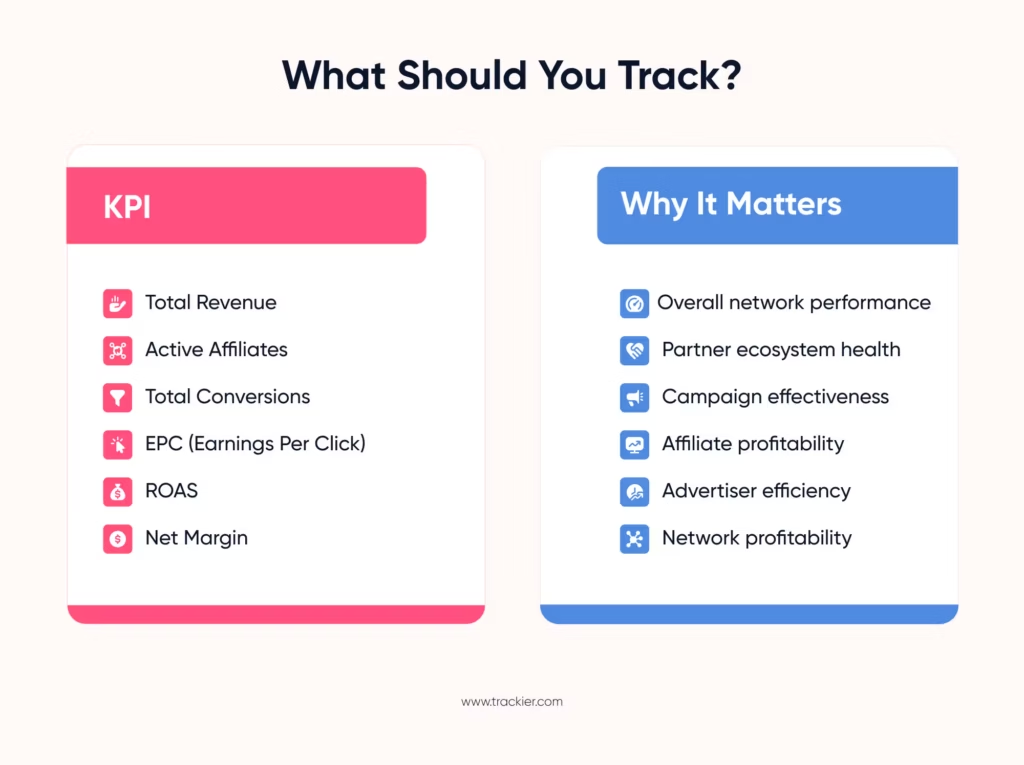
To make performance tracking ‘reliable’, a few attributes must be present in the affiliate software you choose to track.
- Real-time Tracking
Knowing how each campaign is doing on an immediate basis is certainly a priority if you wish to grow into a high-performance affiliate network. What’s more? Affiliates also expect immediate visibility into clicks, conversions and commissions. Real-time reporting improves transparency and trust on both ends — for brands and for partners.
- Precise, Multi-channel Attribution Reporting
Modern customer journeys run across a variety of touchpoints — scattered across multiple platforms. Capturing them precisely is key to delivering value for affiliates and advertisers. Advanced attribution models enable the mapping of the complete, varied journey of each user to effectively reflect where the conversion decision got made each time.
No matter where users click a link or pick a promo code from, platforms like Trackier are built to detect and report on interactions across mobile, web and tablets (provided there’s an existing integration with an MMP platform).
- Fraud Detection and Prevention
Fraud remains one of the major challenges within partner marketing. A report from Juniper Research suggested that 22% of digital advertising spend in 2023 was fraudulent. You can imagine the impact on the outcomes of overall marketing spends, across campaigns. For affiliate networks, the margin of error tends to grow with every single new campaign.
That’s why catching bad actors and poor practices in real-time is key for affiliate networks seeking to build a name for themselves. Doing it manually after the campaign has run its course simply takes too long and is prone to errors.
- Automated Invoicing Across Countries
Affiliate networks work with several partners — all of whom will be onboarded for varying lengths of time. It is vital to have an automated invoicing system for timely, accurate and period invoicing for all partners, no matter where they reside or which country they promote in. An affiliate marketing software should enable you, as an affiliate network, to free yourself from time-consuming tasks such as matching and calculating commissions.
- API and Integration Support
Finally, to start your affiliate network, you will need the affiliate platform you pick to come with flexible integration capabilities and proper API support so that data collected through affiliate platforms can be analysed with first party data in a CRM, CDP or other platform, as needed.
Why does flexibility matter in setting up an affiliate network? Based on the niche you pick, and the clients you serve, or the scale you achieve, you will always need an ever-changing set of tools. If you do not consider future-based requirements at this time, you may have to undergo lengthy platform migration processes at a later stage.
3. Build a Strong Affiliate Recruitment Strategy
An affiliate network can only succeed if it has quality affiliates. In fact, the density of partners decides how many, and how extensive the campaigns of the given network can be — which in turn guides how many advertisers can become clients at a given moment.
What’s more? Affiliates work on contract-basis with networks and programs. This means, they could be engaged with multiple networks and present within brand affiliate programs at the same time. It means: their presence depends completely on the viability of the financial deal they strike with networks and brands.
That’s why recruitment of partners in itself can be one of the hardest tasks to accomplish when you start your affiliate network.
Here are some steps you can take to bring new affiliates into your network:
- Influencer partnerships
- Affiliate communities and forums
- LinkedIn outreach
- Existing customers
- Content creators and bloggers
- YouTube creators
- Industry newsletters and events
Many-a-times, affiliate managers also personally reach out to niche affiliates or influencers who are known to be more effective.
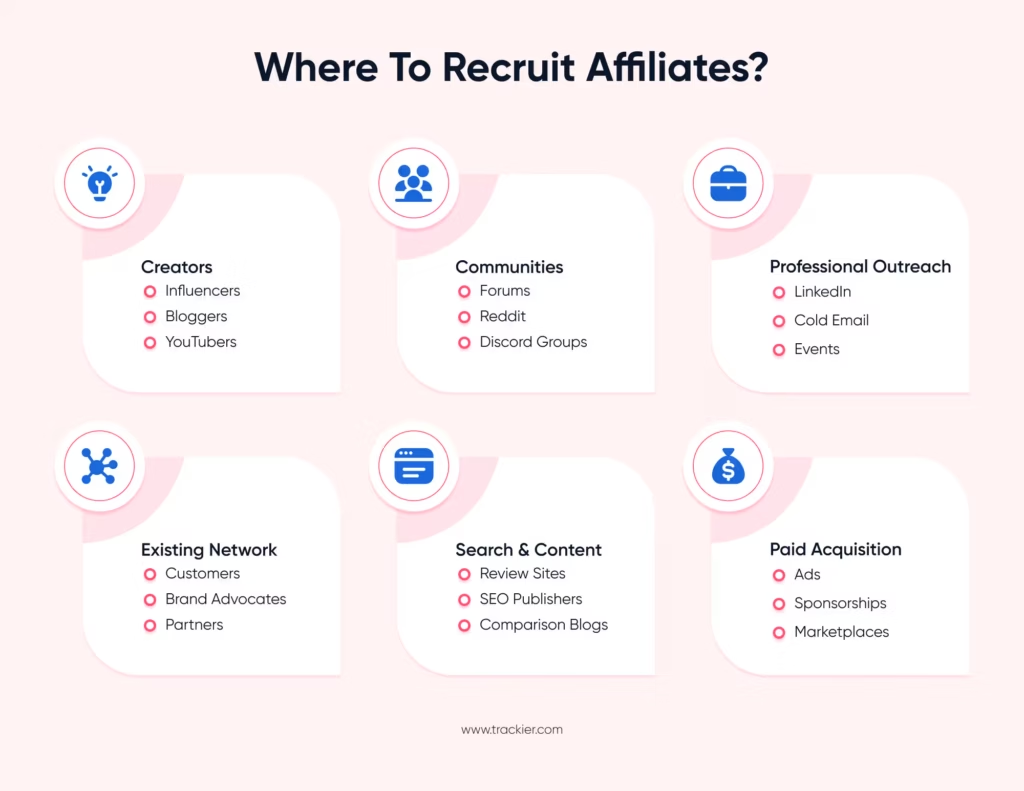
If you’re leading with a pull strategy, here’s what top-performing affiliates are attracted to:
- Competitive commission structures
- Reliable tracking
- Fast payments
- Transparent communication
- Dedicated support
- Exclusive campaigns
- Detailed reporting dashboards
Remember, the building of any affiliate network is primarily about building relationships. Long-term affiliate retention often matters more than rapid short-term recruitment.
4. Create a Competitive Commission and Payment Structure
Your commission models could be the key to succeeding when you start your affiliate network. Partners are attracted to programs, and work according to the remuneration they will get for the work done. Think about it: if everything you do is just like other affiliate networks, what incentive do affiliates have to join yours?
Any affiliate looking to join an affiliate program will try to identify the earnings per click or EPC of the network. The metric directly indicates whether promotions under the given network are profitable or not.
When designing your commission structure, it is important to consider a few variables that could impact everything, from your ability to keep bringing in new partners to making sure they stick around.
- Industry benchmarks
- Competitor commission rates
- Average customer’s lifetime value
- Profit margins
- The expectations of affiliates
Beyond the basic commission structure, it is important to ensure the partners are getting paid in a reliable manner — on time, at the decided interval. Delays, inconsistencies in invoicing and other such anomalies can sour existing relationships and lead to poor contract renewal rates. To remain competitive as an affiliate network, it is important to maintain healthy financial relationships with partners.
In addition to this, offering payouts in multiple currencies, and a variety of payment methods can boost the preference of affiliates for your particular whitelabel affiliate network.
5. Prioritize Compliance and Transparency
Trust is the basis of any performing affiliate network. Advertisers should be able to trust spending their marketing budget with you, and affiliates should trust you as a source of business and income. As you start your affiliate network, and it grows, maintaining traffic quality and compliance becomes equally important.
The burden of maintaining compliance normally falls with brands, and when violations occur (with hefty fines), they may seek to recover damages or sever ties. That’s why building clear affiliate marketing guidelines and processes for audit and review are vital to your existence as an affiliate network, as well as in scaling.
Here are some key steps you can take to ensure your network meets expected standards:
- Implement affiliate verification: Verify your partners before matching them to campaigns.
- Use fraud detection software: Monitor suspicious patterns and traffic anomalies in real-time.
- Establish clear policies: Create transparent affiliate guidelines covering traffic sources, promotional restrictions and compliance requirements.
- Maintain transparent reporting: Let affiliates also see their clicks, conversions and LTV achievements on an immediate basis.
How to Attract Advertisers to Your Affiliate Network?
Once your network business is live, attracting advertisers is one of the most critical steps to actually ‘start’ your affiliate network. The major hurdle is gaining enough trust to have an established business spend their marketing dollars on your platform, before there is any proof of outcomes evident in your work.
That’s why a structured acquisition strategy is vital in ensuring advertisers feel the need to work with your network. Here’s how it can be done.
1. Do You Know Your Ideal Advertiser Profile?
Instead of haphazardly approaching businesses through cold mailing, first identify who would fit into your ‘ideal customer profile’ based on existing publishers and affiliate network’s niche. Consider other factors too, such as:
- Industry or vertical
- Geographic markets
- Monthly marketing budget
- Existing affiliate or partner programs
- Customer acquisition goals
For example, a network focused on fintech marketing should prioritize financial institutions, lending platforms and investment apps rather than eCommerce brands with unrelated audiences.
2. How to Build a Strong Value Proposition?
Any business wants to achieve measurable outcomes when they spend money. Advertisers who you pitch to, will also need to be convinced that your network can help them secure business ends. You need to clearly communicate how your network helps them:
- Reach high-quality publishers
- Track every conversion accurately
- Reduce fraudulent traffic
- Optimize campaigns using real-time reporting
- Scale customer acquisition while maintaining profitability
Add onto these offerings with platform capabilities, customer success stories and performance metrics achieved to make the offer more enticing.
3. What is a Targeted Outreach Strategy?
Successful advertiser acquisition rarely comes from mass outreach. Create a focused list of companies that fit your niche and personalize every conversation.
When you start your affiliate network, try to narrow down on advertisers whose business challenges align closely with your approach. Your outreach should demonstrate this, even before you make the pitch.
Highlight relevant publisher categories, potential audience reach and campaign opportunities instead of sending generic sales messages.
4. How to Simplify Onboarding for Advertisers?
You don’t want to turn business partners away by setting up long and arduous onboarding flows. Make it easy for new partners to launch campaigns by providing:
- A dedicated account manager
- Clear campaign setup guidelines
- Tracking implementation support
- Creative upload assistance
- Transparent commission structures
Reducing friction during onboarding improves activation rates and helps advertisers launch campaigns faster.
5. Does Delivering Early Performance Wins Matter?
The first few weeks determine whether an advertiser continues investing in your network. Focus on achieving measurable results (in terms of metrics like ROAS, ROI and so on) quickly by matching advertisers with your most relevant publishers and monitoring campaign performance closely.
Regular optimization, transparent communication and actionable reporting help establish trust while encouraging advertisers to increase budgets over time.
6. How to Build Long-term Relationships with Advertisers?
As a network, acquiring advertisers is only the beginning. Retaining them requires continuous optimization and strategic collaboration across time. A client will only remain as long as they benefit either through cost arbitrage or through clear, visible results you’re able to give them.
Schedule regular performance reviews, recommend new publisher opportunities and share campaign insights that help advertisers improve their return on investment. Networks that consistently deliver value often generate repeat business and stronger referral opportunities.
How to Find and Onboard Affiliates? Build a Publisher Activation Framework
When you start an affiliate network, it is given that publishers will join in. In reality, recruiting publishers is only half the challenge. The real measure of a successful affiliate network is how many registered publishers become active revenue-generating partners.
When campaigns go live, you don’t want to hear crickets. There should be a certain number of active partner marketers pitching in and actually bringing results. Or your offering becomes hollow and clients may seek to walk away from your business.
Creating a publisher activation framework provides a structured approach to moving publishers from registration to consistent campaign performance, rather than just waiting around for something to happen.
Stage 1: Verify and Qualify
Review every publisher application to ensure it aligns with your network’s quality standards. Evaluate factors such as website quality, audience relevance, traffic sources and compliance with your advertising policies.
This step helps maintain advertiser confidence while reducing the risk of fraudulent or low-quality traffic.
Stage 2: Encourage Quick Sign-ups
Publishers should understand how to start earning as quickly as possible. Provide a clear onboarding experience that includes:
- Platform walkthroughs
- Tracking setup instructions
- Campaign selection guidance
- Promotional best practices
- Affiliate marketing guidelines for compliance
Reducing the learning curve increases the likelihood of early campaign participation.
Stage 3: Match Publishers with Relevant Campaigns
Not every campaign suits every publisher. Use audience demographics, content categories and historical performance to recommend offers that align with each publisher’s strengths.
Better campaign matching improves click-through rates, conversion rates and overall publisher satisfaction.
Stage 4: Help Publishers Succeed
The first successful conversion often determines whether a publisher remains active.
Help publishers achieve early results by recommending beginner-friendly campaigns, providing optimized creatives and sharing performance tips based on similar publishers within your network.
Recognizing initial achievements through incentives or performance bonuses can further improve engagement. Maintain active communication with partners throughout these steps.
Stage 5: Optimise through Data
Activation is an ongoing process rather than a one-time event. Monitor metrics such as:
- Active publisher rate
- Campaign participation
- Click-through rate
- Conversion rate
- Earnings per click
- Revenue generated
Use these insights to identify inactive publishers, recommend new campaigns and deliver personalized optimization advice.
Create a Checklist to Streamline the Process
Before considering a publisher fully activated, ensure they have:
- Completed profile verification
- Implemented tracking successfully
- Joined at least one campaign
- Generated their first click
- Recorded their first conversion
- Received onboarding guidance
- Access to ongoing optimization support
Following this framework creates a more engaged publisher ecosystem, improves advertiser satisfaction and supports sustainable network growth.
Common Mistakes to Avoid When Launching an Affiliate Network
While launching an affiliate network may seem like a simple, straightforward process, having gone through the major considerations to do so, there are some major areas where you need to be more careful to avoid missteps.
Some of the most prominent ones are:
- Targeting too many niches too early
- Ignoring affiliate onboarding experience
- Delaying affiliate payouts
- Using unreliable tracking systems
- Focusing only on recruitment instead of retention
- Neglecting fraud prevention measures
- Failing to provide dedicated affiliate support
Of course, trials and errors are part of growing any enterprise, an emphasis needs to be placed on limiting the errors which are avoidable — especially when they’re noted across the affiliate ecosystem.
Over time, by optimizing partnerships, paying fairly, working on affiliate relationships and improving advertiser experiences, your network can gradually become successful.
Conclusion
If you’re planning to start your affiliate network, first identify a clear niche and build a strategy around it to attract local and global partners to your network. Invest in a robust tracking software to ensure the effectiveness of your affiliates’ efforts is measured, mapped and calculated in real-time.
Long-term success comes down to creating a scalable ecosystem built on transparency, reliable technology, strong partnerships and operational efficiency.
With a combination of the right strategy and the right tools in place, your affiliate network can grow into a powerful acquisition and revenue-generation engine.
FAQs
What is an affiliate network and how does it work?
An independent body which connects advertisers to publishers or affiliates who can promote their products or services is known as an affiliate network. Due to its very nature, a network can work with multiple brands and organisations at once, running multiple, multi-level campaigns with 1000s of affiliates, across multiple geographies at once.
What are the most important factors to consider before launching an affiliate network?
Before launching an affiliate network of their own, it is important to consider the following:
– Whether there is a profitable niche that can be selected
– Choosing and purchasing the subscription of an affiliate marketing software
– Planning for the recruitment of affiliates (as an ongoing practice)
– Deciding on competitive commission modelling
– Securing fraud prevention and compliance tools
Which industries are best for starting an affiliate network?
Some of the profitable niches where an affiliate network can function well are:
– SaaS
– FinTech and Finance
– Health and wellness
– Gaming
– Education
The simple reason why these industries stand out is because they possess 3 attributes: high customer demand, recurring revenue opportunities and strong affiliate participation.
What technology is needed to run an affiliate network successfully?
A partner marketing software is required to run a scalable affiliate network effectively. Such a tool must be equipped with features like real-time reporting, multi-channel attribution, fraud detection tools, automated invoicing, API integrations and secure payment systems to make the entire affiliate management and marketing process seamless and structured.