Relational marketing (also often known as ‘relationship marketing’) is a long-term strategy within marketing, which focuses on building trust, loyalty and value exchange between a business and its customers over a long period of time. You can view it as distinct from transactional marketing, wherein the emphasis is on ensuring individual sales. When marketing takes place through fostering relationships, the aim is usually to drive retention, repeat purchases, customer advocacy and better lifetime value through continuous, personalized and welcome engagement.
In this blog, we’ll be examining what the concept of relational marketing appears as (with the help of example), how it works, and why customers may lean into it.
What is Relational Marketing?
The concept of building a real relationship with customers through the medium of marketing for the purpose of extending their lifetime value as a client, is known as relational marketing. This concept is also sometimes referred to as relationship marketing due to the inherent nature of how it operates — a relationship must be established between the customer and the brand.
To bring about this relation, the brand must establish:
- Value, so that a customer has a reason to keep coming back,
- Trust, through the quality of its goods and services as well as pre and post-sale interactions, and,
- Loyalty within the customer so that their particular needs are always met through the given brand and they keep choosing it, year after year.
You can consider value, trust and loyalty as the essential drivers of relational marketing.
Where did the Term “Relationship Marketing” Come From?
In 1983, the term ‘relational marketing’ was used for the first time by Leonard Berry, a professor of marketing. Subsequently, it found its way into Barbara Jackson’s 1995 work on B2B retention marketing.
Of course, coining and usage are separate matters entirely. The manner in which marketing through building relationships actually occurs can be traced back to pre-industrial times, when local merchants and vendors developed and maintained long-term relationships with customers due to the very personal nature of such commerce.
Only when industrialization occurred did the process of buying and selling become impersonal. And that’s how the need to curate and build unique relationships with each individual customer actually arises.
Consequently, relationship-driven marketing has become a fact of modern marketing and commerce, wherein, businesses invest time and effort into personalization and 1-1 connections with customers, to ensure they don’t view interactions as purely commercial or exchange-driven.
How Relational Marketing Works
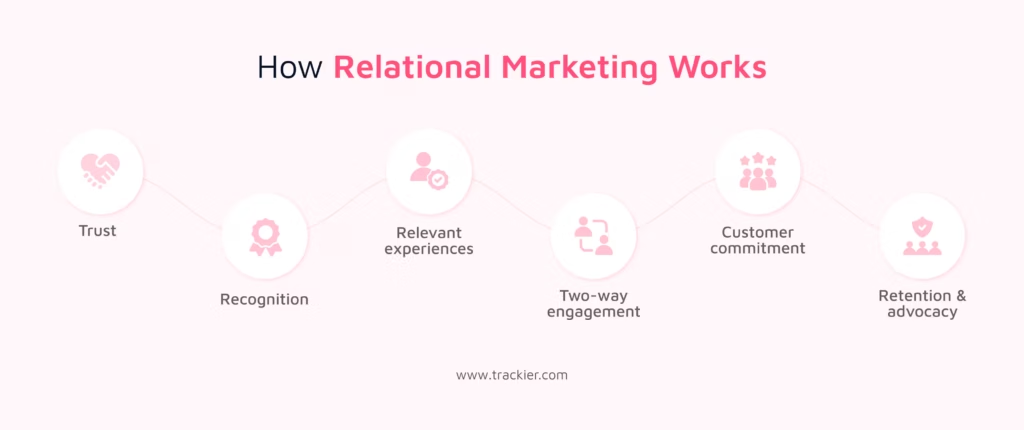
Let’s understand how a buying-and-selling interaction can actually be transformed into something that resembles a relationship — one that extends for some meaningful period of time.
Consider Trackier as a product. When the partner marketing platform, Trackier, is marketed to potential customers, its features and use cases become key sales pillars.
But that’s all good to have, and honestly, all products have those. So, where does the trust come from?
It comes from our user stories and our testimonials. Diverse clientele and users who have bought the tool and implemented it within their marketing systems have seen real benefits. They’ve also gone ahead and talked about them with us.
Or, they could have gone ahead and published it on software review platforms like G2 and Capterra. Potential customers can review actual outcomes and judge whether the platform is worthy of their trust.
Now, those who recognise the benefits of using Trackier for their business will need to understand its value for their specific business problem and requirements. That’s what happens when we connect with them on demo calls — a back-and-forth ensues to gauge the depth of challenges, the scope of custom requirements (if any) and the possible timeline of transition, from the existing tool or framework to the one Trackier provides.
At this stage, a new customer has entered the ecosystem, and through the process of onboarding them, migrating their data and so on, trust and value slowly get established. As they begin using the performance marketing platform, they’ll be able to experience both these factors even more — through 24/7 customer support, additional features on-request, tireless problem resolution of all kinds and zero downtime.
It may seem like this itself is all relational marketing is, but this is less than half of the true journey. You see, initial stages of the relationship function as they do in any interpersonal relationship: you only see each other’s good side.
The true test of the ‘relationship’ is during trying times, or what comes after the first few months. That’s when commitment can ensure longevity. It can be made evident in some of the following ways:
- Trackier offers a reliable platform, which doesn’t take a lot of training to use. Changes within the client’s affiliate and influencer marketing teams can happen without leading to disruption in the team’s usage of the platform.
- A pivot within business could new features or changes within existing features are required? All that comes included with the product.
- New brands within the business? You can make use of as many brand accounts as you need.
- Changes in focus on performance marketing, in general? Shift to a different usage tier, with a unique pricing model.
The flexibility which customers experience with Trackier, is what ultimately, ensures the relationship is built. Additionally, such user-friendly experiences give long-term clients the confidence to turn advocates.
That’s how the entire relationship marketing process works, and comes to fruition.
Relational vs Transactional Marketing: What’s the Difference?
Is there any difference between transactional marketing and the relational kind? Here’s a test of a variety of parameters which can help you ascertain exactly how they differ.
| Aspect of Comparison | Relational Marketing | Transactional Marketing |
| Goal | Build long-term loyalty and increased lifetime value | Immediate sales or one-time conversion |
| Time Horizon | Long-term | Short-term |
| Communication | Use of 2-way dialogues and active listening | 1-way communications through marketing materials |
| Customer Data | Tracking of behaviours, preferences and feedback from customers | Basic contact and purchase details registered |
| Offers | Tailors value-added solutions and personalized offers | Discounts and low prices pushed through mass marketing |
| Primary KPIs | Retention rate and customer life time value | Cost per acquisition, conversion rate and return on ad spend |
| Customer Role | Active, as a collaborative partner | Passive, as a purchaser of goods and services |
| Example | As evident through continuous always-on support in SaaS subscriptions | Purchase of a chocolate bar at a department store |
While there are clear disparities between the two types of marketing, it is vital to understand that each one plays a role in the complete picture of marketing activities. Depending on the situation, organizations may choose to leverage one or the other more.
Relational marketing helps in extending the value of a transactional interaction by building a relationship based on the single instance of sale.
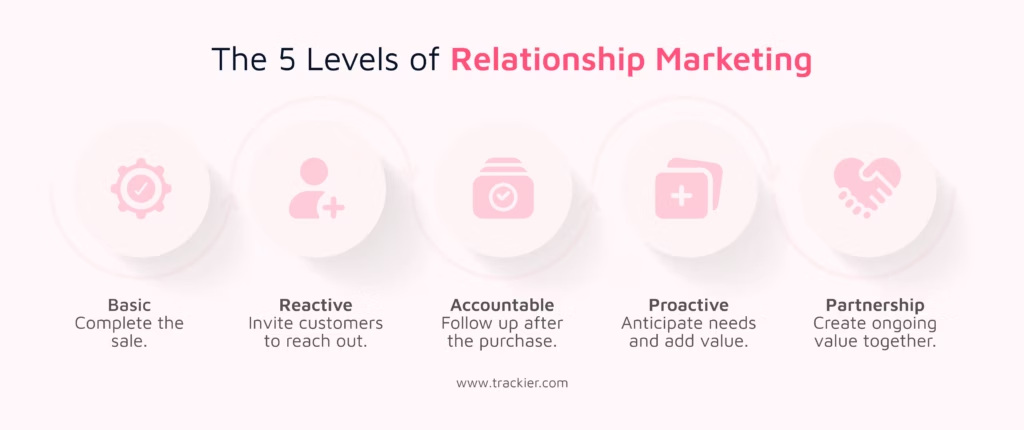
What are the 5 Levels of Relational Marketing?
The thing about relationships is that they take time to develop. Similarly, the building of a relational marketing structure with any single customer will also happen gradually, over a period of time.
The initial interaction is usually a one-off, single purchase. This acts as a stepping stone towards a deeper, more collaborative relationship that can take shape over a longer period of time.
Let’s understand the levels that exist in the relational marketing paradigm, in terms of levels between initiation and maximum intimacy possible within a commercial setting.
Basic Marketing
A customer is guided through a purchase to ensure the transaction goes through, with no emphasis or effort towards follow-ups or other interactions. The entire weight of the relationship at this stage rests on the fact of the monetary exchange between the two parties.
Reactive Marketing
When reactive relational marketing is in play, the seller informs the customer to reach out in case of any concerns, questions or complaints. Here, the relationship gets extended with the possibility of two-way communication, which is subject to the customer reaching back out.
Accountable Marketing
Accountable relational marketing concerns itself with the company or seller taking responsibility for their goods and services by reaching out to the customer after the sale to check if they are satisfied. This could be carried out through an email exchange or over the phone.
Proactive Marketing
Now, the relationship between the brand and customer starts taking shape, where the brand proactively reaches out to the customer, without the initiation of any sale or purchase on either end. This type of outreach could be for the purpose of sharing helpful tips, new updates around the product, product improvements or new use cases as discovered by other customers.
The goal here is to share ‘helpful’ information without seeking anything in return for it. Only if customers find value in this information, the relationship keeps extending.
Partnership Marketing
The final level within the relationship formed through relational marketing is a partnership. Long-term mutual success or customized support is enabled within a long-term relationship to provide effective value at both ends to both parties. Customers may turn advocates and enable the business, while the business itself may cater to the growing or emerging needs of the given customer specifically.
Why Does Relational Marketing Matter in 2026?
To answer why relational marketing’s value in the present, it is important to understand whether its underlying concept actually holds any value, i.e. whether customers care about having a relationship with brands at all.
McKinsey data shows that customers do expect personalization — 71% of them to be precise — across interactions with brands. And it isn’t just a passing thought for them. 76% reportedly become frustrated if this expectation isn’t delivered on.
That does, to some extent, offer a clear understanding of the general notion of relationship building between customers and brands, as expected by the former.
Another metric from Salesforce further adds to this understanding. In the 6th edition of their report on the “State of Connected Customer”, it has been found that 80% of customers care about the experience with a brand as much as they do about the quality of goods and services offered.
It impacts them so much that as per PwC’s 2025 Customer Experience Survey, 29% of users may get turned off and stop purchasing from a brand altogether if their personal experience doesn’t meet expectations.
While it may seem that relational marketing is set up to only benefit businesses by building direct relationships with each customer, this isn’t the case. Research and surveys show that customers already have expectations on the kind of relationship they wish for brands to establish and maintain.
As a result, when relationships are used to further business goals, the entire process comes to work — and matters — because both stakeholders value it.
Another report from Deloitte gives further credence to these findings by noting that within retail, particularly, 80% of the surveyed customers preferred personalized experiences from brands. In this sense, there is an agreement between both parties that relational marketing carries value.
Where they diverge is perhaps, in the manner in which such personalized attempts are carried out, or the extent to which they are implemented across industries. That’s also a great opportunity for businesses (both old and new) since they can evolve their strategy, seek new ways of reaching out to customers and innovate to stand out.
5 Examples of Relational or Relationship Marketing
Building authentic, feel-good relationships secured through marketing are not a new concept. Examine how 5 well-known (super popular) global brands have leveraged this strategy to get closer to their target audience, users and loyalists, over time.
Starbucks: Rewards and Habitual Engagement
Starbucks’ “Rewards” gives customers incentives to return while using purchase and engagement data to deliver relevant offers. The relationship grows through repeated interactions that become increasingly personalized.
Your coffee doesn’t have to be an occasional treat, and Starbucks recognises that. The more you buy, the more treats and offers get unlocked. But that’s not all. Starbucks also celebrates with you. Birthdays mean freebies beyond your membership.
Sephora: Recognition and Personalization
Beauty Insider from Sephora uses membership tiers, exclusive benefits and personalized experiences to make customers feel recognized. As customers engage more, they gain access to greater value, which further adds to the relationship.
Beauty is a segment where users are going to repeat purchases by default. Everyone needs a moisturiser, lip balm or eyeliner, and identifying how to ensure those who have shopped once at Sephora keep returning is one of the best ways to build stable revenue.
Spotify Wrapped: Data Turned into Value
Spotify’s case is the most interesting within relational marketing. It uses listening behavior to create a personalized annual experience through its “Wrapped” report. Instead of simply collecting customer data, it turns that data into something customers enjoy, look forward to, share and talk about.
LEGO Ideas: Co-creation and Community
Everyone loves LEGO, but that is a fact which has taken shape through relational marketing. They care about what you think and need. Therefore, LEGO invites customers to submit product concepts and build community support around them. Popular ideas can reach the review stage, giving customers a meaningful role in product development.
Marriott Bonvoy: Progressive Recognition
Bonvoy rewards gives customers a loyalty program with increasing value over time. It offers repeat stays with increasingly valuable benefits as members move through status levels. The mechanism encourages customers to consolidate their travel with Marriott.
How to Build a Relationship Marketing Strategy?
No relationship forms from thin air. It needs to be built, step-by-step. Knowing how to build a relationship with customers that is secure enough to last through inconsistent commercial engagement is half the trick. But how do you get to that point. Let’s understand how to build a relationship with your customers in 10 simple steps.
1. Define which relationships matter.
Start by identifying the customers, accounts or communities that are most important to your business. Consider both current value and future potential. This helps you focus relationship-building efforts where they can have the greatest impact.
2. Establish a first-party customer data foundation.
Collect and organize information from your own website, CRM, app, purchase history, support interactions and other direct channels. A reliable first-party data foundation makes it easier to understand customers without relying entirely on third-party signals.
3. Segment by lifecycle, needs and value.
Customers have different expectations depending on where they are in their journey. Segment audiences based on factors such as lifecycle stage, behavior, preferences, engagement and customer value.
4. Map meaningful relationship moments.
Identify the interactions that shape the customer experience (across journeys or funnel stages). These could include onboarding, product education, support, renewal, milestones or moments when customers need additional help.
5. Personalize all your communication.
Use what you know about customers to make every interaction more relevant. It doesn’t always need to be personal attributes. Personalization should go beyond adding a first name and reflect actual behavior, needs or preferences.
6. Build two-way feedback.
Give customers clear opportunities to share feedback then use those insights to improve products, services and experiences. Show them evidence of implementation or experiences which reflect that their opinions carry value to strengthen the bond.
7. Reward continuity and contribution.
Recognize customers for repeat engagement, loyalty, advocacy or meaningful contributions to your community.
8. Automate without removing human judgment.
Automation can make relationship marketing scalable, and businesses can use technologies such as conversational AI in marketing to engage customers, answer questions, and personalize interactions at scale. However, important or sensitive interactions may still require human involvement. Allow it to ease the process, but don’t stick the entire activity within an agent — that will waste all the effort you’ve made until that point.
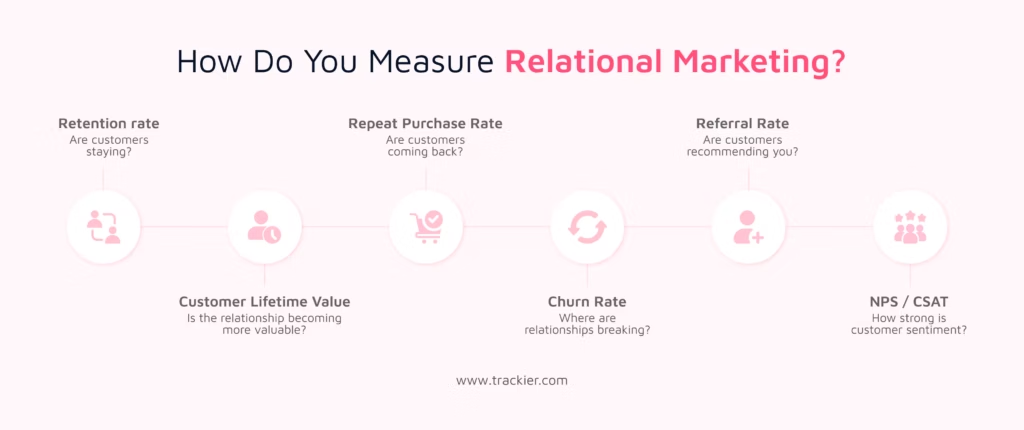
9. Keep measuring relationship quality.
Track retention, engagement, satisfaction, customer lifetime value and other indicators that show whether relationships are becoming stronger. Intervene early to keep relations intact, or improve where they show signs of lag.
10. Continuously improve.
Treat relationship marketing as an ongoing process, and not a one-time effort. Big shows of affection can only take a brand-customer relationship so far. Review performance, listen to customers and adjust your strategy as expectations change.
Relational Marketing vs CRM vs Loyalty Marketing
It may seem confusing to you now, since relational marketing, customer relationship management and loyalty marketing all seem to be built in the same direction — the end goal is extending lifetime value.
All 3 of these concepts are closely related but serve different purposes. Understanding their unique merits can help you refine your customer relationship-building strategy.
| Aspect | Relational Marketing | CRM | Loyalty Marketing |
| What is it? | A customer-focused strategy | A system of data, processes and technology | An execution layer within relationship marketing |
| Primary Purpose | Build stronger, longer-term relationships that increase trust, retention and customer value | Organize customer information and manage interactions across the customer lifecycle | Encourage repeat engagement by rewarding customers for continued activity |
Relational Marketing is the Strategy Layer
Consider relationship marketing to be the broad approach or umbrella concept that gives effect to both CRM data and loyalty measures. The emphasis is on securing and cultivating a meaningful, ongoing relationship with customers at large, rather than optimizing for single transactions or conversions.
But how does relational marketing take effect? Through the means of personalization, customer service, content, community and feedback — all of which come together to increase trust and strengthen retention over time.
Customer Relationship Management Offers Infrastructure for Relational Marketing
CRM offers the basis of this relationship building through effective data collection in a single place. Without a good customer relationship management layer, the operational foundation for the relationships to come about doesn’t exist in the first place.
It helps teams store customer information, track interactions, manage opportunities and coordinate communication. CRM makes relationship marketing easier to execute at scale, but it is crucial to note that CRM is not the strategy itself.
Loyalty Marketing is an Area of Execution in Relational Marketing
Loyalty marketing focuses specifically on encouraging continued engagement. Points, rewards, memberships, exclusive benefits and tiered programs are common examples of ways in which continued engagement can be sustained.
These tactics can support a relationship marketing strategy but loyalty marketing is only one part of the broader relationship.
In simple terms: relationship marketing defines how you build the relationship, CRM helps you manage it and loyalty marketing gives customers reasons to keep engaging. Together, they can create a more consistent customer experience while supporting retention and long-term growth.
Relational Marketing in Partner and Affiliate Ecosystems
Having read through this article, it may seem that relational marketing is limited squarely to what happens between a brand and its customers. However, this isn’t the case.
In partner and affiliate ecosystems (such as in Trackier’s case), the relationship extends across multiple parties. It exists between:
- Advertisers and publishers, and,
- Publishers and customers.
Every single relationship influences the next one, making transparency and trust essential to sustainable growth (beyond just extending relationships).
For advertisers, strong partner relationships begin with some essentials:
- Clear attribution, and,
- Fair commissions.
On the other hand, partners also need assurance that the conversions they’re responsible for are being tracked accurately, and that they will be rewarded fairly as per the agreed terms. Any delays in payment or later changes in terms can affect the very basis of this partnership.
Within affiliate marketing, segmentation is a crucial part of fostering and maintaining relationships. Advertisers must acknowledge that not all publishers are created equal so they must be grouped by performance, audience, channel, customer quality or strategic value. This way the right communications, deals and so on can be shared with affiliates who are more likely to respond positively towards them.
Focusing on relational marketing within the partner ecosystem means you have to look beyond just short-term goals. So, acquisition shouldn’t be the primary parameter of success. Rather, there must be rewards that enable goals like:
- Customer quality,
- Retention,
- Brand alignment, and,
- The ability to reach new audiences.
Keeping open lines of communication with partners help advertisers understand their needs while giving the latter complete visibility into what’s working, and what isn’t. This kind of openness can transform the very nature of outcomes possible through affiliate marketing, by enabling direct action at every instance.
This is where performance infrastructure becomes important. Trackier can provide the infrastructure (i.e. the affiliate software) needed to measure and manage these performance relationships by bringing attribution, partner performance, commissions and reporting into a more visible system. This does not make Trackier a relationship marketing strategy itself.
Instead, the platform or tool provides the operational foundation that helps advertisers manage partner relationships with greater transparency and consistency, similar to the role a CRM plays within loyalty marketing.
When partners can see performance clearly, trust the numbers and receive fair and reliable compensation, the ecosystem becomes easier to manage and more valuable for everyone involved.
FAQs
What is relational marketing in simple terms?
Relational marketing focuses on building lasting customer relationships through trust, personalized experiences and ongoing engagement rather than one-time purchases.
Is relational marketing the same as relationship marketing?
Yes. Relational marketing and relationship marketing generally describe the same approach: building stronger, longer-term relationships with customers through meaningful interactions.
What are the five levels of relationship marketing?
The five levels are basic, reactive, accountable, proactive and partnership marketing, representing progressively deeper customer engagement and greater commitment to the relationship.
What is relational vs transactional marketing?
Relational marketing prioritizes long-term relationships and customer value, while transactional marketing focuses primarily on individual purchases, immediate conversions and short-term business outcomes.
What is an example of relational marketing?
A loyalty program that uses customer behavior to provide personalized rewards and experiences is a relational marketing example because it encourages ongoing engagement and retention. Think: Marriott’s Bonvoy membership.