A good performance marketing strategy should make it easier to justify your budget, not harder to explain.
That sounds obvious. Still, a lot of businesses end up doing the opposite. They add more channels, more tools, more reports, and somehow get less clarity. Numbers keep on going up, confidence keeps on crashing.
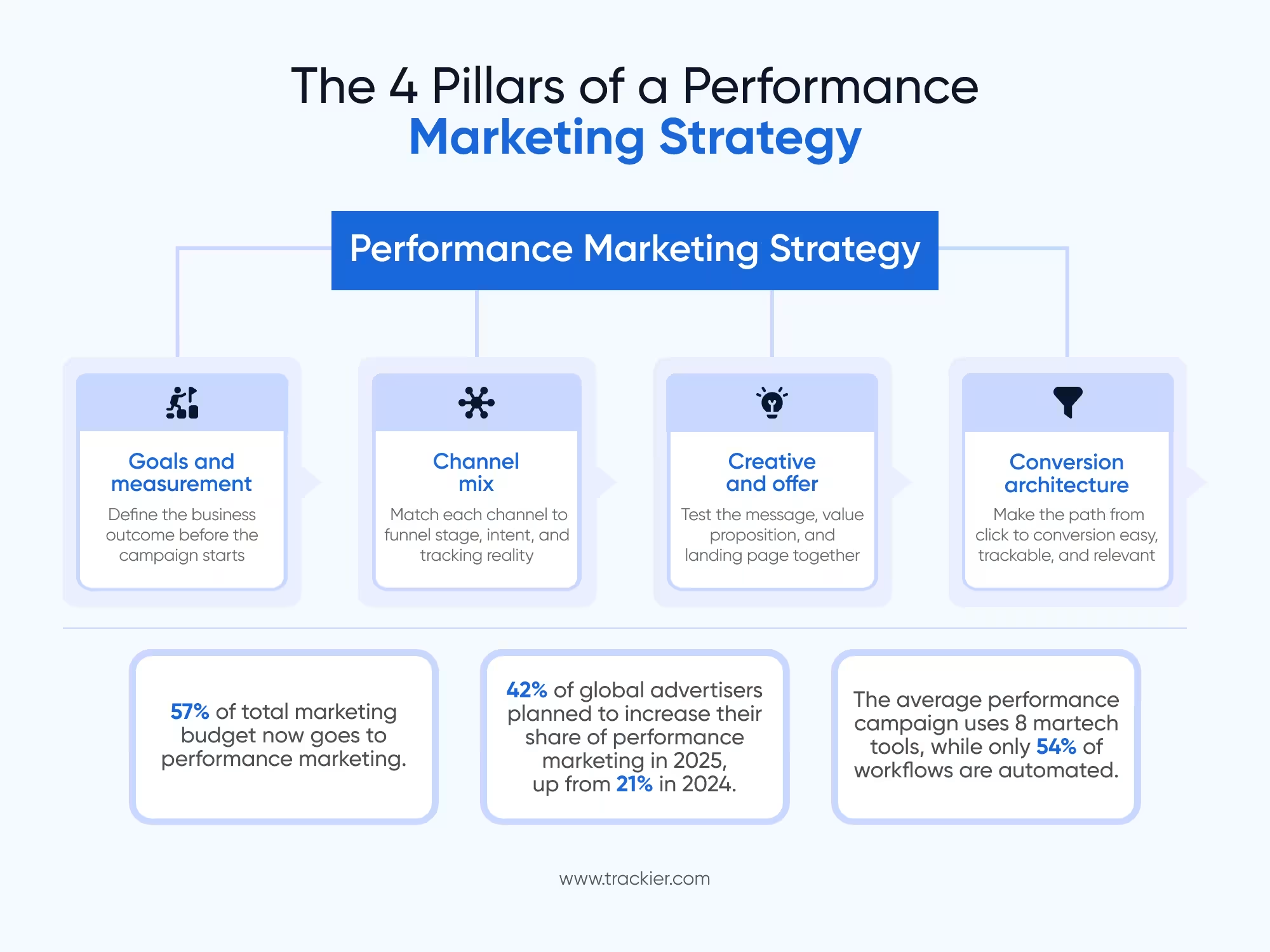
That gap is getting harder to ignore because 57% of total marketing budget now goes to performance marketing, and 42% of global advertisers planned to increase their share of performance spend in 2025, up from 21% in 2024. So yes, the pressure is real. Spend is rising, and every team is being asked to prove what is actually working.
If that sounds familiar, the fix usually starts with better structure, cleaner attribution, and a setup that helps you measure what is really driving ROI.
In this blog, we will break down what a strong performance marketing strategy looks like, where most teams slip, and how to make smarter decisions before more budget goes live.
What Really Is a Good Performance Marketing Strategy?
In practice, a performance marketing strategy decides three things.
- What you are trying to drive.
- Which channels deserve budget.
- And how success will be measured without fooling you halfway through the quarter.
That last part is where most get stuck.
It is a common occurrence in a lot of partner and performance-led programs. A campaign starts strong, paid numbers look healthy, affiliates are sending traffic, the dashboard is busy.
But when you properly look, the real question is still unanswered. Which channel is bringing quality pipeline, repeat buyers, or profitable growth?
That is why a proper strategy has to go beyond media buying.
Why are more teams reworking their performance marketing strategy now?
Because scale has made the cracks easier to see.
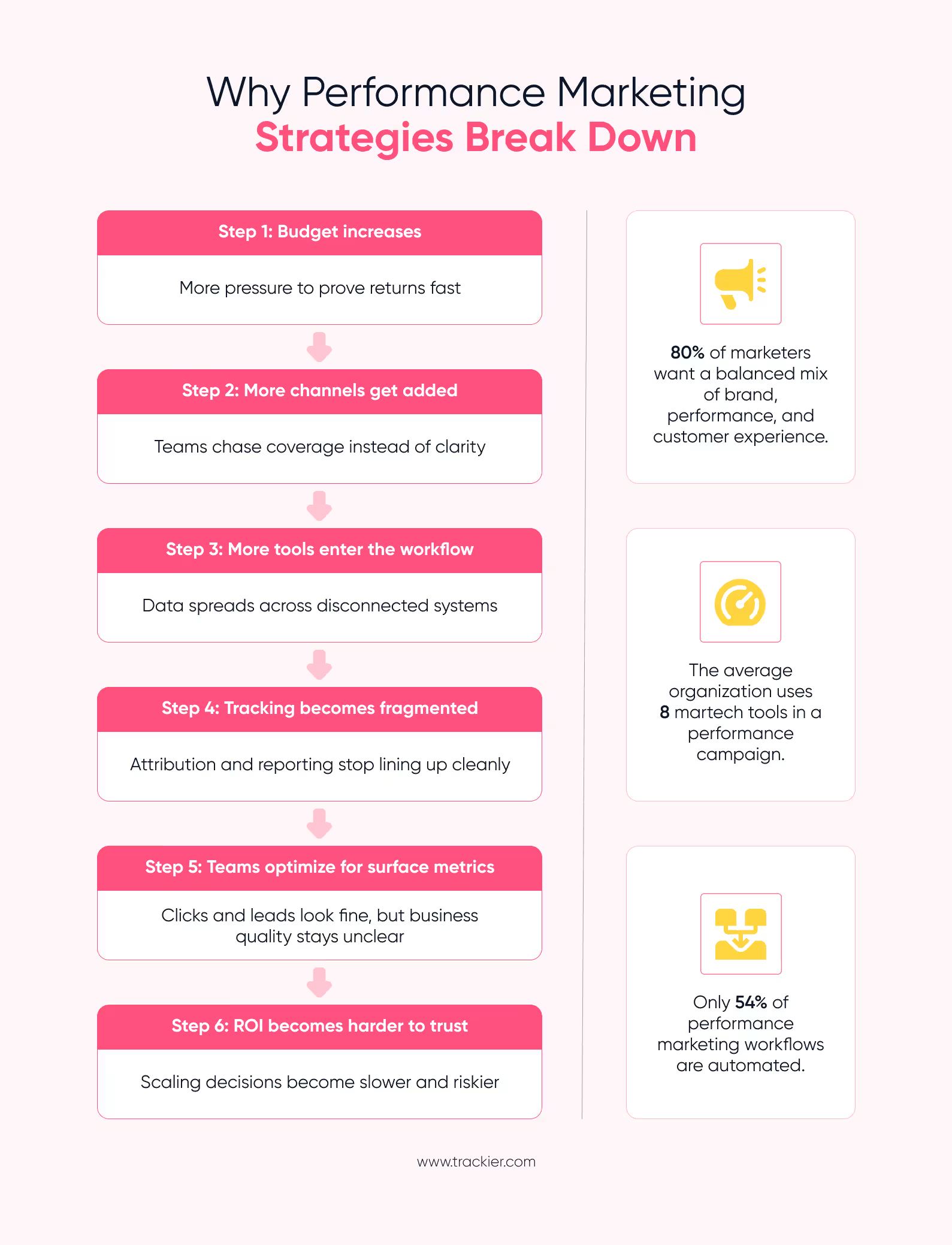
Teams now use more tools, more data sources, and more channels in the same campaign flow. At the same time, workflows are still not as connected as they should be. The average performance campaign now involves eight martech tools, while only 54% of workflows are automated. That is a big reason why reporting often feels slower than spend.
And once that happens, decision-making suffers.
You start optimizing for what is easiest to see, not what matters most. That is when CAC quietly rises, channel overlap gets ignored, and teams keep funding activity that looks efficient but is not truly helping the business move forward.
Your strategy should help you decide better.
What Are the 4 Pillars of a Performance Marketing Strategy?
A strong strategy usually stands on four working pillars.
1. Clarity on Outcomes
Decide what success really means before budget goes live. Not after the campaign. Not once the reporting stops making sense.
For some teams, that means a qualified pipeline. For others, it means revenue, repeat purchase rate, activated users, retained users, or partner-led sales. The important part is that the goal matches the business outcome, not just the media metric.
This matters because the market is putting more pressure on accountability. About 80% of marketers say they want a balanced mix of brand, performance, and customer experience, yet performance spend keeps rising. So, a performance marketing strategy now has to prove short-term movement without losing sight of long-term value.
A simple rule helps here. Measure what the business can defend in a room full of finance, sales, and marketing leaders. That usually cuts through a lot of vanity reporting very quickly.
2. Channel Selection
A smart strategy picks the channels that fit intent, sales cycle, audience behavior, and tracking reality.
That sounds basic, but teams still overcomplicate it. They add channels because competitors are there, because a new platform looks exciting, or because more activity feels like more growth. Usually, it is just more noise.
Right now, the shift in channel priorities is pretty clear. 42% of global advertisers said they planned to increase their share of performance marketing in 2025, up from 21% in 2024. At the same time, 75% planned to increase spend in retail media, which shows that budgets are moving toward channels with stronger performance signals and clearer purchase intent.
So, the job is not to collect channels. It is to build a channel mix that makes sense for your funnel.
For a SaaS company, that may mean search, retargeting, affiliate partnerships, and lifecycle email. For an ecommerce brand, it may include retail media, paid social, search, and creator-led conversion paths. For an app business, it may lean harder on partner traffic, paid acquisition, and post-install measurement.
3. The Message
Your strategy is not complete if it only covers spend and targeting. The offer, the landing page, the creative angle, and the call to action all shape performance. In many accounts, they shape it more than audience tweaks do.
That is where a lot of teams underinvest. They treat creative like campaign packaging when it should be treated like a performance variable.
The shift is already happening. Marketers are prioritizing investment in content automation and creative agility.
That does not mean every team needs flashy automation.
It means the strategy should make room for faster testing, clearer value propositions, better landing page alignment, and creative variations built around real conversion signals. If the message does not connect, even a well-funded media plan starts leaking value.
4. The Path From Click to Outcome
You can have a solid offer and a decent media plan, but if the user journey breaks, performance breaks with it.
Always ask what happens after the click. Is the landing page relevant? Is the form too long? Is partner traffic landing on the right experience? Are conversion events mapped properly? Is attribution clean enough to support optimization?
These questions matter because marketing stacks are getting more crowded, not simpler. Marketers now use an average of eight tools in a single performance campaign, which makes handoffs, reporting, and optimization harder when workflows are not connected properly.
That is why a performance marketing strategy should treat conversion architecture as part of the plan itself, not as a last-mile fix. Your funnel is not just where users convert. It is where strategy gets proven.
Why Do So Many Performance Marketing Strategies Underperform?
Most underperforming plans do not fail because teams are lazy or channels are bad.
They fail because the strategy looks complete on paper but breaks in the day-to-day flow of execution.
A team may have ad spend, reporting tools, landing pages, and a decent channel mix. Still, results feel inconsistent. One month looks strong. The next month looks harder to explain. Then everyone starts changing tactics before the real issue is identified.
That usually happens for one reason. The strategy is tracking activity better than it is tracking business impact.
A weak performance marketing strategy often shows the same warning signs.
The team scales channels before it has clean measurement.
The team judges success too early using surface-level conversion numbers.
And the team keeps adding tools when the real problem is poor alignment between goals, reporting, and action.
Which 5 Fixes Improve a Performance Marketing Strategy Fastest?
The fastest gains usually come from cleaning up what guides decisions, not just what launches campaigns.
That matters because a performance marketing strategy is not just a media plan. It is a decision system. If the inputs are weak, the output will be noisy, no matter how active the team looks.
1. Are you measuring business outcomes or just campaign activity?
This is the first fix, and honestly, it is the one most teams delay too long.
A lot of reporting still rewards what is easy to count. Clicks. Leads. Installs. Form fills. Add-to-carts. Those numbers matter, but only if they connect to something the business actually values.
A stronger performance marketing strategy defines success in business terms first. That could mean qualified pipeline, approved sales, retained users, repeat purchases, or partner-sourced revenue. Once that is clear, campaign metrics become more useful because they have context.
Without that step, optimization turns shallow. Teams start chasing cheaper numbers instead of better outcomes.
2. Is your channel mix based on intent or on habit?
Many companies keep spending in the same places simply because those channels are familiar.
That is risky.
A better performance marketing strategy reviews channels by job, not by history. Search captures demand differently from affiliates. Lifecycle email works differently from paid social. Partner programs influence trust differently from retargeting.
That is exactly why budget shifts are becoming more selective. 42% of advertisers planned to increase their share of performance spend in 2025, but that does not mean every channel deserves equal growth. It means marketers are prioritizing channels that can show clearer intent, tighter attribution, or stronger conversion paths.
So the fix is simple. Review each channel by role. Ask what part of the funnel it supports, what quality it brings, and whether your current tracking can judge it fairly.
3. Does your click-to-conversion journey make action easy?
Sometimes the campaign is not the problem. But the user journey is.
A lot of teams work hard on targeting, bidding, partner sourcing, and creative testing, then send that traffic into a page that asks for too much, explains too little, or feels disconnected from the ad that brought the click.
That creates friction fast.
A better performance marketing strategy looks at the full path, not just the media entry point. The ad promise should match the landing page. The CTA should match the stage of intent. The form should only ask for what is necessary. And the post-click experience should make the next step obvious.
This is especially important in B2B, SaaS, and partner-led funnels where the first conversion is rarely the final business outcome. A demo request, signup, install, or lead form is only useful if the quality holds up after the handoff.
So, before increasing budget, check the journey.
Look at page speed. Check message match. Review form friction. See where users drop. Then fix the biggest break first.
4. Can you trust how your strategy assigns credit?
This is where many teams quietly lose money.
Not because they are under-spending. Because they are learning from the wrong signal.
If your performance marketing strategy gives too much credit to the last touch, too little credit to assisting channels, or no visibility into partner influence, then budget decisions start drifting. The wrong channels look efficient. The real contributors get underfunded.
That is why attribution needs to be treated like operating logic, not a reporting add-on.
A practical fix is to review how credit is being assigned across the journey. Not in theory. In your real setup. Especially when search, paid social, affiliates, remarketing, content, and email are all working together.
To learn more about attribution, check out our marketing attribution, multi-touch attribution, and choosing the right attribution model guides.
5. Are you balancing quick wins with durable ROI?
This is one of the easiest traps to fall into.
Teams chase channels that move fast, then slowly cut investment from channels that build efficiency over time.
That feels practical in the short term. But it usually weakens the overall strategy.
A better approach is to balance immediate conversion channels with channels that compound. That means not relying only on paid acquisition while ignoring the engines that improve response, trust, and lower-cost returns over time.
That matters because some of the highest-return channels are still the ones marketers treat as support layers. Email marketing delivers an average ROI of $42 for every $1 spent, and SEO delivers an average ROI of $22.24 for every $1 spent.
What Should You Do Next With Your Performance Marketing Strategy?
If your current setup feels busy but not fully reliable, start with the basics.
First, define the business outcome you actually want the strategy to drive. Not just the campaign metric. Then review your channel mix by role, not habit. After that, clean up the post-click journey so traffic has a real chance to convert.
Once that is done, audit your attribution logic. That is usually where the biggest budget mistakes hide.
And finally, make room for channels that improve efficiency over time, not just channels that give you instant movement.
That is what makes any strategy sustainable.
To move from theory into action, check out our performance marketing glossary
Hungry for more? Download our free case studies that cover real stories.
Or sign up for the Trackier’s newsletter to get weekly best practices on referral programs and partner marketing.
Frequently Asked Questions
1. What is a performance marketing strategy?
A performance marketing strategy is a structured plan that helps you use marketing spend to drive measurable business results. Those results could be leads, sales, app installs, qualified pipeline, repeat purchases, or partner-led revenue.
What makes it different from a general marketing plan is the focus on outcomes you can track and improve in real time. A good performance marketing strategy does not stop at launching campaigns. It defines goals, assigns budget by channel role, connects attribution to decision-making, and improves conversion paths so teams can scale what is actually working.
2. What are the 4 pillars of PMS?
The four pillars of a strong performance marketing strategy are goals and measurement, channel mix, creative and offer, and conversion architecture.
Goals and measurement tell you what success really means. Channel mix decides where budget should go based on intent and funnel stage. Creative and offer shape whether people respond in the first place. Conversion architecture makes sure the journey from click to action feels smooth and relevant.
If one of these breaks, the strategy becomes harder to trust because the team starts reacting to partial signals instead of complete performance.
3. How do you build a performance marketing strategy?
You build a performance marketing strategy by starting with the business outcome, not the channel list. First, define what success should look like. Then choose the channels that best match your audience, sales cycle, and tracking setup.
After that, make sure the ad, landing page, and conversion journey are aligned. Set up attribution cleanly so the team can see which touchpoints influence revenue, not just which one got the last click. Finally, review performance regularly and adjust budget based on quality and efficiency, not just volume. That is what turns a campaign plan into a real growth system.
4. Which channels should be part of a performance marketing strategy?
That depends on your funnel, your audience, and how cleanly you can measure outcomes. Most teams build a performance marketing strategy using some mix of paid search, paid social, affiliate marketing, partner marketing, retargeting, lifecycle email, and SEO.
The right mix is not always the biggest mix. It is the one that fits buyer intent and supports profitable growth. That is also why long-term efficiency matters. Email marketing delivers an average ROI of $42 for every $1 spent, and SEO delivers an average ROI of $22.24 for every $1 spent. So, the smartest strategies usually balance fast-response channels with channels that keep improving returns over time.
5. How often should you review a performance marketing strategy?
You should review your performance marketing strategy often enough to catch waste early, but not so often that the team starts reacting to normal fluctuation. Weekly checks are useful for pacing, conversion flow, and channel issues. Monthly reviews are better for trend analysis, attribution patterns, and budget reallocation.
Quarterly reviews are where the bigger decisions should happen. That is usually the right time to revisit channel mix, partner contribution, creative direction, and measurement quality. A strategy improves when the review rhythm is steady and practical, not panicked.