OTT advertising is video advertising delivered through internet-based streaming services such as Prime Video, Hulu, Roku and JioHotstar instead of traditional cable or satellite TV. OTT ads can appear on connected TVs, smartphones, tablets and computers, and allow advertisers to use digital targeting, programmatic buying and cross-device measurement.
For advertisers, agencies, marketers and brands, it is important to understand what OTT advertising is all about, its types and how to effectively use it in 2027 to stand out and build better user acquisition funnels. But just running ads on a new platform isn’t enough. This blog will also enable them to begin measuring the outcomes of advertising on OTT.
What Is OTT Advertising?
Streaming advertising or OTT advertising is when ads are shown to an audience directly through the use of the internet, skipping over traditional broadcasting over cable, dish-based television or set-up boxes.
With the advent and heavy promulgation of smart televisions and smartphones, over which over-the-top entertainment is easily accessible, bridging the gap between leisure and brand promotion has never been simpler.
Using various streaming services such as Hulu, Hotstar, Prime Video and so on, ads can be served in between the streamed content as pre-roll ads, mid-roll ads or post-roll ads.
OTT Advertising Definition
To understand this concept accurately, it is important to first grasp exactly what OTT is.
Over-the-top or OTT is the use of the internet to go over traditional systems of sharing television content through broadcast, and instead directly make audio and/or video content available to viewers on their internet-enabled devices.
The requirements for this are simple:
- An internet connection, through which the audio or audiovisual content will be transmitted.
- A device which is connected to the internet, on which the said content will be visible and streamed. OTT ads will also be displayed on the same device.
- Subscription to an OTT platform, which provides access to various media such as movies, shows and podcasts.
There are four types of OTT services available:
- SVOD (Subscription Video on Demand), wherein users pay a fixed annual or monthly fee to access a full library of content, with or without ads. This means, OTT advertising itself becomes irrelevant here, unless it is being shown to users in a tier where ads are still visible. Netflix and Prime Video are both fitting examples.
- AVOD (Advertising Video on Demand), wherein the content itself is completely free and accessible but there are in-stream ads for monetization. Youtube would be a perfect example.
- TVOD (Transactional Video on Demand), which is applicable to platforms that are pay-per-view or one-time buys. If someone rents a movie on Youtube or Apple TV, this format is applicable since their access will be limited to consumption of the given content.
- Live TV OTT, which consists of live streaming services where sports or news are often shown without breaks in a continuous manner.
For the purpose of our understanding of OTT advertising, all the forms of OTT content are valid and can be used to run ads based on the goal of the campaign.
How Does OTT Advertising Work?
Let’s understand how the process of ad serving works within the OTT environment.
- A viewer opens an OTT app and starts watching a movie, show or live event.
- When an ad break is available the platform creates an ad request using details like device type, location, content and audience information.
- The request is sent to an ad server or supply-side platform where available ad inventory is offered.
- Advertisers use a demand-side platform to evaluate the opportunity and place bids based on their targeting and budget.
- The highest eligible bid wins and the selected video ad is delivered to the viewer.
- After the ad is played the platform records metrics such as impressions, video completion rate, reach and engagement.
- These insights help advertisers optimize targeting, creative performance and campaign budgets for better future results.
Here’s a diagrammatic representation of the process at play.
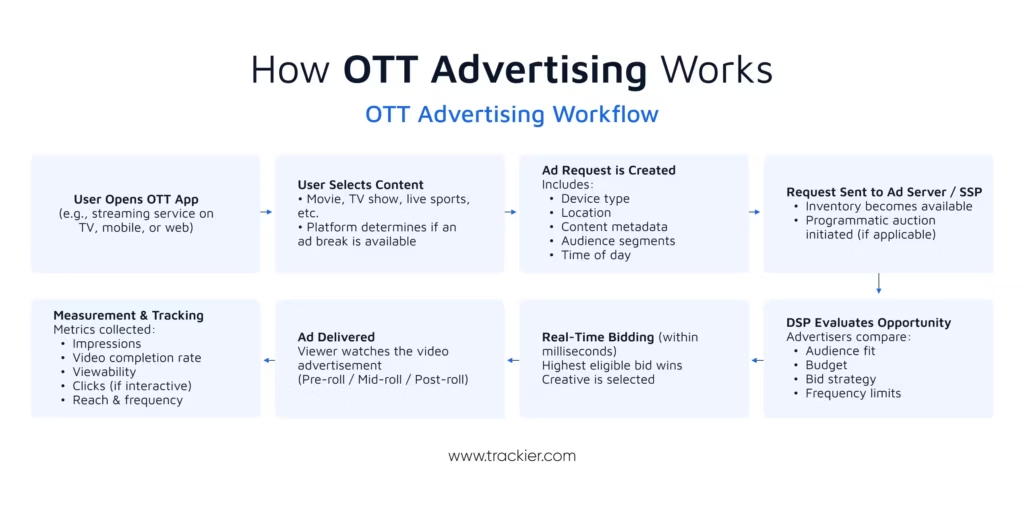
This workflow applies to both programmatic OTT advertising (where ads are bought via automated auctions) and direct-sold OTT advertising (where ad inventory is purchased directly from the streaming platform). The main difference is that in direct deals, the auction step is replaced by a pre-negotiated placement.
OTT vs Connected TV (CTV): What’s the Difference?
Often, over-the-top and connected TV are presumed to be the same — interchangeable concepts. However, this isn’t the case. Both are part of the same functional process in the OTT advertising process, but become relevant at different points.
OTT implies the way in which the content and the ads are served — over the internet, without the need for traditional broadcasting. CTV or connected TV refers to the internet-connected television on which the OTT programming actually runs.
CTV enables the presentation of OTT content and ads.
Let’s understand on the basis of device typology, content and user experience how CTV differs from OTT as a concept.
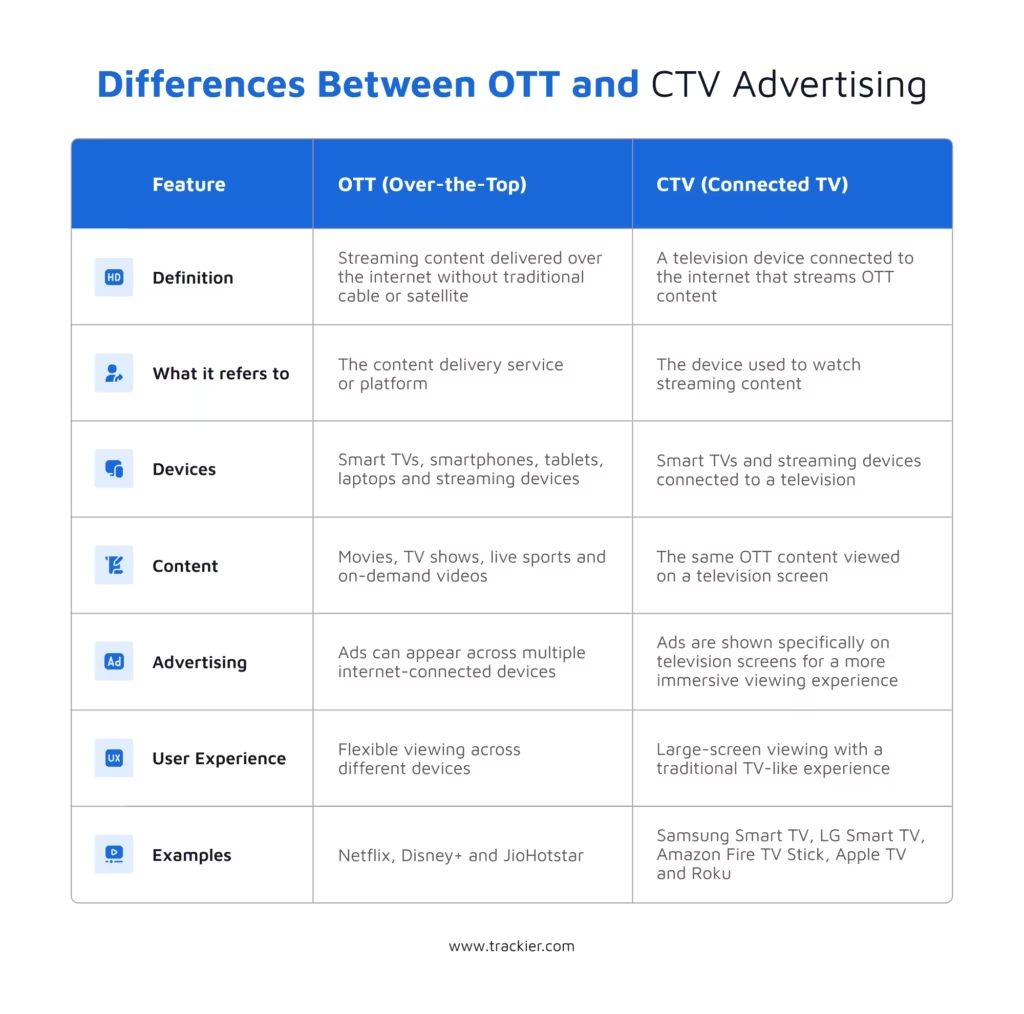
It’s crucial to remember here that every CTV can deliver OTT content, but OTT isn’t limited to CTV devices.
OTT Campaign Examples
E-commerce: From CTV Exposure to Purchase
A fashion retailer runs a CTV campaign promoting a new collection. A viewer sees the ad on a streaming platform and later searches for the brand on their mobile device. After visiting the retailer’s website, the viewer completes a purchase.
In this scenario, the marketer can examine the relationship between the CTV impression, branded search, website visit and purchase. Attribution can help connect these interactions and provide a clearer picture of whether OTT exposure contributed to the eventual sale.
Fintech: From Streaming Ad to KYC Completion
A fintech company promotes its mobile app through OTT advertising. After seeing the ad during a streaming session, a viewer installs the app and begins the account-opening process. The user then completes identity verification or KYC.
Here, the valuable outcome is not simply the app installation. The campaign can be evaluated against a deeper conversion event:
OTT impression → app install → registration → KYC completion
Tracking these stages helps marketers understand whether OTT traffic is producing qualified users rather than just generating downloads.
Gaming and Mobile Apps: From OTT Ad to In-App Action
A mobile game launches an OTT campaign featuring a short trailer and a QR code. Viewers scan the code with their phones, download the game and create an account. Using an MMP set within the modern marketing stack makes the entire chain of events trackable. Some users continue on to complete a defined in-app event such as finishing the tutorial or making their first purchase.
The journey can therefore be mapped as:
OTT exposure → QR scan → app install → registration → in-app event
Comparing these outcomes with campaign spend can help the marketer assess the quality and efficiency of OTT-driven users.
These examples demonstrate why OTT can be particularly valuable for performance marketers. When exposure data is connected with measurable digital actions, advertisers can move beyond viewing metrics and analyze the full path from media exposure to conversion.
Why Does OTT Advertising Matter in 2027?
According to Statistica, OTT viewers are expected to peak to 4.3 billion by the end of 2026. Out of these users, roughly 3.6 billion are expected to be engaged at least once a month.
For advertisers across eCommerce, brands, fintech, SaaS or any other vertical, the opportunity such a large captive audience offers is self-explanatory. Whether the goal is driving brand visibility, or the requirement is for retargeting a previously aware audience, OTT advertising offers an exceptional medium.
On the business side, this value is already becoming evident. As per Statistica, the overall market value of OTT is all set to cross $352.96 billion — much of which is contributed through the SVOD or subscription video on-demand model of over-the-top television.
A report from Market Reports shows that OTT contributes to the use of 79% of the world’s internet bandwidth.
All of this growth cannot be attributed to large-screen engagement alone. Mobile streaming is a huge part of this evolution, with smartphones contributing to 37% of total streaming hours.
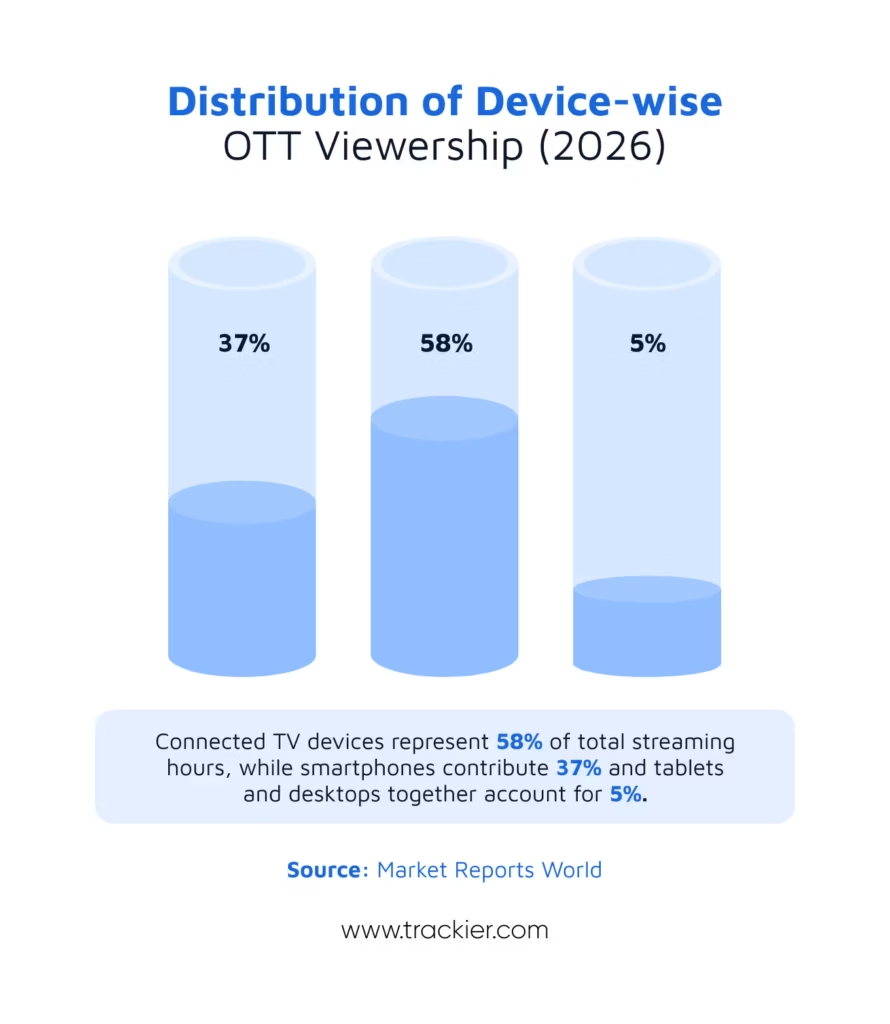
63% of users rely on subscription-based services when it comes to preferred OTT format, while the AVOD format is driving 41% of new registrations.
In the midst of cord-cutting, stronger privacy regulations and the decline of third-party cookies are encouraging advertisers to adopt privacy-first targeting methods, adoption may perhaps outpace expectations as well.
OTT advertising is also increasingly measurable and outcome-oriented, and works perfectly as an extension of existing digital marketing frameworks. Adding onto this are AI-powered audience targeting, programmatic TV and retail media integrations which are enabling advertisers in their quest to locate new mediums of communication with their audience.
What Are the Main Types of OTT Ads?
OTT ads are not a singular, simple way of showcasing paid content to viewers. Rather, OTT advertising is varied, and can be selected based on budget and campaign goals.
Pre-roll Ads
Pre-roll ads are displayed before the main content starts. They are ideal for building brand awareness because viewers see them before accessing their chosen video. These ads are commonly used for product launches and promotional campaigns.
Mid-roll Ads
Such ads appear during scheduled breaks in longer videos such as movies, TV shows or live sports. Since viewers are already engaged with the content, these ads often achieve higher completion rates. They are effective for both branding and performance campaigns.
Post-roll Ads
The ads which appear after the primary content has ended are post-roll ads. A small fraction of those who watch pre-roll ads will end up watching these ads, only if they make it far enough to the end of the main presentation.
They are suitable for reinforcing brand messages or encouraging viewers to take a specific action such as visiting a website or downloading an app. These ads usually target highly engaged audiences.
Interactive OTT Ads
When OTT ads are interactive in nature, they enable users to engage with the advertisement through QR codes, clickable overlays, polls or product showcases. This interactive format creates a more engaging experience and can drive higher user participation and conversions.
Dynamic Ad Insertion (DAI)
DAI inserts personalized ads into video content in real time based on factors such as audience profile, location, device or viewing behavior. This ensures that each viewer receives relevant advertisements while improving campaign efficiency and measurement.
Benefits of OTT Advertising
Of course, there are benefits to any time of advertising. But if you choose to specifically use OTT platforms to advertise your product or service, it is pertinent to understand how it actually stands out when compared to other promotional tactics.
Precision Audience Targeting
OTT platforms use first-party and behavioral data to target viewers based on demographics, interests and viewing habits, reducing wasted impressions.
Cross-Device Reach
Campaigns reach audiences across smart TVs, mobiles, tablets and desktops. Streaming now accounts for nearly 40% of total TV viewing in the US, expanding multi-device visibility.
Better Engagement Than Traditional TV
Most CTV ads are non-skippable and appear in shorter ad breaks, helping improve viewer attention and ad recall.
Real-Time Campaign Optimization
Advertisers can optimize creatives, budgets and targeting during campaigns using live performance insights.
Detailed Performance Measurement
OTT provides metrics such as impressions, completion rates and conversions, enabling accurate ROI measurement.
What Are the Best OTT Advertising Platforms?
Brands can advertise across leading OTT platforms such as:
- Hulu
- Roku
- Amazon Prime Video
- Disney+
- YouTube TV
- Netflix (ad-supported)
- JioHotstar (India)
to connect with highly engaged streaming audiences.
These platforms offer advanced audience targeting, premium video inventory and measurable campaign performance. Netflix announced that its ad-supported plan reached more than 94 million global monthly active users in May 2025, reflecting the continued growth of ad-supported streaming.
How to Launch an OTT Advertising Campaign?
Define Campaign Objectives
Start by identifying what you want to achieve, such as increasing brand awareness, generating leads, driving website traffic or boosting sales. Clear objectives help shape your targeting, messaging and performance metrics.
Identify Your Target Audience
Use demographic, geographic and behavioral data along with viewing preferences to create audience segments. Precise targeting ensures your ads reach viewers who are most likely to engage and convert.
Choose the Right OTT Platform
Select platforms that align with your audience and campaign goals. Factors such as content category, audience demographics, ad formats and geographic reach should influence your decision.
Create High-Impact Video Creatives
Produce short, engaging videos that capture attention quickly. Use strong visuals, concise messaging and a clear call to action to encourage viewers to take the next step.
Set Budget and Bidding Strategy
Determine your campaign budget and choose a suitable buying method, such as CPM or programmatic advertising, to maximize efficiency while maintaining cost control.
Measure and Optimize
Track key metrics such as impressions, video completion rate, click-through rate and conversions. According to the IAB 2024 “Digital Video Ad Spend & Strategy Report”, business outcomes are now the top KPI for digital video advertisers, highlighting the importance of continuous optimization and performance measurement.
OTT Advertising Best Practices
OTT advertising performs best when brands adapt to how viewers actually consume streaming content. Unlike traditional TV, audiences can switch platforms quickly so creative efficiency and measurement discipline matter more than ever.
Keep Videos Short and Attention-Grabbing
Research from Meta and Nielsen shows that attention drops sharply after the first 5-6 seconds of video ads so brands should lead with strong visuals, branding and a clear message early to improve completion rates and recall.
Other research also suggests roughly 45% of viewers skip ads within the first 5 seconds of viewing them.
Personalize Creative for Audience Segments
Segment-based creative strategies improve relevance and engagement. Various reports highlight that data-driven creative personalization can significantly improve ad effectiveness when aligned with first-party audience insights.
Optimize for Every Screen
OTT advertising content is consumed across smart TVs, mobile devices and tablets so ads must be designed in multiple aspect ratios and resolutions to maintain clarity and impact across devices.
Use Frequency Capping
Repeated exposure without limits can lead to ad fatigue and reduced brand perception. Controlled frequency ensures better reach efficiency and prevents wasted impressions.
Continuously Test and Optimize
High-performing OTT campaigns rely on iterative testing of creatives, placements and audiences. Platforms like ‘Think with Google’ emphasize that continuous experimentation leads (including incrementality testing) to stronger ROI and improved conversion outcomes over time.
How Do You Measure OTT Advertising?
Key OTT KPIs
OTT advertising success is measured by combining engagement and performance metrics that reflect both viewer behavior and business outcomes. The key performance indicators that show effective outcomes (in terms of advertising effectiveness) are:
- Completion rate, which shows how many users watch an ad till the end.
- Viewability, which ensures the ad was actually seen on screen.
- Reach and frequency, which help balance exposure without over-saturation.
- CPA and ROAS, evaluate cost efficiency and revenue impact.
- Assisted conversions, which are increasingly important as OTT often plays a mid-funnel role in influencing later purchases.
Attribution Across Devices
Knowing whether the ads are working out, and which specific ones across devices is essential because viewers often watch ads on smart TVs but complete actions on mobile or desktop, making single-device tracking incomplete.
Google highlights that modern consumer journeys are highly fragmented and require data-driven attribution models that distribute credit across multiple touchpoints instead of relying on last-click measurement.
Similarly, Nielsen’s cross-media research shows that TV and digital exposures work together in influencing purchase decisions, reinforcing the need for unified measurement approaches. This shift is driving adoption of identity-based (click ID-leveraged) and probabilistic matching systems to better connect impressions with conversions across devices and platforms.
Conclusion
If there’s one discipline where nothing remains static, it’s marketing. There’s always new mediums to explore, and new ways to communicate with your target audience. But that doesn’t mean all types of advertising are the same.
It’s crucial to understand exactly what OTT advertising implies, and why it is relevant for advertisers before you fix a budget to spend on it. Equally important is considering its types so it can be used optimally, while noting its benefits to review outcomes experienced at the personal level.
FAQs
What is OTT advertising?
OTT advertising is the delivery of video ads over internet-based streaming platforms that bypass traditional cable or satellite TV. It enables targeted, data-driven advertising across devices like smart TVs, mobiles and desktops.
How is OTT advertising different from CTV?
OTT refers to content delivered over the internet while CTV specifically refers to ads shown on internet-connected television screens. OTT is broader, covering all devices, whereas CTV is limited to TV screens.
Which platforms support OTT advertising?
OTT ads run on platforms such as Hulu, Roku, Amazon Prime Video, Disney+, YouTube TV, Netflix (ad-supported) and JioHotstar in India, offering varied audience reach, targeting capabilities and premium video inventory.
How much does OTT advertising cost?
OTT advertising costs vary based on CPM models, audience targeting and platform demand. On average, CPM ranges from $20 to $60 globally, with premium inventory and niche audiences often priced higher.
What metrics should I track in OTT campaigns?
Key OTT metrics include completion rate, viewability, reach, frequency, CPA, ROAS and assisted conversions. These help measure engagement, efficiency and overall impact across fragmented, cross-device customer journeys.