Every business, at one point or another, relies on external sources to promote its business or services.
These sources could be individuals, organizations, or even other businesses. These collaborations are mostly done in exchange for something. Be it a commission, revenue share, or any other form of performance-based compensation. They are called channel partners.
Instead of directly selling to the customers, brands often reach the customers by using these partners as their extended medium.
How does this help the concerned brand when they can promote their product directly to the consumer? Working with partners enables brands to reach a wider segment of the audience without any increase in the internal team or sales infrastructure.
The Role They Play
Channel partners play an important role, especially in the context of performance marketing and affiliate marketing. As per the nature of the arrangement and the brand’s distribution strategy, these partners can operate as –
- Resellers
- Referral partners
- Value-added resellers
- System integrators
- Affiliate publishers
- Co-marketing collaborators
What makes this marketing relationship stand out is that it is structured, trackable, and value-driven. Channel partnerships function in accordance with the framework that manages how leads or sales are –
- Generated
- Tracked
- Attributed
- Rewarded
Why Channel Partners Matter in Performance Marketing
Channel partnerships are among the most cost-effective paths to revenue growth, especially for brands aiming to scale.
The traditional advertising models hold a financial risk as the spending is disconnected from the result and is, hence, hesitant. The partnership model, on the other hand, lowers the potential of this risk because compensation here is directly tied to outcomes that are measurable. This could be a –
- Completed sale
- Qualified lead
- Successful app install
Apart from cost efficiency, channel partners also hold certain other advantages that cannot be replicated internally otherwise.
Market Access and Audience Trust
An already established partner most likely has an audience that trusts their recommendations. A fintech affiliate is relied upon for the content that revolves around personal finances. Similarly, a reseller must have deep relationships with industry specific vertical. The reach of these entities opens doors to ideal customers in ways that cold outreach could never.
Speed To Market
Building a sales team from scratch and establishing the presence of your brand in new geographies is tough and time-consuming. Onboarding a channel partner is significantly faster and reduces the load of the internal team as well. Instead of taking months to tap into new markets, brands can appoint affiliates and do it within weeks.
Scalability Without Operational Costs
Every new channel partner added to a program represents a potential new revenue stream without incurring additional fixed operational costs. This makes channel partnerships especially attractive to businesses that are still in their growth phase. Not just that, it is also relevant for established enterprises that are aiming to diversify their acquisition mix.
Types of Channel Partners
There are different types of partners, and many of them function differently. The type of channel that a brand chooses to operate with must align with their –
- Product type
- Target market
- Value that it wants to deliver
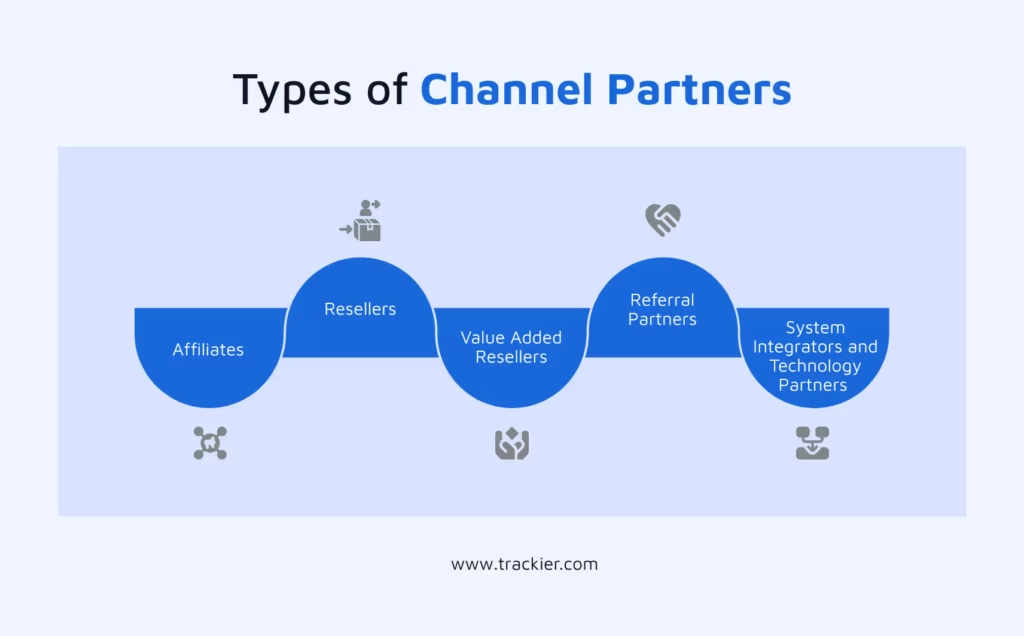
It is after identifying the product requirements that the brand must make its decision of choosing among the various channel partner options that are discussed below –
Affiliates
They are the most common drivers in the digital performance marketing sector. They promote a brand and its offerings through content like –
- Blogs
- Social media
- Newsletters
- Comparison sites
- YouTube channels
They earn a commission for every conversion that they derive. What makes them stand out is their ability to reach a niche audience with high intent that trusts their content.
Resellers
These channel partners purchase a product or service from a brand and resell it to their own customer base, often at a margin. This model is commonly used by SaaS, telecom, and even hardware brands. Here, the reseller additionally layers the product or service with customer support as well as customization.
Value Added Resellers (VARs)
They go a step further than what the standard resellers do. They bring together the additional services, integrations, and expertise along with the product that they sell. VARs are especially common in enterprise software, where buyers expect consultative selling and implementation support alongside the product itself.
Referral Partners
These channel partners are trusted individuals or businesses that introduce qualified leads to the brand. When these leads convert, they earn a referral fee.
Unlike resellers or distributors, referral partners do not pitch products or close deals. Their job is to leverage their existing relationships to introduce and hand the prospective client over to your internal team, which completes the sale.
This strategy allows companies to lower their customer acquisition costs and get into new networks by rewarding complementary service providers, industry consultants, or satisfied customers who endorse their brand.
System Integrators and Technology Partners
They work at the infrastructure level as their role is to embed and integrate the concerned brand’s product within the broader ecosystem. These partnerships are more inclined towards the technical side and are typically long-term. While they create deep switching costs, they also generate sustained and high-quality customer acquisition.
How Channel Partner Programs are Structured
A well-made channel partner program has multiple interconnected components. These components influence how partners are onboarded, activated, measured, and compensated.
Partner Tiers
Many programs allocate their partners in certain tiers on the basis of their performance. These could be silver, gold, and platinum. The performance metrics here could be –
- Revenue contribution
- Deal volume
- Certification status
The idea here is that each partner gets rewarded on the basis of their performance and the tier they are a part of. The partners that are in the highest tier are rewarded the most. Subsequently, if the partners in the lower tiers improve their performance, they are allocated to the the higher tier. This encourages each partner to work better and grow within their program.
Commission and Payout Model
Channel partners are paid differently, depending on the type of industry and partnership that it is under. Some of the common payout models include, but are not limited to –
- Commission per conversion
- Revenue share percentages
- Recurring commissions for subscription-based products
- Performance-based bonus for hitting a threshold volume
The right model depends on the
- Brand’s margins
- Partner’s contribution to the sales cycle
- Level of support the brand provides
Tracking and Attribution
Accurate attribution is the backbone of any channel partner program. Without reliable tracking, it becomes impossible to figure out which partner drove which, making the collaboration more prone to disputes, underpayments, and eventual eroding of trust.
Most brands use a performance marketing platform to assign unique tracking links or IDs to each partner, monitor conversion events in real time, and automate commission calculations.
Key Takeaway
Channel partners can really help brands increase their revenue without a corresponding jump in costs. They can take on various roles, like affiliates, resellers, referral partners, or tech integrators, helping brands reach new markets and audiences that might be tough to access on their own.
However, the success of a channel partner program hinges on its management. Having clear commission structures, accurate tracking, ongoing support, and real-time performance updates is essential to keep partners engaged and motivated. For brands looking to grow through partnerships, having the right setup can turn a basic partner program into one that delivers real benefits.
FAQ
What is the difference between channel partners and direct sales?
Direct sales involve a company’s in-house sales team selling products or services directly to customers. Channel partners, on the other hand, are external entities such as affiliates, resellers, distributors, or referral partners who promote or sell the product independently.
How do brands evaluate the performance of channel partners?
Brands usually assess channel partner performance through metrics such as conversion rates, revenue contribution, customer quality, retention rates, deal size, and engagement levels. In subscription businesses, long-term customer value and churn rate are also important indicators because not all conversions deliver equal business value.
What are the biggest challenges in managing channel partners?
Some common challenges include attribution disputes, inactive partners, inconsistent brand messaging, fraudulent traffic, delayed payouts, and lack of communication. As partner ecosystems grow, managing these issues manually becomes difficult, which is why many brands rely on automated partner management and tracking platforms.
What industries rely heavily on channel partnerships?
Channel partner ecosystems are especially common in SaaS, fintech, telecom, cybersecurity, e-commerce, gaming, cloud services, and enterprise software. These industries often depend on partnerships because customer acquisition can be complex, geographically diverse, or relationship-driven.
