
$15.2 million. That was the cost of false advertising for Teami LLC, imposed by the US FTC in its judgement over deceptive health claims and inadequate influencer disclosures. Most of it was waived off considering the financial condition of the defendants. The company hit with this penalty committed two cardinal sins: its influencers were found to be promoting “unsubstantiated claims” via “undisclosed sponsorships”.
That’s something a good set of affiliate marketing guidelines could have prevented, seeing as to how the fine far surpassed the ability of the violators to pay.
Often, what brands, e-commerce marketplaces and fintech companies believe to be simple common sense when it comes to affiliate marketing promotions, may evade affiliates themselves. You could chalk it up to miscommunication, a genuine mistake or at worst, ill intention.
But the end result is for the advertiser to bear. The publishers? You may remove them from your affiliate program. But they won’t be paying the $15 million fine.
Without a set of clearly written down rules, known abundantly by all, no form of performance marketing with third-party publishers should be initiated. Let’s understand what exactly comes under this umbrella term, and which rules are must-haves.
What are Affiliate Marketing Guidelines?
Broadly, you can understand affiliate guidelines to be the norms, rules, laws and regulations which govern the entire affiliate marketing program being run by any organization, brand or company. It should include some key directives, which cover:
- Legal requirements
- Advertising standards
- Ethical best practices
- Platform-specific rules
The affiliate marketing compliance checklists laid down act as protection for all stakeholders involved, in the following ways.
- Consumers: To prevent them from receiving misleading claims or harmful ad content which causes them injury or loss of any kind.
- Brands: To ascertain that no undue or false premises are being attributed to the products or services of the given brand, which can harm brand value and reputation.
- Affiliates: To ensure contract-based promotions go through smoothly with proper brand positioning, resulting in conversions and accurate payouts.
What’s the Difference: Guidelines vs Policies vs Laws?
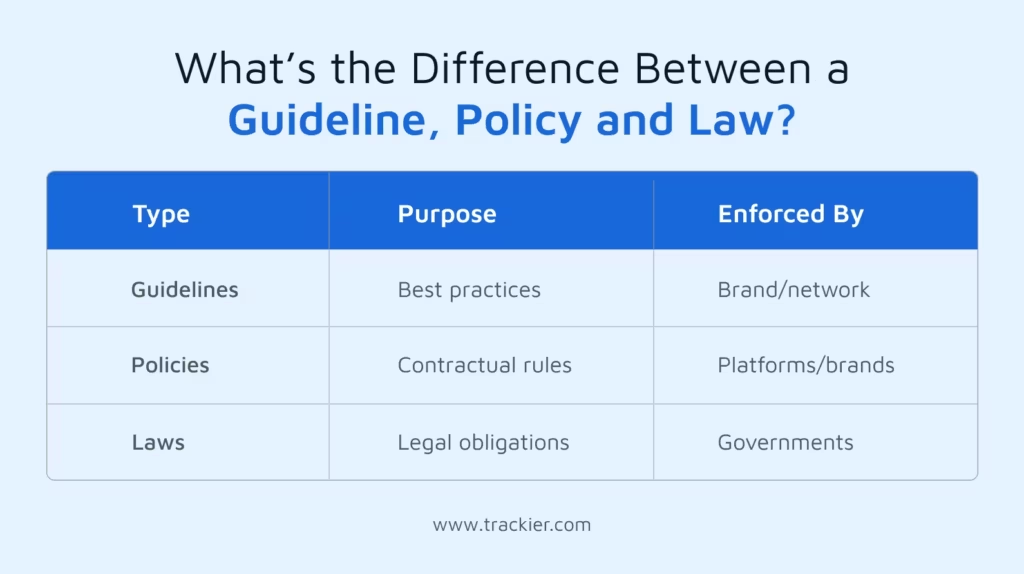
The distinction between what a policy, guideline or law is matters since it determines the enforcing body, and what the result of various violations will be. In simple terms, here’s what each implies:
- Guidelines are strictly recommended operational standards that advertisers place before affiliates (in the case of affiliate marketing), for all kinds of campaign requirements. Contextually, a similar relationship will make them applicable to other parties as well.
- Policies are enforceable company or affiliate-network applied rules, which can affect the affiliate’s ability to promote on specific platforms, or participate in certain campaigns.
- Laws, as is commonly understood, are applied and enforced by government entities and are mandatory to follow. If violated, they result in legal ramifications that may go beyond economic effects, and limit the life and liberty of individuals involved. Aka, it is serious business that has legal, financial or regulatory consequences.
This visual representation can help you understand the concepts better.
Who is Enforcing Affiliate Marketing Guidelines?
To execute the right strategies which enable thorough, effective compliance across operational geographies, it is important to understand what the enforcement structure is for these ‘mandates’ or ‘requirements’. Knowing this will help us distinguish between what is absolutely essential and what is simply a good-to-have.
| Type | Example | Who Sets the Rule? | Consequences for Violation |
| Law or regulation | Applicable consumer law or privacy law | Government or regulator | Legal action or fine (to be deposited with a governmental body) |
| Self-regulatory code | ASCI or ASA framework | Industry-based self-regulatory body | Complaints, rulings and sanctions |
| Platform policy | Google ads or TikTok | A platform | Ad rejection, ad restrictions and account suspensions |
| Program policy | Brand-driven affiliate terms | Advertiser (operator, brand, sportsbook, online casino) or affiliate network | Warnings, withheld commissions and eventual contract termination |
Are Affiliate Marketing Guidelines Legally Binding?
Not all affiliate marketing guidelines are legally binding in the same way. The consequences depend on who issued the rule and what type of requirement it represents.
Laws and regulations are, of course, legally enforceable. For example, consumer protection, advertising, privacy, and electronic marketing laws may apply to affiliate campaigns depending on the country, audience, product, and channel. Violations can lead to investigations, penalties, litigation, or other regulatory action.
Regulatory guidance is different. In the US, for instance, the FTC’s Endorsement Guides are not themselves regulations. However, they explain how the FTC evaluates endorsements and disclosures under laws such as the FTC Act. Ignoring that guidance can still increase the risk of an investigation or enforcement action if an affiliate promotion is deceptive or fails to disclose a material connection.
Industry and self-regulatory codes can also carry consequences. The UK CAP Code and India’s ASCI guidelines, for example, operate within self-regulatory frameworks rather than functioning exactly like legislation. Non-compliance may result in complaints, rulings, corrective action, or referral to other authorities where applicable.
Platform and affiliate-program rules create another layer. Google, Meta, TikTok, an advertiser, or an affiliate network may restrict certain claims, traffic sources, bidding practices or promotional methods. Breaching these rules may result in rejected ads, withheld commissions, campaign removal or account suspension.
The practical takeaway is simple: affiliates should determine whether a requirement comes from law, regulatory guidance, a self-regulatory code, a platform or the advertiser’s program terms — and comply with every applicable layer as required.
Why Do Affiliate Marketing Guidelines Matter?
Having affiliate marketing guidelines can often be the layer of distinction between ethical marketing and deceptive promotions in the influencer and partner marketing space.
They help marketers at various levels, from having campaigns go live without hassles, to ensuring continued brand visibility in a stable manner. Let’s understand some of the major ways in which setting down and abiding by rules is beneficial.
- Reduces Confrontations, Legal Risk with Government Bodies
Whether you’re running affiliate campaigns in the US, India, GCC or any other part of the world, there are clear advertising rules laid down in each region, which must be followed.
Consider the CONAR or National Council for Advertising Self-regulation, which requires affiliates to disclose any advertisement using clear terms, such as “#patrocinado” so that viewers are aware the content is paid marketing before they click on it.
In the UK, the Competition and Markets Authority (CMA) makes it mandatory for any product endorsement to be accompanied by the real, authentic views of the creator to ensure no consumers are misguided.
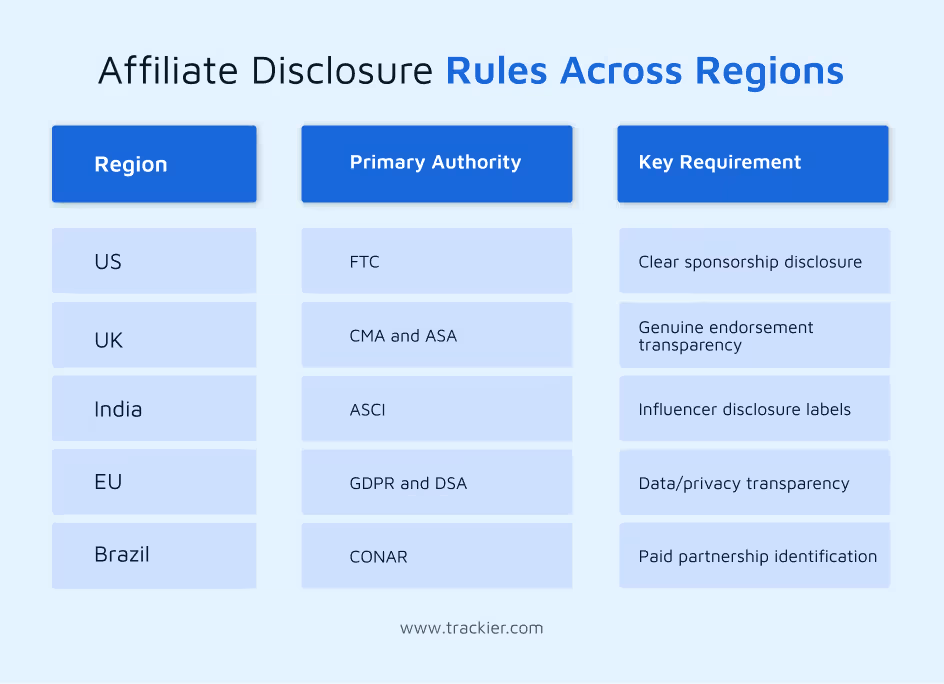
Such varied and globally applicable rules make it clear that affiliate marketing guidelines are vital for the success of any business-relevant marketing strategy. Without them, teams will be constantly mired in controversy, fighting off penalties and stipulations.
Ensuring this type of compliance is especially easy since most governmental organisations release clear documentation of what is allowed and disallowed. For instance, the IAMAI has clearly listed affiliate marketing best practices on its website.
- Maintaining Platform and Ad Account Access
Ad running platforms become relevant within guidelines meant for affiliates because the entire activity relies on their cooperation. If Google, Snapchat, Twitter or TikTok’s policies are violated, affiliate accounts may face content removal, advertising restrictions or account suspension. In the long term, this would lead to affiliates leaving the program due to losing out on the medium driving the conversion-worthy payouts.
- Ease of Functioning within Affiliate Networks
When it comes to complex ecosystems like networks, the need for guidelines becomes even more evident. Consider the fact that when a single publisher is involved in promoting multiple brands across a variety of campaigns, monitoring each post they publish becomes impossible.
Yet, a violation is sure to cost the business in terms of advertisers leaving the network, and facing fines themselves — both of which aren’t good outcomes for smooth functioning.
To make such a situation near impossible, guidelines are required to give affiliates a basis for decision-making across affiliate marketing campaigns.
- Build Consumer Trust and Brand Equity
The most important part of this process is providing customers a reason to believe in your brand. Without this, no marketing or business goal can be met.
When people put faith in your organization, and trust you’ll do right by them, it also adds to word of mouth marketing and positive brand recognition. They may be more likely to choose or recommend your product in supermarkets or department stores.
Trust adds to retention and has the potential to extend the lifetime value of pretty much any given customer. Since revenue is driven through loyal customers, ethical marketing aids the bottomline of the organization.
Who is Responsible for Affiliate Compliance: the Brand or the Affiliate?
Affiliate compliance is generally a shared responsibility. Affiliates are responsible for the content they publish, while brands must take reasonable steps to ensure that partners promoting their products understand and follow applicable requirements.
For affiliates, this means clearly disclosing material commercial relationships, avoiding misleading or unsupported claims, following platform rules, and staying within the terms set by the advertiser or affiliate program. An affiliate cannot assume that the brand will correct a disclosure or claim after publication.
Brands also cannot simply hand compliance over to their affiliates. The FTC advises advertisers using endorsers or marketing networks to provide guidance, explain what claims can and cannot be made, instruct partners on required disclosures, monitor activity, and take action when questionable practices are identified. In the UK, ASA guidance similarly states that brands and affiliate marketers can both be responsible for affiliate advertising under the CAP Code.
A practical compliance program therefore needs responsibilities on both sides. Brands should establish clear affiliate terms, approved claims, disclosure standards, restricted traffic sources, and monitoring processes. Affiliates should follow those requirements consistently across websites, social media, paid ads, email, video and other promotional channels.
Responsibility can vary depending on the jurisdiction, commercial arrangement, level of control and nature of the violation. But operationally, the safest model is not “brand or affiliate.” It is brand AND affiliate: the advertiser sets clear standards and oversight, while the affiliate applies those standards accurately in every promotion.
What are the Key Affiliate Marketing Guidelines Applicable for Publishers?
While a lot of variation can exist in the inclusions within such guidelines, it is recommended to shape them in a manner that is best suited for business type, industry, use-case and expected challenges.
Additionally, the rules shouldn’t be overly complex or too lengthy in phrasing to ensure even adoption across affiliates. Rather, common aspects which apply uniformly across regions and campaigns should be highlighted to give publishers a coherent direction for application within their activities.
Let’s look at some of the common or overlapping areas which exist across regions and enforcements.
The Clear and Conspicuous Disclosure of Marketing
- Clearly, Publicly Disclosing Commercial Relationships
The basic rule for affiliates should be to have all their collaborations be visible, easy-to-notice and understandable to anyone who views their blog, video, social content or advertisement. In considering this, four factors can act as directives across all campaigns:
- Prominence: Is the disclosure in focus, and evident to anyone scanning the messaging?
- Placement: Is it placed in a corner, at the bottom of the page, under the download button or somewhere else?
- Presentation: Is the way the disclosure is included clear, easy to read and straightforward to interpret?
- Proximity: How close or far is it from the standard user path across the landing page, or to the most important information within the page?
There are instances when influencers do add disclosures, but they may be hard to understand for a casual viewer, such as: “#sp” or “#collab”. The first is extremely vague, while the second doesn’t share the exact nature of the collaboration. Instead, they could have said: “I may earn a commission at no additional cost.”
It is vital for promoters to consider platform formats, audience comprehension and device visibility when framing their communication or listing the creatives for organic reach.
- Placing Disclosures Near Affiliate Links
Just placement is not enough. It is crucial to meet the complete set of affiliate compliance disclosure requirements. Footer-only placement is not enough, since decision-making usually has already occurred by then. Primarily, two best practices can be followed placing affiliate links (as should also be mentioned within the affiliate marketing guidelines).
- Disclosures before CTAs: This allows for customers to know for a fact that clicking on the link is directly linked to economic benefits being reaped by the affiliate.
- Above-fold positioning: This makes sure that scrolling lengthy pages, or navigating across sections isn’t essential for knowing when a link placement is in exchange for a payout.
Additionally, not all users will encounter the link on the desktop. Mobile-friendly configurations must be kept in mind while doing this.
Truthful Advertising Standards
- Avoiding Misleading Claims
When promoting a product, a misleading claim would be an exaggeration of results or manipulated testimonials. When promoting a service, it may mislead the audience if they are fed information about fake earnings they can expect, or if actions are sought by creating a false sense of urgency.
Google is one platform where misrepresentation is penalized across advertising.
It is also vital to note that there are degrees to falsifying information, and categories where doing so carries more weight than others. For instance, where finance or health are concerned, sharing misleading claims can directly result in adversity for customers — going very quickly from unethical to illegal.
- Only Promoting Trusted Products
When advertisers are looking for promoters to attract audiences and traffic towards their goods and services, it is pertinent to either get first-hand information about them, or try it out directly to understand what is true and what is false.
Only such an experience can help in gaining a balanced view of the items being promoted, and make claims truthful and honest to the best of the affiliates’ ability.
Low quality promotions affect the brand’s reputation and lead to a barrage of returns, refunds and sales-related disputes. Additionally, they affect repeated engagement, and reduce the lifetime value of each acquired customer.
Platform-specific Affiliate Marketing Guidelines
Here’s what affiliate managers need to incorporate into their rulebook for platform-wise application.
- Google Search and PPC
- Bridge Page Restrictions: Google discourages thin affiliate landing pages that provide little original value before redirecting users to merchant websites.
- Trademark Bidding: Affiliates must follow advertiser rules when bidding on branded keywords in paid search campaigns.
- Cloaking: Showing different content to search engines and users is prohibited and may result in account suspension.
- Misleading Redirects: Redirecting users to unrelated or deceptive landing pages violates advertising and user trust policies.
- Thin Affiliate Pages: Such low value content is against the “value-added content” expectations and is penalised accordingly.
- Meta
- Branded Content Labels: The platform requires sponsored or paid partnerships to be clearly disclosed.
- Prohibited Verticals: Ads are limited for certain industries such as financial, health and adult-related products.
- Ad Disclosure Rules: The monetary relationship between the affiliate and the advertiser must be clearly stated in sponsored content.
- TikTok
- Creator Disclosure Tools: The platform comes with in-built tools to let viewers know which posts are paid for, and which are organic.
- Affiliate Commerce Restrictions: TikTok limits misleading sales tactics and unauthorized product promotion practices.
- YouTube
- Sponsorship Disclosures: All paid promotions and affiliate content needs to be fully out in the open.
- Misleading Demonstrations: Making exaggerated claims about a product’s performance is not allowed by the platform.
- Financial and Health Product Scrutiny: Sensitive categories such as these face more scrutiny, and content may be reviewed more harshly.
- Email Marketing
- CAN-SPAM Act: Commercial email campaigns subject to US law must comply with CAN-SPAM requirements.
- Unsubscribe Compliance: All marketing emails being sent must come with a clearly visible unsubscribe option.
- Sender Transparency: It should be added in the affiliate marketing guidelines that affiliates must be transparent about who the email is intended to be from, and ensure no deceptive subject lines and preview text are being used to encourage better click-throughs.
Ethical Affiliate Marketing Best Practices
- Remaining Truthful Across Promotions
- Affiliates Must Prioritize Audience Value Over Commissions: Users should be able to make informed decisions through educational content, honest product comparisons and solution-oriented decision-making.
- Maintain Consistency Across Promotions: Affiliate messaging should remain aligned across landing pages, advertisements, influencer campaigns and email marketing to avoid misleading users.
- Compliance Exposure: When affiliates make misleading claims or use the brand name while violating ethical best practices, they jeopardize the brand in legal, compliance and other ways.
- Regular Auditing and Updating of Promotional Content: This is vital to ensure all important information being shared such as offers, pricing, links and claims are valid and supported through clear evidence at all times.
- Data Privacy and Consumer Protection
- Privacy and Tracking Disclosure Requirements: Affiliates must clearly disclose how cookies, affiliate tracking technologies, analytics tools and data collection methods operate on their websites.
- GDPR and CCPA Compliance: Affiliates should comply with applicable privacy requirements, including appropriate transparency, notices, lawful bases or consent where required, and applicable opt-out or consumer-rights mechanisms under laws such as the GDPR and CCPA.
- Consumer Data Protection Responsibilities: Affiliates are responsible for securely handling collected consumer information and preventing unauthorized access or misuse.
- Email Capture Transparency: Users should understand why their email addresses are collected and how the information will be used.
- Data-sharing Disclosures: Users must be made aware of who (advertisers, external service providers or affiliate networks) will have access to their personal information at the time of sharing it.
Syncing Affiliate Network and Brand Guidelines
Across affiliate programs and networks, operational affiliate marketing guidelines should be established so that brand reputation, campaign quality and advertising compliance across all relevant regions can be achieved.
Here are some of the most important aspects to cover under this section:
- Trademark Bidding: Affiliate programs, as a practice, restrict bidding on branded keywords or trademarked terms in paid search campaigns without permission.
- Coupon Abuse: Using unauthorized coupons, misleading discount claims or expired codes may violate affiliate agreements since the traffic generation happens through dishonest means.
- Spam Traffic: Traffic generated through spam emails, automated bots or deceptive promotional methods is often marked as fraud. Platforms such as Trackier can help identify fraudulent traffic and apply configured fraud rules and actions to flag, block or reject suspicious activity.
- Incentivized Clicks: Offering rewards or incentives solely to generate clicks without genuine purchase intent is commonly restricted.
Regional Compliance Requirements for Affiliate Marketing
Affiliate marketing compliance is not a singular applicable framework. Rather, the regulations and requirements change as per the region you’re operating in.
In the United States, the FTC or the Federal Trade Commission requires affiliates and influencers to disclose any material relationship that exists between them and advertisers in a “clear” and “conspicuous” manner. In the US, the FTC holds advertisers liable for shortcomings in affiliate compliance monitoring with clear legal and financial repercussions. This was evident in the Teami case discussed at the beginning, which led to a fine of $15.2 million.
In the United Kingdom, the Competition and Markets Authority (CMA) and Advertising Standards Authority (ASA) require clear disclosure of paid collaborations with an additional requirement — the views reflected should be authentic, genuine.
In fact, the ASA maintains a list of influencers who are found in repeated violation of the compliance guidelines. Advertisers are not alone in facing sanction here.
India follows a similar disclosure-first expectation when it comes to affiliate marketing guidelines, monitored and enforced by the Advertising Standards Council of India (ASCI), which is a voluntary self-regulatory council made up of folks from advertising. Further, the IAMAI affiliate marketing guidelines require promotional relationships to be disclosed clearly.
Given the increased scrutiny of advertising, especially with the increase in influencer marketing activities at a global scale, brands need to maintain a region-wise compliance matrix covering disclosure language, privacy obligations, prohibited claims and platform-specific requirements before launching campaigns beyond their local area of operation.
What Can Actually Go Wrong, Operationally?
While it may seem that some infractions are minor issues, and escalations are not required on every single instance, these problems tend to compound. Unclear affiliate marketing guidelines set everyone, from brand to affiliate, up for failure.
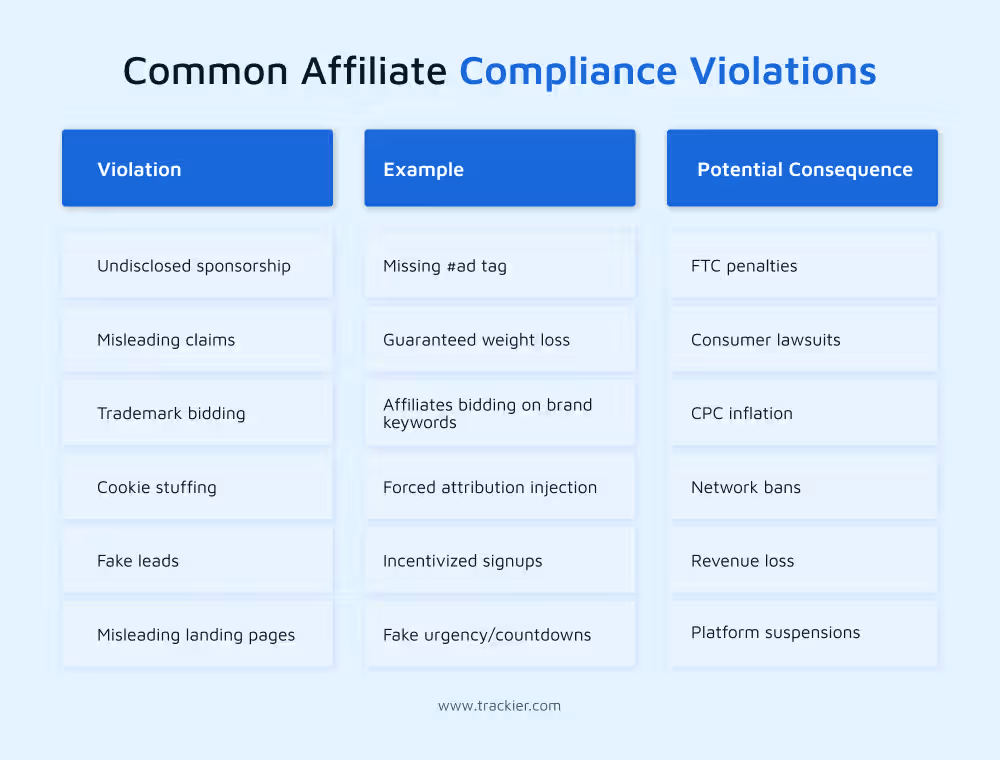
The instances of compliance failure can lead to some of the following outcomes:
- FTC Complaints: An affiliate promotes products without proper disclosures, leading to consumer complaints and potential regulatory investigations.
- Ad Account Bans: Paid campaigns using misleading claims, cloaking, or prohibited content trigger platform enforcement and advertising account suspension.
- Publisher Ad Fraud: Bad actors tend to generate artificial clicks, use bot traffic or other unethical practices that distort campaign performance data.
- Fake Leads: Incentivized or fabricated leads, or instances where purchases are made followed by quick refunds, create inaccurate customer acquisition metrics and waste advertiser budgets.
- Compliance Drift at Scale: As affiliate programs expand, inconsistent monitoring can allow outdated disclosures, unsupported claims and non-compliant promotions to spread across channels.
How Brands Enforce Affiliate Marketing Compliance
Creating affiliate marketing guidelines is one thing. Ensuring they are implemented correctly is another. Let’s understand what brands, SaaS organizations, e-commerce operators and fintech giants can do to safeguard their affiliate programs.
How to Implement Manual and Automated Reviews for Publishers?
- Automated Moderation: Set up a tracking system which reviews the procedural aspects and check marks being placed across the spectrum, at every step to ensure there are no outliers.
- Affiliate Audits: Random reviews must be conducted on affiliate activity to refine their approach, and maintain uniform compliance across all partner marketers.
- AI-led Affiliate Compliance Monitoring: To ensure the process of reviews remains impartial and not affected by any bias, as well as for 24/7 monitoring, AI agents could potentially be set up to manage workflows, and maintain close to 100% compliance accuracy across affiliates and campaigns. AI-assisted monitoring can help flag potential compliance issues at scale and support continuous review, while human oversight remains important for validating findings and handling edge cases.
Affiliate Marketing Guidelines Regarding Traffic and Conversion Quality Monitoring
- Traffic Anomaly Detection: Are you witnessing sudden changes in traffic quality such as an increase in bots, multiple clicks from the same IP, multi-accounting and so on? Then it is important to track the overall quality of traffic so that instances of specific affiliates causing it can be detected.
- Conversion-quality Analysis: Seeing a lot of traffic but it isn’t leading to a good enough conversion rate? Analysis must be conducted to capture where the funnel is causing drop-offs, and why traffic isn’t producing industry-benchmarked conversion rates.
- Click-spam Analysis: Sometimes traffic numbers are inflated at the affiliate’s end. Sometimes the traffic is present due to misleading claims or offers. It is vital to figure out where affiliate marketing guidelines need to be tightened to improve the CTR.
What Enforcement and Penalty Mechanisms Can Brands Include in Affiliate Contracts?
- Warning Systems: Set up triggered alerts which can be checked at various levels (admin, analyst and so on) within your affiliate tracking software.
- Payout Withholding: Based on payment terms decided, set up payment and invoicing conditions, which lead to payouts for affiliates. Not meeting the conditions will automatically withhold the compensation.
- Blacklists: If there are multiple violations from the same marketers, there should be a process to hold them back and drop them from the program altogether.
- Affiliate Scoring: There are tiers within affiliate performance which need to be noted through a system of scoring. They can be set on parameters which matter most to the affiliate program.
- Compliance Clauses: Specific clauses must be included in the affiliate contract that set down must-dos for the promoter when they work on the given brand. In case of any violations, contract terms themselves will cause the publisher to be dropped from the affiliate program or network altogether.
- Probation Systems: If you’re starting program management afresh, or need to set a benchmark, introduce a probation period during which all partners can be tested, and the affiliate program compliance can be gauged for effectiveness.
These are just some of the aspects which make affiliate marketing guidelines easy to implement and improve. By and large, they can be implemented across all in-house and affiliate network-driven affiliate programs in most industries. However, certain specific use cases and regulations in sensitive sectors may cause advertisers to conduct more fine-tuning.
FAQs
Are affiliate disclosures legally required?
Yes, affiliate disclosures are legally required across most jurisdictions by regulatory bodies enforcing advertising standards. In the US this is required by the FTC, in the UK the ASA checks this and in India, the ASCI calls out instances of poor and non-disclosure.
Where should affiliate disclosures appear?
Affiliate disclosures should appear before the link placement, in a prominent, visually simple manner. Consumers should know that clicking the link will monetarily benefit the promoter before they actually engage with it, or make their purchase.
Can affiliate marketers run paid ads?
Affiliate marketers can run paid ads where permitted, but availability depends on the advertiser’s program terms, platform policies, product category, geography and applicable disclosure requirements. Therefore, paid ads are allowed. However, brand bidding, non-disclosure of affiliation, misleading claims and so on are not allowed.
What happens if affiliates violate platform rules?
When affiliates violate the rules of a specific platform, such as Meta or TikTok, they lose access to their promotional accounts — which often is a key source of income for them. However, since they are promoting certain products and brands, they indirectly cause harm to the brand name and reputation through their actions.
What rules must be included in affiliate contracts?
Brands and networks must ensure affiliates are aware of best practices and malpractices (which may void the commercial relationship) before they begin engaging in campaigns. Such awareness must be instituted keeping in mind global and local rules for promotions through the affiliate marketing medium.