Trackier is an all-in-one performance marketing platform that helps businesses manage and measure affiliate, influencer, and partner-driven campaigns.
It offers real-time, multi-touch attribution across channels, automated partner management, invoicing, and fraud prevention, all in one marketing attribution platform.
Brands using Trackier can centralise disparate affiliate and partnership data, eliminate spreadsheets, and “only pay for results” (usually paying per conversion rather than per click). In a rapidly growing partnership economy (with U.S. affiliate spend set to top $13.2B by 2026) and increasingly privacy-conscious consumers, Trackier solves key challenges.
This article provides a deep dive into Trackier, its features, use cases, industry focus, integrations, and a practical checklist for brands.
What is Trackier?
Trackier is a performance marketing software and a dedicated affiliate marketing platform that helps businesses manage, track, attribute, and optimize their marketing campaigns across affiliates, influencers, publishers, media buyers, and partner channels.
Businesses no longer rely on a single user acquisition channel. Growth comes from multiple sources, such as affiliate marketing, influencer campaigns, referral programs, paid media partnerships, coupon platforms, and content collaborations.
Managing all these channels manually creates reporting gaps, data silos, attribution mismatches, payout errors, and scaling challenges.
Trackier, an affiliate marketing software, solves this by bringing campaign management, attribution, analytics, fraud prevention, automation, and partner management into one centralized platform. It helps brands to understand:
- Which partners generate the highest-quality traffic
- Which campaigns drive conversions
- Which channels produce the best ROI
- How customers move across devices and touchpoints
- Where marketing budgets are being wasted
How Does Trackier Work?
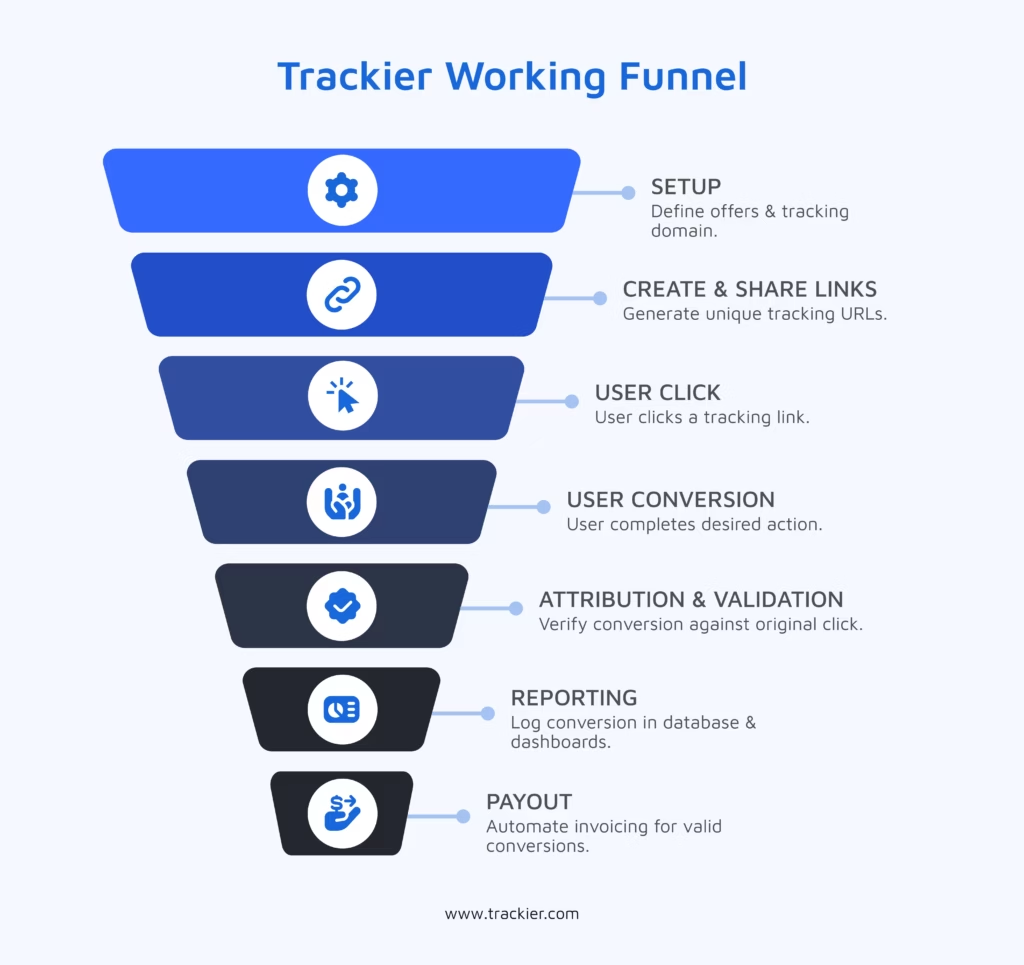
Trackier operates as a click-through-to-conversion tracking funnel. The process works roughly as follows:
1. Campaign Setup: The advertiser or brand configures a campaign in Trackier: defining the offer (payouts, goals), assigning a tracking domain, and choosing tracking methods (e.g., Web SDK, S2S).
2. Link Distribution: Trackier generates a unique tracking URL (or SmartLink) for each campaign or partner. This URL contains placeholders (e.g., {click_id}) that Trackier will replace with a unique ID when the link is clicked.
3. Partner Promotion: Affiliates, publishers, or partners use the provided Trackier links in ads, social posts, emails, etc. When a user clicks, Trackier records the click and issues a unique click_id. The user is directed to the landing page (e.g., product page, signup page).
4. Click and Session Tracking: Trackier’s tracking code (via image pixel, iframe, or Web SDK) on the landing page captures the click_id and any UTM parameters. It may store this in the user’s session or browser. This records who the user is (which partner, campaign, geo, device, etc.) and where they clicked.
5. User Action: The user continues the journey (browsing site, adding to cart, etc.). If they convert (complete a desired action), Trackier’s converter is triggered. This can be:
- Server-to-Server (S2S) postback: the advertiser’s backend sends Trackier an HTTP request with the click_id and conversion details (amount, time) using a secure server-to-server integration.
- Image or iFrame Pixel: a pixel on the “Thank You,” or confirmation page calls Trackier with the click_id.
- Web SDK Pixel: Trackier’s lightweight JavaScript SDK on the page reads the stored click_id and sends a conversion to Trackier (this also covers cookieless situations).
6. Attribution and Validation: Trackier receives the conversion and matches it to the original click via the click_id. It applies attribution logic (e.g., last-click or multi-touch depending on settings). The system validates the conversion against anti-fraud rules: checking for duplicate click_ids, fraudulent patterns, geo/IP filters, etc.
7. Recording and Reporting: The attributed conversion (with value, partner info, etc.) is logged in Trackier’s database. Marketers can then see this in real time on dashboards – viewing metrics like total sales by partner, conversion rates, ROI, etc.
8. Payout Processing: Once conversions are valid and fall within policy (e.g., not refunded), Trackier can automate invoicing. It applies commission rules to calculate each partner’s earnings and can generate invoices.
Core Features of Trackier
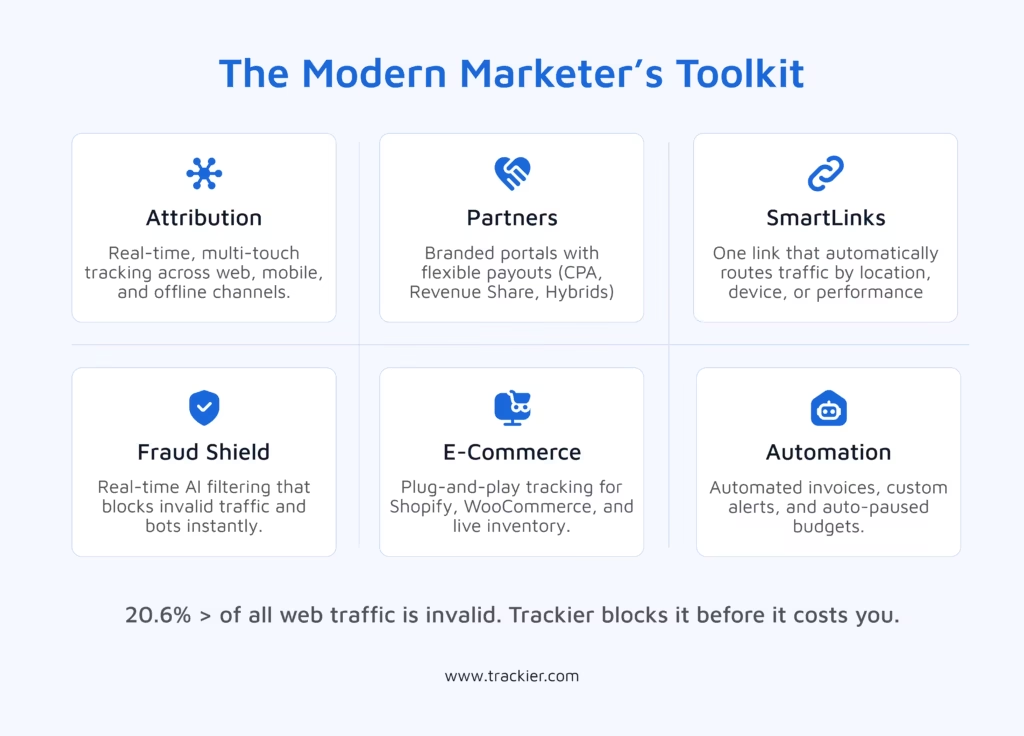
Trackier’s feature set spans the entire funnel of a modern performance marketing software suite. Below are the core capabilities:
1. Performance Tracking and Attribution
Trackier provides real-time, multi-touch attribution across any channel (web, coupon, etc.) as a foundational marketing attribution platform.
- Multi-Touch Attribution: Unlike simple last-click tools, Trackier can credit multiple touchpoints. This means if a customer saw an influencer post, clicked an email, and then finally purchased, Trackier can allocate credit accordingly (e.g., weighted or linear model).
- Customizable Windows: Brands can set attribution rules (cookie/window durations, lead timeouts) to match their buying cycles (e.g., 30-day cookie window for large-ticket items).
- Cross-Channel Support: Whether the click originated from an affiliate link, ad campaign, or an influencer’s code, it all flows through Trackier.
- Marketing Analytics: Trackier gives comprehensive reports: clicks, impressions (if pixelized), conversions, revenues, conversion rates, and ROI by campaign/partner/creative. It also supports cohort analysis and funnel visualisations.
- Real-Time Data: Data is processed with minimal delay (often sub-hourly or real-time), enabling agile decisions (e.g., pausing a non-performing affiliate).
2. Affiliate and Partner Management
Trackier offers comprehensive tools to run an efficient affiliate program management platform:
- Partner Portal: Affiliates log into a branded dashboard (white-label if needed) to view their own performance stats in real-time. They see clicks, conversions, pending commissions, and can download creatives (banners, text links, coupon codes). This self-service portal reduces manual reporting.
- Flexible Commission Structures: Marketers can set global or per-partner payout rules. For example, one affiliate might get $50 per loan application, another might get a 10% revenue share. Trackier allows mixing CPA, CPL, CPS, CPM, revenue-share, and hybrid models.
- Partner Segmentation and Targeting: You can group partners by type (e.g., “bloggers”, “cashback sites”, “influencers”) and apply rules accordingly. Trackier supports geography or device targeting, IP whitelisting, and publisher whitelisting (ensuring only approved sites run links).
- Automated Notifications: Trigger emails to partners on milestones (approved conversions, nearing goals, payment available).
- Bulk Operations: Bulk upload or import partner lists, creative links, or set commission updates across thousands of publishers at once.
- Compliance and Security: Trackier can enforce partner-level permissions, ensuring, for example, that a sub-affiliate (child user) only sees their own data.
3. Fraud Prevention
Protecting against fraudulent traffic is a core feature of Trackier. Key elements:
- Filters: Trackier’s fraud prevention analyzes each click and conversion. It looks for anomalies (suspicious patterns in IP, device, click-timing, etc.) that indicate click fraud or fake leads. For example, if an affiliate’s clicks always come from the same IP with no conversions, Trackier flags that pattern.
- Custom Rules and Blacklists: Marketers can define rules (e.g., maximum clicks per minute per IP, exclude traffic from certain ISPs, block specific affiliate IDs). Trackier allows whitelisting trusted publishers and blacklisting suspicious ones.
- Real-Time Alerts and Blocking: When fraud is detected, Trackier can automatically block further clicks from that source (traffic shaping). It can also alert admins immediately to investigate.
- Protects ROI and Brand: By filtering out “fake traffic,” brands avoid paying commissions on worthless clicks. Trackier’s built-in tools identify invalid clicks and fake conversions to protect margins.
4. SmartLinks and Traffic Distribution
SmartLinks is a single tracking URL that can intelligently route traffic to multiple offers or landing pages based on rules or optimizations. Key points:
- Automatic A/B and Geo Targeting: Rather than managing separate links for each offer, Trackier’s SmartLink can contain several offers. It will send a user to the most relevant destination.
- Fallback Handling: If one offer goes down (out of stock, expired), the SmartLink automatically redirects to an alternate. This ensures affiliates never share dead links.
5. Influencer Marketing Tracking
Trackier covers the gap between affiliate operations and influencer marketing campaigns:
- Coupon and Promo Code Tracking: Influencers often share unique discount codes. Trackier can generate per-influencer codes and record when they are used at checkout.
- Dedicated Links and Campaigns: Each influencer can be given a unique Trackier URL, allowing Trackier to attribute sales or clicks to that influencer. This works even on platforms where clickable links must go in bios or swipe-up.
- Multi-Touch Attribution for Creators: Since influencers typically generate awareness (and then the customer may later buy by another route), Trackier’s multi-touch system credits the influencer’s role rather than having it drop to “direct” or “last click”.
- Analytics: Brands can view performance by creator, e.g., how much traffic an influencer drove, their conversion rate, average order value of their referrals, etc.
- Integration with Social Tools: Trackier can integrate with your social media insights. Brands can export conversion data to evaluate campaigns alongside social metrics.
6. E-commerce Tracking
Trackier offers native integrations for online stores:
- Platform Plugins: Trackier provides Shopify integration along with WooCommerce to automatically capture order events.
- Revenue Tracking: Beyond counting conversions, Trackier logs sale amounts and SKUs (if supported). Brands can then compute ROI and lifetime value.
- Real-Time Inventory Sync: Some integrations allow Trackier to automatically stop campaign links for out-of-stock items.
- Omnichannel Coverage: If a brand sells across multiple online stores or marketplaces, Trackier can unify them. It aggregates data from all stores into one campaign dashboard.
- Direct API/Webhook Integration: For custom or in-house platforms, Trackier offers APIs to send conversion data. This is crucial for complex sites where plugin solutions aren’t available.
7. Automation and Reporting
Trackier automates many routine tasks and provides comprehensive reporting:
- Automated Invoicing: Trackier can generate automated invoices and allow custom payout rules (min/max payout, currency conversion, split payments).
- Workflow Automation: Conditional logic can automate campaign actions: e.g., notify admins when a big sale happens, pause an offer after budget caps, or tier-up affiliates after certain sales.
- Alerts and Dashboards: Real-time alerts (email/SMS) can warn of anomalies (sudden drop in conversions, spikes in clicks). Custom dashboards let marketers see exactly the KPIs they care about at a glance.
- APIs and Webhooks: Trackier offers APIs for developers to push and pull data, and webhooks to notify external systems. This enables integrations with BI tools or CRMs.
- Multi-Client and White-Label: Agencies or networks running multiple affiliate programs can manage them from one login. They can brand the interface with their own logo or domain for clients.
- Data Export: All data can be exported to CSV or queried via API for offline analysis or feeding into other systems.
Use Cases of Trackier
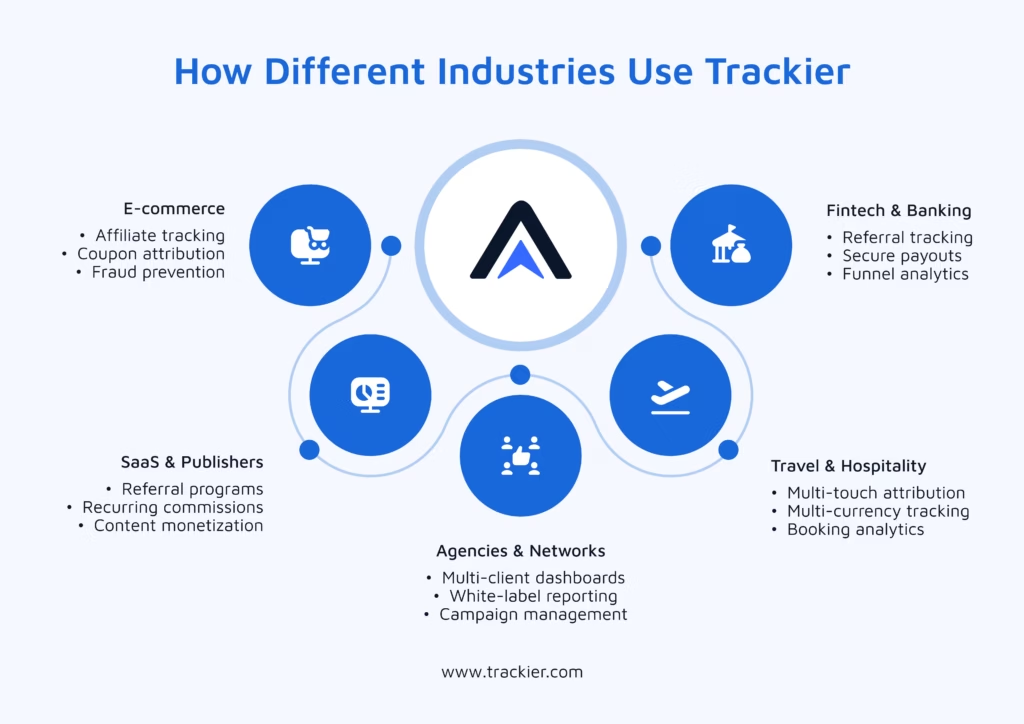
Trackier serves a variety of verticals and scenarios. Below are key use cases, with examples:
1. E-commerce Brands
Scenario: Online retailers want to scale affiliate programs (coupons, cashback, blogging, loyalty), as well as measure influencer marketing campaigns and search ads in one platform.
They need to attribute each sale to the correct source (affiliate code, link click, email campaign, etc.) and optimize ROI.
How Trackier helps: E-commerce sites use Trackier as an automated affiliate marketing platform to centrally manage all affiliate links, coupons, and performance data.
By plugging into the store platform (Shopify, WooCommerce, etc.), all orders from affiliates are automatically logged, and you can quickly identify top-performing affiliates or discount codes. You can also set up fraud filters to block coupon abuse.
Example: GrabOn used Trackier to overhaul its tracking. Pre-Trackier, GrabOn had “fragmented data” and inconsistent reports from different sources.
With Trackier’s unified dashboard, GrabOn saw “738% growth in conversions” quarter-over-quarter and a “70% increase in revenue” by giving credit correctly and eliminating errors. Accurate multi-touch attribution also “improved credit allocation and fraud prevention”.
2. Fintech and Banking
Scenario: Fintech companies and banks increasingly use referral and affiliate campaigns to acquire customers (account sign-ups, loan leads). They need secure tracking, flexible payouts, and compliance with financial regulations.
How Trackier helps: Trackier’s fintech affiliate marketing software offers precise tracking, flexible commissions, and security for financial affiliate programs. It can track both clicks and form submissions.
For example, a bank might give affiliates $10 for each account opened (CPA) or $5 for a lead (CPL). Trackier lets the bank define these tiers and even change them per affiliate.
The platform emphasizes security and compliance: it supports SOC2 practices, GDPR/CCPA data encryption, IP whitelisting for advertiser servers, and two-factor access if needed. The white-label portal is especially useful for banks to build customer trust.
3. Travel and Hospitality
Scenario: Travel brands (airlines, OTAs, hotels, cruise lines) work with affiliate travel blogs, deal sites, influencer photographers, and traditional media to drive bookings. Journeys involve multi-step decisions and different currencies, making attribution complex.
How Trackier helps: Trackier’s travel affiliate management software focuses on multi-touch attribution and global scaling. Affiliates (travel bloggers, comparison sites) share SmartLinks that track a user through research and final booking across multiple sites.
Trackier consolidates multi-currency bookings (auto-converts into one reporting currency), so a vacation package sale in EUR and one in USD can be compared.
Example: A hotel chain provides Trackier links to its affiliate agents in multiple countries. When a traveler eventually books (maybe months after clicking the first time), Trackier can credit the agent instead of counting it as an organic direct booking. This leads to more transparent ROI on affiliate campaigns.
4. Agencies and Media Networks
Scenario: Performance marketing agencies and ad networks run affiliate programs. They need to manage many campaigns and clients simultaneously, often with white-label requirements.
How Trackier helps: Agencies, media and networks use Trackier’s multi-client and white-label features. They can create separate dashboards for each client, controlling which user sees which reports.
For example, an agency might run affiliate programs for ten e-commerce clients; Trackier lets them segregate data so that Client A only views their own metrics.
Trackier also appeals to networks that resell affiliate traffic. They can embed Trackier as a backend and provide it to advertiser partners.
Example: Trackier helped Performance Launchpad to increase the conversion rate by 85%, 2x return on ad spend (ROAS), and QoQ revenue growth of 120%.
5. Other Use Cases
- SaaS and Subscription Services: SaaS companies use Trackier to track referral programs and trial-to-paid conversions. They can attribute sign-ups to affiliates or affiliate partners. Automated reminder emails and flexible commissions (percentage of recurring revenue) are common.
- Content and Media Publishers: Websites that rely on sponsored content or paid placements can track revenue and run ads through Trackier.
Industries Using Trackier in 2026
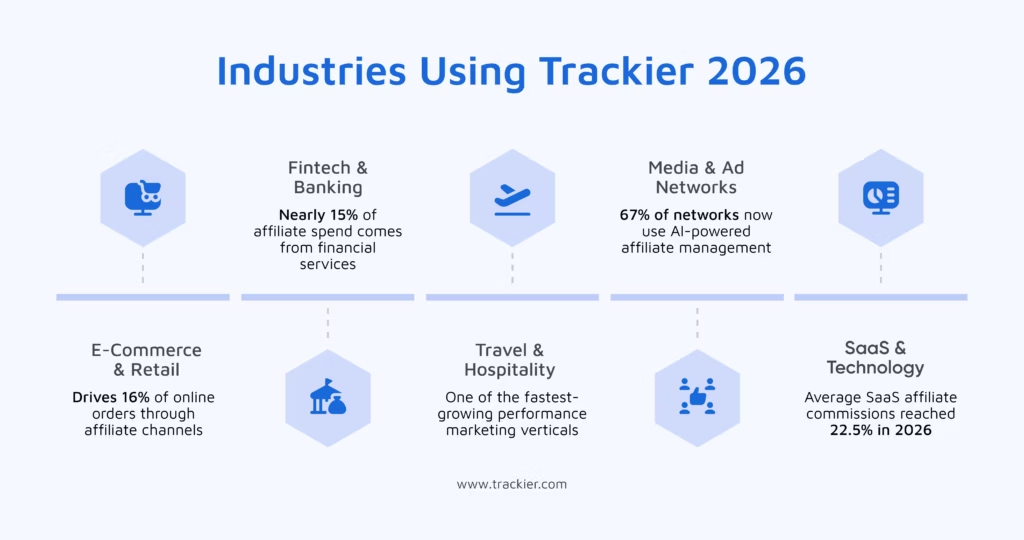
While Trackier is strongly positioned across many verticals, it is best represented in the following industries:
- E-Commerce and Retail: An e-commerce store needs a performance marketing software that can handle a high volume of affiliate tracking and cross-platform attribution. DTC brands or affiliate marketplaces use Trackier to manage their affiliate program across multiple channels.
- Fintech and Banking: Businesses in the fintech and banking industries use Trackier to manage their referral and lead generation programs. The compliance features that Trackier provides, such as GDPR compliance and IP Filtering, are valuable to organizations that are in the fintech and banking sectors.
- Travel and Hospitality: Airlines, hotels, OTAs (online travel agencies), and credit cards use Trackier to evaluate their global campaigns with multi-currency tracking and to leverage marketing analytics.
- Media and Advertising Networks: Affiliate networks and media buyers both have chosen Trackier as their tracking solution.
- SaaS and Technology Companies: SaaS and other technology companies use Trackier to manage their referrals and affiliate program by tracking signups and renewals, and also to integrate with CRM’s such as Salesforce and Hubspot.
Integrations Supported by Trackier
Trackier integrates with a wide ecosystem of tools. It connects with 100+ ad networks, CRMs, analytics platforms, and more.
| Integration Category | Platforms/Tools | Type | Notes |
| E-commerce | Shopify | App/Webhook | Syncs orders and cancellations to Trackier |
| WooCommerce | Plugin/WebSDK | Uses Web SDK on WooCommerce checkout pages to send conversions to Trackier | |
| Magento/Adobe Commerce | Integration | (via API or extension) Captures order data | |
| Analytics & Ads | Google Ads | API (Postbacks) | Tracks ad-driven clicks and conversions (via UTM or conversion tracking import) |
| Facebook Ads | API | Similar tracking through Pixel or postback integration | |
| Google Analytics/GTM | JavaScript | Can push campaign data to GA via GTM tags or use GA events for conversion tracking | |
| Segment | Integration | Tracks data to/from other marketing tools and DMPs | |
| CRM & Sales | Salesforce CRM | API/Connector | Pushes conversion leads to Salesforce; can also pull customer data. Link affiliate leads to CRM entries. |
| HubSpot | Webhook/API | Syncs affiliate data (e.g., contact property) and logs conversions. | |
| Intercom, Mixpanel, mParticle | Webhook/API | Integration with communication and analytics for event tracking. | |
| Payment/Payout | PayPal, Paxum, Payoneer | Payout Gateways | Connects to payment providers to automate affiliate payments. |
| Email/Comm | Mailchimp, SendGrid, SparkPost | API | (Via Zapier or custom) Send affiliate reports or alerts. |
| Others/Automation | Zapier | Middleware | Connects Trackier events to 3,000+ apps (e.g., Slack, Sheets, CRM). |
| Webhooks (Custom) | Webhooks | Custom integration to any system supporting webhooks (e.g., proprietary booking engine). |
Important KPIs Trackier Helps to Measure
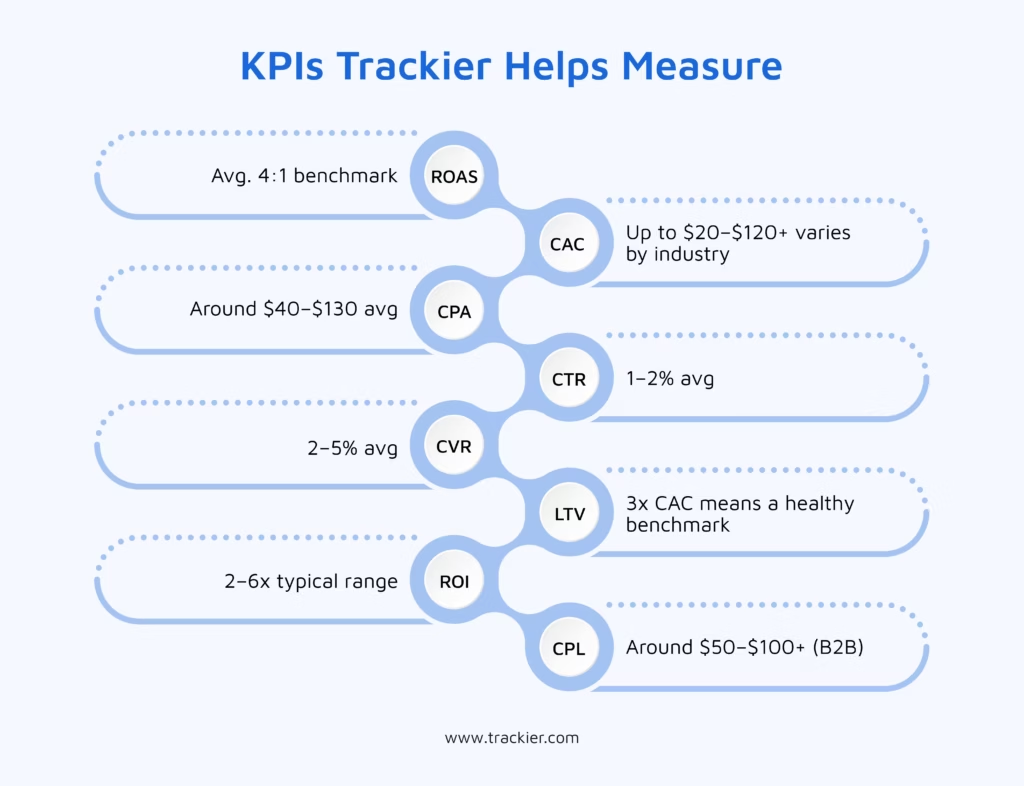
Successful performance marketing isn’t determined by the number of people who see your campaigns. Success is based on the number of meaningful actions resulting from your campaigns, including clicks, leads, purchases, and revenue.
Trackier allows marketers to focus less on vanity metrics (the number of people who have viewed your ad, the number of likes you have on Facebook) and more on KPIs that directly reflect business growth, efficiency, and profitability.
The KPIs that Trackier offers help businesses measure the success of their marketing tactics through a centralized performance marketing platform.
Market data proves this value loop clearly, as brands leveraging proper tracking frameworks record an average affiliate marketing program ROI of $15 for every $1 spent.
1. Return on Ad Spend (ROAS)
ROAS is one of the most important performance marketing KPIs. This metric indicates how much revenue your business generates from each dollar spent on advertising.
Why does ROAS matter?
- This metric shows how profitable your campaigns are.
- ROAS identifies which partners and marketing channels are performing well, helping to determine where you want to spend your budget.
- It will guide you as you allocate your advertising budget amongst the various performance marketing channels.
2. Customer Acquisition Cost (CAC)
CAC measures the cost to acquire a new customer through marketing efforts.
Why does CAC matter?
- Helps control how efficient your marketing is and implement strategic steps to reduce customer acquisition cost over time.
- Used to ensure your business will grow in the future.
- Allow you to identify which marketing channels have a high acquisition cost.
3. Cost Per Acquisition (CPA)
CPA measures the cost of generating an action through performance campaigns, such as a lead, signup, or sale.
Why does CPA matter?
- Core KPI for performance campaigns.
- Applicable across all forms of performance campaigns: affiliate marketing, lead generation, and e-commerce.
- Used to optimize the efficiency of conversions.
Marketers use Trackier’s clean metrics to differentiate between deep financial markers, analyzing cpa vs cac differences to manage accurate advertising margins.
4. Click-Through Rate (CTR)
CTR is the measurement of how often a user clicks on a tracking link after seeing an ad.
Why is it important?
- Indicates the effectiveness of creative concepts and targeting.
- Assists in optimizing messaging and ad partner performance.
- Improves understanding of traffic quality.
5. Conversion Rate (CVR)
It is calculated as the percentage of individuals who complete a specific action after clicking on an advertisement.
Why is it important?
- Conversion rate demonstrates the effectiveness of a landing page and sales funnel
- Helps create a better post-click experience for the user
- Identifies those areas where higher-quality traffic can be obtained
- Optimization remains crucial here since over 70% of high-intent affiliate program conversions are recorded across mobile device environments.
6. Lifetime Value (LTV)
It is the total amount of revenue generated by a customer over the entire time they remain with a given brand.
Why is it important?
- Lifetime value defines the long-term profitability of the company
- Balances the cost of customer acquisition with their lifetime value
- Allows the marketer to make better decisions about scaling their business
7. Return on Investment (ROI)
ROI is the overall measure of profitability after taking into consideration the cost of all marketing expenses.
Why is it important?
- Provides a complete perspective for evaluating the success of a campaign
- Allows comparisons for performance across multiple channels
- Assists you in making more informed decisions about strategic investments
8. Cost Per Lead (CPL)
CPL is the measurement of how much it costs to produce a qualified lead.
Why is it important?
- Critical for campaigns such as fintech, education, and B2B
- Helps in assessing the quality and efficiency of leads generated
- Allows for the optimization of lead acquisition funnels
Why Do Brands Choose Trackier Over Traditional Tracking Methods?
H1: Why Brands Choose Trackier?
Performance-Based Pricing
Cookieless Tracking
Unified Attribution
Fraud Prevention
Real-Time Scalability
Partner Automation
There are a variety of reasons that businesses prefer Trackier to more conventional methods (spreadsheets, legacy affiliate networks, etc.) for tracking their advertising activities.
- Performance-based Pricing: Where traditional affiliate-tracking methods charge a set amount for each affiliate, or for every click, Trackier charges based on performance. With Trackier, you only pay for the actions you get from your affiliates.
- Unified Attribution vs. Siloed Tracking: Most conventional forms of affiliate tracking utilize last-click cookies (which are becoming more difficult to use, due to ad-blocking and cookie expiration) and separate spreadsheets for each of your affiliates to track your advertising. Trackier provides a real-time view of your customers’ journeys from beginning to purchase using web-based multi-touch attribution logic via an integrated marketing attribution platform
- Cookieless and Cross-Device Tracking: Due to increasing restrictions on cookies, Trackier’s Web SDK and multi-touch logic systems are compatible with modern browsers, while traditional affiliate tracking technologies will be obsolete.
- Fraud Prevention: Most advertisers only discover fraudulent advertising activity after they receive an invoice from the affiliate. Affiliate marketing fraud patterns run rampant without strong filters, with over 67% of digital marketers expressing constant operational concern regarding fake leads. Trackier’s integrated fraud detection system identifies and disables fraud in advance of invoicing. This difference alone is usually enough to justify a switch to Trackier.
- Scalability and Agility: Standard tracking methods are not able to scale or pivot as quickly as needed. With Trackier, you can deploy custom developer setups using a robust api integration strategy to pull data into internal business systems instantly.
- Comprehensive Partner Support: Trackier is designed for partnerships, so it has many of the partner-centric features that are missing from standard analytics software, including partner portals, bulk tools, email notifications, and white-labeling. For example, when a business moves from a simple cookie-based affiliate program to using Trackier, they can expect to see savings in commission calculations and invoicing since Trackier automates all of those processes.
Actionable Recommendations
For brands that want to switch to Trackier, here are some tips to help you make the best decision:
- Identify Your Requirements: Figure out all channels and partners you will want to track (web, coupons, offline, etc.). Decide what methods of tracking are necessary and whether compliance needs will be a consideration (GDPR, finance compliance).
- Evaluate Pricing and Volume: Estimate your monthly conversions. Trackier offers a 30-day trial and 10,000 free conversions, so test it with a subset of campaigns. If you have very high volume, you can ask for custom quotes.
- Price and Volume: Calculate the number of conversions you’ll be tracking per month. Since Trackier has a free 30-day trial and gives you 10,000 free conversions. We suggest you run a couple of sample conversion campaigns and track them through Trackier for testing purposes.
- Migration Plan: When moving from a different platform or planning an organized affiliate program migration, ensure no data points are dropped along the way:
- Data Porting – Depending on your requirements, you may want to export all of your prior conversion data from the previous system. (Note: Some historical data may not convert correctly; thus, maintain it for the record)
- Transitioning: You will want to run both of your older and Trackier’s tracking measures for 1-2 weeks. Use this timeframe to compare both and fix any discrepancies.
- Partner Notification: Be sure to let your affiliates and influencers know about either new tracking links or new codes to implement. If at all feasible, implement a 301-redirect from your old links to your new links.
- Integrate: Integrate any necessary plugins or forms of code you may need for your new tracking measures (i.e., Shopify app, Trackier’s Web SDK on the landing pages). Make sure to also test each conversion type of the campaign through Trackier’s campaign testing tool (can simulate the conversion)
- Team Training: Provide sufficient training for everyone involved in any way (marketing, accounting, etc). Give everyone an appropriate role and restrictions on the dashboard.
- Select and set up key functions:
- Choose an attribution model that fits your brand sales process. For example, last-click vs. multi-touch.
- Set up fraud filters (like click limits or blocking specific IP addresses) early and adjust after reviewing initial incoming traffic once set up correctly.
- Set your currencies/payout rules for each location. For example, if you pay in USD and EUR, have automatic conversions set up.
- Use the Checklist: Be sure to have tracking pixels/SDKs on all relevant websites (such as the “thank you” page for all checkouts). Ensure testing works for both click-throughs and conversions in a development environment.
- Integrate: Make sure to integrate Trackier with all systems. If you are just tracking e-commerce, CRM, and analytics, at the very least, integrate with them.
- E-commerce: Install official applications for Shopify/WooCommerce or configure post-backs from your platform so that Trackier knows about orders.
- CRM: If you are performing lead tracking, set up server post-backs or API calls to transmit lead conversions to your CRM.
- Analytics and Ads: Sync UTM parameters or use Trackier’s Google Ads integration to input paid clicks into attribution tracking.
- Track Continued Progress and Metrics: After launching, look to track the following principal qualities:
- Conversion Rate (CVR): (%) of clicks that convert.
- Return-on-Ad Spend (ROAS)/ROI: Revenue generated vs marketing spend per channel/partner.
- Average Order Value (AOV): Trackier can report revenue per order. Increasing AOV (e.g., via upsells) boosts ROI.
- Customer Lifetime Value (CLV): For subscription models, measure if affiliate sources bring higher-value customers.
- Fraud Metrics: % of conversions flagged as invalid.
- Budget Pacing: Ensure you’re meeting target volumes without overspending; Trackier dashboards can show spend cap alerts.
When Brands perform this due diligence correctly, they can use Trackier optimally. Properly setting up the system and monitoring the data must both occur correctly; even well performing KPI’s will not be accurate as they relate to specific affiliate channels unless each link has been uniformly tagged.
After initial launch, it is important to perform regular audits to ensure that you can verify each conversion from Trackier and your revenue report to the most recently completed reporting month, verify each of your attribution windows based on your most recent sales history, and make any adjustments as necessary if sales cycles for each source change.
Conclusion
Upgrading your performance marketing infrastructure to Trackier removes the operational exhaustion of manual tracking and siloed spreadsheets.
By mitigating technical risks, unifying cross-channel touchpoints, and securing your data pipelines against traffic fraud, Trackier provides the necessary structural agility required to scale digital partnerships efficiently in 2026.
Stop letting legacy data silos and tracking gaps limit your business growth. Ready to transform your attribution modeling and optimize your marketing spend?
Book a free demo to see how our unified performance marketing platform can scale your business.
FAQs
1. What is a marketing attribution platform?
A marketing attribution platform is a specialized software solution that tracks and evaluates the entire consumer journey across multiple digital touchpoints. Instead of guessing which ad worked, it relies on advanced algorithmic logic to identify exactly which campaigns, affiliates, or publishers successfully generated conversions, clicks, and downstream business revenue.
2. How does Trackier prevent affiliate marketing fraud?
Trackier stops fraud in real-time using its automated Fraud Shield. The system actively analyzes incoming traffic for common anomalies, such as suspicious IP addresses, duplicate device IDs, and unnatural click-to-conversion time patterns. It blocks invalid traffic, click loops, and fake leads instantly before they can corrupt your billing data.
3. What is the difference between CPA and CAC?
Cost Per Acquisition (CPA) measures the specific cost of driving a single localized conversion action, such as a signup or product sale within a campaign. Customer Acquisition Cost (CAC) evaluates the total aggregate cost, including all marketing overhead, software layers, and operational spend, required to acquire a brand-new paying customer.
4. Can Trackier track conversions without relying on cookies?
Yes, Trackier is built for the modern privacy-conscious era. By combining robust Server-to-Server (S2S) postback tracking with its lightweight Web SDK, the platform passes secure, unique click identifiers directly between backend servers. This approach ensures highly accurate data measurement and attribution even in strict, completely cookieless browser environments.
5. What are the benefits of using SmartLinks?
Trackier’s SmartLinks compress multiple active offers into a single tracking URL. Using automated conditional routing, the system analyzes the visitor’s location, device type, or live performance metrics to send them to the most relevant landing page. If an offer expires, it redirects traffic dynamically to eliminate dead links.
6. How does multi-touch attribution help e-commerce brands?
Traditional tracking layers reward only the very last click, completely ignoring earlier touchpoints. Multi-touch attribution unifies the entire multi-device journey, distributing conversion credit fairly across the top-of-funnel blog posts, social media influencers, and coupon platforms that collectively nurtured the customer toward completing their transaction.
7. What payment gateways integrate with Trackier for automation?
Trackier connects natively with popular payment networks and global payout gateways, including PayPal, Payoneer, and Paxum. Once the built-in validation system approves conversions, the platform automatically applies your custom commission tiers, calculates cross-currency earnings, and generates clean invoices to distribute accurate publisher payouts seamlessly.
8. Is parallel tracking necessary during a platform migration?
Running your legacy tracking software in parallel with Trackier for one to two weeks is highly recommended. This overlapping transition phase allows your engineering team to verify server webhooks, test campaign endpoints, ensure clean data porting, and calibrate anti-fraud rules without risking any data loss or disrupting live traffic pipelines.