
Affiliate marketing has evolved as an essential channel for growth, rather than simply a test of a particular strategy or revenue source for brands. By 2026, the worldwide industry for affiliates will cross $20-22.5 billion, 80% of global companies today currently have active affiliate programs.
As the affiliate marketing approach evolves, so too has the importance of this useful resource for growing companies via affiliate partners. Now, affiliate marketers are not limited only to joining affiliate networks or using traffic generated by those networks; rather, they will be able to establish, develop, and maintain entire partner groups.
This can lead to confusion in determining which of these two options, an affiliate marketplace vs affiliate network, provides optimal growth. Both partner categories are designed to provide growth; however, they operate differently.
This article will clarify the distinctions between the two business models. Of course, the objective for you as an affiliate marketer will depend on which model best supports your ability to generate sustainable and scalable growth. Our ultimate recommendation is that you should implement Trackier to gain full control of your performance, attribution, and partnerships using real-time tracking.
What is an Affiliate Network?
An “Affiliate Network” consists of companies created to assist advertising brands (brands that promote their products/services) to connect with merchants (publishers, creators, or affiliates) who promote their products/services for a fee (a commission).
The affiliate network acts as the middle layer that builds the necessary relationships and provides the technology/process to execute a successful, high-volume affiliate marketing.
For example, by leveraging an affiliate network, an advertiser is able to establish multiple partnerships at one time by providing the entire affiliate marketing program within one platform for an advertiser’s entire program.
Through an affiliate network, an advertiser can put their offer on the affiliate network, define the amount of commission they will pay for the affiliate partner’s sales, and select from various existing affiliate partners through the Affiliate Network.
For example, a merchant can evaluate and analyse multiple offers, select from multiple subsections, and then promote the products from those offers via special “tracking links” provided by the affiliate network.
The components of the affiliate network are what allow the networks to be so successful. The infrastructure provides the network with the ability to track the clicks/conversions, assign the appropriate partner to sales attribution, handle the payment to the affiliate, and determine if the affiliate is compliant with the overall affiliate marketing program rules.
These capabilities allow for the management of operational complexity and provide the appropriate measurement/scalability that many affiliate programs require.
How Affiliate Networks Work?
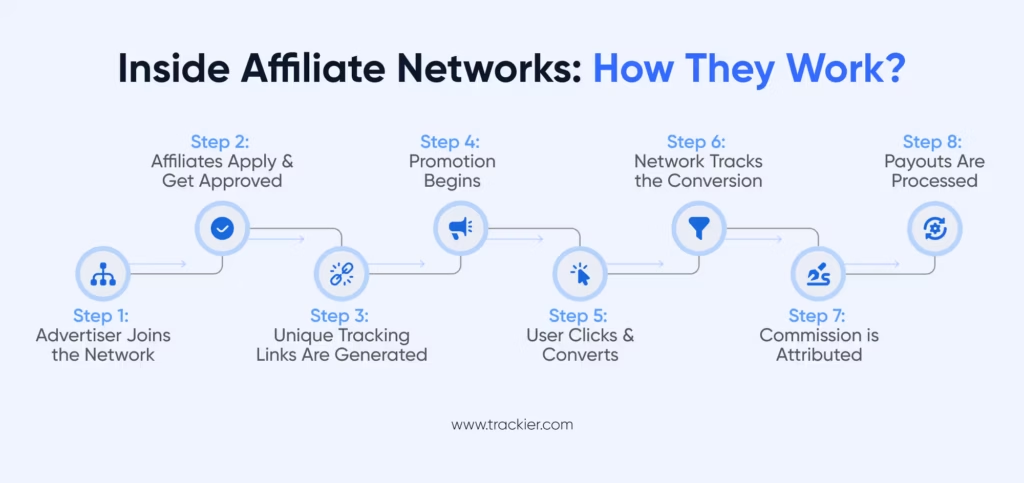
The affiliate networks’ functional structure consists of three main areas: brands, affiliates, and consumers. The affiliate network uses a step-by-step process to create a performance-based ecosystem that connects advertisers, publishers, and consumers.
The process begins when an advertiser (the company or individual selling a product/service) sets up its affiliate program on the network, establishes a commission structure/rate, lists available products/services to promote, and develops a list of program rules/terms.
After setting up their program, the advertisers must then recruit affiliates to promote their offers, which typically occurs through the use of an affiliate platform where publishers can browse through the different available affiliate programs on the network and submit an application to promote the offers that meet their audiences’ needs.
Once accepted, the affiliate will be given unique tracking links and creative material to use in promoting the respective program.
When a user clicks on an affiliate’s link on the network, the affiliate network will track that user’s activity based on the network’s tracking capabilities.
If that user takes any desired action (makes a purchase, signs up, or generates a lead), then the affiliate network will attribute the conversion to the respective affiliate based on a predetermined set of rules (cookie duration, attribution model, etc.).
Once the affiliate network has validated the transactions (removing instances of fraud, returns, or duplicate transactions) and calculated commissions, the affiliate network will disperse the appropriate amount of commission dollars to each of the affiliates and maintain complete transparency in the calculation/dispersal of commissions.
In summary, this is how affiliate networks operate with respect to:
> Connecting advertisers and affiliates
> Tracking every click and conversion
> Correctly attributing performance
> Handling commission payments to all affiliates
What is an Affiliate Marketplace?
Affiliate marketplaces are designed especially for the discovery of partners and collaboration between brands and affiliates. With an emphasis on developing an open system, affiliate marketplaces differ from traditional networks that serve as third parties.
Affiliate marketplaces are a primary way of connecting advertisers seeking to grow with affiliates (commonly known as publishers, media buyers, and creators) who seek to generate revenue.
Affiliate marketplaces consolidate brand searches/browsing through a diverse collection of different partner types (by both niche and traffic source), allowing them to filter through the numerous partner options available, and establish direct relationships without having to utilize a third-party network.
The key difference between an affiliate marketplace and a traditional affiliate network is that brands will now have more ownership of their relationships with their affiliated partners. Brands will have the ability to manage:
- Partner Selections
- Commission Structures
- Campaign Optimization
- Long-Term Relationship Building
Most affiliate marketplaces in today’s marketplace are developed on top of sophisticated marketing analytics platforms, allowing companies to make data-driven decisions based on the performance metrics of their partners’ campaigns and provide brands with real-time insights on the performance of their affiliate campaigns.
Affiliate Marketplace vs Affiliate Network: Key Differences
Choosing between an affiliate marketplace and an affiliate network comes down to control, scalability, cost, and how you build partnerships. While both connect brands with affiliates, their structure and growth impact are fundamentally different.
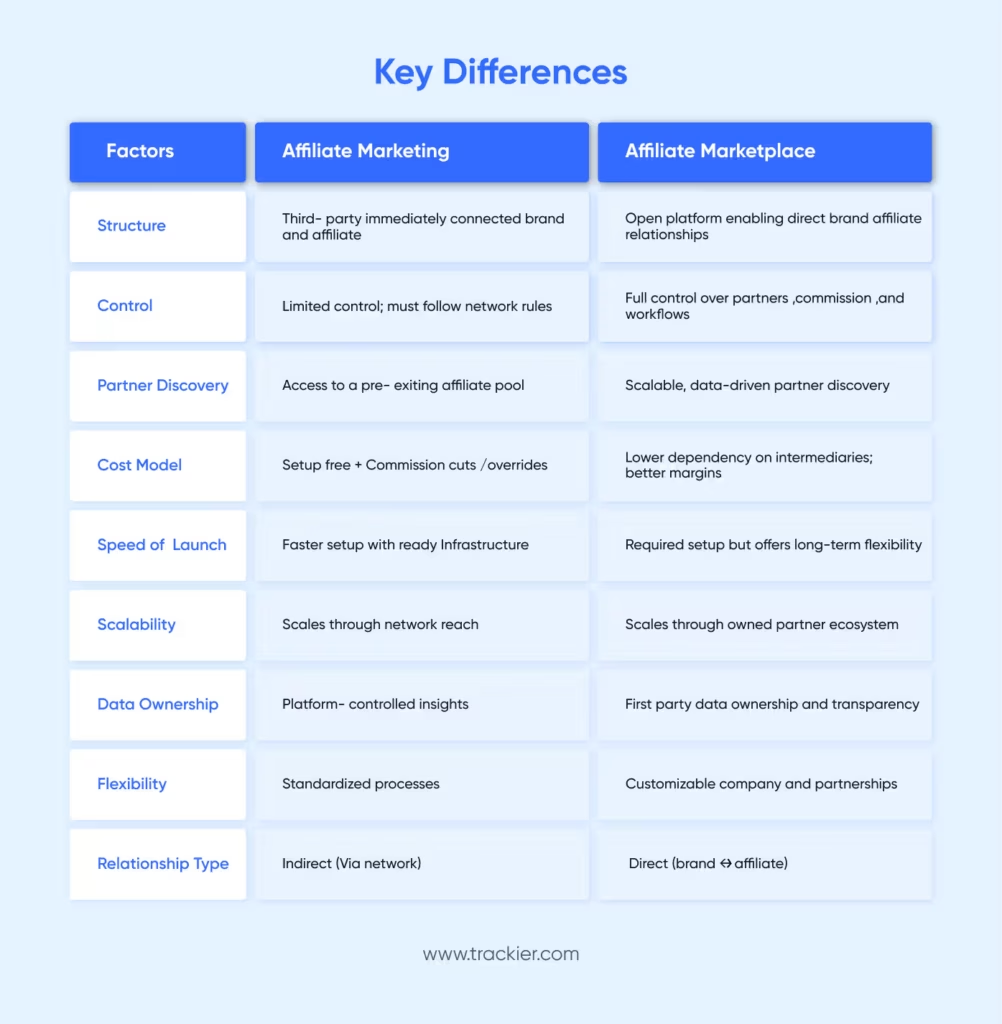
Advantages and Disadvantages of a Marketplace versus a Network for Affiliates
Affiliate networks and marketplaces both offer unique growth opportunities, but have many other factors to consider when making your decision; understanding these advantages and disadvantages will assist you in making an informed decision based on compatibility with your directional focus.
| Model | Advantages | Disadvantages |
| Affiliate Network | – Fast to implement via established infrastructure – Large number of pre-vetted affiliates available – Offers tracking, payment, and compliance services – Onboarding and campaign launch take place quickly | – Payment of the platform and commission cut will reduce the margin percentage – Limited ability to manage partnerships and data – Heavy competition amongst affiliates – Reliance on the third-party platform |
| Affiliate Marketplace | – Affiliate relationship is directly between you and the affiliate – Cost to operate is more efficient (no cuts for intermediaries) – Full control over campaign, payout, and data – Ability to build a database of affiliates via scalable ways and grow over time | – Initial effort and planning are necessary – Need some type of tracking/partner management tools – Not as quick to implement as an affiliate network – Requires internal resources for optimization |
Which One is Better for Growth?
There is no single winner regarding growth; however, there is no single correct answer regarding which is superior for development, as it depends on your definition of scaling and what stage your development is in.
Affiliate Networks: The Best for Initial Stages of Growth
Affiliate networks have been designed to help brands grow quickly and easily. One essential feature of an affiliate network is that it provides immediate access to a large affiliate pool. This provides brands with the ability to quickly launch and acquire users without having to build their own infrastructure from the ground up.
Affiliate networks also provide many advantages for early-stage companies and teams that may have limited resources. Brands using affiliate networks do not have to worry about:
- Recruiting partners from scratch
- Setting up tracking and attribution systems
- Managing payment systems
All of these processes occur within one system, and this makes networks an excellent choice for companies looking for quick growth with minimal effort to operate.
Additionally, affiliate networks allow brands to scale their reach into thousands of affiliates more rapidly, and they will be able to penetrate new territories much more easily than if they were to do this on their own.
Affiliate Markets: Ideal For Long-Term Sustainable Growth
The limitations of networks, particularly regarding control, margin, and ownership of relationships, become more apparent as a brand develops. Affiliate Marketplaces are the solution. An Affiliate Marketplace enables brands to do:
- Create and maintain ongoing direct relationships with their best-performing affiliates
- Use first-party data to optimize campaigns
- Minimize reliance on 3rd parties and reduce fees
The marketplace-driven affiliate ecosystem is therefore designed to be built, rather than continually having to “buy” growth; you will be creating an engine of partners driving success into perpetuity by leveraging your success and achievement from each partner.
How to Choose a Suitable Business Model
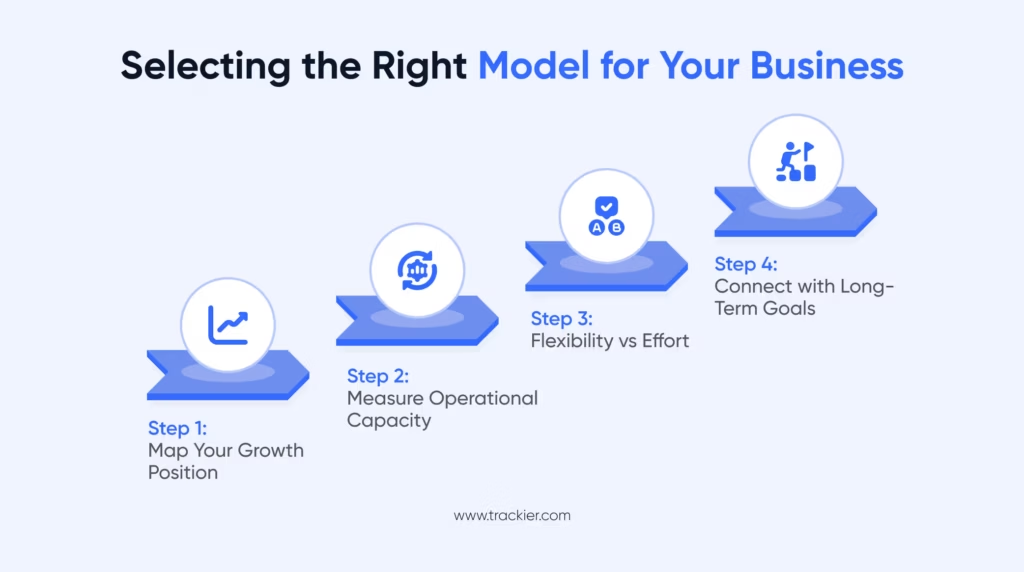
There are two types of affiliate models that you can use to build your business. An affiliate network provides a way to connect with multiple affiliate websites on one platform.
An affiliate marketplace connects brands with affiliates. While the two are often used interchangeably, you should base your decision on how you want to build your business at this stage.
You shouldn’t consider one to be better than the other; it’s about what is going to work for your business.
Step 1: Establish Your Growth Stage
If you are just getting started, affiliate networks are typically your best option as they can provide you with instant access to a large pool of affiliates without having to spend the time or resources on building the necessary infrastructure.
If you’re already scaling your business, using a direct partner ecosystem (i.e., marketplaces) can give you more control and long-term value.
Step 2: Review Your Internal Resources
When utilizing affiliate networks, the majority of the operational effort associated with tracking, paying, and monitoring compliance is taken care of. In contrast, you will need to put more effort into:
- Recruiting partners
- Optimizing campaigns
- Analyzing data
Step 3: Weigh Control Against Convenience
Networks provide less control but offer more convenience. With marketplaces, you will have better control but also the best levels of responsibility.
This can often be one of the most critical components in making a decision. Affiliate networks share responsibility for their programs with affiliates, whereas direct models provide you with complete ownership of the program.
Step 4: Make Sure Your Model Fits Your Goals
If your goal is to achieve traction quickly, then an affiliate network would be your best choice. If your goals are to achieve better profitability and scalability over the long-term, then a marketplace would be the better choice.
Conclusion
At this point, affiliate marketing is already a $20 billion-plus business in 2026; this space will only become more competitive over time. The issue is not if you should invest in this space, but what to do to create the affiliate marketing business model at scale.
While using affiliate networks allows you to begin fast and its marketplace grows your business more smartly, long-term growth will happen when you are in control of partnerships, data, and performance strategy.
When you are interested in scaling your marketing strategy, having access is not enough; you should also have ownership and control, which is where Trackier comes into play.
You can book a demo today to see how you can develop, measure, and scale your partner ecosystem with complete visibility, automation, and a growth-ready infrastructure.
FAQs
1. Are affiliate networks easier to start with?
Yes, affiliate networks are easier for beginners because they provide built-in infrastructure, access to affiliates, and managed operations. Brands don’t need to handle tracking or payments independently. This makes them ideal for businesses with limited resources or those new to affiliate marketing.
2. How do marketplaces improve long-term growth?
Marketplaces enable direct relationships, better data ownership, and higher flexibility. This allows brands to continuously optimize partnerships, improve ROI, and scale efficiently. Over time, this creates a compounding growth effect, where strong affiliate relationships drive consistent and sustainable revenue.
3. How do affiliate networks track performance?
Affiliate networks use tracking technologies like cookies, unique links, and attribution models to monitor clicks, conversions, and revenue. This ensures that each affiliate is accurately credited for their performance, making affiliate marketing measurable and performance-driven.
4. What type of businesses benefit most from affiliate marketplaces?
Growth-stage and enterprise businesses benefit the most from affiliate marketplaces. These companies need more control over partner selection, campaign optimization, and data. Marketplaces allow them to build long-term relationships, improve efficiency, and scale affiliate programs beyond the limitations of traditional networks.
5. Can a business use both an affiliate network and a marketplace?
Yes, many brands use a hybrid approach. They start with affiliate networks for quick traction and then expand into marketplaces to build direct relationships. This allows businesses to balance speed and control while gradually transitioning toward a more scalable and owned partner ecosystem.
6. Do affiliate marketplaces require affiliate software?
Yes, affiliate marketplaces typically require a tracking and partner management platform. Since there is no intermediary managing operations, businesses need tools for tracking conversions, managing partners, and handling payouts. This is where platforms like Trackier play a critical role in enabling marketplace-driven growth.