One common mistake businesses often make is that they market to everyone, which is not the right approach. This is because not every customer is relevant to you, and may be a misfit for your product. Marketing to these customers can be draining, financially and, at a point, mentally as well.
This is where the concept of an ideal customer profile (ICP) comes into the picture. These are the customers who have the potential to –
- Generate high revenue
- Stay for a longer period of time
- Engage more
- Are easier to retain
This helps a business develop an understanding of the type of customers that they are most likely to benefit from. These are the customers that provide the most value to businesses.
ICPs, hence, are like guides for marketing, sales, partnerships, and customer acquisition efforts.
Industries like affiliate marketing involve campaigns that rely heavily on targeting, traffic quality, and conversion performance. Having a clear ICP in this scenario can directly improve ROI and campaign efficiency.
What is an Ideal Customer Profile (ICP)
An ICP is a detailed description of a customer that is perfect for a business. It includes the characteristics of a company or individuals that are most likely to –
- Purchase a product or service
- Remain loyal
- Contribute long-term value
It must be noted that building an ideal customer profile should not be done through pure assumptions. It must also take into account customer data, market research, behavioural insights, and prior performance.
For example, for a SaaS affiliate platform like Trackier, the ideal customers would be mid-sized affiliate networks that operate in regulated industries and would require real-time tracking, fraud detection, and multi-channel attribution.
The whole purpose of creating an ideal customer profile is to help businesses invest their resources in the audience that is more likely to convert.
Key Components of an ICP
An ideal customer profile takes different types of customer information into consideration. These key components help a business understand –
Who the customer is – This includes the customer’s personal, professional, or business-related characteristics.
How they behave – This focuses on the way customers interact with products, services, and marketing campaigns.
What influences their behaviour – This identifies the motivations, preferences, and factors that affect customer decisions.
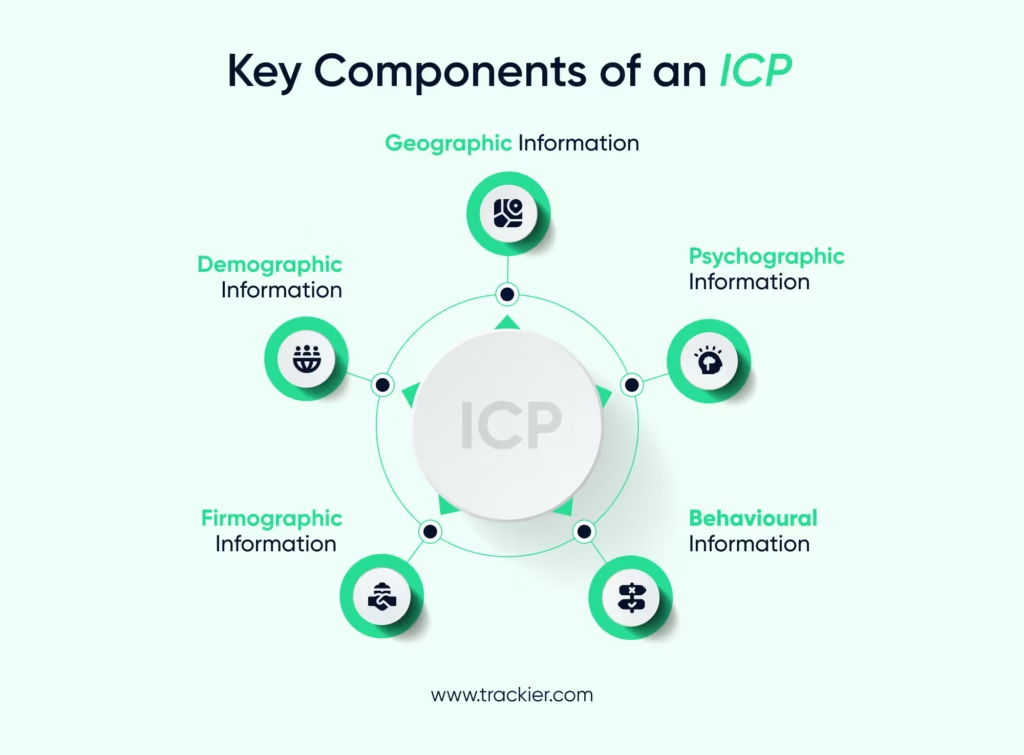
Demographic Information
Demographics are the basic identifying details of a customer as an individual. This normally includes –
- Age
- Gender
- Income level
- Education
- Occupation
- Marital status
These details are especially useful in the B2C form of marketing. Each customer has different needs and purchasing decisions, and they vary across age groups and income levels.
A financial affiliate platform that targets high-income investors markets in a way that is different from a platform that targets college students looking for budgeting apps.
Geographic Information
This information focuses on the physical location of the customer. What comes under this is data like –
- Country
- State or region
- City
- Climate
- Language
- Population density
Information like this becomes necessary because it provides insights about the customer preferences, legal regulations, payment systems, and online behaviour that are different across regions.
This is a crucial factor in the field of affiliate marketing. Geographical targeting is a necessary step of campaign optimization, because an affiliate campaign that might be performing well in one location may not be legally allowed in another region.
Psychographic Information
Here, the focus is set on a customer’s mindset, interests, values, and motivations. This includes –
- Lifestyle
- Personality traits
- Interests
- Goals
- Pain points
- Beliefs and opinions
This analysis helps in figuring out the reasons behind certain decisions that a customer makes.
For example, two users may purchase the same software product for completely different reasons. One may value automation and speed, while another may prioritize security and compliance.
If a marketer understands the “why” behind the customer’s decisions and what they prefer, they can easily offer the customers what they can actually resonate with.
Customer Behaviour Insights
This data explains how the customer interacts with products, platforms and campaigns. The necessary information around behaviour includes –
- Purchase behavior
- Browsing activity
- Engagement patterns
- Brand loyalty
- Product usage
- Response to advertisements
These insights are valuable in the niche of affiliate marketing because this reveals the actions that a user takes before finally converting into a customer.
Some users convert just as they click on the link, while others may require multiple pushes at multiple touchpoints till they convert. Developing an understanding of these patterns helps businesses with campaign optimization and the formation of attribution models.
Firmographic Information
This information is relevant in the B2B form of marketing. It describes the characteristics of a business rather than those of an individual. Some of the common firmographic data includes –
- Company size
- Industry
- Annual revenue
- Business model
- Number of employees
- Growth stage
Firmographic segmentation helps businesses identify organizations that are operationally and financially aligned with their offerings.
ICP and Buyer Persona
People often use the terms ideal customer profile and buyer persona interchangeably, but they are not the same.
Ideal customer profile – It is the customer that is the best fit for your business overall. The focus here remains on broader characteristics such as industry, budget, company size, or user behaviour.
Buyer persona – Here, too, the focus is on the customer, but it gets narrowed down to the individual decision maker within the target audience.
A company could be the ICP, but the person of concern within that company who has to be approached is relevant for the buyer persona.
In simple terms, ICP identifies the right type of customer, and buyer persona, on the other hand, identifies the person involved in the buying decision.
Businesses often use them together because they improve the targeting and communication strategies.
How to Build an Ideal Customer Profile
Building an ICP requires a combination of data analysis, research, and customer understanding. This requires multiple steps.
Analyze Existing Customers
First step is to identify the current customers that generate the most revenue. For this, businesses must examine –
- Long-term customers
- High-revenue accounts
- Customers with strong retention
- Accounts with minimal support requirements
- Customers with consistent engagement
Identify Common Traits
After gathering customer data, businesses look for shared attributes. This could be the geographic location, customer goals, preferred channels or technology that they use.
Use Data and Analytics
Businesses can gather valuable insights for ideal customer profile development by utilizing analytics tools, CRM systems, affiliate tracking platforms and customer surveys. For data analysis, businesses also must study –
- Conversion rates
- Retention metrics
- User engagement
- Acquisition sources
- Campaign performance
ICPs that are created with the help of valid data are accurate and also sustainable.
Continuously Refine the Ideal Customer Profile
Market changes over time because customer, their behaviour and interests change. Trends change. A business’s ICPs should also evolve accordingly.
Businesses may refine their profiles on the basis of –
- Market trends
- New technologies
- Customer feedback
- Industry regulations
- Campaign performance changes
An updated ICP ensures that the marketing and sales strategies are also relevant.
Why ICPs Matter in Affiliate Marketing
Affiliate marketing relies on targeting the right audience, publishers and advertisers. Without ICPs, businesses may attract low-quality traffic that might generate clicks but not meaningful conversions.
An ideal customer profile helps affiliate marketers –
- Improve targeting accuracy
- Increase conversion rates
- Reduce acquisition costs
- Identify high-performing affiliates
- Personalize campaigns
- Improve customer retention
- Optimize marketing spend
Not every affiliate delivers the same traffic quality. Some may specialize in high-intent users, while others generate low-converting traffic volumes.
Final Thoughts
An Ideal Customer Profile is more than just a marketing document. It is a strategic framework that helps businesses understand who they should target, why those customers matter, and how to reach them effectively.
By combining demographic, geographic, psychographic, behavioral, and firmographic insights, businesses can create a clearer picture of their most valuable customers.
In affiliate marketing, especially, where performance depends on accurate targeting and efficient acquisition strategies, a well-defined ICP can significantly improve campaign outcomes and long-term business growth.
FAQ
What makes an ideal customer profile effective?
An effective ideal customer profile is built using real customer data instead of assumptions. It clearly identifies the audience most likely to convert, stay loyal, and generate long-term revenue. A strong ICP also evolves with changing customer behaviour, market trends, and business goals to remain relevant over time.
Can small businesses benefit from an ideal customer profile?
Yes, small businesses often benefit the most from an ideal customer profile because they usually work with limited budgets and resources. An ICP helps them focus on high-potential customers instead of wasting time and money on broad targeting that may not generate meaningful conversions or long-term customer relationships.
Does an ideal customer profile help improve customer retention?
Yes, an ideal customer profile improves retention by helping businesses attract customers whose needs align closely with their products or services. When customers receive relevant solutions and experiences, they are more likely to stay engaged, continue purchasing, and develop long-term trust in the brand.
How often should businesses update their ideal customer profile?
Businesses should review and refine their ideal customer profile regularly, especially when market conditions, customer behaviour, or industry trends change. Updating the ICP helps businesses maintain accurate targeting, improve campaign performance, and adapt to new technologies, regulations, and customer expectations in competitive industries.
