Affiliate marketing has grown from a small side channel into a major way for digital brands to make money. It looks easy to scale at first, but in reality, it doesn’t work that smoothly for most brands.
In the beginning, everything feels simple. You have a few affiliates, some tracking links, manual approvals, and basic reports. It all works fine.
But then things start to grow.
More affiliates join. More campaigns go live. Data increases. Payouts cycle becomes harder to manage. And suddenly, what once felt easy turns into a mess of spreadsheets, emails, and constant follow-ups.
This is where most affiliate programs get stuck.
Not because there’s no traffic.
Not because affiliates aren’t performing.
But because the system managing everything can’t handle the growth.
That’s exactly why Automated Affiliate Marketing becomes necessary, not just helpful.
What is Automated Affiliate Marketing?
Automated Affiliate Marketing refers to the use of technology, platforms, and workflows to manage, track, optimize, and scale affiliate programs without relying heavily on manual effort.
Instead of handling tasks like affiliate onboarding, link generation, campaign tracking, fraud detection, and payouts manually, automation systems streamline these processes in real time.
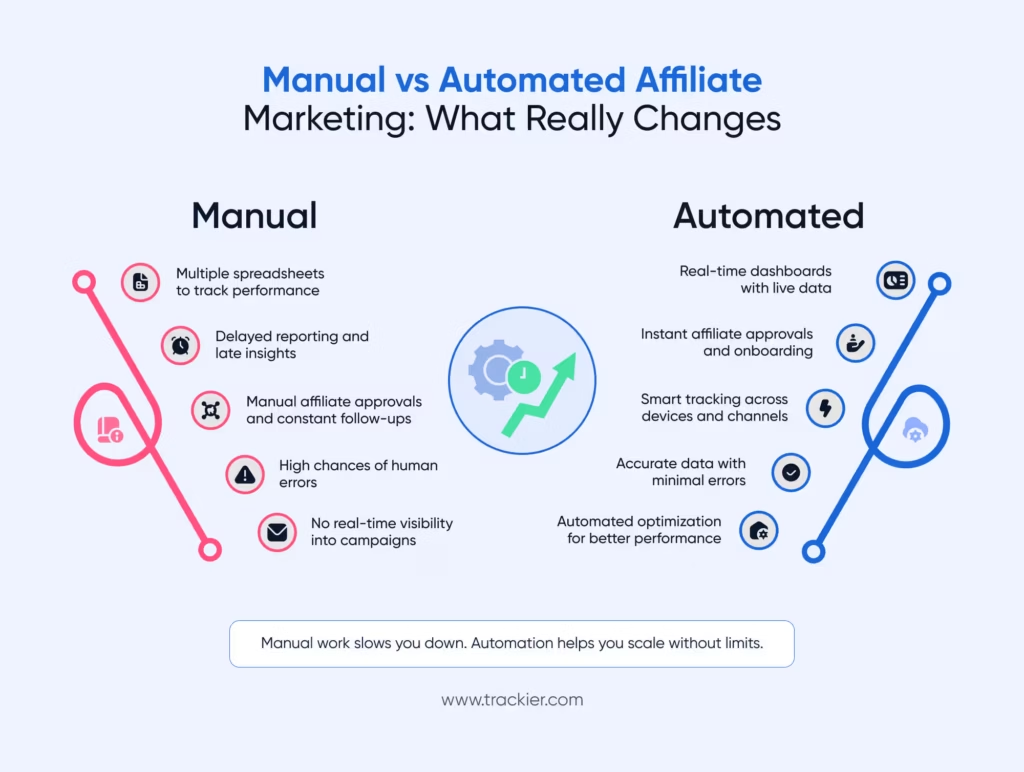
In simple terms, it replaces:
- Manual tracking → with real-time attribution
- Spreadsheet management → with centralized dashboards
- Email-based communication → with automated workflows
- Delayed payouts → with system-driven payments
Automation doesn’t remove control. It enhances it by giving you accurate data, faster processes, and the ability to scale without operational chaos.
Why Affiliate Programs Fail Without Automation
Many brands assume affiliate marketing is just about acquiring more partners. But scaling without the right infrastructure often leads to inefficiencies that silently damage performance.
Here’s how things typically break down:
1. Scattered Data and Reporting Chaos
When affiliate data is managed manually, it often lives across multiple tools and spreadsheets. Performance metrics, conversions, clicks, and revenue data are rarely aligned.
This leads to:
- Inaccurate reporting
- Delayed insights
- Poor decision-making
Without a single source of truth, teams end up guessing rather than optimizing.
2. Slow Affiliate Onboarding
Manual affiliate onboarding slows down growth. Every new affiliate requires:
- Approval checks
- Communication
- Link creation
- Setup validation
When done manually, this process can take days. In a competitive landscape, that delay means lost revenue opportunities.
3. Tracking Issues and Lost Attribution
One of the biggest hidden problems in affiliate marketing is broken or incomplete tracking.
Without automation:
- Conversion paths are unclear
- Multi-touch attribution is lost
- Affiliates are under-credited
This not only impacts revenue tracking but also damages trust with affiliates.
4. Delayed and Error-Prone Payouts
Affiliate payouts involve multiple variables:
- Commission structures
- Performance tiers
- Regional differences
- Payment methods
Managing this manually increases the chances of errors, delays, and disputes.
And once affiliates lose trust in payouts, retention drops significantly.
5. Limited Scalability
Manual systems might work smoothly when you have a small number of affiliates, like 10. As the number grows to 100, cracks start to appear with delays, errors, and increased workload. By the time you reach 1,000 affiliates, these systems often become unmanageable.
Without automation, scaling your affiliate program becomes not just difficult, but operationally unsustainable.
What are the Core Components of Automated Affiliate Marketing
To truly understand how automation transforms affiliate programs, it’s important to break down the key components that make it work.
1. Automated Affiliate Onboarding
Instead of manually approving and setting up affiliates, automation platforms allow:
- Instant or rule-based approvals
- Automated welcome flows
- Pre-configured campaign access
This reduces onboarding time from days to minutes.
2. Smart Tracking and Attribution
Automation ensures every click, conversion, and revenue event is tracked accurately.
Key features include:
- Real-time tracking
- Multi-touch attribution
- Cross-device tracking
- Server-to-server (S2S) integration
This creates a clear and reliable performance picture.
3. Centralized Dashboard and Reporting
All affiliate data is stored and visualized in a single dashboard.
This includes:
- Clicks and conversions
- Revenue tracking
- Affiliate performance
- Campaign ROI
With real-time data access, decision-making becomes faster and more accurate.
4. Automated Commission Management
Automation systems calculate commissions based on:
- Fixed CPA models
- Revenue share
- Hybrid structures
- Performance tiers
This eliminates manual calculations and reduces errors.
5. Automated Payout Systems
Payout automation ensures affiliates are paid accurately and on time.
Features include:
- Scheduled payments
- Multi-currency support
- Integration with payment gateways
- Invoice automation
This builds trust and improves affiliate retention.
6. Fraud Detection and Prevention
Fraud can silently drain affiliate budgets.
Automation tools help detect:
- Fake traffic
- Click spamming
- Duplicate conversions
Real-time alerts and filters ensure only valid traffic is rewarded.
How Automated Affiliate Marketing Drives Growth
Growth in affiliate marketing is not just about adding more partners or increasing traffic. It is about how efficiently you can manage, optimize, and scale those efforts. This is exactly where Automated Affiliate Marketing creates a measurable impact.
Instead of relying on delayed actions and manual coordination, automation builds a system where everything moves faster, decisions become sharper, and opportunities are captured in real time.
Here’s how automation directly drives growth:
Faster Campaign Execution and Time-to-Market
In a competitive environment, speed is a major advantage.
With manual systems, launching a campaign involves multiple steps: onboarding affiliates, creating tracking links, sharing creatives, and validating setups. Each step introduces delays.
Automation removes these bottlenecks.
Campaigns can go live almost instantly with:
- Pre-configured onboarding flows
- Auto-generated tracking links
- Immediate access to creatives and offers
This reduced time-to-market allows brands to capitalize on trends, seasonal opportunities, and high-performing traffic sources before competitors do.
Real-Time Data Leads to Smarter Decisions
One of the biggest growth limitations in manual affiliate programs is delayed reporting.
When data is updated weekly or even daily, teams are always reacting late. By the time you identify what’s working, the opportunity may already be gone.
Automation changes this completely.
With real-time dashboards, you can:
- Monitor campaign performance instantly
- Identify top-performing affiliates early
- Detect underperforming campaigns before they waste budget
This allows continuous optimization instead of periodic adjustments, which significantly improves ROI over time.
Accurate Attribution Unlocks Hidden Revenue
A major issue in affiliate marketing is lost or incorrect attribution.
When tracking is incomplete:
- High-performing affiliates are under-rewarded
- Marketing channels appear less effective than they are
- Revenue leaks go unnoticed
Automated systems use advanced tracking methods like multi-touch attribution and server-to-server tracking to ensure every conversion is properly recorded.
The result is simple: you stop losing revenue that was already being generated but not tracked correctly.
Improved Affiliate Experience Drives Retention
Affiliates are performance-driven partners. They prefer programs that are transparent, reliable, and easy to work with.
Automation improves their experience by providing:
- Instant onboarding
- Clear and real-time performance data
- Accurate and timely payouts
When affiliates trust your system, they are more likely to:
- Send higher-quality traffic
- Increase their promotional efforts
- Stay loyal to your program
Retention improves, and with it, long-term revenue stability.
Scalable Infrastructure Without Operational Overload
Manual systems create a direct relationship between growth and workload.
More affiliates = more work.
Automation breaks this dependency.
Once workflows are set:
- Onboarding happens automatically
- Tracking runs continuously
- Reports update in real time
- Payouts are processed systematically
This means you can scale from 100 to 1,000 or even 10,000 affiliates without proportionally increasing your team size or operational complexity.
Growth becomes sustainable instead of chaotic.
Reduced Costs, Higher Efficiency
Automation reduces the need for repetitive manual tasks such as:
- Data entry
- Spreadsheet management
- Manual commission calculations
- Constant follow-ups
This leads to:
- Lower operational costs
- Fewer human errors
- Better resource allocation
Teams can focus on strategy, partnerships, and optimization instead of administrative work.
Fraud Prevention Protects Your Revenue
Affiliate fraud is one of the silent growth killers.
Fake clicks, bot traffic, and duplicate conversions can drain budgets without delivering real value.
Automated systems include fraud detection mechanisms that:
- Identify suspicious traffic patterns
- Block invalid clicks
- Flag abnormal conversion behavior
By ensuring that only genuine performance is rewarded, automation protects your ROI and keeps your program profitable.
Continuous Optimization Through Data
Automation doesn’t just collect data. It makes it usable.
With detailed insights, you can:
- Optimize commission structures
- Adjust campaigns based on performance
- Double down on high-converting traffic sources
- Eliminate underperforming affiliates
This creates a continuous improvement loop where your program keeps getting more efficient over time.
Stronger Competitive Advantage
In affiliate marketing, the difference between average and high-performing programs often comes down to execution.
Brands using manual systems:
- Move slower
- Miss opportunities
- Struggle with scale
Brands using automation:
- Act faster
- Optimize continuously
- Scale without friction
Over time, this gap compounds, giving automated programs a significant competitive edge.
How to Implement Automated Affiliate Marketing
Shifting to Automated Affiliate Marketing is not just about adopting a tool. It is about rebuilding your affiliate operations into a system that can scale without friction. If you jump in without structure, you risk carrying old inefficiencies into a new platform.
A well-planned implementation ensures that automation actually delivers speed, accuracy, and growth instead of adding another layer of complexity.
Here’s how to do it the right way:
Step 1: Understand Your Current Gaps
Start by identifying what’s slowing you down.
Look at:
- How affiliates are onboarded
- How tracking and data are managed
- How commissions and payouts are handled
- Where delays or errors usually happen
This helps you clearly see what needs to be automated and where your biggest inefficiencies lie.
Step 2: Set Clear Goals for Automation
Don’t try to automate everything at once.
Decide what you want to fix first:
- Faster onboarding
- Better tracking accuracy
- Fewer payout errors
- Real-time performance visibility
Clear goals will guide how you set up your system and prioritize features.
Step 3: Choose the Right Platform
Your automation platform should be built for scale, not just basic management.
Look for:
- Real-time tracking and attribution
- Flexible commission models
- Automated workflows
- Reliable payout systems
- Fraud detection
- Easy integrations
The right platform should support both your current needs and future growth.
Step 4: Set Up Tracking and Core Automation
This is the foundation of your entire system.
Make sure to:
- Configure tracking links properly
- Enable advanced tracking (like S2S)
- Test conversion flows
- Automate onboarding and campaign access
Once this is set, your program can run smoothly without constant manual input.
Step 5: Automate Commissions and Payouts
Set clear rules for:
- Commission structures (CPA, RevShare, Hybrid)
- Performance-based incentives
- Payout schedules and methods
Automation will then handle calculations and payments accurately, reducing errors and building affiliate trust.
Step 6: Monitor, Optimize, and Scale
Automation is not a one-time setup.
After implementation:
- Track performance in real time
- Identify what’s working and what’s not
- Optimize campaigns and partner performance
- Scale what drives results
This step turns automation into a long-term growth engine.
Conclusion
Affiliate marketing is no longer just about partnerships. It’s about having the right system in place.
Manual work might feel manageable in the beginning, but as your program grows, it starts slowing you down. Things get messy, errors increase, and scaling becomes harder than it should be.
That’s where Automated Affiliate Marketing comes in.
It helps you:
- Reduce manual work
- Track performance accurately
- Improve the affiliate experience
- Scale your program without chaos
If your affiliate program feels hard to manage or slow to grow, the problem is not your strategy.
It’s your system.
And the solution is using the right automation platform.
With a platform like Trackier, you can:
- Track every click and conversion clearly
- Automate onboarding and payouts
- Save time on daily operations
- Manage and grow your affiliate program easily
So instead of spending time on manual tasks, you can focus on growing your program.
Because the brands that grow faster are not the ones working the most. They’re the ones working smarter.
FAQs
1. What is automated affiliate marketing, and how is it different from manual affiliate marketing?
Automated affiliate marketing uses platforms and tools to manage onboarding, tracking, reporting, and payouts in real time without heavy manual effort.
In contrast, manual affiliate marketing relies on spreadsheets, emails, and delayed reporting, which makes scaling difficult and error-prone.
2. Why do affiliate programs fail without automation?
Affiliate programs often fail without automation because of scattered data, tracking issues, delayed payouts, and slow onboarding.
As the number of affiliates grows, manual systems cannot handle the complexity, leading to inefficiencies, lost revenue, and poor affiliate relationships.
3. How does automated affiliate marketing improve tracking accuracy?
Automation improves tracking by using advanced methods like real-time attribution, server-to-server (S2S) tracking, and multi-touch attribution.
These systems ensure that every click and conversion is recorded correctly, reducing the chances of lost or incorrect attribution.
4. Can automation reduce affiliate fraud?
Yes, most automated systems include fraud detection features that identify suspicious activities like fake clicks, bot traffic, and duplicate conversions.
This ensures that only genuine performance is rewarded, protecting your budget and ROI.