Customer acquisition examples show how real brands turn attention into actual customers. Today’s digital world is highly competitive, making it more expensive to gain new customers. In fact, customer acquisition costs have risen by over 60% in the past decade, pushing businesses to rethink how they attract and convert people.
That’s why marketers are studying proven strategies from successful companies. Whether it’s referral programs, influencer collaborations, content marketing, or community building, the right approach can dramatically improve conversions and reduce acquisition costs.
But modern customer acquisition isn’t just about running campaigns, it’s about tracking what actually works. Brands need clear visibility into which partners, channels, and campaigns drive real growth. Trackier helps businesses track partnerships, optimize performance marketing, and prevent fraud, and enables teams to scale acquisition efforts with reliable data and measurable ROI.
In this article, we’ll break down real customer acquisition examples from leading brands and analyze the strategies behind their growth. You’ll discover what worked, why it worked, and how you can apply similar tactics to your own marketing strategy.
What is Customer Acquisition?
Customer acquisition is the process of attracting, engaging, and converting new customers into buying your product/service. Customer acquisition management can be done through all touch points throughout the buyer journey, from the first time potential customers see your brand to when they purchase.
This process involves multiple channels such as paid advertising, search engine optimization (SEO), social media marketing, influencer partnerships, affiliate programs, email campaigns, and sales outreach. The goal is not just to generate traffic, but to convert high-intent prospects into paying customers efficiently and sustainably.
Why Customer Acquisition Matters?
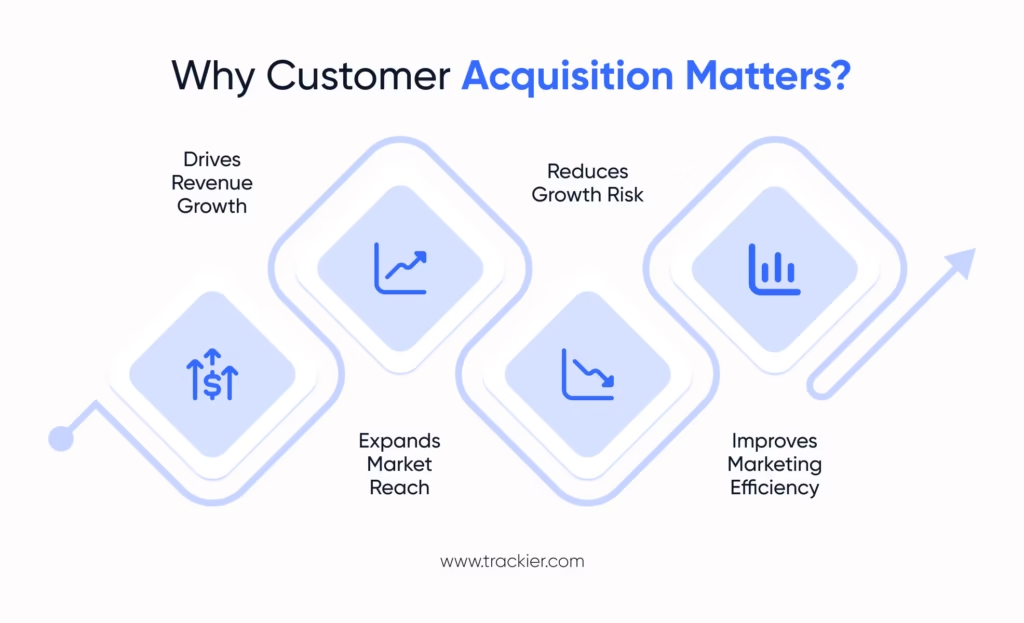
Sustainable growth in business relies mostly on the successful acquisition of customers. Revenue declines, market share drops, and long-term scalability is difficult if you do not have a steady flow of new customers. Here are a few reasons why this is important:
1. Revenue Growth
The addition of new customers increases immediate revenue while also generating lifetime value (LTV) over the long term.
A consistent method for acquiring new customers will produce a predictable stream of revenue. In fact, new customers contribute roughly 35% of total revenue, with existing customers making up the remaining 65%, underscoring that both acquisition and retention matter for overall growth.
2. Market Expansion
When acquiring new customers, businesses are able to expand into new markets with new audiences while remaining competitive within their segments or industries as they evolve.
3. Growth Risk
Relying only upon your existing customer base for revenue will inevitably create risk because of the churn that takes place with your current customer base. Acquiring customers continually will offset the churn of current customers and maintain your growth at a steady level.
4. Marketing Effectiveness
Acquisition metric tracking (such as CAC, conversion rate, and ROAS) assists you in making informed decisions regarding budget allocations and optimizing marketing campaigns.
Additionally, brands using advanced personalization can reduce acquisition costs by about 15%, showing the value of targeted marketing.
12 Best Customer Acquisition Examples
Customer acquisition is the lifeline of every growing business. No matter how strong your product is, growth only happens when new customers consistently discover, trust, and choose your brand.
But acquiring customers today is harder than ever. Consumers are overwhelmed with ads, competition is intense, and attention spans are short.
That’s why studying real customer acquisition examples from successful companies is one of the smartest ways to improve your strategy.
1. ASOS – Student Discount Strategy
ASOS built a strong acquisition engine by targeting one of the most influential consumer segments, students.
Instead of offering random discounts, the brand created a dedicated student discount program, offering 10% off year-round. This simple move did more than drive short-term sales.
It helped ASOS become the default fashion brand for young shoppers entering adulthood. Students who discover the brand early often remain loyal customers for years.
Why does this work?
- Students are highly trend-aware but budget-conscious
- Early brand exposure builds long-term loyalty
- Discount programs create urgency and repeat visits
Acquisition lesson: If you clearly understand your audience, you can design offers that feel exclusive rather than promotional.
2. Casper – Referral Marketing
Casper disrupted the traditional mattress industry using one of the most effective acquisition channels: referrals. Instead of spending heavily on retail stores, Casper encouraged customers to promote the brand.
Their referral program was simple:
- Give a friend $75 off
- Get $75 back
This created a strong incentive loop where satisfied customers naturally brought in new buyers. Casper combined this with:
- Engaging subway ads
- Podcast sponsorships
- A frictionless online shopping experience
But the real conversion driver was their 100-night free trial, which removed purchase anxiety.
Why does it work?
- People trust recommendations from friends more than ads.
- A clear incentive simply accelerates that behavior.
Acquisition lesson: Make sharing your product effortless and rewarding.
3. Sephora – Loyalty Program That Attracts New Customers
Sephora’s Beauty Insider program is one of the most successful loyalty-driven acquisition strategies in retail. At first glance, it looks like a retention tactic. But it actually attracts new customers because of the perceived value.
Members earn:
- Points on purchases
- Exclusive products
- Early access to launches
- Personalized recommendations
Why does it work?
- Customers feel like insiders instead of buyers.
- The combination of personalization, rewards, and exclusivity encourages sign-ups.
Acquisition lesson: A strong loyalty program can function as both acquisition and retention.
4. Lululemon – Community-Driven Growth
Lululemon rarely relies on aggressive advertising. Instead, the brand built a community around wellness and lifestyle. Their acquisition playbook includes:
- Free in-store yoga sessions
- Fitness events
- Partnerships with local trainers
- Micro-influencer collaborations
These initiatives turn customers into brand loyalists. People don’t just buy the product. They join the culture.
Why does it work?
- Community builds emotional attachment.
- Customers who feel connected to a brand promote it organically.
Acquisition lesson: If your brand becomes part of someone’s lifestyle, acquisition becomes automatic.
5. Oracle Eloqua – B2B Email Nurturing
B2B customer acquisition rarely happens instantly. Eloqua built its strategy around long-term lead nurturing. Instead of pushing immediate demos, they guide prospects through educational content journeys.
Their system includes:
- Behavior-based email sequences
- Lead scoring
- Personalized content by industry
- Automated follow-ups
By the time the sales team engages, prospects are already informed and interested.
Why does it work?
- Complex B2B purchases require trust and education.
- Nurtured leads convert significantly better.
Acquisition lesson: Not every lead is ready to buy; nurture them until they are.
6. Amazon – Subscription Ecosystem
Amazon transformed its acquisition through its Prime membership model. Instead of focusing on individual purchases, Amazon encouraged customers to join a value ecosystem. Prime members receive:
- Fast delivery
- Exclusive deals
- Streaming content
- Music and gaming perks
The free trial brings users in. Convenience keeps them.
Why does it work? Prime shifts the mindset from shopping occasionally to shopping automatically on Amazon.
Acquisition lesson: Create ongoing value instead of one-time transactions.
7. Salesforce Pardot – Content-Led Lead Generation
Pardot focuses heavily on educational content to acquire customers. Instead of cold sales tactics, the platform attracts prospects through:
- Guides
- Webinars
- Whitepapers
- Industry research
This content answers real marketing problems and positions the product as the solution.
Why does it work?
- Educational content builds authority.
- When businesses need a solution, they trust the brand that taught them something.
Acquisition lesson: Teaching is one of the most powerful marketing strategies.
8. Harry’s – Pre-Launch Viral Referral Campaign
Harry’s achieved one of the most famous startup launches in eCommerce. Before selling a single product, they launched a referral campaign offering rewards for inviting friends. Rewards included:
- Free shaving cream
- Free razors
- Exclusive early access
The result? 100,000 email sign-ups in one week.
Why does it work?
- Clear incentives
- Viral sharing mechanics
- Strong landing page design
Acquisition lesson: Build excitement before launch.
9. Glossier – User Generated Content
Glossier turned customers into marketers. Instead of polished ads, the brand encouraged everyday users to post real skincare routines. They actively:
- Reposted customers
- Featured community photos
- Interacted with followers
This created authenticity and massive organic reach.
Why does it work? People trust real customers more than traditional advertising.
Acquisition lesson: Let your audience tell your brand story.
10. Zappos – Customer Experience Marketing
Zappos built its acquisition strategy around one thing: Customer happiness.
Instead of aggressive advertising, the company invested in support and experience. Their policies include:
- Free shipping both ways
- 365-day returns
- 24/7 customer support
Customers loved the service and told everyone.
Why does it work? Word of mouth from happy customers is extremely powerful.
Acquisition lesson: Sometimes great service is the best marketing.
11. HubSpot – Content Marketing Engine
HubSpot is one of the best examples of content-driven customer acquisition. Instead of traditional advertising, the company built an entire ecosystem of educational content. Their strategy includes:
- SEO blogs
- Free courses
- Templates
- Marketing tools
Millions of marketers discover HubSpot through helpful resources. Eventually, many of them become customers.
Why does it work? Content builds trust at scale.
Acquisition lesson: If your content genuinely helps people, it becomes a growth funnel.
12. Duolingo – Viral Social Media Strategy
Duolingo turned social media into a massive acquisition channel. Their TikTok strategy focused on humor, trends, and personality rather than polished advertising.
The brand’s mascot became a viral character. Instead of selling directly, Duolingo entertained. This dramatically increased brand awareness and downloads.
Why does it work? Entertaining content spreads faster than promotional content.
Acquisition lesson: Sometimes the best marketing doesn’t feel like marketing.
How to Build a Successful Customer Acquisition Strategy?
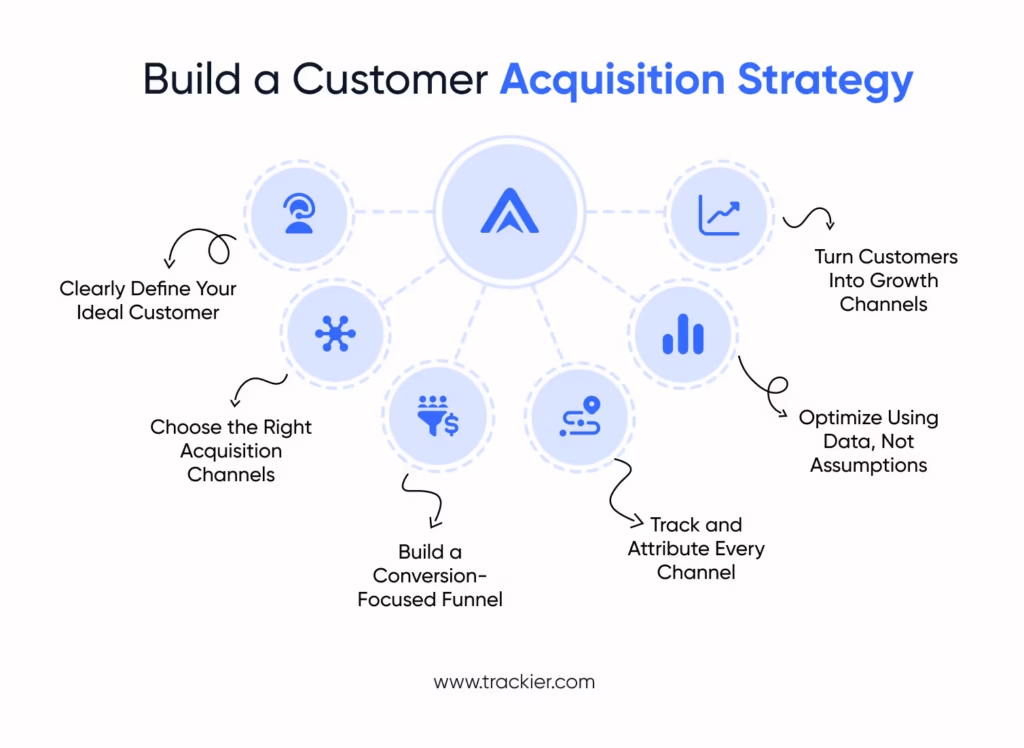
Customer acquisition isn’t just about running ads or launching campaigns. It’s about building a repeatable system that consistently brings the right customers to your business.
The most successful brands focus on understanding their audience, choosing the right channels, tracking performance, and continuously optimizing their approach.
Here’s how you can build a customer acquisition strategy that actually drives sustainable growth.
1. Clearly Define Your Ideal Customer
Every effective acquisition strategy starts with knowing who you’re trying to attract. Without a clear understanding of your target audience, even the best campaigns can miss the mark.
Start by identifying:
- Demographics and firmographics
- Pain points and needs
- Buying behavior
- Preferred channels and platforms
When you understand your ideal customer, you can craft messaging that resonates and choose acquisition channels that deliver better results.
For example, a SaaS company targeting enterprise clients will rely heavily on content marketing, partnerships, and account-based marketing, while an e-commerce brand might focus more on social ads and influencer collaborations.
2. Choose the Right Acquisition Channels
Not all channels perform the same for every business. The key is identifying where your audience spends time and how they prefer to discover new products.
Common high-performing acquisition channels include:
- Content marketing – Blogs, guides, and educational resources that attract organic traffic.
- Paid advertising – Google Ads, social ads, and display campaigns to reach targeted audiences.
- Influencer and affiliate marketing – Leveraging trusted voices to promote your brand.
- SEO – Ranking for high-intent keywords that bring ready-to-buy users.
- Email marketing – Nurturing leads until they are ready to convert.
- Referral and Partnership marketing – Referred customers tend to convert faster and have 2x higher lifetime value than other channels.
The most effective companies rarely rely on just one channel. Instead, they build a multi-channel acquisition engine that captures users at different stages of the buying journey.
3. Build a Conversion-Focused Funnel
Driving traffic is only half the journey. Your acquisition strategy should guide users smoothly from discovery to conversion. A strong funnel usually includes:
- Awareness – Blogs, social media, ads
- Consideration – Case studies, webinars, comparison pages
- Decision – Free trials, demos, testimonials
Each stage should remove friction and answer the questions potential customers may have before making a decision.
Brands that map this journey carefully often see higher conversion rates and lower customer acquisition costs.
4. Track and Attribute Every Channel
One of the biggest mistakes companies make is not knowing which channels actually drive conversions. Without proper tracking, marketing teams end up guessing instead of optimizing.
This is where a performance marketing software becomes valuable. With the right tracking infrastructure, businesses can:
- Attribute conversions to the correct partners or channels
- Detect fraud and protect marketing budgets
- Optimize campaigns based on real performance data
- Manage affiliate, influencer, and partnership campaigns in one platform
Instead of relying on analytics tools, having a unified system helps marketers make smarter decisions and scale acquisition efforts confidently.
5. Optimize Using Data, Not Assumptions
Customer acquisition is an ongoing process of experimentation. High-performing teams constantly test:
- Landing pages
- Ad creatives
- Messaging
- Incentives
- Targeting
Small improvements in conversion rate can significantly reduce acquisition costs and increase ROI.
When campaign performance, attribution, and partner activity are tracked in one platform, teams can quickly identify what is working and double down on winning channels.
Trackier helps businesses monitor campaign performance across multiple sources, making optimization faster and more accurate.
6. Turn Customers Into Growth Channels
The best acquisition strategies eventually become self-sustaining. When customers love your product, they naturally bring in more users. This can be achieved through:
- Referral programs
- Affiliate partnerships
- Influencer collaborations
- Loyalty incentives
Managing these partnerships effectively requires proper tracking, reward management, and performance insights, something tools like Trackier are designed to support at scale.
Conclusion
Customer acquisition isn’t about jumping on every new channel that appears. It’s about building a reliable, scalable system that brings in the right customers at the right cost; consistently.
Brands cited as examples built their foundation of success by choosing channels to reach their customers, developing a method for tracking customer success, and continuing to optimize what was working, as well as keeping track of every single conversion.
Applying this same process of tracking to your campaigns will result in predictable growth for your business. That means having clear attribution and strong partner management, as well as having real-time insights into what is actually driving results.
Trackier allows you to track all of your conversions across multiple channels, including affiliates and influencers, quickly identify fraud before it can negatively impact your budget, and optimize your sales based on real performance data.
Eliminate all of the guesswork; gain visibility into your growth sources.
Ready to scale smarter? Request a demo today.
FAQs
1. How can Trackier help improve customer acquisition?
Trackier enables brands to track affiliate, influencer, and partner performance marketing campaigns, allowing companies to optimize acquisition by maximizing ROI and minimizing ad spend waste through proper attribution, fraud detection, and real-time reporting, thereby growing both efficiency and effectiveness.
2. Why is performance tracking important when acquiring customers?
Accurate attribution through performance tracking enables brands to identify which channels, campaigns, and partners yield tangible conversions. Without performance tracking, a marketing team may misallocate its budget and likely lose money on ineffective advertising due to improper attribution and not be able to optimize at all. Having accurate tracking allows a brand to optimize intelligently, achieve better ROI, and scale growth through data-driven analysis.
3. How long does it take to see results from the acquisition strategy implementation?
The timeframe to realize results depends on the specific acquisition strategy implemented. Paid media acquisition strategies can provide immediate results, whereas search engine optimization and content marketing strategies will take six months or more to generate consistent organic traffic. A strong customer acquisition strategy should focus on balancing short-term and long-term acquisition strategies and provide the brand with both immediate victories and longer-term sustainability.
4. What key metrics correlate with success in acquiring customers?
Brands integrating performance marketing into their acquisition strategy can measure customer acquisition success using the following key metrics: customer acquisition cost (CAC), conversion rate, lifetime value (LTV), return on ad spend (ROAS), and churn rate. These metrics will help brands evaluate the performance of their campaigns so that they can leverage data to continue driving improvement.
5. How can businesses reduce customer acquisition costs?
Businesses can reduce CAC in many ways, such as by enhancing their target selections and creating better landing pages; additionally, through using referral programs, spending on SEO, concentrating on channels with the highest performance, accurately attributing costs, and tracking and monitoring performance to eliminate unnecessary expenses while reallocating budgets to the most efficacious means of generating revenue.