Marketers everywhere are asking one big question in 2026: How do we grow without overspending on ads?
Real referral marketing examples give us the answer.
A smartly designed referral program doesn’t just cut acquisition costs; it builds trust and loyalty at the same time. And when coupled with the right partner marketing software like Trackier, referrals can become your most efficient growth channel.
In this blog, we’ll explore real-world referral marketing examples, including some of the best referral marketing campaigns across industries, break down what makes them work, and share referral marketing techniques you can apply right away. Whether you’re at a SaaS startup, a B2B enterprise, or running campaigns for an agency, you’ll walk away with a clear picture of how referral patterns can supercharge your growth.
What makes referral marketing so powerful?
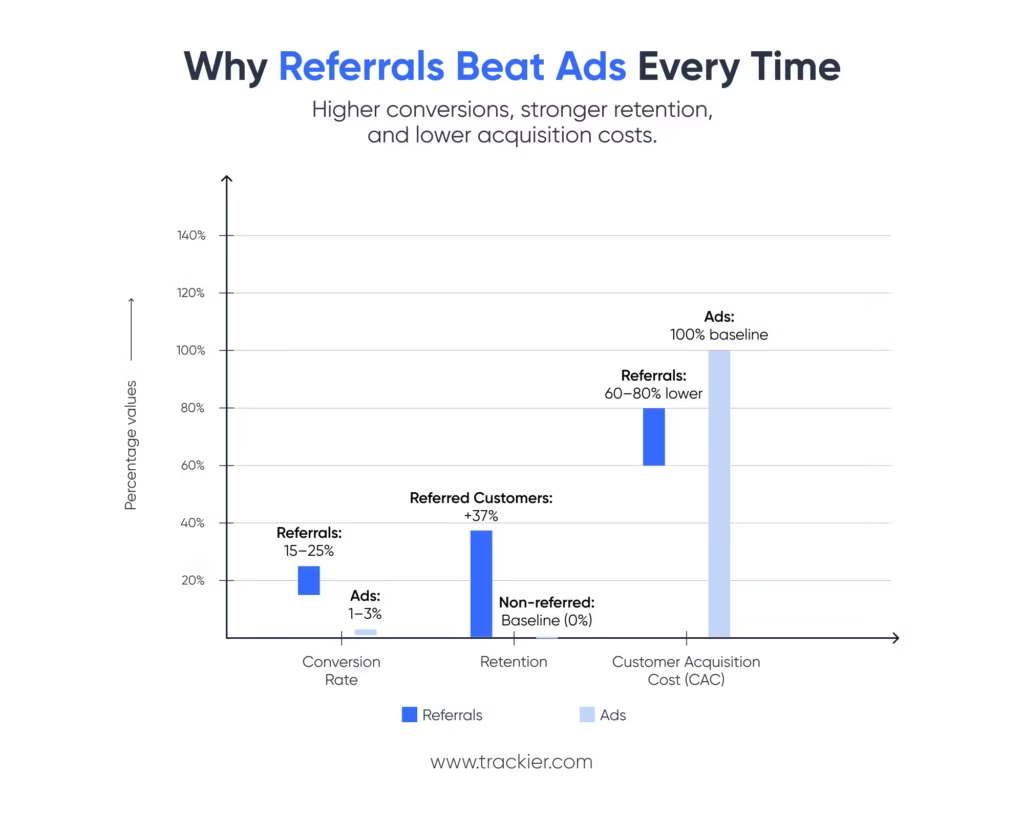
All referral marketing examples show us that it works because people trust people more than brands.
89%+ of consumers trust word-of-mouth referrals more than any form of advertising. In B2B, peer recommendations and case studies are the strongest influence on buying decisions.
When someone you trust says, “This tool saved me hours,” it lands better than a polished ad. That is why referral marketing examples often outperform traditional paid campaigns in both conversion rates and customer lifetime value (LTV).
Want to learn about Referral Marketing Examples and Programs in depth? Read the blog NOW!
How do referral marketing examples actually work?
Most referral programs follow a simple flow:
- The brand creates a referral incentive like discounts, credits, or perks.
- The user shares a unique referral link with their network.
- The friend signs up or makes a purchase.
- Both parties receive a reward.
This is the baseline referral pattern. But the real magic lies in how companies design the incentives, track referrals, and communicate the value. That is where referral program best practices come in.
12 best referral marketing campaigns that reduced CAC
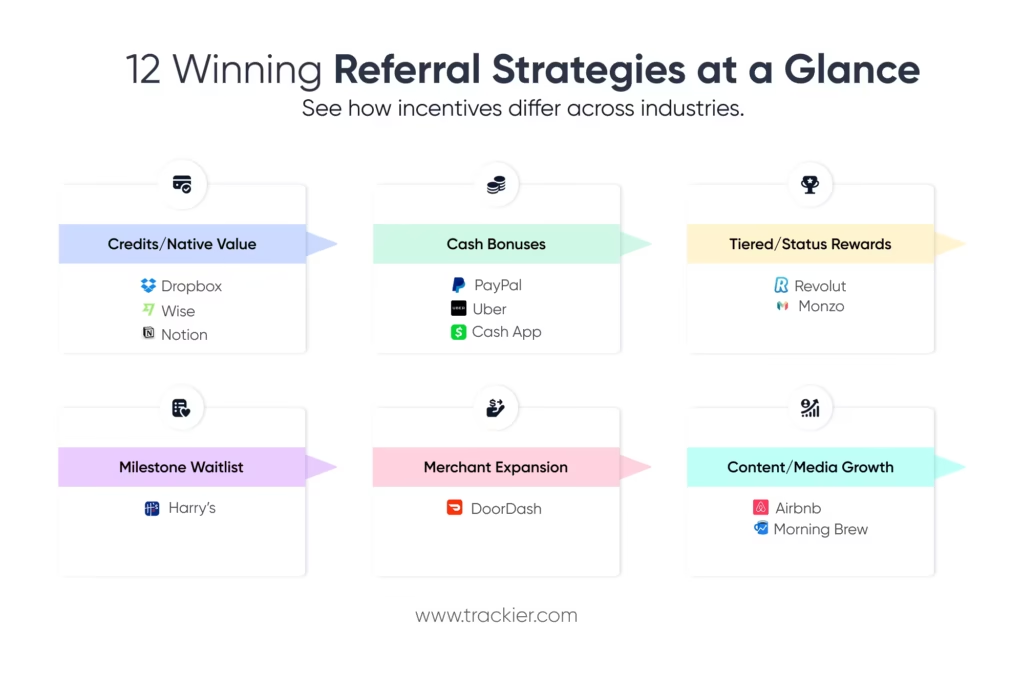
Let’s dive into 12 referral marketing examples across different industries and see how each one executed it and why many of them are considered some of the best referral marketing campaigns for reducing CAC.
P.S. There is a surprise at the end!
1. Dropbox
Dropbox’s “Get free storage when you invite friends” is probably the most cited referral marketing example, and remains one of the best referral marketing campaigns in SaaS history. The reward was native to the product. Extra storage directly enhances user experience. Dropbox grew from 100,000 to 4 million users in 15 months largely due to this campaign.
2. PayPal
In its early days, PayPal gave $10 to both the referrer and the referee. It cost them millions but built a massive user base quickly. The tactic demonstrated how bold financial incentives can accelerate adoption in crowded spaces.
3. Moss Bros
Moss Bros, a menswear retailer, partnered with Mention Me to deploy a machine-learning-powered referral campaign. 20% of new customer acquisitions from referrals, 4% higher AOV, 6× more shares from high-intent referrers, and 23% higher likelihood to buy again with targeted discounts.
4. Uber
Uber referrals delivered 12× ROI, and referred users have ~25% higher lifetime value, making it one of the best referral marketing campaigns in the mobility sector. Their referral program was so effective that within months, Uber penetrated competitive cities faster than rivals like Lyft.
5. Wise
Wise’s referral incentive (reduced transfer fees for referred users) has been credited with driving adoption among cost-sensitive, cross-border users. Wise highlights referrals as a key low-cost acquisition channel that reinforces its promise of transparency and trust in new markets.
6. Monzo
79% of Monzo customers joined through word of mouth in its latest FY2026 report. Monzo also reports 15.2M total customers, +3M new customers, £1.7B revenue and £172.6M adjusted profit before tax.
7. Harry’s
Harry’s used a milestone-based referral waitlist to validate demand before launch. The campaign pulled in 100,000 signups in a single week, reducing reliance on paid channels and providing leverage for early retail partnerships. This low-CAC referral success accelerated its DTC growth and entry into stores like Target.
8. DoorDash
DoorDash introduced merchant referrals offering $1,000 to the referrer and $500 to the referred restaurant once the new partner completed 15 orders in 60 days. This performance-based incentive helped expand its merchant base efficiently, ensuring spend only followed proven revenue contribution.
9. Cash App
Cash App’s referral program continues to use cash incentives to encourage customers to invite friends. Cash App has reported that its invitation program helped acquire new transacting actives at an average cost of $10 or less, demonstrating how referrals can provide a measurable customer acquisition channel.
The program remains active, with eligible new customers currently able to earn a $10 referral bonus after completing the required actions.
10. Morning Brew
Morning Brew’s referral program became a cornerstone of subscriber acquisition, contributing ~30% of new readers during its hypergrowth phase. That predictable, high-quality audience inflow allowed the company to increase ad sales, boost CPMs, and become attractive for acquisition, proving that referrals can scale media businesses as effectively as fintech or SaaS.
11. Coinbase
Coinbase’s referral program rewards users when invited friends complete account setup and first trades.
Coinbase’s financials showed net revenue up 50% year-on-year to $927 million and net income up 114% to $336 million, with referrals helping drive funded account activations at lower acquisition costs compared to traditional campaigns.
12. Airbnb
Airbnb’s referral strategy awarded both sides travel credits. The result: referrals increased bookings by more than 300% in key launch markets, helping overcome trust barriers in peer-to-peer rentals and cementing. This positioned Airbnb among the best referral marketing campaigns in the travel and marketplace ecosystem.
13. SaaS Agencies (BONUS POINT)
Agencies often run partner referral programs where leads are shared, and revenue is split. This is a best practice in B2B where community ecosystems matter more than discounts. By aligning incentives, both partners scale together.
What techniques make these referral marketing examples work?
Referral marketing techniques boil down to execution:
Align incentives with value
Do not give coffee mugs if you sell enterprise SaaS. Offer usage credits, upgrades, or exclusive features.
Simplify sharing
Single-click links, in-app sharing, and mobile-first flows matter.
Track everything
Use a platform like Trackier to prevent fraud and measure ROI.
Personalize reminders
Nudges when users approach milestones boost repeat referrals.
Leverage urgency
Short-term campaigns (like Revolut’s) drive quick spikes.
When you mix these referral patterns into your strategy, you create repeatable growth engines.
Why Referral Marketing Delivers Measurable ROI in 2026

Marketers love channels that prove their worth, and referral marketing examples consistently do just that.
Unlike paid ads where budgets keep climbing, referral program examples show that trust-driven recommendations lower costs and build long-term loyalty.
Referral traffic converts at an average rate of 2.5% to 3.5%, compared with just 0.5% to 1% for paid social traffic. The difference highlights the value of trust: referral visitors arrive through recommendations from people they already know, while paid ads must first earn attention and credibility.
Why?
Because instead of fighting for clicks in a crowded auction, you let loyal customers spread the word inside trusted circles. This is especially valuable for startups and SaaS brands that need growth without burning runway.
Higher retention also compounds lifetime value, giving you better revenue per customer across years.
Programs that use double-sided or tiered rewards can generate up to 10x the ROI as compared to generic paid advertising.
For marketers, the “why” is clear:
- Lower CAC because referrals run on word-of-mouth, not bidding wars.
- Higher LTV because referred users are more loyal.
- Scalability since programs can be automated with platforms like Trackier.
- Predictable ROI thanks to clear tracking of referral patterns and incentive payouts.
The “how” is about designing referral marketing techniques that align with your audience.
Cash works for fintech. Credits keep SaaS users engaged. Tiered perks encourage repeat sharing. Done right, referral program best practices turn casual users into long-term ambassadors while keeping budgets lean.
What are the referral program best practices for 2026?
- Stay compliant: Regulations like GDPR and India’s DPDP Act require explicit consent for sharing.
- Prevent fraud: Fake referrals inflate CAC. Anti-fraud tools are a must-have.
- Test rewards: Alternate between credits, discounts, and exclusives to see what sticks.
- Integrate with CRM: Feeding referral data into Salesforce or HubSpot helps track LTV and churn.
These best practices ensure referral programs do not just start strong but scale sustainably.
Where should marketers start?
The above listed referral marketing examples prove that the model works across industries. But copying blindly will not help. You need to adapt referral program best practices to your brand, audience, and industry patterns.
Here’s where to start:
Pick an incentive aligned with your product
If you are a SaaS brand, credits or premium features make sense. If you are in fintech, fee discounts are powerful. Misaligned rewards like irrelevant vouchers can kill momentum.
Test it with a small group first
Pilot with 500–1000 users before scaling. Collect data on conversion, churn, and ROI. This avoids costly mistakes and shows what referral marketing techniques resonate.
Track and optimize continuously
Referrals are not “set and forget.” Use Trackier to spot fraud, test multiple reward structures, and A/B test referral messages. Optimization ensures referral program best practices become second nature.
Promote your referral program like a campaign
A hidden referral widget will not cut it. Treat it like a product launch with email campaigns, in-app banners, and even co-marketing with partners to drive visibility.
Want to dive deeper?
Sign up for Trackier’s newsletter for weekly tips and strategies.
Subscribe on LinkedInFAQs
What is a referral program?
A referral program is a structured marketing strategy where companies encourage customers to recommend their product or service to others. The key is offering an incentive such as discounts, credits, or perks that motivates both the referrer and referee. Referral marketing leverages trust-based word of mouth and converts it into measurable growth.
For marketers, referral programs reduce CAC (Customer Acquisition Cost) and often deliver higher LTV compared to paid ads.
Are there any referral marketing examples that worked in real life?
One of the best-known referral marketing examples is Dropbox’s. They offered users additional storage space for every friend they referred. This aligned perfectly with user needs, creating a viral loop that helped Dropbox grow from 100,000 users to 4 million in just 15 months. Similar referral examples today can be seen in fintech (Wise), SaaS (Notion), and mobility apps (Uber).
Why use a referral program?
Referral programs help brands acquire new users at a lower cost, build trust faster, and improve retention. Unlike ads, referrals feel authentic because they come from real people. They also encourage loyalty since rewards are often tied to continued usage.
For startups and B2B marketers facing rising ad costs, referral marketing techniques are one of the most effective ways to scale sustainably.
What are the best referral marketing campaigns?
The best referral marketing campaigns are programs that drive sustainable customer acquisition at a lower CAC while maintaining strong retention and lifetime value. Examples include Dropbox, Uber, Airbnb, and fintech-led growth models.
How can businesses build one of the best referral marketing campaigns?
Focus on incentive alignment, ease of sharing, performance tracking, and ongoing optimization.