E-commerce brands are currently facing many obstacles when it comes to growing their business.
There are higher costs to acquire new customers, more competition in terms of other channels trying to acquire new customers through digital means, and a growing reliance on paid advertising methods that are causing e-commerce brands to rethink how they want to achieve growth for their businesses.
In response, many e-commerce brands are now making an investment in affiliate marketing marketplaces, which provide a performance-based marketing model that enables brands to partner with influencers, publishers, content creators, loyalty platforms, and other partners who generate revenue by referring customers to the brand.
Affiliate marketing represents a huge market opportunity as it has grown into a $22 billion global industry and has become one of the fastest-growing channels for acquiring new customers for online retailers.
Trackier helps e-commerce brands find and engage with high-performing affiliate partners, provide accurate tracking of every conversion, and help protect e-commerce brands from fraudulent activity.
Understanding the Affiliate Marketplace Model
A marketplace for affiliates is a service that connects brands with affiliate marketers who are able to sell products and make sales. Understanding the structural differences between an affiliate marketplace vs affiliate network is key to choosing the right setup.
With a marketplace for affiliates, a brand can search for and find thousands of publishers, creators, influencers, and media buyers looking for partnership opportunities rather than manually recruiting each individual partner.
The process of becoming an affiliate in one of these marketplaces is simple:
- The brand creates an affiliate marketing program for the company using a scalable affiliate platform for ecommerce businesses.
- The affiliate marketing program is then made available to all affiliates or through an affiliate marketing marketplace.
- Affiliates interested in promoting the brand apply to the brand.
- The brand selects qualifying affiliates to partner with.
- The affiliates generate sales and traffic to the brand.
- The affiliate receives his/her commission for only measurable actions taken by customers based on a set affiliate commission rate.
Unlike with most other forms of advertising, where the brand pays the medium (newspaper, television, etc) upfront for access to their audience, when using a marketplace for affiliates, the brand does not pay until they receive a measurable result (ie. a purchase has been made and tracked via cost per sale, a subscription has occurred, or a qualified lead has been created).
When using a marketplace for affiliates, the partnerships created between brands and affiliates are based on performance; therefore:
– Brands minimize their risk when acquiring customers.
– Affiliates receive payment according to the results of their promotional efforts.
– Customers find new products that they trust based on the recommendation of an affiliate.
Modern affiliate service providers also offer management tools that allow for effective tracking of all affiliate activity, attribution analysis for identifying individual affiliates driving traffic to a brand, reporting on all affiliate activities, fraud protection, as well as the secure and timely payment of all affiliate commissions.
This allows brands to quickly and efficiently expand their partner programs.
What Factors are Causing E-Commerce Brands to Shift Towards Marketplace Models?
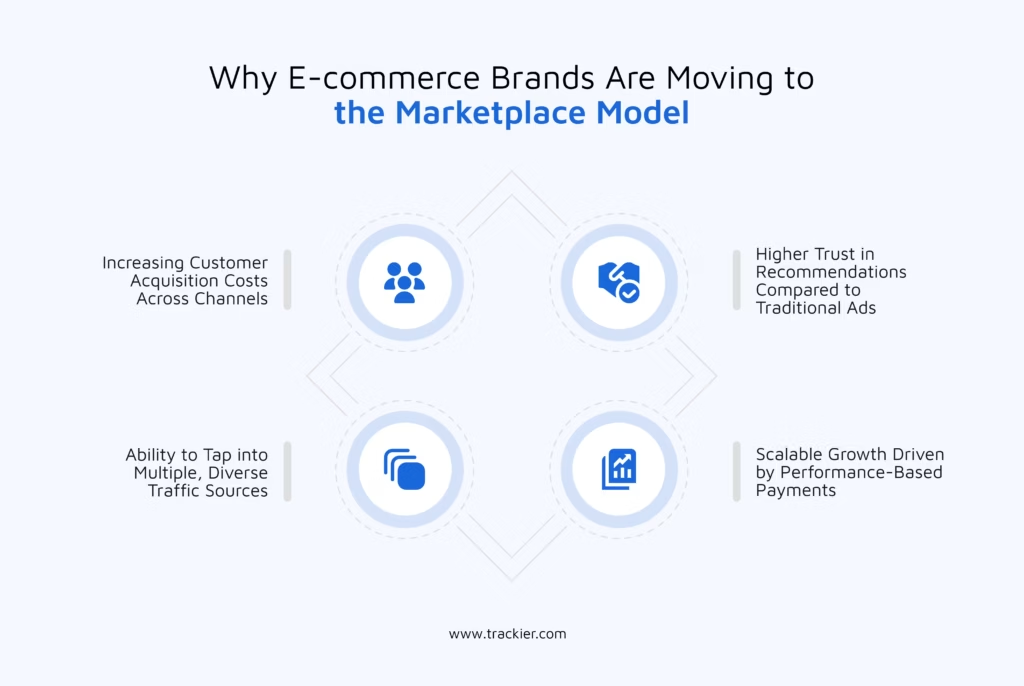
Many shifts in consumer behavior and the economics of digital marketing are fueling the transition to affiliate marketing marketplaces.
1. Rising Costs of Customer Acquisition
Although paid advertising is still an effective method of advertising, the costs of advertising online have risen significantly.
Brands are experiencing declining/shrinking profit margins from increased advertising costs associated with search, social media, and display platforms. By transitioning to affiliate marketing platforms, brands can significantly reduce customer acquisition cost and see a more predictable return on advertising spend since commissions are based on actual sales.
Brands no longer incur costs for clicks that may not result in a sale; they only incur costs when a sale occurs.
As a result, brands experience improved marketing efficiency and lower risk associated with customer acquisition.
2. Consumers Trust Recommendations More Than Advertisements
Modern consumers consider recommendations to be very important when determining what products to purchase.
Trusted sources of product recommendations such as YouTube, product reviews, blogs, and niche communities generally have more influence on consumer purchasing decisions than traditional advertising sources.
Brands can successfully tap into this shift by building a structured influencer marketing strategy.
The projected size of the creator economy is nearly $500 billion worldwide and demonstrates a better influence than ever created by any other marketing channel on how people will purchase products.
Affiliate marketing marketplaces allow brands to access and build their brand equity within these trusted communities on a large scale.
3. Access to Multiple Traffic Sources
Brands can rely too heavily on only a few types of channels to source customers, which may lead to changes in revenue due to performance volatility across such platforms as Google and/or Facebook.
Affiliate networks offer brands a more diverse way to reach customers by using a variety of traffic sources, such as:
- Influencers
- Content publishers (bloggers, etc.)
- Product reviewers
- Loyalty programs
- Cashback sites
- Niche communities
4. Growth through Performance-Based Affiliates
Affiliate marketing has a vastly different method of reaching customers compared to paid advertising.
If a brand wants to grow through paid advertising, it will need to proportionately increase its budget accordingly.
With an affiliate partnership, the ability to grow exists by creating more partnerships within the affiliate network itself.
As the number of affiliates grows and begins to promote the brand, the reach and knowledge of the brand continue to expand without having a proportional increase in advertising costs. This creates a scalable model for brands acquiring new customers.
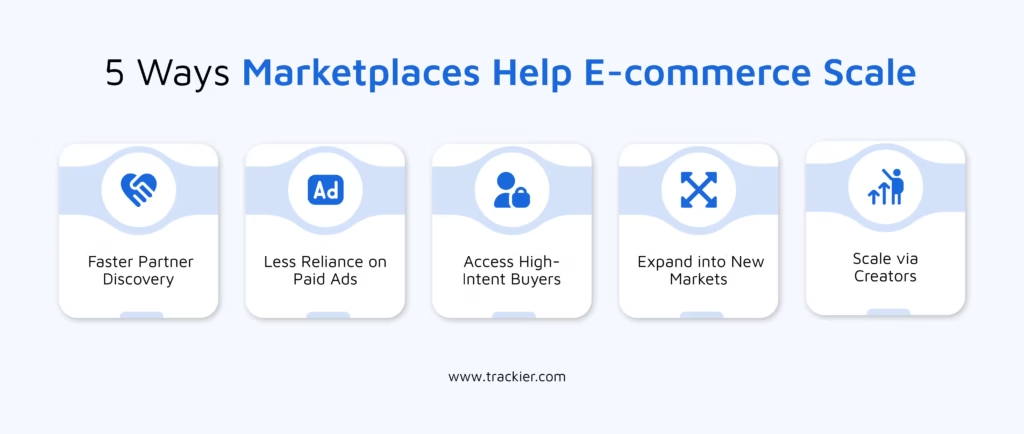
5 Ways That Affiliate Marketing Marketplaces Can Enable E-Commerce Brands to Expand Their Sales
Establishing an affiliate program is just the beginning; it is essential to build an affiliate ecosystem that generates ongoing traffic, conversions, and revenue as well.
Affiliate marketplaces enable brands to find many high-quality affiliates so they can diversify their acquisition channels and reach more customers without increasing their advertising budget.
Five ways in which affiliate marketing marketplaces assist brands to increase e-commerce sales and create a more sustainable customer acquisition strategy:
1. Speed Up Partner Discovery
The ability to find high-quality affiliates has long been one of the most significant barriers to developing an affiliate program.
Affiliate marketplaces help to overcome this barrier by giving you access to an existing network of established partners.
Brands can now find and onboard partners more quickly than ever, which leads to less time spent getting to scale within an affiliate channel.
For many emerging e-commerce brands, delayed time to revenue can have a huge impact on their ability to grow.
2. Expand Beyond Paid Advertising
Many brands in today’s market struggle with the fact that they rely on only a few advertising platforms to generate revenue.
Affiliate marketplaces create additional customer acquisition channels, allowing brands to rely less on paid advertising.
Some examples of how brands can generate sales through these affiliate partnerships are:
- Content marketing partnerships
- Influencer partnerships
- Product review sites
- Coupons and deals tied to an overall coupon marketing strategy
3. Target High-Intent Buyers
Affiliate traffic differs in conversion rates from traditional advertising traffic.
Why? Because buyers find products through trusted sources.
When buyers come across a product review, watch a demo on social media, or compare items from a specialty publisher, they are frequently further along in their buying journey, and they usually have a higher intent to purchase.
The result is typically:
- Higher conversion rates
- More engagement
- Larger order value averages
- Better customer quality
4. Enter New Markets Faster
Entering new markets can be very expensive as well as very risky. Brands need to know the culture in each new country, the language, how their consumers shop, and how their consumers buy products.
Affiliate marketing marketplaces make overcoming those barriers a bit easier. Brands can instantly build local performance marketing partner channels because local affiliates have:
- Established audiences
- Expertise in the market
- Trust of the local consumers
- The ability to create locally relevant content
By leveraging existing local partners to build brand awareness, Brands can enter new markets at a greater rate. This strategy is also especially effective for Brands that want to expand internationally.
5. Scale Your Revenue by Partnering with Creatives
Affiliate marketing and creative marketing are colliding and merging into one another in today’s marketplace.
Now, creators want to earn commissions based on measurable results, rather than just one-off sponsorship deals.
Many brands are creating incentives for creators to sell their products through affiliate commissions, which would reward creators for actual sales.
By offering this type of incentive, the alignment between the creator and the brand becomes much stronger.
Brands are noticing a growing trend towards creator-led commerce and continued growth of affiliate partnerships; therefore, brands are prioritizing measurable ROI rather than vanity metrics as it relates to the creator.
E-commerce brands are able to transform their relationships with creators into ongoing revenue-generating relationships, rather than merely utilizing them for short-term promotional efforts.
Developing a Winning E-Commerce Affiliate Marketplace Strategy
Setting up an affiliate program is pretty simple, but achieving success with one means having a plan.
1. Establishing a Competitive Commission Plan
The amount of commission that an affiliate will receive from your brand is one of the primary determining factors when they are looking to join your affiliate program.
Because of this, you want to create commissions that allow the affiliate to earn the best commissions while still allowing you to turn a profit. Common commission plans for affiliate programs include:
- Percentage of sales
- Flat cost per action commissions
- Tiered commission structure
- Hybrid commission structure (percentage and flat CPA)
2. Recruiting Different Types of Associates
Another common mistake that many brands make when looking to develop their affiliate program is using the same affiliate type to promote their product. Many high-performing affiliate programs will have a mix of:
- Influencers
- Content creators
- Review sites
- Coupon sites
- Cashback sites
- Loyalty sites
- Comparison sites
3. Provide Your Partners with Quality Marketing Materials
The more effective marketing materials your affiliates have access to, the more successful they will be in promoting your product.
Designing high-converting affiliate landing pages and providing regular marketing assets are critical to their success. Here are some marketing materials that brands should provide to their affiliates:
- Product data feeds
- Creative banners
- Promo codes
- Landing pages
- Brand assets
- Product info
4. Correctly Assign Attribution
Attribution is the basis for affiliate marketing. Accurate attribution allows brands to:
- Measure performance
- Fairly compensate partners
- Optimize campaigns
- Limit revenue loss
Utilizing a reliable marketing attribution platform ensures modern-day affiliate programs maintain:
- Real-time tracking
- Tracking across all devices
- Convert validation
- Transparent reporting
5. Nurturing the Relationship with Your Partners
Affiliate marketing is often perceived as a technology solution when, in fact, it is a relationship-based business. Top Affiliate marketers will receive:
- Regular communications
- Exclusive promotions
- Performance-related incentives
- Rapid response times
- Opportunities for growth
How Trackier Can Help You Grow Your E-Commerce Business
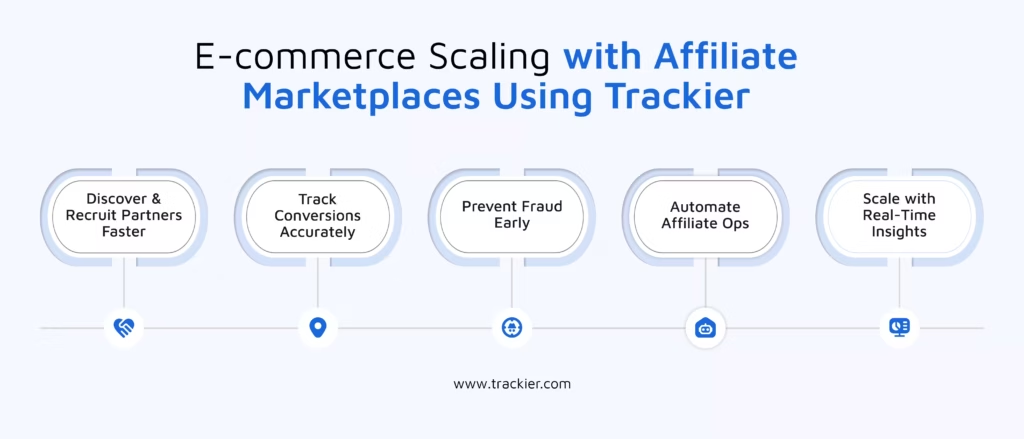
An affiliate marketing marketplace strategy comprises more than just finding an affiliate. Brands need a network that supports all aspects of how they can connect with affiliates, evaluate their performance, nurture them, and grow efficiently.
Trackier helps:
- Find and recruit new affiliate partners – Trackier helps brands find relevant publishers, creators, influencers, and performance partners. Therefore, it reduces the time and effort needed to acquire new partners.
- Accurately track each affiliate conversion – Brands have the ability to track all conversions through tracking and attribution methods. Understanding where each conversion originates allows brands to optimize their campaigns and pay their partners appropriately.
- Recognize and prevent fraud before it affects revenue – Trackier’s fraud prevention enables brands to automatically analyze their traffic patterns to identify suspicious behavior. When brands have the ability to identify fraudulent conversions, they are able to maintain a healthy marketing analytics budget and improve profitability through their partnership programs.
- Automate affiliate program operations – It is not possible to manually manage hundreds or thousands of affiliates in a sustainable manner. Trackier helps brands to automate the onboarding process for their partners, manage commissions, validate conversion data, generate reports, and facilitate payments.
- Grow and scale with real-time insights – Through thorough reporting, brands can identify their most profitable affiliate partners, analyze their most effective traffic sources, understand which of their campaigns generate revenue, and find opportunities for optimization.
Conclusion
The affiliate marketplace model has evolved far beyond traditional affiliate marketing.
The affiliate marketing marketplace model is much more than just an affiliate program; it is a scalable growth channel for e-commerce brands that can acquire new customers through established and trusted vendor partners, grow into other markets with less risk, and diversify their sales efforts beyond paid advertising.
Incorporating these findings into your e-commerce trends 2026 strategy will ensure your program remains highly competitive.
As customer acquisition costs continue to rise, brands that rely solely on paid media will likely see more and more challenges in maintaining their growth; however, the best affiliate marketplaces provide a different alternative that has been developed based on performance, partnerships, and the ability to quantify returns.
The new e-commerce brand growth strategy will no longer focus on the question, “Do affiliate partnerships generate revenue?” but rather on the question, “How quickly will they develop their own marketplace-enabled partner ecosystem?” to create new revenue for their businesses by converting creators, publishers, and industry influencers into lifelong revenue-generating partners.
Are you ready to scale your e-commerce growth?
Request a demo to see how we assist you in recruiting the best-performing partners, tracking each conversion, and preventing fraud, while providing you with the tools to grow your revenue exponentially.
FAQs
1. What is an affiliate marketplace in e-commerce?
An affiliate marketplace is a platform where e-commerce brands can connect with publishers, influencers, content creators, loyalty platforms, and other affiliates looking for partnership opportunities. Instead of recruiting partners manually, brands gain access to a large ecosystem of affiliates and only pay commissions when predefined actions, such as sales or conversions, occur.
2. How is an affiliate marketplace different from an affiliate network?
An affiliate network primarily acts as an intermediary between brands and affiliates, while an affiliate marketplace focuses on partner discovery and relationship building. Marketplaces typically offer brands greater control over partner recruitment, commission structures, performance tracking, and long-term relationship management, making them better suited for scalable growth strategies.
3. Why are the best affiliate marketplaces becoming popular among e-commerce brands?
Affiliate marketplaces help brands reduce customer acquisition costs, diversify beyond paid advertising, and access new audiences through trusted partners. Since commissions are tied to actual performance, brands can scale revenue more efficiently while minimizing upfront marketing risk. This makes affiliate marketing an attractive channel in a competitive e-commerce landscape.
4. What types of affiliates can e-commerce brands find in a marketplace?
E-commerce brands can partner with various affiliate types, including influencers, bloggers, review websites, coupon platforms, cashback sites, loyalty programs, comparison engines, media buyers, and niche content publishers. A diverse affiliate mix helps brands reach different audience segments and reduce dependence on a single traffic source.
5. How can brands measure the success of an affiliate marketplace strategy?
Success can be measured using key performance indicators such as affiliate-generated revenue, conversion rate, customer acquisition cost (CAC), return on ad spend (ROAS), average order value (AOV), and partner activation rates. Accurate tracking and attribution are essential for understanding which affiliates contribute most to business growth.
6. How does Trackier help e-commerce brands manage the best affiliate marketplaces?
Trackier helps e-commerce brands discover new affiliates, track conversions in real time, automate commission management, prevent fraudulent activity, and analyze partner performance from a single platform. With advanced attribution and reporting capabilities, brands can scale affiliate programs efficiently while maintaining visibility into every stage of the customer journey.