Most partnerships begin with two people who want to build a business together.
But who owns each task? Which results qualify for payment? Who can use the customer data? How long may a logo or campaign asset stay live? What happens when one side wants to leave?
A partnership agreement puts those answers in writing before work begins. It can govern a business owned by several partners or a commercial relationship between separate companies. The contents change with the model, but the purpose stays practical. Both sides get a shared reference for decisions, delivery, payments, rights, risk, and exit.
This guide explains the main types, clauses, measurement terms, and examples that business owners and partner marketing teams can use when preparing a workable agreement. For the wider process around partner selection, onboarding, enablement, measurement, and management, read the complete partner marketing guide.
Editorial note:
This article provides general business information. It is not legal or tax advice. Local counsel should review the final document where ownership, personal liability, regulated products, personal data, or cross-border activity is involved.
What Is a Partnership Agreement?
A partnership agreement is a contract that records how two or more parties will work together. It can describe ownership and management in a shared business. It can also govern a commercial project between independent companies, such as an affiliate programme, referral arrangement, reseller channel, technology integration, or co-marketing campaign.
For a legal business partnership, the document commonly covers capital, profit and loss sharing, voting, authority, records, partner admission, retirement, and dissolution. The US Small Business Administration notes that the chosen structure can affect taxes, personal liability, registration, and operation. Its current business structure guide also explains that rules vary by state.
A commercial marketing partnership usually works differently. The parties remain separate businesses. Each side contributes agreed work, access, content, technology, distribution, leads, or funding. The contract should state that neither side may bind the other unless named authority has been granted.
Casual use of the word “partner” should not create uncertainty about co-ownership, agency, employment, or authority to sign for another company.
The document must match the operating process. A vague promise to “promote the product” leaves open the channels, timing, market, approval process, tracking method, and payment trigger. A useful partnership agreement turns those points into rules that marketing, sales, finance, legal, and operations teams can follow.
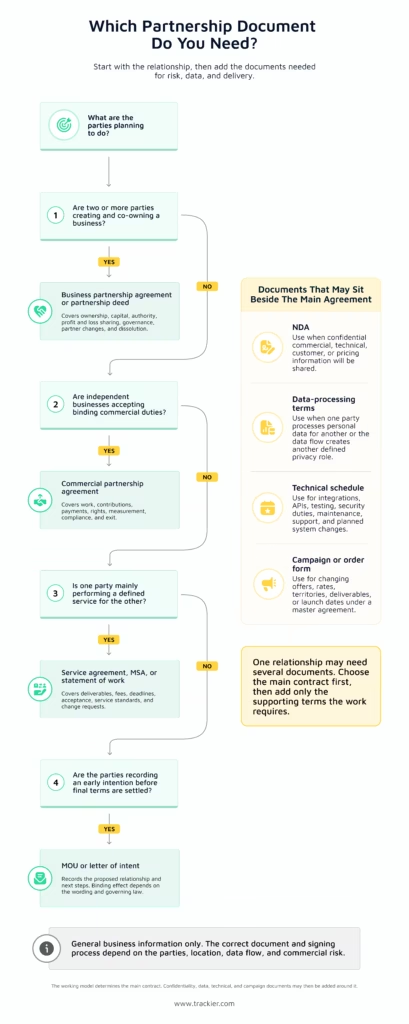
Related documents may support the relationship. An NDA protects confidential information. An MOU may record an early intention. A service agreement may fit when one party mainly performs defined work. Data-processing terms may be needed when personal data is handled for another company.
One relationship can use more than one document. The document name matters less than the duties, rights, and risks written inside it.
Which Partnership Agreement Type Fits The Relationship?
Start by deciding whether the parties are creating a co-owned business or collaborating as independent organisations. The legal and commercial effects are different.
Business ownership structures
| Structure | How it Works | Terms That Need Attention |
| General partnership | Two or more owners carry on a business and share its results. General partners may manage the business and can face personal exposure under applicable law. | Capital, profit and loss sharing, authority, voting, deadlocks, withdrawal, and dissolution |
| Limited partnership | A general partner manages the business, while limited partners usually contribute capital with a narrower management role. | Partner status, management limits, distributions, capital calls, transfer rights, and replacement of the general partner |
| Limited liability partnership | Partners use a partnership form with liability protection defined by local law. Availability can differ by state or country. | Professional duties, insurance, client ownership, compensation, admission, departure, and filing rules |
| Joint venture | Parties work together on a defined project, market, product, or activity through a new entity or a contract. | Contributions, governance, new IP, revenue and loss allocation, exclusivity, duration, and close-out |
In the United States, a partnership generally files an information return while profits and losses pass through to the partners for federal tax reporting. The IRS explains this treatment in its updated partnership tax guidance. State law can still change formation, liability, and registration duties.
Commercial partner marketing models
| Model | Contribution | Clauses That Need More Detail |
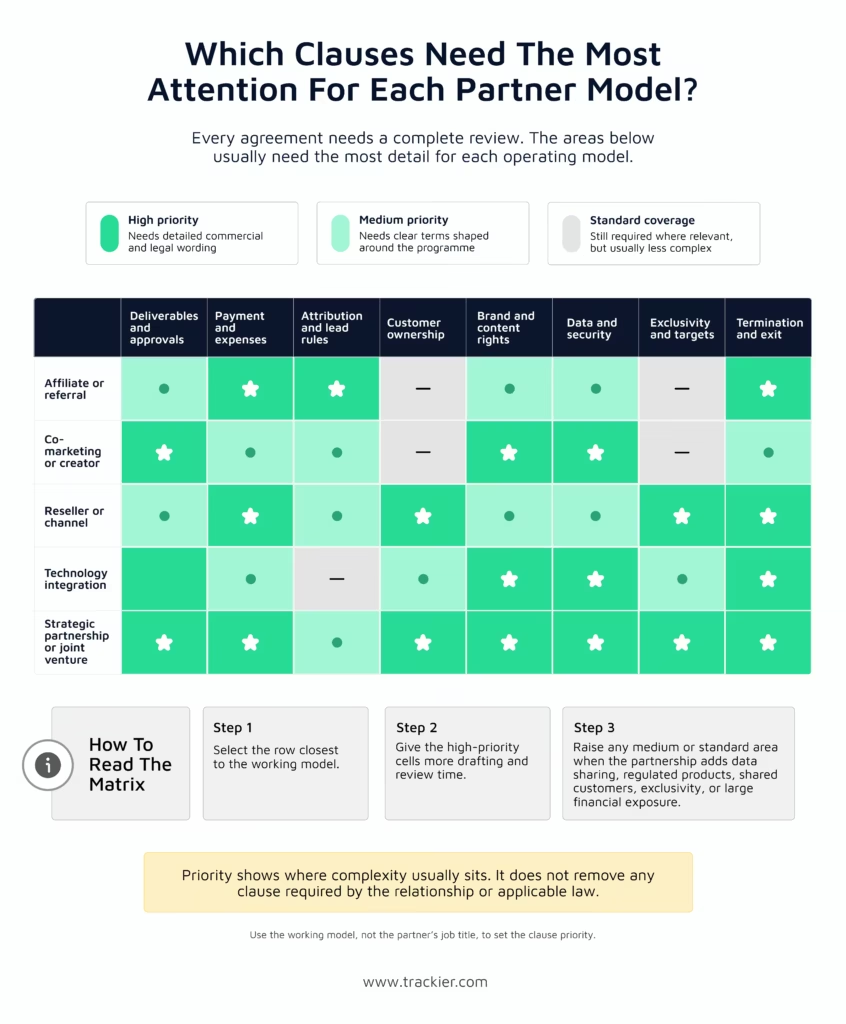
| Co-marketing or creator | Content, speakers, promotion, or audience access | Deliverables, approvals, disclosures, content rights, brand use, lead sharing, and cancellation |
| Affiliate or referral | Trackable traffic, sales, leads, installs, or introductions | Eligibility, attribution, validation, fraud, commission, reversals, and payout |
| Reseller or channel | Sales, distribution, implementation, support, or account growth | Territory, pricing, deal registration, customer ownership, renewals, and termination |
| Technology integration | APIs, connectors, listings, shared workflows, or embedded features | Technical scope, testing, IP, data, security, maintenance, support, and deprecation |
| Strategic partnership | Market entry, a combined offer, distribution, or co-selling | Governance, contributions, exclusivity, targets, decision rights, IP, and exit |
A partnership marketing strategy helps teams select a model based on the audience, commercial goal, and contribution expected from each side.
Affiliate and referral agreements can sit in one programme, but their rules differ. An affiliate often uses links or codes, while a referral partner may register a named opportunity and step away.
Reseller and channel agreements go further because the partner may present pricing, manage accounts, deliver services, or support renewals. Trackier’s guide to channel partners explains these roles.
Mixed models are common. Choose one primary model, then add terms for every extra role.
What Clauses Should a Partnership Agreement Include?
The clause set should reflect the relationship. A webinar campaign does not need the same document as a multi-year reseller programme. An integration that exchanges customer data needs more privacy and security details than a content collaboration.
Parties, purpose, scope, roles, and approvals
Use the full legal name and registered address of each party. Add company numbers, tax details, and signatory names where required. Trading names can appear, but they should not replace the entity responsible for work and payments.
Name contacts for routine delivery, finance, privacy, security, and formal notices.
The purpose section should identify the product, campaign, audience, market, channel, commercial aim, and exclusions.
Every deliverable needs an owner, format, quantity, deadline, dependency, and acceptance standard. Approval terms should name the reviewer, response period, revision limit, and treatment of out-of-scope requests.
Decision rights need the same clarity. Routine campaign changes may sit with partner managers. Budget increases, public claims, new data uses, exclusivity, or market expansion may need senior approval.
Fees, commissions, expenses, and payment timing
Payment wording should let two finance teams reach the same number without an informal explanation.
A fixed fee needs an amount, currency, invoice date, due date, tax treatment, and milestone where relevant. A commission needs the qualifying event, rate, calculation base, validation period, and payout date.
Define revenue. Gross order value, collected revenue, and net revenue produce different amounts. State how taxes, discounts, delivery charges, refunds, credits, chargebacks, fees, and foreign exchange affect the calculation.
Tiered rates need a measurement period and a rule for crossing the threshold. Expenses should require prior written approval.
Record the invoice format, payout threshold, payment method, bank fees, tax documents, and treatment of a negative balance. Trackier’s affiliate payment guide covers payout methods, hold periods, and validation.
Attribution, reporting, leads, and customer ownership
Name the event that qualifies for credit. It may be an approved lead, completed order, collected invoice, subscription, install, registration, or later in-app action.
Record the attribution model, window, tracking method, and source of record. Referral links, postbacks, pixels, codes, CRM records, and APIs can all play a role. One report should govern billing even when both parties keep separate analytics.
Lead registration rules should define a valid introduction and the time allowed for acceptance or rejection. Existing customers, active opportunities, duplicates, unsupported regions, and incomplete records may be excluded.
Customer ownership follows the model. A referral partner may introduce a lead without continuing account rights. A reseller may manage the relationship while the vendor keeps access for billing, support, security notices, or product delivery.
Give each party a set period to question a report. State which records may be requested and when the reporting period closes.
Brand assets, content rights, and intellectual property
Each party should retain material it owned before the relationship, including trademarks, software, documents, databases, research, designs, and existing content.
New work needs its own rules. Identify who owns reports, recordings, landing pages, creative assets, integration code, and customer material produced during the project.
Joint ownership can slow later use. A cleaner setup often gives ownership to one party and a defined licence to the other.
Brand permissions should name approved logos, images, claims, channels, locations, and the usage period. WIPO’s overview of trademark protection explains that trademark owners can license use while keeping ownership.
Creator and co-marketing terms should separate production rights from reuse rights. Paying for a post does not automatically permit editing, paid advertising, translation, or unlimited use of a person’s name and image.
Confidentiality, personal data, and security
Define confidential information, and the people allowed to receive it. Common exclusions include information already public, received lawfully from another source, or developed independently.
Personal data needs a practical map. Record what is collected, why it is used, where it moves, who can access it, how long it is kept, and how it will be deleted or returned.
Legal roles should follow the work. The parties may act as controller and processor, independent controllers, or joint controllers for a defined activity.
Security duties should match the access and risk. Terms can cover authentication, permissions, encryption, logging, backups, incidents, staff access, and continuity.
Set an incident-notice route and timeframe. The parties should know who investigates, supplies records, contacts affected people or regulators, and handles response costs when responsibility is established.
Advertising, warranties, liability, indemnity, and fraud
The contract should assign responsibility for claims, comparisons, endorsements, reviews, discount messages, and sponsored content.
The US Federal Trade Commission says endorsements must be honest and not misleading. Its current endorsement and review guidance also covers disclosure of material connections between advertisers and endorsers.
The brand may supply approved claims and evidence, while the partner follows channel and disclosure rules. Regulated sectors may need added review for each market.
Warranties can cover authority, ownership or licensing, lawful promotion, accurate information, valid consent, and stated duties.
Indemnities can allocate named third-party claims. Liability limits should fit the contract value and risk, with legal review for exclusions.
Performance contracts should define invalid activity, including bots, duplicate leads, false details, stolen payment methods, cookie stuffing, unauthorised incentives, manipulated installs, and prohibited brand bidding. Trackier’s fraud prevention tools show how traffic checks and fraud reports can support review.
Exclusivity, conflicts, targets, and review
Exclusivity should identify the product, market, channel, customer group, region, and duration.
A partner receiving exclusivity may need a minimum target. Distinguish a forecast from a binding commitment and state the result of missing each one.
Conflicts need a clear rule. A creator may work with several brands. An agency may serve competitors. A consultant may refer prospects to more than one provider. State which relationships are allowed, need notice, or are prohibited.
Performance reviews can cover conversions, lead quality, revenue, refunds, delivery, payments, support, incidents, and planned work.
Poor results may lead to a correction plan, revised target, reduced territory, lower spend, or removal of exclusivity.
Term, renewal, termination, and post-exit duties
State the start date, duration, renewal process, and notice window.
Termination terms should cover ordinary exit and serious breach. Either side may end without cause after notice. Immediate action may apply to fraud, unlawful promotion, data misuse, insolvency, repeated non-payment, or serious brand harm.
Some breaches can be corrected. Give a cure period for an overdue invoice, prohibited asset, missing security control, or delayed duty where correction is reasonable.
Post-exit terms should address unfinished work, live links, account access, approved commission, pending conversions, invoices, customer handover, confidential records, personal data, and brand assets.
State whether an eligible activity recorded before the end date continues through the normal validation process.
Disputes, governing law, notices, and amendments
A dispute process can begin with operational owners and move to senior commercial contacts before formal action.
The contract may use negotiation, mediation, arbitration, court proceedings, or a sequence. Cross-border terms may also name governing law, venue, language, and enforcement.
Reporting and invoice disputes may need a separate notice and evidence process.
Formal notices should use approved addresses and delivery methods. Routine campaign emails should not count as legal notice unless the contract says so.
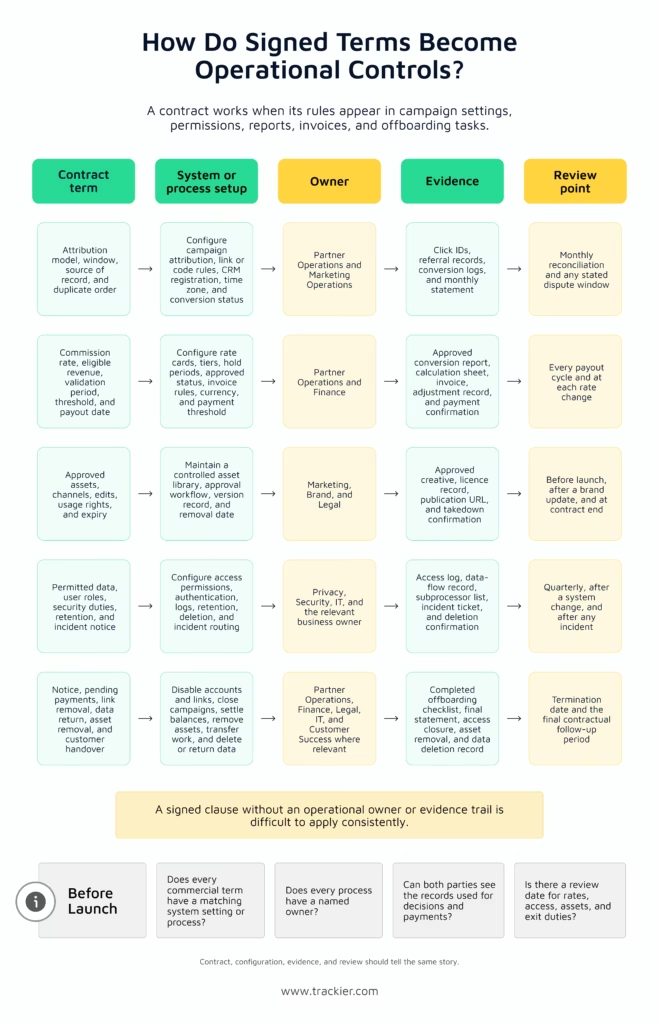
Major changes may require a signed amendment. Routine offer, rate, or campaign changes may use an order form or written approval from named contacts. A change log can keep the signed partnership agreement, campaign setup, finance rules, and partner communication aligned.
How Should Attribution & Payment Terms Be Written?
Attribution turns partner activity into commercial credit. Payment turns that credit into an amount due. Both parts need the same definitions.
Define the qualifying result
Use a result that can be verified.
“Successful customer” is too broad. “A new customer who pays for an annual subscription and remains active after the 30-day cancellation period” gives both sides a usable rule.
Cover eligible products, locations, customer types, payment status, and exclusions. Employee purchases, test accounts, existing customers, duplicates, renewals, and unsupported regions may need separate treatment.
For a lead programme, state the required fields and acceptance criteria.
Choose the model and window
The model should match the partner’s role.
First accepted referral can suit a B2B introduction. Last eligible click can suit direct-response affiliates. A code can suit creator campaigns. Multi-partner credit may work, but the split must be agreed upon before launch.
Trackier’s guide to partner attribution explains how models assign credit across partner-led journeys.
State when the window begins and ends. A click window may run for a set number of days. An accepted opportunity may remain protected for several months. Cookie duration and contractual protection are not always the same.
Also state whether credit survives termination for eligible activity recorded before the end date.
Name the tracking method and billing report
List approved tracking methods and the team responsible for setup and testing.
A partner may use a unique link, code, click ID, CRM registration, mobile measurement record, or API event. Server-to-server postback tracking can connect a click with a later conversion without relying on the browser for the final event.
Do not place personal data in tracking parameters unless the privacy terms permit it.
Choose one report for billing. Name the account, event, status, time zone, currency, and period.
Resolve duplicates, rejection, and reversal
Set an order of priority when several partners claim the same customer.
B2B teams should decide whether credit attaches to a contact, company, opportunity, product, or contract.
Conversions may remain pending while payment, eligibility, refunds, and fraud are checked. State the hold period and allowed rejection reasons. Partners should see whether a record is pending, approved, rejected, or reversed.
Chargebacks, later refunds, or confirmed fraud may support reversal within a stated period. Explain how recovered commission will be deducted or repaid.
Make the payout calculation reproducible
Record the rate, eligible revenue, tax treatment, currency, threshold, invoice process, due date, and method.
Test the clause with a sample. An order may begin at £1,000, exclude £100 in tax and a £50 refund, then apply a 10 per cent commission. The sequence should be clear.
Automated calculations still need signed rules. Automated invoicing and partner payments work best when configured rates, validation periods, currencies, and thresholds match the contract.
Give the partner a reasonable period to question a statement. Name the evidence, escalation route, and closing date.
What Does a Practical Partnership Agreement Example Look Like?
A useful example should show the level of detail needed without pretending to be a ready-to-sign legal clause.
Consider a SaaS company appointing a referral partner for the US market. The partner introduces prospects. The SaaS company handles sales, contracts with customers, delivers the product, and pays commission after receiving payment.
| Topic | Weak Wording | Clearer Business Wording |
| Scope | The partner will promote the product. | The partner may introduce new US-based B2B prospects for the named plans. Paid search, mass email, sub-partners, and public pricing claims require written approval. |
| Valid referral | The partner receives credit for leads. | A referral qualifies after registration through the agreed form and written acceptance within five working days. Existing customers and active opportunities do not qualify. |
| Commission | The partner receives 10 per cent commission. | Commission equals 10 per cent of collected first-year subscription fees, excluding tax, refunds, credits, chargebacks, implementation fees, and third-party costs. |
| Attribution | Tracked referrals qualify. | The first accepted referral remains protected for 180 days. The CRM record governs billing. A later advertising click does not replace it. |
| Payment | Commission is paid monthly. | Approved commission is included in the monthly statement and paid within 30 days of a valid invoice, subject to the agreed threshold. |
| Brand use | The partner may use company materials. | Current approved assets may be used for the programme during the contract term. Editing, paid advertising, domain use, and implied company representation need written approval. |
| Termination | Either party may cancel. | Either party may terminate on 30 days’ notice. Immediate termination applies to fraud, unlawful promotion, serious data misuse, or repeated non-payment. Accepted referrals keep their protection period. |
A co-marketing agreement would focus more on content ownership, promotional commitments, approval dates, cancellation, attendee notices, lead sharing, and reuse rights.
A technology integration agreement would add technical schedules, test criteria, release duties, security controls, maintenance, support, system changes, and retirement of the connector.
The example must follow the working model. Copying referral terms into a reseller or technology contract leaves major risks unanswered.
How Do Requirements Differ Across The US, EU, And India?
A global template should not present one legal position as universal. Formation, liability, tax, advertising, privacy, signing, and enforcement can change by country. Several US requirements also change by state.
United States
US businesses should confirm the entity and state law involved.
A legal partnership may create management rights, authority, tax reporting, and personal exposure that do not apply to a marketing contract. Independent commercial partners should say so clearly.
Federal tax guidance treats partnership income as passing through to partners, while state rules can affect formation, liability, and registration. Endorsement campaigns may also need disclosure of paid relationships.
European Union
EU-facing agreements need a clear data map when partners collect, exchange, or access personal data.
The parties should identify whether each activity involves controllers, joint controllers, or a controller and processor. Article 28 of the GDPR requires terms covering instructions, confidentiality, security, subprocessors, assistance, deletion or return, and audit information.
When personal data moves outside the European Economic Area, the parties may need an approved transfer safeguard. The European Commission’s Standard Contractual Clauses for international data transfers provide one mechanism for relevant transfers to third countries. Name the countries involved rather than treating “Europe” as one market.
India
A legal partnership in India is governed by the Indian Partnership Act, 1932. The Act defines a partnership through an agreement to share business profits where all or any of the partners act for all.
That mutual authority is different from a commercial collaboration between separate companies.
A partnership deed commonly records capital, profit sharing, management, accounts, admission, retirement, disputes, and dissolution. Registration status needs legal review because the Act can restrict certain claims by an unregistered firm.
An LLP in India is governed separately under the Limited Liability Partnership Act, 2008. Affiliate, referral, reseller, creator, and co-marketing contracts may remain independent commercial arrangements.
Across all three regions, local review should match the parties, data flow, industry, payment model, and value.
What Should You Check Before Signing a Partnership Agreement?
Read the document as an operating plan, not only as legal paperwork.
Confirm the relationship. Decide whether the parties are co-owners, independent contractors, referral partners, resellers, technology providers, or another model.
Map the work from onboarding to final payment. Every handoff needs an owner, input, deadline, and approval path.
Test the financial terms with sample numbers. Check taxes, discounts, refunds, tiers, currencies, validation, reversals, and payments after termination.
Review the attribution path. Both sides should be able to name the qualifying event, model, window, billing report, duplicate rule, and dispute period.
Trace the data. Record where it starts, why it is shared, who can see it, where it is stored, and when access ends.
Check brand and content permissions from both directions.
Run an exit scenario covering unfinished work, live links, pending commission, customer handover, confidential records, personal data, access, and public content.
Give the approved terms to the teams expected to follow them. A signed partnership agreement has limited value when campaign settings, sales processes, invoices, and offboarding tasks use different rules.
Once the agreement is signed, a clear partner lifecycle management process can carry the same rules into onboarding, activation, performance reviews, renewal, and exit.
Hungry for more? Download our free case studies that cover real stories.
Or sign up for Trackier’s newsletter to get weekly best practices on referral programs and partner marketing.
Frequently Asked Questions
1. Is a partnership agreement legally required?
The answer depends on the relationship and jurisdiction. For US federal tax purposes, IRS Publication 541 states that the partnership agreement and its later modifications may be oral or written. That tax guidance does not replace state rules covering formation, registration, liability, authority, or evidence. Written terms still provide a clearer operating record of ownership, payments, duties, decisions, and exit
2. Can a business write its own partnership agreement?
Business teams can prepare the commercial outline. A qualified lawyer should review the final partnership agreement where ownership, liability, large payments, exclusivity, intellectual property, personal data, cross-border work, or regulated products are involved.
3. What is the difference between a partnership agreement and an MOU?
An MOU often records an early intention or proposed responsibilities. A full partnership agreement usually contains firmer duties, payment rules, rights, remedies, and exit terms. Wording and intent affect legal status more than the title.
4. Does a partnership agreement need to be notarised?
Notarisation is not universal. The signing method depends on the country, state, business form, document, and assets. Some parties choose witnesses or notarisation for stronger evidence even when it is not required.
5. How long should a partnership agreement last?
The term should match the relationship. A campaign may end after delivery and payment. An ongoing partnership agreement may use a fixed term with renewal. State the dates, notice period, renewal, and continuing duties.
6. Can the terms be changed after signing?
Yes, when both sides follow the amendment process. Major changes may need a signed amendment. Routine campaign, offer, or rate updates may use an order form or written approval from named contacts.
7. What happens when one partner wants to leave?
The termination clause should cover notice, unfinished work, payments, accepted referrals, handover, access, confidential information, personal data, brand assets, and public content. A legal partnership may also need valuation, transfer, retirement, or dissolution rules.
8. Who owns leads from a joint campaign?
Ownership and permitted use depend on the campaign and the notice given to the individual. State who collects the data, whether it is shared, how each party may contact the lead, how opt-outs work, and when the data is deleted.
9. Which law should govern an international agreement?
The parties commonly select governing law and a dispute forum. That choice does not remove mandatory privacy, advertising, consumer, tax, or sector rules elsewhere. Cross-border terms should cover venue, language, notices, and enforcement.