What Are Referral Incentives?
Referral incentives are structured rewards that are triggered when a referred individual completes a predefined action. This action may include signing up for a platform, making a purchase, subscribing to a service, or reaching a specific engagement milestone.
The incentive may be issued to the referrer, the referred user, or both parties. Dual-sided reward models are widely adopted because they increase participation, improve conversion rates, and create a positive first interaction for new users.
Referral incentives are commonly used across e-commerce, SaaS, fintech, education, and mobile app ecosystems to support organic and sustainable customer acquisition.
How Referral Incentives Work
A referral incentive program begins with clearly defined rules and eligibility criteria. Participants receive a unique referral link or code that identifies them as the source of a referral.
When a new user engages with the link and completes the required action, the system tracks and validates the referral. Once the conditions are met, the incentive is issued automatically based on the predefined reward structure.
Accurate tracking and validation are critical to ensure transparency, prevent misuse, and maintain trust among all participants.
Functions of Referral Incentives
Referral incentives perform several important roles within a marketing and growth framework.
- They activate existing users as promoters, allowing brands to expand reach without relying entirely on paid media.
- They enable performance-based acquisition, ensuring that rewards are distributed only after successful outcomes.
- They strengthen trust by leveraging personal recommendations rather than anonymous advertising.
- They support faster onboarding, as referred users often receive guidance and reassurance from the referrer.
- They generate valuable data related to referral sources, user behavior, and conversion quality.
Together, these functions position referral incentives as both a growth accelerator and a source of actionable insights.
Key Characteristics of Referral Incentives
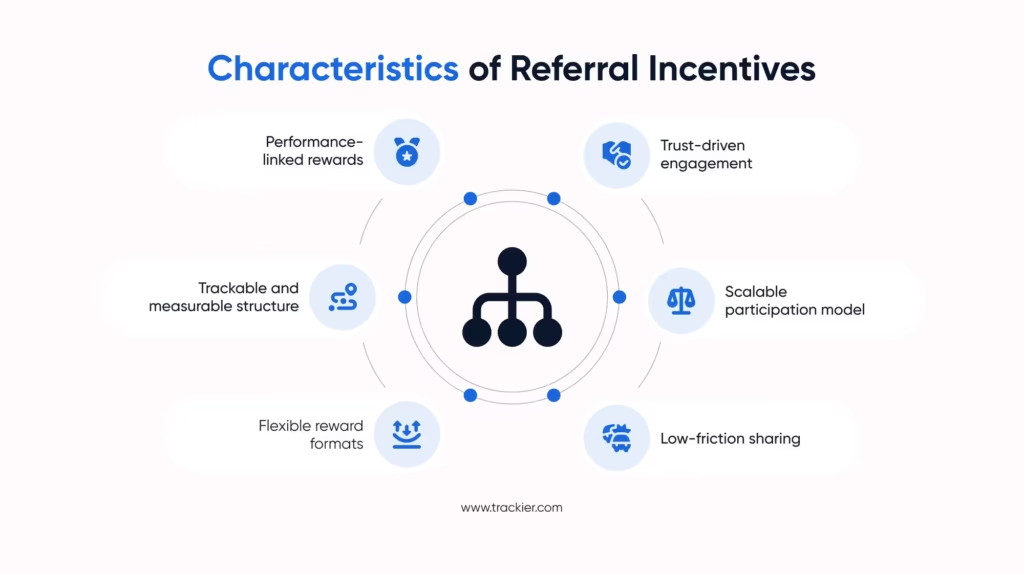
Referral incentives have distinct attributes that set them apart from traditional promotional methods.
- Performance-linked rewards: Incentives are issued only after verified actions, which ensures accountability and controlled spending.
- Trackable and measurable structure: Unique referral links or codes enable accurate attribution and transparent reporting.
- Flexible reward formats: Incentives can include cash rewards, discounts, credits, points, or access to premium features.
- Trust-driven engagement: Referrals rely on genuine relationships, resulting in higher intent and credibility.
- Scalable participation model: As more users join and refer others, the program grows organically.
- Low-friction sharing: Simple referral mechanics encourage widespread adoption and consistent engagement.
Advantages of Referral Incentives
Beyond acquisition, Referral Incentives play a critical role in shaping how brands grow, engage, and retain users in competitive digital ecosystems. Below are some of the key outcomes and advantages businesses can achieve.
Cost-Efficient Customer Acquisition
Referral incentives help brands control acquisition costs by rewarding only successful outcomes. Unlike traditional advertising, there is no spend on impressions or clicks that fail to convert, which makes referral programs financially efficient and predictable.
This performance-based approach allows businesses to scale without proportionally increasing marketing budgets.
Higher Conversion Rates
Users who join through referrals are more likely to convert because they already trust the recommendation source. This reduces hesitation and shortens the decision-making cycle.
As a result, referral-driven traffic often outperforms paid channels in terms of signup and purchase completion rates.
Improved User Quality and Retention
Referral-based users typically demonstrate stronger engagement and longer retention. Since they join through personal recommendations, they often have a clearer understanding of the product’s value.
This leads to better onboarding experiences and higher long-term usage.
Faster and More Organic Growth
Referral incentives create a compounding growth effect. Each new user has the potential to become a referrer, expanding reach through organic networks.
This enables brands to grow faster without overdependence on external advertising platforms.
Stronger Brand Loyalty and Advocacy
Rewarding referrals reinforces positive relationships with existing users. It makes customers feel valued and involved in the brand’s success.
Over time, this builds deeper loyalty and turns users into long-term brand advocates.
Increased Customer Lifetime Value
Referred users often stay active longer and contribute more value over time. Their higher engagement and trust-driven entry into the platform result in stronger lifetime revenue potential.
This makes referral incentives a powerful contributor to sustainable business growth.
Referral Incentives Across the Customer Lifecycle
Referral incentives support growth throughout the customer journey.
- During acquisition, they attract new users through trusted recommendations rather than cold outreach.
- During activation, they encourage early engagement by offering immediate value.
- During retention, they motivate ongoing participation through repeat rewards.
- During advocacy, they convert loyal users into consistent promoters.
This lifecycle impact makes referral incentives a long-term strategy rather than a one-time campaign.
Common Referral Incentive Structures
Brands implement referral incentives using various structured models.
• Flat reward model
A fixed incentive is issued for every successful referral, keeping rewards simple and predictable.
• Tier-based model
Rewards increase as referral volume grows, motivating high-performing participants.
• Time-limited incentives
Short-term rewards create urgency and boost engagement during specific campaigns.
• Milestone-based rewards
Additional incentives are unlocked when predefined referral goals are achieved.
These structures can be adjusted based on performance insights and business objectives.
Challenges Addressed by Referral Incentives
Referral incentives help solve several common growth challenges.
- They reduce trust barriers in competitive markets by leveraging personal recommendations.
- They lower acquisition costs during scaling phases where paid advertising becomes expensive.
- They provide measurable attribution for word-of-mouth growth that is otherwise difficult to track.
- They create predictable referral pipelines when managed with proper tracking and validation.
With appropriate safeguards, issues such as fraud or low-quality referrals can be effectively controlled.
Best Practices for Implementing Referral Incentives
Successful referral incentive programs require careful execution.
- Ensure reward value aligns with the effort required from participants.
- Keep the referral process simple and intuitive.
- Clearly communicate eligibility rules and reward timelines.
- Track referral quality alongside referral volume.
- Continuously analyze performance data to refine incentives.
- Implement controls to prevent misuse and duplicate rewards.
Strategic alignment with overall marketing and retention goals ensures the long-term sustainability of the program.
Strategic Importance of Referral Incentives
Referral incentives represent a shift toward community-driven growth, where users actively contribute to the brand’s expansion. They transform customers from passive users into engaged partners in growth. When supported by reliable tracking, automation, and analytics, referral incentives become a scalable, cost-efficient, and high-trust acquisition channel that delivers consistent long-term value.
Enroll in our Referral Program and leverage a high-trust acquisition channel built on precision tracking and long-term value creation.
FAQs
What makes referral-based rewards effective for customer acquisition?
Referral-based rewards work because they leverage trust between people who already have a relationship. When recommendations come from known sources, new users are more likely to engage, convert, and remain active over time, compared to traffic from traditional advertising channels.
Who can participate in a referral program?
Participation is typically open to existing users, customers, partners, or community members who meet predefined eligibility criteria. The structure is designed to make sharing simple while ensuring rewards are issued only for valid and verified actions.
How are rewards tracked and attributed accurately?
Tracking is handled through unique referral links, codes, or identifiers that connect each action back to its source. Automated validation ensures accuracy, transparency, and protection against duplicate or fraudulent activity.
Can referral programs scale without increasing acquisition costs significantly?
Yes. Since rewards are issued only after successful outcomes, this approach allows brands to scale acquisition while maintaining control over costs. As participation grows, the model becomes more efficient rather than more expensive.
