
Affiliate marketing has been around for decades, but affiliate program management in 2026 looks nothing like it did even five years ago, with the global market projected to reach $42.6 billion in 2026, up from $37.3 billion in 2025.
What was once a channel driven by coupon sites, last-click wins, and manual spreadsheets has evolved into a data-intensive, fraud-sensitive, performance-led growth strategy. Today, affiliate programs are no longer “side channels.”
For many brands, they are a core revenue source, along with paid media, influencer marketing, and partnerships. But with this evolution comes complexity. To effectively manage affiliate program operations in 2026 means dealing with:
- Privacy-first tracking and attribution
- Smarter (and harder-to-detect) fraud
- Influencers as affiliates
- Multiple geographies, payout models, and compliance rules
- Leadership pressure to prove incremental ROI
Trackier offers an end-to-end API and 200+ integrations that simplify these and reduce manual work. This article is built to help you navigate all of that.
Whether you’re an affiliate program manager, performance marketer, growth leader, or founder, this is a practical article on how to build, manage, and scale affiliate programs the right way in 2026.
Why Affiliate Marketing Management Matters More Than Ever in 2026?
Affiliate marketing is no longer about “getting more partners.” It’s about managing the right partners, with the right incentives, backed by the right data. Several major shifts in affiliate marketing management have made program oversight more critical than ever:
The End of “Set and Forget” Affiliate Programs
In earlier years, brands could:
- Approve affiliates in bulk
- Pay everyone the same commission
- Rely on last-touch attribution
- Review performance monthly
That approach doesn’t work anymore.
Today’s affiliate ecosystems are dynamic. Traffic quality can change daily. Fraud patterns evolve weekly. High-performing affiliates need constant optimization, while low-quality partners can quietly drain budget if left unchecked.
Technology Has Raised the Bar
Modern affiliate management software like Trackier has enabled:
- Real-time reporting
- Partner-level performance insights
- Advanced fraud prevention
- Automated workflows
As a result, expectations have increased. Manual processes and legacy tools are no longer acceptable for serious growth.
What is Affiliate Program Management?
Affiliate program management refers to the processes, tools, and strategies used to manage affiliate program performance end-to-end, from onboarding to payouts.
In 2026, this includes much more than tracking links and paying commissions. A modern professional looking to manage affiliate program workflows is responsible for:
- Designing the affiliate program structure
- Recruiting and affiliates onboarding
- Approving, segmenting, and monitoring affiliates
- Setting payout models and incentives
- Managing campaigns and offers
- Tracking performance and attribution
- Detecting and preventing fraud
- Communicating with partners
- Reporting results to leadership
How Affiliate Program Management Has Changed (2020–2026)?
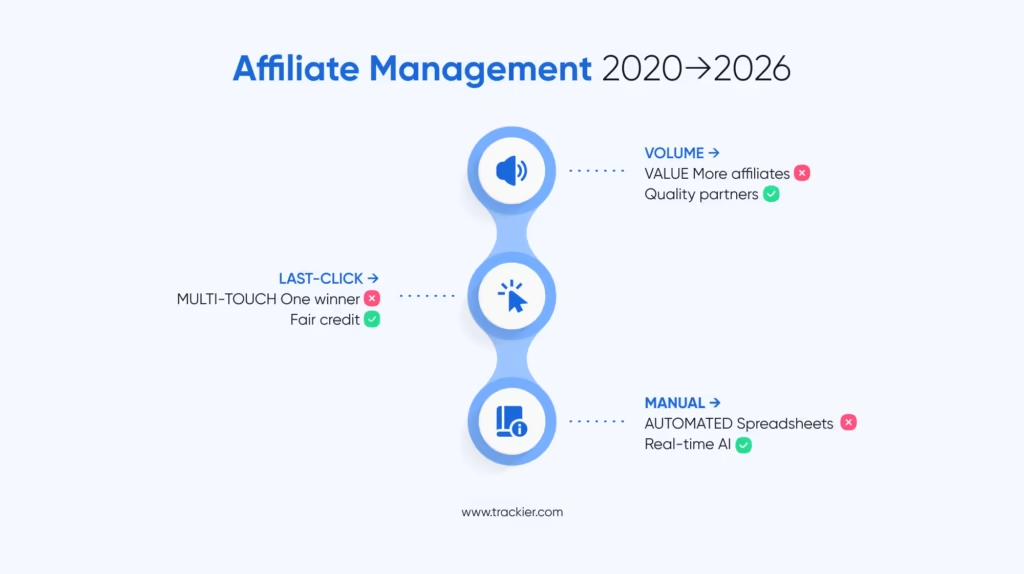
To manage affiliate program partners effectively in 2026, it’s important to understand what has changed.
From Volume to Value
Earlier affiliate programs focused on:
- More affiliates
- More clicks
- More conversions
Modern affiliate marketing management focuses on:
- Partner quality
- Incremental revenue
- Long-term LTV
- Fraud-free conversions
From Last-Click to Smarter Attribution
Last-click attribution used to dominate affiliate marketing. Today, it’s widely understood to be:
- Biased
- Easy to manipulate
- Poor at measuring true contribution
Affiliate managers now need:
- Configurable attribution windows
- Deduplication with paid media
- Visibility into assist vs conversion roles
From Manual Oversight to Automation
Spreadsheets and monthly reviews have been replaced by:
- Real-time dashboards
- Automated alerts
- Rule-based traffic controls
- AI-assisted optimization
Types of Affiliate Programs You Can Run in 2026
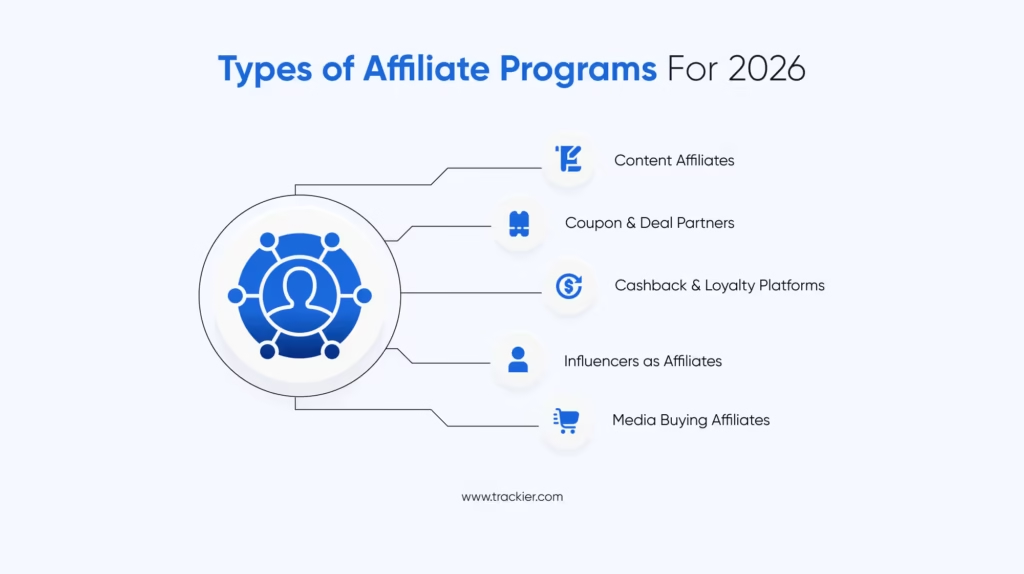
Not all affiliate programs are the same. The structure you choose should align with your business model. For example, influencers prefer trackable links and performance-based payouts, which require a comprehensive affiliate management system to track accurately.
1. Content Affiliates
These include:
- Blogs
- Review sites
- Comparison platforms
- Niche publishers
They typically drive high-intent traffic and perform well for SaaS, fintech, and subscription products.
2. Coupon and Deal Partners
Coupon affiliates can drive volume, but also have risks:
- Conversion hijacking
- Low incrementality
- Reduced brand value
3. Cashback and Loyalty Platforms
As per the reports, retail and e-commerce continue to lead the sector, with 44% of all affiliate revenue globally flowing through these types of reward-based systems. And these affiliates work well for:
- eCommerce
- Travel
- Fintech
However, attribution rules and commission structures must be carefully designed to avoid overpaying.
4. Influencers as Affiliates
Influencer-led affiliate revenue is growing at 26% year-over-year as brands prioritize trust over traditional banner ads. Also, influencers prefer:
- Performance-based payouts
- Trackable affiliate links
- Long-term partnerships
5. Media Buying Affiliates
These partners run paid traffic (Search, Social, Display) to your offers. While they can scale a campaign overnight, they require the strictest monitoring.
Ad fraud is becoming more sophisticated; in 2025, digital advertisers are expected to lose $41.4 billion globally to fraudulent traffic and “bot” conversions. So, they require strict controls, validation rules, and close monitoring.
Setting Up a High-Performance Affiliate Management System
A successful affiliate program doesn’t start with recruiting affiliates; it starts with structure, clarity, and control. In 2026, high-performing programs are designed intentionally from day one, with clear goals, strong tracking foundations, and scalable processes.
Here’s how to set up an affiliate program that is built for performance, not chaos.
Defining Goals and KPIs That Actually Matter
Before launching, you must define what success looks like. While direct revenue is the standard, 79% of marketers in 2025 use affiliate programs for customer engagement and brand awareness as much as for direct sales. Common affiliate goals include:
- Direct revenue
- Generating qualified leads
- Acquiring subscribers
- Expanding into new geographies
- Supporting upper-funnel discovery
The mistake many brands make is optimizing affiliates for volume, not value. In 2026, affiliate KPIs should be divided into three layers:
1. Primary performance KPIs
- Conversions (sales, leads, installs)
- Revenue generated
- Cost per acquisition (CPA)
- ROAS or contribution margin
2. Quality and sustainability KPIs
- Conversion approval rate
- Repeat purchase rate
- LTV by affiliate
- Refund or churn rate
3. Risk and control KPIs
- Fraud rate
- Invalid traffic percentage
- Time-to-conversion anomalies
- Brand bidding violations
Designing Smart and Scalable Payout Models
Your payout structure determines who joins your program and how they promote you. In 2026, flat commissions for all affiliates rarely work well. Instead, high-performance programs use flexible and performance-aligned payouts. Common approaches include:
- Tiered commissions based on volume or quality
- Higher payouts for first-time customers
- Lower commissions for coupon or assist-only affiliates
- Bonuses for high-LTV or geo-priority traffic
For example:
- A content affiliate driving new, high-intent users may earn a premium CPA
- A cashback partner assisting conversions late in the funnel may receive a lower rate
- Media-buying affiliates may operate under stricter validation rules and holding periods
Choosing the Right Affiliate Tracking and Management Platform
Your affiliate program is only as strong as the system running it. In 2026, affiliate management software must go far beyond basic link tracking. At a minimum, your platform should support:
- Real-time click and conversion tracking
- First-party and server-to-server attribution
- Flexible attribution windows
- SmartLinks and dynamic offer routing
- Partner-level and source-level reporting
- Automated rules for traffic control and payouts
- Built-in fraud detection and alerts
Trackier plays a critical role, not just in tracking performance, but in enforcing rules, protecting budgets, and enabling scale without manual work.
Setting Validation Rules and Conversion Holding Periods
Not every conversion should be approved instantly. High-performance affiliate programs use:
- Conversion holding periods to validate quality
- Rule-based approvals based on traffic behavior
- Postback verification with internal systems or CRMs
Preparing Internal Processes Before You Scale
Before onboarding dozens or hundreds of affiliates, ensure your internal processes are ready. This includes:
- Clear affiliate terms and policies
- Defined approval and rejection criteria
- Internal ownership for fraud reviews
- Regular reporting cadence
- Clear escalation paths for disputes or issues
Affiliate Onboarding, Approval, and Partner Quality Control
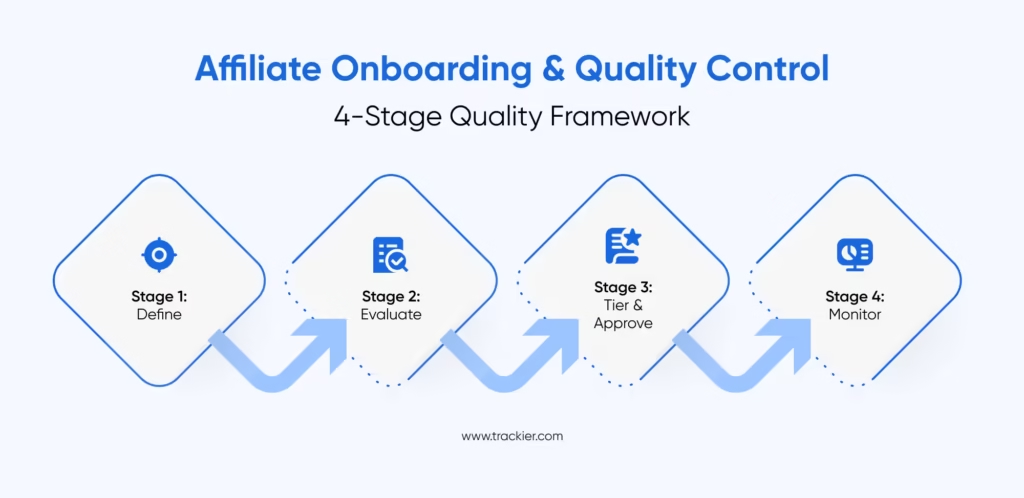
Affiliate onboarding and approval is one of the most underestimated stages of affiliate program management, and one of the biggest determinants of long-term success.
In 2026, who you allow into your program matters more than how many affiliates you recruit. A poor affiliate can drain the budget, introduce fraud risk, and distort performance data before issues are even visible in reports, especially when affiliate fraud and fake traffic continue to be major industry challenges.
In fact, up to 25% of leads generated through affiliate campaigns were found to be fake or low quality in 2025, highlighting why stricter vetting during onboarding is critical.
Building a Quality-First Affiliate Onboarding Process
Modern affiliate programs no longer rely on open, automatic approvals. Instead, they follow a quality-first onboarding framework that balances growth with control. At the onboarding stage, affiliate managers should clearly define:
- Accepted traffic sources (content, paid, social, email, etc.)
- Restricted or prohibited promotional methods
- Geographic focus and targeting rules
- Compliance and brand safety guidelines
- Payout structures and validation policies
This structured approach matters especially when fraud is a top concern, with 63% of affiliate marketers citing fraud as a major challenge in managing programs
Evaluating Affiliates Before Approval
Before approving an affiliate, it’s critical to evaluate both intent and capability. Key factors to assess include:
- Primary traffic sources and acquisition methods
- Historical performance with similar offers
- Promotional assets (websites, channels, audiences)
- Past compliance or fraud-related issues
- Alignment with your brand positioning
Tiered Approval and Controlled Access
In advanced affiliate programs, approval doesn’t have to be binary. Many teams use tiered onboarding models, where:
- New affiliates start with limited offers or lower payouts
- Access expands only after performance and quality are validated
- Higher-tier partners receive premium commissions, early offers, or exclusive deals
Ongoing Partner Quality Control
Quality control is a continuous process. Modern affiliate management solutions allow for:
- Regular performance reviews at the partner level
- Monitoring rejection rates and conversion quality
- Tracking abnormal traffic patterns or sudden volume spikes
- Reviewing attribution behavior across channels
Tracking, Attribution, and Analytics in a Privacy-First World
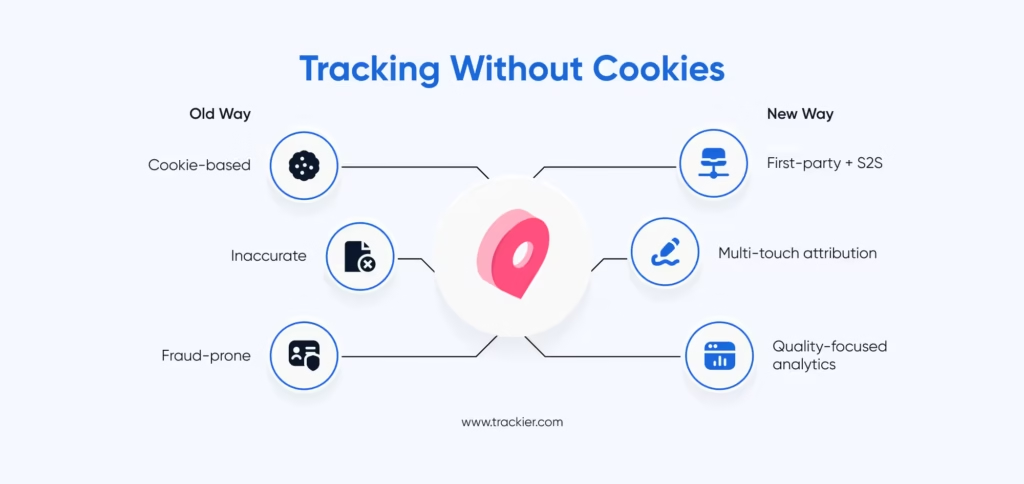
Tracking and attribution are essential in affiliate program management, but in 2026, they are also the most complex and most misunderstood parts of the ecosystem.
Affiliate managers today operate in a world where third-party cookies are unreliable, devices are fragmented, and privacy regulations continue to tighten. As a result, accurate measurement is no longer guaranteed by default. It must be designed deliberately.
The End of Cookie-Dependent Affiliate Tracking
Traditional affiliate tracking relied heavily on browser cookies and last-click attribution. In a privacy-first environment, this approach breaks down due to:
- Browser restrictions on third-party cookies
- Shorter cookie lifespans
- Cross-device user journeys
- Increased use of privacy modes and ad blockers
For affiliate programs, this creates two major risks:
- Under-attribution, where legitimate affiliates don’t get credit for conversions they influenced
- Over-attribution, where low-quality partners exploit weak attribution logic to claim conversions
Modern Tracking Infrastructure in 2026
To operate effectively, affiliate programs now rely on first-party and server-to-server (S2S) tracking models.
First-party tracking ensures that conversion data is captured directly by the brand, reducing dependency on browsers and improving reliability.
Server-to-server attribution further strengthens this by sending conversion events directly from backend systems, making tracking more resilient, accurate, and fraud-resistant. This infrastructure allows affiliate managers to:
- Maintain attribution accuracy despite cookie loss
- Validate conversions before approval
- Apply consistent tracking across web, app, and hybrid journeys
Trackier is built with these privacy-first architectures in mind. This infrastructure allows teams to manage affiliate program attribution accurately despite cookie loss and validate conversions before approval.
Rethinking Attribution Models for Affiliate Programs
In 2026, affiliate attribution is no longer one-size-fits-all. Modern affiliate program management requires flexible attribution frameworks, including:
- Custom attribution windows based on product type and buying cycle
- Rules to prioritize high-intent traffic sources
- Deduplication logic across paid media, influencers, and affiliates
- Clear separation between assist and conversion roles
For example, content affiliates may influence early-stage discovery, while coupon partners often appear at checkout. Treating both equally in attribution can inflate costs and misrepresent value.
Analytics That Go Beyond Clicks and Conversions
Privacy-first affiliate analytics in 2026 focus on quality, not just volume. Key analytical dimensions now include:
- Conversion approval vs rejection rates
- Time-to-conversion analysis
- LTV and retention by affiliate
- Geo-level and device-level performance patterns
- Fraud-adjusted ROI
These insights help affiliate managers answer strategic questions:
- Which partners drive long-term customers?
- Which traffic sources introduce risk?
- Where should commissions be increased, or reduced?
Affiliate Fraud in 2026: Threats, Impact & Prevention
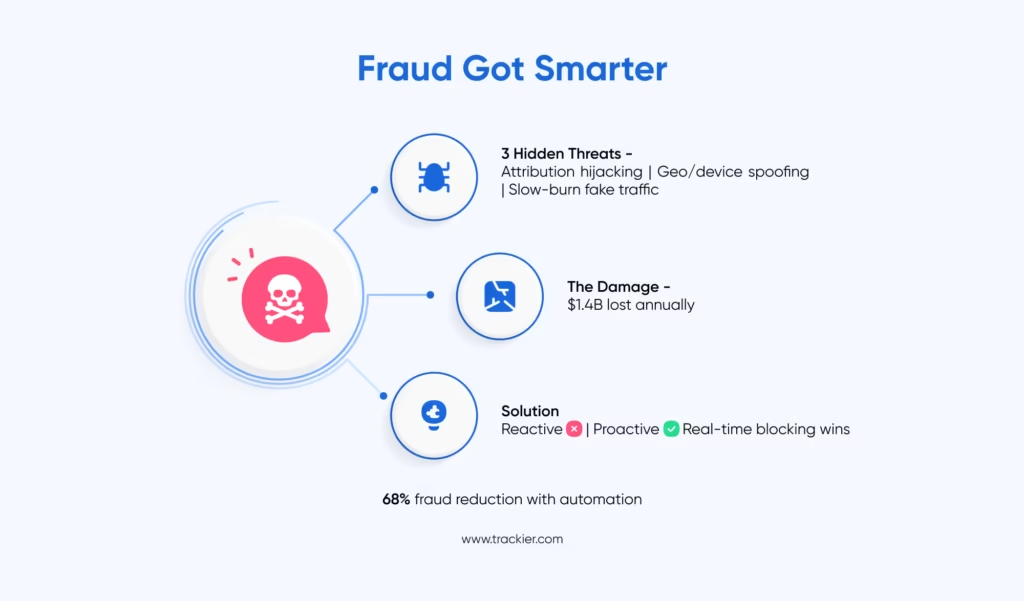
In 2026, fraud is no longer obvious, noisy, or easy to detect. Instead, it is strategic, subtle, and designed to blend into legitimate performance data.
Why Affiliate Fraud Is More Dangerous in 2026?
The biggest change is not the existence of fraud, but its sophistication. Fraudsters today:
- Mimic genuine user behavior
- Use clean-looking traffic sources
- Spread activity across multiple affiliates and devices
- Exploit attribution loopholes rather than volume spikes
As a result, many brands unknowingly pay out commissions on:
- Non-incremental conversions
- Low-intent or fake users
- Conversions that would have happened anyway via paid or organic channels
Advanced Affiliate Fraud Tactics to Watch in 2026
Beyond traditional fraud types, modern affiliate managers should be aware of more nuanced tactics, such as:
- Attribution Layering – Affiliates position themselves late in the funnel, using toolbars, pop-ups, or redirects, to capture credit without adding value.
- Geo and Device Spoofing – Fraudsters manipulate device IDs, IPs, or locations to bypass geo restrictions and validation rules.
- Slow-Burn Fraud – Instead of high-volume attacks, fraudsters send small amounts of suspicious traffic consistently over time, making it harder to flag anomalies.
The Real Business Impact of Affiliate Fraud
Affiliate fraud doesn’t just inflate costs; it corrupts decision-making. Unchecked fraud leads to:
- Overpaying the wrong partners
- Scaling affiliates that harm long-term LTV
- Underestimating the true ROI of other channels
- Internal mistrust of performance data
- Difficulty proving incrementality to leadership
Proactive Fraud Prevention vs Reactive Cleanup
In 2026, reactive management is already too late. Top-tier affiliate marketing management focuses on prevention-first strategies, including:
- Real-time traffic monitoring instead of post-payout audits
- Rule-based controls for traffic sources, devices, geos, and behavior
- Conversion validation and holding periods to verify quality
- Partner-level risk scoring instead of blanket approvals
Trackier supports this proactive approach by combining:
- Real-time fraud signals
- Automated traffic rules
- Conversion-level validation workflows
- Transparent audit trails
This allows affiliate managers to stop fraud before payouts happen, not chase refunds after the damage is done.
Affiliate Program Automation and AI in 2026
Automation and AI are no longer experimental in affiliate program management; they are foundational.
As affiliate ecosystems grow more complex, manual oversight simply cannot keep pace with the volume of partners, traffic sources, geographies, and fraud signals that modern programs generate.
In 2026, the question is not whether to automate, but what to automate, and where human judgment still matters.
Why Automation Is Critical for Affiliate Programs Today?
Affiliate programs now operate in real time. Traffic quality can change within hours, fraud patterns can emerge suddenly, and high-performing affiliates expect faster approvals, payouts, and responses.
Manual processes introduce delays that directly impact revenue and partner trust. Automation helps affiliate managers:
- React instantly to performance changes
- Reduce operational workload for lean teams
- Maintain consistency across campaigns and regions
- Minimize human error in payouts and approvals
What Affiliate Program Tasks Can Be Automated in 2026?
Modern affiliate program management platforms allow automation across multiple layers:
1. Partner Onboarding and Approvals
Automation can pre-screen affiliates based on:
- Traffic sources
- Geography
- Promotional methods
- Historical risk indicators
2. Traffic Monitoring and Rule Enforcement
Automated rules can:
- Block traffic from restricted geos or devices
- Pause affiliates when abnormal click-to-conversion ratios appear
- Flag sudden traffic spikes for review
3. Conversion Validation and Payout Control
Automation ensures:
- Conversion hold periods are applied consistently
- Suspicious conversions are delayed or rejected
- Approved conversions move smoothly into payout workflows
4. Reporting and Alerts
Instead of static reports, automation enables:
- Real-time performance alerts
- Notifications for fraud signals
- Automated weekly or monthly reports for stakeholders
The Role of AI in Affiliate Program Management
AI goes a step further than automation by identifying patterns that humans may miss. In 2026, AI is increasingly used for:
- Traffic quality scoring based on behavioral signals
- Predictive fraud detection, identifying risk before losses occur
- Performance forecasting, helping managers allocate budgets more effectively
- Commission optimization, recommending payout changes based on LTV and quality
Managing Global and Multi-Region Affiliate Programs
As affiliate programs mature, most brands eventually face the challenge of scaling beyond a single market.
While global expansion unlocks significant growth opportunities, it also introduces layers of operational, technical, and compliance complexity that cannot be managed with a one-size-fits-all approach.
Regional Differences in Affiliate Behavior
Affiliate performance varies widely by region. Traffic sources, user intent, and partner maturity levels differ across markets. For example:
- In North America and Western Europe, content and SaaS-focused affiliates often dominate.
- In emerging markets across APAC, LATAM, and MENA, media buying affiliates and cashback platforms may play a larger role.
- Influencer-led affiliate models perform differently depending on platform penetration and consumer trust.
Effective global affiliate program management requires region-specific strategies, not just global replication.
Geo-Based Payouts and Incentive Structures
Commission models that work in one market may fail in another. Factors such as:
- Average order value
- Competitive commission benchmarks
- User acquisition costs
- Currency strength
must be considered when setting payouts. In 2026, leading programs use geo-based commissions and dynamic incentives to balance competitiveness with profitability, rather than applying flat global rates.
Tracking, Attribution, and Local Compliance
Global affiliate programs must also account for:
- Regional privacy regulations
- Different attribution expectations
- Local ad disclosure requirements
Accurate tracking across regions requires a centralized, first-party tracking infrastructure that can handle multiple domains, currencies, and time zones without data fragmentation. Trackier helps teams maintain consistent attribution logic globally, while still allowing localized customization where needed.
Managing Payments, Currencies, and Taxes
One of the most underestimated challenges of multi-region affiliate programs is payments. Delays, currency conversions, and unclear tax requirements can quickly damage partner trust. Mature programs implement:
- Multi-currency payout support
- Clear validation and payment cycles
- Transparent reporting on approved and rejected conversions
Affiliate Program Compliance, Brand Safety, and Governance
In 2026, affiliate program compliance is no longer a checkbox activity; it is a core pillar of brand protection and sustainable growth.
As affiliate ecosystems expand across influencers, media buyers, content creators, and global partners, the risk of brand misuse increases significantly if governance is weak.
Why Compliance Matters More Than Ever?
Modern affiliate programs operate in highly regulated and reputation-sensitive environments. A single non-compliant affiliate can:
- Misrepresent your brand or pricing
- Violate advertising regulations
- Trigger legal scrutiny
- Erode customer trust
Key Areas of Affiliate Compliance in 2026
1. Brand Bidding and Paid Search Control
Unauthorized brand bidding remains one of the most common affiliate violations. Affiliates may bid on:
- Branded keywords
- Misspelled brand terms
- Competitor terms using your brand name
Strong affiliate governance requires:
- Clearly defined paid search policies
- Ongoing monitoring of keyword activity
- Automated detection and enforcement mechanisms
2. Ad Copy, Creatives, and Messaging Control
Affiliates often create their own ad copies, landing pages, or social posts. Without oversight, this can lead to:
- False claims
- Outdated offers
- Misleading discounts
- Non-compliant disclosures
3. Disclosure and Regulatory Compliance
In 2026, disclosure requirements are stricter across regions. Affiliates must clearly disclose:
- Paid partnerships
- Affiliate relationships
- Sponsored content
Governance Through Technology
Manual compliance monitoring does not scale. Leading brands now rely on affiliate management solutions that provide
- Rule-based enforcement
- Traffic and behavior monitoring
- Audit trails for approvals and violations
- Partner-level compliance history
Trackier helps centralize governance by giving brands visibility and control across their entire affiliate ecosystem.
Affiliate Program KPIs and Benchmarks to Track in 2026
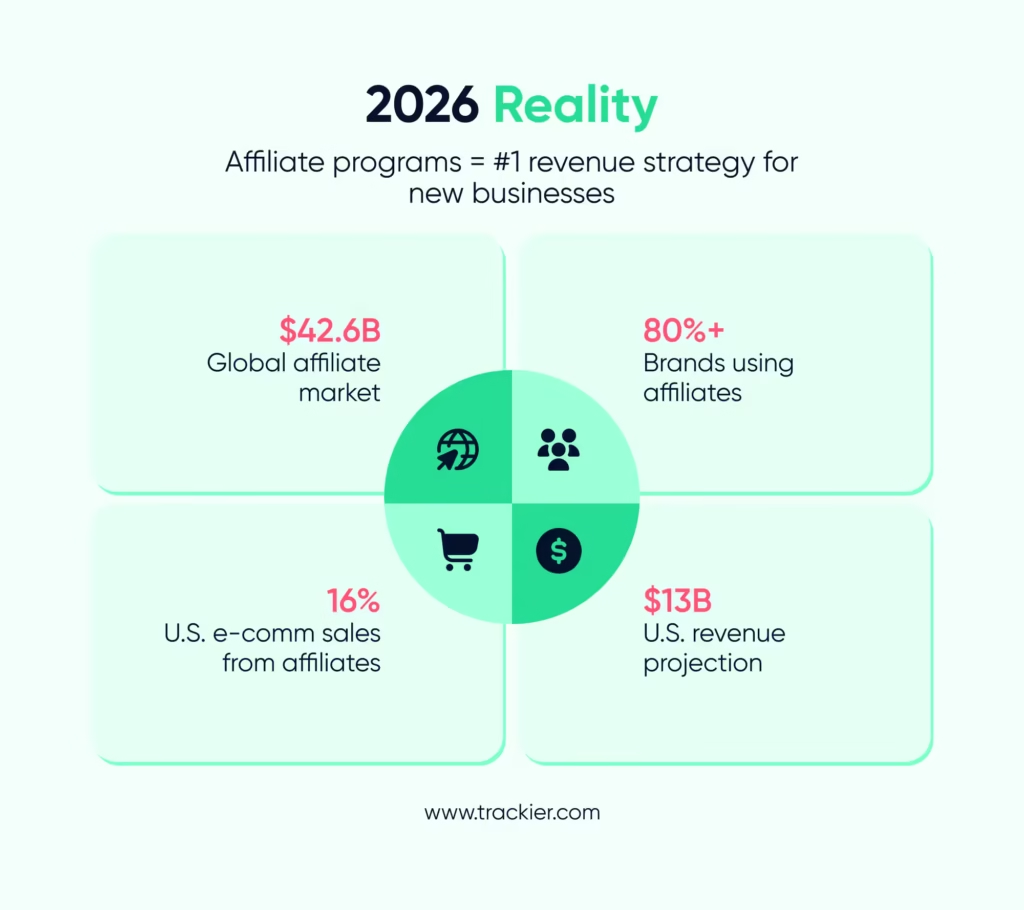
Tracking affiliate performance in 2026 goes far beyond clicks and conversions. As affiliate programs mature, KPIs must reflect quality, incrementality, and long-term value, not just short-term volume.
The right metrics help affiliate managers defend budgets, optimize payouts, and scale sustainably.
Core Performance KPIs
These remain foundational, but must be interpreted with context:
- Conversion Rate – Indicates traffic relevance and landing page effectiveness. Track CVR by affiliate type, not just overall.
- Earnings Per Click (EPC) – Useful for comparing affiliates, but should be evaluated alongside fraud and rejection rates.
- Approved vs Rejected Conversions – A widening gap often signals lead fraud, low-quality traffic, or compliance issues.
- Revenue or Leads Generated – Track absolute contribution, not just growth percentage.
Quality and Incrementality KPIs
In 2026, leadership expects clarity on how valuable affiliate traffic really is:
- New vs Existing Customer Ratio – Helps identify whether affiliates are acquiring incremental users or capturing existing demand.
- Assisted vs Last-Click Conversions – Shows whether affiliates are initiating demand or only closing conversions.
- Time-to-Conversion – Extremely short conversion times may indicate brand bidding or attribution hijacking.
- LTV by Affiliate – One of the most important metrics for subscription, fintech, and SaaS businesses.
Fraud and Risk Metrics
Affiliate fraud is no longer an edge case; it’s an ongoing risk:
- Fraud Rate by Partner – Track suspicious activity trends over time, not just isolated spikes.
- Invalid Click Percentage – High invalid click rates often point to bot traffic or incentivized sources.
- Brand Keyword Violations – Especially critical for search-driven programs.
- Hold Period Adjustments – Frequent payout reversals signal deeper quality problems.
Common Affiliate Program Management Mistakes
Even mature affiliate programs often underperform, not because the channel doesn’t work, but because of avoidable management mistakes. In 2026, these mistakes are more costly than ever due to tighter margins, stricter attribution, and more sophisticated fraud.
1. Scaling the Program Before Fixing the Foundations
One of the most common mistakes is onboarding more affiliates before the basics are covered. Brands often focus on growth in partner count while ignoring:
- Attribution accuracy
- Conversion validation rules
- Fraud monitoring processes
This leads to inflated performance numbers and wasted payouts.
How to avoid it? Lock down tracking, attribution, and fraud prevention first. Only scale once you trust your data.
2. Treating All Affiliates the Same
Paying every affiliate the same commission might feel fair, but it’s inefficient. High-quality partners subsidize low-quality ones, and poor traffic quietly drains budget.
How to avoid it? Segment affiliates by performance, intent, and risk level. Use tiered payouts and incentives that reward quality, not volume.
3. Over-Reliance on Last-Click Attribution
Last-click attribution continues to distort affiliate performance, especially with coupon sites and cashback platforms. It often rewards affiliates who capture demand rather than create it.
How to avoid it? Use configurable attribution windows and deduplication with paid channels. Evaluate affiliates based on contribution, not just the final touch.
4. Ignoring Early Fraud Signals
Many teams wait for fraud to become “visible” before acting. By the time suspicious patterns show up in monthly reports, significant budget may already be lost.
How to avoid it? Monitor traffic daily. Set automated alerts and rules to flag anomalies in click-to-conversion time, geo mismatches, or sudden volume spikes.
5. Poor Communication with Affiliates
Affiliates often underperform simply because they lack clarity on offers, creatives, or expectations. Silence leads to misaligned promotions and compliance issues.
How to avoid it? Maintain regular communication. Share updates, performance insights, and clear guidelines to build long-term, productive partnerships.
6. Using Outdated Tools
Legacy tracking tools struggle with privacy changes, multi-channel attribution, and real-time optimization. This limits visibility and slows decision-making.
How to avoid it? Use modern affiliate program management platforms that support automation, fraud prevention, and granular reporting, so you can act, not react.
Choosing the Right Affiliate Program Management Platform
Choosing the right affiliate program management platform can make or break your program. The best affiliate management software does more than just track clicks; it is the operational feature of your affiliate ecosystem, enabling you to scale efficiently, prevent fraud, and make data-driven decisions.
Key Evaluation Criteria
When evaluating platforms, consider the following factors:
1. Scalability
Your program should grow without hitting technical limits. Look for platforms that can handle:
- Thousands of affiliates
- Multi-region campaigns
- High-volume traffic spikes
2. Attribution and Tracking Flexibility
Modern programs need more than last-click reporting. Evaluate whether the platform supports:
- Multi-touch attribution
- Configurable attribution windows
- Server-to-server (S2S) tracking for privacy compliance
- SmartLink or dynamic offer routing
3. Fraud Prevention Capabilities
In 2026, fraud is sophisticated and constantly evolving. Choose a platform with:
- Real-time fraud detection
- Click and conversion validation
- Brand bidding prevention
- Automated alerts for suspicious activity
4. Automation and Workflow Management
Automation is critical to reduce manual work and human error. The right platform should let you:
- Auto-approve or reject affiliates based on custom rules
- Set up automated commission structures
- Trigger alerts and notifications based on performance thresholds
5. Advanced Reporting and Analytics
Access to actionable insights is essential. The platform should provide:
- Partner-level and campaign-level dashboards
- Performance breakdowns by geo, device, or traffic source
- Predictive insights to optimize campaigns proactively
Why Modern Brands Prefer Trackier?
Trackier is designed for data-driven, performance-first affiliate programs. Trackier enables brands to:
- Track conversions in real-time across multiple channels
- Automatically detect and prevent fraud before it impacts your ROI
- Manage global campaigns with multi-currency, geo-specific rules
- Easily segment partners, adjust payouts, and optimize offers
By choosing a platform built for scalability, security, and automation, brands can focus less on operational challenges and more on growing high-quality, incremental revenue from affiliates.
The Future of Affiliate Program Management Beyond 2026
Affiliate program management will continue to evolve beyond 2026, not because the channel is new, but because the way value is created and measured is fundamentally changing.
The future of affiliate programs will be shaped by technology, regulation, and shifting expectations from both partners and leadership teams.
1. From Channel-Based Thinking to Partner Ecosystems
One of the biggest shifts ahead is the move away from managing affiliates as a standalone channel. Instead, brands will increasingly manage partner ecosystems that include:
- Affiliates
- Influencers
- Content creators
- Referral partners
- Strategic B2B partners
The difference between these groups will matter less than how each partner contributes across the customer journey.
An influencer who introduces demand, a content site that educates, and a coupon partner that converts may all be part of the same revenue path.
Future affiliate program management will focus on coordinating these roles, not competing with them. This change will require:
- Unified tracking across partner types
- Flexible attribution models
- Partner-level contribution analysis instead of single-touch credit
2. Incrementality Will Become Non-Negotiable
Beyond 2026, leadership teams will no longer accept surface-level metrics like total affiliate revenue at face value. The key question will be: “What value did affiliates create that would not have happened otherwise?”
Incrementality measurement will move from a “nice-to-have” to a core requirement. This includes:
- Identifying partners that capture existing demand vs those that generate new demand
- Separating assist-heavy partners from true acquisition generators
- Adjusting payouts based on incremental impact, not just conversions
Affiliate managers who cannot explain incrementality will face budget pressure. Those who can will gain stronger internal credibility and larger growth mandates.
3. Deeper AI Adoption, With Human Control
AI will play a larger role in affiliate program management, but not in a fully autonomous way. Instead, AI will increasingly be used to:
- Detect emerging fraud patterns before damage occurs
- Predict partner performance trends
- Flag anomalies in traffic quality or conversion behavior
- Recommend commission or rule adjustments
However, the most successful programs will treat AI as a decision-support layer, not a replacement for human judgment. Trust, relationships, and strategic context cannot be automated, and affiliate programs still rely heavily on all these.
4. Stronger Regulation and Brand Accountability
Regulatory pressure around privacy, disclosures, and advertising transparency will continue to increase. At the same time, consumers are becoming more aware of:
- Misleading promotions
- Undisclosed affiliate relationships
- Aggressive or deceptive advertising tactics
As a result, affiliate program management will be more closely tied to:
- Brand safety policies
- Legal and compliance frameworks
- Clear partner guidelines and enforcement
Programs that lack governance will not just lose money, they will lose trust. Future-ready affiliate managers will work closely with legal, compliance, and brand teams to build programs that are both profitable and defensible.
5. Affiliate Managers as Revenue Strategists
Finally, the role of the affiliate program manager itself will evolve. Beyond 2026, the most effective affiliate managers will no longer be seen as channel operators. They will be viewed as:
- Revenue strategists
- Partner ecosystem builders
- Data-driven decision-makers
They will be expected to:
- Influence growth strategy
- Advise on partner investments
- Align affiliate efforts with broader marketing and revenue goals
This shift will elevate affiliate program management from execution to leadership, and brands that recognize this early will gain a lasting advantage.
Conclusion: Building a Future-Proof Affiliate Program
Affiliate marketing is no longer just about recruiting more partners; it’s about managing partnerships intelligently to drive predictable growth. Current industry data shows that affiliate marketing has moved well beyond niche status and has become a strategic growth engine for brands worldwide:
Industry Growth and Adoption
- The global affiliate marketing industry is projected to be valued at approximately $17–18.5 billion in 2025, growing steadily into 2026 and beyond.
- In the U.S. alone, affiliate marketing spending is expected to reach nearly $12 billion in 2025 and over $13 billion in 2026, reflecting double-digit annual growth.
- Over 90% of e-commerce businesses are expected to leverage affiliate marketing by 2026, making it a central channel for customer acquisition.
Brand and Publisher Engagement
80%+ of brands and 84% of publishers are already running affiliate programs, indicating widespread adoption across industries. Affiliate channels now drive ~16% of all e-commerce orders, establishing them as a major digital sales driver. In 2026 and beyond, successful affiliate program management requires:
✔ A clear strategy — matching affiliate incentives with business goals.
✔ Strong tracking and attribution — to measure real results accurately.
✔ Proactive fraud prevention — since fraud continues to be a major challenge.
✔ Data-driven optimization — using analytics and automation to improve performance.
✔ The right technology foundation — built to scale and adapt as the program grows.
With the right strategy and tools, affiliate programs can become one of the most reliable, scalable, and profitable growth channels, driving long-term business growth.
FAQs
How to manage an affiliate program?
Managing an affiliate program involves recruiting the right partners, setting clear goals, tracking performance accurately, and maintaining strong communication. Use reliable tracking software, monitor conversions and fraud, optimize commissions, and regularly engage affiliates with updates, creatives, and performance insights to drive consistent growth.
How to run a successful affiliate program?
A successful affiliate program starts with a clear strategy, competitive commissions, and transparent tracking. Focus on quality affiliates, provide strong onboarding support, share timely promotions, and continuously analyze performance data. Regular optimization and proactive fraud prevention help build long-term, scalable affiliate partnerships.
What is a reasonable commission rate structure for a new affiliate program?
A reasonable commission rate depends on your industry, margins, and customer lifetime value. Most new programs start between 5%–30% or a fixed CPA. Tiered commissions, performance-based bonuses, and higher payouts for top affiliates help incentivize quality traffic without overspending.
How can I effectively manage fraud and ensure compliance in my affiliate program?
To manage fraud, use real-time tracking, traffic validation, and automated alerts to detect suspicious behavior early. Set clear compliance rules, monitor conversion patterns, and regularly audit affiliates. Using an affiliate management platform with built-in fraud prevention helps protect budgets and maintain program integrity.
What are the best practices for providing creative assets and tools to affiliates?
Provide affiliates with ready-to-use banners, text links, landing pages, and product feeds. Keep creatives updated, mobile-friendly, and aligned with current campaigns. Offer deep links, tracking links, and clear guidelines so affiliates can promote effectively while staying brand-compliant.
What key data points should be included in an affiliate performance report?
An affiliate performance report should include clicks, conversions, conversion rate, revenue, commission payouts, traffic sources, and fraud metrics. Tracking ROI, top-performing affiliates, and trends over time helps managers optimize campaigns, reward high performers, and make data-driven decisions.