Influencer marketing trends are starting to look a lot more like performance marketing and that has been long overdue.
For years, brands have treated creators like ‘hired’ or ‘rented reach’. You just pick a profile, approve a post, wait for likes, then explain the result in a weekly report. That is a story that many of us have lived.
But marketers now want cleaner signals, creators better partnerships and audiences want honest recommendations. That’s the reason understanding which trends will help you build audience trust, track actions, and spend your budget with more control is crucial.
If your team already runs partner-led campaigns, an affiliate tracking software can help tie creator activity with performance data.
Which Influencer Marketing Trends Demand Your Attention?
Recent marketing data has pointed out that brands are increasing influencer investment and not just brands, marketers are also putting more pressure on creator programs to show ROI, audience fit, and business impact.
Social media teams are already using AI increasingly across workflows and the smart ones are using it to support decisions over removing the element of human judgment.
Here are 5, un-missable influencer marketing trends that you should keep your eye on:
1. Micro creators are becoming growth partners
Micro creators used to be thought of as the ‘budget option’.
Their value in their lower cost and more importantly, audience closeness. In many categories, smaller creators have built communities that actually listen because their content is niche and specific.
A SaaS founder would talk about sales tools. A performance marketer could show campaign mistakes. A finance creator would be good at breaking app offers down. These people do not have celebrity reach but they do have a direct path to audience attention.
This changes how creator selection works for brands.
Focusing only on follower count is a poor first filter. A creator with 40,000 relevant followers can bring better quality traffic than someone with 800,000 mixed followers. The useful factors to keep in consideration are audience match, comment quality, past brand fit, content consistency, and whether the creator can explain the product to the audience quickly and properly.
Micro creators also help teams test more ideas without pouring the whole budget into one big brand name. A brand can test five creators across different niches, compare clicks, signups, demo intent, revenue, and payout quality, and then finally decide who they want to stay in the program.
2. Long-term creator partnerships are replacing one-off posts
One-off creator posts still work for events like launches, seasonal pushes, app installs, quick product announcements, but as a long-term strategy, they can fall short.
Once a creator posts the audience sees a brand name, some people click, a few out of them might even convert. Then the brand moves to another creator and starts from zero again. It is not a very efficient way of doing things.
Longer creator partnerships give campaigns more room to breathe.
This reflects one of the clearer influencer marketing trends today: the creator understands the product better, the audience sees the brand more than once, and the message can move from awareness to proof to offer, feeling less like an ad and more like the creator’s usual work.
The reporting gets better too. Focusing on metrics from a single post can be misleading, the timing could’ve been bad, the hook could’ve been missed, there are a number of scenarios and possibilities. But with a longer partnership, teams can compare patterns across posts, formats, landing pages, and creator angles.
A creator bringing fewer clicks in the first post might bring stronger conversions in the third. Another may create strong awareness but weak lead quality. The point is, you only see these patterns when the partnership has enough data behind it.
Current creator research also shows brands moving away from treating creators like media slots. More teams are building ongoing partnerships where creators support content direction, audience understanding, and campaign learning, not only distribution.
There is an important mindset change here. A good creator is thought of as part media channel, part community reader, part creative tester, and part partner.
3. AI is helping teams find better creator fit
AI already is sitting inside almost every influencer workflow, yet, creator marketing depends on taste, context, audience trust, timing, and basic human judgment.
When it comes to spotting influencer marketing trends, AI tools can help scan creator profiles faster, group creators by niche, spot repeated topics, review audience comments, flag brand safety concerns, and compare content style against campaign needs. They can also help identify creators whose audience overlaps with the brand’s best customer segments.
In short, it saves time, but it does not replace judgment.
AI can also support reporting. It can help summarize which creators brought traffic, which messages performed better, where drop-offs happened, and which content angles require another run.
Recent social marketing reports show heavy AI use across marketing workflows, and influencer marketing is naturally part of that shift.
Here is a simple rule of thumb to follow when working with AI, use it for sorting, checks, and pattern reading, use humans for final selection, relationship handling, creative judgment, and compliance review.
Then use real campaign data to decide what worked.
This is one of those influencer marketing trends that can help you pick some serious pace as long as uou do not confuse automation with understanding.
4. Social commerce is shortening the path from content to action
Creator content used to send people away from the platform. Social commerce is making that path shorter.
Creator videos, product tags, storefronts, promo codes, affiliate links, app deep links, and creator-led landing pages are all pulling content and action closer together. A recommendation can move from “that looks interesting” to “I can try this now” in a few taps.
But the post should not be the end of measurement.
Teams need to know which creator drove traffic, which content format drove better intent, which offer worked, and whether the traffic quality matched the campaign goal, and engagement alone does not answer that.
And here, influencer marketing trends overlap with partner marketing. A creator can act like an affiliate, a content partner, a demand channel, and even a distribution partner. The campaign needs tracking links, promo codes, event tracking, fraud checks, and accurate reporting.
5. Compliance and performance tracking are becoming part of the same workflow
Recent research on affiliate-led influencer campaigns shows why disclosure compliance remains a concern, especially when creator content includes paid links, promo codes, or brand relationships.
This affects trust.
Audiences are better at spotting forced creator content and they notice vague disclosures, hidden partner links, and more. A clean disclosure protects the creator, the brand, and the audience. Performance tracking belongs in the same workflow.
A creator can drive a lot of clicks, but the traffic is not sure to convert. Another may bring fewer visits but better signups. Without proper tracking both creators look the same.
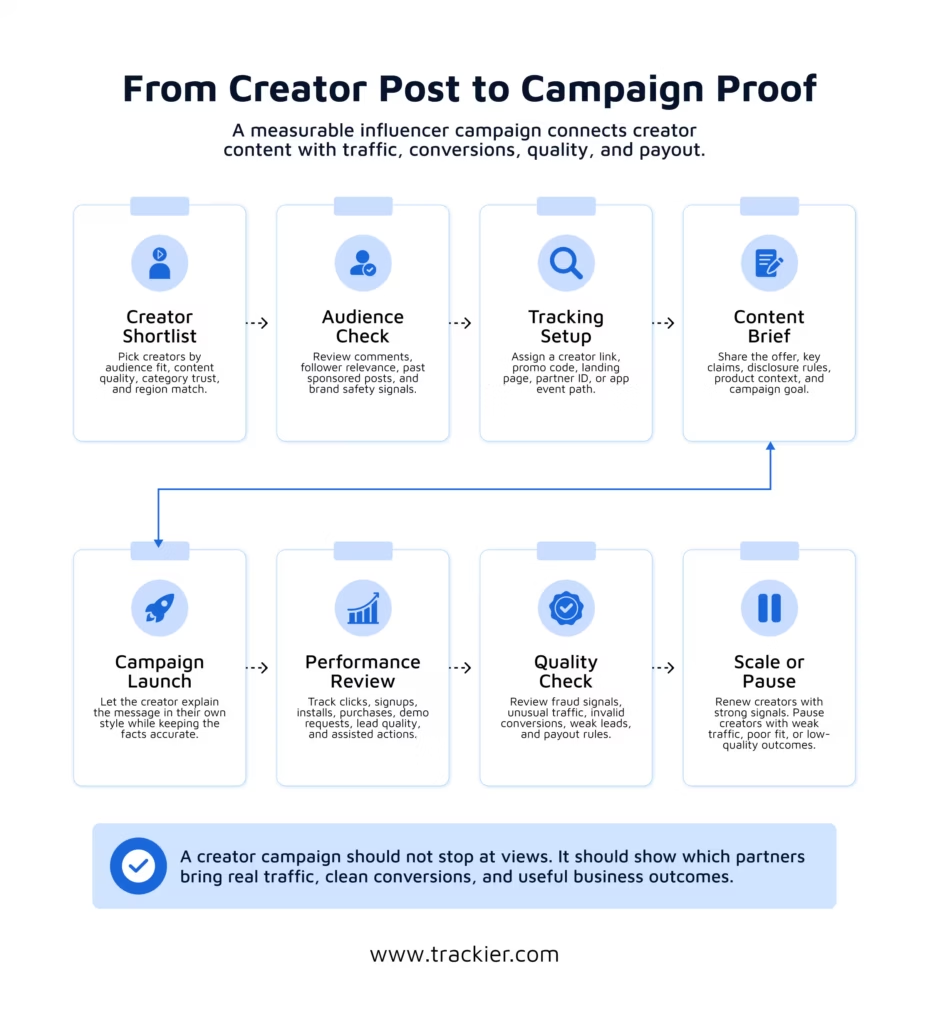
A proper workflow should connect creator approval, disclosure rules, tracking setup, conversion events, fraud checks, and payout logic. Creator programs are becoming partner programs and partner programs need control.
How To Act On Influencer Marketing Trends Effectively?
When influencer marketing trends bring actual change in how your team selects creators, sets goals, measures quality, and decides where the next round of budget goes, that is when you know the trends are coming in handy.
– Start with the final goal of the campaign.
- If the goal is awareness, judge creator content by reach quality, audience match, saves, comments, brand search movement, and assisted traffic.
- If the goal is lead generation, track form fills, demo intent, trial starts, and lead quality.
- If the goal is revenue, connect creators to conversions, payouts, refunds, repeat purchases, or subscription quality.
One creator program can serve different goals, but each creator should not be judged by the same metric every time.
– Build a creator scorecard before outreach begins.
A simple one works better than a complicated one nobody likes to open and look at. Include audience fit, content quality, comment quality, brand safety, past sponsorship style, expected conversion path, region fit, and disclosure readiness. For US campaigns, disclosure checks need to be part of the workflow because paid or gifted relationships should be clear and easy to notice.
– Then give every creator a trackable path.
That path can be a link, promo code, landing page, QR code, app deep link, referral setup, or partner ID. If traffic, conversions, and payouts cannot be tied back to the creator, the campaign will fall back to inaccurate assumptions.
For affiliate-led creator programs, a clean affiliate marketing platform can help teams manage partners, track conversions, automate commissions, and measure ROI from campaigns.
– The next step is to watch quality.
High clicks can hide weak intent. Cheap leads can become expensive when they never move. Strong engagement can still bring poor business results. So the review should include traffic source, conversion rate, lead stage movement, payout status, fraud signals, and post-campaign retention where the data is available.
Influencer marketing trends are pushing teams to work more closely with creators on content direction. Give creators product context, the audience problem, the offer and the must-say points, then leave room for their format, phrasing, pacing, and examples.
– The review cycle should stay short.
Check early traffic, comments, whether the creator is answering questions correctly, whether the landing page matches the content promise. A creator would do their part well and the campaign might still bleed because the offer, page, form, or tracking setup is not optimized. Run a small test group before scaling.
Pick a few creators across different audience types, give them clear tracking and compare results after enough activity has passed. Then decide which creators should move into longer partnerships and which audience segments are not worth the spend.
What Are The Next Steps To Take?
Treat creator marketing like a partner channel from the beginning. That small change affects almost every decision. You stop buying posts in isolation and start building a system where creators can be selected, activated, tracked, paid, renewed, or paused.
Start with five practical moves. Define one campaign goal before you shortlist creators. Choose creators by audience fit before follower count. Set up tracking before content goes live. Review quality after the first wave.
Keep the creators who improve over time. A creator who learns your product and brings useful traffic across multiple posts may become more valuable than a bigger creator who gives you one loud spike and nothing after.
Influencer marketing trends will keep changing because platforms, audiences, and buying paths keep changing. The useful direction is already visible, creator programs are becoming more measurable, more accountable, and more connected to partner marketing.
Brands that build the right workflow now will already have the basics in place every time a new format gathers attention.
Hungry for more? Download our free case studies that cover real stories.
Or sign up for Trackier’s newsletter to get weekly best practices on referral programs and partner marketing.
Frequently Asked Questions
1. How should B2B brands use influencer marketing trends without sounding forced?
B2B brands should work with operators, founders, consultants, analysts, agency leaders, and niche creators who already speak to the market. The content should feel useful before it feels promotional. For example, a SaaS brand can ask a creator to explain a workflow, compare common mistakes, or show how teams solve a reporting problem. Influencer marketing trends are useful for B2B when they support trust, education, and trackable demand, not when they copy consumer-style creator campaigns.
2. How can teams measure influencer campaigns when the buyer journey is long?
Longer buying journeys need softer and harder signals together. Track clicks, landing page visits, content downloads, demo requests, trial starts, assisted conversions, CRM stage movement, and final revenue where possible. A creator may not close a deal in one post, especially in SaaS or enterprise buying. So the campaign should connect creator activity with pipeline signals over time. Influencer marketing trends are moving in this direction because marketers need to prove more than reach and engagement.
3. Should brands pay influencers through flat fees or performance-based payouts?
Both models can work, but the better setup often depends on the creator’s role. A flat fee makes sense when the creator is producing content, educating the audience, or helping with awareness. Performance-based payouts work better when the campaign has clear conversion paths, clean tracking, and a direct action such as signup, purchase, install, or qualified lead. Many teams now use hybrid models because creator effort and business outcomes both need fair value. Performance-based compensation is also appearing more often in current influencer marketing trends.
4. How much control should a brand keep over creator content?
A brand should control claims, compliance, product accuracy, offer details, and disclosure rules. The creator should control the way the idea is explained. Over-control usually makes the content sound like an ad read. Too little control can create wrong claims or weak positioning. Give creators the product truth, the audience problem, the tracking path, and the non-negotiables. Then let them write in their own rhythm. That balance keeps influencer marketing trends practical instead of over-managed.
5. What should brands check before scaling an influencer program?
Before scaling, check creator fit, audience quality, traffic behavior, conversion rate, lead quality, payout accuracy, suspicious activity, and content compliance, plus whether the landing page matches the creator’s promise, since many campaigns fail after the click, not inside the post. FTC guidance also requires clear disclosure of material connections, so that review should happen before expanding. Keeping up with influencer marketing trends helps brands know which checks matter most as things shift.


