Affiliate commission rate looks like a simple number from the outside.
A 10% payout. A 25% recurring commission. A flat $50 for every qualified lead. Easy enough, right?
Well, not always.
That number dictates how affiliates choose programs, how businesses protect margins, how networks price offers, and how long a partner relationship stays healthy. A rate that looks attractive on paper can fail just as easily if tracking is inaccurate, payouts are delayed, or the rules feel unclear.
On the other side, a low rate is not always unfair. Sometimes the product has thin margins, high refund risk, or a long validation cycle.
Before we get into models and benchmarks, it helps to understand how commission tracking fits into the wider partner journey. Trackier’s glossary article on affiliate attribution explains how clicks, conversions, partners, and payouts are usually tracked inside an affiliate program.
What Is an Affiliate Commission Rate?
An affiliate commission rate is the payout an affiliate earns after driving a specific result for a business.
That result can be a product sale, a qualified lead, a signup, an app install, a subscription, a demo booking, or any other action agreed in the affiliate program.
It can be set as a percentage, a fixed amount, a recurring payout, or a tiered reward.
For example, a retail program may pay a percentage of every completed sale. A SaaS program may pay a recurring commission for each active customer. A lead generation program may pay only when the lead passes quality checks. An affiliate network may define different payouts for different offers, countries, traffic types, or partner levels.
That is why one flat answer rarely works.
A fair commission rate depends on the product, the margin, the sales cycle, the customer value, and the amount of work needed to drive the action.
What Are the Main Affiliate Commission Rate Models?
A commission rate can be structured in more than one way. That is where most confusion begins.
Two programs may both say they offer “20% commission,” but the real earning value can be completely different. One may pay once on the first sale. Another may pay every month as long as the customer stays active. A third may increase the rate only after the affiliate crosses a revenue target.
Before comparing numbers, it is better to understand the model behind them.
1. Percentage-Based Commission
This is the most common affiliate commission rate model. The affiliate earns a fixed percentage of the sale value after a successful conversion.
For example, if a product sells for $200 and the commission is 10%, the affiliate earns $20. Simple enough.
This model works well when order values vary. It also keeps the payout linked to revenue, which makes it easier to scale across different product prices.
For affiliates, percentage-based commissions can be attractive when the product has a strong average order value. For businesses, it keeps payout flexible because the commission moves with the sale amount.
Retail affiliate programs often use percentage-based commissions because the payout moves with the sale value. This keeps the model simple for affiliates and flexible for businesses, especially when product prices vary across categories.
2. Flat Commission
A flat commission pays the same amount for every approved action.
That action could be a sale, lead, account opening, app install, demo booking, or qualified signup. The order value does not change the payout.
For example, an affiliate may earn $30 for every approved lead or $100 for every new customer. This model is easier to understand because everyone knows the exact payout before promotion starts.
Flat commission works best when the value of each conversion is fairly consistent. It is also useful in lead generation because the final sale may happen later, after the affiliate has already done their part.
A flat affiliate commission rate is not always lower quality than a percentage model. In many cases, it gives affiliates more predictable earnings and gives the business cleaner cost planning.
3. Recurring Commission
Recurring commission is common in SaaS, memberships, subscriptions, and other repeat-payment products.
Here, the affiliate earns a commission more than once. The payout may continue for a fixed period, such as 12 months, or for as long as the referred customer remains active.
This model works well when the product has strong retention. It rewards affiliates not only for bringing a customer in, but also for bringing in the kind of customer who stays.
For affiliates, recurring commission can be powerful because one good referral can keep paying over time. For businesses, it can be a fair model when revenue is also recurring, not one-time.
The important detail is the payout window. A 25% recurring affiliate commission rate for three months is very different from 25% for the full customer lifetime. Always check the duration, payout rules, cancellation terms, and refund policy before judging the rate.
4. Tiered Commission
A tiered commission model increases the commission rate when performance improves.
This usually means better rates after the affiliate reaches a certain number of sales, leads, active customers, or revenue contribution.
For example:
| Performance Level | Example Commission | What It Means |
| Starter tier | 10% | A basic rate for new or low-volume affiliates |
| Growth tier | 15% | A higher rate after consistent approved conversions |
| Partner tier | 20% | A premium rate for top performers or strategic partners |
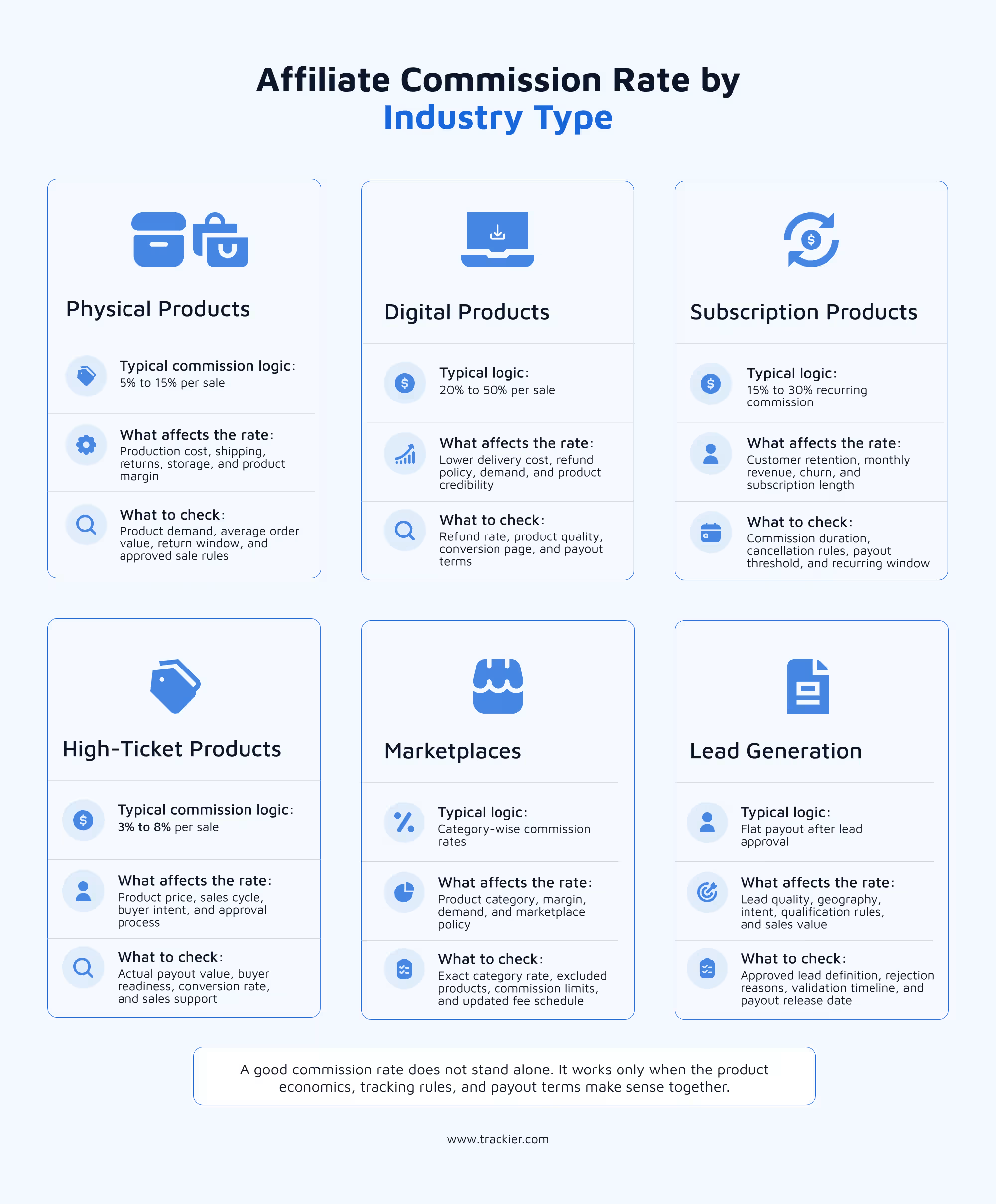
How Do Affiliate Commission Rates Change by Industry?
Commission rates do not behave the same way across every industry.
That is why comparing one program with another can be misleading very quickly. A 5% payout in one category may be excellent. A 5% payout in another may not get much attention at all.
The difference usually comes down to margin, repeat purchase value, product price, refund risk, and how hard it is to influence the sale. A simple low-ticket product does not carry the same commission logic as a subscription tool, a financial product, or a high-consideration B2B solution.
Physical Products Usually Have Lower Commission Rates
Physical products often come with production costs, storage costs, shipping costs, return risk, and tighter margins. Because of that, the affiliate commission rate is usually more controlled.
A retail affiliate program may still be attractive, but the real value often depends on product demand and conversion rate. If the product sells easily and has strong brand trust, even a modest commission can perform well for affiliates.
For context, current affiliate commission benchmarks place physical goods around 5% to 15% per sale, digital products around 20% to 50%, subscription services around 15% to 30% recurring, B2B software and services around 10% to 30% of the first contract value, and high-ticket items around 3% to 8% per sale.
For affiliates, this means product selection matters as much as the rate. For businesses, this means one flat payout across all products may not always make sense.
What Should You Check Before Choosing or Offering a Commission Rate?
Before accepting or setting a commission rate, do a quick reality check.
This does not need to be complicated. You only need to ask whether the rate makes sense for the product, the effort, and the outcome being rewarded.
Use this simple checklist.
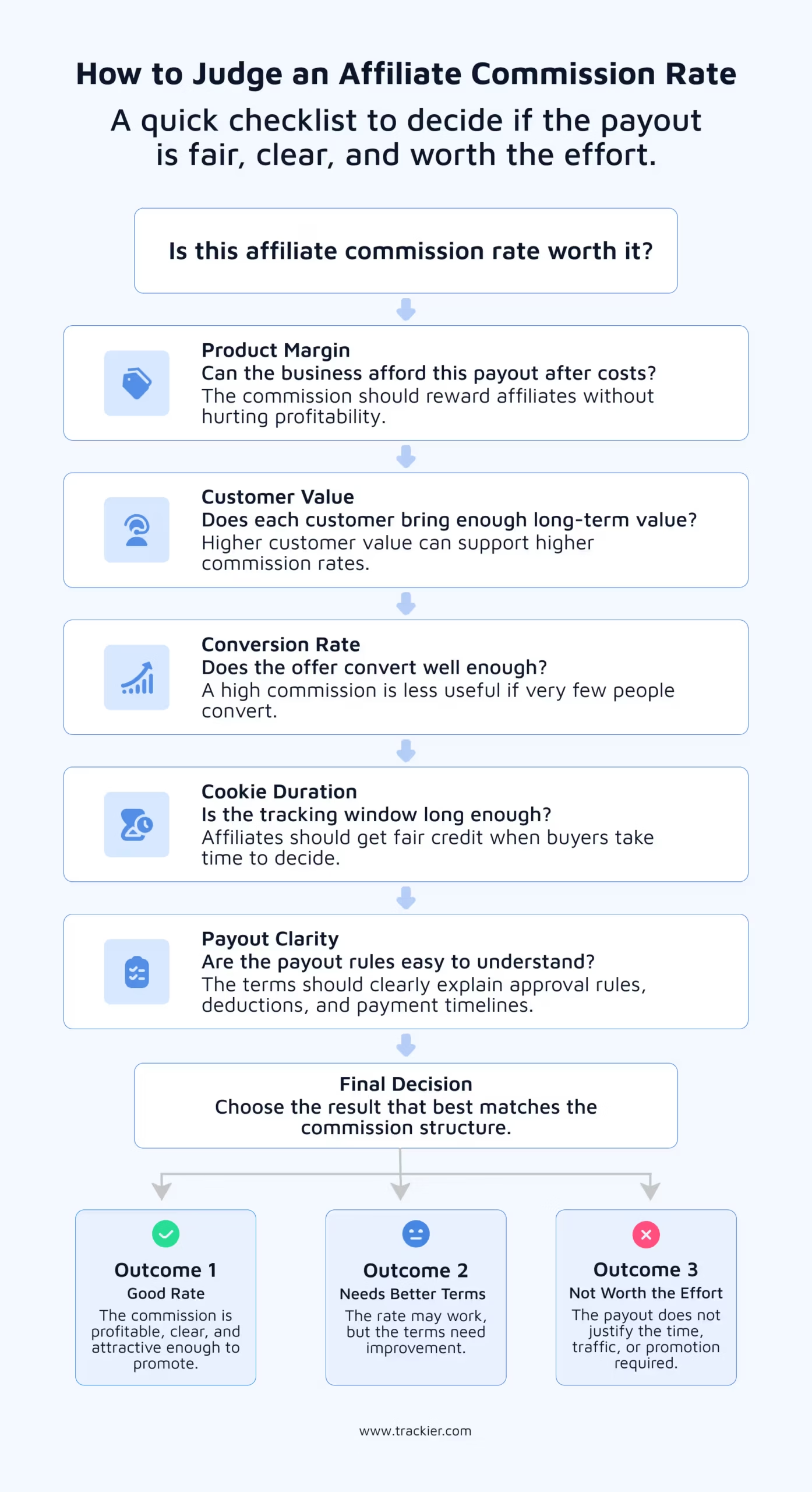
- Check the product margin: A product with tight margins cannot always support a high commission. Physical products usually pay lower rates because shipping, production, returns, and storage reduce room for payouts. Digital products and subscriptions may support stronger payouts because delivery costs are lower or revenue continues over time.
- Check the customer value: A subscription product or high-LTV customer can support a stronger commission because the business earns beyond the first transaction. This is why SaaS and membership programs often use recurring payouts.
- Check the partner effort: A simple coupon placement does not require the same effort as a full comparison guide, webinar, community recommendation, or B2B lead generation campaign. Higher effort usually deserves better payout logic.
- Check the attribution setup: Commission disputes often happen when clicks, conversions, attribution windows, and rejected actions are not tracked properly. A reliable affiliate tracking setup helps make the commission process more transparent.
- Check category-specific rates: Large marketplaces often use different rates for different product categories. Amazon Associates, for example, publishes category-wise commission rates because not every product type carries the same margin.
Conclusion
Affiliate commission rate is not just about who gets paid and how much. It is about whether the value exchange is clear.
For affiliates, a good rate should justify the traffic, content, audience trust, and effort behind every recommendation. For businesses, it should reward real outcomes without turning growth into a margin problem.
That balance depends on a few basics.
Look at the product margin. Check the customer value. Understand the effort needed to drive the action. Review the cookie window, approval rules, refund policy, and payout timeline. Most importantly, make sure the tracking is clear enough for both sides to trust the result.
A higher commission rate can attract attention, but attention alone does not build a strong program. A fair rate, backed by clean attribution and reliable payouts, does.
So before you accept, promote, or set a commission structure, do one thing well.
Instead of focusing solely on the percentage, judge the full payout model. That is where better affiliate partnerships begin.
Hungry for more? Download our free case studies that cover real stories.
Or sign up for Trackier’s newsletter to get weekly best practices on referral programs and partner marketing.
Frequently Asked Questions
1. What is considered a ‘good’ affiliate commission rate?
The definition of a good affiliate commission rate depends on the product type, margin, customer value, and how difficult the conversion is.
Physical products usually pay lower rates because costs like shipping, storage, and returns reduce margin. Digital products and subscriptions may support higher payouts because delivery costs are lower and revenue can continue over time.
The better way to judge a rate is to compare commission, conversion rate, cookie duration, and payout reliability together.
2. Why do affiliate commission rates vary by industry?
Affiliate commission rates vary because every industry has different economics.
A fashion product, SaaS subscription, marketplace item, finance lead, and high-ticket product do not create value in the same way.
Some products have lower margins. Some have longer sales cycles. Some need strict lead validation. That is why many programs use category-wise, flat, recurring, or tiered commission models instead of one standard payout for every offer.
3. Is a higher affiliate commission rate always better?
No. A higher affiliate commission rate can look attractive, but it does not always mean better earnings.
Affiliates should also check conversion rate, brand trust, cookie duration, refund rules, and payout timelines.
A 15% commission on a product that converts well can be more valuable than a 40% commission on an offer with poor demand or unclear approval rules. The important aspect is how much approved revenue the offer can generate consistently.
4. What should affiliates check before joining a commission-based program?
Affiliates should check the commission model, cookie duration, minimum payout threshold, payment frequency, refund policy, and approval rules.
They should also check whether the product fits their audience. A good affiliate commission rate will not help much if the audience does not trust the product or the landing page does not convert.
Clean tracking also matters because unclear attribution can lead to missed or disputed commissions.
5. What should businesses check before setting an affiliate commission rate?
Businesses should start with margin, customer lifetime value, sales cycle, and partner effort.
A product with thin margins may need a lower percentage or flat payout. A subscription product may support recurring commission. A high-effort B2B lead may need quality-based approval rules.
The rate should also be supported by proper tracking, conversion attribution, fraud checks, and payout workflows.
Trackier’s affiliate tracking software covers these capabilities, including click tracking, conversion attribution, fraud detection, automated payouts, reporting, and partner management.