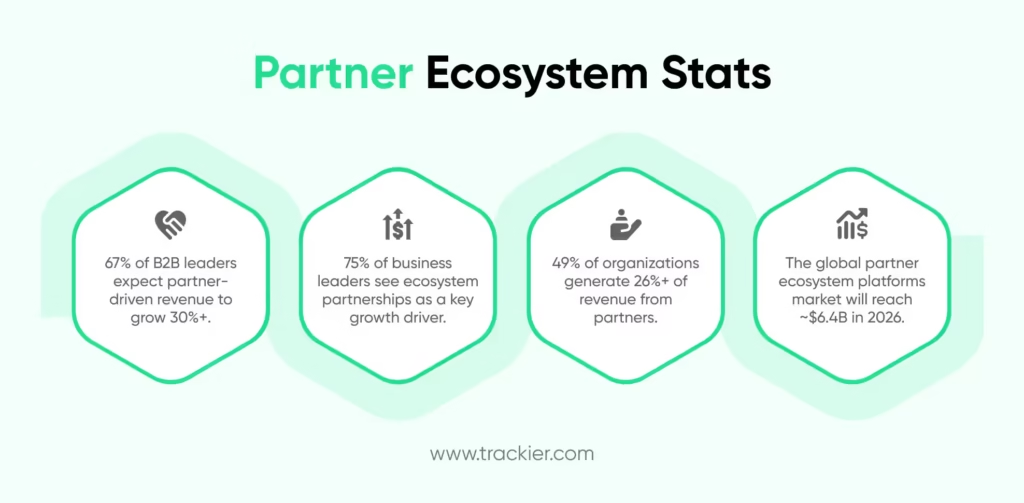
Partnerships are no longer optional; they’re a major driver of business growth in today’s digital economy. In fact, a recent survey found that 67% of B2B organizations expect indirect revenue from partners to grow by more than 30% compared to the previous year, highlighting the expanding influence of partner ecosystems on revenue outcomes.
But strategic partnerships don’t flourish by accident. To unlock consistent value from affiliates, influencers, channel partners, and other collaborators, organizations need a structured approach to managing relationships at every phase. Partner Lifecycle Management (PLM) provides that roadmap, turning potential partners into high-performing growth engines.
Today, companies are increasingly putting their performance-driven teams into technology that can deliver better visibility and automation across all lifecycle activities (onboarding, attribution, performance tracking, fraud prevention, etc.). Platforms like Trackier provide real-time insight and automated workflows that allow organizations to scale the growth of their partner programs while maintaining control.
We will examine the stages of partner lifecycle management in depth and show how a disciplined and data-driven approach will allow you to achieve sustainable growth through your partner ecosystem.
What is Partner Lifecycle Management?
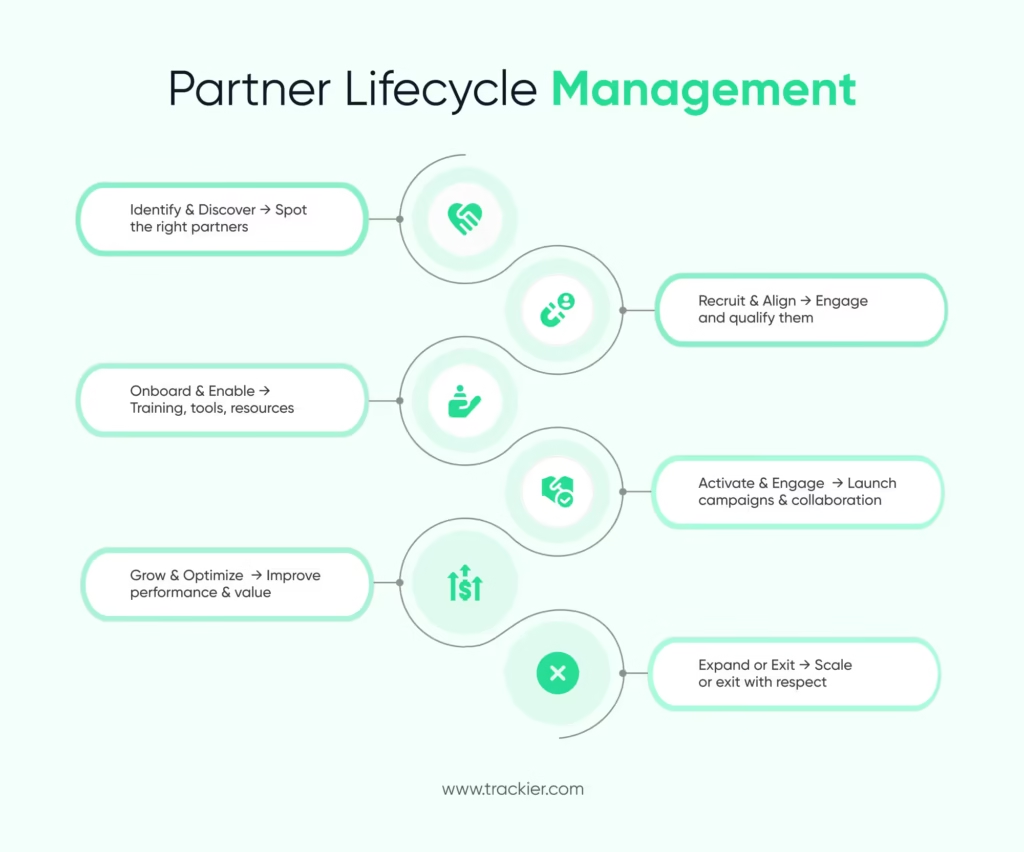
Partner lifecycle management (PLM) refers to the strategies and procedures used by companies to oversee partner relationships from their beginning through maturity, and even to renewal or exit.
It provides partners with an opportunity to progress through various stages of the partnership lifecycle, including recruitment and onboarding, engagement with partners, tracking of partner performance, optimization of partner performance, and ongoing evaluation of performance so that partners and the organizations that partner with them will both ultimately be successful.
Instead of viewing partnerships as one-time transactions, PLM ensures that each partner receives the appropriate support and resources at all stages of the relationship lifecycle.
Clear expectations regarding the recruitment of partners, optimal enablement during the onboarding process, ongoing engagement to increase performance, and the evaluation of the performance of partners through data during the evaluation process for expanding or restructuring the partnership.
PLM helps businesses build stronger, more productive ecosystems by aligning goals, maintaining visibility into performance, and continuously improving partner engagement, all of which can drive sustainable revenue growth.
Tools for automation and marketing analytics make it easier to manage each stage efficiently and transparently, especially when scaling partner programs.
Why Partner Lifecycle Management Still Matters in 2026?
The evolution of business ecosystems is rapidly shifting; nevertheless, PLM remains an important component of a company’s overall strategy and will continue to be so until 2026 and beyond. Below are reasons that illustrate this point:
- Partner ecosystems are broader, more complex, and more strategic than ever. Today’s business networks include affiliates, influencers, technology alliances, service firms, and channel partners working together to deliver end‑to‑end solutions. Without a clear lifecycle framework, organizations risk slow onboarding, misaligned expectations, and fractured execution. Structured PLM gives every stakeholder a map of the journey and roles, which improves coordination and results.
- Partnerships are increasingly important to revenue and growth. A strong partner ecosystem now drives measurable business outcomes, from expanding market reach to building sustainable revenue pipelines. Industry data shows that partner programs remain highly important to ecosystem partners, with 63% of technology ecosystem respondents indicating partner programs are “extremely important” to their business success.
- Data‑driven execution is the new standard. Organizations are adopting analytics, automation, and real‑time performance measurement to make partner engagement smarter and more efficient. From predicting trends to identifying high‑performing partners early, data‑centric PLM replaces guesswork with insights that improve outcomes and reduce churn.
- Technology investment is rising sharply. The market for partner ecosystem platforms and partner relationship management systems continues to expand, reflecting the increasing reliance on digital tools to manage lifecycle activities like onboarding, enablement, and performance tracking. This growth underscores how essential structured PLM is to scaling partner programs effectively in 2026 and beyond.
10 Effective Steps for Partner Lifecycle Management
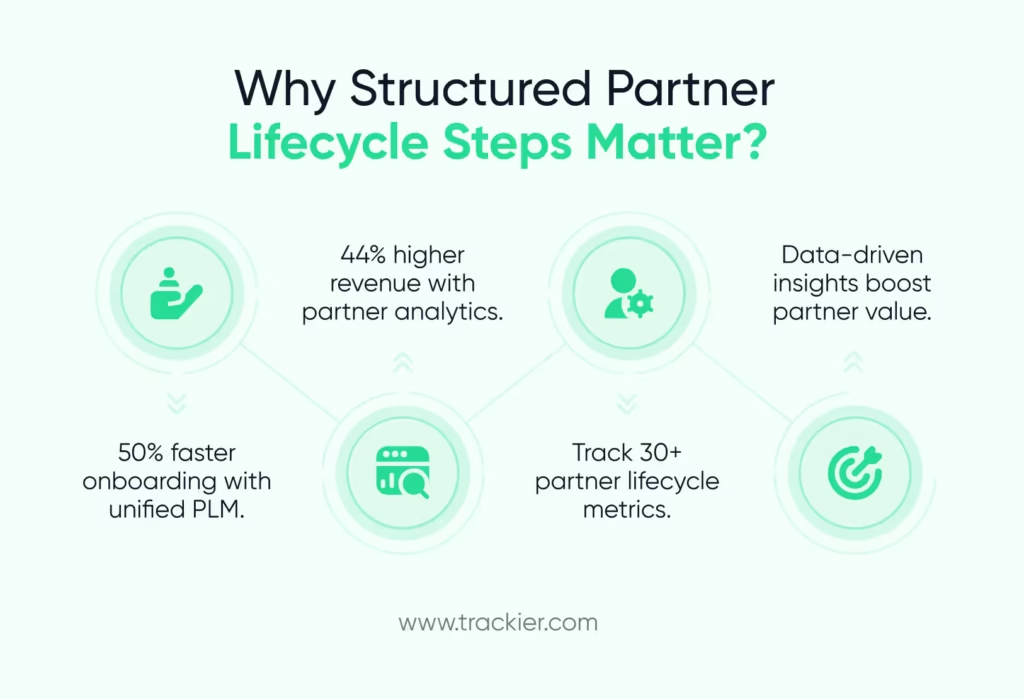
Effective partner lifecycle management (PLM) is both strategic and operational. It combines thoughtful planning, strong communication, appropriate enablement, and data‑driven optimization so that partners contribute meaningfully to your business goals. Below are 10 proven steps to manage partner lifecycle successfully:
1. Create an Ideal Partner Profile (IPP)
The first step is to determine what you consider to be “successful” in a partner. Develop an ideal partner profile by identifying attributes such as industry alignment, technical skills, audience fit and strategic value.
This helps eliminate wasted efforts spent on partners that are misaligned with your goals, and directs your attention to partners where the best potential exists for driving significant results.
2. Build a Repeatable Recruitment Process
Recruiting partners should not be done in an ad hoc manner. You should create and document a standardized recruiting process that clearly defines the following:
- Partner value proposition
- Channels of outreach
- Partner qualification checklists
3. Develop a Structured Onboarding Program
Onboarding sets the tone for the partnership for the duration of the relationship. You should create a 30-60 day onboarding plan including:
- Training and enablement modules
- Shared access to tools and dashboards
- Clear expectations for achieving initial milestones
4. Create Clear Communication and Governance Models
Establish communication rhythms and governance guidelines for the partnership, such as:
- Weekly pipeline syncs during activation
- Monthly joint operating reviews
- Quarterly strategy checkpoints
5. Enable with Resources and Support
Support and provide resources to partners through the following ongoing support mechanisms:
- Marketing resources
- Technical documentation
- Sales playbooks
- Certification programs
6. Monitor Performance with Shared KPIs
Track partner performance using transparent metrics such as:
- Pipeline sourced
- Deal registration conversion
- Partner engagement levels
- Revenue contribution
7. Conduct Regular Reviews and Feedback Loops
Quarterly business reviews (QBRs) and monthly check‑ins help you:
- Assess progress against goals
- Understand blockers
- Surface coaching opportunities
8. Launch Joint Go‑to‑Market (GTM) Activities
Partners become most productive when you collaborate on joint GTM plays like:
- Co‑branded campaigns
- Webinars or events
- Bundled offers
9. Optimize and Scale with Data
Leverage performance data to identify:
- High‑performing partners for investment
- Gaps in enablement or engagement
- Opportunities for improvement
10. Manage Expansion and Exit Thoughtfully
Not all partnerships scale; some need to evolve or end. For mature relationships, explore:
- Expansion into new markets or segments
- Joint product or service development
Key Metrics to Track Across the Partner Lifecycle
Tracking the right metrics throughout the partner lifecycle gives you visibility into performance, engagement, and long‑term impact, helping you make informed decisions and optimize your partner ecosystem for sustainable growth. Here are the most important metrics to monitor at each stage of the journey:
1. Partner Acquisition and Onboarding Metrics
- Time to First Sale – Measures how long it takes a new partner to make their first sale after onboarding. A shorter timeframe usually indicates effective enablement and alignment.
- Onboarding Engagement – Includes things like email open rates, resource downloads, and completion of courses or certifications during onboarding. High engagement here often predicts better performance later.
2. Activity and Engagement Metrics
- Partner Activation Rate – The percentage of recruited partners actively participating in your program (e.g., sharing content, generating leads, registering deals).
- Training Completion and Certification Rates – Tracks how many partners finish training or certification programs, reflecting readiness to drive performance.
- Active Partner Count – Number of partners actively generating value over a set period, a key indicator of ecosystem health.
3. Pipeline and Performance Metrics
- Pipeline Value Sourced by Partners – The total sales pipeline generated through partner activity, showing the scale of influence partners have on future revenue.
- Deals Registered and Approved – Tracks how many partner‑originated opportunities are progressing through your funnel, helping you gauge partner effectiveness.
- Conversion Rates – Measures how many partner‑referred leads convert into actual sales. Higher conversion rates often reflect strong partner understanding and alignment.
4. Revenue and Financial Metrics
- Partner‑Attributed Revenue – The actual revenue generated from partner‑sourced or partner‑influenced deals.
- Customer Acquisition Cost (CAC) via Partners – How much it costs to acquire a customer through partner channels, including commissions and support costs. This helps assess cost efficiency and profitability.
- Average Deal Size – The typical value of partner‑driven sales, which can reveal differences in customer quality or sales strategies across partner segments.
5. Customer and Long‑Term Value Metrics
- Customer Lifetime Value (CLV) – The expected total revenue from a partner‑sourced customer over time. CLV helps show which partners are generating sustainable value.
- Retention and Renewal Rates – Measures how well partner‑sourced customers stay engaged or renew subscriptions, reflecting customer satisfaction and product fit.
6. Program Health and Satisfaction Metrics
- Partner Retention and Churn Rates – The percentage of partners who remain active over time versus those who drop off. High churn can signal issues in support or value delivery.
- Partner Satisfaction Scores – Survey‑based metrics like NPS or CSAT capture how satisfied partners are with support, communication, and overall experience.
7. Operational Efficiency Metrics
- Time to Partner Response – The average time your team takes to respond to partner queries or requests. Faster responses build trust and momentum.
- Support and Enablement Utilization – How frequently partners use your help resources, toolkits, or support channels. High usage often correlates with higher engagement and performance.
How Technology Simplifies Partner Lifecycle Management?
With the introduction of advanced technologies, many businesses have moved away from traditional manual methods of managing relationships with partners and towards automated and scalable solutions controlling the entire partner lifecycle.
Through the use of a centralized platform to manage the partner lifecycle, businesses can move away from managing tasks across multiple tools (e.g. e-mail, spreadsheets) and manage partners from beginning to end with one platform. Here’s how:
1. Automates Manual Workflows
Technology automates repetitive tasks such as partner onboarding, contract management, and updates on partner statuses.
Automation makes onboarding easy for all partners, provides access to resources needed for setup, and shortens the amount of time it takes from partner engagement to delivery of first value with little to no manual input required.
Eliminating manual inputs reduces errors during onboarding and ensures that partners can begin to contribute quickly.
2. Centralizes Partner Information
The centralization of partner data prevents the need to track multiple records of a partner in different locations.
Technology solutions create a single repository for all partner data, including partner profile data, performance metrics, communication history, and co-owned resources, so that all partners have access to one another’s data in one location.
As a result, organizations can stay organized with minimal friction or wasted time.
3. Enhancing Communication and Collaboration
Integrated portals and messaging tools make communication more transparent and respond to needs more effectively; this allows partners to access materials, ask questions, or receive updates without the constant back and forth of emails.
This kind of communication provides higher trust and sets the stage for productive partnership relationships.
4. Providing Real‑Time Performance Insights
With an integrated dashboard and analytics, you can assess your partner’s performance in one platform at any given time; you can track leads, conversions, revenue influence, and see trends, while guiding underperformers and investing more quickly into your highest value partners.
5. Personalizing the Partner Experience
Technology enables organizations to personalize the partner experience based on the type of partner, performance level and engagement patterns.
Training programmes, marketing materials, and onboarding pathways can be different for each type; for example, strategic partners may have different training options compared to affiliates, which increases the value and relevance of the programme.
6. Supports Scalability
As a partner network increases in size, so too does the workload associated with maintaining an ever-increasing volume of partners; thus, organizations must adopt technologies that enable them to grow with their partners, without having to increase employee workload at the same rate.
Therefore, a technology-driven growth model can support a large number of partners in a network, without compromising the quality of support provided to partners.
7. Using Data to Make Decisions
Technology brings advanced analytics, reporting, and visual dashboards, empowering you to quantify partner contributions, optimize incentives, and align resources with actual impact. Data replaces guesswork, helping you prioritize initiatives that drive measurable growth.
Conclusion
Partner lifecycle management isn’t just a checklist; it’s a strategic framework that determines how well your partner ecosystem drives real business outcomes. In 2026 and beyond, organizations that treat partnerships as long-term growth engines, not ad-hoc add-ons, will win more market share, build stronger brand affinity, and deliver more predictable revenue.
PLM helps you do this by giving structure to how you recruit, enable, engage, and optimize partner relationships over time. However, without the right technology, managing all this can still feel overwhelming. That’s where modern platforms step in to simplify complexity and automate repetitive work.
Trackier bring together real-time tracking, performance analytics, automated payouts, and fraud prevention, giving you full visibility into partner performance and letting you focus squarely on strategy and growth.
Imagine onboarding partners in minutes instead of hours, seeing which partners truly impact your bottom line in real time, and automating payouts so partners are always motivated and paid accurately.
With Trackier’s unified performance marketing and partner management capabilities, you can do all this and more, turning your lifecycle strategy into tangible growth across channels.
If you’re ready to scale your partner ecosystem with clarity, automation, and data-driven insights, give Trackier a try and see how it transforms your lifecycle management from reactive to proactive growth enabling.
FAQs
1. How can technology help in partner lifecycle management?
Technology like partner management platforms automates onboarding, centralizes partner data, simplifies communication, and provides real‑time performance analytics. These capabilities reduce manual work, improve collaboration, and enable data‑driven optimization at every lifecycle stage.
2. What metrics should I track in Partner Lifecycle Management?
Key metrics include partner acquisition rates, activation and engagement measures, performance and pipeline contributions, revenue attributed to partners, partner satisfaction, and retention or churn rates. Tracking these helps identify high‑impact partners and areas for improvement.
3. What stages are included in the partner lifecycle?
Typical lifecycle stages include: discovery and recruitment, onboarding and enablement, activation and engagement, performance growth, optimization and evaluation, and renewal or exit. These phases help structure partner interactions and maximize long‑term value.
4. How does PLM differ from Partner Relationship Management (PRM)?
PLM refers to the full journey of a partnership, while PRM typically describes the software and systems used to automate and manage partner interactions. PRM tools often support PLM by centralizing communication, tracking performance, and streamlining processes.
5. What role does data play in Partner Lifecycle Management?
Data provides objective insights into partner behaviour, performance trends, and lifecycle bottlenecks. With real‑time analytics and dashboards, organizations can identify high‑performing partners, optimize incentives, and make informed decisions that improve outcomes across all lifecycle stages.