Executive Summary
2026 is a recalibration point for performance marketers.
As third-party cookies crumble and AI takes the wheel in everything from creative optimization to predictive targeting, marketers are faced with a hard reset.
Attribution models are evolving rapidly. Customer acquisition costs (CACs) are increasingly erratic. Media costs are up, and attention spans are down. Against this backdrop, one thing is clear: yesterday’s performance playbook won’t survive 2026.
This report explores how attribution, AI, and ad spend dynamics are shaping a new era in performance marketing. It provides data-backed insights for CMOs, growth leaders, and partner marketers navigating a highly fragmented ecosystem. With real-world examples and market-specific takeaways, we map the new performance frontier and what it means for platforms like Trackier’s Partner Marketing Software and the businesses that rely on it.
Chapter 1: The AI-Automation Tug of War
Performance marketing in 2026 is unmistakably automated, but that doesn’t mean it’s entirely autonomous. Marketers find themselves at a critical crossroads, where AI promises speed, precision, and scale, but the trade-off is creeping disconnection.
Campaigns run faster, but are they running in the right direction?
Let’s start with what’s changed.
74% of marketers now use AI tools in their marketing stack. AI personalization has boosted conversion rates by up to 30%.
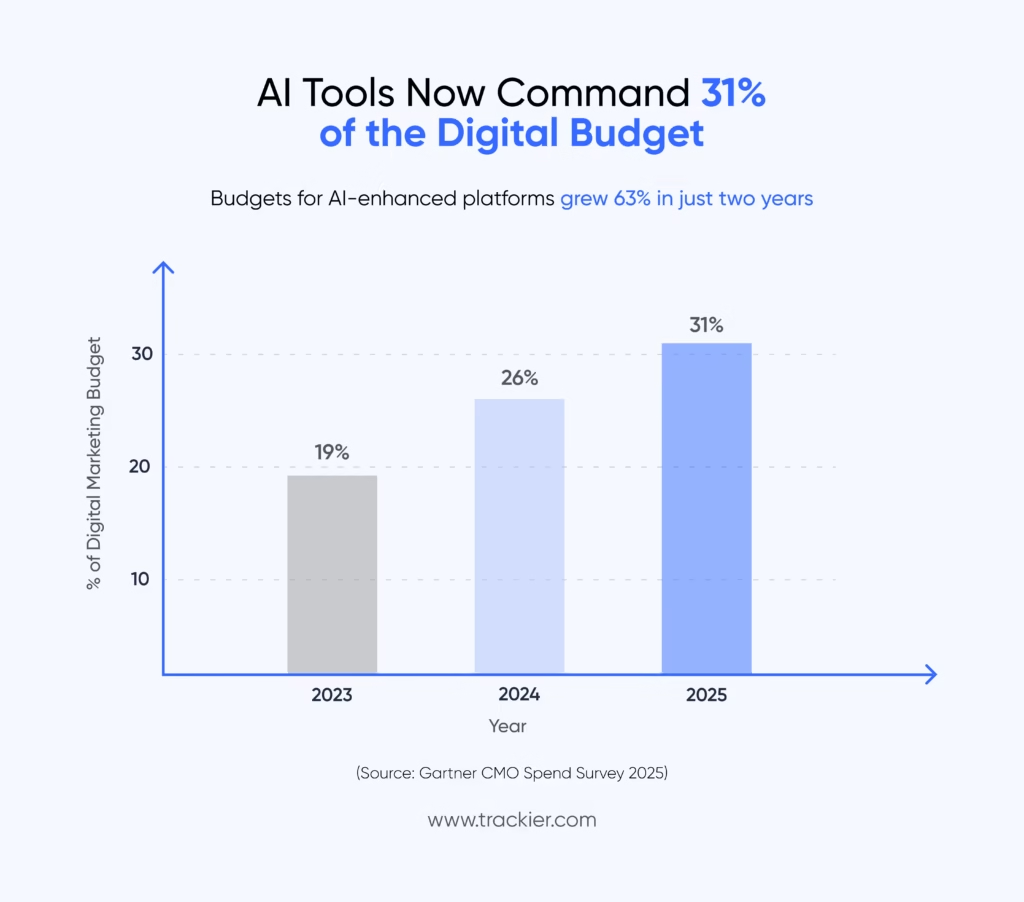
From generative creative tools to bid management algorithms, the average campaign is now powered by at least five AI-led touchpoints. Whether it’s choosing the best-performing creative variant, determining the highest-converting ad slot, or optimizing delivery timing, algorithms are taking the wheel across platforms. The shift is undeniable. According to the Gartner CMO Spend Survey 2025, 31% of digital marketing budgets allocated to AI-enhanced tools (2025, up from 19% two years ago). Paid media makes up 30.6% of marketing budgets in 2025. Marketing budgets remain flat at 7.7% of company revenue in 2025.
What’s driving this surge? Primarily, platform incentives and efficiency pressure. Google, Meta, and Amazon have all transitioned to AI-default settings in their ad products. Smart Bidding, Performance Max, Advantage+, and similar formats reduce manual input while promising better results. The lure is hard to ignore: faster testing, broader targeting, and real-time course correction.
But with every gain in automation comes a question:
Are we still driving the strategy, or just reacting to algorithmic suggestions?
Where AI Has the Strongest Grip
AI’s grip is especially strong in three key areas of performance marketing:
- Programmatic Media Buying: Most demand-side platforms (DSPs) now run on default AI-led bidding. They evaluate thousands of variables such as, device, time, geo, behavior, in milliseconds, far beyond human capability. Marketers set budgets and guardrails; the rest is machine territory.
- Creative Generation and Testing: Tools like Pencil, AdCreative.ai, and Jasper are enabling marketers to spin out thousands of ad creatives with minor variations across formats. Multivariate testing that once required weeks now happens overnight. However, that speed often sacrifices brand tone, customer empathy, or strategic narrative unless closely supervised.
- Predictive Audience Modeling: Platforms are now suggesting interest clusters, demographic profiles, and lookalike groups marketers may not even consider. TikTok’s Symphony, Meta’s Advantage+, and LinkedIn’s AI-aided audience expansion are reshaping top-of-funnel strategies, but also removing intentionality from targeting.
This wave of intelligence is seductive, but also opaque.
Black-box optimization systems are making micro-decisions at a scale no human team can review in real-time. The shift from campaign management to campaign monitoring is creating an operational identity crisis for marketers, especially those in performance-focused roles.
46% of CMOs said they felt “increasingly disconnected” from real-time campaign decisions due to added layers of AI automation by ad platforms. This figure jumps to 59% of CMOs reporting insufficient budget and leaning on AI to drive efficiency in industries like fintech and ecommerce, where pace and precision are paramount.
“The shift isn’t from man to machine, it’s from marketer to model curator. Your job is to teach the AI your business nuance.”
— Marketing Director, Fintech App (India)
What the Marketer’s Role Looks Like Now
The role of a performance marketer is evolving into that of a strategic interpreter, someone who trains, audits, and guides machine behavior, rather than executing every lever manually.
| Benefits | Trade-Off |
| Faster testing & optimization | Loss of granular creative control |
| Lower operational overhead | Reduced team visibility into real-time decisions |
| Predictive scaling | Over-reliance on black-box logic |
| Broader audience reach | Risk of brand tone dilution |
This is particularly risky for brand-sensitive sectors including healthcare, finance, SaaS, where compliance, tone, and positioning aren’t negotiable. One poorly worded AI-generated ad could breach regulatory guidelines or damage trust irreparably.
What This Means for Trackier Users
For users of Trackier’s partner marketing platform, this tug of war between automation and control is highly relevant.
Why? Because partner marketing inherently demands a level of customization and manual oversight that generic ad platforms can’t match. You’re working with affiliates, influencers, and resellers, each with their own tone, reach, and contribution to the funnel.
Trackier addresses this challenge by:
- Offering transparent optimization insights via customizable dashboards. You don’t just see performance, you understand where it’s coming from.
- Providing rule-based automation that’s fully configurable. Want to pause a partner if click-to-install ratio drops below a threshold? You can do that.
- Retaining manual override controls for partner payouts, campaign redirection, fraud flagging, and more, without sacrificing scale.
In short, Trackier users don’t have to choose between automation and control. The platform is built to let you scale with AI without surrendering strategic visibility.
The AI-Aware Marketer
So, what does a high-performing marketing team look like today? It’s not the one with the flashiest automation stack. It’s the one that:
- Understands what AI tools can and can’t do.
- Builds workflows that pair machine learning with human strategy.
- Audits AI decisions the same way they audit campaign metrics.
- Chooses tools that illuminate, not obscure, performance insights.
This shift is as much about mindset as it is about technology. The best marketers are not resisting automation, but they’re not blindly trusting it either, instead they’re curating it.
Chapter 2: Attribution Is Dead, Again
Today, attribution is a strategic identity crisis.
The tools that performance marketers once relied on to assign credit are no longer sufficient. Last-click attribution, already teetering for years, has collapsed under the weight of privacy restrictions, multi-device behaviors, and the rise of dark funnel touchpoints. But with its fall comes an urgent need to rebuild. Because if you can’t trust how you assign credit, you can’t trust your growth model.
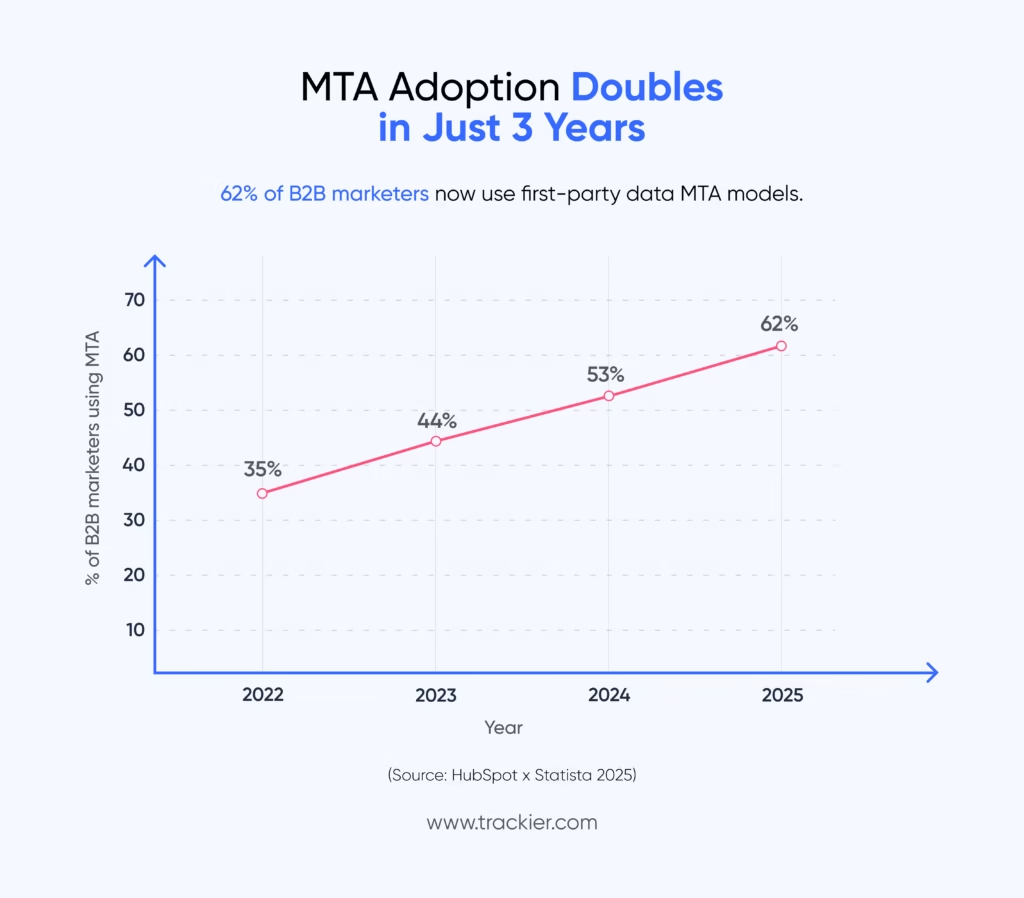
Over 52% of marketers adopted multi-touch attribution in 2024, with 57% calling it critical for measurement.
Why the Attribution Breakdown Matters Now
Attribution is all about decision-making. Budgets, incentives, creative direction, even hiring decisions stem from what marketers believe is “working.”
In the last year alone:
- Apple’s iOS 17 introduced Link Tracking Protection, stripping key UTM parameters from shared links.
- Google Chrome’s final cookie phase-out has impacted nearly 65% of desktop and mobile web sessions globally.
- Ad blockers and browser-level privacy defaults are hiding as much as 40% of referral traffic in key markets.
The result? Gaps. Gaps between first impression and final sale. Gaps between campaign spend and performance. Gaps that last-click attribution cannot explain.
“When 40% of our paid traffic shows up as direct or ‘unattributed,’ you stop trusting the numbers. We had to rebuild how we define value.”
— Senior Performance Analyst, APAC Retail Brand
The New Role of Multi-Touch Attribution (MTA)
Multi-touch attribution models aren’t new, but 2026 is the year they’ve become non-negotiable. With 8 to 10 touchpoints in a typical B2C journey, and over 20 in B2B, no single source deserves full credit.
MTA works by assigning partial credit to each channel or interaction in a buyer’s journey. Depending on the model used (linear, time-decay, position-based, etc.), value is split more realistically across every stage, from first ad click to email open to demo request.
Adoption of MTA models has surged:
- 62% of B2B marketers report using first-party MTA, up from 42% in 2023.
- 71% of marketers say they use more than one attribution model depending on campaign type and sales cycle length.
- 39% report using U-shaped (position-based) attribution as their default, emphasizing early and conversion-stage interactions over mid-funnel touches.
Still, attribution isn’t one-size-fits-all. Direct-to-consumer brands might favor time-decay models that reward recency. SaaS platforms running ABM might rely on weighted custom models that reflect how different buyer personas interact.
The Shift to First-Party Attribution Infrastructure
Third-party dependencies are dead weight. Modern attribution needs a first-party foundation:
- Authenticated user journeys (via login states, email IDs, or account-based tracking)
- Server-side tagging to reduce data loss from browser-level restrictions
- Clean cross-device IDs stitched from CRM, CDP, and ad platform inputs
This is a challenge for lean teams. Which is why solutions like Trackier’s multi-touch attribution system are becoming indispensable. It offers:
- Partner-specific touchpoint breakdowns
- Rule-based credit weighting
- Transparent, real-time attribution chains
For brands with decentralized campaigns, affiliate, influencer, content, app, all operating simultaneously, having a single source of truth is no longer optional.
Incrementality
While MTA maps contribution, incrementality testing measures causality. In other words: Did this channel drive a net new conversion, or would it have happened anyway?
In 2026, the best teams are blending the two:
- Using MTA for real-time channel optimization
- Using geo-split or audience holdouts to validate incrementality over time
Examples include:
- Affiliate holdouts: Where a brand turns off affiliate links in a region for two weeks to measure baseline conversion drop.
- Influencer incrementality tests: Where identical campaigns are run with and without an influencer overlay to test lift.
- Dark funnel surfacing: Where gated content, Slack communities, or product review sites are mapped back to leads using engagement timestamps and self-reported attribution.
“Our MTA model showed LinkedIn driving 8% of conversions. Our incrementality test showed it was closer to 2%. Big difference in budget planning.”
— Head of Growth, B2B SaaS Scaleup
Why This Is a Platform Problem, Not Just a Model Problem
The real barrier to good attribution isn’t logic, but fragmentation. Each tool (CRM, ad platform, analytics suite, partner tracker) has its own view of the truth. Stitching those together takes time, engineering, and alignment.
That’s why full-stack performance platforms like Trackier matter. By offering attribution logic, partner integration, payout logic, and fraud protection in one place, they reduce the delta between insight and action.
Whether it’s comparing last-click versus linear on a partner basis or setting custom touchpoint decay rates, having the flexibility to adjust attribution per campaign or vertical is crucial.
Chapter 3: Ad Spend in Freefall, Or Just a Correction?
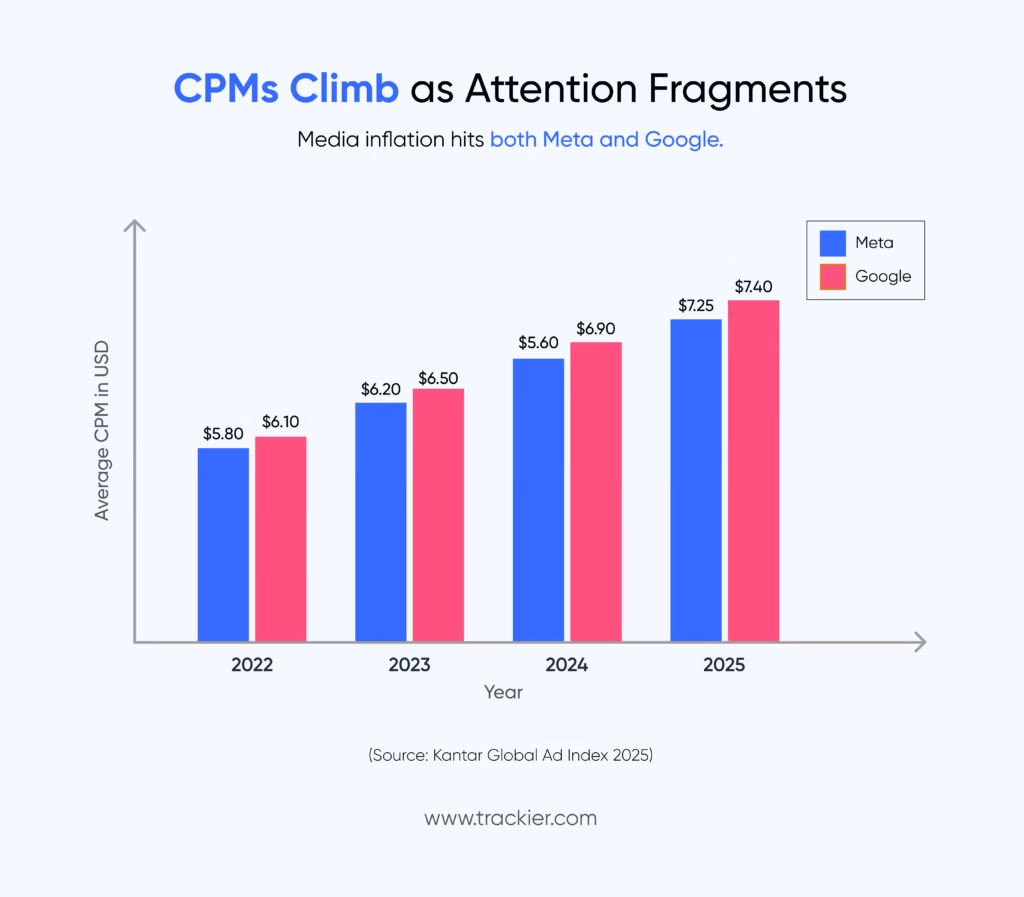
Across nearly every advertising channel, media inflation has disrupted forecast models, ROI expectations, and campaign planning cycles. While some headlines declare a freefall in performance marketing efficiency, seasoned marketers recognize what’s happening for what it truly is: a necessary correction.
Today, Cost Per Mille (CPM) rates have risen dramatically:
- Meta (Facebook & Instagram): Meta reported Q4 2024 advertising revenue grew 21% YoY and average ad price rose 14%
- Google Display & Search: 14% YoY increase
- YouTube: 17% YoY increase
This inflation is being driven by:
- Higher competition for finite attention
- Post-cookie tracking inefficiencies reducing retargeting accuracy
- Shifts in privacy laws reducing ad inventory targeting precision
Meanwhile, Customer Acquisition Costs (CACs) have become increasingly volatile. Especially in high-growth verticals like:
- eCommerce, where average CACs rose 27% YoY
- Fintech, where conversion costs fluctuate weekly based on regulatory changes
- D2C subscription brands, which are battling increased churn alongside acquisition struggles
But these macro changes have also forced marketers to re-evaluate their mix. Rather than doubling down on paid social or search where costs are spiking, many are shifting toward partner marketing, retail media networks, and streaming-based sponsorships, channels that offer more transparency, lower acquisition costs, and longer-term returns.
Media Mix Recalibration
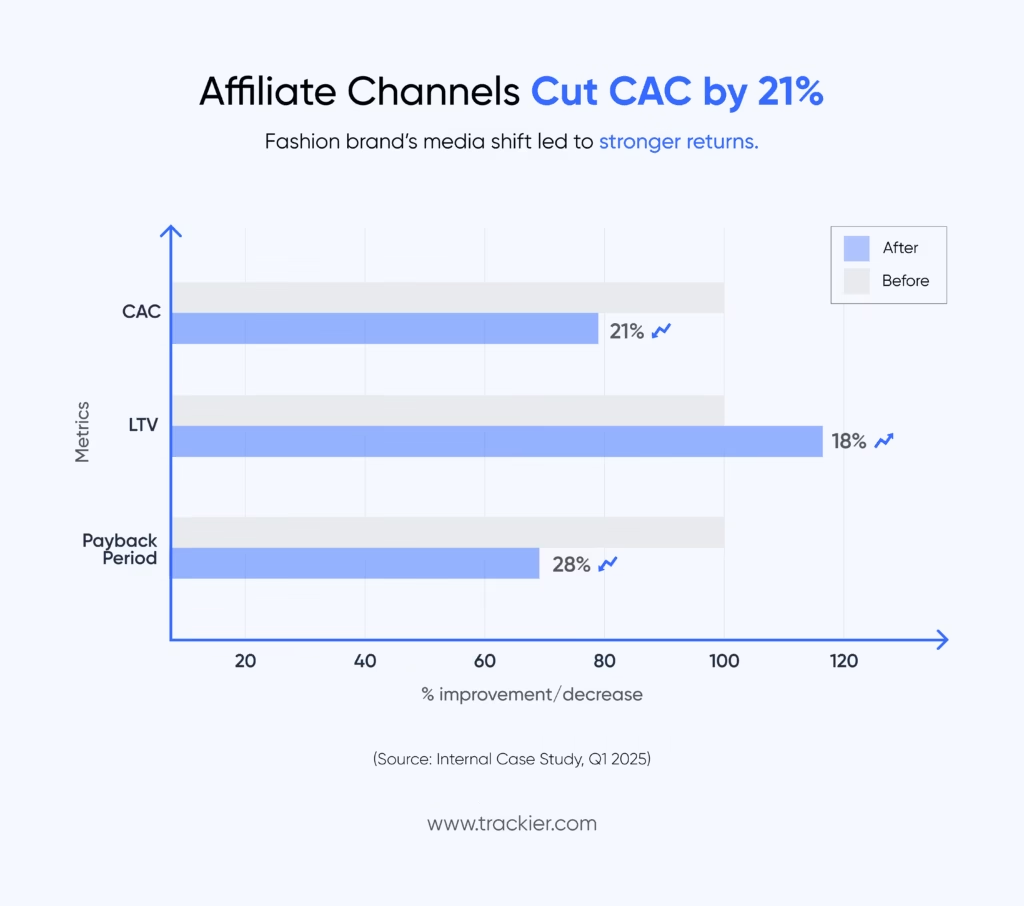
Take the case of a global fashion brand that had previously spent 70% of its digital budget on Meta and Google Ads. In Q1 2025, they reallocated 30% of that budget to affiliate programs and retail media partnerships. The results:
- 21% lower CAC
- 18% higher LTV per user
- 28% faster payback period
- Less reliance on volatile social algorithms
This shift didn’t just improve ROI; it also created a more stable performance base, one less vulnerable to algorithmic changes, ad fatigue, or tracking disruptions.
Why Affiliate & Partner Marketing Are Gaining Steam
With paid ads becoming increasingly unpredictable, affiliate and partner channels are enjoying a strategic resurgence. Their appeal lies in:
- Cost-predictable models (pay-per-performance vs. pay-per-impression)
- First-party data strength
- Low-fraud environments with proper tools in place
For Trackier users, this is where the platform’s capabilities shine. From fraud prevention filters and rule-based payouts to dynamic attribution models, Trackier offers the granularity and control necessary to navigate today’s erratic ad climate. Brands can segment by campaign type, partner class, geo, and device to fine-tune media strategy and reinvest in what’s working.
Incrementality Over Impression Volume
No longer are marketers chasing impressions and vanity clicks. The focus has moved to incrementality, understanding which channels genuinely contribute to conversions versus those that merely intercept.
Tools like geo-lift testing, holdout experiments, and channel suppression tests are becoming standard in measuring true performance. And with performance budgets under more scrutiny than ever, CMOs are demanding answers to questions like:
- “What’s our marginal cost per incremental user?”
- “Which partner drives real net-new customers, not overlap?”
With the right data and tools, many are discovering that a dollar spent on a niche affiliate program or an embedded product recommendation yields more return than a flashy banner ad.
Chapter 4: The First-Party Data Gold Rush
For years, marketers treated privacy regulations as a compliance headache, something to work around, not with. But in today’s market, the smartest brands have flipped that script. First-party data isn’t just a workaround for cookie deprecation. It’s emerging as the foundation of modern performance marketing.
This shift has been catalyzed by three converging forces:
- The collapse of third-party identifiers: With Google Chrome phasing out third-party cookies globally and Apple tightening IDFA restrictions, cross-site tracking has become deeply unreliable.
- Global compliance tightening: New regional mandates, from India’s Digital Personal Data Protection Act to expanded GDPR-like laws in Brazil and South Africa, are forcing brands to revisit their data collection architecture.
- Platform opacity: Walled gardens like Meta and TikTok now report performance through modeled conversions, reducing transparency and inflating CAC predictions.
In response, marketers are going back to the source, their own customers.
First-Party ≠ Just Email Lists
Today’s first-party strategies are smarter, faster, and more diversified. Brands are building owned-data ecosystems that span every owned and earned touchpoint.
Brands using first-party data achieved a 2.9× revenue lift and 1.5× cost savings.
These include:
- Opt-in referral programs that double as acquisition and enrichment engines.
- On-site behavioral tagging (via server-side GTM or APIs) to capture event-level actions.
- Partner pipelines where affiliates and influencers pass consented user data for retargeting and CRM syncing.
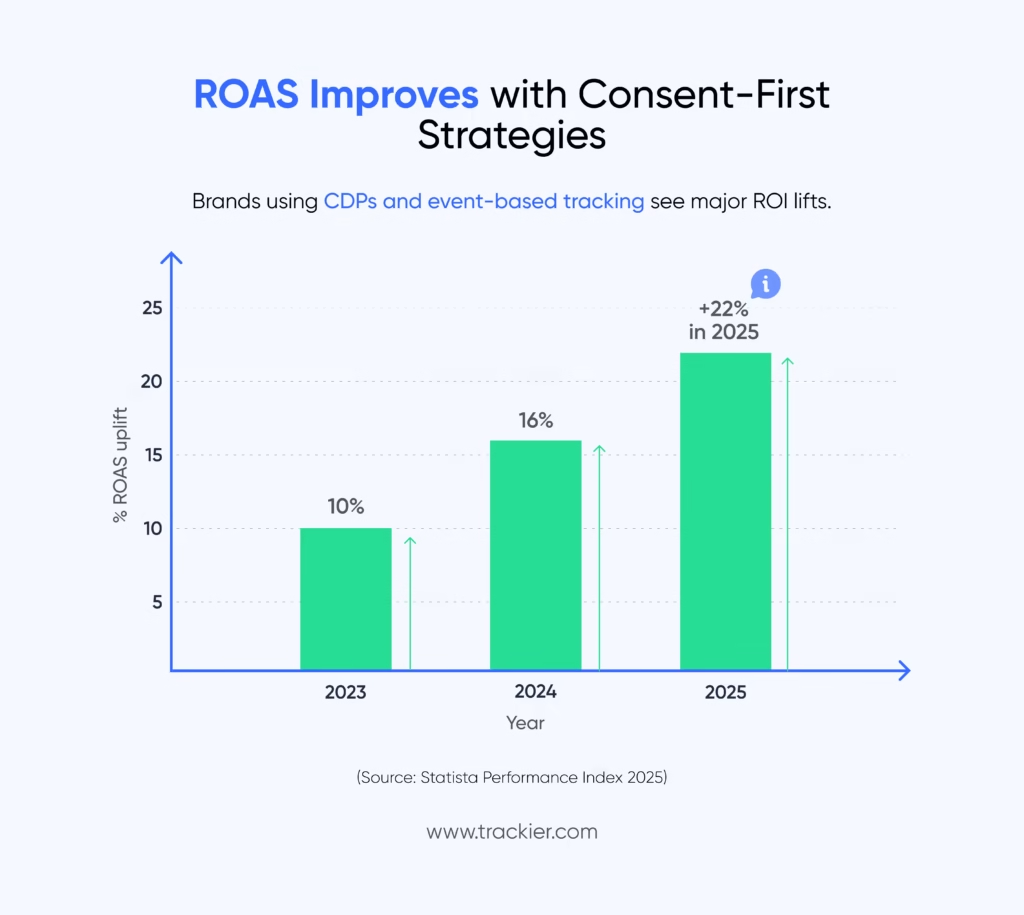
And it’s working. In a 2025 survey by Salesforce, marketers who invested in first-party CDPs (Customer Data Platforms) reported a 22% uplift in campaign ROAS and a 19% drop in churn, attributed largely to cleaner segmentation and reduced retargeting waste.
“Third-party data told us what users did. First-party data tells us who they are. That context makes all the difference.”
— Chief Marketing Officer, D2C Nutrition Brand (USA)
Consent-First Doesn’t Mean Conversion-Last
Contrary to old fears, privacy-first experiences are not conversion killers. In fact, friction-aware design is becoming a differentiator. Brands that transparently explain the benefit of data-sharing, be it personalized offers, early access, or loyalty tiers, are seeing opt-in rates as high as 71% across mobile and desktop.
In one case, a fintech app replaced its long opt-in disclaimer with a single-line prompt and an explainer modal. The result? A 37% lift in signups with consent, without impacting funnel velocity.
This is a core secret: compliance is no longer at odds with growth. It’s fuel for it, when built into the experience, not slapped on top.
What This Means for Trackier Users
Trackier’s partner marketing ecosystem is already optimized for a first-party future. Through native integrations with platforms like Shopify, WooCommerce, Firebase, and AppsFlyer, users can ingest and act on real-time partner-verified data. Combined with consented event-level tracking, this empowers marketers to:
- Measure true partner contribution at each funnel stage.
- Reduce dependence on cookie-based logic.
- Scale compliant re-engagement campaigns with full funnel visibility.
Trackier also enables webhook-based tracking, which passes live user actions directly to attribution logic, minimizing reliance on delayed syncs or inferred behaviors.
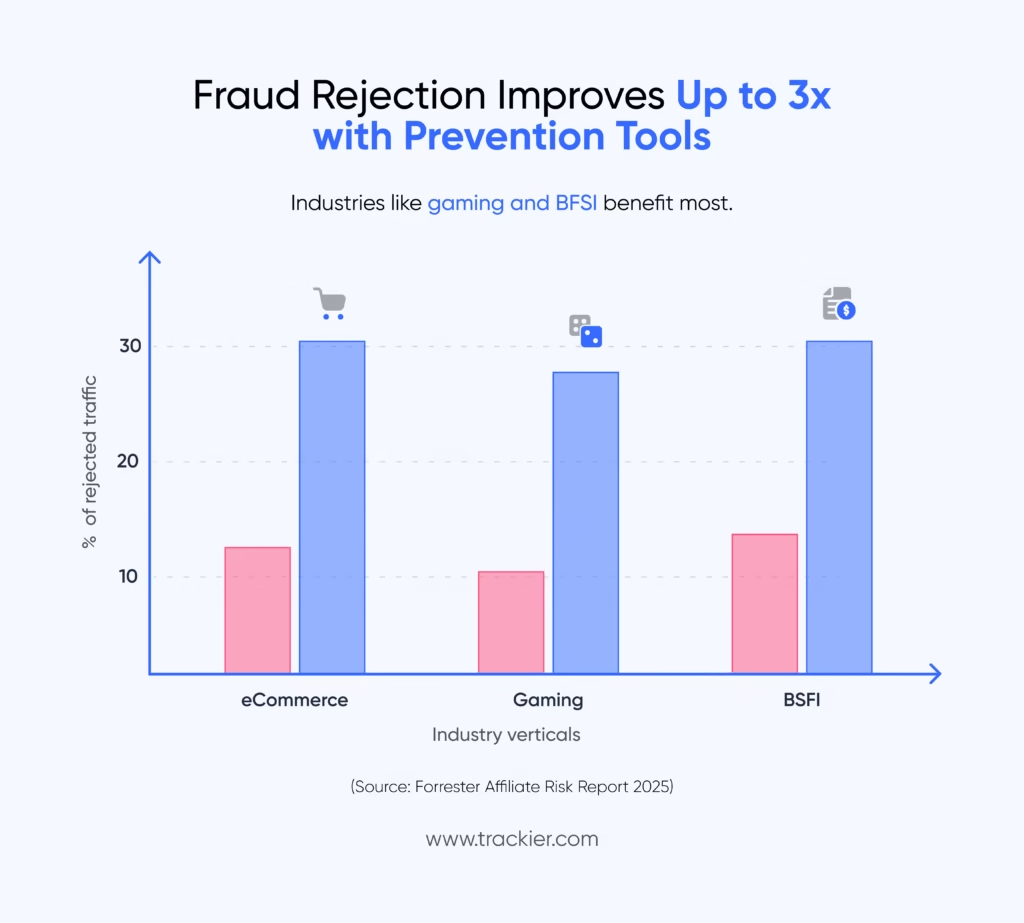
Chapter 5: Creator-Led Performance- The New Affiliate Model
Once upon a time, “influencer” was shorthand for aspirational lifestyle posts and vanity metrics, likes, shares, and filtered brunches. Not anymore.
The creator economy has fully merged with performance marketing. Brands are no longer just paying for reach or impressions. They’re activating creators as measurable, ROI-driven partners, where every click, referral, and conversion is tracked, attributed, and optimized.
Creator marketing spend has grown by 143% since 2021, delivering better ROI than traditional ads.
The creator economy is valued at nearly $200 billion in 2024, projected to grow to $528 billion by 2030.
This evolution is as strategic as it is inevitable. When cookies crumble and ads get skipped, creator trust becomes the last mile of attention. Performance marketers are waking up to this, and finally building influencer programs that look less like PR, and more like product pipelines.
Organizations increased creator investment by 74% in 2024, signaling the creator economy’s boom.
The Shift from Influencer to Affiliate 2.0
The traditional affiliate model was transactional, banners, coupons, and backlinks from publishers. But today’s top-performing affiliate programs are run through creators with niche authority and direct audience access.
Nano and micro-influencers drive stronger engagement and ROI than macro/VIP creators.
Why the shift?
- Authenticity beats ad-blindness: Users are 5x more likely to convert from peer-created content than from display ads.
- Micro-creators drive macro-results: Small-to-mid tier creators with highly engaged communities (under 100K followers) now outperform celebrity influencers on ROI.
- Platforms have matured: Tools like LTK, Impact.com, and even Shopify Collabs make it easier than ever to onboard, track, and pay creators at scale.
66% of brand marketers report that creator content delivered better ROI than traditional digital advertising.
And the impact shows. In Trackier’s internal analysis, partner programs that included creator-led affiliates saw:
- 31% higher CTRs across landing pages.
- 2.3x increase in average order value via personalized creator codes.
- Reduced CAC by up to 18% versus paid ads in similar verticals.
“We didn’t just partner with creators. We co-built our funnel with them. That mindset tripled our referral revenue in six months.”
— D2C Health & Wellness Brand, India
Performance-First Creator Playbooks
Top brands are moving beyond one-off shoutouts and integrating creators into the performance stack. Here’s how:
- Always-On Ambassador Models
Instead of one-time campaigns, brands are recruiting a consistent creator cohort. These “partner-creators” get unique landing pages, real-time dashboards, and ongoing incentives, mimicking traditional affiliate mechanics but with richer storytelling. - Shoppable UGC Funnels
UGC isn’t just for awareness anymore. Brands are turning creator videos into clickable, trackable commerce layers. Think: Instagram Reels that redirect to mobile PDPs, or YouTube Shorts embedded with direct attribution links. Platforms like Tolstoy and Videowise are closing the loop between story and sale. - Multi-Touch Attribution for Creators
No more last-click bias. With modern attribution models, brands can now track creator influence across the funnel, from awareness to assisted conversions. Tools like Trackier enable hybrid models where creators are rewarded for both volume and influence weight. - Incentive Stacking
Modern programs blend fixed payouts with dynamic bonuses, tiered rewards based on milestones like AOV, retention, or LTV. This structure motivates creators to think like growth marketers, not just content producers.
Why It Works (and Scales)
Creator-led performance isn’t just effective, it’s resilient:
- Works across channels (social, blogs, newsletters, communities).
- Circumvents rising ad costs and signal loss.
- Builds long-term brand equity through voice and story, not just discounts.
Most importantly, it scales with the right tech. Platforms like Trackier allow for direct integration of creator campaigns into the affiliate dashboard, tracking everything from coupon usage to first-party clicks. This real-time insight lets brands double down on high-performers, and coach the rest.
Chapter 6: The Partner Renaissance
For years, affiliate marketing lived in a narrow lane, payouts for clicks, last-touch commissions, and a heavy dependence on coupon codes. But, that model is being rewritten.
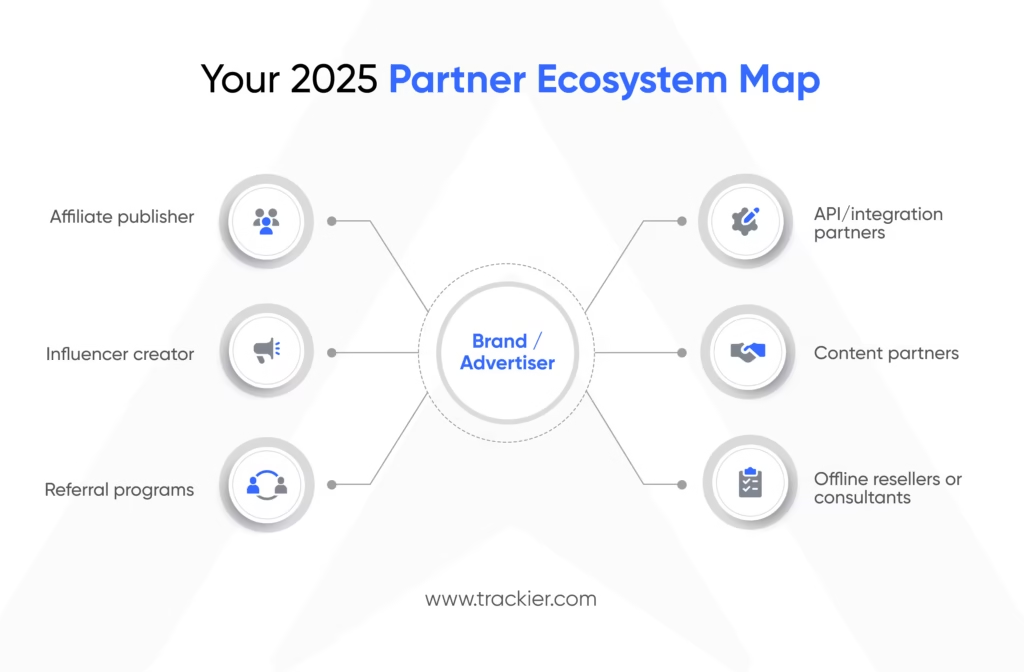
Across industries and regions, marketers are recognizing that affiliate, influencer, content, referral, and brand-to-brand partnerships are not siloed tactics but a cohesive ecosystem strategy. They’re shifting from “affiliate” to “partner”, not just in naming conventions, but in how these contributors are integrated, measured, and compensated.
“Partners aren’t the sidecar anymore. They’re the engine of incremental growth.”
— CMO, APAC-based D2C health brand
As of recent stats:
- 72% of global marketers cite partner and affiliate marketing as a primary growth channel, up from 41% in 2022.
- 30% of eCommerce brands report that creator- and influencer-driven performance marketing delivers higher LTV than traditional paid channels.
- 41% of B2B SaaS companies say their top revenue-generating channel is a strategic partnership or referral program.
This shift isn’t just about diversification. It’s about performance with control, driving measurable growth without surrendering to rising media costs or black-box algorithms.
The Power of Ecosystem Thinking
Smart marketers are now managing partners like portfolios:
- B2C brands work with long-tail creators, app affiliates, price-comparison engines, and retail media platforms.
- Fintechs and edtechs rely on micro-influencers and user referrals to drive trust-sensitive conversions.
- B2B SaaS players leverage consultants, service providers, and native integration partners as high-value referrers and co-sellers.
Trackier users in these sectors are integrating multiple partner types under a single tracking and attribution system. This allows brands to test commission models, enforce fraud rules, and track event-level performance, regardless of whether the partner is a content creator or an API integration.
“When all your partners: affiliates, creators, B2B integrators, sit in one dashboard with performance and fraud visibility, it’s no longer affiliate marketing. It’s ecosystem orchestration.”
— Senior Partnerships Lead, Global SaaS Company
Performance Meets Predictability
With CAC volatility and ad inflation, pay-for-performance models are regaining attention. In fact:
- Cost-per-sale and rev-share partnerships now account for 23% of performance spend, up from 11% in 2021.
- Brands running unified partner programs across influencer and affiliate saw 22% lower blended CAC.
And it’s not just about cost. It’s about reach with trust. A recommendation from a podcast host or a consultant carries more weight than a programmatic ad.
The Evolution of the Partner Stack
Platforms like Trackier now support:
- Hybrid attribution models that span clicks, coupon usage, influencer links, and API events.
- Partner segmentation by vertical, tier, geography, or payout structure.
- Granular fraud controls, including postback validation, click-to-conversion time monitoring, and duplicate suppression.
What this means for Trackier users:
You can now unify all your partnerships, affiliate, influencer, B2B, and referral, in a single platform, with tools to optimize payouts, visualize partner ROI, and run custom events.
Strategic Takeaway
Affiliate and partner marketing must graduate from a support role to a strategic growth pillar. It’s not about replacing paid ads, but about balancing your acquisition mix with channels that are trust-led, cost-controllable, and data-rich.
Chapter 7: From Metrics to Meaning
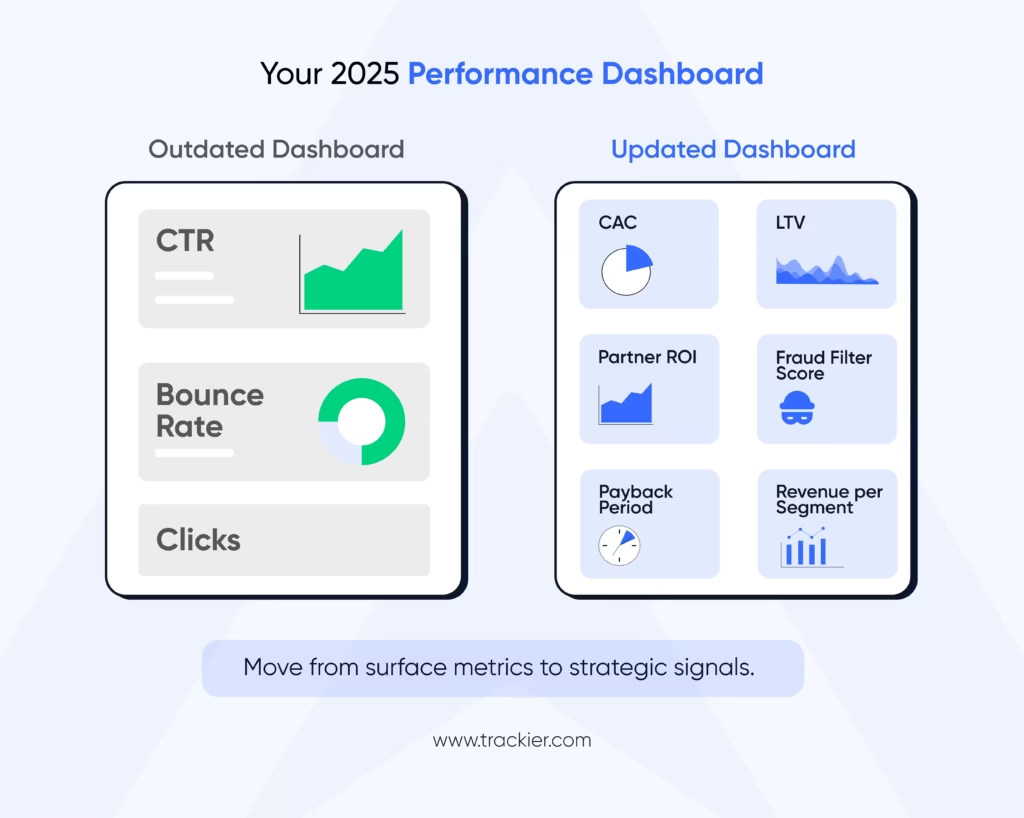
In the early days of performance marketing, success was often equated with a few high-visibility metrics: impressions, clicks, CTRs, and basic conversions. But in the current setting, a deeper transformation is underway. Performance leaders are realizing that not all KPIs are created equal, and what gets measured is shaping what gets done, sometimes at the expense of long-term growth.
A growing number of CMOs are pushing their teams to retire surface-level metrics in favor of business-aligned performance frameworks that prioritize quality over quantity. The move from vanity KPIs to value-driven KPIs is as much about mindset as it is about measurement.
“Clicks mean nothing if they don’t lead to revenue. We’ve stopped celebrating engagement and started measuring economics.”
— VP Marketing, US-based SaaS Startup
The KPI Reset in Motion
What’s driving this shift?
- Boardroom pressure: Marketing is increasingly accountable to CFOs and investors. CAC:LTV ratios and pipeline velocity have replaced CTR in quarterly reviews.
- Data democratization: Tools like Mixpanel, Amplitude, and Looker have put deeper performance metrics within reach of non-technical teams.
- Attribution evolution: As multi-touch models improve, marketers can see how upstream interactions influence downstream revenue, enabling better performance storytelling.
A 2025 survey of 400 CMOs revealed the most important performance metrics:
- Customer Acquisition Cost (CAC): 91%
- Customer Lifetime Value (LTV): 85%
- Incremental Revenue Lift: 79%
- Return on Ad Spend (ROAS): 76%
- Pipeline Contribution (for B2B): 69%
Compare that to 2020, when click-through rates (CTR) and impressions topped the list.
Quality Signals Are the New North Star
Beyond just revenue, savvy marketers are also building KPI stacks around:
- LTV:CAC efficiency ratios
- Payback period (in days)
- Retention-adjusted ROAS
- First-party conversion paths
- Partner ROI by cohort or vertical
These KPIs go beyond short-term spikes and offer a clearer view into repeatable, scalable performance.
“It’s not about volume. It’s about velocity, margin, and retention. That’s what makes performance marketing strategic in the boardroom.”
— Director of Growth, D2C Skincare Brand
Platform Evolution Is Enabling Smarter Measurement
Trackier users, for example, can now:
- Assign custom KPIs to individual campaigns or partners
- Track LTV-linked conversion events with flexible attribution windows
- Segment performance data by margin tiers, user cohorts, or funnel stage
- Use APIs and webhooks to pull partner performance directly into financial reporting dashboards
This type of integration is key to turning performance marketing from a marketing silo into a business engine.
Cross-Functional KPI Thinking
Marketing is no longer the only team thinking about performance.
Sales, product, and finance now expect marketing data to tie directly to their OKRs. As a result, top brands are:
- Aligning campaign metrics with sales pipeline stages (e.g. SQL generation, deal velocity)
- Tying acquisition campaigns to product adoption rates
- Measuring net revenue retention (NRR) from performance-sourced users
This shift requires marketers to collaborate with analytics, product, and RevOps teams more closely than ever.
What This Means for Trackier Users
Trackier is becoming a marketing intelligence layer. Users can set smart KPIs across their affiliate, influencer, and partner campaigns, monitor fraud risk, and correlate performance with profitability, all within a unified dashboard.
The brands that succeed in 2026 will be the ones who turn data into decisions and KPIs into strategy.
Chapter 8: Privacy, Pixels, and Performance
For over a decade, third-party cookies were the silent engine behind digital advertising. They fueled everything from basic remarketing to cross-site tracking and multi-channel attribution. That era is officially over.
With Google’s full deprecation of third-party cookies in Chrome now complete, and with Safari, Firefox, and emerging privacy regulations having already led the charge, performance marketers are operating in a radically different landscape.
This isn’t just a technical change. It’s a foundational shift in how performance marketing works: how you track, whom you trust, and what you can measure.
“It’s not just about losing cookies. It’s about losing the illusion of perfect tracking. That’s what forced us to rebuild our strategy from the ground up.”
— Head of Growth, EU-based B2B SaaS
Welcome to the Post-Cookie Age
The old model of campaign optimization, pixel fires, third-party audiences, last-click attribution, is rapidly being replaced. In its place:
- First-party data as the new currency
- Server-side tracking as the new standard
- Consent-first experiences as the new default
Brands that relied heavily on Facebook, Google Ads, and programmatic retargeting have had to reinvent their approach. Many now see affiliate and partner marketing as a safer, more privacy-resilient channel that doesn’t rely on third-party signals.
The Privacy-Performance Paradox
The irony? As data becomes more protected, marketers are being asked to become more accountable.
That means:
- Building performance engines without relying on fingerprinting or third-party cookies
- Running transparent, event-based attribution models tied to actual business outcomes
- Ensuring that tracking infrastructure is not just performant, but compliant, with GDPR, CCPA, and newer frameworks like India’s DPDP Act
For performance marketing platforms, this is a litmus test. Only tools with strong first-party, server-side, and postback capabilities can provide the reliability marketers need.
How Trackier Is Solving for Signal Loss
Trackier users are equipped to thrive in a privacy-first landscape:
- Server-to-server (S2S) tracking ensures data is passed securely without relying on client-side cookies
- Postback integrations with MMPs, CRMs, and eCommerce platforms enable event-level granularity
- Consent management support helps brands stay compliant across geographies
- Cookieless click tracking enables campaign measurement in walled gardens and high-sensitivity sectors
“We switched to Trackier for one reason: attribution that doesn’t break when Chrome updates.”
— DTC Fashion CMO, North America
What Performance Looks Like in a Privacy-First World
- More transparency
Users expect clarity on what’s being tracked, and why. Brands that lead with transparency build trust, and conversion. - Smarter partnerships
Without third-party cookie precision, marketers are relying more on trusted partners and first-party engagement. - Attribution reimagined
Marketers are using a mix of:- UTM-based tracking
- First-party IDs and login events
- Cohort-based reporting
- API and webhook-triggered actions
- Stronger collaboration with engineering
S2S setups and server logs now require tight marketing–tech collaboration. Growth teams are becoming more technical by necessity.
The Competitive Advantage of Privacy-Ready Performance
Brands that invest early in privacy-resilient infrastructure are gaining a competitive edge:
- Lower data loss rates
- More accurate ROI attribution
- Reduced regulatory risk
- Higher user trust
For Trackier clients, the benefit is clear: performance without compromise. You get full-funnel visibility, flexible attribution, and fraud prevention, without relying on outdated or non-compliant tech.
Chapter 9: The Future Belongs to Modular Martech
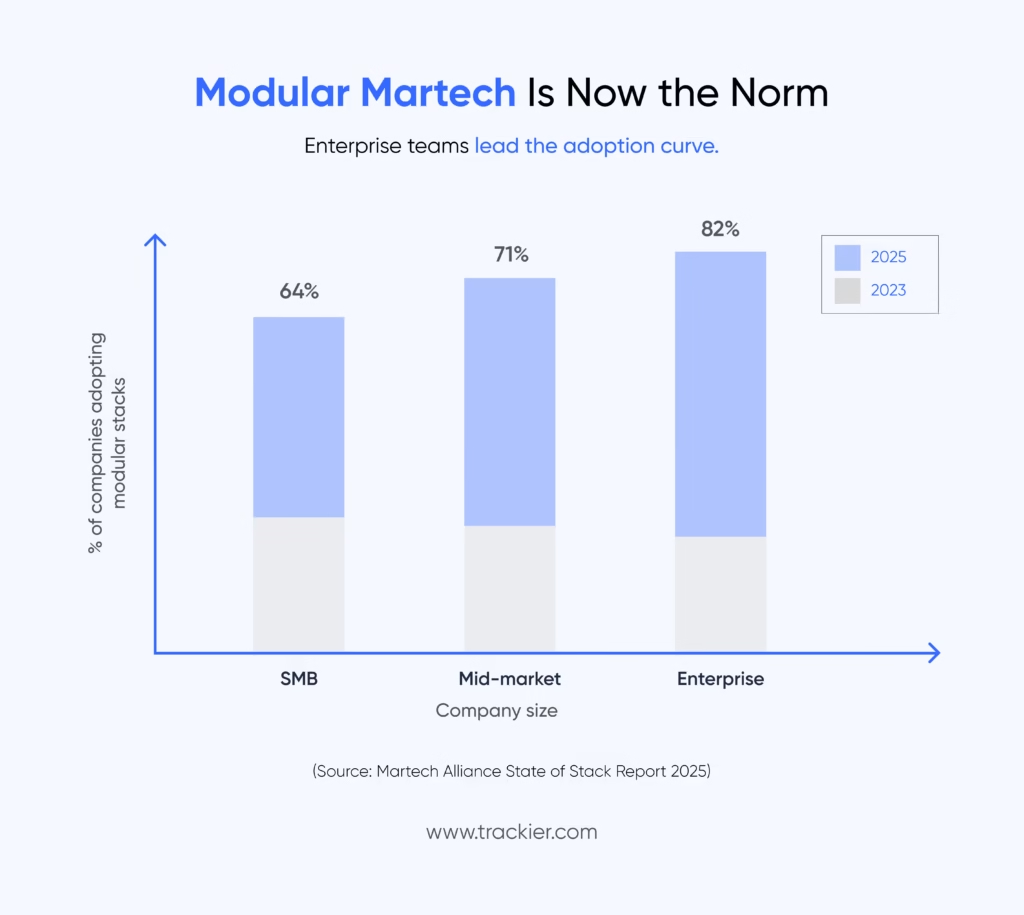
The conversation around marketing technology has moved away from “best-in-suite” vs. “best-in-class.” The new debate? How modular your martech stack is, and how fast it can adapt to change.
Rigid, monolithic platforms are increasingly seen as liabilities. Growth teams now prize agility over accumulation. A martech stack is only as powerful as its ability to evolve, piece by piece, without requiring a total rebuild.
This shift has fueled the rise of modular, composable martech ecosystems, often referred to as the “LEGO approach” to marketing architecture. The premise is simple: treat your stack as a set of interoperable components, not a fixed structure.
Why is modularity winning?
1. Customer journeys are non-linear and constantly evolving
Touchpoints now span email, web, mobile, chat, influencer content, marketplaces, and even voice or AI assistants. Marketers need tech that can flex with these channels, not collapse under their complexity. Composable systems allow teams to add or remove tools as new engagement formats emerge.
2. Data is everywhere, and integration is survival
From eCommerce checkout events and affiliate referrals to CRM lifecycle data and third-party APIs, the volume and variety of data sources have exploded. A modular stack allows you to plug data into the right decision engines without bottlenecks or duplication.
3. Localization is no longer optional
For globally operating brands, modular architecture makes it possible to run region-specific logic (e.g., consent settings, attribution windows, loyalty rules) without duplicating the entire martech stack in each market.
4. Experimentation velocity drives growth
When every channel and campaign is a testbed, the ability to swap tools quickly, be it for attribution, analytics, or optimization, becomes a competitive advantage. Legacy suites often force brands to wait through slow release cycles or lock them into static workflows.
As one Head of Growth at a leading D2C health brand put it:
“The future isn’t suite vs. stack. It’s system vs. speed. Whoever can rewire their strategy fastest wins.”
Modular Martech in Practice
Here’s what the new stack looks like for high-performing, agile brands:
- Standalone CDPs like Segment or mParticle to unify and control customer data across touchpoints, with server-side tracking for accuracy and compliance
- Plug-and-play integrations with partner platforms such as Trackier, enabling seamless affiliate and influencer performance tracking
- No-code tools like Zapier or Make for automating CRM, referral, and loyalty workflows with minimal dev support
- Consent management platforms (CMPs) like OneTrust or Ketch to localize privacy compliance dynamically by geography
- A/B testing platforms that operate independently of the CMS or email platform, allowing performance teams to run fast, isolated experiments
This composability democratizes future-proof marketing. Lean teams can now achieve stack sophistication that was once reserved for Fortune 500s.
What This Means for Trackier Users
Trackier’s architecture is built for the modular marketer. With real-time webhooks, open APIs, pre-built integrations with Shopify, Firebase, Branch, and others, the platform slides easily into existing tech environments, without requiring structural changes. You can add Trackier for partner marketing without disrupting your CRM, analytics, or eCommerce workflows.
Its rule-based automation, customizable event flows, and transparent attribution logic allow brands to layer in performance partnerships as part of broader growth strategies, not isolated channels. Whether you’re testing a new affiliate cohort or rolling out regional influencer tracking, Trackier lets you do it without rebuilding your stack from scratch.
The bottom line? In a fast-moving, privacy-sensitive, performance-obsessed world, the marketer who can rebuild without disruption will win. Modularity is no longer a luxury, it’s table stakes.
Chapter 10: 7 Moves Every Performance Leader Is Making
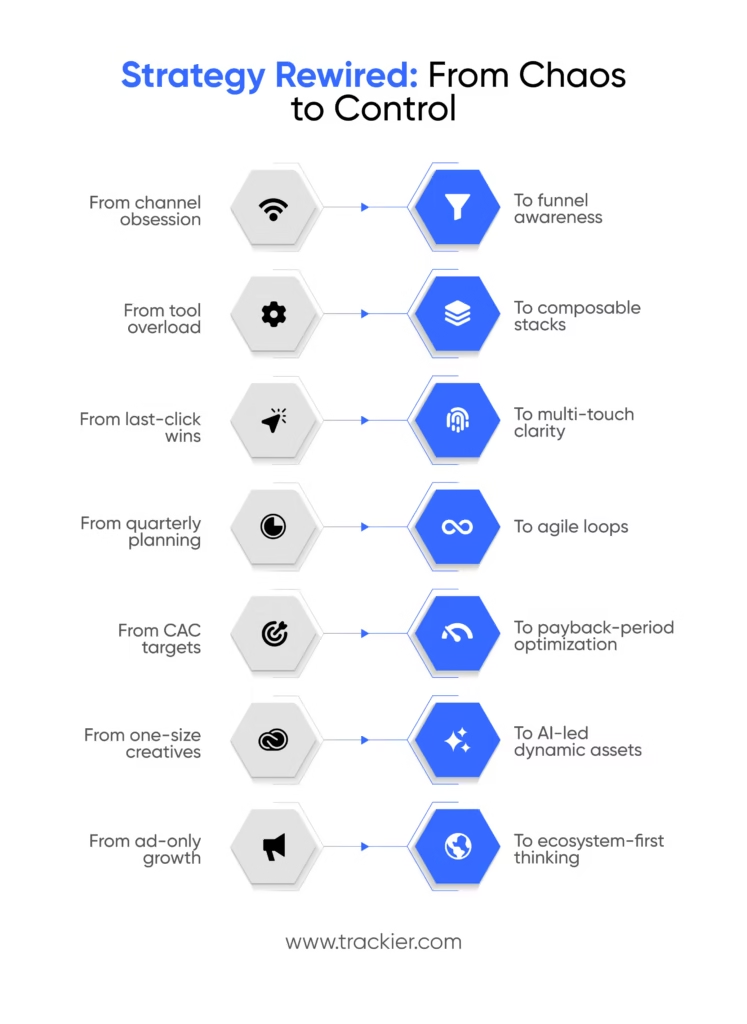
Performance marketers aren’t just adapting to change, they’re engineering it. The 2026 playbook looks very different from years past. Here are seven strategic shifts reshaping how growth leaders operate:
- From media buying to channel orchestration
Paid, owned, earned, and partner channels are treated as a coordinated system, not silos. - From CAC focus to margin focus
It’s not just about cost per acquisition, but lifetime value, retention, and payback period. - From last-click to value-based attribution
Custom attribution windows and models better reflect your sales cycle and customer behavior. - From quarterly planning to agile loops
Scrum-style campaign planning and real-time dashboards allow for faster iteration. - From gut instinct to data fluency
Team-wide education on incrementality, testing frameworks, and causal inference is on the rise. - From tool overload to composable stacks
Fewer, better-integrated tools with open APIs and performance visibility. - From fraud detection to fraud prevention by design
Proactive fraud filters, bot blockers, and anomaly detection are now table stakes.
Each of these shifts reflects a move toward greater resilience and precision, where growth isn’t just a number, but a capability.
“Marketing is no longer the art of storytelling alone. It’s the science of real-time, cross-channel orchestration.” — CMO, Global SaaS Unicorn
What this means for Trackier users:
Trackier’s product roadmap reflects these priorities, from agile reporting to multi-channel attribution to fraud prevention built into the stack.
Final Takeaway
Performance Marketing Is a Discipline
Performance marketing is entering a complete reset. Throughout this report, we explored how AI, attribution challenges, rising media costs, privacy-first data practices, creator-led programs, and modular technology are reshaping the industry. This conclusion brings together the main points and outlines what lies ahead.
1. AI-powered yet Human-guided Future
AI now drives most campaign execution including creative generation, bid optimization, and audience modeling. 74% of marketers already use AI tools in their daily work according to HubSpot and conversion rates have improved by up to 30% as a result. However, forty 6% of CMOs report feeling disconnected from real-time decision-making. Successful teams are combining machine efficiency with human strategy. They curate and oversee AI outputs while ensuring campaigns remain aligned with brand values.
2. Attribution and Incrementality as Strategic Bedrock
With third-party cookies phased out and link tracking stripped by iOS 17, last-click attribution has collapsed. Multi-touch attribution is now mainstream with 52% of marketers using it and 57% considering it critical. Incrementality testing has emerged as a complementary approach that proves the true lift of each channel. Together they are helping marketing teams rebuild trust in performance data.
3. Media Costs and Customer Acquisition Volatility
Advertising costs have surged. As per data, Meta ad prices rose 14% year over year while overall ad revenue grew 21%. Customer acquisition costs for ecommerce brands climbed by 27%. These pressures are driving marketers to rebalance budgets toward affiliate programs, retail media, and strategic partnerships which are delivering more predictable returns.
4. The First-party Data Revolution
First-party data has become the foundation for sustainable marketing performance. Brands using it have seen a 2.9 times revenue lift and 1.5 times cost savings. Retailers that invested early in first-party data have unlocked new growth opportunities. Building consent-first data pipelines not only ensures compliance but also improves retention. A 2% retention improvement can reduce marketing costs by 10% (Think With Google).
5. Creator-led Performance and the Partner Renaissance
The creator economy is now valued at nearly two hundred billion dollars and is projected to reach five hundred twenty eight billion dollars by 2030. Investment in creators has grown by 143% since 2021 and 66% of brands report that creator content outperforms traditional advertising. Partnerships with affiliates, influencers, and co-sellers have become essential engines of growth. They deliver lower acquisition costs and higher lifetime value compared to volatile paid channels.
6. Metrics That Matter for Growth
Marketing teams are moving away from vanity metrics such as impressions and click-through rates. Decision making is increasingly based on CAC to LTV ratios, payback period, retention-adjusted ROAS, and incremental revenue lift. Performance marketing is now a cross-functional driver of profitability connected to finance, product, and sales objectives.
7. Modular Technology and Privacy-first Infrastructure
Composable marketing stacks allow brands to add or replace tools without disrupting operations. This flexibility helps teams respond quickly to market changes. Privacy-first infrastructure such as server-to-server tracking and cookieless attribution ensures compliance while keeping performance measurement reliable.
For growth leaders, that means rethinking not just your tools, but your team structure, skill mix, and execution cadence. And for platforms like Trackier, it means continuing to invest in flexibility, composability, and intelligence, because the marketers of the new world will expect nothing less.
“The performance marketer of the future isn’t a media buyer or a data geek. They’re a system architect.”
— Faizan Ayubi, CEO, Trackier
Hungry for more? Download our free case studies that cover real stories.
Or sign up for the Trackier’s newsletter to get weekly best practices on referral programs and partner marketing.