Everyone says that growing a business is simple: just increase customers, revenue, and expand into new regions or markets. However, it is not easy, because growth feels unstructured. Brands test multiple performance marketing channels, shift budget from one campaign to another, and prioritize their goal every quarter. But the real problem is not having a growth strategy framework.
The best framework offers direction on where to expand or where to put efforts. In other words, it simply connects business goals with an execution plan and creates a plan that helps other teams to work together (teams could be marketing, sales, product, cs, etc). Without a proper strategy, growth becomes reactive, and most of the decisions depend on trends, pressure, or short-term wins.
But without having performance marketing software, tracking efforts would not be easy. Trackier offers campaign tracking, fraud prevention, and partnership management.
What is a growth strategy framework
Nowadays, brands focus on leveraging different strategies to increase their revenue. They try different performance marketing channels, launching new campaigns (maybe in new regions), and add new features to their products (of course, it is time-consuming). All of these actions can increase revenue by a small margin in the short term, but in the long term, they need a framework.
So, a growth strategy framework is a structured approach that businesses can follow to expand their revenue, customer base, and market reach. It combines strategic direction with practical execution guidelines.
Most growth frameworks focus on a few core elements, such as identifying the right customer segments, choosing the most effective acquisition channels, improving product or service value, increasing customer retention and lifetime value, and measuring performance using clear metrics.
Growth strategy vs growth plan
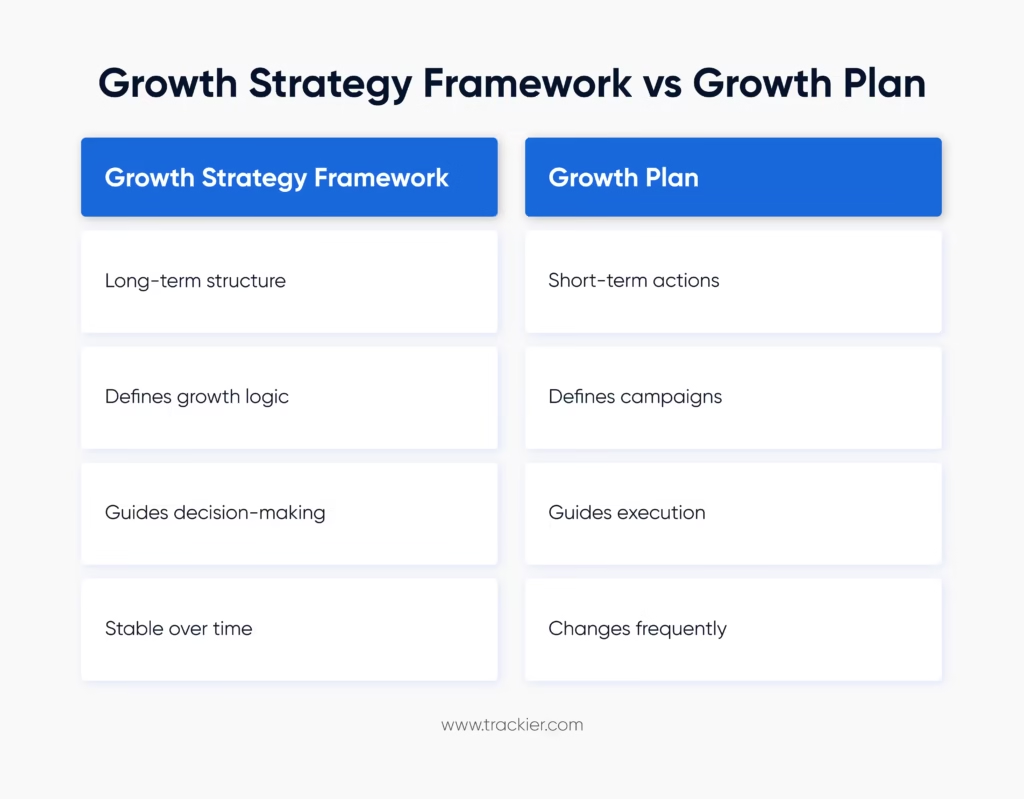
A growth plan mainly focuses on short-term actions like targets for the quarter, campaign ideas, hiring plans, or any marketing initiatives. However, these are not a fixed plan; this can be changed as the market evolves.
However, a growth strategy framework is kind of a fixed plan as it defines the logic behind every decision and explains why certain markets or regions are targeted, why we need to invest in that specific channel, and what the target audience is that we need to focus on.
Let’s understand this with an example: a growth plan could prioritize paid ads channels to generate leads for this quarter, but the growth framework decides whether we should focus on new customer acquisition or whether the brand should prioritize retention, partnerships, or product expansion.
Why you need a business growth strategy framework in 2026
Having a business growth strategy framework helps teams to align with one goal and resolve one of the most common issues, which is misalignment between different teams.
For instance, the marketing team may focus on generating leads, while the sales team will be focusing on onboarding enterprise accounts, but the product team will focus on building features for different customer segments.
Another issue is inefficient resource allocation, and brands may spend so much budget on new customer acquisitions rather than focusing on customer retention and expansion (where are the main opportunities)
Market penetration
In many industries, we have reached a point in time when it is more sophisticated than ever for organizations to acquire new customers. Rapid growth has provided both new entrants to marketplaces and continued growth from established participants. Businesses can no longer depend on trial and error to successfully grow their interests.
The refinement of a strategy framework allows companies to target where true opportunities exist rather than attempting to distribute their resources among many channels. Organizations can focus on the market segments and customers that provide the greatest opportunity for future growth.
Better use of data
Businesses today typically have access to significant amounts of data from their marketing and customer activities. However, data without context rarely results in actionable steps to proceed efficiently along the path to success.
Having a framework for your growth strategy allows teams to reduce the number of metrics that are actually important to track. Companies are able to shift away from tracking dozens of indicators and focus on key performance metrics, such as customer acquisition cost, retention rate, or lifetime value.
Cross-team alignment
Developing a successful business requires cooperation and relationship-building between multiple teams. While marketing generates demand, sales convert prospects into clients, customer service supports these clients after they have purchased, and product teams are continually looking for ways to improve the experience your company provides.
Without an overall business growth strategy, each team may primarily pursue its own specific objectives. By providing your teams with a structured framework for developing and executing on their best action steps, the teams will work together to achieve overall strategic growth goals and the performance metrics associated with those goals.
Predictable scaling
Businesses typically face one of the largest challenges of all in the area of continuous growth due to the fact that results can vary widely when businesses only rely on their individual campaigns or short-term tactics to measure performance.
Implementation of a framework makes it easier for businesses to identify their repetitive growth drivers. Once businesses know what those growth drivers are, they can also effectively scale those drivers and create consistent revenue growth.
Components needed in a growth strategy framework
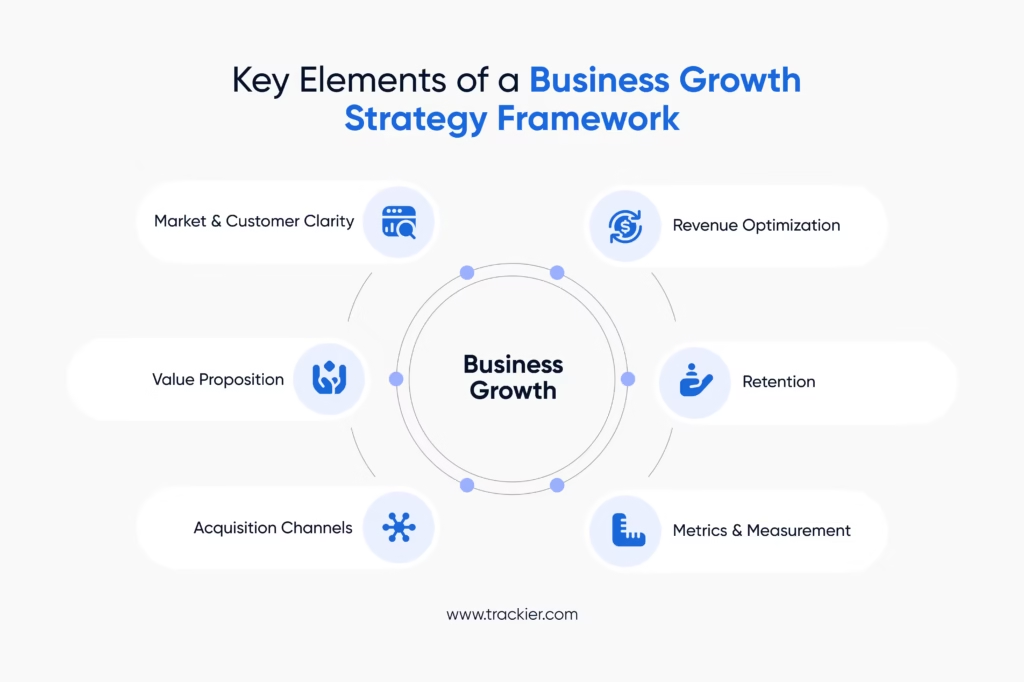
A growth strategy framework becomes most beneficial when the components of that framework are clearly identified and defined.
Each component serves as guidance for how a business identifies opportunities, allocates resources, and measures the progress made in achieving the objectives of the growth strategy.
Without this structure, teams fall heavily into acquisition without concentrating on areas such as retention, pricing, or market position.
Understanding the Market and Customer
The first step in creating a framework is understanding the market and identifying customers for targeting. Businesses must determine an ideal audience profile, which includes determining the issues their target customers have and determining how their product or service solves those issues.
Rather than target a general audience, companies tend to break down customers into segments, such as by behavior patterns, demographic profiles, type of industry, or the frequency with which a customer purchases products.
This segmentation allows teams to create marketing campaigns and products that meet the specific needs of a customer. A few key parameters that businesses look at when segmenting customers include:
- Size of market segment – number of potential customers within the segment
- Customer needs and headache issues – problems that the product can realistically address
- How often a customer purchases from the company – customer purchasing behaviors
- Market demand – overall demand for the solution to the issue, within the customer market segment
Value proposition and differentiation
To create a successful business, you must have a good value proposition that explains to customers why they should buy your product or service over others. This is an important part of your overall growth strategy as it defines how your company is different than your competitors.
With a clear differentiation, it’s much easier to facilitate marketing and sales conversations, as well as develop partnerships, because you will be able to articulate the unique things about your product. Businesses can analyze several common factors when building their value proposition, including:
- Unique Capabilities of the Product,
- Price Advantage or Cost-Efficiency,
- Customer Experience Provided, and
- Industry Specialization or Niche Expertise.
Acquisition channels and growth strategy
The channels used by companies to acquire customers are called the acquisition channels. The framework for developing your acquisition channels will help you in the selection of acquisition channels that continuously provide you with qualified leads, rather than using a trial-and-error approach across all channels that are available.
Many businesses will test various acquisition channels before focusing on those that are providing consistent results. The following are some of the most common acquisition channels:
- Organic Search and Content Marketing
- Paid Advertising
- Affiliate Programs and Partner Programs
- Referral Programs
- Social Media Marketing
When building this framework, companies often measure:
- Customer Acquisition Cost (CAC),
- Conversion Rate by Channel,
- Lead Skill or Purchase Intent, and
- Channel Scalability.
Optimizing Revenue Model
Growth depends not only on acquiring customers but also on increasing the value generated from each customer. A business growth strategy framework, therefore, includes strategies to improve revenue models.
Businesses review how pricing, product packaging, and upsell opportunities affect overall revenue. Commonly evaluated areas include:
- ARPU (Average Rev Per User)
- Pricing Structure or Tiered Pricing
- Upsell/Cross-Sell Opportunities
- Subscription/Recurring Revenue
Retention and expansion of existing customers
Retention plays a huge role in most growth frameworks because keeping existing customers is often more cost-effective than acquiring new ones. A growth strategy framework focuses on improving customer satisfaction and long-term engagement. Companies usually examine several factors that influence retention:
- How Easy is it to Onboard New Customers
- How Frequently New Customers Use the Product
- How Effective is Customer Support
- Renewal Rates/Repeat Purchasing Rates
Metrics and performance tracking
The final component of a growth strategy focuses on measurement. Without clear metrics, businesses struggle to determine whether growth initiatives are working.
Organizations typically track a combination of acquisition, revenue, and retention indicators. Common performance parameters include:
- Customer acquisition cost (CAC)
- Customer lifetime value (LTV)
- Conversion rate
- Retention rate
- Revenue growth rate
Top 5 popular brand growth strategy frameworks
While many organizations design and develop their own growth strategy framework, many of these frameworks are based on pre-existing strategic models.
Over time, various consulting firms, researchers, and business figures have developed many different growth frameworks to assist organizations in organizing their expansion strategies.
Each framework explores a different area of growth; some are focused on expanding into new markets while others focus on innovating products, acquiring customers, or continuing to build on existing business models.
By understanding these frameworks, organizations can determine which one is the best fit for their current level of growth, maturity, and competitive space.
A. Ansoff matrix
The Ansoff Matrix is one of the most common methodologies used to plan for business growth. This matrix was created by Igor Ansoff and helps organizations evaluate their growth opportunities by using a combination of products and markets to determine their optimal product and market combinations.
Within the matrix, there are four primary ways in which you can grow your business:
- Market penetration – Organisations will try to increase the sales volumes of their existing products within existing markets. To do this, they will employ a variety of different strategies such as changing price points, launching marketing campaigns, or enhancing distribution.
- Market development – Organisations will sell their existing products into new geographic areas and/or to new customer segments.
- Product Development – Organisations will launch new products aimed at their existing customers. This often consists of developing new innovations and enhancing existing features of a product.
- Diversification – Organisations will attempt to enter into an entirely new market with new products.
B. AARRR framework
The AARRR framework, also known as Pirate Metrics, is used primarily by digital companies and startups, helping businesses to assess the rate of new customers throughout the entire customer journey. There are five critical stages in this process:
1. Acquisition: Where users learn about and access businesses through marketing channels, including search engines, advertisements, external partnerships, and/or referrals.
2. Activation: User’s first significant experience with the business (proven using metrics like percentage of users who completed onboarding or used the product for the first time).
3. Retention: Frequency with which customers return to or use the business’s offerings over time.
4. Revenue: How the company makes money from customers (e.g., subscription receipts, product sales, and/or product upgrade orders).
5. Referral: Customers recommending the company’s offerings to their friends, family, and coworkers.
C. McKinsey’s three horizons of growth
The Three Horizons framework facilitates the simultaneous management of short-term business performance with long-term growth. The framework helps organizations balance growth strategies to achieve multiple simultaneous growth goals. The three types of growth include:
- Horizon 1 – Enterprise Core Business Growth: This is focused on enhancing and improving the company’s present products/services that produce income for the business.
- Horizon 2 – New/Developing Opportunities: This is related to creating new types of products, new types of services, and new types of markets that will be potential significant production sources for the company moving forward.
- Horizon 3 – Future Innovation: Includes experimental initiatives that could create entirely new business models or industries.
D. Blue ocean strategy
The Blue Ocean Strategy seeks to create new market areas instead of competing against existing competitors.
This strategy eliminates competition from engaging in saturated markets and focuses on finding new demand in the market. The Blue Ocean Strategy typically combines value with innovation to create new demand for products or services.
Using this growth strategy framework allows organizations to explore customer pain points not currently addressed by their competitors, remove or simplify product features that do not provide substantial value to their customers, and find ways to provide value at a lower price point.
The Blue Ocean Strategy encourages organizations to rethink the boundaries of their existing markets and to identify potential new markets.
E. Lean growth loop framework
The lean growth loop framework emphasizes continuous learning and experimentation through a cycle of repeated iterations. This cyclical model is typically utilized by digital firms or companies that require extensive data and rapid testing.
The lean growth loop framework involves:
- Identifying growth opportunities
- Testing a hypothesis through an experiment
- Measuring performance using data
- Refining the strategy based on the measured performance
Growth strategy framework templates

Many brands now understand the importance of a growth strategy framework; however, building from scratch is not a good option, as it will consume so much time and resources. A structured template could make your process easier. Let’s have a look at these frameworks:
Step 1: Define your growth objective
First, define your primary growth objective. Without having this clarity, you may work on multiple projects, but they will not contribute the same value. Some of the common growth objectives are revenue increase, entering into new markets, targeting new customer segments, and increasing customer lifetime value.
Some of the parameters to evaluate are targets for the revenue growth, goals for expanding into new markets, new customer acquisition targets, and a timeline for the growth initiatives.
Step 2: Understand your current growth stage
Before selecting growth tactics, companies need to understand their current stage of growth. Different strategies work better at different stages of a business lifecycle.
For example, early-stage companies usually focus on customer acquisition and product-market fit. Established companies often focus on retention, expansion, and market penetration. A template helps businesses analyze their current position before planning future initiatives.
Parameters to review include:
- Current revenue growth rate
- Customer acquisition trends
- Market share within the industry
- Product adoption and usage patterns
Step 3: Identify your primary growth tactic
Once the current position is clear, the next step is identifying the main growth lever. Growth tactics represent the key areas that can drive the largest impact.
Most businesses typically focus on one of these primary tactics:
- Customer acquisition
- Customer retention
- Revenue expansion
- Market expansion
Step 4: Select supporting growth channels
After identifying the main growth tactic, businesses need to choose the channels that will support their strategy. A growth strategy framework helps evaluate which channels deliver consistent results and which ones require experimentation.
Common growth channels include:
- Organic search and content marketing
- Paid advertising
- Affiliate and partnership programs
- Social media marketing
- Referral programs
Important parameters to evaluate:
- Customer acquisition cost by channel
- Conversion rates
- Channel scalability
- Lead or customer quality
Step 5: Define key growth metrics
A growth strategy template must include clear metrics that measure progress. Without performance indicators, teams cannot determine whether growth initiatives are working. Businesses usually track metrics related to acquisition, revenue, and retention.
Common metrics include:
- Customer acquisition cost (CAC)
- Customer lifetime value (LTV)
- Retention rate
- Revenue growth rate
Step 6: Build a 90-day execution plan
The final step in the growth strategy framework template focuses on execution. Businesses should translate strategic decisions into short-term action plans that teams can implement immediately. Many companies use 90-day planning cycles because they allow teams to test initiatives while maintaining strategic focus.
A 90-day execution plan typically includes:
- Key initiatives for each growth channel
- Resource allocation and budget planning
- Performance targets for defined metrics
- Experimentation opportunities for new ideas
Example of a framework used to create a growth strategy
Putting a framework into the real-life examples of businesses around you makes it easier to comprehend and visualize the business strategies behind the growth framework.
Even though the framework may have the same structural characteristics, how companies implement it will vary. It depends on how the company has determined its business model, its industry, and its current stage of business development.
Each company has a priority level for different levers of growth. For a software-as-a-service (SaaS) company, its focus will be primarily on product use, recurring revenues, and customer loyalty. The examples below provide real-life examples of how a company has used the framework to determine its growth direction.
A. Example of a SaaS growth strategy framework
A software company will develop its framework based on product adoption, recurring revenue, and retained customers. Therefore, most SaaS companies that follow subscription-based business models will have long-term relationships with their customers as a key component of their growth plan. Businesses can also streamline operations and improve execution by using MonsterOps EOS software to align teams, track goals, and manage accountability as they scale.
SaaS product companies should focus on –
- Customer acquisition via online channels such as organic search, paid advertising, etc.
- Simple onboarding to provide the best value to new users.
- Retention strategies (very important) to motivate customers to keep using the product.
KPIs that companies should monitor include monthly recurring revenue, lifetime customer value, customer churn rate, and product activation rate.
B. Examples of D2C growth strategy
A D2C brand should establish its marketing strategies to support growth by acquiring customers, positioning its brand correctly, and encouraging repeat purchases.
There are some important components which D2C brand should follow:
- Using social media ads and influencer partnerships to acquire new customers
- Create a strong brand narrative that engages
- Improve the customer experience via digital and delivery channel improvements
- Develop loyalty programs that reward customers for repeat purchases
Some of the key metrics that D2C brands often analyze include customer acquisition cost, average order value, repeat purchase rate, and retention rate.
C. Examples of a B2B growth strategy framework
Whereas B2C brands have shorter sales cycles and lower contract values, B2B growth strategies are typically based on targeting leads, building relationships with those leads, and forming strategic partnerships with other businesses. Important components of a B2B growth strategy framework are:
- Industry-specific marketing campaigns that target decision makers
- Strategies for enabling the sales process for leads that require longer purchasing cycles (usually when purchasing items like office equipment)
- Partner programs and affiliate partnerships that can generate additional leads
- Strategies that generate renewed contracts through a customer’s experience with customer service, where tools like an ai answering service can help B2B teams respond to routine inquiries faster and reduce missed customer touchpoints.
Some of the key performance metrics that are commonly analyzed by B2B businesses include:
- Lead conversions
- Average sales cycle duration
- Customer lifetime value
- Annual recurring revenue
D. Example of growth strategy for marketplaces
Since such websites allow for commerce between two parties, the strategies outlined here are specifically geared towards the balance between having enough suppliers/goods or services versus having enough people who want to purchase them.
For this reason, companies following this type of strategy typically put the most effort into:
- Adding more suppliers (service providers) to their website
- Luring (acquiring) new buyers through different marketing programs
- Building up credibility for themselves via ratings/reviewing systems & verification processes
- Making sure that when buyers return to their website, they have a positive experience
The most important metrics that marketplace companies are tracking would be:
- Active Suppliers/Buyers
- Number of Transactions
- Conversion Rates
- Recurring Customers
How to choose the right growth framework for your business
Businesses differ in their products, customer segments, revenue models, and growth stages. Because of these differences, selecting the right framework requires careful evaluation rather than simply adopting a popular model.
A practical business growth strategy framework should reflect the company’s current position and the opportunities available in its market. The following factors can help businesses decide which frameworks are most suitable for their situation.
1. Assess your business model.
To determine which growth strategy framework best suits your business, you must first consider what kind of business it is.
Each model will require a different priority for growth – SaaS, for instance, is generally more focused on retaining its customers, recurring revenue, and having its products adopted.
However, direct-to-consumer (DTC) brands will place a greater emphasis on acquiring new customers and building long-term relationships with those customers, while B2B companies may rely more heavily on establishing partnerships and generating leads through targeted marketing and/or longer sales cycles.
2. Determine the level of maturity of your target market
The maturity or age of the marketplace also has an effect on the strategy you choose. Companies in a newer market are likely to pursue different types of growth strategies than those in a mature industry.
In a newer marketplace, you will likely focus on educating your customers and generating demand for your product. In a mature marketplace, companies tend to concentrate on differentiating their product and enhancing customer retention.
The key parameters you should evaluate are:
1. Size and demand for the marketplace
2. Number of competitors in the industry
3. Level of awareness of the customer regarding your product category
4. Barriers to entry into the marketplace
3. Assess available resources
The strategy for growing a business has to fit with the resources that the organization currently has available to it. A growth strategy framework requiring a large marketing budget or a big sales team would likely not work successfully for smaller businesses.
Before committing to any growth framework, organizations need to evaluate their operational capacity. Some of the key parameters that should be used in this evaluation include:
- Marketing budget and spending capacity
- Expertise and experience of team members
- Analytical and technology infrastructure
- Access to specific distribution channels or willingness to develop partnerships for doing so
4. Determine risk tolerance
Each growth framework can carry with it some level of risk. Some frameworks are intended to optimize existing operations, while others might be more geared toward entering new markets or introducing new products.
While companies that have more predictable revenue streams than others have a reasonably good opportunity for experimenting with new opportunities, organizations that have not yet stabilized are likely to be better served by using frameworks that focus on operational efficiency and market penetration.
Parameters for consideration include:
- The degree to which an organization has sufficient investment resources to take advantage of new initiatives
- The potential financial risk associated with expansion strategies
- The timeline associated with the expected return on those new investments
5. The alignment of frameworks with long-range business goals
The last step within the process is to evaluate whether or not the selected growth strategy framework supports long-term organizational objectives.
While performance improvements within the short term are important, a company must have a sustainable source of growth that aligns with the general vision of the organization.
When evaluating the long-term growth of an organization, the following are generally reviewed:
- Five-Year Revenue Targets
- Targeted Markets or New Geographic Areas
- Product Development Priorities
- Improvements to Customer Experience
Common pitfalls of creating a legal structure for developing the growth strategy framework
Some people have had trouble executing a well-defined and structured growth strategy framework because they did not look at all aspects of it. One of the most common issues businesses have with executing their growth strategy is positioning their growth efforts within a strategic framework.
Additionally, they struggle with measuring the success of their growth effort. Understanding the types of errors that occur in developing and implementing your growth strategy framework can help refine your company’s overall business strategy and yield improved results.
- Focusing on Too Many Channels – Many businesses do not focus on any one method of growth; they use multiple or all methods at once. For example, a business may use multiple methods of advertising, marketing, partnering, and creating content at the same time without establishing a level of priority between the different channels of growth. A business that uses fewer channels that have consistently produced results will have a more effective growth framework.
- Not focusing on customer retention – Many growth strategies emphasize acquisition while ignoring retention. While acquiring new customers can be costly, the real long-term growth of any company comes from keeping customers engaged over time.
- Tracking too many metrics – In general, trying to track too many metrics can complicate identifying the variables that drive growth. An effective growth strategy framework focuses on a small number of key metrics that reflect overall performance.
- Not having team alignment – Growth initiatives typically involve marketing, sales, product, and customer success teams. When these teams do not share the same priority, it can affect their ability to execute effectively.
Aligning Teams Around Your Growth Framework
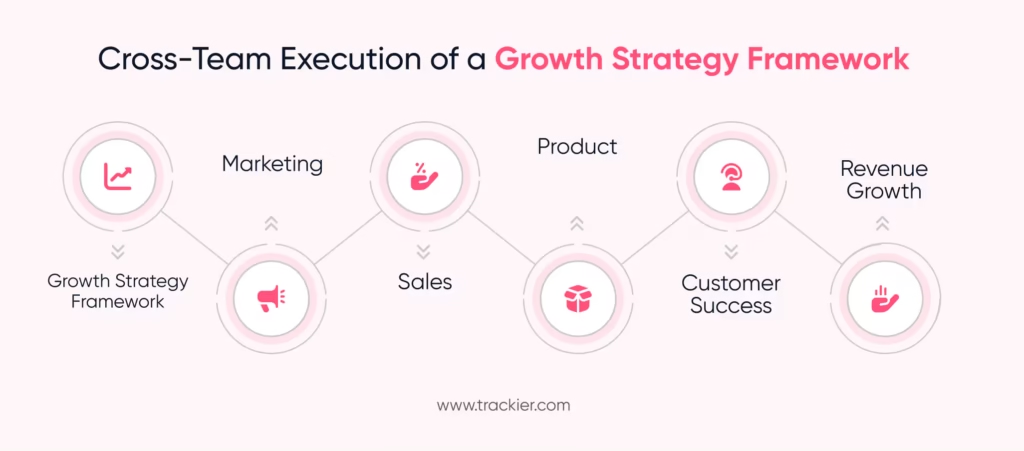
Growth frameworks thrive on multi-team contribution towards common outcome objectives. Marketing is responsible for customer acquisition, Sales is responsible for converting leads, and Product is responsible for enhancing user experience. When you have uncoordinated teams, there are many strategic growth initiatives that can be fragmented or ineffective.
Establishing a clear business strategy empowers each team to understand its individual contributions towards driving revenue and customer acquisition. Together with defining shared outcomes, each department should be assigned clear ownership, and the team(s) should be regularly reviewed to stay aligned.
Establish Shared Growth Outcomes
First, marketing teams, sales teams, and product teams will need to define the goals they share across departments. Teams will be able to make easier decisions, and be able to consistently drive initiatives if they are all working towards common goal outcomes.
Establish Clear Ownership
Each department should have a clear understanding of its own role in executing the growth framework. With clearly defined ownership, confusion surrounding role expectations will be reduced, and the teams will be able to focus their energy on the areas where they can add the most value.
Examples of Ownership Include:
- Marketing: driving customer acquisition and performance of campaigns
- Sales: lead conversion and driving revenue
- Product: driving onboarding experience and feature adoption
- Customer Success: driving retention and expansion.
Utilize common performance measures
When teams are measuring the same performance measures or KPIs (key performance indicators), it is easier to align.
When other teams and leaders are measuring their initiatives’ contributions to business growth strategy via shared measures, it makes it easier for them to assess how those initiatives contribute to overall business success.
Conduct frequent reviews of growth strategies
Growth strategy reviews should happen on a regular basis. These reviews will also allow teams to measure their results against their established goals, evaluate what challenges they may be having, and re-order their priorities as appropriate.
Regular conversations regarding campaign performance metrics, customer behavior, and revenue outcomes will help ensure that your framework keeps supporting your long-term business objectives.
Summary
An organized growth strategy enables organizations to develop a consistent plan for ongoing expansion rather than relying on uncoordinated efforts and short-lived tactics to drive incremental increases in revenue.
By having a defined framework (i.e., standardized processes/rules), they can establish the priorities for their acquisition channels; estimate resource distribution; and assess the progress made on achieving their stated goals.
Growth decision-making becomes more complicated as businesses experience expansion into new markets, changes in customer expectations, and increased competition. When designed correctly, a growth strategy will serve as a consistent and reliable decision-making mechanism for business leaders to utilize, while also providing businesses with the necessary flexibility to adapt to changing environments.
By creating and continually improving a defined framework for their business growth strategies, organizations are in a better position to develop scalable acquisition channels, retain current customers, and maximize long-term revenues.
Ultimately, their structured approach will convert what was once an experiment into a predictable and repeatable process through clear objectives, ongoing collaboration among teams, and measurable results.
FAQs
What are the 4 growth strategies?
The four growth strategies include market penetration (selling more existing products to current markets), market development (entering new markets), product development (launching new products for existing customers), and diversification (introducing new products in new markets). Businesses use these strategies to identify structured ways to expand revenue and market presence.
What is the 5 strategy framework?
The 5 strategy framework often refers to five core areas businesses analyze when planning growth: market opportunity, customer segments, value proposition, growth channels, and performance metrics. These elements help companies structure their growth strategy framework, ensuring that expansion decisions are based on customer demand, competitive positioning, and measurable business outcomes.
What is the 7 step strategy framework?
A 7 step strategy framework outlines the structured process businesses follow to build and execute growth strategies. The steps usually include defining goals, analyzing the market, identifying customer segments, selecting growth opportunities, prioritizing initiatives, setting performance metrics, and executing with regular reviews. This framework helps organizations turn strategic planning into measurable and actionable business growth.