A growth marketing strategy focuses on building repeatable systems that help businesses grow consistently. Instead of running isolated campaigns, teams look at the entire customer journey and improve each stage with testing, data, and iteration. The goal is steady progress, not one-time spikes.
Unlike traditional marketing plans that often stop at acquisition, a growth marketing strategy considers what happens after a user signs up, makes a purchase, or engages for the first time. Retention, engagement, and long-term value matter just as much as reach.
This method depends on clear measurement. Teams use data from performance marketing software to understand which actions contribute to growth and which ones stall it. Decisions are based on patterns, not assumptions.
As businesses expand, growth marketing strategies help teams prioritise efforts, test faster, and focus on outcomes that support sustainable expansion rather than short-term visibility.
What Is a Growth Marketing Strategy?
A growth marketing strategy is a structured way to improve how a business acquires, activates, retains, and monetises customers. It focuses on identifying friction points in the customer journey and solving them through testing and optimisation.
Rather than relying on fixed plans, growth marketing strategies continuously evolve. Teams test small changes, check performance regularly, and optimize what works. This makes growth more predictable and easier to sustain over time.
How Growth Marketing Thinks Differently
Asking questions is the first step in growth marketing. Teams examine where users drop off or lose interest rather than selecting strategies first. Experiments are designed to fix those specific issues.
Changes are tested in small steps. This could be a tweak in messaging, onboarding flow, or pricing page. If the change improves results, it stays; if it does not, it is removed. This keeps efforts focused and reduces wasted time.
Core Goals of a Growth Marketing Strategy
Each growth marketing strategy usually aligns around a few clear goals:
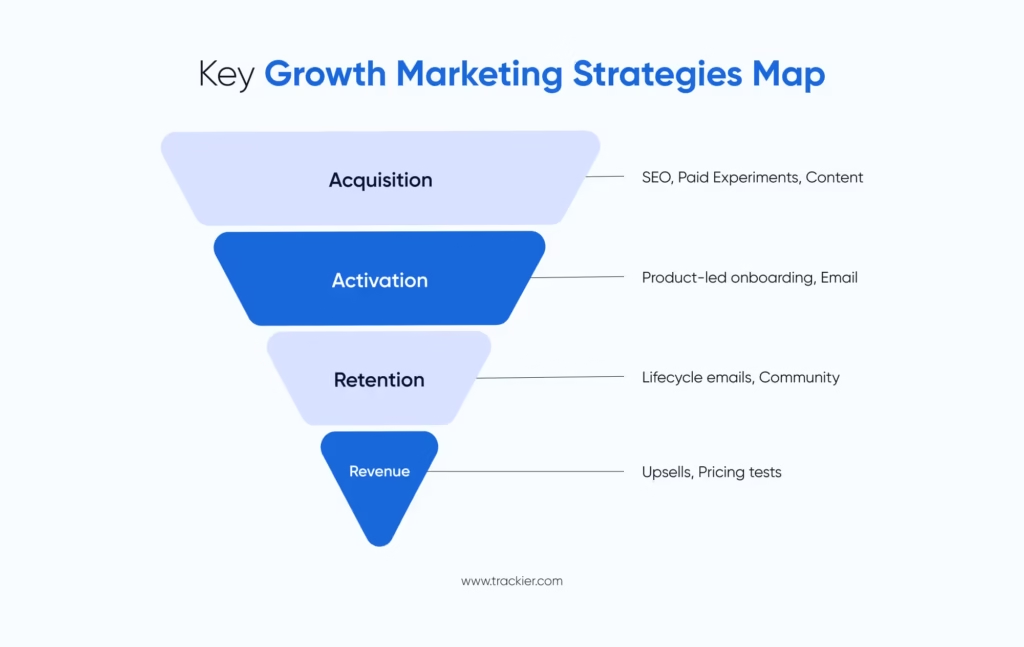
- Acquisition: Bringing in users who match the business intent
- Activation: Helping users reach their first meaningful action
- Retention: Encouraging repeat usage or engagement
- Revenue: Increasing lifetime value through upsells or renewals
- Referral: Turning satisfied users into advocates
These goals are connected. Progress in one area often supports the next, which is why growth marketing strategies are built as systems rather than isolated efforts.
Growth Marketing vs Digital Marketing
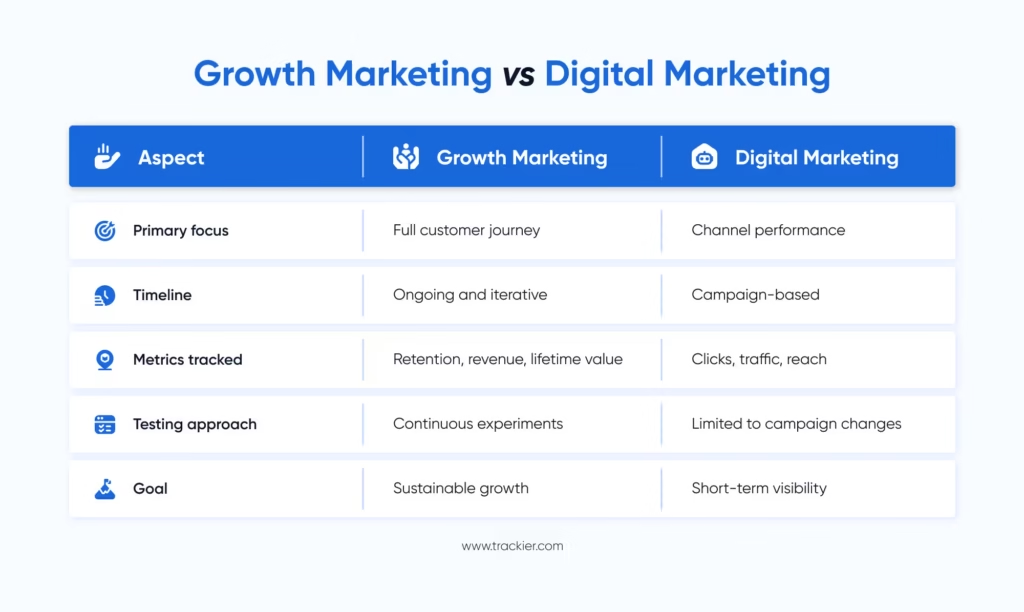
Growth marketing and digital marketing are often used interchangeably, but they are not the same. Both use online channels, but the intent and execution differ.
Digital marketing focuses on running campaigns across channels such as search, social media, and email. The main objective of digital marketing is visibility and traffic, so once a campaign ends, the activity usually stops.
Growth marketing focuses on outcomes across the entire funnel. It monitors user behaviours beyond clicks and impressions. The system includes retention, repeat actions, and revenue.
Strategic Differences
The majority of digital marketing strategies are usually channel-led. Teams plan activity based on where to post or advertise.
Growth marketing strategies start with a problem. The channel is chosen only if it helps solve that problem.
Growth marketing also works on longer timelines. Instead of short campaign bursts, efforts are reviewed and improved continuously.
Execution Differences
Digital marketing campaigns often run in isolation. Ads are managed by one team, another handles email, and results are measured independently.
Growth marketing connects these efforts. Data from acquisition feeds into activation and retention. Decisions are made based on how each step affects overall growth, not individual channel performance.
Why Businesses Need a Growth Marketing Strategy
As businesses grow, marketing efforts become harder to manage. Multiple channels, tools, and campaigns run at the same time. Without structure, teams are not able understand what brings results.
A growth marketing strategy brings focus. Instead of spreading effort across many activities, teams concentrate on areas that move users forward in the funnel. This reduces wasted spend and improves consistency.
Scaling Without Increasing Spend Linearly
In traditional marketing, more spending often translates to more outcomes. Growth marketing strategies aim to improve output without increasing costs at the same pace. Small improvements in conversion or retention can create a noticeable impact over time.
Research shows that increasing customer retention by as little as 5% can increase profits by up to 95%. This is why growth strategies focus on improving existing user value, not just adding new users.
Improving Retention Alongside Acquisition
Acquisition brings users in, and retention keeps them engaged. Growth marketing strategy treats both as equally important.
When retention improves, businesses rely less on constant new traffic. Users return, engage more, and are more likely to convert again. This makes growth more stable and easier to forecast.
Creating Predictable Growth Systems
Growth marketing replaces guesswork with patterns. Teams identify what works, repeat it, and remove what does not. Over time, this creates systems that support steady growth instead of short-term spikes.
Predictability helps teams plan better, set realistic goals, and allocate resources better.
Key Growth Marketing Strategies
Growth marketing strategies work best when they are tied to specific outcomes. Each strategy listed below includes clear conditions that teams can track and improve over time.
1. Content-Led Growth
Content supports users before and after they engage with a brand. It works best when it answers real questions and removes uncertainty.
Key parameters to track:
- Organic traffic quality
- Time spent on page
- Assisted conversions
- Content-driven sign-ups
2. SEO-Driven Growth Strategy
SEO-driven growth focuses on capturing demand that already exists. Pages are built around intent, not volume alone.
Key parameters to track:
- Keyword rankings by intent
- Click-through rate from search
- Organic conversion rate
- Page-level engagement
3. Lifecycle Email Marketing
Lifecycle emails focus on timing and relevance. Messages are triggered by user actions rather than fixed schedules.
Key parameters to track:
- Open rate by user stage
- Click-through rate
- Activation completion rate
- Repeat engagement
4. Product-Led Growth
Product-led growth depends on how quickly users experience value. The product itself guides adoption and upgrades.
Key parameters to track:
- Time to first key action
- Feature usage frequency
- Free-to-paid conversion rate
- User drop-off points
5. Community and Referral Loops
Community-driven growth builds trust and long-term engagement. Referrals come naturally when users see value.
Key parameters to track:
- Active community participation
- Referral conversion rate
- Repeat referrals
- User-generated mentions
6. Paid Growth Experiments
Paid growth is used for testing before scaling. Experiments focus on learning, not volume.
Key parameters to track:
- Cost per acquisition
- Conversion rate by audience
- Message performance
- Incremental lift
Digital Marketing Growth Strategy vs Traditional Growth
A digital marketing growth strategy is centered on growing through online channels. Traditional growth is more about offline efforts, long sales cycles, and fixed marketing strategies. The difference lies in how flexible and measurable each approach is.
Channel-First vs Funnel-First Approach
Traditional growth usually starts with channels. Teams decide where to advertise or promote before understanding user behaviour.
A digital growth marketing strategy starts with the funnel. Teams identify where users drop off and choose channels that help fix those gaps. This keeps efforts aligned with outcomes rather than visibility.
Short-Term Wins vs Compounding Growth
Traditional growth often focuses on immediate results, such as event-driven leads or seasonal campaigns. Once the activity is over, it will slow down.
Digital growth strategies build assets that compound in value. Content, lifecycle flows, and optimisation work together to support long-term performance.
Measurement and Attribution
Traditional growth relies on high-level metrics like leads generated or reach achieved. These metrics are harder to connect to revenue.
Digital marketing growth strategies track actions across stages. Teams can see which efforts contribute to conversions, retention, and repeat value, making decisions easier to justify.
Growth Marketing Frameworks Used by Teams
Every growth marketing strategy needs a reliable structure. Frameworks help teams decide where to focus, what to test, and how to measure progress. Without a framework, efforts often become hard to expand.
Teams use growth marketing frameworks to bring consistency to decision-making while still allowing room for testing and iteration.
1. AARRR Framework
The AARRR framework is commonly used within a growth marketing strategy to break growth into five stages: Acquisition, Activation, Retention, Revenue, and Referral.
By mapping user behaviour across these stages, teams can identify weak points in the funnel and prioritise fixes that support the strategy.
2. North Star Metric Framework
A strong growth marketing strategy is attached to a North Star Metric. This metric reflects the core value users receive from a product or service.
When teams align campaigns, experiments, and messaging around one central metric, growth efforts become easier to evaluate.
3. Experimentation Frameworks
Experimentation is a key part of any growth marketing strategy.
- ICE scores ideas based on Impact, Confidence, and Ease
- PIE scores ideas based on Potential, Importance, and Ease
These frameworks help teams focus on experiments that are more likely to deliver results with available resources.
Growth Marketing Examples
Growth marketing examples help explain how a growth marketing strategy works in real situations. Instead of focusing on tactics alone, these examples show how teams align goals, testing, and measurement to drive results.
1. SaaS Growth Marketing Examples
In SaaS, a growth marketing strategy mainly focuses on activation and retention. Many teams analyse where users drop off during onboarding and simplify early steps.
Common actions include improving product walkthroughs, adding usage-based emails, and reducing friction in trial experiences. These changes help users reach value faster and increase the chances of conversion.
2. Ecommerce Growth Marketing Examples
Ecommerce growth marketing strategies usually prioritise repeat purchases. Teams track browsing behaviour and use personalised reminders to bring users back.
Examples include cart recovery flows, product recommendations based on past activity, and post-purchase follow-ups. These efforts improve retention without increasing acquisition spend.
3. Marketplace Growth Marketing Examples
Marketplaces depend on balanced growth across supply and demand. A growth marketing strategy here focuses on improving engagement on both sides.
Teams often run targeted incentives, referral programs, or listing optimisations. The goal is to increase activity while maintaining quality across the platform.
4. B2B Growth Marketing Examples
B2B growth marketing strategies tend to focus on lead quality and lifecycle movement. Instead of pushing for immediate conversions, teams nurture leads through education and use case clarity.
Examples include gated content, account-based messaging, and sales-aligned follow-ups that support long-term relationships.
Building a Growth Marketing Strategy Step-by-Step
Building a growth marketing strategy starts with clarity. Teams should be able to understand what drives results and where users face friction. Each step builds on the previous one, making growth more predictable.
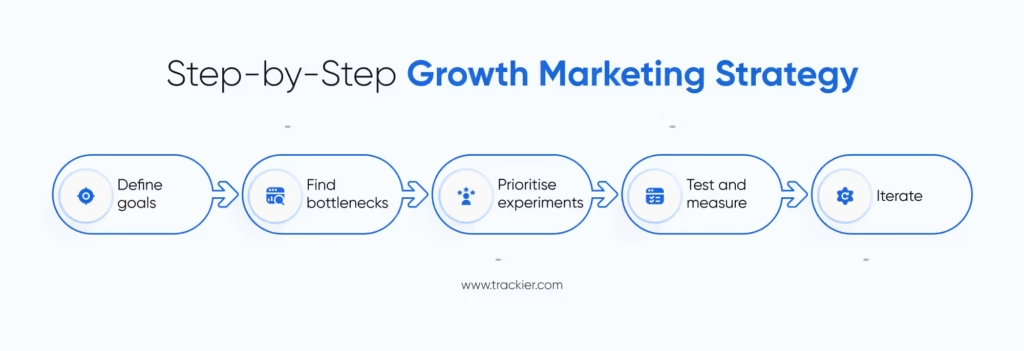
Define Business and Growth Goals
A growth marketing strategy should align with business goals. These goals might include increasing sign-ups, improving retention, or growing revenue.
Clear goals help teams decide which metrics matter and which activities to prioritise.
Identify Bottlenecks in the Funnel
Once goals are set, teams look for drop-offs. This could be low activation rates, poor retention, or stalled conversions.
Data from analytics tools highlights where users stop progressing. Fixing one bottleneck at a time often leads to noticeable improvement.
Prioritise Growth Experiments
Not every idea should be tested at once. A strong growth marketing strategy prioritises experiments based on potential impact and effort.
Frameworks like ICE or PIE help teams focus on experiments that are more likely to deliver results without overusing resources.
Test, Measure, and Optimize
Testing is done in small steps. Each experiment has a clear hypothesis and success metric.
Results are reviewed regularly, what works is scaled, and what does not is removed. This process strengthens the growth marketing strategy and improves decision-making.
Metrics That Matter in Growth Marketing
Metrics help teams understand how successful your growth marketing strategy is. Instead of tracking everything, growth marketing focuses on a few indicators that show real progress across the funnel.
Each metric should connect to a clear action or outcome. If a metric cannot influence a decision, it barely adds any value.
1. Acquisition Metrics
Acquisition metrics measure how users enter the funnel. These metrics help evaluate the quality of traffic, not just volume.
Common acquisition metrics include:
- Cost per acquisition (CPA)
- Conversion rate from visit to sign-up
- Channel-level performance
A growth marketing strategy uses these metrics to identify which channels bring users who are more likely to activate or convert.
2. Activation Metrics
Activation metrics track whether users reach their first meaningful action. This stage shows whether the value proposition is clear.
Common activation metrics include:
- Time to first key action
- Onboarding completion rate
- Feature adoption rate
Improving activation usually has a direct impact on retention and revenue later in the funnel.
3. Retention Metrics
Retention metrics show whether users return after their first interaction. These metrics are important to any long-term growth marketing strategy.
Common retention metrics include:
- Returning user rate
- Churn rate
- Engagement frequency
Retention highlights whether users continue to find value over time.
4. Revenue Metrics
Revenue metrics connect growth efforts to business outcomes. These metrics help teams understand how growth translates into revenue.
Common revenue metrics include:
- Average revenue per user (ARPU)
- Customer lifetime value (CLTV)
- Conversion rate from free to paid
A growth marketing strategy tracks revenue trends alongside acquisition and retention to maintain balance.
5. Referral Metrics
Referral metrics measure how often customers bring in new users. These metrics indicate satisfaction and trust.
Common referral metrics include:
- Referral conversion rate
- Share or invite rate
- Repeat referrals
Strong referral metrics can reduce reliance on paid acquisition.
Tools Used in Growth Marketing
A growth marketing strategy uses tools to track behaviour, test ideas, and automate actions. The focus is on clarity and measurement, not the number of tools used.
1. Analytics and Tracking Tools
Analytics tools help teams understand how users move through the funnel. These tools show where users drop off and which actions lead to conversions.
Common uses include tracking page performance, user journeys, and event-based actions. This data can help prioritise improvements and measure impact accurately.
2. Experimentation and Testing Tools
Testing tools help teams run controlled experiments. These tools compare variations in messaging, layouts, or flows to see what performs better.
They support faster learning by reducing guesswork. Results from experiments help refine the growth marketing strategy without making major changes blindly.
3. Automation and Lifecycle Tools
Automation tools support user engagement after acquisition. These tools trigger messages based on behaviour or timing.
Common use cases include onboarding emails, reminders, and re-engagement flows. When used correctly, automation improves retention without adding manual effort.
4. Collaboration and Planning Tools
Growth marketing often involves multiple teams. Collaboration tools help organise experiments, document learnings, and track progress.
Clear documentation ensures insights are reused rather than lost. This keeps the growth marketing strategy consistent as teams grow.
Common Mistakes in Growth Marketing Strategy
A growth marketing strategy can fail even with good tools and data. Most issues come from poor focus, unclear goals, or rushed execution. Avoiding these mistakes helps teams build sustainable growth instead of short-term gains.
1. Focusing Only on Acquisition
Many teams spend most of their effort on bringing in new users. This creates high costs and unstable growth.
A strong growth marketing strategy balances acquisition with activation and retention. Improving what happens after users arrive often delivers better results than increasing traffic.
2. Running Experiments Without Clear Goals
Testing without a defined outcome leads to confusion. Teams may collect data but fail to learn anything useful from it.
Every experiment should link back to a specific metric. Clear goals make it easier to decide whether an experiment worked and what to do next.
3. Tracking Too Many Metrics
Tracking everything makes it hard to focus. Dashboards fill up, but decisions slow down.
A growth marketing strategy works best when teams track a small set of metrics tied to each funnel stage. Fewer metrics improve gives clarity.
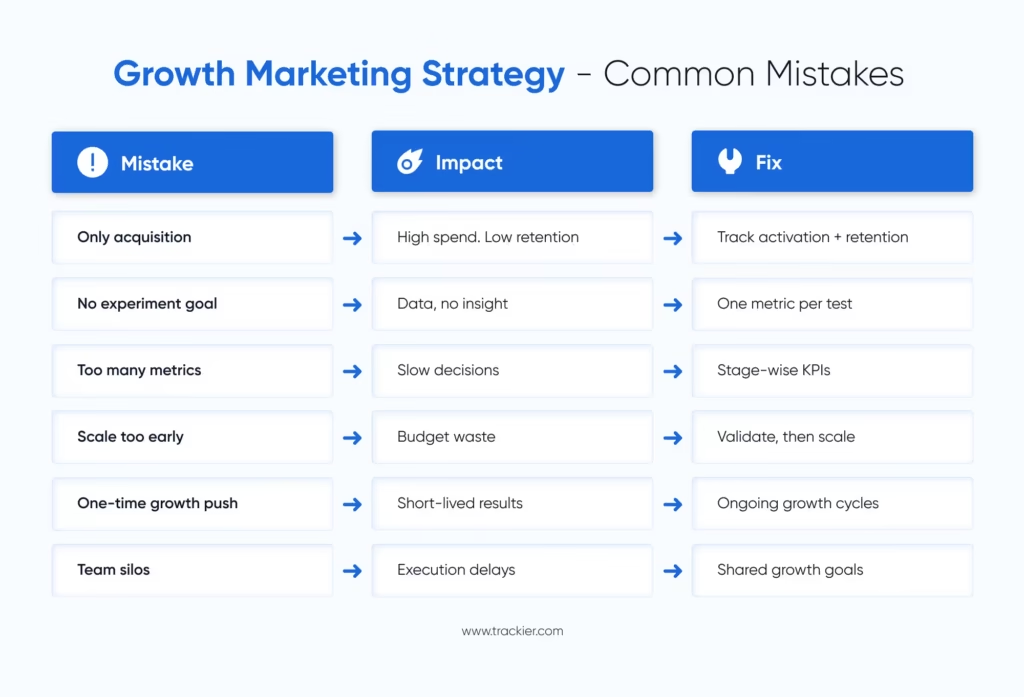
4. Scaling Before Validating
Some teams scale campaigns or features before confirming results. This increases risk and wasted spend.
Testing should always come before scaling. A growth marketing strategy relies on proof, not assumptions.
5. Ignoring Cross-Team Alignment
Growth marketing depends on collaboration between marketing, product, and sales. When teams work in isolation, progress slows.
Shared goals and regular communication help keep the growth marketing strategy aligned and effective.
Conclusion
A growth marketing strategy works best when it is built on clarity, testing, and consistency. Growth comes from improving how users move through each stage, from first interaction to long-term engagement.
When teams focus on measurable outcomes, prioritise experiments, and align efforts across functions, growth becomes easier to manage and scale. The strategy remains flexible, but decisions stay grounded in data and intent. Over time, this approach creates steady progress that supports both business goals and user needs.
FAQs
What is a growth marketing strategy?
A growth marketing strategy is a plan that focuses on increasing a business’s reach, engagement, and revenue through consistent improvement. It aligns acquisition, activation, retention, and monetisation efforts around measurable goals. Instead of relying on one-time campaigns, it uses testing, data, and optimisation to drive steady, repeatable growth.
What are the 4 growth marketing strategies?
The four common growth marketing strategies are market penetration, market development, product development, and diversification. Market penetration focuses on selling more to existing customers. Market development targets new audiences. Product development introduces new offerings. Diversification combines new products with new markets to expand growth opportunities.
What is the 70 20 10 rule of marketing?
The 70 20 10 rule of marketing suggests allocating resources across three areas. Seventy percent goes to proven strategies that deliver consistent results. Twenty percent is used for optimising and extending successful efforts. Ten percent is reserved for experiments and new ideas that could unlock future growth.
What are the 5 main marketing strategies?
The five main marketing strategies often include content marketing, search engine optimisation, paid advertising, email marketing, and social media marketing. Each strategy supports different stages of the funnel. They help attract users, build engagement, and convert interest into measurable business outcomes.
What are the four types of growth?
The four types of growth typically include organic growth, inorganic growth, internal growth, and external growth. Organic growth comes from improving existing operations. Inorganic growth involves acquisitions or partnerships. Internal growth focuses on product and process improvements. External growth expands reach through new markets or channels.