In performance marketing, every click counts, literally. Affiliates constantly look for ways to understand which campaigns, offers, and partners deliver the strongest revenue outcomes. That’s why EPC tracking has become a non-negotiable metric for anyone serious about scaling their affiliate earnings. It goes beyond vanity metrics and helps affiliates evaluate real profitability by knowing exactly how much each click is worth.
Whether you’re optimizing ads, selecting high-performing offers, or negotiating better payouts, EPC tracking gives you clarity rooted in data, not guesswork.
What Is EPC Tracking?
EPC tracking (Earnings Per Click tracking) measures how much an affiliate earns for every click generated on a particular offer or campaign.
It connects performance to payouts by calculating how many conversions came from your traffic and the revenue they generated.
In simple terms:
EPC = Total Earnings / Total Clicks
If you earned $300 from 2,000 clicks, your EPC is $0.15, meaning every click is worth fifteen cents.
This single metric helps affiliates evaluate campaign success, traffic relevance, and overall earning potential. It simplifies decision-making by showing which offers bring the highest per click earning.
This metric helps affiliates quickly identify:
- Which offers provide the highest payout potential
- Whether traffic quality is strong or weak
- What campaigns deserve more investment
- Which partners are delivering ROI
In short, EPC tells you how profitable your clicks are.
Relationship of EPC Tracking and Affiliates
Affiliates rely heavily on performance metrics to understand the true value of their marketing efforts. Among all performance indicators, EPC tracking stands out because it directly connects user action with actual revenue generated. This relationship is crucial: affiliates drive traffic, but EPC tells them whether that traffic is profitable.
By analyzing EPC, affiliates gain clarity on which offers produce meaningful earnings, which channels bring high-intent users, and how effectively their strategies convert attention into revenue. Without EPC tracking, affiliates operate in the dark, unable to distinguish between campaigns that merely drive clicks and those that generate real results.
Benefits of This Relationship & Key Factors That Influence It
The strong connection between affiliates and EPC tracking unlocks several advantages that help maximize revenue and refine performance strategies. When affiliates understand how EPC impacts their daily operations, decision-making becomes sharper, and scaling becomes more predictable. However, the strength of this relationship depends on several factors that influence how EPC behaves over time.
Benefits of the EPC & Affiliate Relationship
1. Smarter Campaign Prioritization
EPC helps affiliates immediately recognize which campaigns deserve more budget, attention, and traffic. High-EPC offers rise to the top, while low-EPC campaigns can be paused or tested with new angles.
2. Better Control Over Revenue Streams
By understanding which offers or advertisers consistently generate high earnings per click, affiliates can build stable, predictable revenue streams instead of relying on guesswork.
3. Improved Optimization Cycles
Since EPC directly reflects funnel performance, affiliates can use it to guide testing decisions for creatives, landing pages, audience segments, and messaging. The feedback loop becomes faster and more insightful.
4. Stronger Negotiation Power With Advertisers
Affiliates with consistently high EPC can negotiate:
- Higher payouts
- Exclusive offers
- Priority access to premium campaigns
- EPC becomes a performance proof-point
5. Faster Scaling With Lower Risk
Because EPC reveals how profitable each click is, affiliates can scale campaigns confidently. They know which channels drive real ROI, important for both organic and cost per click affiliate strategies.
Key Factors That Influence This Relationship
1. Traffic Quality
The relevance, intent, and authenticity of traffic greatly affect EPC. High-quality audiences typically convert more, increasing earnings per click.
2. Offer Relevance & Appeal
Even good traffic can fail to convert if the offer does not align with user needs. Niche, pricing, and brand credibility all play a role.
3. Landing Page Performance
Slow, cluttered, or poorly optimized landing pages can drastically reduce EPC. A strong user experience increases conversions and boosts earnings per click.
4. Payout Structure
Higher payouts generally lead to higher EPC, but only if conversion rates remain strong. Affiliates must balance payout attractiveness with funnel performance.
5. Creative & Messaging Quality
Ad angles, design, CTA placement, and overall messaging can dramatically shift EPC. Strong creatives turn impressions into clicks and clicks into revenue.
6. Device, Geography & Demographics
Audience location, device type, and demographic behavior heavily influence conversion patterns, impacting EPC trends across campaigns.
7. Seasonality & Market Demand
Festive seasons, sales cycles, or industry trends can temporarily increase or decrease EPC depending on product relevance and competition.
8. Fraud & Invalid Traffic
Fraudulent clicks or bot traffic can drag down EPC and harm partner relationships. Accurate tracking tools like Trackier help maintain clean, reliable EPC reporting.
Why EPC Tracking Is Crucial for Affiliates
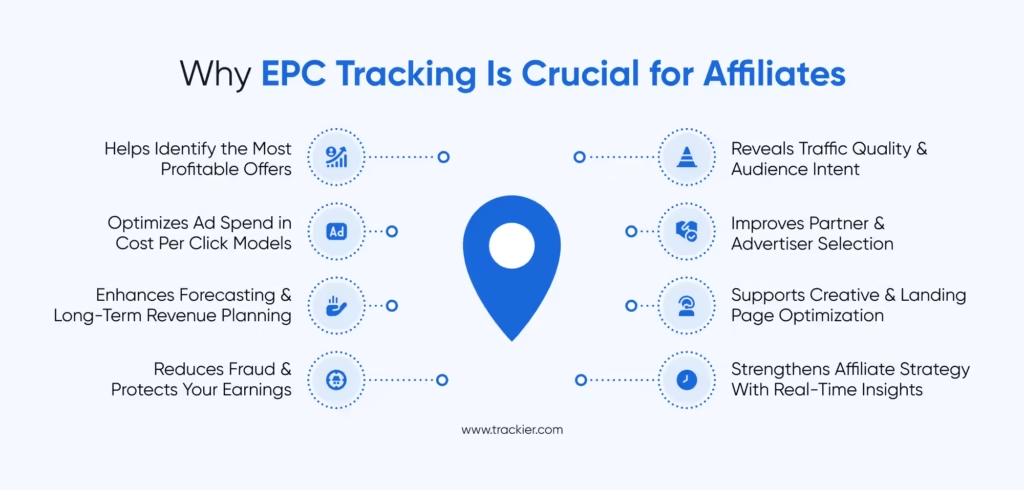
Helps Identify the Most Profitable Offers
Not all offers with high payouts deliver strong results. EPC tracking helps affiliates find offers that produce real revenue, not just promise it.
- Instead of relying on broad metrics like impressions or CTR, EPC shows real earning performance.
- Two offers may look similar on the surface, but their EPC values may differ drastically. With EPC tracking, affiliates can quickly switch from low-value to high-value offers without wasting traffic.
This makes EPC the foundation for crafting profitable affiliate strategies.
Reveals Traffic Quality & Audience Intent
Traffic volume means very little without conversions. EPC shows whether the clicks you’re generating have genuine intent.
If your visitors are clicking but not converting, your EPC will remain low.
EPC tracking helps affiliates understand:
- Is the traffic relevant?
- Are the landing pages effective?
- Are you promoting the right offer to the right audience?
This is crucial for optimizing your overall per click earning. For affiliates working with paid traffic, EPC becomes essential in maximizing per click earning.
Optimizes Ad Spend in Cost Per Click Models
In a cost per click affiliate campaign, you’re spending money for every visit you drive. EPC helps ensure that your earnings per click stay higher than your cost per click.
For affiliates working with a cost per click affiliate model, EPC becomes a decision-making metric. If your EPC is lower than what you pay per click, the campaign is losing money.
But if your EPC is higher, you’re in a profitable zone.
EPC tracking helps affiliates:
- Stop campaigns that burn money
- Double down on profitable ads
- Reallocate budgets with precision
This helps affiliates scale safely and profitably.
Improves Partner & Advertiser Selection
Choosing the right advertiser makes a big difference. EPC tracking highlights which advertisers drive real conversions and which ones underperform.
Not every advertiser is equal. Some consistently deliver high EPC, others don’t. By monitoring EPC across offers and networks, affiliates can:
- Choose better advertisers
- Negotiate higher payouts
- Build strategic long-term partnerships
This creates stability and predictability in per click earning.
Enhances Forecasting & Long-Term Revenue Planning
Accurate forecasting helps affiliates scale sustainably. EPC provides the clarity needed for effective revenue planning.
EPC tracking helps affiliates project:
- Monthly earnings
- Expected revenue from specific traffic volumes
- Break-even points
- Future performance trends
Accurate forecasts enable smarter scaling decisions. EPC becomes a roadmap for growth, not just a performance metric.
Supports Creative & Landing Page Optimization
EPC is one of the best indicators for testing creatives, landing pages, and funnels. Testing new creatives, ad copies, and landing pages becomes easier when EPC tells you exactly which variation drives the highest earnings.
Using EPC data, affiliates can:
- Test multiple ad variations and determine which perform best
- Identify messaging styles that resonate more with users
- Improve landing page design, CTA placement, and conversion flow
- Refine content for audience intent and behavior
- Build continuous improvement cycles based on performance
High EPC indicates that every stage of the funnel is working efficiently
Reduces Fraud & Protects Your Earnings
Fraud is a major issue in affiliate marketing. EPC tracking helps detect anomalies before they impact revenue.
EPC helps affiliates and networks:
- Identify bot-driven or incentivized clicks
- Spot suspicious patterns in traffic
- Prevent earning losses from invalid clicks
- Maintain trust with advertisers
- Improve the overall quality of their campaigns
Platforms like Trackier add fraud detection layers that help keep EPC data accurate and actionable.
Strengthens Affiliate Strategy With Real-Time Insights
Affiliate performance changes quickly. Real-time EPC tracking gives affiliates the speed they need to react immediately.
Real-time EPC helps affiliates:
- Make faster decisions during traffic surges
- Act when EPC suddenly increases or decreases
- Compare performance across channels
- Trigger automated optimization rules
- Scale campaigns at the perfect time
Real-time EPC isn’t just useful, it’s a competitive advantage.
How Trackier Helps Affiliates With EPC Tracking
Trackier simplifies epc tracking with:
- Real-time click and conversion monitoring
- Offer-wise and source-wise EPC insights
- Fraud detection filters
- Custom dashboards for performance breakdown
- Automated rules for optimizing campaigns
- Accurate reporting for smarter decisions
With Trackier’s analytics engine, affiliates get a clear view of what’s working and what needs attention, helping maximize earnings efficiently.
Final Thoughts
EPC tracking is more than a number. It’s the foundation of a successful affiliate strategy.
By understanding your earnings per click, you can identify profitable offers, eliminate wasted spend, improve audience targeting, and scale your campaigns with confidence.
The more consistently you monitor EPC, the faster and smarter you grow as an affiliate.
FAQs
What is EPC tracking in affiliate marketing?
EPC tracking refers to monitoring how much an affiliate earns for every click they generate. It shows the real earning value of each click, helping affiliates understand which campaigns and offers are actually profitable. EPC tracking is essential because it ties traffic performance directly to revenue, making it easier to choose the right campaigns and scale effectively.
Why is EPC tracking important for affiliates?
EPC tracking helps affiliates identify high-performing offers, optimize their traffic sources, and increase overall profitability. It reveals how well clicks convert into revenue, allowing affiliates to focus on offers with the highest per click earning. Without EPC tracking, affiliates may spend time or money on campaigns that bring traffic but don’t convert.
How is EPC calculated?
EPC is calculated using the simple formula:
EPC = Total Earnings ÷ Total Clicks
For example, if you earned $150 from 1,000 clicks, your EPC is $0.15. This number helps affiliates compare different offers and choose the most profitable ones.
What factors influence EPC performance?
Several elements impact EPC performance, including traffic quality, offer relevance, payout structure, landing page performance, audience behavior, and creative quality. Strong alignment between your audience and the offer usually results in higher EPC, and better per click earning overall.
How does EPC tracking help in cost per click affiliate campaigns?
In a cost per click affiliate setup, you pay for every click you generate. EPC tracking ensures that your earnings per click remain higher than your advertising spend. This helps affiliates avoid losses, optimize campaigns quickly, and allocate budgets more efficiently.