Digital advertising has become central to how brands reach, engage, and convert online audiences. According to research, global ad expenditure on digital advertising will reach almost $950 million by 2026, thereby accounting for about 70% of the entire advertising expenditure.
With search, social, video, programmatic, retail, and partner channels offering different ways to reach customers, choosing the right platform can directly affect campaign performance.
For brands running performance-driven campaigns across multiple partners, Trackier provides tracking, attribution, campaign management, and performance insights to help connect advertising activity with measurable outcomes.
This blog explores the leading digital advertising platforms, what each is best suited for, and how businesses can evaluate them.
What Are Digital Advertising Platforms?
Digital advertising platforms allow companies to set up and manage paid ad campaigns on the web. The platforms link advertisers to the audiences on platforms like search engines, social media, sites, apps, video hosting services, and online marketplaces.
A digital advertising platform allows advertisers to control various parts of the ad campaign, such as the campaign’s audience, the type of ads, budget, bids, where the ads are placed, and measuring effectiveness. The targeting options can include various criteria, including search purpose, demographics, interests, and behavior.
There are several major categories of digital advertising platforms:
- Search advertising platforms for reaching users based on their search queries
- Social advertising platforms to reach consumers through social networks
- Display advertising platforms for ad placement in various sites and applications
- Video advertising platforms that utilize videos for reaching consumers
- Programmatic advertising platforms for data-based ad buying
- Retail advertising platforms for turning shoppers into clients using e-commerce and marketplace solutions
- Affiliate/partner platforms for advertising via publishers and partners
How does an online advertising platform work?
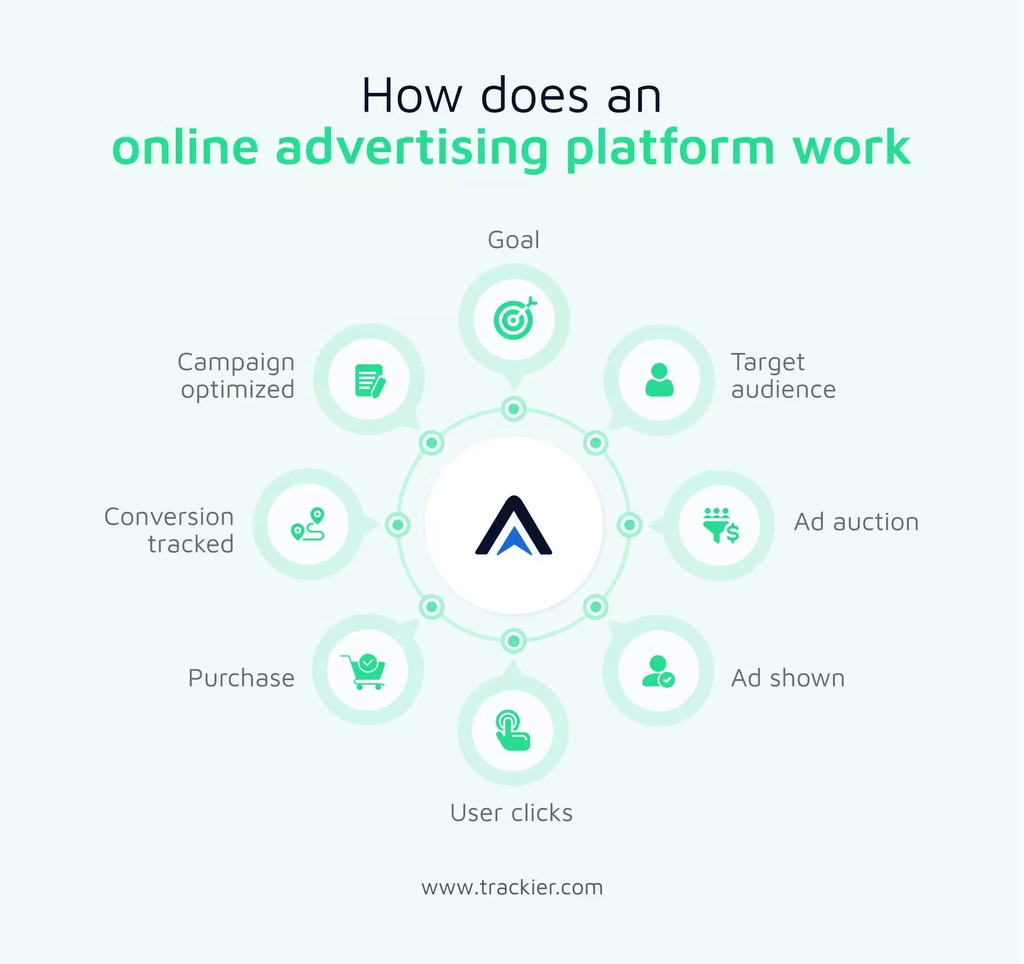
Online advertising platforms are intermediaries that connect advertisers, consumers, and digital ad inventory, enabling companies to promote their products to prospective customers and analyze the outcome of each ad launched.
Although the exact steps involved in the online advertising process differ based on the type of platform being used, the basic workflow is somewhat similar.
1. Advertisers Determine Their Campaign Objectives
The beginning of the process will be based on an objective, such as creating traffic for a website, generating leads, sales, or brand awareness. The next step is setting up the budget, selecting the ad type, and determining the way of measuring success.
2. Advertisers Target Their Audience
The platform applies advertisers’ targeting preferences to find the necessary people. Depending on the platform, this may include keywords, locations, devices, demographics, interests, behavior of people, and their previous experiences with a brand.
3. The Ad is Selected by the Platform
Whenever there is a valid opportunity for an advertisement, it is the platform’s job to decide which ad appears here. Usually, this process takes the form of an automated auction.
For instance, Google Ads conducts an auction every time there is a valid search. However, the decision is based not just on the highest bid but involves other parameters such as the quality of the ad, its relevance, and other signals.
When it comes to programmatic advertising, the same process can take only milliseconds. Namely, a publisher creates an ad impression, by which point demand-side platforms have evaluated the impression and made bids depending on the advertisers’ targeting.
4. The Ad is Shown to the Consumer
After an eligible ad has been selected, it is displayed in relation to the ad slot that became available, which may be a search result, website, app, social network feed, video, or e-commerce page.
The entire process is very fast. In the case of programmatic advertising, real-time bidding allows platforms to analyse and bid for available ad spots within milliseconds.
5. The User’s Activity Is Recorded
Once the advertisement has appeared, the platform notes the relevant entries such as:
- Impressions
- Clicks
- Video views
- Engagements
- Conversions
- Purchases or leads
6. Improvement of Campaigns
Based on the recorded results of the campaign, the advertisements are modified. The advertisers can change the amount of money allocated for the ad campaign, the bids used in the campaign, the audience, the creative, the placement, and so on.
Most platforms automate part of the process. For example, by using automated bidding in Google Ads, advertisers can get signals about the device, place, time, language, and operating system in order to set the proper bids.
Top online advertising platforms to consider
There is no one-size-fits-all approach when it comes to digital advertising platforms. The choice of the platform depends on several criteria, which include campaign objectives, target audience, advertisement format, budget, and performance metrics.
There are a number of platforms that provide services for major search, social, retail, B2B, and programmatic advertising applications.
1. Google Ads
Google Ads is one of the trending advertising platforms covering search, display, video, shopping, and other Google channels. Search-related advertising campaigns help businesses get in touch with users who are currently searching for relevant products or offers.
Suitable for: search-based targeting, e-commerce activities, lead generation, retargeting, extensive digital coverage.
2. Meta Ads
Meta Ads allow businesses to place ads on Facebook and Instagram. The unique thing about Meta Ads is the focus on audience-based advertising.
Suitable for: brand recognition, audience finding, e-commerce, lead generation, retargeting.
3. LinkedIn Ads
The advertising platform LinkedIn Ads targets a professional crowd, using criteria such as occupation, business profile, market area, and so on.
The main ad types provided by LinkedIn are sponsored content, sponsored message, dynamic advertisement, and text advertisement.
Recommended for: advertising to businesses, finding clients, account-based marketing, and influencing a narrow target audience.
4. Microsoft Advertising
Using Microsoft Ads, advertisers can conduct search, display, video, connected TV, shopping, and Performance Max campaigns. The search network does not focus only on Bing, as it includes partner companies (for instance, Yahoo and DuckDuckGo).
Recommended for: search advertising, online shopping, finding additional market segments, and targeting Microsoft advertising partners.
5. TikTok Ads
TikTok Ads is a unique form of advertising that revolves around short videos and discovery. The fact that it is mostly visual and video-oriented makes this kind of advertising perfect for companies that communicate their products via appealing videos.
Recommended for: product promotion, retail services, online shopping, and video advertising.
6. Amazon Ads
Amazon Ads is a platform that allows businesses to advertise in a customer-focused environment where customers are already looking for goods and comparing various products.
Ideal for: E-commerce, product discovery/retail sales, close to purchase.
7. YouTube Ads
YouTube allows businesses to run video advertisements across one of the largest video platforms in the world. Brands can use video advertisements to raise customer awareness, demonstrate the product, inform viewers about various topics, and make them take action.
Ideal for: Video marketing, raising brand awareness, demonstrating the product, consideration.
8. Affiliate and Partner Advertising Platforms
Affiliate and partner advertising platforms have a unique approach when compared to conventional media buying channels.
Instead of paying for every single impression from the advertising platform, businesses can use publishers, affiliates, and other partners to reward them according to the delivered performance results.
Moreover, such platforms usually provide tracking, partner management, commission calculation, and monitoring partner performance features.
Ideal for: Performance marketing, partnerships, e-commerce, and campaigns focused on conversions.
How to Select the Most Suitable Advertising Platform
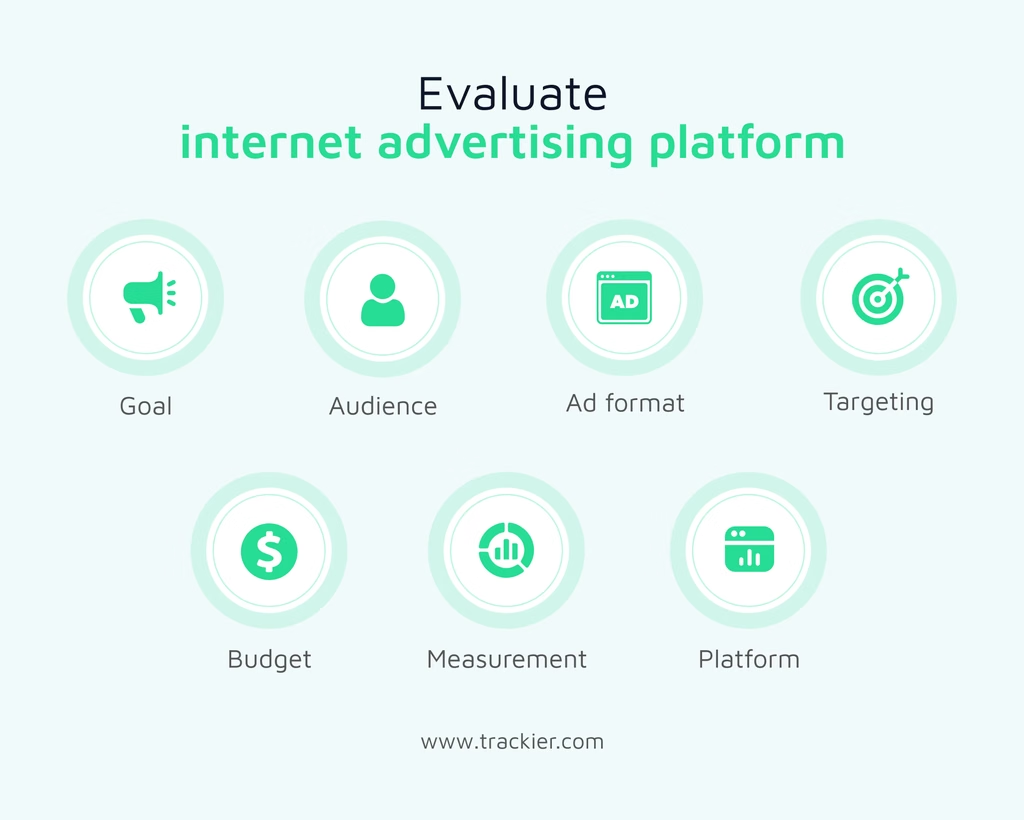
Selecting an advertising platform begins with identifying what goals you have, who the target audience is, and how you plan to assess the results. Each platform serves its unique target audiences, advertising formats, method of targeting, and advertising objectives.
For example, search platforms help to identify purchase intent, and social media and display platforms allow one to engage a target audience at the early stages of the buying process.
When deciding on the advertising platform, consider the following two points:
1. Define the Goal of the Advertising Campaign
Decide what exact result you want to achieve through the advertising campaign. Examples of advertising goals are:
- Awareness of the brand
- Traffic on the website
- Leads
- Downloads
- Sales
- Acquisition of clients
2. Locate Where Your Target Audience Interacts
Why use a platform if it does not help you reach your target group? Identify where your probable customers search, browse, consume content, shop, or engage with companies.
Here are some examples:
- Search platforms can be effective while people are searching for a certain product or service.
- Social platforms could help businesses reach customers according to their characteristics, interests, and behaviors.
- Professional platforms have significance for B2B marketing campaigns.
- Retail advertising platforms are effective in reaching customers prior to making the purchase.
- Programmatic platforms allow advertisers to reach customers on a variety of websites and digital resources.
3. Consider Your Ad Format
The ad creative should influence your selection of the platform. Some platforms are more effective for certain types of ads and customer journeys. Think about whether your campaign can be successful with the use of:
- Search ads
- Display ads
- Video ads
- Carousel ads
- Product ads
- Native ads
- Sponsored content
Key Metrics to Track on internet advertising platforms
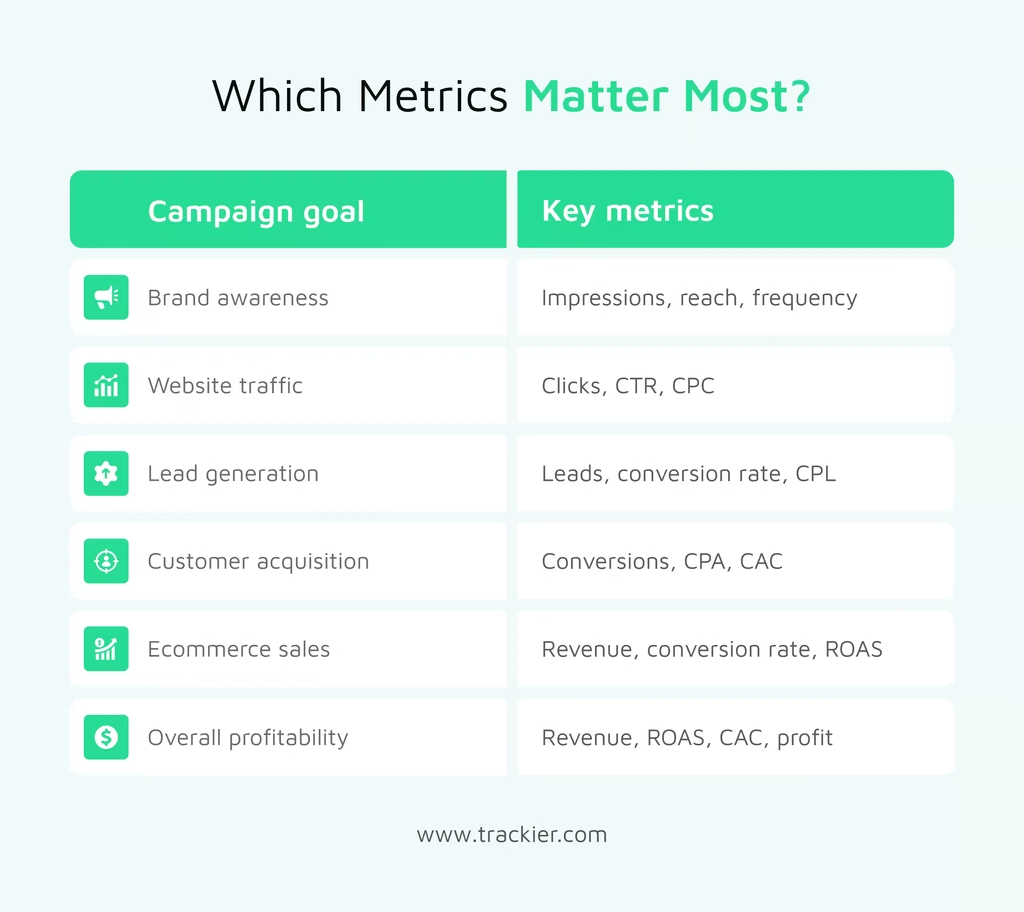
Just running advertisements is not enough to determine whether the advertising campaign is effective. Marketers must track metrics throughout the consumer journey, from when consumers see or click the ad to when they convert or make purchases after seeing the ad.
Most internet advertising platforms provide basic performance metrics like impressions, clicks, spending, conversions, and cost metrics.
Other analytics tools will help link your advertisements to leads, customers, or your revenue. Here are some metrics you must pay attention to:
1. Impressions
Impressions tell you how many times your advertisement has been displayed. It is useful for brand awareness and reach campaigns.
The fact that your advertisement is well displayed does not give you an idea of whether people interact with it or convert.
2. Click-Through Rate (CTR)
It is a method of calculating the percentage of impressions that translate into clicks.
- CTR = (clicks ÷ impressions) × 100
It allows advertisers to know how effectively their ad creatives, messages, and targeting methods drive users to take a desired action.
3. Cost Per Click (CPC)
CPC indicates the average cost incurred for a click on an ad.
- CPC = Ad Spend ÷ Clicks
It enables companies to analyze the cost of retrieving potential clients through an advertising campaign. Nevertheless, a low CPC does not automatically signify a successful campaign if clicks do not lead to significant conversions.
4. Conversion Rate
The conversion rate means how often a person completing a conversion activity interacts with an advertisement.
- Conversion Rate = (conversions ÷ ad interactions) × 100
The figure indicates which conversions are completed only through one source, but may vary depending on the platform and tracking method used.
5. Cost Per Acquisition (CPA)
This metric helps in figuring out the average amount spent by advertisers to acquire one conversion.
- CPA = Advertising Expenses / Total Conversions
This metric is especially useful in campaigns that aim to acquire leads, new customers, or sign-up clients.
6. Cost Per Lead (CPL)
In lead generation campaigns, the CPL indicates the average expenditure for acquiring a lead.
CPL = Ad Spend ÷ Number of Leads
This will help marketers to know how efficiently money has been spent in the campaigns aimed at acquiring leads.
7. Return on Ad Spend (ROAS)
The ROAS metric depicts how much revenue was generated compared to the amount spent on ads.
ROAS = Revenue Attributed to Ads ÷ Ad Spend
A ROAS of 4:1 indicates that the campaign generated $4 of revenue for every dollar spent on ads.
Knowing ROAS allows advertisers to match revenue with their expenditure on ads, but it’s important to consider other aspects as well, like margins, customer acquisition costs, and lifetime value.
8. Customer Acquisition Cost (CAC)
CAC looks at the general cost of getting a new client. While CPA zeroes in on a specific conversion event, CAC looks at overall marketing and sales costs as well.
Thus, CAC is beneficial when it comes to determining whether customer acquisition through advertising could be sustained beyond a certain campaign.
Conclusion
Choosing the best digital advertising platforms is just the beginning. You need to pre-determine your campaign goals, figure out the locations of your target audience, choose the right ad type, and set up conversion tracking.
You should also monitor CTR, CPA, ROAS, total revenue, as well as clicks and general impressions.
In the case of running campaigns across multiple partners and channels, make sure that you connect tracking and attribution data to measure which sources produce returns.
FAQs
How much do digital advertising platforms cost?
Digital advertising costs vary depending on the platform, audience, competition, campaign objective, bidding strategy, and market. Some platforms allow advertisers to set their own budgets and control spending. Google Ads, for example, states that there is no minimum spending commitment, while LinkedIn allows advertisers to control daily or lifetime budgets.
What metrics should be tracked on advertising platforms?
Important advertising metrics include impressions, reach, clicks, click-through rate, cost per click, conversion rate, cost per acquisition, conversion value, and return on ad spend. The most relevant metrics depend on the campaign objective. Conversion-focused campaigns should connect advertising activity with actual conversions and revenue rather than relying only on traffic or impressions.
Can businesses advertise on multiple platforms at the same time?
Yes. Businesses can use multiple advertising platforms to reach different audiences or support different stages of the customer journey. For example, a brand may use search advertising to capture existing demand and social or video advertising to build awareness. Cross-platform tracking and attribution can help compare performance and understand overall campaign impact.
How do advertising platforms target users?
Advertising platforms use different targeting methods depending on their available data and advertising products. These can include keywords, location, demographics, interests, behaviors, professional attributes, audience segments, and previous interactions. LinkedIn, for example, supports targeting based on professional characteristics such as job title, industry, company, and skills.
How can businesses improve advertising campaign performance?
Businesses can improve campaign performance by defining clear objectives, selecting relevant audiences, testing creative variations, monitoring campaign metrics, and adjusting budgets or bidding strategies based on results. Conversion tracking is also important because it helps connect advertising activity with business outcomes. Platforms such as Google Ads provide automated bidding options designed around goals such as conversions and conversion value.