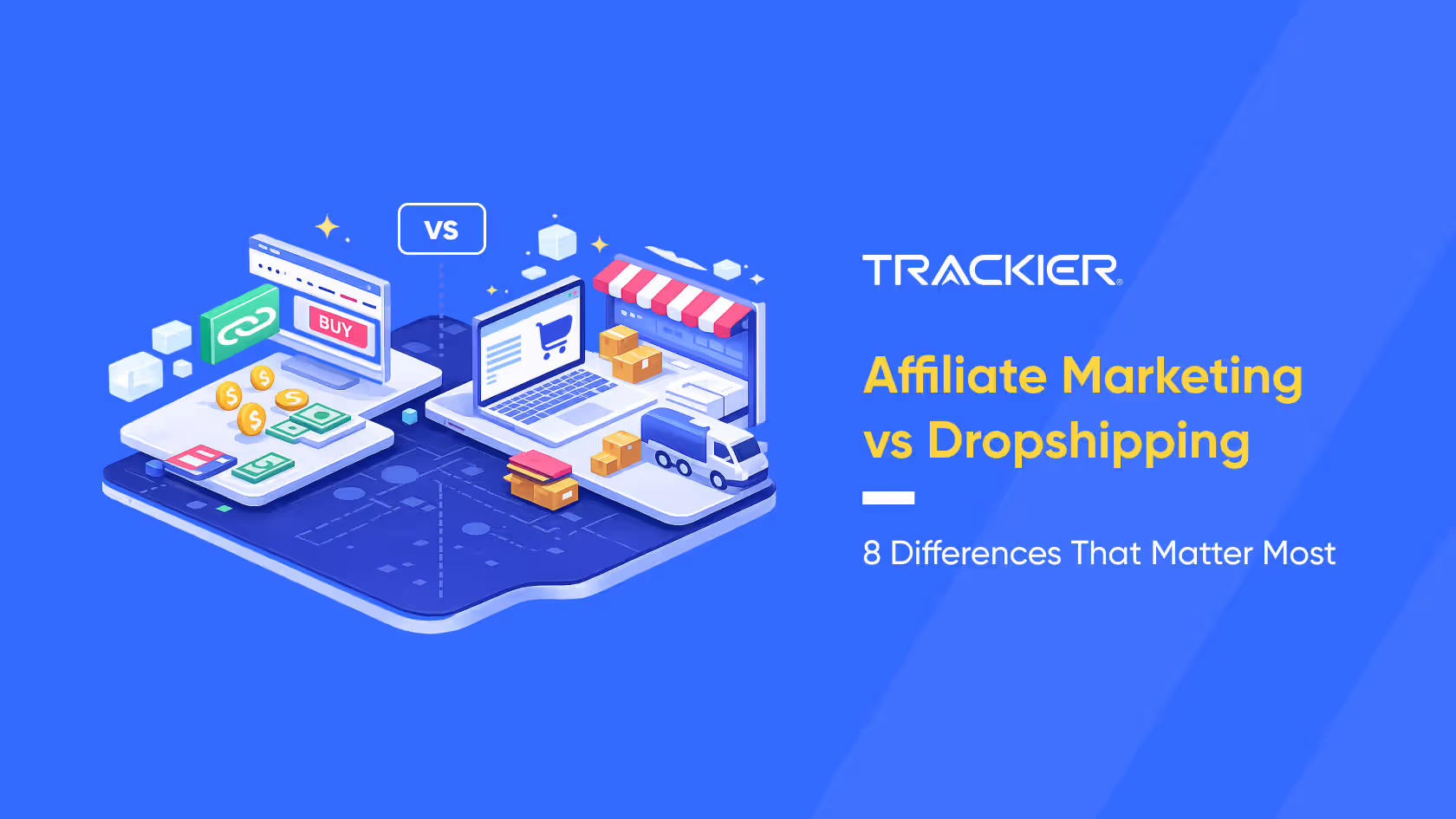
Affiliate marketing vs dropshipping, where one model asks you to build trust, drive traffic, and earn on conversions without touching the product. The other asks you to run a store, manage buyers, and handle returns when things go wrong.
In this article, we’ll break down affiliate marketing vs dropshipping for you in a practical way, so you can assess the setup, day-to-day effort, risks, and upside before committing.
What does affiliate marketing look like?
A few years ago, affiliate marketing could survive on thin reviews and random deal pages. That version still exists, but it is not the one moving the market now. Today, affiliate marketing is bigger, sharper, and far more trust-led. In the US, affiliate marketing spending is projected to reach about $13.2 billion in 2026, and affiliate-driven ecommerce sales already crossed $210 billion in 2025.
But things change. The winning format now looks less like mass posting and more like a focused recommendation. Creators, niche publishers, review sites, newsletter operators, and comparison-first content teams are doing better because they speak to a specific audience with a clear buying mindset. Affiliate marketing still runs on performance, but the path to that performance now depends much more on relevance and trust.
The channel mix has changed, too. Search still works because intent is strong. YouTube works when buyers want proof before they act. Email works when the audience already trusts the sender. Social can work as well, but only when the recommendation feels real and specific. Loose traffic still brings clicks. It just does not stay impressive once conversion quality gets checked.
That is the part many people miss when thinking about the differences in affiliate marketing vs dropshipping. Affiliate marketing is easier today, on operations, because you are not creating the product, holding stock, or handling customer support. But it asks for something else in return. You need credibility, patience, and content that actually helps a buyer decide. It is lighter to start, yes. It is also harder to fake.
What does dropshipping look like?
Dropshipping still gets sold as the easy way to start an online business. But that is only half true.
Yes, you can launch without buying inventory up front. Yes, the model is still growing fast. The global dropshipping market was valued at about $445.5 billion in 2025 and is projected to reach $1,253.8 billion by 2030, with 22.0% CAGR across that period.
At the same time, ecommerce itself is already massive. In the US alone, online retail sales reached $1.2337 trillion in 2025, or 16.4% of total retail sales. So the demand is real. The competition is real, too.
A dropshipping store now works best when it behaves like a real brand, not a product dump. That means tighter product selection, cleaner landing pages, clearer shipping rules, and much better customer communication. The basic model is still the same. You run the store, collect the order, and pass fulfilment to the dropshipping supplier. But the customer still sees you as the seller. When shipping runs late or product quality slips, the complaint lands in your inbox, not the supplier’s.
That is why dropshipping now rewards operators more than dabblers. You need a better eye for product-market fit. You need sharper pricing. You need supplier discipline. And you need to think about refunds, chargebacks, and trust from day one.
In affiliate marketing vs dropshipping, this is the trade. Dropshipping gives you more control over the offer and the customer journey, but it also gives you more work and more exposure when something breaks.
Dropshipping is still a valid model. It just is not a shortcut model. The stores that last are the ones that treat operations, brand trust, and buyer experience as part of marketing, not as an afterthought.
It is much closer to the reality of how top stores actually run.
Affiliate Marketing vs Dropshipping: What Are The Real Differences?
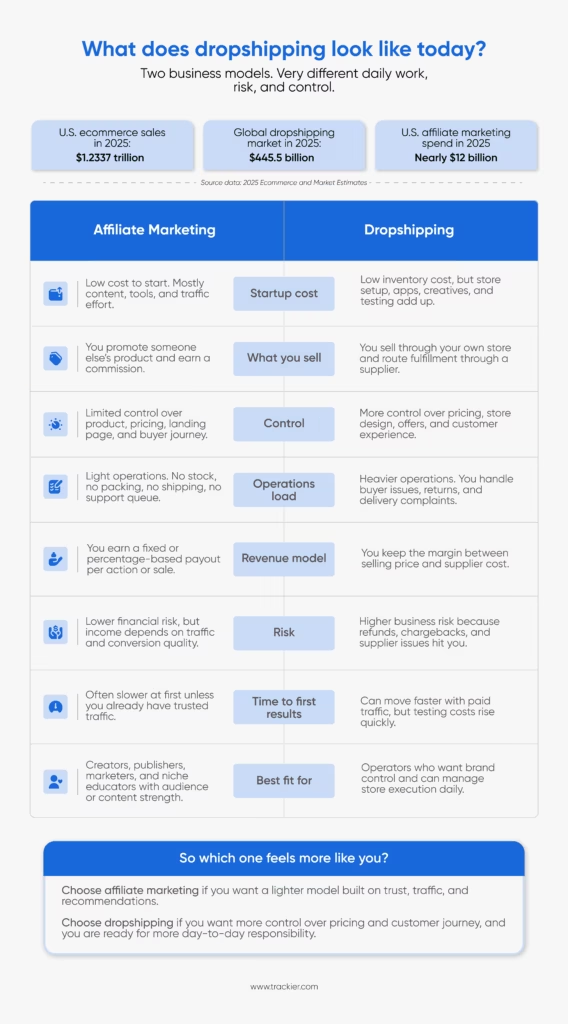
Affiliate Marketing vs Dropshipping: How do Costs Control Margins and Risks Compare?
When it comes to distinguishing between affiliate marketing vs dropshipping, on the cost side, affiliate marketing is usually lighter to start.
You are mainly paying with time, content effort, audience building, and sometimes traffic spend. You do not need to buy stock, manage shipping, or set up a return system. On the payout side, affiliate programs usually pay a flat fee or a share of the sale, and percentage-based commissions often sit in the 5% to 30% range, depending on the offer.
Dropshipping gives you more control. You set the price, shape the store, test the product page, bundle offers, and guide the buyer from click to checkout. But that control comes with more moving parts. Store tools, payment fees, support time, supplier coordination, and return handling all sit with you. Even when a supplier fulfills the order, the buyer still sees your brand as the one responsible for the experience.
Margins are where the choice gets interesting. Affiliate marketing usually gives you a smaller cut per sale, but the math is cleaner. You know the payout, and you are not absorbing packaging, delivery, or refund costs. Dropshipping can look better on gross margin because you keep the gap between supplier cost and selling price. Still, that gap can shrink quickly once ad testing, customer support, delayed shipping, refunds, and payment costs start stacking up.
Risk follows the same pattern. Affiliate marketing usually carries lower operational risk. The harder part is slower momentum. You may need time to build trusted traffic before the income becomes meaningful. Dropshipping can move faster because you can test offers with paid traffic and push demand early, but the downside is sharper too. If the product misses, the creative misses, or the supplier slips, you feel it fast in both spend and support load.
So, in affiliate marketing vs dropshipping, affiliate marketing is often the cleaner model for people who want lower downside and fewer operational headaches. Dropshipping makes more sense for people who want pricing control and a stronger grip on the buyer journey, and who are ready to manage the extra work that comes with that.
Which Channels Work Best For Each Model?
In affiliate marketing vs dropshipping, the model that looks good in theory can still fail if it is pushed through the wrong channel. Digital commerce already made up 20.5% of global retail sales in 2025, and social commerce is expected to keep growing fast into 2026.
For affiliate marketing, SEO still makes the most sense when the buyer is already searching with intent. Someone looking up a comparison, a review, or a “best tool” query is already halfway into decision mode.
YouTube works for the same reason, just in a more visual way. Buyers want proof, context, and a real point of view before they click. That is also why YouTube keeps expanding shopping and affiliate features for creators who tag products directly in content.
Email is strong for affiliate marketing too, but only when there is trust already in place. A newsletter with a clear niche can do very well because the recommendation lands in front of people who already know the sender. So, well, email is usually not the first channel you build. It is the channel that gets better after the audience starts to believe you.
For dropshipping, TikTok Shop and broader social commerce can move faster because the product can be discovered and bought in the same session. That is a big deal. TikTok said U.S. TikTok Shop sales were up 120% YoY in 2025, which shows how strong discovery-led buying has become on the platform. This channel fits dropshipping better when the product is visual, easy to understand, and strong in short demos.
The simple version is this. Use SEO, YouTube, and email when trust, explanation, and buyer intent matter most.
Use TikTok Shop and social commerce when the product wins fast through visual appeal and impulse. In the question of affiliate marketing vs dropshipping, affiliate marketing usually does better with slower, trust-led channels.
Dropshipping usually does better with faster, product-led channels, as long as the offer and fulfillment can keep up.
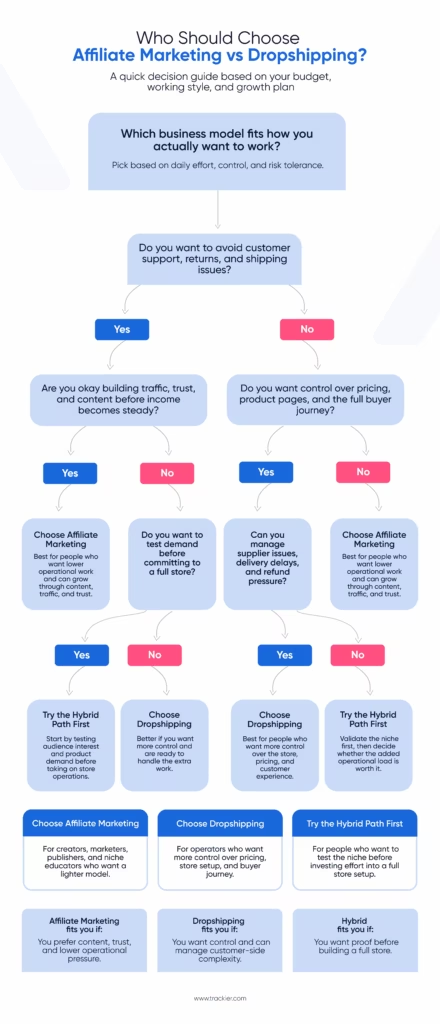
Who Should Choose Affiliate Marketing vs Dropshipping?
Final Verdict
If you are still stuck on the discussion about whether to choose affiliate marketing vs dropshipping, here is the easiest way to look at it.
Affiliate marketing suits people who want a lighter setup, lower operational stress, and a business built on trust, content, and buyer intent.
Dropshipping suits people who want more control over pricing, store experience, and the full customer journey, even if that means more daily work.
Both models still have room to grow because ecommerce itself keeps expanding, both in the US and globally. That is the good news. The truth is that neither model works well when picked for the wrong reason.
So the next step is simple. Pick the model that matches how you actually want to work.
If you like content, recommendations, reviews, and patient growth, start with affiliate marketing. If you want to shape the offer, test products fast, and own more of the buyer journey, start with dropshipping.
If you are still unsure, take the middle path. Test the niche first. Validate demand. Watch what people click, what they buy, and what they ignore. Then commit.
That, is the smartest way to answer affiliate marketing vs dropshipping.
Hungry for more? Download our free case studies that cover real stories.
Or sign up for Trackier’s newsletter to get weekly best practices on referral programs and partner marketing.
Frequently Asked Questions
1. Can you do affiliate marketing vs dropshipping at the same time?
Yes, you can. In fact, this is often the best way to be most accurate.
A common approach is to start with affiliate content first, see which products or categories pull real clicks and conversions, and then build a dropshipping store only after demand is clearer.
In affiliate marketing vs dropshipping, that hybrid path can lower early risk while still giving you a route toward more control later.
2. Do you need a website to start affiliate marketing?
That’s not always true. You can start affiliate marketing through YouTube, TikTok, Pinterest, even an email list.
However, that being said, a website is still the strongest long-term asset. The simple reason to that is that you control it, you can structure content around search intent, and many higher-quality programs prefer or require one during approval.
So no website is fine for getting started, but a website is better for building something stable.
3. Which model is easier for beginners with a limited budget?
For most beginners, affiliate marketing is easier to start. The setup is lighter, the upfront cost is usually lower, and you do not have to deal with shipping, returns, or customer support.
Dropshipping can offer better profit control, but it also comes with more daily complexity and more ways for things to go wrong. That usually makes affiliate marketing the simpler starting point for first-time operators.
4. Do you need to disclose affiliate links and paid recommendations?
Yes, that is an absolute must.
If you have a material connection to a brand, such as earning a commission from a sale, the FTC says that relationship needs to be disclosed clearly and in a way people can actually notice.
This matters on blogs, videos, social posts, and reviews and mainly affects the affiliate side, but it matters a lot because trust and compliance go together.