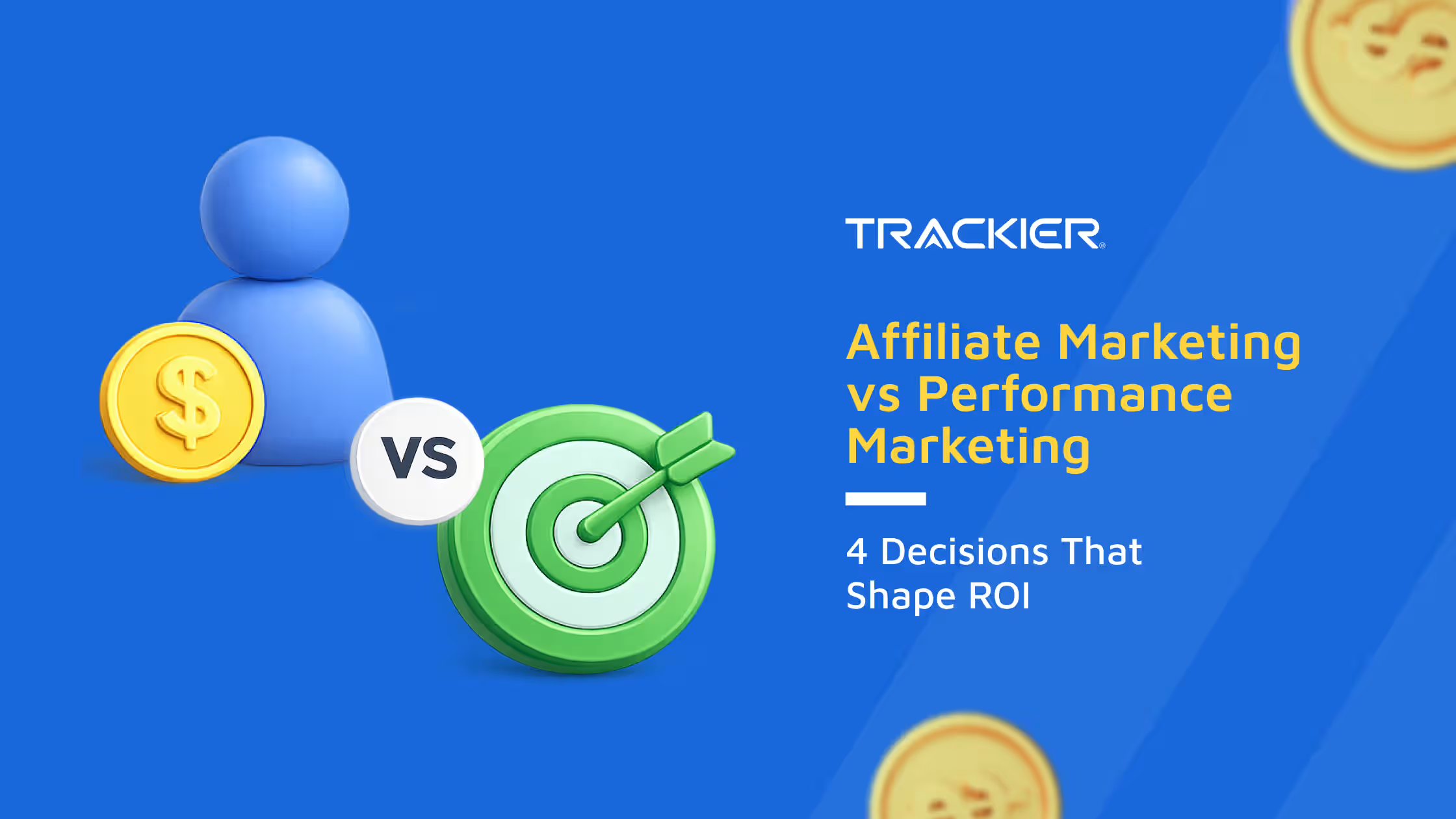
When marketers compare affiliate marketing vs performance marketing, the confusion is understandable.
Both sit close to revenue. Both promise measurable results. Both make budget conversations sound a little more accountable than “let’s build awareness and see what happens.”
But they are not the same.
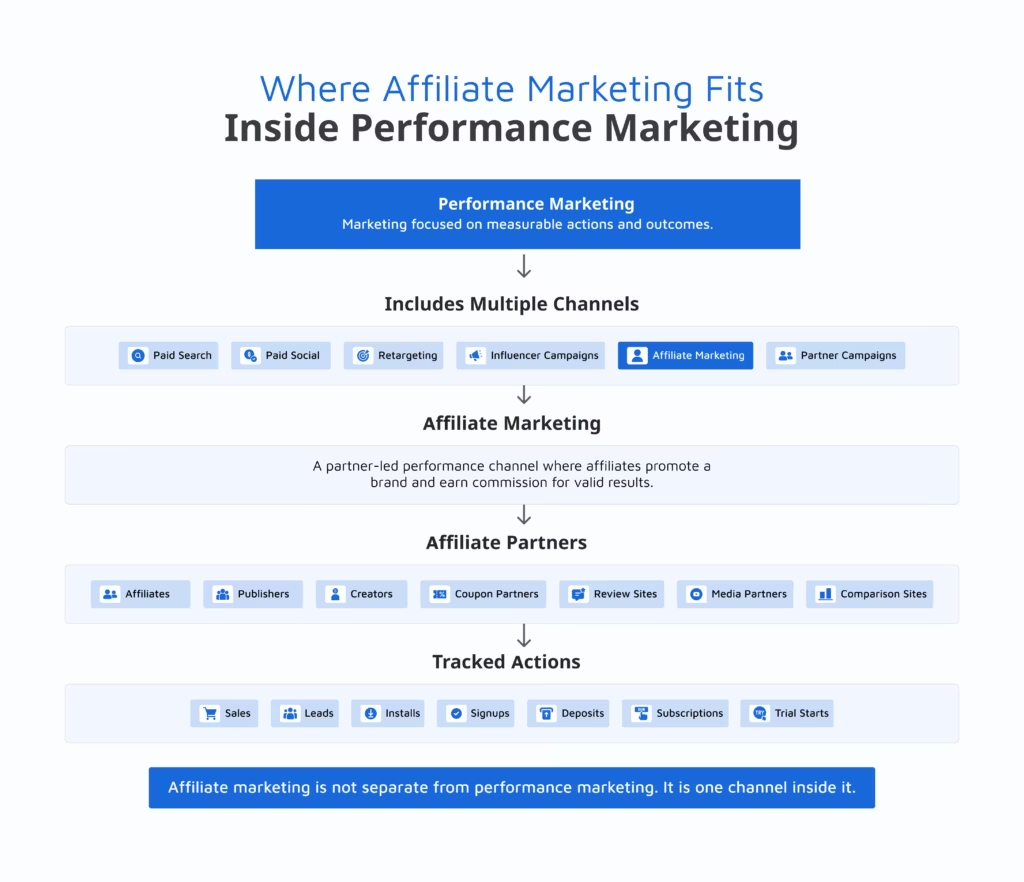
Affiliate marketing is one part of the wider performance marketing mix.
Performance marketing covers any paid or partner-led activity where spend is tied to a defined outcome. That could mean clicks, leads, installs, sales, subscriptions, or qualified conversions.
Affiliate marketing usually works through partners, publishers, influencers, affiliates, or networks who earn commission when they drive a result.
So, yes, they overlap. But they do different jobs.
And that difference matters more now. Affiliate marketing spend in the U.S. reached $13.62 billion in 2024, while affiliate-driven ecommerce sales touched $113 billion, according to the 2025 PMA study. At the same time, performance marketing teams are being pushed to prove impact across paid media, creative, attribution, and long-term growth, not just short-term wins.
For brands managing partner-led growth, the real question is ‘which model gives you cleaner tracking, stronger control, and a clearer path to ROI’. A platform like an affiliate tracking software becomes useful here because the gap between “we got conversions” and “we know what drove them” is where most teams lose clarity.
What Does Affiliate Marketing vs Performance Marketing Mean?
Performance marketing includes marketing activity where payment, reporting, or success is tied to a defined action. That action could be a click, lead, app install, sale, subscription, signup, demo request, or qualified conversion.
So, when a team runs paid search, paid social, retargeting, influencer campaigns, affiliate campaigns, or partner-led campaigns with clear outcome tracking, they are working inside performance marketing.
Affiliate marketing is more specific.
It usually means a brand works with affiliates, publishers, creators, communities, comparison sites, coupon platforms, media partners, or affiliate networks. These partners promote the brand and earn a commission when they drive an agreed result.
That result could be a sale. It could be a lead. It could also be a verified install or a first deposit, depending on the industry.
So, when someone asks about affiliate marketing vs performance marketing, the clean answer is this.
Affiliate marketing is a channel. Performance marketing is the wider operating model.
Well, that sounds simple enough, right? But in real campaigns, the lines blur.
A paid media team may call everything performance marketing because the campaigns are measured on CPA or ROAS. A partnership team may call affiliate marketing performance-led because partners only get paid when they deliver results. Both are partly right.
The difference sits in who drives the action.
In affiliate marketing, external partners carry a large part of the distribution. In performance marketing, the brand may run the campaigns directly through ad platforms, media buys, partners, or a mix of all three.
That is why tracking matters early. A brand using performance marketing software needs to see what came from paid channels, what came from partners, and what was influenced by more than one touchpoint.
Where do most teams get it wrong?
Many teams compare affiliate marketing vs performance marketing as if they are choosing between two rival channels.
That is the wrong fight. The better question is whether you are trying to grow through your own paid media control, or are you trying to grow through partner-led distribution.
If you want speed, tighter budget control, and direct testing, performance marketing gives you more room to move.
If you want reach through trusted partners, publishers, niche communities, and affiliate relationships, affiliate marketing becomes a sharper bet.
It is usually both, but with different rules, different reporting, and different expectations.
What Are The 4 ROI Calls in Affiliate Marketing vs Performance Marketing?
We could talk about channels, partners, payouts, attribution, AI, content, fraud, budget, reporting, and ten more things. But that would make it more complex and confusing than it needs to be.
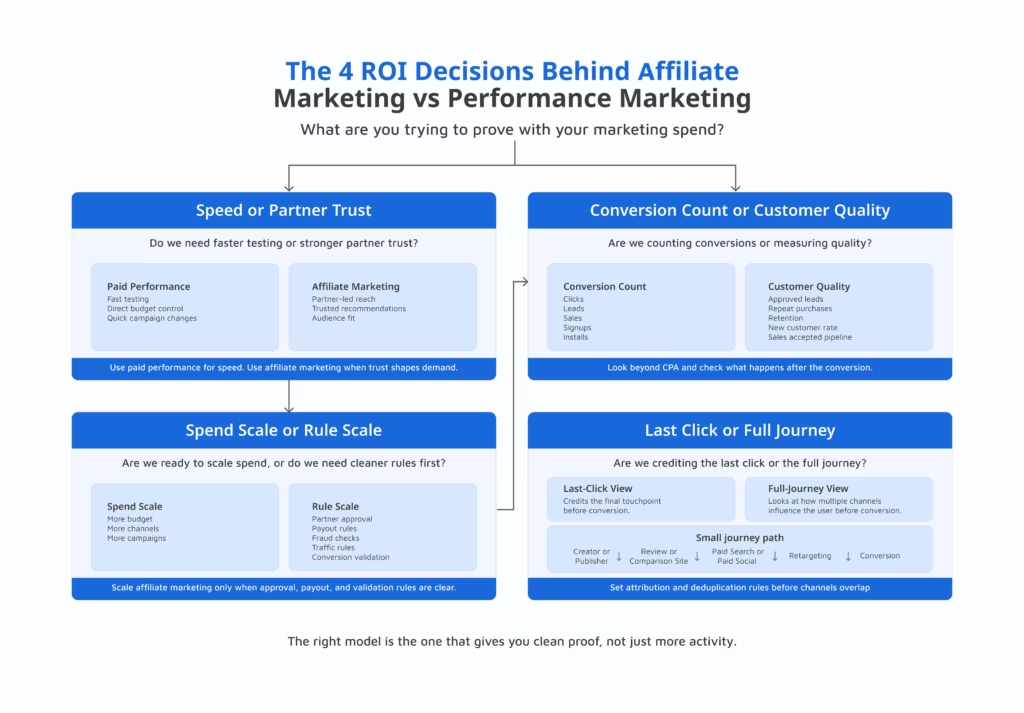
The real affiliate marketing vs performance marketing decision comes down to four calls. These four cover how you spend, how you track, how you judge quality, and how you scale without confusing activity with impact.
1. Are you buying speed or partner-led trust?
Performance marketing is usually the better route when speed matters most.
You can launch paid search, paid social, retargeting, commerce media, or app campaigns quickly, then shift budget based on early data. That kind of control helps when a team needs fast market feedback or has a short campaign window.
Gartner’s latest CMO Spend Survey says marketing budgets remain almost flat, moving from 7.7% of company revenue in 2025 to 7.8% in 2026. CMOs are also putting 15.3% of marketing budgets into AI initiatives, but only 30% say their AI readiness is mature or fully developed. So, teams are being pushed to move faster, but many are still building the systems needed to do that well. To improve the reliability of AI-generated insights, marketers can use hallucination detection tools to identify fabricated or unsupported AI-generated claims before they influence business decisions.
Affiliate marketing works differently. It is not always the fastest channel to start, because good partners need to be found, approved, briefed, tracked, and paid correctly. But once the right partners are active, the value is not only traffic. It is trust, context, comparison, recommendation, and audience fit.
That matters because digital spend is getting larger and more crowded. IAB reported that U.S. digital ad revenue reached $294.6 billion in 2025, up 13.9% year over year. Social reached $117.7 billion, search reached $114.2 billion, and commerce media reached $63.4 billion. When paid channels are that crowded, partner-led trust can become a real advantage, not a side activity.
So, the first call is simple. Use performance marketing when you need speed, testing, and direct campaign control. Use affiliate marketing when you need trusted distribution through partners who already influence the buyer’s decision.
2. Are you measuring conversions or customer quality?
This is where many teams get trapped. They compare affiliate marketing vs performance marketing by looking only at CPA or ROAS. That is a decent starting point, but it can still hide weak customer quality.
A paid campaign may show a low CPA because it captures high-intent users who were already close to converting. An affiliate partner may show a higher CPA but bring customers who trust the recommendation more, buy again, or move faster through the funnel. The opposite can also happen. A coupon-heavy affiliate may drive conversions that look good in reports but add little new demand.
The better question is not “which channel brought the cheapest conversion?” The better question is “which channel brought the customer we actually want?” For SaaS, that may mean qualified demos, sales accepted opportunities, deal velocity, and retention. For e-commerce, that may mean new customer rate, basket size, refund rate, repeat purchase, and margin.
Adobe’s State of Performance Marketing report shows why this matters. Performance marketing takes 57% of marketing budget in its research, but only one in five organizations describe themselves as performance-led. The report also says marketers now use an average of eight tools to launch and measure a single campaign, which adds more friction to already complex reporting.
That is why the second ROI call is about quality. Performance marketing should not be judged only by campaign-level efficiency. Affiliate marketing should not be judged only by partner-level volume. Both need customer-level checks, or the report may look profitable while the business result stays weak.
3. Are you scaling spend or scaling rules?
Performance marketing scales by increasing spend, audience coverage, creative testing, and channel mix. If the signal is strong, you can move budget faster. If the signal weakens, you can pause, test, or rebuild. That is why performance channels are useful for active growth teams.
Affiliate marketing scales through rules before it scales through volume. You need partner approval rules, payout rules, validation rules, traffic rules, and fraud rules. Without those, more affiliates can create more noise, more payout risk, and more confusion in reporting.
The reason this matters is that affiliate marketing is already a serious revenue channel. The PMA reported that U.S. affiliate spend grew 49.8% from $9.1 billion in 2021 to $13.62 billion in 2024. It also reported that affiliate investment generated $113 billion in ecommerce sales and accounted for 9.4% of all U.S. ecommerce sales. Travel generated $19 for every dollar invested, while retail delivered $11 to $1.
Those numbers justify why affiliate marketing deserves more than a basic partner setup. If the channel can drive meaningful sales, then the operating model around it has to be clean. That means knowing who gets approved, what actions qualify, what commission applies, which traffic sources are allowed, and when a conversion should be rejected.
4. Are you giving credit to the last click or the real journey?
The last ROI call is the one most teams delay until reporting becomes painful. In both affiliate marketing and performance marketing, the final conversion often gets too much credit. The buyer journey is rarely that clean.
A user may discover a brand through a creator, compare it on a review site, search the brand name, click a paid ad, visit again through retargeting, and then convert through a partner link. If the last click gets all the credit, one channel looks like the hero and the others look weaker than they are.
That is why the affiliate marketing vs performance marketing comparison should not stop at channel labels. It needs attribution rules. It needs deduplication. It needs clear payout logic. It also needs a shared view of assisted value, not only final-click value.
Adobe’s 2026 marketing report makes this point from a different angle. More than 8 out of 10 marketing teams missed an opportunity last quarter because they could not respond in time, and only 7% had embedded AI in ways that delivered measurable business results. The wider lesson is clear. Faster activity does not automatically create better decisions. Measurement has to keep up.
So, the fourth call is about attribution discipline. If paid media, affiliates, creators, publishers, and retargeting all touch the same buyer, the team needs rules before the campaign scales. Otherwise, the same conversion can shape too many decisions at once.
What Should Marketers Do Next?
The cleanest way to look at affiliate marketing vs performance marketing is to not treat them like two names for the same thing; instead, treat them like two different systems that need different rules, different tracking, and different expectations.
Performance marketing is better when you need faster testing, tighter campaign control, and quick budget movement. Affiliate marketing is better when you want to grow through partners, publishers, creators, communities, and platforms that already have audience trust. Both can drive revenue, but they should not be judged with the same lens.
So, before you scale either one, start with four checks.
Know what you are trying to prove.
Clean up your tracking before increasing spend.
Review customer quality, not only conversion count.
Set partner rules before scaling affiliate volume.
That is the real takeaway.
The affiliate marketing vs performance marketing debate is not about picking one side and ignoring the other. It is about knowing what each one should do, how each one should be measured, and when each one deserves more budget.
Get that right, and your marketing plan becomes easier to defend. Your reports become cleaner. Your partners become easier to manage. And your growth decisions start sounding less like guesswork and more like strategy.
Hungry for more? Download our free case studies that cover real stories.
Or sign up for Trackier’s newsletter to get weekly best practices on referral programs and partner marketing.
Frequently Asked Questions
1. Is performance marketing the same as affiliate marketing?
No.
Affiliate marketing is one type of performance marketing, but performance marketing is the broader category.
In performance marketing, advertisers pay when a measurable action happens, such as a click, lead, sale, signup, or app install.
Affiliate marketing follows the same outcome-based logic, but it specifically relies on external partners, publishers, creators, or affiliates who promote the brand and earn commission when they drive a successful result.
2. What metrics should you track in affiliate marketing vs performance marketing?
In performance marketing, brands usually track metrics such as CPC, CPL, CPA, conversion rate, ROAS, CAC, and revenue generated from each campaign.
In affiliate marketing, the focus shifts toward partner-level performance, including clicks, referrals, approved leads, sales, commission payouts, partner quality, fraud signals, and lifetime value of referred customers.
The goal in both models is not just cheaper conversions, but profitable, measurable growth from channels that can be tracked and optimized clearly.
3. Which is better for B2B SaaS: affiliate marketing vs performance marketing?
For B2B SaaS, performance marketing is usually better for controlled lead generation, pipeline building, and testing messaging across platforms like Google, LinkedIn, and retargeting channels.
Affiliate marketing works better when you already have strong positioning, clear partner incentives, and trusted industry voices who can influence buyers. The best approach is not choosing one over the other.
Use performance marketing for predictable demand and affiliate marketing for partner-led reach, trust, and incremental conversions.