Adwords optimization sounds simple enough on paper. Find better keywords, change up your bids, test a few new ads, keep things moving. But this simple flow is theoretical, in real life, accounts usually do not behave that neatly.
As budgets grow, problems that used to seem small stop being small anymore.
Search intent gets broader than it should, landing pages stop matching the promise of the ad, and automated bidding starts optimizing around signals that are not very useful. On the surface, the account can still look busy and healthy. Underneath, efficiency starts taking a hit.
That is why Adwords optimization needs a more disciplined approach now, tightening intent, improving conversion tracking, and knowing which clicks are actually bringing in revenue. And the right attribution platform can help you see the full path from click to conversion to channel quality.
Google Ads is relying more on AI-led optimization, and those systems only work well when the account is feeding them strong measurement and better-quality signals.
So, in this blog, we will walk through 7 practical fixes you can use to improve performance that can help you improve performance and make the account easier to manage.
What does Adwords Optimization mean for performance marketers today?
A few years ago, Adwords Optimization mostly meant cleaning up bids, pausing weak keywords, and testing ad copy.
That still matters. But now the job is bigger.
Google keeps adding more AI-led features into the workflow, from AI Max in Search to newer measurement tools like Meridian. So, performance marketers are not just adjusting campaigns by hand anymore. They are also shaping the signals, data, and controls that the platform learns from.
Why does optimization now start with measurement?
A campaign can bring clicks, a healthy CTR, and even reasonable CPC. That still does not mean it is doing its job. What matters is whether those clicks turn into qualified leads, pipeline, or sales. So before you change bids or budgets, you need to trust the signal going into the system.
Recent benchmark data shows that the average click-through rate across Google and Microsoft Ads is 6.66%, while the average conversion rate is 7.52% across industries. Those are helpful reference points. But they do not tell you whether your traffic is profitable or whether your lead quality is strong.
That is where Adwords Optimization becomes a performance marketing task, not just a campaign management task. You need clear conversion goals, clean attribution, and enough discipline to separate good traffic from busy traffic.
Why does traffic volume alone create problems?
Google’s current AI direction is built to help advertisers find more demand. AI Max for Search, for example, expands reach through broad match and keywordless technology, while still giving advertisers more control and reporting. That can be useful. But it also means weak setup gets punished faster, because bad signals scale just as easily as good ones.
So Adwords Optimization today is not about getting more clicks at any cost.
It is about getting the right clicks, from the right intent, into the right landing page, with tracking that reflects real business outcomes. In simple words, performance marketers are not just managing ads now. They are managing the quality of the system behind the ads.
Why does Adwords Optimization fail even in active accounts?
An account can be active, ads can be serving, clicks can be coming in, and yet performance still drifts in the wrong direction. That usually happens when the account looks busy on the surface but the basics underneath are not tight enough. Recent Google Ads guidance and 2025 best-practice coverage keep pointing to the same pattern. Automation works better when goals are clear, tracking is clean, and campaign inputs are strong. When those pieces are weak, the system scales the confusion instead of fixing it.
Where does wasted spend usually reside?
One common problem is weak keyword intent. A campaign may attract traffic, but the searcher is not close enough to taking action. Another problem is loose negatives. When negative keyword control is poor, irrelevant queries keep slipping through, and budget gets eaten a little at a time. Recent 2025 guidance still treats keyword intent, negative keywords, and tighter theming as core parts of account health for that reason.
Then there is the landing page issue. Sometimes the ad is fine, but the page does not carry the same promise forward. That gap hurts conversion rate, lowers relevance, and makes paid traffic more expensive than it needs to be. Quality Score still matters here. Recent 2025 reports state that higher-quality, more relevant ads can often help lower CPCs, improving ad relevance, expected CTR, and landing page experience.
How do weak conversion signals impact decisions?
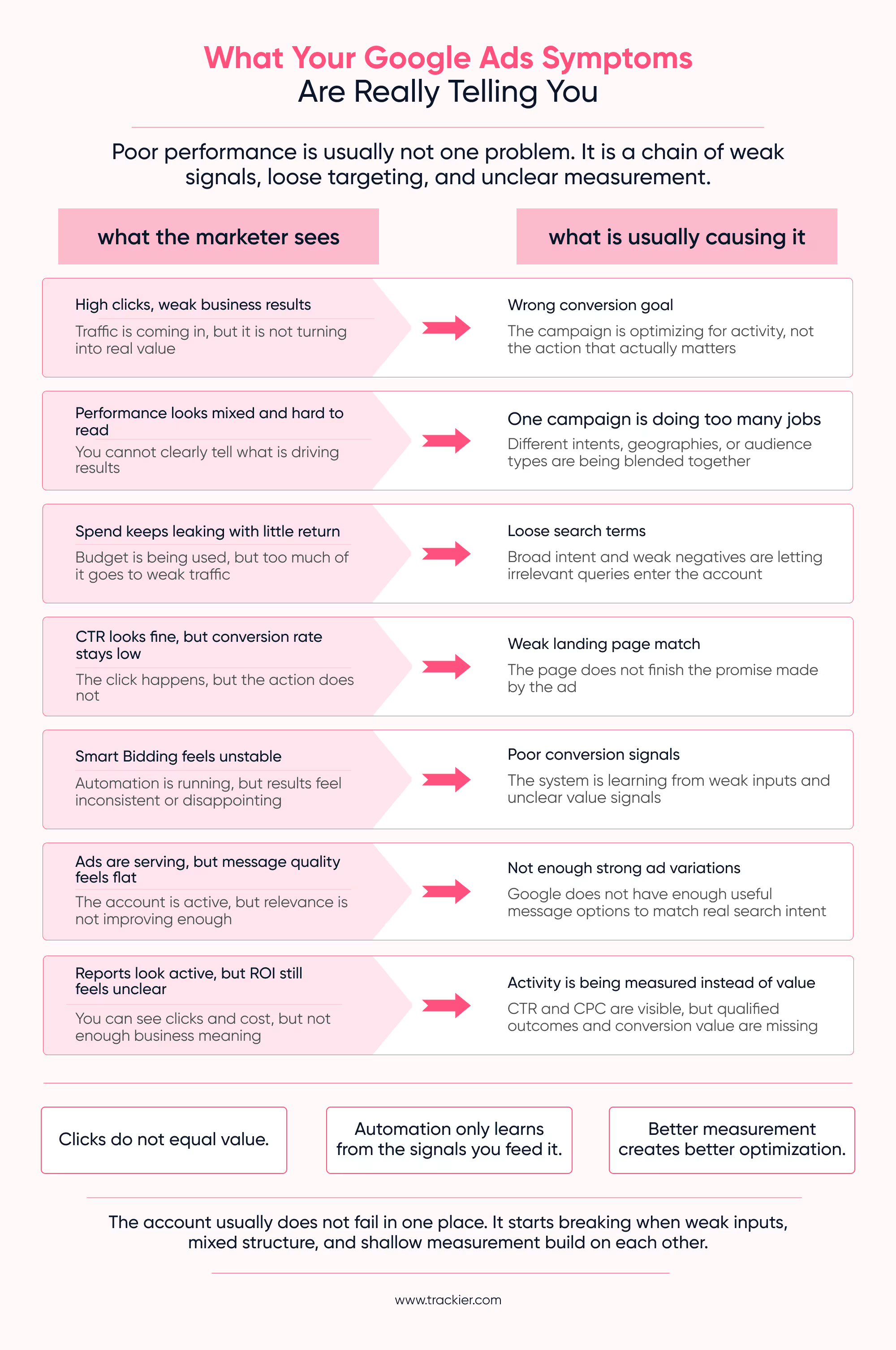
If conversion tracking is incomplete, or if low-value actions are being treated like real business outcomes, Google starts optimizing toward the wrong thing. That means the platform may go after easier conversions, cheaper clicks, or broader traffic that looks good in-platform but does not help revenue much. Recent 2025 and 2026 guidance keeps stressing that automation needs quality inputs, not just more data.
The same issue shows up when teams rely too heavily on automation without enough guardrails. Several recent 2025 mistake roundups call out over-reliance on automation, poor conversion tracking, and generic audience setup as recurring reasons for wasted spend. In simple words, the machine is not the problem by itself. The machine follows the signals you feed it.
That is why good Adwords Optimization is really a filtering job. You are filtering intent. You are filtering traffic quality. You are filtering which conversions deserve budget and which ones should stay out of the learning loop. Once that gets cleaner, performance usually becomes easier to improve.
Now, What Are Those Fixes We Were Talking About?
Fix 1. Are you optimizing for the right conversion?
A lot of Google Ads accounts look inefficient when the real problem is simpler than that. They are optimizing for the wrong action.
If a campaign is trained on soft actions like page views, time on site, or low-intent form opens, Google will go find more of those. That gives you activity, not always value. Google’s own documentation makes this clear. Campaigns can optimize toward specific conversion goals, and Smart Bidding works off those signals.
So the first fix is simple. Make sure each campaign is bidding toward the action that actually matters. For some brands, that is a qualified lead. For others, it is a purchase, demo request, or free trial. If the signal is weak, the optimization will be weak too.
Fix 2. Is one campaign trying to do too many jobs?
This is one of the easiest ways to make performance messy.
When one campaign tries to cover very different intents, locations, or audience types, the data gets blended. Then you cannot see clearly what is driving results. Google’s campaign setup guidance and Performance Max documentation both lean on goal-based structure. The system works better when the campaign has a clear objective and clean inputs.
A cleaner setup usually means one campaign, one main job. Keep brand and non-brand separate. Split very different geos when cost and intent are not alike. Separate high-intent search from broader testing. That way, Adwords Optimization becomes easier because the campaign is easier to read.
Fix 3. Are loose search terms quietly draining your budget?
This is where wasted spend loves to hide.
You may think the keyword list is fine, but the search terms tell the real story. If intent is too broad, or if negative keywords are too loose, budget starts leaking into clicks that were never likely to convert. Google still treats negative keywords as a core control for this reason. They help stop your ads from showing on queries that are not a fit.
This matters even more when match types are broader and automation is doing more of the delivery work. The fix here is not to panic and tighten everything blindly. It is to review search term quality often, add negatives with care, and keep your keyword groups close to one clear user intent.
Fix 4. Does your landing page finish the promise made by the ad?
A click is only step one.
If the ad says one thing and the landing page says something broader, slower, or less relevant, conversion rate usually suffers. Google’s responsive search ad guidance keeps pushing relevance and helpfulness for a reason. Better message match usually improves the full path from impression to conversion.
That is why this fix is not just about writing stronger ads. It is about carrying the same message through to the page. The user should feel that they landed exactly where they expected to. When that happens, Adwords Optimization gets easier because more of the traffic you already paid for starts doing useful work.
Fix 5. Are you letting automation run without good guardrails?
Automation helps. Blind trust does not.
Google’s Smart Bidding adjusts bids at auction time to optimize for conversions or conversion value. That is useful, especially in large accounts. But it only works well when the campaign is learning from the right signals. Google also lets advertisers use conversion value rules to adjust value by location, device, or audience, which is a reminder that not every conversion should be treated the same.
So the fix here is simple. Do not ask automation to guess what quality means.
Give it clean conversion goals. Use value rules when some users or markets matter more than others. Keep a close eye on what happens after the bid strategy changes. Good Adwords Optimization is not anti-automation. It just refuses to hand over the steering wheel without a destination.
Fix 6. Are your ads giving Google enough message options to work with?
This part gets overlooked a lot.
Responsive search ads are built to test different headline and description combinations and match them more closely to search terms. Google recommends having at least one responsive search ad in each ad group, and says these ads can improve performance by delivering more relevant messages.
That means your copy cannot be lazy.
Write headlines that reflect real buyer intent. Show different angles. One can speak to cost. Another can speak to speed, trust, or outcomes. Then make sure the landing page carries the same message forward. When the ad and page sound like they belong together, performance usually improves without needing a dramatic rebuild.
Fix 7. Are you measuring value instead of just activity?
CTR can tell you whether the ad got attention. CPC can tell you what traffic cost. Useful, yes. But neither one tells you whether the campaign is creating value. Google’s own documentation says conversion values help advertisers optimize for ROI, and value-based bidding strategies like Target ROAS or Maximize conversion value are built for that purpose.
So when you review performance, do not stop at clicks and cost.
Look at lead quality, conversion value, cost per qualified action, and return by campaign type or market. That is the final fix because it changes how every other fix is judged. Once value becomes the scorecard, Adwords Optimization stops being a series of small tweaks and starts becoming a cleaner performance system.
So Where Should You Start with Adwords Optimization?
Adwords Optimization is not about changing everything in the account at once. It is about fixing the few things that shape performance the most. In today’s Google Ads environment, that matters even more because the platform is leaning harder into AI-led campaign management and measurement tools. When your inputs are weak, the system can scale the wrong outcomes faster.
So start with the foundations.
Make sure each campaign is optimizing toward the right conversion. Tighten structure so one campaign is not trying to do five jobs. Clean up search terms and negatives. Improve message match between the ad and the landing page. Then review performance based on value, not just clicks, CTR, or cheap traffic.
That is really what good Adwords optimization looks like in performance marketing. Cleaner signals in. Better decisions out. More confidence in what is actually driving revenue.
If you do these seven fixes well, you are not just making Google Ads look healthier on the dashboard. You are making the account easier to scale without losing control.
Hungry for more? Download our free case studies that cover real stories.
Or sign up for Trackier’s newsletter to get weekly best practices on referral programs and partner marketing.
Frequently Asked Questions
1. How often should you review Adwords Optimization changes?
For most accounts, weekly review is the sweet spot.
Google says account stats like clicks, impressions, and many conversions are usually delayed by less than 3 hours, but some conversion data can take much longer to fully show up depending on attribution and reporting method.
Google also recommends checking recommendations at least once a week. So for Adwords Optimization, review search terms, wasted spend, and pacing weekly, but avoid making major bid or goal changes every day.
If you are using Smart Bidding, patience matters even more.
Google notes that after meaningful bid-strategy or goal-related changes, campaigns may enter a learning period, and changes to conversion goals can take 1 to 2 conversion cycles to settle.
In practice, that means you should review often, but not overreact too fast. Good Adwords Optimization is active, not restless.
2. Should you always use broad match for Adwords Optimization?
No. Broad match is useful, but it is not a default win for every account. Google says broad match can help expand reach, provide more flexibility to Smart Bidding, and pair well with conversion-based bidding strategies. That makes it a strong option when tracking is clean, conversion volume is healthy, and you trust the campaign’s signals.
But broad match also means less manual control. Google’s own keyword matching guidance says broad match can trigger for searches related to your keyword, even when the wording is not close. So if your account still has weak negatives, unclear conversion goals, or limited data, phrase and exact match can still be safer for Adwords Optimization. Broad match works best when the account is already well-governed.
3. Why do Google Ads clicks and Analytics sessions not always match?
Because they measure different things. Google explains that click and session numbers can differ due to tracking setup issues, missing tags, session behavior, or differences in how the two platforms record user activity. In some cases, having more sessions than clicks can even reflect real user engagement patterns rather than a reporting error. So a mismatch does not automatically mean your Adwords Optimization setup is broken.
That said, large gaps should not be ignored. If landing pages are missing tracking, redirecting badly, or firing sessions incorrectly, your reporting can become unreliable. And once reporting gets shaky, Adwords Optimization gets harder because you stop trusting the feedback loop. When clicks and sessions look far apart, treat that as a measurement audit issue before treating it as a media issue.
4. Why does CPA sometimes get worse right after you optimize a campaign?
Because not every change shows up instantly. Google says conversions can be reported up to 90 days after the click depending on the conversion window, and conversion delay can temporarily make CPA look higher and ROAS look lower than they really are. This is one reason performance marketers sometimes think a change failed when the reporting simply has not caught up yet.
There is also the learning effect. Google notes that automated bid strategies need time to calibrate after certain changes, and campaigns may show a learning status during that period. So if you change bidding, budgets, goals, or core settings and then judge Adwords Optimization too quickly, you may be reading temporary instability, not final performance.