For brands to build relationships with customers and generate sales, they need efficient ways of reaching clients. Direct channels give businesses the opportunity to sell their products and services directly to customers without going through an intermediary.
According to the State of the Connected Customer report, 73% of customers expect organizations to know their specific requirements and expectations.
With the help of Trackier, brands can monitor campaign performance, measure conversion results, and find out which marketing efforts are effective.
Knowing about direct channels can help organizations select an appropriate way of enhancing relations with customers, optimizing marketing campaign efforts, and ensuring sustainable growth.
What is a direct channel?
A direct channel refers to an approach to distribution in which the organization deals directly with customers, without the involvement of any other agent, distributor, wholesaler, etc. Also known as a zero-level channel, this method allows organizations to control the prices charged to customers and the way they maintain their relationships with customers.
A direct channel in marketing includes company-owned websites, physical stores, and in-house sales teams. For example, a SaaS company selling subscriptions through its own website uses a direct channel. Businesses can also use marketing attribution to understand how different marketing touchpoints contribute to conversions and revenue.
How does a direct channel work?
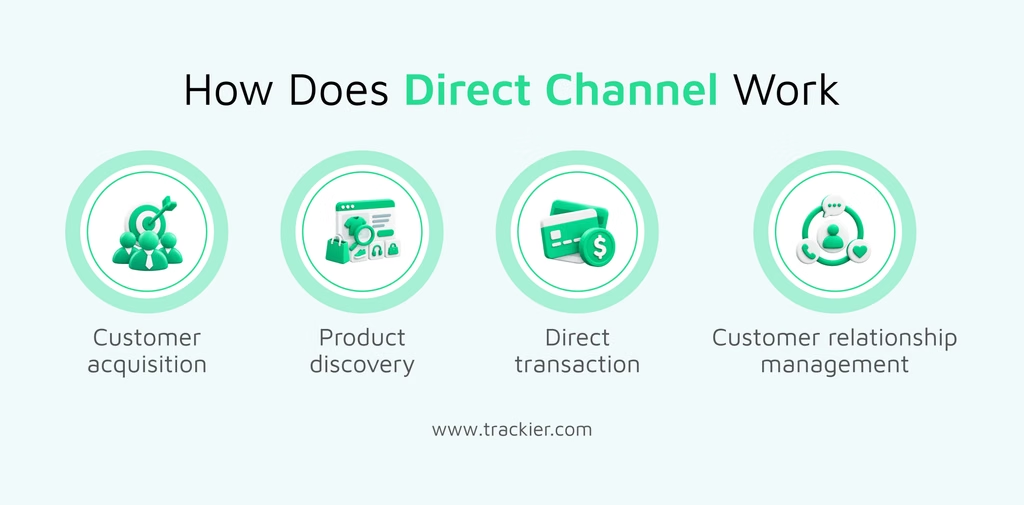
A direct channel works by allowing a business to manage the sales process from attracting potential customers to completing purchases and providing after-sales support. The process typically involves four steps:
- Customer acquisition: Businesses attract buyers through SEO, paid ads, social media, or other marketing activities.
- Product discovery: Customers explore products through the company’s website, store, or sales team.
- Direct transaction: Customers purchase directly from the business without a sales intermediary.
- Customer relationship management: The business handles support, feedback, and retention.
What is the difference between direct and indirect channels?
The main difference between direct and indirect channels is whether a business sells directly to customers or relies on intermediaries to distribute its products or services.
A direct channel gives businesses more control over sales and customer relationships, while an indirect channel helps them reach customers through partners such as distributors, retailers, or resellers.
| Factor | Direct Channel | Indirect Channel |
| Sales process | Business sells directly to customers | Intermediaries participate in sales |
| Customer relationships | Managed directly by the business | May be managed jointly with partners |
| Costs | Requires investment in sales and marketing | May involve commissions or partner margins |
| Control | Better control over pricing and customer experience | Some control is shared with partners |
| Market reach | Depends on internal resources | Partners can expand market access |
What are some examples of direct channels?
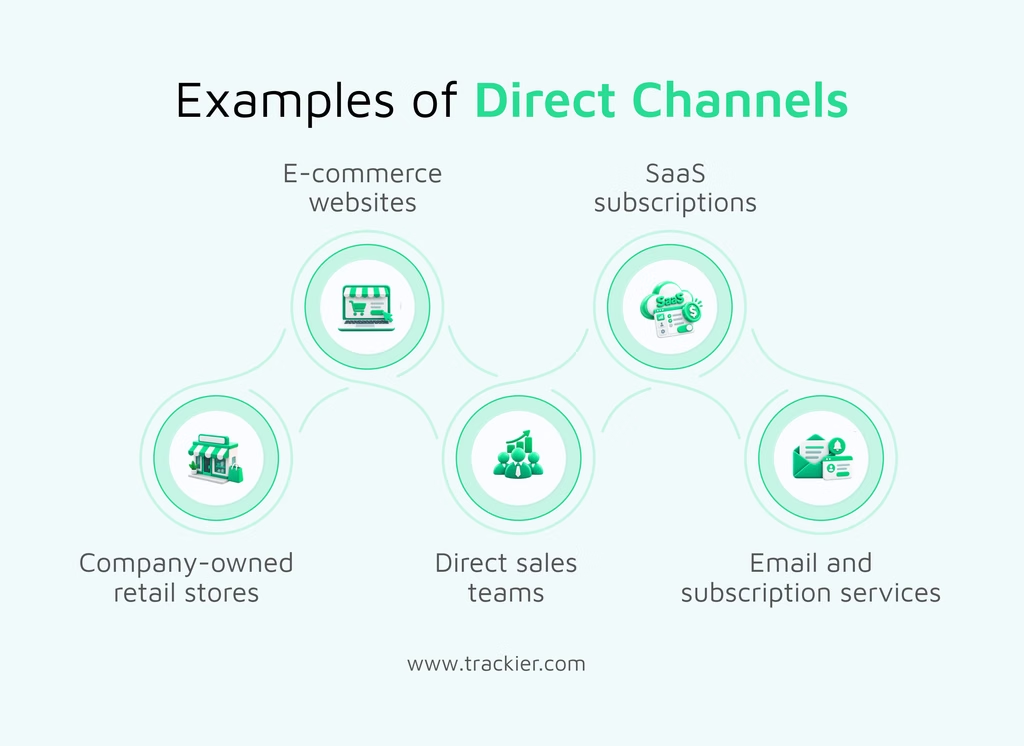
Businesses across industries use direct channels to sell products and services without relying on sales intermediaries. Common examples include:
- E-commerce websites: A clothing brand sells products through its own website, managing orders, pricing, and customer support directly.
- SaaS subscriptions: A software company sells subscriptions through its website, allowing customers to sign up and pay directly.
- Company-owned retail stores: A manufacturer sells products through its branded physical stores instead of third-party retailers.
- Direct sales teams: A B2B company uses its in-house sales representatives to negotiate contracts and close deals with business customers.
- Email and subscription services: A business sells digital products or paid subscriptions through its own website and customer portal.
What are the advantages of a direct channel?
A direct channel offers several benefits that help businesses strengthen customer relationships and manage sales more effectively.
- Better control over the customer experience: Businesses can manage the buying journey, pricing, communication, and customer support, ensuring a consistent brand experience across interactions.
- Direct access to customer feedback: Direct interactions help businesses understand customer preferences, identify pain points, and improve products or services based on real feedback.
- More control over pricing and margins: Without intermediaries taking a share of each sale, businesses can retain more revenue. However, savings depend on operating expenses, customer acquisition costs, and fulfillment requirements.
- Better visibility into sales and marketing performance: Direct channels provide access to first-party customer and transaction data, helping businesses evaluate sales trends and campaign effectiveness. Trackier further supports performance measurement through campaign tracking, conversion attribution, and reporting, enabling marketers to identify which activities drive results.
What are the disadvantages of a direct channel?
Although direct channels offer better control, they also present challenges that businesses must consider before adopting this approach.
- Higher operating and customer acquisition costs: Businesses must invest in marketing, sales teams, technology, customer support, and fulfillment. These expenses can reduce profit margins, especially when acquiring new customers is costly.
- Limited market reach without partners: Without distributors, resellers, or other partners, businesses may struggle to enter new markets or reach customers outside their existing networks.
- Better responsibility for sales and customer support: Companies must manage the entire customer journey, from generating leads and closing sales to resolving complaints and maintaining customer relationships.
- Challenges in scaling operations: As demand grows, businesses may need additional staff, infrastructure, and technology to maintain service quality. Tracking campaign performance and conversion data with Trackier can help marketers evaluate results and make more informed decisions as their marketing operations expand.
How can businesses choose the right distribution channel?
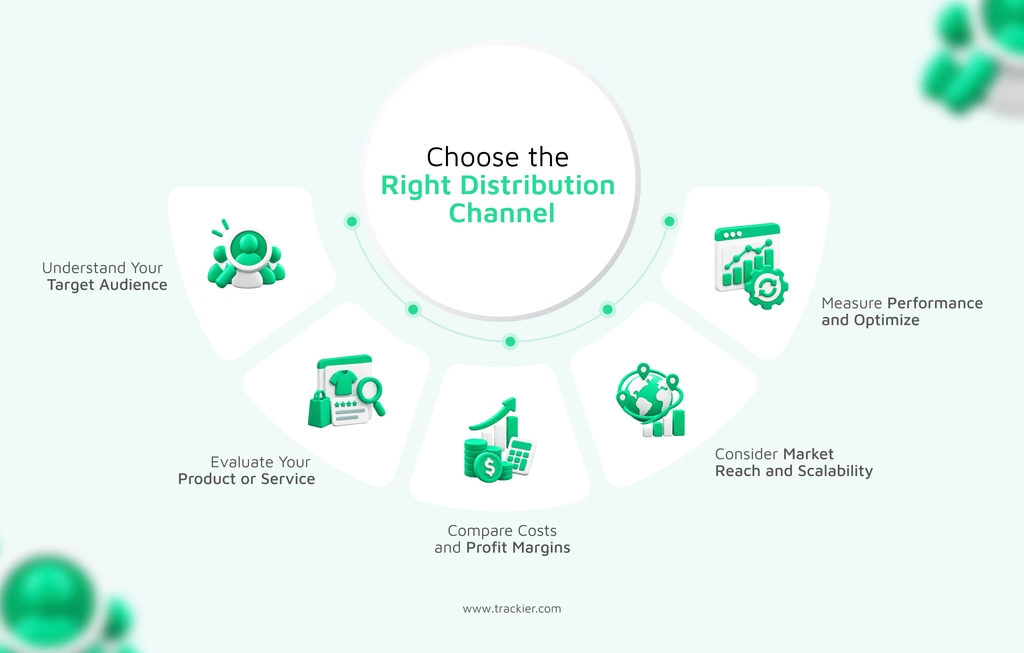
Choosing the right distribution channel depends on a business’s target audience, product type, budget, and growth objectives.
While a direct channel offers better control over customer relationships, indirect channels can help businesses expand their reach through established partners.
The right strategy balances customer convenience, operating costs, and long-term profitability.
1. Understand your target audience
Start by identifying how customers prefer to discover, evaluate, and purchase products. This suggests that self-service websites and digital sales channels can be valuable, particularly for buyers who want to research independently.
However, complex or high-value purchases may still require guidance from a sales representative.
2. Evaluate your product or service
Consider the complexity, price, and delivery requirements of your offering. Digital products and SaaS subscriptions can often be sold directly through a website, while physical products may require distributors or retailers to handle storage, transportation, and local availability.
Products that need demonstrations, customization, or ongoing consultation may benefit from a combination of direct sales and partner support.
3. Compare costs and profit margins
Assess the full cost of each channel, including marketing, sales staff, technology, commissions, shipping, and customer support.
Direct channels eliminate some intermediary costs but require businesses to manage more operations themselves.
Indirect channels involve partner margins or commissions but may reduce the investment needed to reach new customers. Compare customer acquisition cost (CAC), conversion rates, and profit margins before deciding.
4. Consider market reach and scalability
If your business plans to expand into new regions, distributors, resellers, and affiliates can provide access to established audiences.
However, if maintaining control over pricing, customer data, and brand messaging is a priority, direct channels may be more suitable. A hybrid strategy can help businesses balance reach with control.
5. Measure performance and optimize
Monitor revenue by channel, conversion rates, customer acquisition costs, and customer lifetime value (CLV) to identify which channels deliver sustainable results.
Trackier helps businesses track campaigns, attribute conversions, and evaluate marketing performance, supporting more informed decisions about where to invest their budgets.
Conclusion
Using a direct channel gives businesses the ability to create and sell products to their end-users without any intermediaries. Using direct channels allows companies to control important aspects of the business such as pricing, relationships with customers, and product purchasing.
However, the higher costs involved in the direct channel method, the difficulties experienced in acquiring customers, and the limitations in market reach make it harder to operate independently.
Selecting the best distribution channel is a function both of the product offered and of the target audiences. In other words, direct channels are effective for companies that want to have strong relations with their customers, while indirect channels are suitable for companies that need to work with already established partners.
It is crucial for businesses to monitor sales performance, acquisition costs, conversion rates, etc. Trackier is a unique tool created for performance marketers that provides accurate data about campaigns, conversions, and results.
FAQs
1. What is a direct channel example?
A common direct channel example is a SaaS company selling subscriptions through its own website. Customers can explore plans, purchase subscriptions, and receive support directly from the company without involving resellers or distributors. Other examples include company-owned retail stores and manufacturers selling products directly to consumers.
2. Is direct channel marketing the same as direct marketing?
No, direct channel marketing and direct marketing are different concepts. A direct channel refers to the route a business uses to sell products or services to customers. Direct marketing involves promotional activities, such as email campaigns, SMS messages, and personalized offers, that communicate with customers without relying on mass-media intermediaries.
3. Can a business use both direct and indirect channels?
Yes, businesses can combine direct and indirect channels to expand their reach while maintaining customer relationships. For example, a software company might sell subscriptions through its website while partnering with resellers or affiliates to attract additional customers. This hybrid approach can help businesses balance control, market reach, and operating costs.
4. What does direct channeling mean?
Direct channeling refers to selling or distributing products and services directly from a business to its customers without sales intermediaries. It allows businesses to manage pricing, customer interactions, and the buying experience more closely. Common examples include company-owned websites, physical stores, and internal sales teams handling customer transactions directly.