Imagine you are spending $10,000 on an advertising campaign without knowing whether it generates any results or not.
Many years ago, brands practiced this: they ran ads in television commercials, print ads, and on billboards, hoping customers would see and buy their products. And measuring the accurate result is impossible with these commercials.
But in today’s time, things have changed,
Modern markets can track anything from clicks, conversions, and purchases to the entire buying journey of a particular user in real time. They know exactly which campaign generated revenue, which ad creative drove a high number of conversions, and which marketing channel is delivering the better results on investment.
This advancement has made performance marketing one of the most powerful and result-generating strategies for businesses worldwide.
Whether it is a Google Shopping ad, a social media campaign, an influencer partnership, or an affiliate program, brands are increasingly investing in campaigns where results can be measured and optimized continuously.
But what does successful performance marketing actually look like in the real world?
In this article, you will learn about performance marketing, explore some of the best campaigns from leading brands, and understand the different types of marketing channels used to drive growth.
What is Performance Marketing?
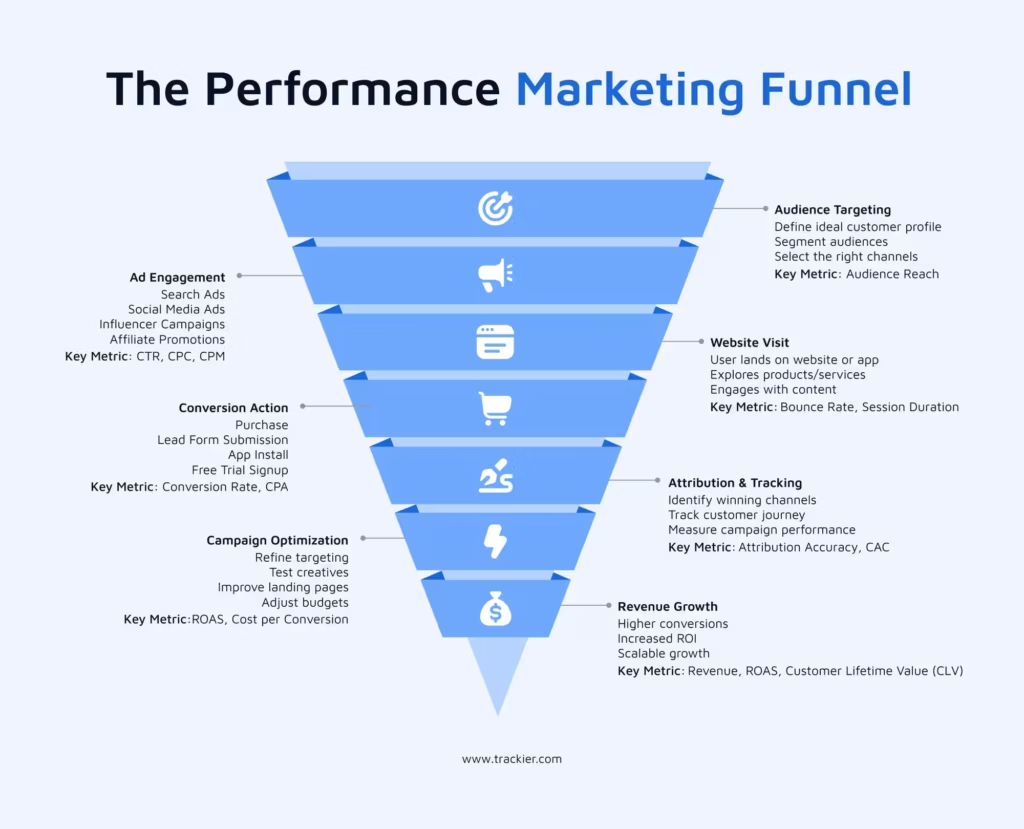
Performance marketing is a type of digital marketing in which advertisers will pay only when a desired action takes place, such as:
- Clicks
- Signups
- Sales
- App installs
- Conversions
Unlike traditional advertising, performance marketing focuses heavily on accountability.
Every dollar spent can be tied to a measurable outcome.
For example:
- A fashion brand may pay for completed purchases.
- A SaaS company may pay for qualified leads.
- A mobile app may pay for app installs.
- An affiliate program may pay publishers only when a sale occurs.
This results-focused model helps businesses maximize efficiency while reducing wasted advertising spend.
Why Brands are Investing More in Performance Marketing
Today, the digital marketing world is growing fast, and businesses are facing more competition than ever to reach and attract customers online.
Today’s consumers interact with brands across multiple touchpoints before making a purchase. A customer might discover a product on TikTok, read reviews on Google, click a retargeting ad on Instagram, and finally convert through an email campaign.
With so many channels influencing buying decisions, businesses need visibility into what is actually driving results.
That’s where performance marketing works.
According to Statista, ad spending in the global advertising market is projected to reach US$1.26 trillion by 2026, with TV & Video Advertising accounting for the largest share at approximately US$391.33 billion. This continued growth highlights the increasing importance of measurable, performance-driven marketing strategies.
Performance marketing helps businesses in several important ways:
1. Improve Marketing ROI
Every business wants to get the most value from its marketing budget.
Performance marketing makes this easier by showing exactly which campaigns, ads, or channels are generating results. Instead of guessing what works, marketers can focus their budget on the strategies that bring in the most leads, sales, or revenue.
This helps businesses spend smarter and improve their overall return on investment (ROI).
2. Scale Successful Campaigns Faster
One of the biggest advantages of performance marketing is real-time tracking.
Marketers don’t have to wait weeks to understand whether a campaign is working. If a campaign is generating strong results, it can quickly increase the budget, reach a larger audience, and drive even more conversions.
This allows brands to grow faster while maximizing profitable opportunities.
3. Reduce Customer Acquisition Costs
Getting new customers can be expensive.
Performance marketing helps businesses lower these costs by continuously testing and improving campaigns. Marketers can experiment with different ad creatives, audiences, landing pages, and offers to see what performs best.
Over time, these improvements help generate more conversions without significantly increasing marketing spend.
4. Build Better Customer Experiences
Customers interact with brands through multiple channels before making a purchase.
Performance marketing provides insights into how people move from discovering a brand to becoming a customer. This helps businesses understand what customers want, improve their messaging, and create a smoother buying experience.
A better customer experience often leads to higher conversion rates and stronger customer loyalty.
5. Make Smarter Decisions
Successful marketing is driven by data, not assumptions.
Performance marketing gives businesses access to real insights about customer behavior and campaign performance. Instead of relying on guesswork, marketers can use data to make informed decisions and improve their results over time.
Many of the performance marketing examples in this article show how brands use data, creativity, and continuous optimization to achieve better outcomes. Whether it’s Spotify using personalization or Glossier leveraging affiliate marketing, these performance marketing examples highlight the power of measurable marketing strategies.
7 Performance Marketing Examples That Generated Real Business Results
The following performance marketing examples come from brands that successfully combined creativity, data, and audience understanding to generate measurable outcomes.
Although each campaign used a different channel, they all focused on one goal:
Driving business growth.
1. Nike’s Breaking2 Campaign: Turning Storytelling Into Performance
When marketers think about performance marketing, they often think about paid ads.
Nike took a different approach.
The company launched the Breaking2 project with an ambitious objective: helping an athlete break the two-hour marathon barrier.
Instead of directly promoting products, Nike transformed the challenge into a global digital event streamed across YouTube and social media.
Millions of viewers followed the journey.
The campaign generated extensive media coverage, social conversations, and engagement from athletes and fitness enthusiasts worldwide.
Why This Campaign Worked
Nike understood that emotional engagement often comes before conversion.
Rather than selling shoes directly, the company sold inspiration, innovation, and human achievement.
Key Success Factors
- Emotional storytelling
- Athlete credibility
- Live digital engagement
- Social amplification
Marketing Takeaway
One of the biggest lessons from this performance marketing example is that not every campaign needs an immediate sales objective.
Sometimes, creating memorable experiences can strengthen brand loyalty and influence future purchasing decisions.
2. Spotify Wrapped: Personalization at Scale
Few performance marketing examples generate as much anticipation as Spotify Wrapped.
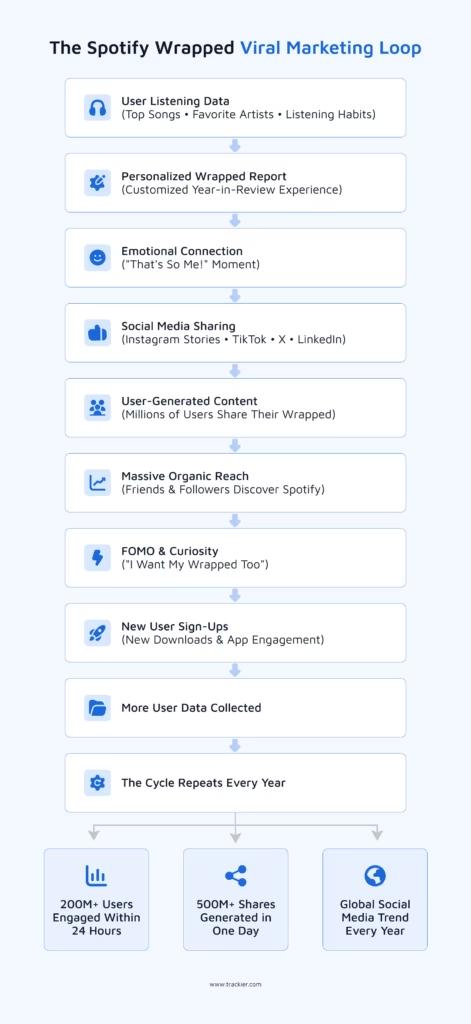
Every year, Spotify transforms user listening data into personalized reports showcasing:
- Most-played songs
- Favorite artists
- Listening habits
- Top genres
- Music personalities
What started as a customer engagement campaign has become a cultural event.
In 2024, Spotify Wrapped reportedly reached over 200 million users within the first day and generated hundreds of millions of social shares.
Why This Campaign Worked
Spotify combined three powerful marketing principles:
Personalization
People naturally engage with content that feels unique to them.
Social Sharing
The campaign was designed specifically for social media.
User-Generated Content
Customers became brand ambassadors without being asked.
Marketing Takeaway
This performance marketing example proves that first-party data can become a powerful marketing asset when used creatively.
3. Duolingo’s Viral TikTok Strategy
Many brands joined TikTok.
Very few understood it.
Duolingo did.
The language-learning platform embraced memes, trends, internet culture, and humor instead of traditional advertising.
Its mascot Duo became one of the most recognizable brand characters on social media.
One campaign involving the fictional “death” of Duo generated billions of impressions and widespread online discussion.
Why This Campaign Worked
Duolingo stopped acting like a corporation and started acting like a creator.
This made its content:
- More relatable
- More shareable
- More entertaining
The strategy helped the company generate substantial organic reach while reducing dependence on paid advertising.
Marketing Takeaway: Brands that adapt to platform culture often outperform brands that simply repurpose content across channels.
4. Glossier’s Affiliate Marketing Strategy
Glossier built a significant portion of its growth through influencer and affiliate marketing.
The beauty brand partnered with creators who shared:
- Product reviews
- Tutorials
- Beauty routines
- Personal recommendations
Every piece of content included trackable affiliate links.
This created a measurable customer journey:
Content → Click → Purchase
Industry reports suggest affiliate marketing contributes approximately 16% of all eCommerce sales, making it one of the most effective performance marketing channels available today.
Why This Campaign Worked
Consumers trust recommendations from creators they follow.
Glossier leveraged that trust while maintaining full visibility into campaign performance.
Key Success Factors
- Authentic creator partnerships
- Trackable affiliate links
- Strong social proof
- Community-driven promotion
Marketing Takeaway: Affiliate marketing remains one of the most scalable and cost-effective growth channels because brands only pay for actual results.
6. Anastasia Beverly Hills’ TikTok Campaign
Beauty brand Anastasia Beverly Hills used TikTok’s TopView ad format to promote a new mascara launch.
The results were impressive:
- More than 27 million impressions
- 9% increase in brand awareness
The campaign combined influencer-style content with short-form vertical video to capture attention quickly.
Why This Campaign Worked
TikTok users respond strongly to authentic, entertaining content.
Rather than feeling like a traditional advertisement, the campaign blended naturally into the platform experience.
Key Success Factors
- Video-first creative
- Premium ad placement
- Influencer-style storytelling
- Mobile optimization
7. Hoka, Brooks, and Lululemon: Winning the Search Intent Game
Among all performance marketing examples, search advertising remains one of the most conversion-focused.
Brands like Hoka, Brooks, and Lululemon invest heavily in Google Shopping campaigns.
When users search for terms like:
- Best running shoes
- Marathon shoes
- Women’s activewear
- Workout apparel
These brands appear directly in search results.
Because users are already showing purchase intent, conversion rates are often significantly higher compared to interruption-based advertising channels.
Why This Campaign Worked
The brands target customers at the exact moment they are ready to buy.
Key Success Factors
- High-intent traffic
- Product-focused creatives
- Shopping ads
- Real-time optimization
Key KPIs
- CPC
- CTR
- Conversion Rate
- ROAS
Marketing Takeaway
Search intent remains one of the strongest indicators of purchase behavior.
The closer you get to customers to their buying decision, the higher the likelihood of conversion.
What These Performance Marketing Examples Teach Modern Marketers
While these performance marketing examples come from different industries and use different channels, they all share a few important lessons.
The brands that consistently achieve strong results don’t rely on luck. They focus on understanding their audience, using data effectively, and continuously improving their campaigns.
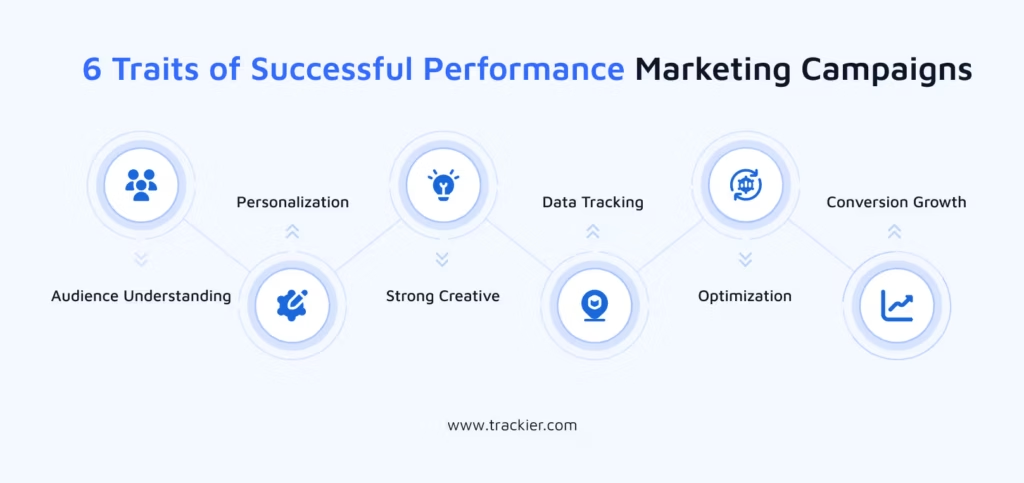
Here are some key takeaways marketers can learn from these successful campaigns:
Understand Your Audience First
Every successful campaign starts with knowing your customers.
Brands like Spotify and Nike created campaigns that connected with their audience’s interests, emotions, and behavior. The better you understand your audience, the easier it becomes to create campaigns that capture attention and drive action.
Make Experiences Personal
People engage more with content that feels relevant to them.
Spotify Wrapped is a great example of this. By using customer data to create personalized experiences, Spotify made users feel connected to the brand and encouraged them to share their results.
Create Content for Each Platform
What works on TikTok may not work on Instagram or Google.
Duolingo succeeded because it embraced TikTok’s culture instead of posting traditional advertisements. Successful marketers adapt their content to fit the platform and audience they’re targeting.
Track Everything That Matters
One of the biggest advantages of performance marketing is visibility.
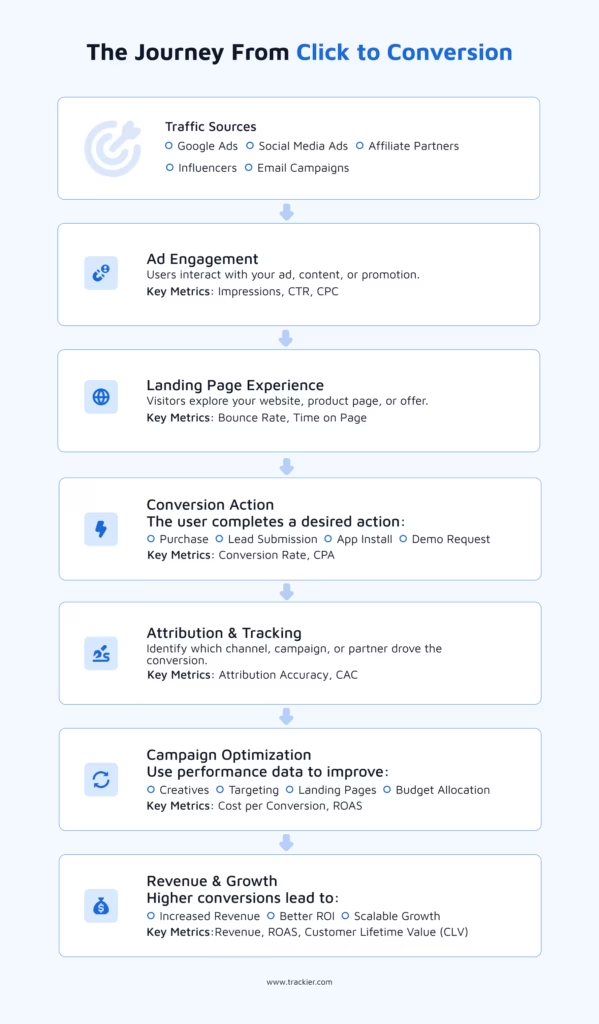
Brands can track clicks, conversions, revenue, and customer journeys to understand what’s working and what’s not. Accurate tracking helps marketers make better decisions and improve campaign performance over time.
Keep Testing and Improving
The best campaigns are rarely perfect from day one.
Successful brands continuously test different creatives, audiences, messaging, and landing pages to find what delivers the best results. Even small improvements can have a significant impact on overall performance.
Make It Easy to Convert
Customers shouldn’t have to work hard to take action.
Whether it’s a purchase, app install, or sign-up, reducing unnecessary steps can improve conversion rates. Aerie’s shoppable Instagram ads are a great example of how a smoother customer journey can lead to better results.
The Bottom Line
These performance marketing examples prove that successful campaigns aren’t just about having a large budget. They’re about understanding customers, creating engaging experiences, tracking performance, and continuously optimizing for better results.
Technology provides the data, but a smart strategy is what turns that data into growth.
How to Apply These Performance Marketing Examples to Your Own Campaigns
You don’t need Nike’s budget, Spotify’s user base, or Glossier’s creator network to benefit from these performance marketing examples.
The real value lies in understanding the strategies behind these campaigns and applying those lessons to your own marketing efforts.
Here are five practical ways to get started:
Set Clear Goals From the Beginning
Before launching any campaign, define what success looks like.
Are you trying to generate leads, increase sales, drive app installs, or grow affiliate revenue?
Having clear goals helps you choose the right channels, measure performance accurately, and optimize campaigns more effectively.
Use Data to Guide Decisions
The most successful brands don’t rely on assumptions.
They use data to understand customer behavior, identify high-performing channels, and uncover opportunities for improvement. Tracking key metrics such as clicks, conversions, CPA, and ROAS helps ensure your decisions are backed by real insights.
Continuously Test and Optimize
Performance marketing is not a one-time activity.
Successful campaigns are constantly refined through testing. Experiment with different ad creatives, audience segments, landing pages, and calls-to-action to find what resonates best with your audience.
Even small improvements can lead to significant gains in performance over time.
Make the Customer Journey Simple
The easier it is for customers to take action, the better your results are likely to be.
Review every step between discovery and conversion. Remove unnecessary friction, simplify forms, improve landing page experiences, and make it easy for users to complete the desired action.
Focus on Attribution and Tracking
You can’t improve what you can’t measure.
Accurate attribution helps you understand which campaigns, channels, affiliates, or creators are driving conversions. With the right tracking in place, you can invest more confidently in high-performing channels and scale your campaigns efficiently.
Final Thoughts
The best performance marketing examples prove that successful campaigns are about more than just spending money on ads.
They succeed because they understand their audience, deliver the right message at the right time, and continuously optimize based on real data.
Whether it’s Nike creating an emotional story, Spotify turning customer data into a viral experience, Duolingo mastering social media trends, or Glossier leveraging affiliate partnerships, each brand focused on building meaningful customer connections while driving measurable results.
The biggest lesson?
There is no single formula for success in performance marketing. Different brands use different channels, strategies, and creatives, but they all share one common goal: turning marketing efforts into measurable business outcomes.
As competition continues to grow, marketers who combine creativity, data-driven decision-making, and accurate attribution will have a clear advantage. By tracking performance, optimizing campaigns, and focusing on what truly drives conversions, brands can improve ROI, scale faster, and achieve sustainable growth.
And that’s exactly what great performance marketing is all about.
FAQS
1. What is performance marketing?
Performance marketing is a digital marketing strategy where advertisers pay only when a specific action occurs, such as a click, lead, sale, app install, or conversion. This model helps businesses measure results accurately and optimize campaigns based on performance.
2. Why is performance marketing important for businesses?
Performance marketing allows businesses to track every stage of the customer journey, measure campaign effectiveness, improve ROI, reduce customer acquisition costs, and make data-driven decisions that support long-term growth.
3. What are some examples of successful performance marketing campaigns?
Some notable performance marketing examples include Nike’s Breaking2 campaign, Spotify Wrapped, Duolingo’s TikTok strategy, Glossier’s affiliate marketing program, Anastasia Beverly Hills’ TikTok campaign, and search advertising campaigns from leading retail brands.
4. Which channels are commonly used in performance marketing?
Performance marketing campaigns typically use channels such as:
Search advertising
Social media advertising
Affiliate marketing
Influencer marketing
Display advertising
Email marketing
Mobile app advertising
5. How do you measure the success of a performance marketing campaign?
Success is measured using key performance indicators (KPIs) such as:
Conversion Rate
Cost Per Acquisition (CPA)
Return on Ad Spend (ROAS)
Click-Through Rate (CTR)
Cost Per Click (CPC)
Customer Lifetime Value (CLV)