Growth marketing has become a core strategy for modern businesses looking to scale sustainably. In fact, companies with mature experimentation programs see up to 15% higher revenue growth, highlighting how data-driven testing and optimization directly impact business outcomes.
As brands compete across multiple channels, the ability to track performance, optimize campaigns, and understand customer journeys becomes critical. That’s why many growth-focused teams rely on Trackier to gain accurate attribution, manage partnerships, and scale campaigns efficiently.
In this blog, we’ll break down what growth marketing is, how it works, and the strategies, tools, and frameworks businesses can use to build a predictable growth engine in 2026 and beyond.
What is Growth Marketing?
Growth marketing is a data-driven approach focused on achieving sustainable growth across the entire customer lifecycle, rather than just focusing on acquiring new customers. Growth marketing includes acquisition of new customers, but it also includes all other parts of the customer journey, including retention and referral.
Growth marketing has become more popular with the rise of the startup ecosystem and introductory frameworks like the AAARRR model (Acquisition, Activation, Retention, Revenue, and Referral). Growth marketers do not run stand-alone campaigns but instead continually experiment, monitor, and improve each part of the funnel.
Growth marketers use a combination of performance marketing, product analytics, customer psychology, and automation tools to develop their strategies, with heavy reliance on data, attribution, and real-time analytics for making decisions.
In a highly competitive marketplace, those brands that implement a growth marketing philosophy will grow at a faster rate, lower their customer acquisition cost (CAC), and have a larger, more sustainable impact.
Components of A Growth Marketing Plan
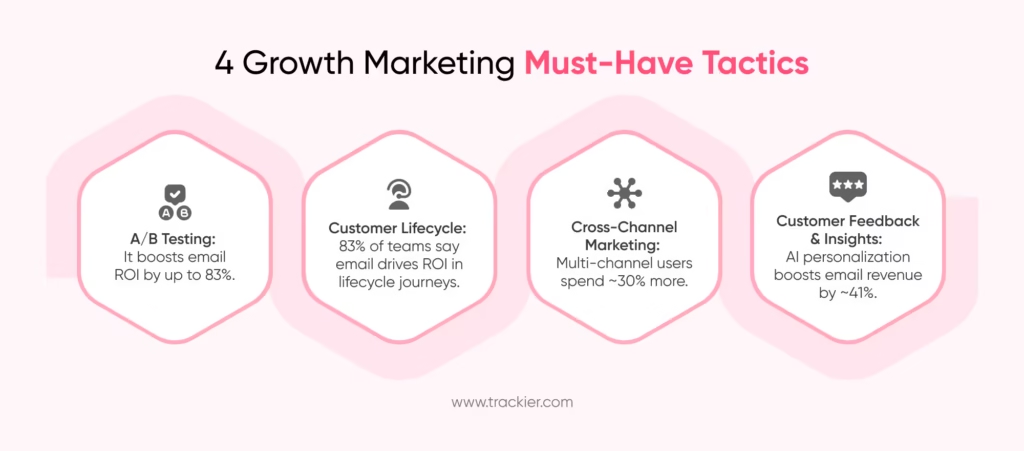
To create an effective growth marketing plan, businesses must have many critical elements that contribute to each part of the customer’s journey and enhance performance at all stages.
1. A/B Testing
When using A/B testing in your marketing campaigns, you will not have to guess what is working and what is not working. By testing different versions of headlines, landing pages, CTA’s, emails, or ad creative, you can see which version of each performs highest and increases conversions and engagement.
Recent industry data shows that 67% of marketing leaders run A/B tests weekly to optimize campaigns, and winning experiments deliver an average conversion lift of around 12%.
By utilizing data rather than making assumptions, the growth team will be able to make improvements to the campaign that maximize ROI and improve performance through continual testing. Because growth marketing relies on continuous testing, it is scalable and sustainable.
2. Optimizing Customer Lifecycle
Growth marketing does not just stop at acquiring customers; it focuses on all pieces of the customer lifecycle (Awareness, Acquisition, Conversion, Retention, and Loyalty).
The specific messaging, promotional channels, and products being offered are tailored based on where the customer is in their journey, which will create more relevant offers for the consumer, allowing for more engagement and creating more customer lifetime value (CLV).
3. Cross-Channel Marketing
Growth marketing integrates various marketing channels such as paid advertising, email, social media, content, and partnerships to create a consistent customer experience.
Brands like Starbucks that get the omnichannel experience right do a great job of connecting the customer app experience, in-store promotions, and digital campaigns.
4. Client Feedback and Information
It is critical to listen to your consumers. Surveys, reviews, and behavioural information assist in finding both the weaknesses and strengths of the company.
The insights gained from these tools will help guide company improvement, messaging updates, and optimization of campaigns, all to provide better tools and grow the company according to what its customers want.
Growth Marketing vs Performance Marketing vs Digital Marketing
Digital marketing is often confused with growth marketing and performance marketing due to their overlapping definitions and connection to digital technologies.
Each of these three methodologies serves a different business purpose, and understanding the boundaries between them is essential for implementing a successful campaign.
1. Digital Marketing: The Broad Umbrella
Digital marketing is a generalization of all forms of online marketing. Examples of some forms of digital channels used by businesses include search engines, social networks (social media), websites, email, online display advertising and mobile apps.
The primary objective of a digital marketing strategy is to receive maximum exposure. A digital marketing strategy can include, but may not be limited to search engine optimization (SEO), social media management, content marketing, PPC advertisements, influencer campaigns and/or e-mail marketing campaigns.
Therefore, while digital marketing represents the ‘Where’, or the channels and platforms through which marketing is done, it is important to note that some digital marketing campaigns do not generate measurable (ROI) revenue.
Rather, some digital marketing campaigns focus on brand awareness or consumer engagement, for example, rather than generating an immediate sale or purchase.
2. Performance Marketing: ROI-Focused Execution
Performance marketing is focused on driving measurable results, which leads to advertisers only paying for actions that have already occurred. Performance marketers utilize several different channels, including paid search (PPC), affiliate marketing, display advertising, sponsorship, and partner programs.
Performance marketers determine how to allocate their ad budgets based on data through KPIs such as cost per acquisition (CPA), return on ad spend (ROAS), and conversion metrics.
The importance of performance marketing continues to grow as digital advertising becomes more measurable. For example, global digital advertising spend is projected to exceed $836 billion by 2026, with performance-based channels such as search and social accounting for a large share of that investment.
Performance marketing relies heavily on data analysis and is designed to provide advertisers with a detailed analysis of each action taken during the consumer buying process. The goal of performance marketing is to achieve a trackable return on investment quickly.
While performance marketing may be beneficial for scaling up an advertising campaign in the short term by acquiring new customers, it is not necessarily a retention-based channel and does not necessarily provide long-term value for a business unless it is considered within a larger channel mix.
3. Growth Marketing: Full-Funnel and Experimentation-Driven
Growth marketing differs from performance marketing in that it seeks to optimize a complete, end-to-end customer lifecycle experience and optimize for growth. This is accomplished through experimentation and continuously testing marketing through the whole customer lifecycle (the five stages: Acquisition, Activity, Retention, Revenue, and Referral).
Growth marketers will continuously test and experiment to optimize every aspect of their marketing mix, including the overall product offering, marketing message, onboarding process, pricing, and all customer communications throughout each phase of their customer lifecycle.
In contrast to performance marketing, which focuses on achieving quick returns, growth marketing is able to balance returning immediate revenue to pay back the cost of acquiring customers while ensuring long-term success by providing a unified growth strategy that connects marketing, product, data, and customer experience together.
The Growth Marketing Funnel
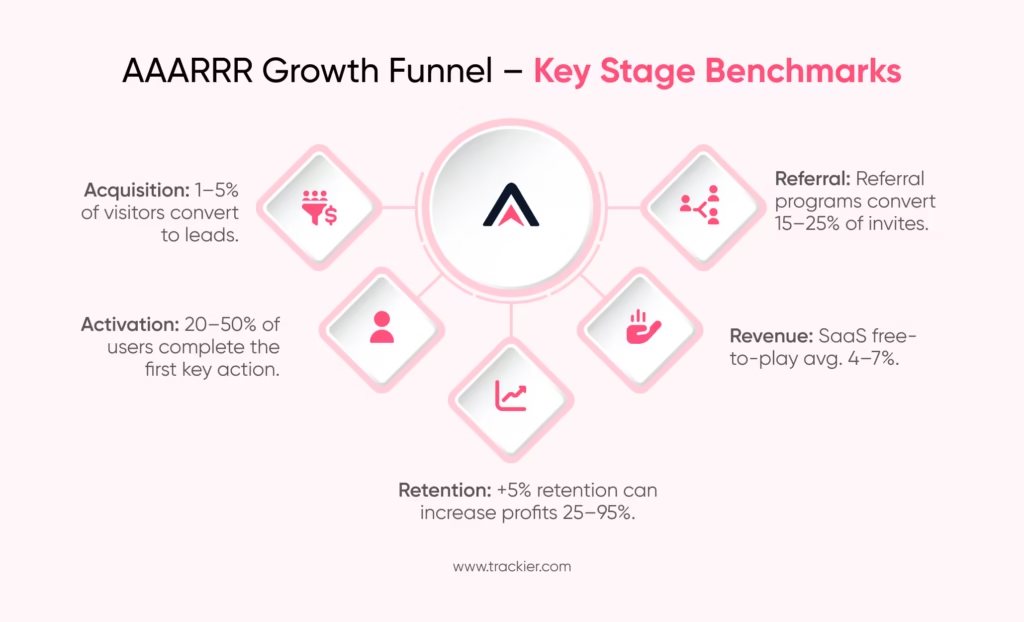
The goal of the growth marketing funnel is to convert strangers into loyal customers through a full funnel approach to achieving targets.
The growth marketing funnel operates by analyzing customer behaviour throughout every stage of their journey, as opposed to the traditional funnel’s focus on awareness and conversion, to help encourage repeat purchases for repeat business.
The AAARRR model is one of the most commonly used frameworks for monitoring the success of each stage of the funnel, as shown below:
1. Acquisition
At this stage, potential customers are first attracted to your brand. Examples of acquisition channels include: SEO(search engine optimization), paid advertisement, social media, affiliate marketing, influencer campaigns, partnership marketing, and content marketing.
The goal at the acquisition stage is to ensure that you are not only attracting traffic to your site, but you are also attracting qualified traffic that matches your ideal customer profile.
2. Activation
The first action a user takes at this stage is considered an activation. An activation could be anything from signing up for a free trial, completing an onboarding process, downloading an app, or completing the first purchase.
This stage focuses heavily on user experience, landing page optimization, and onboarding processes; therefore, providing your customers with a positive first-time experience will help build their long-term engagement.
3. Retention
Gaining new users is costly; however, retaining users to use your product or service repetitively after their initial purchase can be very profitable. Retention is the ability to bring your users back and then have them continue using (engaging with) your product or service.
Strategies to improve retention are using email automation, sending targeted push notifications, creating personalized recommendations, building a strong loyalty program, providing excellent customer support, etc.
4. Revenue
Once you acquire users and retain them, in a sense, you have them for life. You now begin to focus on generating revenue (monetizing).
Growth marketers will now analyze pricing strategies, develop upsell/cross-sell opportunities, and optimize subscription (recurring) models/conversion funnels to drive revenue per customer.
This is also the stage where measuring metrics such as CAC, LTV, and ROAS becomes even more important.
5. Referral
The last step in this process is creating brand loyalty among your customers. Building referral programs (i.e., get a discount for referring a friend), affiliate marketing, creating user-generated content (i.e., pictures of customers using your product), and incentivizing sharing of your brand (i.e., using social media) create organic growth loops.
As more and more users promote your brand, the cost to acquire new users decreases while at the same time increasing the trust and credibility associated with your brand.
Growth Marketing Strategies
Growth marketing has more than a series of strategies. It is a complete ecosystem of strategies that complement each other to draw in, engage with, turn into customers, and retain customers in such a way that promotes scalable growth for a business.
The best growth marketers are creative, utilize data, and experiment to find consistent and measurable means of increasing growth. The following are some of the most effective strategies utilized by growth teams from 2026 on.
1. Full Funnel Optimization
Growth marketers do not just focus on acquiring at the top of the funnel; instead, they optimize all of the stages of the customer journey, including discovery, activation, retention and referral.
By mapping user behaviours, identifying where users stop converting and refining experiences at each touch point, growth teams can improve conversions for the entire customer journey.
2. A/B Testing and Conversion Rate Optimization
Testing is the foundation of growth marketing. By conducting A/B tests, testing out different landing pages, CTAs, forms, and creatives, growth teams can determine what increases conversions.
Through continual testing and measuring, growth teams can remove any guesswork to yield measurable increases in performance.
3. Lifecycle Nurturing and Email Automation
Automated workflows are an effective growth channel (even more than e-commerce).
Using automated workflows to on-board new users, re-engage with inactive customers, and nurture inactive prospects through personalized workflows are proven to create through behavioural automation-based email sequences (example: welcome series, cart abandonment emails, reactivation emails).
4. Loyalty and Referral Growth Programs
Using a referral strategy to convert excited customers into loyalists for your brand will generate new customers through word-of-mouth while simultaneously reducing your CAC.
An excellent example is the referral program that demonstrates how using referrals with incentives can drive your user base dramatically.
5. Product-Led Growth
Under a product-led growth strategy, products are utilized as a growth base.
By using freemium offers, free trials or built-in viral features such as inviting friends to use, prospects are able to experience the value of the product prior to purchasing it.
This leads to activation and provides less friction for customers to convert.
6. Community Building and Social Media
Growth marketers engage with potential customers on social sites, such as Instagram and X, not only by posting content but also by building an engaged community and compiling data to increase engagement with brands.
They use interactive content, user-generated content and community groups to engage their customers by creating a shared experience that helps spur growth through organic channels.
7. Paid Media with Precise Targeting
Paid advertising strategies on platforms such as Facebook Ads and Google Advertising Network can increase your reach and help speed up your growth rate.
By using data to segment your audience and re-target users with maximum efficiency, you will get the best ROI from every ad dollar spent while driving sales conversions for your business.
8. Cross-Channel Integration of Growth Strategies
Your growth strategy is often best when each channel is integrated into a larger cohesive strategy rather than kept separate from the others.
Creating an integrated email, social, paid search, and organic strategy provides more consistent messaging to every user and maximally increases your odds of converting users at any point in their buying journey.
Growth Marketing Channels
Growth marketing channels are the platforms and mediums businesses use to attract, engage, and retain customers through the entire customer journey.
These channels serve as the “pipes” that bring prospects into your funnel and help you move them from awareness to loyalists.
Choosing the right mix depends on your audience, product, and growth goals, but some channels consistently deliver results across industries.
1. Organic and Owned Channels
These are channels that you control and optimize over time without paying directly for each interaction. The core of this category includes:
- Search Engine Optimization (SEO) – Helps your content rank higher in search results, driving sustainable organic traffic.
- Content Marketing – Blogs, videos, infographics, and podcasts build authority and educate audiences.
- Email Marketing – Behaviour-based nurture campaigns keep customers engaged and encourage repeat actions.
- Social Media (Organic) – Platforms like LinkedIn, Instagram, and YouTube allow you to build a community and share value-driven content.
2. Paid Channels
Paid marketing accelerates awareness and acquisition by putting your brand in front of targeted users quickly. Common paid growth channels include:
- Pay-Per-Click (PPC) Ads – Search and display ads on platforms like Google Ads for high-intent visibility.
- Paid Social Advertising – Targeted ads on social platforms such as Meta and TikTok to drive conversions or engagement.
- Influencer Partnerships – Paid collaborations that reach niche audiences aligned with your brand.
3. Partnership and Affiliate Channels
Strategic collaborations expand your reach by tapping into complementary audiences.
- Affiliate Marketing – Reward partners for driving conversions. In fact, affiliate links now drive around 16% of global e-commerce orders, making it one of the most powerful performance-driven acquisition channels.
- Business Partnerships – Co-created campaigns or co-branded initiatives that open doors to new customer segments.
4. Referral and Community Channels
These channels leverage existing customer relationships to fuel organic growth:
- Referral Programs – Incentives that encourage customers to invite friends.
- Community Engagement – Building loyal user communities on forums, groups, or social platforms that foster advocacy and long-term engagement.
Growth Experiments Framework
A growth experiment framework is a structured process that helps marketing teams test ideas, validate assumptions, and discover scalable growth opportunities.
Instead of relying on intuition or one-time campaigns, growth teams follow a repeatable testing process that allows them to learn quickly and continuously improve performance across the funnel.
1. Identify Opportunities
The first step is identifying growth opportunities based on data and user insights. Teams analyze metrics such as drop-off points in the funnel, customer feedback, product usage data, or campaign performance.
This helps uncover areas where improvements could drive measurable impact, such as improving sign-ups, increasing retention, or boosting conversions.
2. Form a Hypothesis
Once an opportunity is identified, teams develop a testable hypothesis. A strong hypothesis clearly defines the problem, proposed solution, target audience, and expected outcome.
For example: “If we simplify the signup form, conversion rates will increase because users will face fewer friction points.”
3. Prioritize Experiments
Growth teams generate many ideas but cannot test them all. Therefore, experiments must be prioritized based on potential impact, effort required, and confidence in the idea.
Frameworks such as RICE (Reach, Impact, Confidence, Effort) or PIE (Potential, Importance, Ease) are often used to rank which experiments should be tested first.
4. Design and Run the Experiment
Next, teams design the experiment. This includes defining the test variants, selecting the audience segment, determining the success metrics, and setting the experiment duration.
Most growth experiments rely on A/B testing, where two variations are shown to users to identify which performs better.
5. Analyze Results
After the experiment runs for a statistically significant period, teams analyze the results to determine whether the hypothesis was validated.
Metrics such as conversion rate, engagement, or revenue impact help determine the winning variation.
6. Learn and Iterate
The final step is documenting insights and applying them to future experiments. Even unsuccessful tests provide valuable learnings that refine future strategies.
Successful experiments can then be scaled across channels, campaigns, or product features.
KPIs That Matter in Growth Marketing
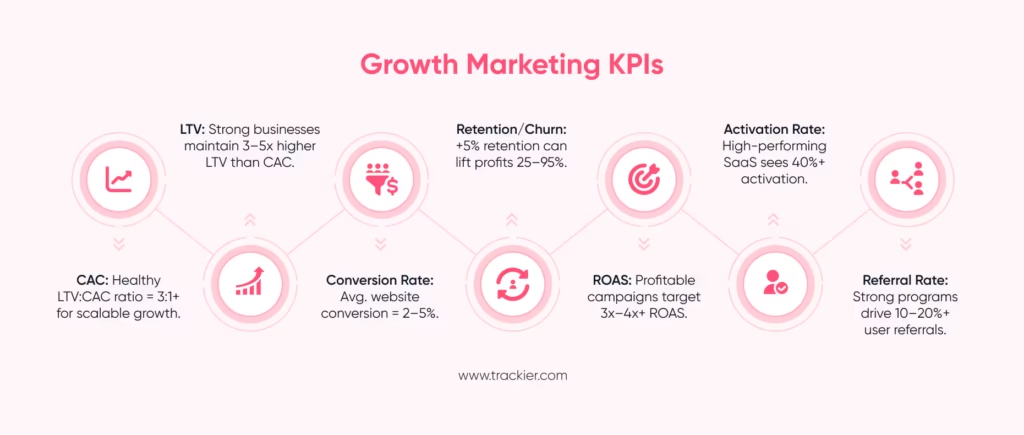
Growth marketing relies on measurable results. Unlike traditional marketing, which can emphasize impressions and branding only, growth marketing focuses on metrics associated with revenue, retention, and long-term scalability.
Measuring the KPI’s guarantees that each experiment, campaign, or improvement contributes to the sustainable growth of the business.
1. Customer Acquisition Cost (CAC)
Customer acquisition cost is the cost of acquiring a new customer. The cost includes all associated costs of bringing in a new customer, including advertising/marketing spend, tools/software used to market, agency fees, and the internal costs of your team.
CAC is very important because it determines if your growth strategy is financially viable. If your CAC is higher than the revenue generated per customer, your ability grow is jeopardized.
To keep CAC down but high-quality leads coming in, growth teams need to constantly experiment with new channels and creatives.
2. Customer Lifetime Value (LTV)
LTV is the total revenue a business expects to derive from its customers over the life of the relationship between the business and customer. This is just as important as CAC in the growth marketing world.
A business that has strong LTV can invest much more into its paid acquisition efforts. Retention, upselling, cross-selling, and loyalty programs all have a positive impact on improving LTV, and improving LTV ultimately strengthens overall business profits.
3. Conversion Rate
The conversion rate is an important measurement of effectiveness in your marketing funnel. It measures the effectiveness of converting traffic into customers.
A growth marketing team focuses on testing, optimizing landing pages, providing better onboarding experiences, and creating personalized messages to increase conversion rates.
4. Retention Rate and Churn Rate
Retention rate measures how many customers continue to use your product over time. Churn rate measures how many customers stop using your product. Even if you are acquiring a large number of customers each month, high churn can devastate your growth.
Sustainable growth can only be achieved through the maintenance of happy, active customers. Retention marketing initiatives such as email automation, product improvements, and customer success initiatives play a large role in increasing retention.
5. Return on Ad Spend (ROAS)
Return on ad spend (ROAS) measures how much revenue is produced for every dollar that you spend on advertising. ROAS helps marketers determine which of their campaigns or channels are generating profitable returns.
Growth marketing teams use attribution measurement and performance tracking to help them determine how to best allocate their budgets toward the channels producing optimal results and eliminate inefficient spending.
6. Activation Rate
Activation is an indicator of how many users are taking the first meaningful action after registering: for example, finishing their onboarding experience, or using a key feature.
This metric is critical for SaaS and app-based companies; by increasing the activation rate, you increase the chances for ongoing retention and revenue.
7. Referral Rate
Referral rate measures how many customers acquire new users via referrers or through other referral-based means.
A high referral rate signifies satisfied customers and that there is a good product/market fit, resulting in a self-reinforcing growth cycle.
Growth Marketing Examples
A good way to learn about growth marketing is through examples of companies that have come up with creative ways to grow, increase engagement, decrease costs to acquire new customers, and build sustainable growth loops.
The examples below show many different strategies to grow, including referral programs, community development, being culturally relevant, and creating viral content.
1. Dropbox – Use Referral Programs for Growth
Dropbox is one of the most frequently referenced examples of growth marketing, as it changed the way it grew when it came up with the idea of a referral program.
The referral program allowed users to receive free cloud storage for every friend they invited, and each of their invited friends also received the same amount of free cloud storage.
This created an incentive for customers to become users, created a viral growth loop and allowed Dropbox to grow from a start-up to hundreds of millions of users, a model that is studied in many different growth marketing playbooks.
2. Airbnb – Grow by Leveraging Existing Platforms
Airbnb did not grow through just traditional acquisition channels; it grew by leveraging existing platforms. In the beginning phase of the company, hosts were able to post their listings on both Airbnb and Craigslist.
By allowing hosts to list on both platforms, Airbnb was able to access the existing audience of Craigslist and provide visibility to its listings, which in turn enabled it to grow quickly among a familiar audience.
3. Gap’s “Better in Denim” — Cultural Virality Meets Sales
The “Better in Denim” campaign from Gap Inc., which featured nostalgic throwbacks to some of the brand’s most iconic styles and included the Katseye Dance Company, achieved absolutely unheard-of success as a cultural phenomenon.
Not only did the campaign receive billions of impressions and hundreds of millions of views on various social media platforms, but it also resulted in strong double-digit growth in sales for Gap and an overall outperformance against the company’s expectations.
4. ASICS Colour Injection Campaign
ASICS launched its Colour Injection campaign targeting Gen Z using TikTok by using community ambassadors to create content that resonated with the #RunTok audience.
ASICS received millions of impressions, thousands of sales on the day after the campaign was launched, and proved once again that there is a direct relationship between community-focused content creation and converting overspent customers into new revenue.
5. Bombas: Data-Driven Creative Testing
Bombas is another prime example of a direct-to-consumer (DTC) brand utilizing growth marketing strategies to optimize its paid media campaigns through testing metrics and applying them within a defined timeframe.
By systematically analyzing their creative assets and optimizing their audience, Bombas was able to increase its return on advertising spend (ROAS) by 46%, reduce customer acquisition costs by 34%, and increase total conversions by 2.4 times during the holiday rush, showcasing just how valuable experimental learning can be when combined with performance-based marketing techniques.
Growth Marketing Tools Stack
A comprehensive suite of growth tools is important to grow campaigns and automate workflows on off-site performance analysis and optimize each step of a customer’s journey.
Growth marketers don’t use just one tool; they create an integrated ecosystem from many tools where each tool serves a certain purpose to achieve accurate performance measurements.
Below is a list of the main categories and tools that will comprise a successful growth marketing stack/technology stack in 2026.
1. Customer Relationship Management (CRM)
This type of platform is the foundation of any growth plan. A CRM creates one place to view all of a company’s interactions with its customers by pulling data from multiple platforms into one consolidated view, tracking leads and including information about how a company’s product or service relates to individual users on a personalized basis.
A unified CRM system gives growth teams one platform to find all of the data needed to segment their audience, automate messaging and follow up, and actually track revenue.
HubSpot is a well-known example of a CRM being used by businesses to manage contacts, automatically distribute campaign materials and share data between sales and marketing departments.
2. Analytics and Attribution Tools
Knowing and understanding what is working and what isn’t serves as the foundation of the growth marketer’s journey.
Analytics tools allow marketers to track visitor behaviour on their websites, or other digital environments, monitor how their marketing programs/campaigns are performing and follow users through their entire journey from the time they first encounter a brand or company until they make a purchase (including, but not limited to, all the actions they take in between).
Google Analytics (GA) provides marketers with ways to monitor where their website traffic is coming from, how engaged those visitors are, how many convert into customers, etc., plus advanced attribution tools can track the revenue generated by each channel; this data becomes actionable insights to optimize performance.
3. Marketing Automation and Workflow Tools
Automation tools help growth teams provide personalized, timely messaging without manual effort.
They power email sequences, trigger-based messaging, user segmentation and other processes.
Additionally, tools like Zapier connect different applications to create automated workflows, saving time and reducing manual errors.
4. Email and Engagement Platform
Email continues to be one of the most effective channels for nurturing leads and retaining customers.
It provides advanced automation/segmentation allow marketers to send tailored messages based on the user’s behaviour.
This increases engagement through targeted campaigns while helping to drive users deeper into the funnel.
5. Conversion and Experimentation Tools
Optimizing the user experience through experimentation is the foundation of growth marketing. Tools for A/B testing and conversion rate optimization help teams optimize landing pages, messaging and user flows.
For example, features such as multivariate testing and behavioural analytics enable marketers to continuously improve their performance without guesswork.
6. Interactive Lead Generation and Qualification
Interactive tools (e.g., quizzes, calculators, and dynamic funnels) increase engagement while collecting valuable first-party data.
These tools can also improve lead qualification and subsequently, the follow-up workflow, resulting in overall increased conversion rates.
7. Tools for Referral or Community Growth
Referral programs support current customers bringing in new users; they create natural (and typically cheaper acquisition cycles.
Referral programmes, campaigns, rewards and viral loops increase satisfied customers being advocates of a brand.
8. Tools for Collaboration and Project Management
Since growth marketing requires collaboration (cross-functionally) and insight, growth marketing involves working with product, content, design, and analytics teams.
Project management tools will ensure that all experiments are organized, timelines are aligned, and results are tracked. (So that you do not miss anything).
Growth Marketing Trends for 2026
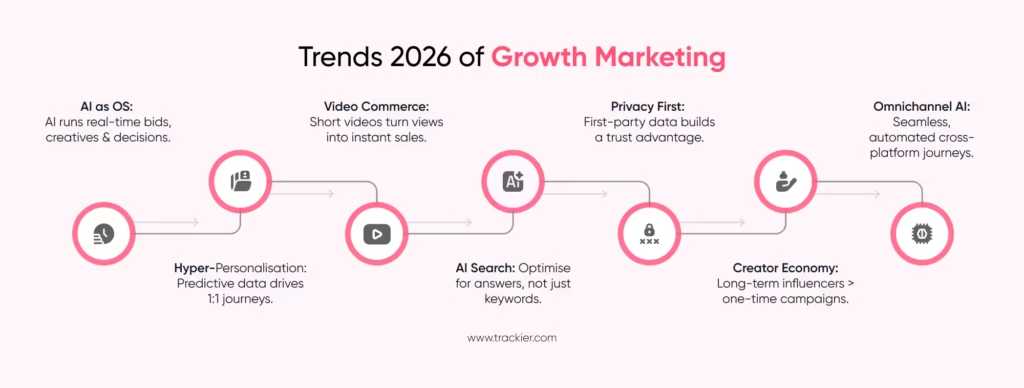
Growth marketing continues to evolve rapidly as we approach the year 2026. Brands are adopting advanced technologies and evolving with their customers’ behaviours, resulting in smarter tools for marketing that will allow companies to increase consumer engagement, drive more conversions, and create more loyalty among consumers.
1. AI as a Core Operating System
AI is no longer an area in which companies simply experiment; it is now central to all aspects of marketing execution. Within a few short years, many marketing departments will manage campaign-level activity from within agentic AI solutions.
Agentic AI will adjust marketing campaign bids in real-time, generate and experiment with different ad creatives, and provide brand-level personalization for consumers across all channels. In other words, agentic AI will not solely automate workflows within an organization, but will also assist marketing teams with making better decisions about growing their brands.
2. Hyper-Personalization and Predictive Marketing
In 2026, customer marketing that is based on “one-size-fits-all” will quickly begin to lose its effectiveness and importance to many brands.
Brands will leverage first-party data and predictive analytics, enabling them to map highly personalized customer journeys based on customer conduct patterns, desires, predictions, and appropriate messaging.
The utilization of real-time customer data for personalized marketing throughout all digital platforms will provide increased relevance and drive an increase in conversion, therefore leading to increased loyalty between brands and consumers.
3. Video and Interactive Commerce
Shoppable and short online video content will continue to grow in popularity. Social media (such as Instagram and YouTube) has transitioned from being solely engagement channels to becoming an outlet for direct sales.
Users can discover new products and purchase them immediately after viewing them through videos. Connecting video content with easy buying options allows brands to turn user attention into immediate sales.
4. Search and Answer Engine Optimization Through AI
As AI tools and answer engines (such as Google’s SGE or AI chat assistants) are changing search, marketers need to create content that answers a question, not just focus on certain keywords.
Therefore, to ensure that your brand appears in the AI-generated results, you should create content using structured data for your website and provide helpful, concise answers.
5. Customer Trust and Privacy Strategies
With third-party cookies no longer available and global privacy regulations tightening, how brands use and collect data is now more important than ever. Providing transparency regarding how you use and collect data is much more critical today than ever before.
Brands will increasingly focus on data collected from customers (zero-party data) and data received directly from customers (first-party data). Trust will become a key differentiating factor for brands by 2026.
6. Building Relationships with Influencers and Communities
Brands are moving towards more relationship-based influencer marketing. Rather than just running a campaign or doing a one-time promotion, brands will establish long-term partnerships with niche content creators.
Brands will increasingly look to build strong communities where customers feel connected and valued. Authenticity and user-generated content will become even more important in driving engagement and growth.
7. Seamless Omnichannel Marketing with AI Automation
In 2026, customers are using a variety of platforms to communicate and engage with brands (e.g., email, SMS, social media, CRM, etc.). Increasingly, brands will focus on providing connected messages to their customers wherever they are engaging with them online.
AI-based automated solutions will help enable brands to provide seamless experiences throughout their customers’ journeys using real-time user activity tracking, ensuring a consistent brand experience across all digital touchpoints.
Conclusion
Growth marketing is more than a collection of tactics; it’s a systematic approach to acquiring, engaging, and retaining customers through data, experimentation, and continuous optimization. Businesses that succeed with growth marketing focus on improving every stage of the customer journey rather than relying on one-off campaigns.
By combining the right strategies, tools, and channels, companies can build a repeatable growth engine that drives both short-term performance and long-term revenue.
Successful growth teams typically focus on:
- Testing continuously through structured growth experiments
- Tracking the right KPIs like CAC, LTV, retention, and conversion rates
- Optimizing the entire funnel from acquisition to referral
- Using integrated tools and analytics to make data-driven decisions
- Scaling high-performing channels and partnerships
However, none of this works effectively without accurate tracking and clear attribution. Growth teams need visibility into which campaigns, channels, and partners are truly driving conversions and revenue.
Trackier help businesses scale faster. With powerful attribution, partner tracking, fraud prevention, and performance analytics, Trackier enables marketing teams to understand what’s working and optimize campaigns with confidence.
Ready to turn your growth strategy into measurable results?
Book a demo and see how you can track, optimize, and scale your marketing performance from one unified platform.
FAQs
1. Why is attribution important in growth marketing?
Attribution helps marketers understand which channels, campaigns, or partners are responsible for conversions. Accurate attribution enables teams to allocate budgets effectively, optimize high-performing campaigns, and eliminate wasted spend, ensuring that growth strategies are based on reliable performance insights.
2. How can businesses scale growth marketing efforts?
Businesses scale growth marketing by identifying successful experiments and expanding them across channels or markets. Automation, better attribution tracking, and advanced analytics also help teams manage campaigns efficiently while maintaining consistent performance across large audiences.
3. What is the difference between growth marketing and performance marketing?
Performance marketing focuses on measurable results such as clicks, leads, or conversions from paid campaigns. Growth marketing takes a broader approach by optimizing the entire customer lifecycle, including onboarding, retention, and referrals, to create sustainable long-term growth rather than just immediate campaign ROI.
4. How long does it take to see results from growth marketing?
Results can vary depending on the industry, product, and strategy. Some experiments deliver insights within weeks, while larger initiatives may take months. Because growth marketing relies on continuous testing and optimization, improvements accumulate over time and lead to long-term, compounding growth.
5. What industries benefit from growth marketing?
Growth marketing can benefit businesses across industries, including SaaS, e-commerce, fintech, mobile apps, and digital services. Any organization that relies on digital channels, measurable performance metrics, and scalable customer acquisition can use growth marketing to improve efficiency and accelerate growth.