Is business expansion always on your mind? Do you wish to take your business global?
If you are already investing time and budget into affiliate advertising, adding an international perspective can bring in new growth opportunities. Expanding across borders helps brands tap into new audiences, diversify revenue streams, and gain sharper insights into market behavior. However, global expansion is rarely that easy. Each region comes with its own cultural nuances, consumer expectations, compliance norms, and media habits.
This is where a structured approach and a reliable affiliate advertising platform become important. Not to push sales, but to help brands plan, manage, and measure affiliate programs consistently across regions. With the right foundation, international affiliate advertising can become less chaotic.
Why International Affiliate Advertising Needs a Different Approach
Before going global, it is important to understand that strategies that work in one country may fail in another. Payment preferences, commission models, partner maturity, and even attribution expectations differ widely across regions. A global-first affiliate advertising strategy focuses on adaptability, local expertise, and clean performance tracking.
1. Identify Affiliate Advertising Experts in Your Target Region
When entering a new market, local knowledge plays a critical role. Every region has its own operational ways that outsiders may overlook. There are two common approaches brands follow:
- Building an in-house regional team with local affiliate knowledge
- Partnering with agencies or consultants who already have established affiliate relationships
Both approaches can work. You need to ensure that whoever manages the region understands local affiliate expectations, compliance rules, and partnership dynamics.
2. Understand the Dynamics of the Target Region
This step forms the backbone of your international affiliate advertising strategy. In regions like the US or UK, affiliate advertising has been prominent for over two decades. Identifying partners and standard commission structures is relatively straightforward.
In emerging markets, however, a small group of affiliates may dominate the ecosystem. Brands must understand how these partners operate, including:
- Preferred payment frequency
- Supported currencies and payout methods
- Performance expectations and reporting standards
Documenting these details early helps avoid friction later.
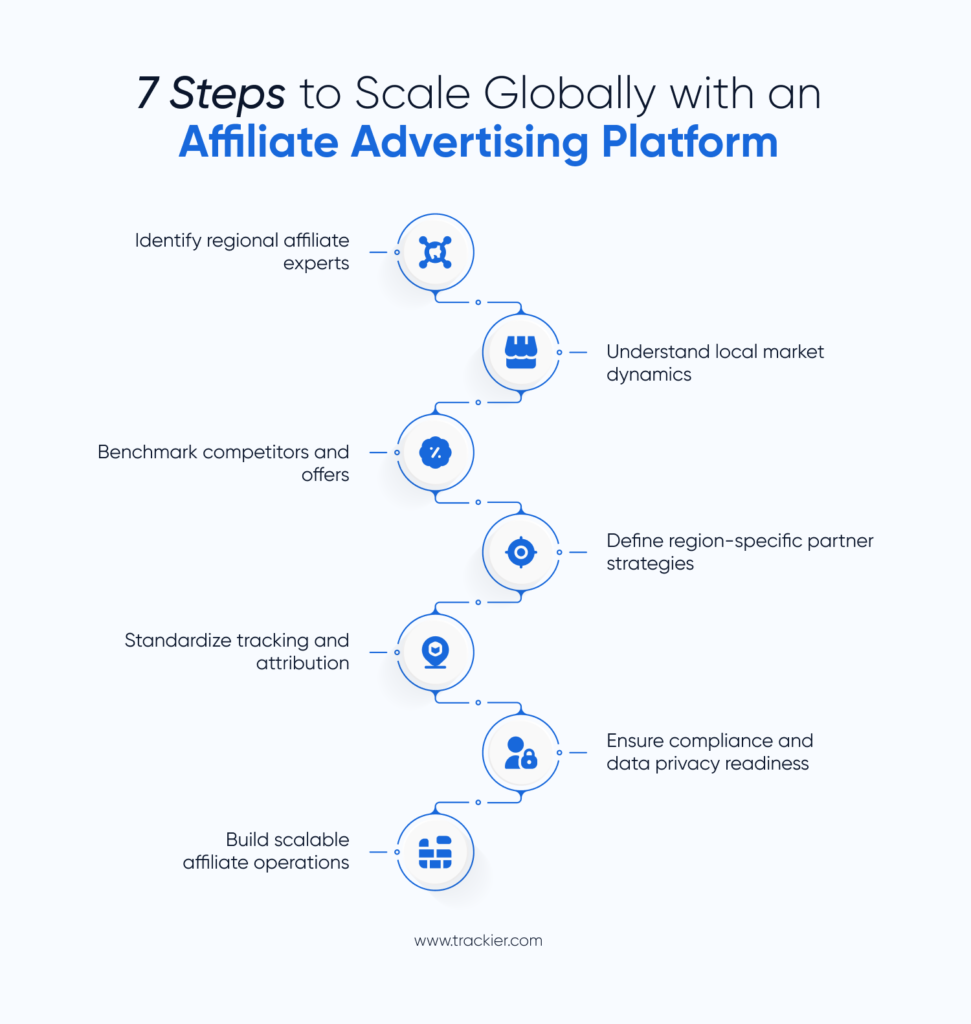
3. Conduct Competitive Analysis in Affiliate Advertising
Competitive benchmarking is essential when entering a new region. Affiliates usually work with multiple brands, which means your offer needs to be aligned with market expectations.
Study your competitors to understand:
- Commission structures
- Incentives and bonuses
- Affiliate support models
You do not always need the highest payout, but your value proposition should be competitive and clearly communicated.
4. Define a Clear Partner Strategy for Each Region
Not all partnerships perform equally across markets. Some regions respond well to influencers, while others rely more on content publishers, cashback platforms, or brand-to-brand collaborations. An affiliate advertising platform can support this process by segmenting partners by region, model, and performance, making it easier to test and refine partner strategies.
When defining your partner strategy, focus on:
- Identifying high-performing partner types for each region
- Aligning partner incentives with local buying behavior
- Balancing short-term revenue partners with long-term brand partners
A clear partner mix helps allocate resources efficiently and avoids spreading efforts too thin.
5. Standardize Tracking and Attribution Across Markets
As programs expand internationally, inconsistent tracking becomes a major problem. Different regions may use different platforms, leading to fragmented data and unclear performance insights.
To maintain consistency, brands should:
- Use a single attribution logic across regions
- Ensure uniform reporting formats for all partners
- Maintain visibility into partner-level performance
Using a unified affiliate advertising platform helps compare performance across regions without relying on manual data reconciliation.
6. Ensure Compliance and Data Privacy Readiness
Regulatory requirements change widely across countries. Data privacy laws, advertising disclosures, and tax regulations can directly impact affiliate programs. Using an affiliate advertising platform with built-in controls and audit trails can simplify compliance management across regions.
Before launching in a new region, ensure you:
- Review local data privacy and consent requirements
- Align affiliate contracts with regional regulations
- Set clear disclosure and reporting guidelines
Proactive compliance reduces long-term risk and builds trust with partners.
7. Build Scalable Processes Before Scaling Spend
International growth should be process-led, not spend-led. Before increasing budgets, ensure that operational foundations are strong.
Focus on building scalable systems for:
- Affiliate onboarding and approvals
- Payment processing and reconciliation
- Ongoing communication and performance reviews
Document workflows and use automation where possible to avoid operational bottlenecks as partner volumes grow.
Conclusion
Expanding affiliate advertising internationally requires more than replicating domestic strategies across borders. It demands regional understanding, structured processes, and consistent performance measurement. While global expansion is complex, the right systems and planning can simplify execution and reduce risk.
A well-implemented affiliate advertising platform can act as a support layer for managing complexity, helping brands execute international strategies with greater clarity and control.
FAQs
What is an affiliate advertising platform?
An affiliate advertising platform helps brands manage affiliate partnerships, track performance, and measure conversions across channels. It centralizes partner onboarding, attribution, reporting, and payouts, making it easier to grow affiliate programs across multiple regions while maintaining data consistency.
Is affiliate advertising effective for international expansion?
Yes, affiliate advertising is often cost-efficient for global expansion because brands pay for performance rather than exposure. It helps businesses enter new markets with lower upfront risk with the help of local partners who already understand regional audiences.
How do brands choose affiliates in new markets?
Brands usually start by researching local affiliate networks, agencies, and high-performing publishers. Understanding regional traffic sources, content preferences, and payout expectations helps identify affiliates that align with business goals.
What challenges arise in international affiliate advertising?
Common challenges include tracking inconsistencies, payment complexities, regulatory compliance, and communication gaps. These issues can be minimized with clear processes, regional expertise, and a centralized affiliate advertising platform.