When you open a website or any application, an ad space is bought and sold in the background before the page finishes loading.
This auction happens within a second through the process of real-time bidding.
Instead of advertisers buying ad space in advance, they compete in a live auction for every single ad impression. The advertiser with the winning bid gets to display their ad to the user.
In this glossary article, you will learn about real-time bidding, how it works, and why it plays an important role in digital advertising.
What is Real-Time Bidding (RTB)?
Real-Time Bidding (RTB) is an automated process that allows advertisers to buy digital ad space through a live auction. The auction happens every time a user visits a website or opens an app.
Advertisers place bids based on information such as:
- User location
- Device type
- Interests
- Browsing behavior
- Time of day
The advertiser with the highest eligible bid wins the auction, and their advertisement is shown to the user almost instantly.
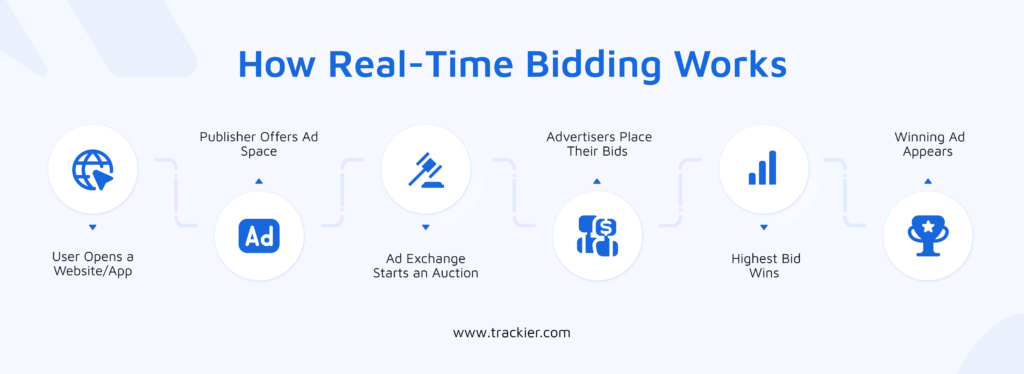
How Does Real-Time Bidding Work?
Although it happens in milliseconds, the process follows a few simple steps.
Step 1: A User Visits a Website or App
When someone opens a webpage or mobile app, an ad space becomes available.
Step 2: The Publisher Sends an Ad Request
The publisher sends details about the available ad space to an ad exchange.
The request may include information like:
- Website category
- Ad size
- Device type
- General audience information
Step 3: Advertisers Decide Whether to Bid
Advertisers use Demand-Side Platforms (DSPs) to review the available impressions.
They decide:
- Whether the audience matches their target customers
- How valuable the impression is
- How much they are willing to pay
Step 4: The Auction Takes Place
Several advertisers bid for the same ad impression. The highest eligible bid wins the auction.
Step 5: The Winning Ad Is Displayed
The winning advertisement appears on the webpage before it fully loads.
The entire process usually takes less than one second.
Key Components of Real-Time Bidding
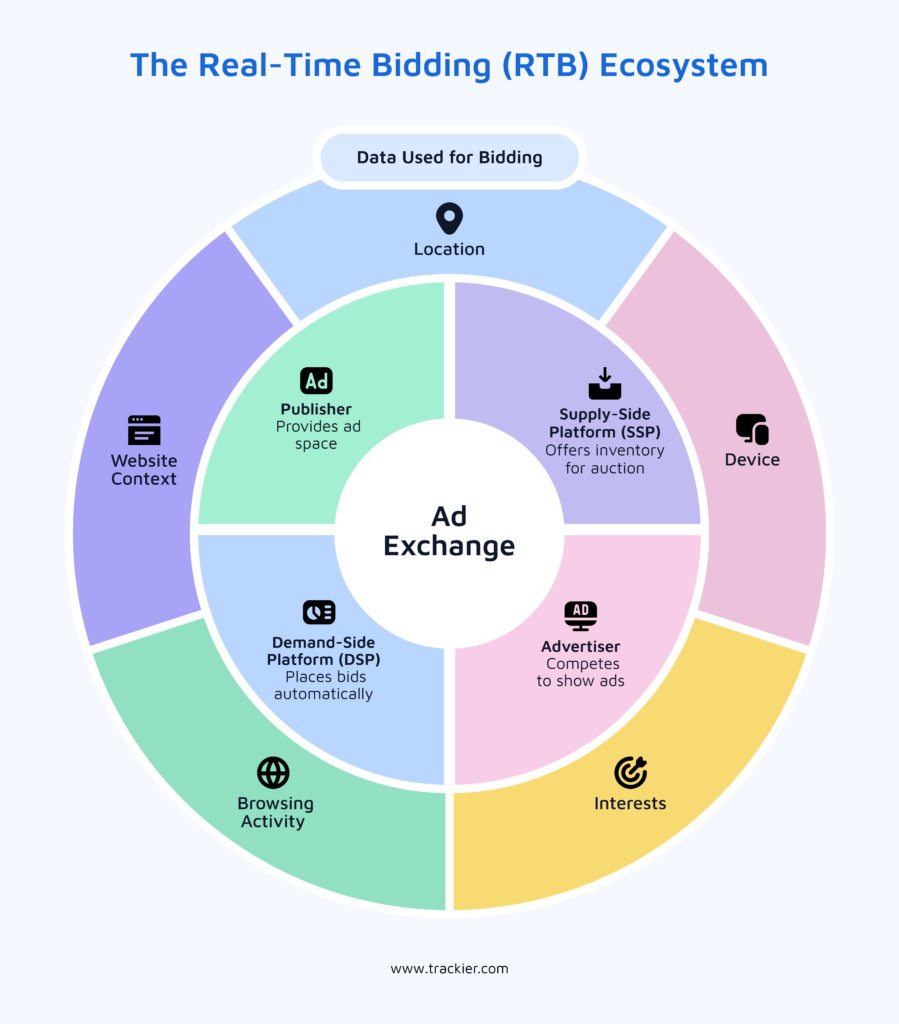
Several platforms work together to make RTB possible.
1. Demand-Side Platform (DSP)
A Demand-Side Platform (DSP) is used by advertisers to automatically buy ad impressions. It helps them set targeting rules, bidding strategies, and campaign budgets.
2. Supply-Side Platform (SSP)
A Supply-Side Platform (SSP) helps publishers manage and sell their available ad inventory to multiple advertisers.
3. Ad Exchange
An ad exchange is the digital marketplace where publishers and advertisers meet. It conducts the auction and selects the winning bid in real time.
4. Data Management Platform (DMP)
A Data Management Platform (DMP) collects and organizes audience data, allowing advertisers to target the right users accurately.
Key Benefits of Real-Time Bidding
Better Audience Targeting
RTB helps advertisers reach people who are more likely to be interested in their products or services. Instead of showing ads to everyone, they can target users based on factors like location, interests, device, and browsing behavior.
Smarter Budget Spending
Advertisers only bid for ad impressions that match their target audience. This helps them avoid spending money on users who are unlikely to engage with their ads, making every advertising dollar count.
Higher Revenue for Publishers
Every available ad impression is offered to multiple advertisers through a real-time auction. More competition often means higher winning bids, allowing publishers to earn more from their website or app.
Real-Time Campaign Optimization
Since bidding happens in real time, advertisers can quickly adjust their budgets, bids, and targeting based on campaign performance. This helps improve results without waiting for the campaign to end.
Better Campaign Performance
Showing ads to the right audience at the right time increases the chances of getting more clicks, conversions, and sales. As a result, advertisers can achieve a better return on investment (ROI).
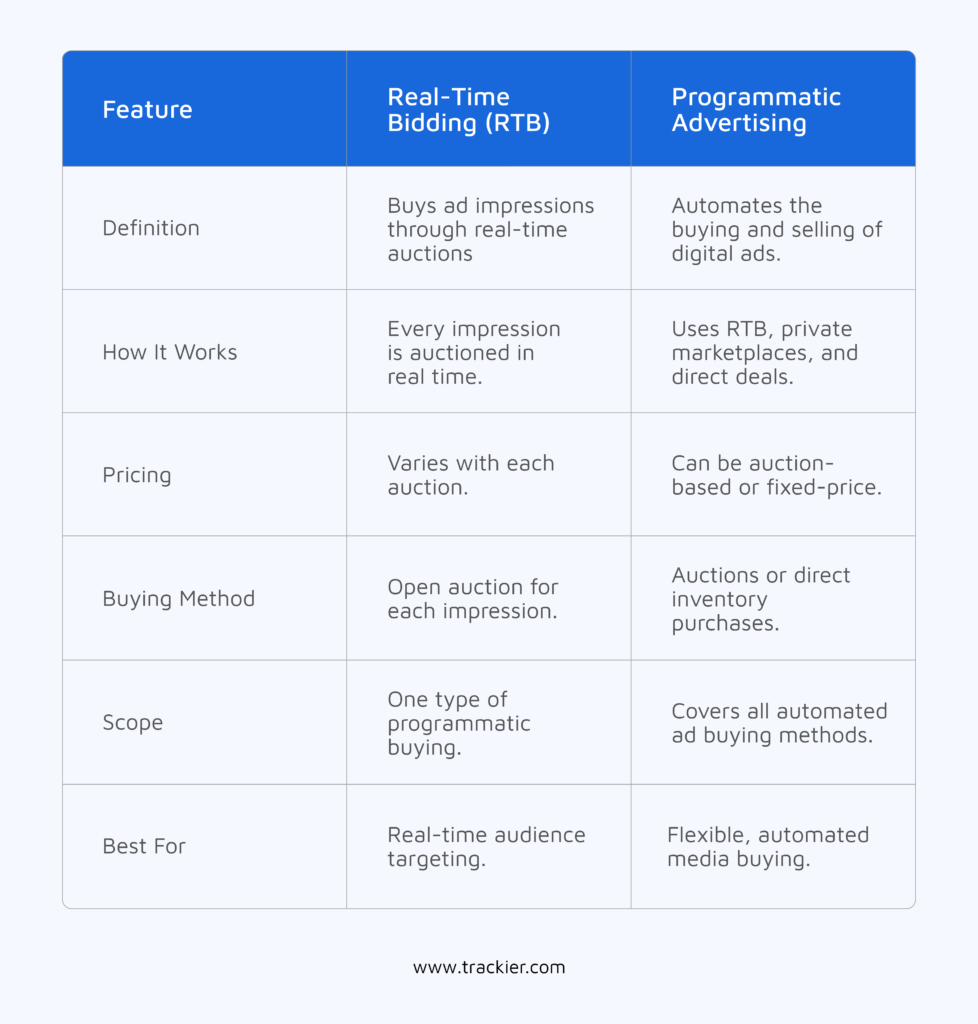
Real-Time Bidding vs Programmatic Advertising
Conclusion
Real-Time Bidding has become an important part of modern digital advertising. It helps advertisers reach the right audience at the right time while allowing publishers to earn more from their ad inventory.
When combined with reliable tracking, attribution, and fraud prevention, RTB becomes even more effective. Understanding how Real-Time Bidding works can help businesses improve campaign performance, reduce wasted ad spend, and make smarter marketing decisions.
FAQs
1. Is Real-Time Bidding suitable for small businesses?
Yes. Real-Time Bidding allows businesses of all sizes to set their own budgets and bid only for ad impressions that match their target audience. This makes it a cost-effective option for small businesses.
2. Where is Real-Time Bidding used?
Real-Time Bidding is commonly used across websites, mobile apps, video platforms, and connected TV (CTV) advertising. It helps advertisers reach users across different digital channels.
3. Can advertisers control how much they spend in RTB?
Yes. Advertisers can set daily budgets, bid limits, and targeting rules before launching a campaign. This gives them full control over their advertising spend.
4. What types of ads can be bought through Real-Time Bidding?
RTB supports different ad formats, including display ads, video ads, native ads, mobile ads, and in-app advertisements.
5. Why is audience data important in Real-Time Bidding?
Audience data helps advertisers decide whether an ad impression is valuable. Information such as a user’s location, device, interests, and browsing behavior allows advertisers to show more relevant ads and improve campaign performance.
