The GCC e-commerce market is no longer an emerging opportunity; it’s already a high-growth market. In fact, the GCC region has already crossed $50 billion in 2026, impacted by a mobile-first Gen Z audience and more rapid digital adoption.
However, success is not defined by how much traffic you are getting, and that is why most of the brands fail to understand the market. The success depends on how efficiently your users are discovering your products or services.
But what is the main differentiator? The difference lies in language, culture, and behaviour.
Brands believe that operating localized marketing campaigns is sufficient, the majority of the work begins afterwards with optimising and scaling, and in this instance, Trackier will assist you in tracking performance at a geo-level so that smarter, localized campaign optimisation can turn visibility into real conversions.
What is Localized Discovery in E-commerce?
Localized discovery in e-commerce helps businesses align their offerings with users’ language, culture, behaviour, and context to assist them with discovering products.
Let’s take a closer look:
1. When we talk about e-commerce discovery, we are referring to the way a user discovers products online through different means, such as searching for products and browsing them, maturing through recommendations or other social channels.
2. When we refer to localising, we are referring to matching products with localisation in terms of language, culture, currency, and expected outcomes.
What localized discovery consists of:
- Language-first discovery of products through the web in an Arabic-speaking country, examples include: Arabic search results, Arabic versions of product descriptions, and culturally relevant keywords used for finding products.
- Culturally relevant products include items relating to specific cultural events (i.e. Ramadan collections, modest fashion, etc.).
- Behavioural specificity between countries refers to the different ways people are used to browsing, preferences, and motivations for shopping across the different GCC countries.
- Adaptation of platforms and channels, what works on marketplaces vs social platforms in Saudi Arabia may not work in the UAE.
Why is the GCC Market Fundamentally Different?
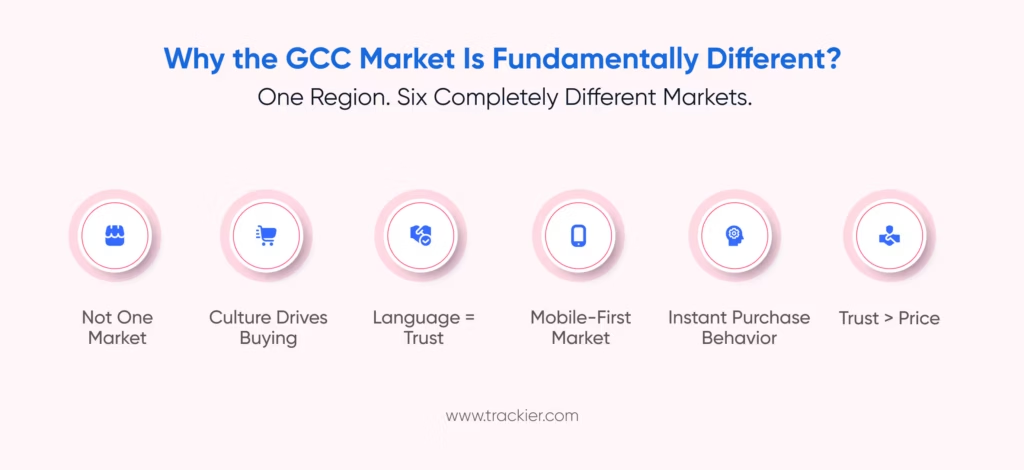
The e-commerce industry in the GCC may be perceived as cohesive; however, this perception fails to account for the vast differences between commercial behaviours, cultural differences, and digital behaviours from other areas of the world. Here is a brief description of some of these differences:
1. It is one region, but 6 different markets
Although the GCC includes Saudia, the UAE, Qatar, Kuwait, Oman, and Bahrain, they shouldn’t be viewed as the same market.
The spending powers, payment methods, and delivery expectations are all unique and distinctly different between each market. Consumer behaviour in each market is very different.
2. Cultural differences drive consumer behaviour
Unlike many Western countries, culture significantly influences how people make purchasing decisions in the GCC. There are shopping spikes around religious events such as Eid and Ramadan.
Expectations for modest apparel, family values, and you can’t forget about gift-giving, spicy’s each, and the demand for them.
3. Communication helps to drive conversions; language is not just a preference
Arabic is more than just a language; it’s an indicator of trust. Strong communication and language affect your intent to purchase online. Consumers will convert higher if they see culturally relevant communication.
4. A mobile-first shopping experience is essential
The GCC has one of the highest levels of e-commerce driven by mobile devices in the world.
The majority of consumers utilize their smartphones to make purchases. The expectation of consumers is for fast, app-like, frictionless shopping experiences.
5. Discovery and purchase happen together
Many markets have separate stages of discovery and conversion; however, they often act simultaneously in GCC.
Instant purchases are commonly generated through social media or influencers or by using marketplaces. Users expect a seamless transition from their discovery of products to their checkout.
6. Experience and trust matter more than price
GCC consumers are very brand-conscious and driven by experience. They seek out high-quality, authentic product offerings and premium experiences.
Reviews, trusted payment methods, and reliable delivery, as trust signals, highly influence purchase decisions.
Key Channels Where Localized Discovery Wins
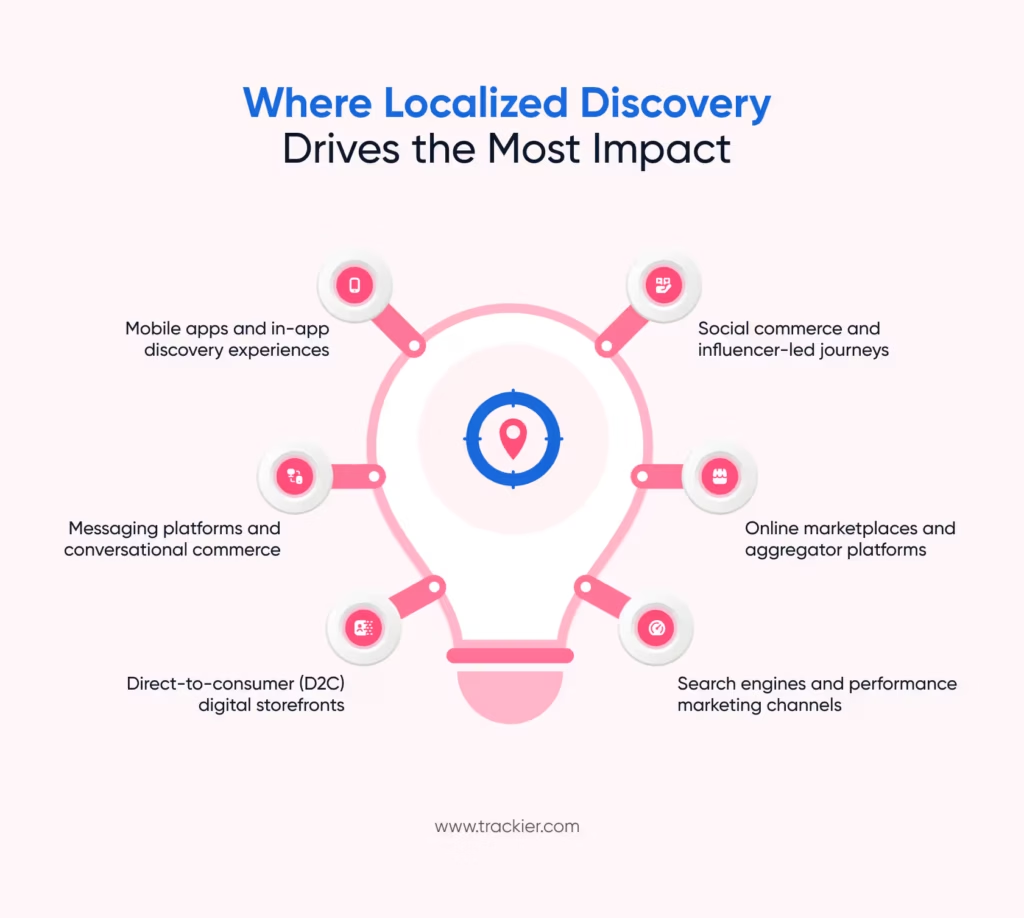
Localized discovery does not occur on a single channel; it occurs across multiple channels (where users search for, and then browse, validate and make their final purchase decision).
There are significant differences between how channels work in the GCC compared to Western markets, so localizing your content provides companies with an opportunity to have a unique competitive advantage over companies in Western markets. Below are the top channels that create a localized discovery opportunity:
1. Social-commerce and influencer ecosystems
In the GCC, social media as a channel for where users discover new brands, is the first place where users discover new brands.
- 78% of users discover a new brand on social media
- Instagram, TikTok, and Snapchat are the top platforms for social commerce
- Influencer marketing and content creators significantly influence a user’s level of trust in and/or purchase an item from a new brand
Localization is a necessary element in the channel, and here are two reasons as to why:
- 15-25% higher engagement in Arabic versus non-Arabic content
- Different countries prefer different social media platforms to use (e.g. Snapchat in KSA and Instagram in UAE)
Actions you can take, and the supporting content you will want:
- Partner with local influencers instead of global ones
- Create creatives for that region/audience, not one global campaign
- Use storytelling in the native language of that audience, not a translated one
2. Marketplaces
Marketplaces, where can you discover and purchase products? Marketplaces are responsible for many cross-border e-commerce sales, and there is active searching by users for the products they want to buy.
Why is localization important?
- Localisation impacts search visibility through the use of Arabic product titles.
- Localised product attributes increase conversion rates when a purchase is made.
- Regional pricing and offers impact ranking.
Insights you may utilise include the following:
- Use local search terms together with Arabic keywords to optimise your listings.
- Adapt the way you categorise your products based on regional behaviour.
- Test your images for localisation (modest fashion styling, for example).
3. Search and performance advertising
Search is still very important; however, there is a difference in how it operates in GCC countries. This is because users switch between Arabic and English when they perform searches on the internet.
The way in which they intend to use the product they are looking for varies widely depending on the culture or region they live in.
How do you win?
- By doing local keyword research instead of using global keywords from other countries.
- Targeting specific geographic areas in your campaigns.
- Ensure that your advertising messages align with the culture of your audience.
4. Mobile apps and on-site discovery
The GCC is a mobile-first market. In fact, 50-60% of all e-commerce purchases take place on a mobile device, and therefore, a lot of attention has been placed on providing seamless and fast experiences when users visit your website or application.
How do you ensure that you are providing localised experiences?
- Ensure that your website or application can be navigated in Arabic with a right-to-left interface (RTL).
- Include filters, categories, and navigation buttons that will help Arab users easily navigate and find what they are looking for.
- Provide personalised recommendations for Arab users depending on where they are located in the region.
5. Messaging and conversational commerce
Messaging/Conversational commerce is the most under-utilized method for shopping in the GCC region. Messaging Apps such as WhatsApp serve as an entire funnel for e-commerce and have an open rate of 85%-92%.
How does it work?
– High trust and personal interaction
– Providing support and real-time product discovery
– High influence on conversion decisions
6. Direct-to-consumer (D2C) websites
Direct-to-Consumer (D2C) websites will continue to generate lots of sales despite the dominance of marketplaces because the brand website controls the full consumer discovery process.
Examples:
– Personalised product recommendations
– Localised landing pages
– Region-specific offers
How to Build a Localized Discovery Strategy?
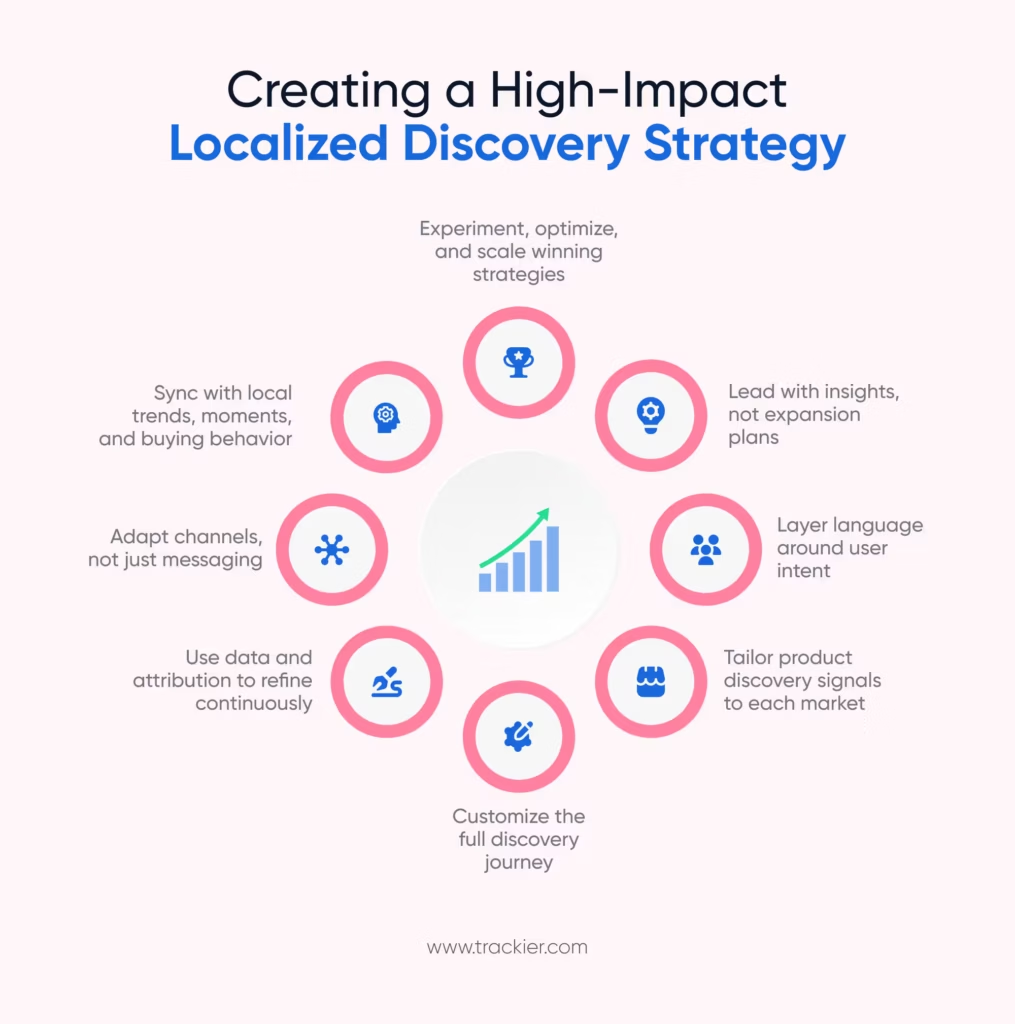
Building a localized discovery strategy is not just about making a content task; it is more about a growth system. The goal is to ensure users discover products that are relevant and trustworthy. Let’s learn how you can make one for your brand.
1. Start with market intelligence, not expansion
Most of the brands try to scale first rather than localizing, and that is one of the biggest reasons to fail. Instead:
- Identify high-intent regions using traffic and demand data
- Analyze your competitors, their pricing benchmarks, and users’ product preferences
- Map customer journeys by country
2. Build language with intent layers
Page or campaign translation helps users to understand your product, and localization helps them to buy it. So:
- Use native language keywords (because Arabic search intent differs from English)
- Adapt tone, CTAs, and product naming
- Align content with how users actually search
In fact, 76% of consumers prefer buying in their native language, and many won’t purchase otherwise. So, do separate keyword research for each region, and do not reuse global SEO lists.
3. Localize product discovery inputs
Product discovery starts way before a user visits your website. So:
- Optimize product feeds with localized titles and attributes
- Run geo-targeted ad creatives
- Align marketplace listings with local search behaviour
In fact, localized product pages can convert up to 1.5x–3x higher than generic ones. So, an action plan would be to audit your top 20 products and see if they are discoverable in Arabic search and marketplaces.
4. Adapt the entire discovery experience
Discovery does not stop at just on the click, it continues across the experience. So:
- Enable local currency, payment methods, and delivery expectations
- Adjust navigation, filters, and category structures
- Optimize mobile-first UX (critical for GCC users)
5. Align with cultural moments and buying triggers
In GCC, timing is strategy. So, you should:
- Build campaigns around Ramadan, Eid, and White Friday
- Adapt visuals, messaging, and product bundles
- Highlight culturally relevant categories (e.g., modest fashion)
6. Localize channels, not just content
Different regions discover products differently. For example:
- Marketplaces dominate in some GCC markets
- Social commerce and influencers drive trust
- Search behaviour varies significantly by language
7. Build a feedback loop with data and attribution
This is where most of the strategies do not work because, without data, localization just becomes guesswork. So:
- Track performance by geography, campaign, and channel
- Measure discovery, clicks, and conversion journeys
- Identify what works in each market
Brands can leverage a performance marketing software to:
- Track regional campaign performance
- Identify high-converting discovery channels
- Optimize partner and influencer contributions
8. Test, iterate, and scale what works
Localized discovery strategies are not just a one-time thing; they continue to evolve. So:
- A/B test localized vs non-localized experiences
- Experiment with pricing, creatives, and messaging
- Scale only what performs in each region
Conclusion
Successful e-commerce in the GCC region relies heavily on context and timing of when you get discovered by your potential customers, versus just “more potential customers” discovering you. Therefore, your ability to drive positive traffic via a “standardised campaign approach” without localized discovery means low-to-no conversion and lost revenue.
An effective strategy for understanding your customers’ consumer behaviour will depend upon knowledge of the region’s customer base, culturally relevant experiences, and continuous optimisation.
Your first step to determining if localization exists is to conduct a complete audit of the entire discovery journey through all of the channels used to find you, such as through search/SEO, social media networks, marketplaces, or mobile apps. This will help highlight any areas where localization has not been implemented.
Once you’ve completed the audit, the next step will be to implement a measurement layer to capture data-driven insights into how customers in each location convert.
With proper insight, you can migrate from disparate activities to a standardized, results-based methodology that is large enough to scale.
If you would like to build measurable results through localised discovery, book a demo to begin your journey to effective optimization through clarity and control.
FAQs
1. What channels benefit most from localized discovery?
Channels like search, marketplaces, social media, and mobile apps benefit the most. Each requires localized keywords, content, and user experience to ensure products are easily discoverable and relevant to regional audiences.
2. How does location-based data improve discovery?
Location data allows brands to tailor experiences in real time, adjusting content, products, and offers based on user geography. This improves relevance and engagement, as users are more likely to interact with content aligned to their environment.
3. Can localized discovery increase conversions?
Yes. Studies show that personalized and relevant experiences can significantly boost revenue and conversions, with tailored interactions driving higher engagement and purchase intent. Localized discovery enhances this by adding cultural and regional relevance.
4. What are common mistakes in localized discovery?
Common mistakes include relying only on translation, ignoring cultural nuances, using generic campaigns across regions, and failing to adapt search or recommendations. These lead to irrelevant experiences and lower conversions.
5. How can brands implement localized discovery effectively?
Brands should combine data, localization, and tracking tools to understand regional behaviour, optimize campaigns, and personalize discovery journeys. Trackier helps track performance across regions and channels, enabling continuous optimization and better decision-making.