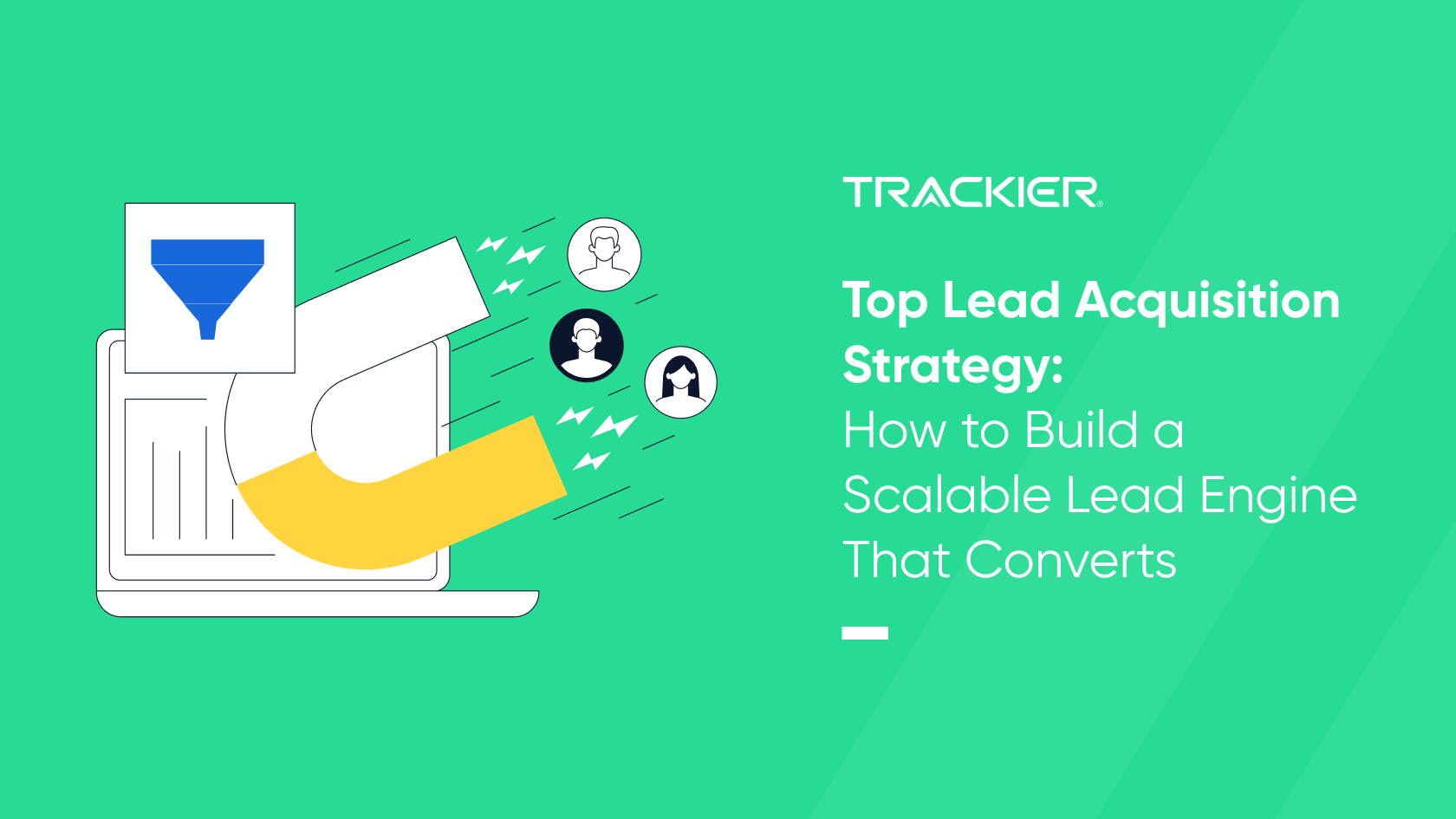
The success of any performance-driven business hinges on one thing, having a strong lead acquisition strategy. Whether you’re running user acquisition campaigns, affiliate programs, influencer partnerships, or paid performance ads, your ability to consistently bring in qualified leads determines how fast and sustainably your business can grow.
Building the right lead acquisition marketing plan isn’t just about collecting form submissions, it’s about attracting high-intent users, validating every touchpoint, minimizing fraud, and aligning acquisition efforts with ROI.
What Is a Lead Acquisition Strategy?
A lead acquisition strategy is a structured approach to attracting, capturing, and nurturing potential customers who show interest in your product or service. It includes the channels, messages, campaigns, tracking systems, and optimization techniques you use to turn cold audiences into actionable leads.
For performance marketers, the strategy must ensure:
- High-quality, validated, and fraud-free leads
- Effective targeting across channels
- Accurate tracking of user journeys
- Better attribution and revenue insights
- Optimized conversion paths
This is where data-driven tools like Trackier help streamline and measure performance at every step.
Why Lead Acquisition Marketing Matters for Growth
Most companies focus only on conversions, overlooking the quality of leads entering the top of the funnel. A robust lead acquisition marketing plan ensures that:
- Ads and campaigns reach the right audiences
- Acquisition cost stays within a profitable limit
- Lead qualification is automated
- Partners and affiliates deliver quality traffic
- Scaling becomes predictable
- Revenue teams get cleaner data
In short, Strong Acquisition = Stronger Conversions
Top Lead Acquisition Strategies to Scale Your Growth

Below are the leading strategies fast-growing brands use across eCommerce, BFSI, EdTech, Gaming, Fintech, and SaaS verticals.
1. Build Multi-Channel Acquisition Funnels
Relying on a single channel limits reach. A high-performing acquisition strategy uses a mix of:
- Paid Ads
- Affiliate Marketing
- Influencer & Creator Partnerships
- SEO & Organic Content
- Social Media Communities
- Programmatic Media Buying
- Retargeting & Remarketing
Trackier helps you track and validate leads from every channel under one dashboard, so you know which sources deliver the highest ROI.
2. Use Precision Targeting & Audience Segmentation
Delivering the right message to the right audience increases lead quality and reduces cost per lead.
Segment users by:
- Demographics
- Interests & behaviour
- Purchase intent
- Engagement level
- Past campaign interactions
You can integrate attribution and analytics to understand which segments produce the most qualified leads.
3. Optimize Your Landing Pages for Conversion
Your acquisition efforts fail if the landing page doesn’t convert.
High-converting landing pages include:
- Clear headlines
- A sharp value proposition
- Minimal form fields
- Strong CTAs
- Trust signals, social proof, and reviews
- Fast loading time
Pairing conversion-optimized pages with accurate tracking helps you measure impact at scale.
4. Leverage Affiliate & Partner Marketing
Partner-driven traffic can fuel some of the most cost-efficient lead acquisition.
Benefits include:
- Access to new audiences
- Low upfront cost
- Pay only for verified leads
- Scalable partner distribution
Using Trackier’s partner management capabilities, brands can:
- Onboard partners faster
- Track lead quality in real time
- Prevent fraud with automated validation
- Optimize partner payouts
- Understand partner-wise ROI
5. Strengthen Lead Quality With Anti-Fraud Technology
One of the biggest challenges in lead acquisition is fake, duplicate, or low-intent leads.
Brands lose huge budgets to bots, click farms, and unqualified traffic.
A good tracking tool can help protect acquisition efforts with:
- Real-time click-level validation
- Automated fraud prevention
- Lead scoring
- IP/device fingerprinting
- Invalid traffic filtering
This ensures you only pay for genuine, actionable leads.
6. Use Data-Driven Attribution to Identify Winning Channels
Without attribution, you’re guessing which channel works. A modern lead acquisition strategy should include:
- Multi-touch attribution
- Partner-level analytics
- Campaign-wise ROI
- Funnel performance tracking
- Unified customer journey mapping
A supporting tool can be used here to understand granular reporting so marketers can double down on profitable sources.
7. Personalize Lead Nurturing to Increase Conversions
Acquiring the lead is only the first step, nurturing turns intent into revenue.
Use:
- Email sequences
- Automated follow-ups
- WhatsApp/SMS engagement
- Retargeting ads
- Contextual content
- Personalized offers
Personalized nurturing improves lead-to-customer conversion dramatically.
Key Functions That Power a Successful Lead Acquisition Strategy
A successful lead acquisition strategy relies on several core functions that work together to attract the right audience, capture their interest, and convert them into qualified leads. These functions help marketers optimize budgets, improve lead quality, and build a predictable flow of high-intent prospects.
1. Targeted Audience Identification
Every strong acquisition strategy begins with identifying the ideal audience. This involves analyzing demographics, interests, behaviours, and intent signals to reach users who are most likely to convert. Targeting ensures campaigns stay efficient and relevant.
2. Multi-Channel Lead Generation
Relying on one platform is limiting. Effective acquisition uses a combination of paid ads, organic content, social media, affiliate partners, influencers, and email marketing. A multi-channel approach expands reach and increases opportunities for consistent lead flow.
3. Lead Capture and Conversion Optimization
This function focuses on improving how leads enter the funnel. High-quality landing pages, simplified forms, strong calls-to-action, and fast-loading experiences help reduce drop-offs. Testing different variations allows marketers to improve conversion rates over time.
4. Lead Qualification and Scoring
Not all leads have equal value. Lead scoring helps differentiate between casual visitors and high-intent prospects. By evaluating user behaviour, engagement, and profile data, businesses can prioritize leads that are more likely to move forward in the buying journey.
5. Fraud Prevention and Validation
Protecting acquisition efforts from fake, duplicate, or invalid leads is essential. Validation systems help detect suspicious activity and ensure only genuine leads enter the funnel. This reduces wasted spend and maintains the quality of incoming traffic.
6. Attribution and Performance Measurement
Understanding what contributes to a successful lead is critical. Attribution helps track which campaigns, channels, creatives, or touchpoints influence user behaviour. Clear measurement supports better decision-making and budget allocation.
7. Nurturing and Follow-Up Automation
Capturing a lead is only one part of the journey. Consistent follow-up through email, SMS, WhatsApp, or remarketing helps guide prospects toward conversion. Personalized nurturing builds trust and increases the chances of turning leads into customers.
8. Continuous Optimization and Scaling
A strong lead acquisition strategy evolves through testing and learning. Marketers refine campaigns, adjust targeting, improve messaging, and eliminate underperforming sources. Continuous optimization builds a scalable and predictable lead generation engine.
How Trackier Strengthens Your Lead Acquisition Strategy
Trackier enhances acquisition workflows by giving teams complete visibility into:
- Lead source & partner performance
- Real-time attribution across all channels
- Automated reporting and payouts
- Anti-fraud protection & invalid traffic control
- Cross-channel tracking from click to conversion
- Workflow automation for lead validation
- Scalability for enterprises handling millions of monthly events
Marketing teams move from manual, scattered lead tracking to a unified, intelligent lead acquisition engine.
Best Practices to Improve Lead Acquisition Marketing
- Test multiple channels before scaling – Before investing a large portion of your budget into one platform, it’s important to experiment with multiple channels. Different industries and audiences respond differently to paid ads, affiliates, influencers, social media, and SEO. Testing helps marketers understand where the highest-intent leads come from. Once the winning channels are identified, scaling becomes more predictable and cost-efficient.
- Optimize ads based on high-converting segments – Not every audience segment will convert equally. Analyze data to see which age groups, interests, behaviours, or geographies deliver the best results. Tailor your messaging, visuals, and offers specifically for these high-performing segments. This approach maximizes returns and reduces wasted impressions by focusing only on the most responsive groups.
- Keep your forms short and frictionless – Lengthy forms often lead to abandonment. Shortening the form fields, using autofill, and minimizing unnecessary questions help reduce friction and increase conversions. The smoother the user experience, the more likely a prospect is to complete their submission. Clear instructions, simple layouts, and trust badges also improve form performance.
- Use retargeting for high-intent visitor – A large percentage of users leave without taking action on the first visit. Retargeting helps bring them back by showing relevant ads based on their previous interactions. Whether it’s a product they viewed, a page they visited, or a form they almost completed, retargeting reinforces intent. This strategy often delivers some of the highest ROI in acquisition because it focuses on warm audiences.
- Measure CPL and CAC daily – Cost Per Lead and Customer Acquisition Cost are two critical metrics for evaluating acquisition performance. Monitoring them daily helps marketers quickly identify spikes, dips, or inefficiencies. This ensures that budgets remain optimized and campaigns don’t overspend. Real-time insights also help teams make faster decisions and allocate spend to the best-performing sources.
- Continuously remove low-quality traffic sources – Low-quality leads drain the budget and reduce the efficiency of the funnel. Regular auditing helps identify partners, channels, keywords, or campaigns that bring spam, invalid, or low-intent leads. Eliminating these sources improves overall lead quality and ensures that only genuine and engaged users enter the pipeline. This keeps acquisition costs healthy and improves conversion rates.
- Leverage automation for lead routing & validation – Automation ensures that leads are instantly verified, sorted, and assigned to the right teams or workflows. This prevents delays, reduces manual work, and improves response time. Automated validation also protects the system from fake or duplicate leads and ensures that only qualified prospects enter the funnel. The result is a faster, cleaner, and more efficient lead-handling process.
Final Thoughts
A winning lead acquisition strategy combines smart targeting, powerful tech, reliable validation, and continuous optimization. Businesses can streamline acquisition, improve lead quality, and scale without compromising on ROI through the right tracking tool.
If you want to transform your acquisition engine, Trackier gives you the tools to measure, optimize, and grow faster.
FAQs
What is a lead acquisition strategy?
A lead acquisition strategy is a structured plan used to attract, capture, and qualify potential customers who show interest in your product or service. It includes choosing the right channels, creating targeted campaigns, optimizing landing pages, validating leads, and nurturing prospects until they are ready to convert. A strong lead acquisition strategy ensures you attract high-intent users while maintaining cost efficiency.
Why is lead acquisition important for business growth?
Lead acquisition is essential because it keeps your sales pipeline active and predictable. Without new leads entering your funnel, revenue becomes inconsistent. A good lead acquisition strategy helps reach the right audience, generate consistent demand, lower acquisition costs, and ultimately convert more prospects into paying customers.
How do you improve the quality of acquired leads?
Lead quality improves when you refine targeting, use clear messaging, optimize landing pages, and validate incoming leads. Shorter forms, strong value propositions, and tailored campaigns help attract high-intent users. Lead scoring also helps filter out low-quality prospects and prioritize the most valuable ones.
What is the difference between lead acquisition and lead generation?
Lead generation refers to creating interest and attracting potential customers. Lead acquisition goes a step further and focuses on capturing and validating those leads through forms, landing pages, or automated systems. In simple terms, lead generation brings awareness while lead acquisition turns interest into actionable data.
How often should a lead acquisition strategy be optimized?
A lead acquisition strategy should be optimized continuously. Market conditions, user behaviour, and platform algorithms change frequently, which means your campaigns need regular adjustments to stay effective. Consistent testing, reviewing performance metrics, and refining targeting help keep the lead acquisition strategy relevant and high-performing. Most businesses revisit their acquisition plan weekly, while fast-scaling companies optimize their strategy almost daily.
What channels are most effective for lead acquisition?
The most effective channels for a strong lead acquisition strategy depend on your industry and target audience. However, commonly successful options include paid ads, affiliate marketing, influencer partnerships, content marketing, SEO, email marketing, and social media campaigns. Leveraging multiple channels ensures a broader reach, better lead quality, and reduced dependence on any single traffic source.