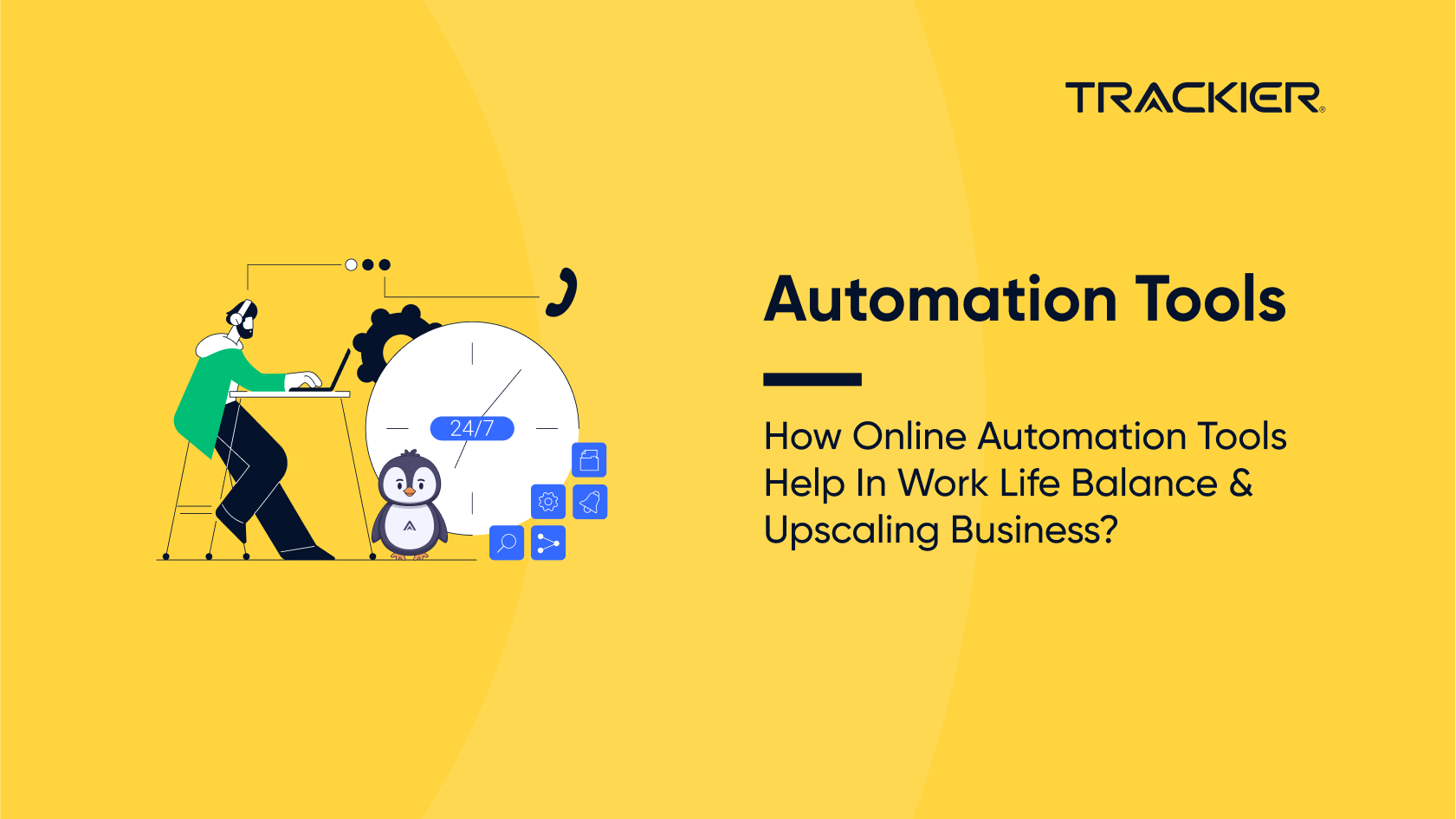
With increasing competition and shrinking attention spans, automation tools help businesses reduce manual effort, improve accuracy, and focus on what matters most: growth and innovation. It’s a universal desire of every businessman to scale their business rapidly and cost-effectively. All it takes is awareness and adaptability.
What Are Automation Tools?
Automation tools are software solutions designed to automate repetitive, time-consuming, and data-heavy tasks. They reduce human intervention, minimize errors, and deliver faster, more reliable outcomes.
By implementing automation, businesses can:
- Improve operational efficiency
- Gain real-time performance insights
- Optimize marketing spend
- Enhance decision-making through data
- Achieve higher ROI with lower effort
Automation is no longer optional; it is a competitive necessity.
How Do These Automation Tools Help?
Automation Tools are the tools that help organisations or businesses automate their testing needs, which is likely to reduce human intervention and achieve greater speed, reliability, and efficacy.
For Example, Trackier is an automation tool that has three major features that help businesses grow.
1. Performance Marketing Tool:
Performance marketing tool by Trackier helps the brands and organisations identify their affiliates and influencers that are giving them maximum returns, and even helps them with a dedicated panel where the users can streamline the payments of their affiliates and influencers as well. This tool saves the businesses time and money, as the groundwork is done by trackier. Brands only spend on marketing service providers after their business objectives have been achieved or when specific actions have been taken, such as a click, sale, or lead. In other words, it is performance-based marketing.
2. Mobile Measurement Partner (MMP):
Mobile measurement partner is the one that helps the mobile apps understand which of their channels are giving their application higher insights that help in the growth of the application. Trackier MMP traces the source of an install (organic/paid) and gives aggregate statistics for it.
In 2020, the size of the global mobile marketing market was estimated at 11 billion U.S. dollars, and the source projected that it would reach 57.85 billion dollars by 2030. This would signify a compound annual growth rate (CAGR) of over 18 percent.
What does the Trackier MMP tool offer:
- Helps track Affiliate traffic – Number of users bought by publishers, advertisers, or agencies
- In App Advertising (IAA) and In App Purchasing (IAP) – These two features help you track monetization strategies and their effectiveness.
- Audience segmentation insights can help to tailor in-app engagement strategies.
- Pull out reports for performance metrics for any given period, user trajectory, publisher/advertising channel, etc.
- Helps define a list of events (in-app benchmarks) that a user reaches as they progress through the App. You can choose from preset events, such as first recharge, level achieved, tutorial complete, and registration, or create your own custom events, e.g., partial registration.
- Logs: One feature that allows you to download monthly/weekly logs of clicks/impressions/installs/uninstalls/ conversions/in-app events as per different categories, e.g., geography, partners, agencies, event IDs, etc.
These business insights of your Mobile Application can help you make the right business online marketing decisions.
3. Anti-Fraud Tool:
Fraud is a major challenge in digital marketing, and automation plays a critical role in preventing it.
Anti-Fraud Capabilities:
- Block fraudulent installs and fake downloads
- Detect suspicious click activity
- Identify fraudulent sources and partners
- Prevent inflated acquisition costs
By eliminating invalid traffic, businesses protect their budgets and ensure marketing spend goes toward genuine users.
- Mobile Measurement Platform (MMP) Anti-Fraud Tool: Block fraudulent downloads to prevent swollen costs.
- Performance Marketing Anti-fraud tool: Blocks and identifies fake clicks and their source of having such tools.
Considering the present-day scenario, our lives have become busy, and we always have some or the other thing in our schedule. Such tools enhance your work-life balance as they take your worry away, save your time by bringing you business insights that can maximise your ROI, which eventually upscales your business.
Preparing Your Business for a Data-Driven Future
Automation is set to play an even more influential role in how businesses operate and scale. From marketing and analytics to reporting and optimization, automated systems enable organizations to respond faster to market changes and customer behavior. Businesses that invest early in automation are better positioned to adapt, innovate, and stay resilient in a highly competitive environment.
Rather than replacing human effort, automation complements it by eliminating repetitive tasks and enabling teams to focus on creativity, strategy, and growth planning.
How Automation Translates into Measurable ROI
Automation should not be viewed as a short-term solution, but as a long-term business enabler. Whether it is streamlining workflows, improving data accuracy, or enhancing customer engagement, automation tools provide a structured approach to managing complexity at scale.
As businesses grow, manual processes often become bottlenecks. Automation removes these barriers by offering consistency, transparency, and efficiency across operations. This allows organizations to scale without proportionally increasing costs or resources, making growth more sustainable and predictable.
Building Smarter Systems, Not Just Faster Processes
In today’s fast-moving digital landscape, automation has become a foundational element of successful businesses. It empowers organizations to make informed decisions, optimize performance, and maintain control across multiple channels and platforms.
By adopting automation tools, businesses can achieve a balance between operational efficiency and strategic growth. Over time, this not only improves performance metrics and ROI but also creates a more agile, focused, and future-ready organization.
FAQs
Why are automation tools important for businesses today?
Automation tools help businesses reduce manual effort, minimize errors, and operate more efficiently. In a fast-paced digital environment, they enable organizations to manage large volumes of data, track performance in real time, and make quicker, more informed decisions, all while saving time and operational costs.
Can small and mid-sized businesses benefit from automation tools?
Yes, automation tools are not limited to large enterprises. Small and mid-sized businesses can use automation to streamline workflows, manage marketing efforts, and gain actionable insights without expanding their teams. This allows them to scale operations sustainably and compete more effectively in the market.
How do automation tools improve return on investment (ROI)?
Automation tools improve ROI by ensuring resources are spent efficiently. They provide clear visibility into what strategies, channels, or partners are performing well, allowing businesses to focus on high-impact activities. By reducing waste and optimizing performance, automation directly contributes to better financial outcomes.
Do automation tools replace human involvement?
No, automation tools are designed to support human teams, not replace them. They handle repetitive and data-intensive tasks, freeing up time for teams to focus on strategic planning, creativity, relationship-building, and innovation. Human judgment remains essential for interpreting insights and driving growth.
How should a business get started with automation?
Businesses should begin by identifying processes that are repetitive, time-consuming, or prone to errors. From there, selecting automation tools that align with specific business goals, such as growth, analytics, or optimization, ensures smoother adoption and measurable results over time.