In 2026, customer acquisition will never be more challenging for sustainable business growth. As per the reports, the cost to acquire new customers has increased by 222% over the past 8 years, combined with increases in advertising expenses, increased competition for customers, and constantly changing consumer behaviours, putting pressure on marketers.
At the same time, the marketing environment is changing rapidly. Today, brands face many challenges as customers engage with many online and offline channels, on many devices and touchpoints, before making a purchase decision.
Because of this rapid evolution of the customer buying journey, brands must understand and optimise their customers’ buying journey, from the very first time a customer is introduced to a brand, all the way to the customer placing a purchase order.
Customer acquisition funnel helps businesses visualise and manage every step of the customer journey, from initial awareness to final purchase, so they can pinpoint drop-offs, refine messaging, and allocate budgets more effectively.
To maintain growth and be competitive, brands should use Trackier, which provides a comprehensive approach to tracking and optimising the entire customer acquisition funnel, allowing brands to measure every step in the customer journey and make smarter decisions to reduce CAC and boost growth.
In this blog, we will unpack what a customer acquisition funnel is, its key stages, how to build one for your business, and essential metrics to track, setting you up to turn more prospects into loyal customers in 2026 and beyond.
What is a Customer Acquisition Funnel?
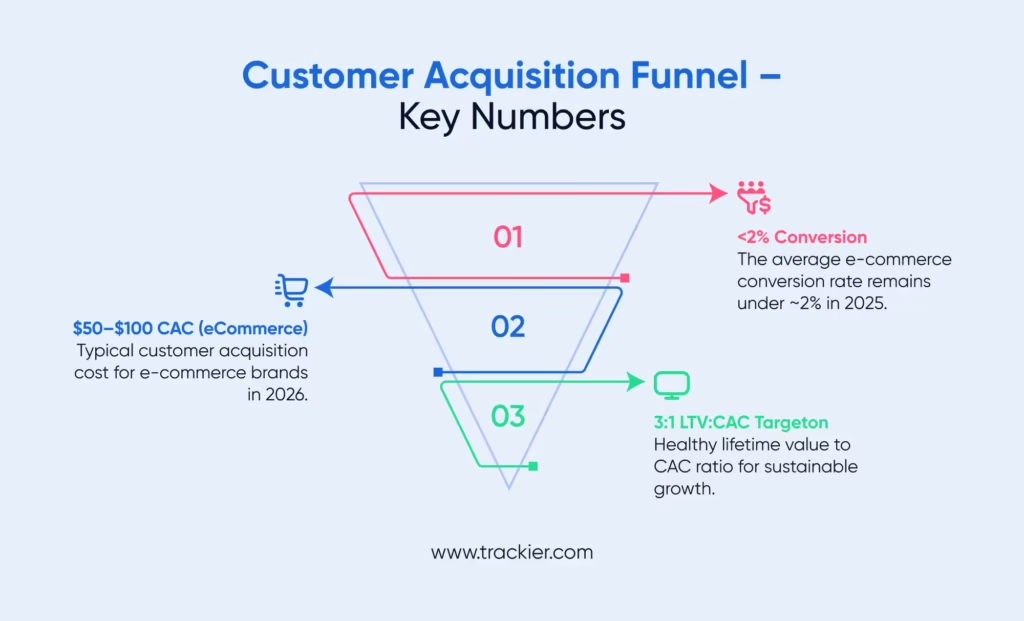
A customer acquisition funnel is a simple yet powerful framework that shows the path a potential customer takes from first discovering your brand to becoming a paying customer. It helps businesses visualise and optimise every step of the buyer’s journey so they can convert more prospects efficiently.
The customer acquisition funnel starts with the initial phase of reaching out to prospects through various channels such as social media, search engine marketing, and many others.
Moving forward, a smaller proportion of prospects that were originally approached will become interested in services or products, conduct their investigation of the offerings and ultimately purchase one of the available products or services offered by brands.
Unlike general marketing models that focus only on attracting leads, the customer acquisition funnel is specifically designed to track, measure, and improve how new customers are acquired, helping teams identify where prospects drop off and where optimisation can increase overall conversions.
Customer Acquisition Funnel Stages
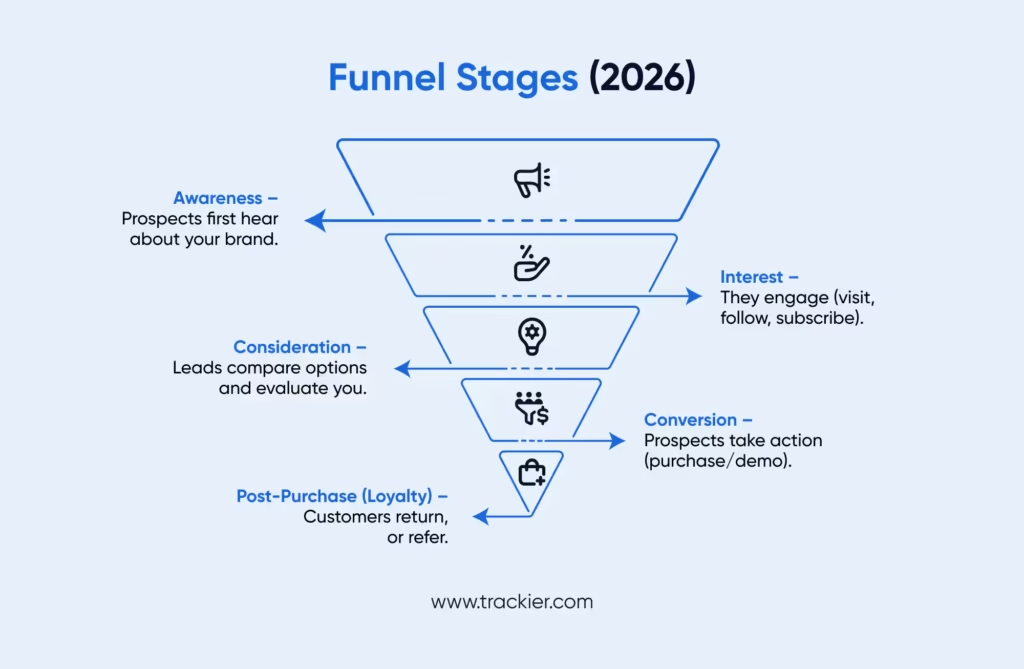
A customer acquisition funnel breaks down the path a potential customer takes, from first hearing about your brand to becoming a paying customer (and beyond).
The following is a 2026 version of the most common stages businesses will want to track for their customers as they move through the funnel.
1. Awareness – Top of Funnel (TOFU)
Awareness is the first stage where you will first create awareness of your company, product, or solution, and ultimately generate potential customers who may not even know that they have a problem or a need for your service.
Through advertising, SEO, or content marketing, strategic partnerships, and influencer marketing, your potential customers will hear about your brand and become aware of who you are and what you do.
Objective: Initial awareness to attract a relevant audience.
Examples of channels & activities:
- Paid media (social ads, search ads)
- SEO blog posts and guides
- Influencer collaborations
- Social media storytelling
2. Interest – Engagement Begins
Once customers are aware of your business, they become curious. Customers start to interact with you: they visit your website, read your blog, subscribe to your newsletters, and follow you on social media. When they do this, it means what you’re saying matches up with what they are looking for.
Objective: Educate and intrigue potential customers so they want to learn more.
Common tactics:
- High-value content (eBooks, webinars)
- Social engagement campaigns
- Retargeting ads that reinforce messaging
- Lead magnets and forms
3. Consideration – Evaluating Options
Prospects are now comparing your solutions with others, and beginning to research various products, their features, and other people’s experiences, and to make sure your product is the one they want.
Goal: To build trust and establish value.
Resources that are helpful to prospects:
- Case studies
- Product demos
- Comparison guides
- Email nurture sequences
4. Conversion – Bottom of Funnel (BoFU)
The conversion funnel is the last step of the funnel, when a prospect takes action and completes their transaction (purchase, subscription, or demo).
The primary goal is to make it as easy as possible for prospective customers to convert from one stage in your funnel to becoming a buying customer.
Goals: Convert leads to paying customers.
Conversion boosters include:
- Clear, compelling landing pages
- Time-limited offers
- Free trials or limited-time deals
- Simplified checkout flows
5. Post-Purchase: Loyalty & Advocacy
While traditional funnels stopped at conversion, modern strategies extend into retention, where satisfied customers repeat purchases, join loyalty programs, or refer others. These actions effectively feed new prospects back into the top of the funnel through word-of-mouth.
Objective: Increase lifetime value (LTV) and grow organically.
Examples:
- Loyalty rewards
- Referral incentives
- Reviews and community engagement
How to Build Your Customer Acquisition Funnel?
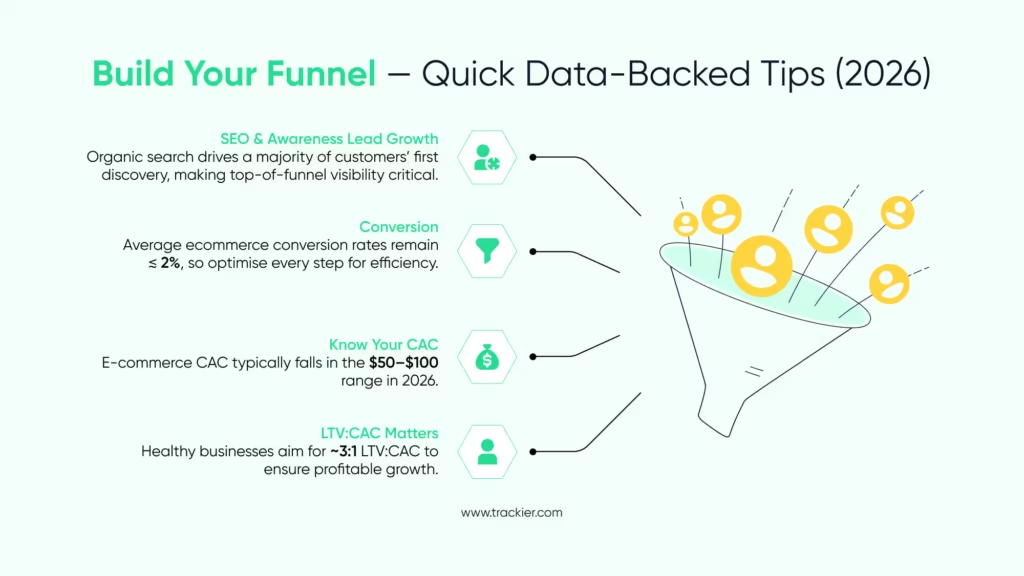
An effective customer acquisition funnel is built on more than just landing page creation or advertising efforts.
It’s about designing an organised process that collects data of the right audience, keeps their attention, and converts them into customers through cost-effective solutions while also providing positive experiences and long-term value.
Follow the steps below to create an effective customer acquisition funnel in 2026:
1. Define Your Target Audience and Goals
Before anything else, focus on who your ideal customers are:
- Demographics, behaviours, and pain points
- What problem does your product uniquely solves
This clarity helps tailor your funnel messaging, channel selection, and offers. Set specific acquisition goals, such as:
- 15% increase in qualified leads in 90 days
- Reduce CAC by 10%
- Boost conversion rate from 3% → 5%
2. Map Every Customer Touchpoint
Visualise how a potential customer moves from first hearing about your brand to purchase:
- Social ads
- Organic search and SEO
- Influencer mentions
- Email interactions
- Website visits and navigation paths
3. Build Awareness with Multi-Channel Reach
Awareness fuels the top of your funnel. In 2026, a diversified approach is essential:
- SEO and organic content – Organic search drives ~53% of website traffic, making it a key awareness source.
- Paid ads – Meta, Google, LinkedIn, and programmatic ads to reach targeted segments
- Social content & video storytelling – Video usage remains dominant, and businesses are leveraging video marketing to educate and attract audiences.
- Influencer & partnership campaigns – Influencers can extend reach and build trust by exposing your brand to new audiences.
Trackier makes it easy to track and attribute impressions, clicks, and engagement across multiple channels, ensuring you know which sources are most effective at bringing prospects into your funnel.
4. Nurture Leads Through Engagement
Once prospects are aware, the goal is to turn interest into intent:
- Use email drip campaigns to deliver value and answer prospects’ questions
- Host webinars or live demos for deeper product exploration
- Offer gated assets like reports, case studies, or interactive tools
5. Optimise Conversion Points
At the bottom of the funnel, the focus shifts to converting interest into action:
- Create compelling landing pages with clear CTAs
- Use free trials, demos, or limited-time offers
- Simplify forms and checkout experiences
6. Analyse and Refine Using Data
A funnel isn’t “built” once and forgotten. It needs continual refinement through analytics:
- Track drop-off points at every stage
- Understand which channels yield the highest ROI
- Assess cost efficiency and optimise spend
7. Build Feedback Loops & Scale
The final step is to ensure your funnel evolves as your audience and market change:
- Collect customer feedback at touchpoints
- Test new channels like AI-driven personalisation
- Scale high-performing acquisition pathways
Key Metrics to Track at Each Funnel Stage
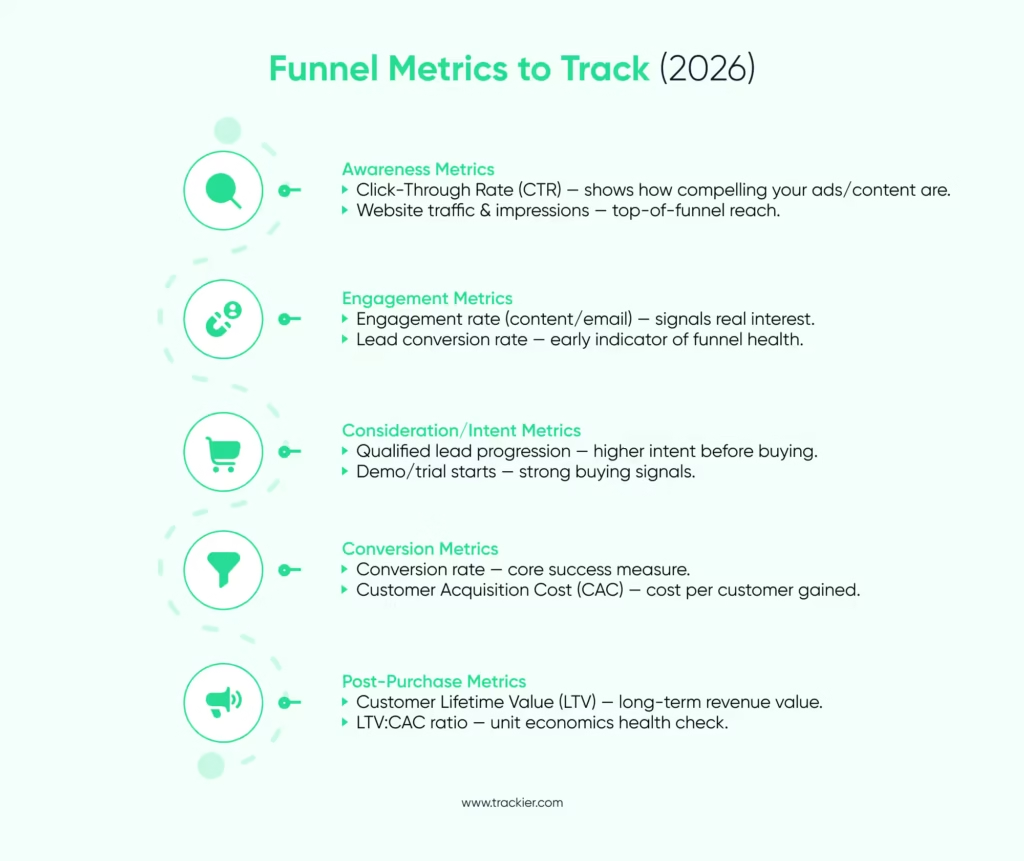
To optimise a customer acquisition funnel effectively, you must track the right metrics at the right stages. These metrics reveal where prospects are engaging, hesitating, or dropping off, and help you decide what to improve, invest in, or automate.
The numbers you measure should align with your business model and goals, but the following metrics are widely recognised as critical in 2026.
| Funnel Stage | Key Metrics | Why Does It Matter? |
| Awareness (ToFu) | Impressions, Reach, Website Traffic, Click-Through Rate (CTR) | Tracks visibility and initial audience engagement, helping identify which channels attract relevant prospects. |
| Interest / Engagement | Lead Conversion Rate, Cost Per Lead (CPL), Engagement Rate (Content, Email), Time on Page | Measures how well awareness turns into real interest (signups, email captures, content interactions). |
| Consideration / Intent (MoFu to BoFu) | MQL → SQL RateEmail Open & CTRDemo / Trial RequestsLead Quality Score | Shows depth of prospect interest to buy, letting you focus on high-intent leads. |
| Conversion (BoFu) | Sales Conversion Rate, Customer Acquisition Cost (CAC), Average Order Value (AOV), ROAS | Indicates how effectively leads convert into paying customers and how profitable campaigns are. |
| Post-Purchase / Loyalty | Repeat Purchase Rate, Churn Rate, LTV / CAC Ratio, NPS / Referral Rate | Reveals long-term value, critical for sustainable growth beyond first purchase. |
How Trackier Helps Optimize the Customer Acquisition Funnel?
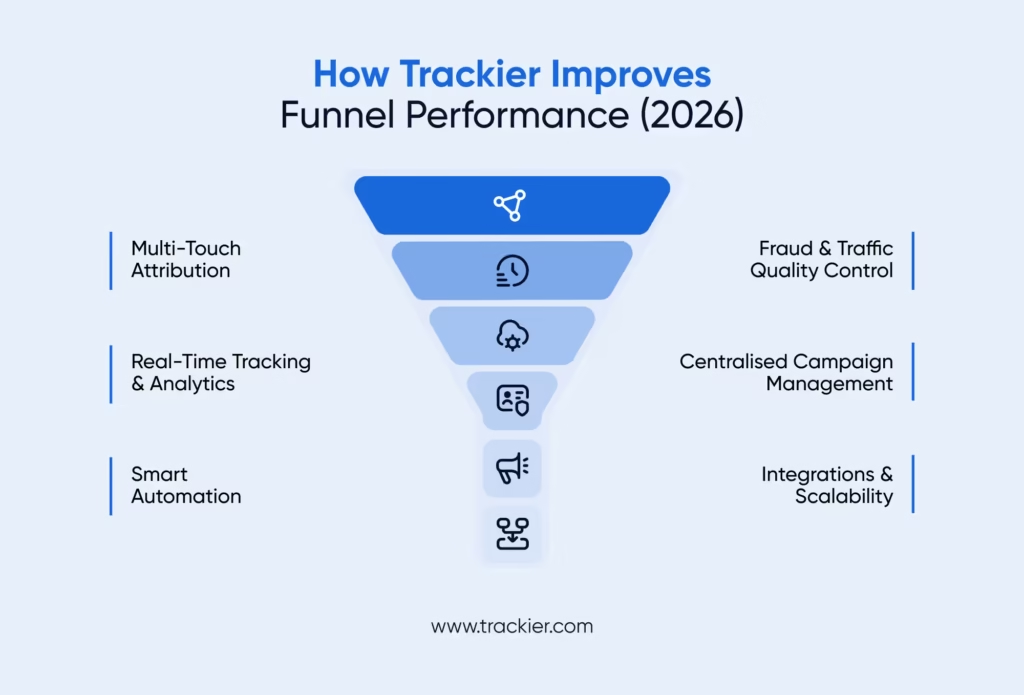
To successfully optimize a customer acquisition funnel in 2026, a brand must use up-to-date technology to track, analyse, and report in real-time, which allows businesses to make immediate decisions based on data from all channels and partners.
Trackier helps marketers to track, analyse, and optimize every touchpoint, from first impression to conversion, ensuring that acquisition efforts are efficient, measurable, and scalable.
Here are ways Trackier enhances every stage of your customer acquisition funnel through the latest technology, as well as industry-leading features.
1. Real-Time Tracking and Analytics
Trackier provides real-time insights into clicks, conversions, spend, and ROI, so you never wait hours or days to understand performance. This level of visibility is crucial because marketers today often run hundreds to thousands of campaigns simultaneously across channels.
- Live reporting means you can spot underperforming campaigns as they happen.
- Custom dashboards let you monitor metrics that matter most for your acquisition strategy.
- Drill-down analytics help identify which campaigns, partners, or creatives contribute to conversions, so you can reallocate budget confidently.
2. Dynamic and Multi-Touch Attribution
Understanding which touchpoints truly drive conversions is essential in a world where buyers interact with multiple ads, emails, influencers, and search results before converting. Trackier’s dynamic and multi-touch attribution models help you assign credit accurately across the funnel.
- Trackier supports first-party, server-side, and event-based tracking that works even in privacy-focused environments.
- Multi-touch attribution lets you see the impact of every interaction in the customer journey.
- View-through attribution (VTA) credits ads viewed but not clicked—capturing real influence beyond just clicks.
3. Automated Optimization and Workflow Automation
Trackier’s automation tools reduce repetitive tasks and enhance funnel performance with minimal manual effort.
- Smart Links dynamically route traffic to the best-performing offers based on user context.
- Automated workflows trigger the right actions based on user behaviour, like follow-ups or retargeting, reducing funnel drop-offs.
- Offer Checker and Link Test tools ensure landing pages and tracking URLs work as intended, protecting conversion opportunities.
4. Fraud Detection and Traffic Quality Control
Invalid or fraudulent traffic can inflate engagement metrics while draining budget. Trackier’s advanced anti-fraud technology detects and blocks fake clicks and bot activity, so you only pay for real, high-quality interactions.
- Fraud filtering ensures that CAC metrics reflect genuine customer behaviour, leading to more accurate ROI calculations.
- Custom fraud rules allow you to tailor protection per campaign, partner, or audience segment.
5. Centralized Campaign Management
Managing multiple campaigns and partners manually often leads to data silos and inefficiencies. Trackier’s centralised campaign management enables you to oversee everything from a single dashboard.
- Quickly launch campaigns with pre-built templates and campaign wizards.
- Use bulk targeting to edit multiple campaigns at once.
- Analyse key metrics like clicks, conversions, and ROI to identify bottlenecks.
6. Integration and Scalability for Enterprise Growth
Trackier integrates seamlessly with CRMs, ad networks, and analytics tools, meaning your funnel metrics can be unified across the entire marketing ecosystem.
- API support and integrations ensure that data flows smoothly, enabling deeper analysis and personalisation.
- Scalability means you can grow from thousands to millions of clicks and conversions without performance loss.
Conclusion
Building a customer acquisition funnel isn’t a one-time task; it’s an ongoing process that evolves with customer behaviour, channels, and market dynamics. As acquisition costs continue to rise and user journeys become more fragmented, the brands that win are the ones that understand every stage of their funnel, track the right metrics, and optimise continuously.
A strong customer acquisition funnel helps you move beyond vanity metrics and focus on what truly matters: qualified traffic, meaningful engagement, efficient conversions, and long-term value. It allows you to identify where prospects drop off, which channels drive real ROI, and how to allocate budgets more intelligently across the funnel.
But strategy alone isn’t enough. To turn insights into action, you need accurate tracking, reliable attribution, and real-time visibility across all your acquisition channels.
By bringing together performance tracking, multi-touch attribution, fraud prevention, and actionable analytics in one platform, Trackier helps you optimise every stage of your customer acquisition funnel, from first click to final conversion.
If you’re ready to stop guessing and start scaling with confidence, it’s time to build a funnel powered by data, not assumptions.
Book a demo and see how smarter tracking and attribution can help you reduce acquisition costs, improve conversions, and drive sustainable growth.
FAQs
1. What are the 5 stages of customer acquisition?
The five stages of customer acquisition are awareness, interest, consideration, conversion, and loyalty. These stages represent how customers move from discovering a brand to becoming repeat buyers. Tracking each stage helps businesses optimise messaging, improve conversions, and build long-term customer relationships.
2. How do you measure the success of a customer acquisition funnel?
Success is measured using metrics like impressions, CTR, cost per lead, conversion rate, CAC, ROAS, and customer lifetime value. Tracking these metrics at each stage helps businesses understand what’s working, where users drop off, and how to optimise funnel performance.
3. How does Trackier help optimise the customer acquisition funnel?
Trackier helps optimise the customer acquisition funnel by offering real-time tracking, accurate attribution, fraud prevention, and performance analytics across channels. It helps marketers to identify high-performing campaigns, reduce wasted spend, and make data-driven decisions to improve conversions and ROI.
4. How can businesses reduce customer acquisition costs using a funnel approach?
Businesses can reduce customer acquisition costs by identifying inefficient channels, improving targeting, optimising landing pages, and tracking performance accurately. A data-driven funnel approach ensures marketing budgets are spent on channels and strategies that deliver measurable results.
5. Why is a customer acquisition funnel important for businesses?
A customer acquisition funnel provides clarity on how marketing and sales efforts impact growth. It helps businesses allocate budgets effectively, track performance across channels, and improve ROI. By optimising each stage, brands can attract higher-quality leads and convert them more efficiently.