Marketing plans usually start with a channel list which includes various channels, including, but not limited to, email, paid search, SEO, LinkedIn, partners, retargeting, webinars, and, if budget remains, maybe an offline event.
Direct and indirect marketing give you an insight into which campaigns are meant to get a response in real-time and which campaigns are meant to help the buyer get ready before they act.
In performance marketing, a buyer may read a guide today, click a partner link next week, and book a demo after seeing an ad later. If your reporting only sees the last step, the earlier work can lose all visibility. A good affiliate tracking software helps you connect those touch points with more context.
What Are Direct And Indirect Marketing?
Direct and indirect marketing are two ways to reach buyers at different points in their buying journey.
Direct marketing asks for an action. The buyer already has some intent, or at least enough interest to respond. The campaign could ask them to book a demo, sign up, download a guide, reply to an email, use a coupon, or buy. Increasingly, AI sales agents run this direct, action-oriented outreach one to one researching each prospect and personalizing the ask across email, LinkedIn, and calls.
You see this in paid search, email campaigns, SMS offers, retargeting ads, affiliate links, referral campaigns, and direct mail. The audience is usually defined. The messaging is clear. The action is easy to measure.
Indirect marketing does a quieter job. It helps the buyer understand the problem, trust the brand, and remember the company when the need becomes active. Blogs, SEO pages, PR, organic social, podcasts, customer stories, webinars, and partner education usually all can be counted in the same.
No one reads one blog and instantly becomes a perfect sales opportunity. Well, rarely. But that blog can help them understand what to ask, what to compare, and which brand sounds like it knows the category.
How Do Direct And Indirect Marketing Work Together?
Direct and indirect marketing work better when each one has a distinct job.
Indirect marketing explains the category, gives the buyer language for the problem, and makes the brand easier to remember. Direct marketing then gives that buyer a next step when interest becomes active.
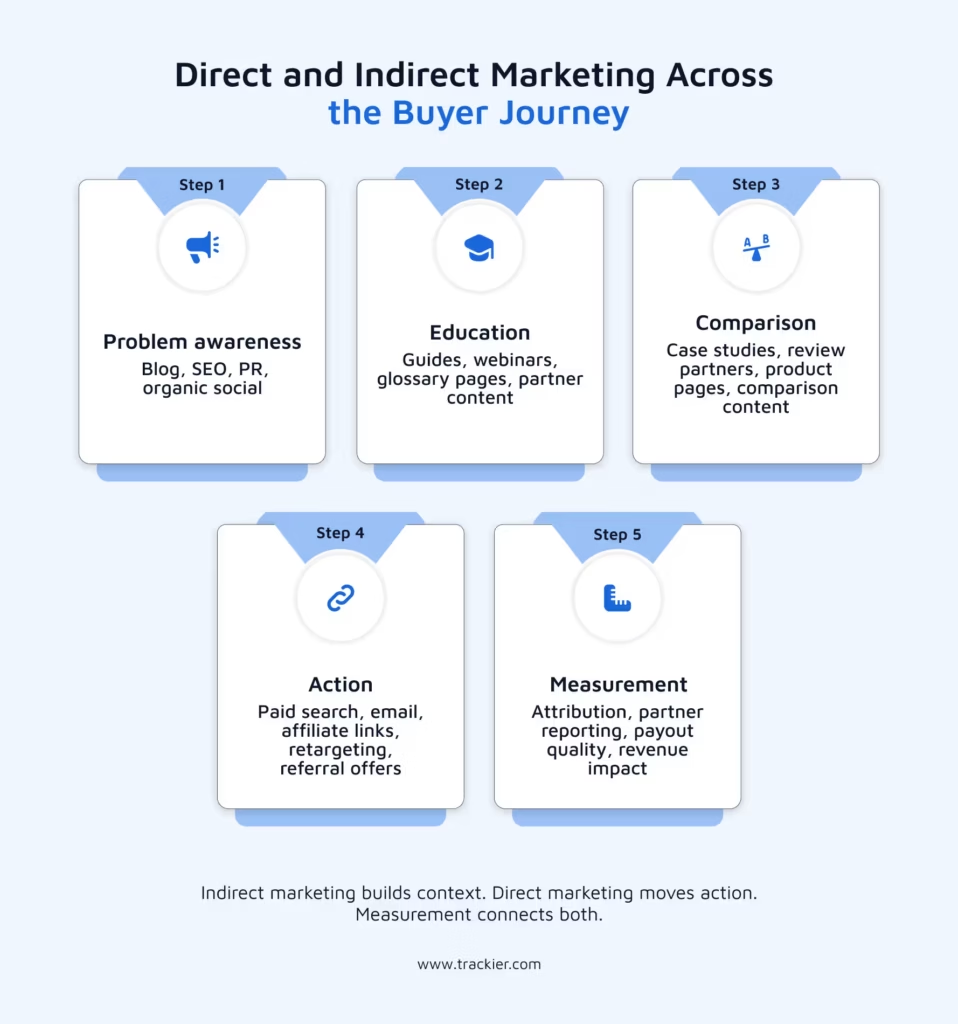
In a B2B journey, a marketer searches for ways to manage affiliate payouts. They read a guide. A few days later, they see a LinkedIn post from the same company. Later, they visit a product page. After that, a retargeting ad invites them to book a demo.
The ad may get the conversion credit. The guide may have done the early teaching. The product page may have handled the comparison. The LinkedIn post may have kept the brand familiar.
This is common in partner and performance marketing. Buyers move between content, ads, referrals, partner mentions, and sales conversations. Clean attribution helps teams see the shape of that movement instead of giving all the praise to the final click.
The right affiliate marketing platform can help here by tracking conversions, partner activity, commissions, and ROI from different sources. It will not magically fix a weak strategy, of course. But it can stop teams from making budget calls with half the journey missing.
Use direct marketing when intent is already visible
Direct marketing fits buyers who are closer to action.
If someone searches for campaign tracking software, they probably do not need a long lecture on why tracking matters. They need to know whether your product fits their use case, what happens next, and why they should trust the offer.
Paid search, retargeting, email, partner offers, referral links, demo campaigns, and reactivation messages work well in such a situation.
Keep the message specific. Match the offer to the buyer’s stage. Send traffic to a page that answers the obvious questions. Track the result properly. Basic, yes. Still missed surprisingly often.
Email is a useful example. Email marketing generally returns 36 dollars for every dollar spent. That does not happen because teams send more emails. It happens when they segment well, write clearly, and send messages that match the buyer’s moment.
Use indirect marketing when buyers are still learning
Indirect marketing fits buyers who are still forming the problem in their own mind.
They may not know which tool they need yet. They may not even know what the issue should be called. Maybe they are trying to understand affiliate fraud, partner tracking, commission models, or how performance marketing differs from regular paid media.
At this stage, a hard demo push can feel early, but something subtle, like maybe a useful article, glossary page, report, webinar, or customer story, can give them something to work with first.
This is also where internal linking helps the reader move without feeling pushed. A blog on channel planning can naturally point to a guide on partner marketing, a page on partner integrations, or a resource on affiliate fraud when the topic calls for it.
How Can You Balance Direct And Indirect Marketing?
The balance depends on your stage, budget, sales cycle, and how familiar buyers are with your category.
A startup with little awareness may need more indirect marketing than it expects. People cannot convert if they do not understand the problem or trust the brand yet. At the same time, the team still needs direct campaigns to test demand, collect leads, and learn which messages land.
An enterprise B2B brand may already have awareness, but still needs indirect marketing to support long buying cycles. Large teams compare vendors slowly. Content, PR, customer stories, and partner education help keep the brand in the room while the buying group moves at its own pace.
Agencies usually need both at the same time. Direct campaigns bring leads for clients. Indirect marketing explains the agency’s thinking, builds credibility, and gives prospects a reason to trust the team before the pitch.
When buyers do not know the problem well, invest more in education. When buyers are already searching, invest more in direct response. When both are happening, connect them instead of letting every channel report in its own little corner.
The direct marketing market is still growing, which makes sense. Brands want measurable action. But action gets easier when buyers have already been warmed by useful content, trusted partners, or category education.
How Do You Measure Direct And Indirect Marketing?
Direct marketing is usually easier to measure because the action is close to the message.
You can track clicks, leads, demos, purchases, conversion rate, cost per acquisition, revenue, and partner payout. These numbers are useful because they show whether the campaign moved someone toward a visible result.
Indirect marketing needs a wider view. You may track organic traffic, keyword growth, branded search, assisted conversions, referral traffic, engagement quality, content-influenced pipeline, and sales feedback. Some of these numbers take longer to build. That does not make them weak. It only means the channel works earlier in the journey.
Website, blog, and SEO remain strong ROI channels for marketers, according to current marketing statistics. So, indirect marketing should not be measured only by instant form fills. That would miss a lot of its job.
The better approach is to connect leading and lagging signals.
A leading signal shows early movement. More qualified traffic, stronger engagement, better search visibility, more partner-referred visits. A lagging signal shows business impact. Pipeline, customers, revenue, retention, partner ROI.
For direct and indirect marketing, both signals matter. A direct campaign with low-quality leads is not healthy just because the CPL looks good. An indirect campaign with strong traffic but no influence on pipeline also needs a second look.
For partner-heavy teams, measurement also needs fraud checks, attribution rules, payout logic, and source-level quality. Otherwise, a campaign can look active while wasting money in the background.
For readers who want to understand traffic quality better, you can check out Trackier’s guide on click fraud.
Use attribution to avoid unfair channel credit
Attribution helps marketers understand which touchpoints influenced the result.
In a simple setup, the last click gets credit. That can work for very short journeys. It becomes less useful when buyers move across search, social, content, affiliates, email, and sales before converting.
Direct and indirect marketing often share the same outcome. A buyer may read three content pieces, visit through a partner, leave, then convert through a retargeting ad. If the team only reads the final action, the earlier influence disappears.
Multi-touch reporting helps reduce that blind spot. It gives marketing teams a better way to understand which channels create demand, which channels capture demand, and which channels help close the gap between the two.
The Right Next Steps
Give each channel a job.
SEO cannot behave like retargeting, a cold paid social campaign will not convert like a warm email list. Each channel supports a different part of the journey.
Map your current channels into two groups:
- Direct marketing for response.
- Indirect marketing for education, trust, and recall.
Then look at the gaps. If you have plenty of traffic but weak conversions, your direct offers or landing pages may need work. If you have strong offers but low demand, your indirect marketing may be too thin.
Next, check your measurement setup. Track the source, partner, campaign, offer, and conversion quality. Look at assisted influence where possible. Review fraud signals before paying out commissions. Keep your reporting clean enough for budget decisions.
The buyer does not move that neatly. The plan shouldn’t either.
Hungry for more? Download our free case studies that cover real stories.
Or sign up for Trackier’s newsletter to get weekly best practices on referral programs and partner marketing.
Frequently Asked Questions
1. What is the difference between direct and indirect marketing?
Direct marketing is built around a distinct next step. The buyer is asked to click, reply, sign up, book, buy, or take some other measurable action. Indirect marketing works earlier. It helps buyers understand the problem, trust the brand, and remember it when the need becomes active. In simple terms, direct and indirect marketing differ by timing. One asks for action. The other makes that action easier later.
2. What are direct and indirect marketing channels?
Direct marketing channels usually include email campaigns, paid search, SMS, retargeting, referral links, affiliate offers, and direct mail. Indirect marketing channels usually include SEO, blogs, PR, organic social, podcasts, webinars, communities, and customer stories. The channel alone does not decide the category though. A LinkedIn ad can be direct if it asks for a demo. A newsletter can be indirect if it only educates the reader.
3. What are examples of direct and indirect marketing?
A direct marketing example would be a paid search ad that takes buyers to a demo page, or an email campaign sent to leads who already downloaded a guide. An indirect marketing example would be a blog that explains affiliate fraud, a webinar about partner growth, or a customer story shared during early research. In direct and indirect marketing, the same buyer may see both before becoming a qualified lead.
4. How does affiliate marketing fit into direct and indirect marketing?
Affiliate marketing can sit on both sides. A coupon partner, cashback site, or offer-led campaign often works closer to direct marketing because the buyer is near action. A review site, influencer, comparison page, or content partner can support indirect marketing by helping the buyer understand and compare options. Brands should not measure every affiliate in the same way. Some partners close demand. Some help create it much earlier.